Retail News CRM

Tag: registration

  • Vietcombank enables online registration for gold purchases

    State-owned Vietcombank has introduced an online registration system for gold bar purchases starting Wednesday.

    Customers can register to buy gold from 9 a.m. daily and collect their orders in the afternoon.

    Vietcombank said that it promises to keep all customer information confidential and only use it for gold bar transactions.

    Vietcombank assures that all customer information will remain confidential and will only be used for gold bar transactions. This initiative makes Vietcombank the first of the four state-owned banks to offer online registration for gold purchases.

    At other state-owned banks, such as Agribank, BIDV, and VietinBank, customers still need to queue for tokens in the morning and return in the afternoon to collect their gold.

    Since earlier this month, long queues have been seen at these banks as the State Bank of Vietnam (SBV) began distributing gold bars through them. Some customers have been lining up as early as 4 a.m. to secure tokens, with each branch serving only 20-40 customers per day.

    The SBV recently confirmed that there is sufficient gold to meet retail demand. However, the bank noted that some individuals have been hiring others to queue in order to hoard gold and drive up prices. Consequently, the SBV has requested government officials to investigate signs of speculation.

    The price of Saigon Jewelry Company gold bars has remained steady at nearly VND77 million ($3,026.37) over the past four days, approximately 8.5% higher than the global rate.

  • Vietnam halves car registration fees to boost sales

    Vietnam halves car registration fees to boost sales

    Vietnam has cut car registration fees in half for locally-made or assembled cars as authorities hope against hope that the move will boost sales.

    The 6-month cut takes effect July 1 and the fees will return to normal starting Jan. 1, according to a government decree issued Wednesday.

    Registration fees are calculated based on car prices in each locality. The rates are 12% in Hanoi and Hai Phong, and 10% in HCMC.

    Vietnam issued the same 50% cut for six months in 2020 and 2022 to boost consumption. The move caused sales to double in both cases.

    The Ministry of Finance, however, said earlier that the cut might not be as effective this time since the economy is seeing a strong decline in industrial activity and exports amid high inflation and low GDP growth.

    In the first five months, 113,500 auto units were sold, a 36% plunge year-on-year, according to the Vietnam Automobile Manufacturers Association.

  • SIM Cards Must Now Be Registered With Telcos in the Philippines

    SIM Cards Must Now Be Registered With Telcos in the Philippines

    Mobile phone users in the Philippines must now register their SIM cards with their telecom provider after the country’s President, Ferdinand Marcos Jr., signed into law the SIM Card Registration Act.

    According to the official dispatch, the new measure aims to promote accountability in the use of SIM cards and help law enforcement to track those involved in crimes committed through mobile phones.

    Under the new law, all public telecommunications entities or direct sellers must require the SIM card user to show a valid identification document with a photo.

    The registered SIM card details will not be disclosed unless the user authorizes access to his information.

    Law enforcement agencies that conduct probes on purported crimes committed through phones may also submit a written request to telco firms to disclose the details of the SIM card holder.

    The two telecom giants in the Philippines, Globe Telecom and PLDT Group, had previously expressed support for this measure, saying they would be helping the government in preventing crimes committed electronically.

    The law consolidates the bills approved by the House of Representatives and the Senate.

  • Car registration fee cut by half again

    Car registration fee cut by half again

    A government decree has cut registration fees for locally made cars by 50 percent for six months starting December 1.

    This is the second time in the last two years such a cut is being made to mitigate the difficulties faced by the auto industry due to the Covid-19 pandemic.

    In the first six months of last year, 17,600 cars were bought on average each month. In the second half, when the 50 percent cut took effect, sales doubled.

    The registration fees are calculated based on car prices in each locality.

    The rates are 12 percent in Hanoi and Hai Phong, and 10 percent in HCMC.

    Last year, car sales had fallen by 8 percent to 296,634 units as the Covid-19 pandemic badly affected the economy, hitting people’s incomes and discretionary spending.

  • Auto registration fee to be halved again

    Auto registration fee to be halved again

    The Ministry of Finance has said the registration fee for locally manufactured automobiles will be halved for six months until May 15 next year.

    If the government issues the decree for the purpose after Nov. 15, the fee cut would apply from Dec. 1 to May 31, it said, explaining the reduction is meant to stimulate demand and help boost investment and revive supply chains in the auto industry.

    When the fee was similarly cut in the second half of last year, it helped increase auto sales and tax collection increased by VND14.11 trillion ($613.48 million).

    Over 102,900 automobiles produced in the country were registered in the first half of last year, and the number doubled in the second half when the fee was halved.

    Some neighboring countries like Indonesia and Malaysia have also offered preferential treatment to their domestic automobile industry amid the Covid outbreaks, it added.

    Eleven foreign automobile firms that do not manufacture in Vietnam, including Audi, Volkswagen, Subaru, Volvo, Jeep, and Porsche, recently called on the government to apply the registration fee cut also to imported vehicles.

    The Vietnam Automobile Manufacturers Association had also called on the ministry for similar cuts for both local products and imports, but the ministry rejected it as not appropriate.

    The association said its members sold 170,073 vehicles in the first nine months of this year, a year-on-year decrease of 1 percent. The numbers do not include sales of Audi, Jaguar-Land Rover, Subaru, Volkswagen, Volvo and some others who did not reveal their numbers.

    According to the General Statistics Office, Vietnam imported 112,000 complete built-up vehicles in the nine-month period, up 67.9 percent.

  • Government may halve registration fees for locally produced automobiles

    Government may halve registration fees for locally produced automobiles

    The government has instructed the Ministry of Finance to assess the impact of a 50-percent cut in registration fees for locally produced automobiles.

    Thanh Cong Motor Vietnam Joint Stock Company had called on the government to cut the fee to support an industry affected by Covid-19.

    The ministry has been told to complete the task this month.

    In June, the Vietnam Automobile Manufacturers Association (VAMA) had proposed a similar 50-percent cut in registration fees, but the ministry had rejected it.

    Last year too the government had cut the fee by half, and it cost VND6 trillion ($260.9 million).

    In the first six months of this year VAMA members, who account for more than 95 percent of the market, saw sales fall 30 percent year-on-year to 102,720 vehicles.

    Car manufacturers fear the global effects of Covid would have a long-term impact on people’s incomes and auto demand.

    VAMA expects sales to decline by more than 15 percent this year. Last year, they had risen by 11.7 percent to 322,322 units.

  • Ministry says no to cuts in auto registration fees

    Ministry says no to cuts in auto registration fees

    The Ministry of Finance has rejected a proposal to reduce auto registration fees by half, saying it is not necessary for the current setting.

    The proposal was made by the Vietnam Automobile Manufacturers Association (VAMA), seeking support for manufacturers amid the Covid-19 pandemic.

    However, the Ministry of Finance said that the government had already implemented different measures to support businesses and citizens last year, including extending the deadline for payment of taxes and land use fees and incentives on special consumption tax for cars manufactured or assembled locally.

    “After reviewing the proposal, the Ministry of Finance sees that lowering registration fee is not suitable with the current setting,” it said.

    Last year, the government had provided a 50 percent discount on the registration fees for cars produced domestically.

    The move lowered the government’s revenues by VND6 trillion ($260 million).

    The Ministry of Finance also denied VAMA’s request to lower the production of cars under an import tax incentive program.

  • Government discontinues discount on car registration fees

    Government discontinues discount on car registration fees

    The government believes domestic car producers have received enough support from the discount scheme, and so will not extend it.

    The 50 percent discount scheme on the registration fees of cars produced domestically, which came into effect on June 28 this year, will not be continued, and will terminate on Thursday as planned, a leader of the Ministry of Finance’s Tax Policy Department said.

    According to the ministry, the 50 percent discount on car registration fees had only been a short-term solution, solving difficulties for domestic automobile manufacturing and assembling enterprises facing impacts of the epidemic.

    This policy has cost the state budget an estimated VND3.7 trillion ($160.56 million) in revenue, while embassies of car manufacturing countries such as Indonesia and Thailand, as well as the European Chamber of Commerce in Vietnam have approached the MoF to complain about discrimination between imported and domestically produced vehicles, the ministry said.

    Meanwhile, fees and charges continuing to receive discounts include those in the fields of citizenship registration, road maintenance, food safety, project appraisal, healthcare, and securities trading.

    The MoF said that the above policies have cost the state budget an estimated VND1 trillion this year.

  • Saigon to double car registration fees

    Saigon to double car registration fees

    HCMC will raise registration fees of cars under 9 passenger seasts from VND11 million ($473) to VND20 million ($860) from October 17.

    According to a resolution recently passed by the city’s People Council, licensing fees for other types of cars will be set from the initial cost of VND150,000 ($6.4) to VND500,000 ($22). Such as, prices for semi trailers and trailers (container trucks) will now be VND200,000 ($8.6).

    For motorbikes, those valued under VND15 million ($645) will now have a new registration fee of VND1 million ($43). Motorbikes costing between VND15-40 million ($645-1,720) and above will have new registration fees of VND2-4 million ($86-172).

    Vo Van Hoan, Vice Chairman of Ho Chi Minh City People’s Committee, said the new registration fees were equivalent to those in Hanoi, and that the increase was an appropriate reflection of the city’s economic status.

    The HCMC department of transportation estimates that there are more than 825,000 cars and 8.1 million motorbikes in the city. In the first six months of this year, the number of newly registered cars and motorbikes increased year-on-year by 15 percent and 6 percent respectively.

  • Nearly 70 Percent of Singaporeans Registered to National E-Payment System

    Nearly 70 Percent of Singaporeans Registered to National E-Payment System

    Singapore’s national e-payment system, «PayNow», currently boasts a nearly 70 percent penetration of the city-state’s population with monthly volumes exceeding S$1 billion, an MAS board member recently shared with parliament.

    Ong Ye Kung, minister of education and Monetary Authority of Singapore board member noted that take-up was «encouraging» with more than 65 percent of Singaporeans aged between 20 to 75 years old having already registered, representing 2.8 million accounts.

    Transaction volumes have also increased significantly. Two years ago, PayNow registered 150,000 transactions totaling S$24 million ($17 million) and in July this year, the figures rose to over 5 million and S$1 billion ($720 million), respectively.

    Despite PayNow’s success, Ong noted that Singapore made a conscious decision to keep the playing field open for all.

    «We made a deliberate decision not to have one player dominate the landscape and grow up very quickly,» he said, citing other channels like Apple or Google Pay.

    «Instead, we put in place the backbone infrastructure so that multiple providers can compete and innovate to increase consumer choice while encouraging interoperability. As a result, Singaporeans can now make e-payments in multiple ways which are simple, swift and secure.»

    Although corporate adoption has lagged its retail counterpart, Ong remains optimistic. Its corporate business currently serves entities representing half of the total unique entity number (UEN) issued in Singapore, an ID number required to interact with government agencies. It has 20 percent penetration rate of retail acceptance across hawker centers, supermarkets, healthcare and various F&B businesses.

    As a result, the ratio of cash and cheque’s relative usage to e-payments have decreased significantly. Cheques have fallen 8 percent per year over the past three years while the cash ratio dropped from 53 percent to 33 percent in the same period.

    When asked about pushing greater usage from banks, Ong agreed that the MAS should encourage the sector to promote PayNow corporates while also charging for cheques.

    «And I think having this carrot-and-stick, push-and-pull approach will continue to see higher take-up of pay now corporate,» he said.

  • Hanoi to limit new motorbike registration from 2020

    Hanoi to limit new motorbike registration from 2020

    Hanoi is considering limiting the registration of new motorbikes in the downtown area from next year to reduce traffic jams. It will start with the districts of Hoan Kiem, Hai Ba Trung, Ba Dinh, Dong Da, and Tay Ho, and will expand to the districts of Cau Giay, Hoang Mai, Long Bien, Thanh Xuan, Gia Lam, and Dong Anh in 2025.

    The city said that a motorbike ban during rush hour would be trialed on a stretch of Nguyen Trai Street in Thanh Xuan District this year or next year. The stretch runs about 2.2 kilometers from the Nguyen Trai – Third Ring Road intersection to the Nguyen Trai – Lang intersection. A similar ban will take effect on Xuan Thuy Street in Cau Giay District when the metro starts operating after 2020. Other roads the city is considering are Giai Phong, Nguyen Van Cu, Le Van Luong, Tran Duy Hung, and Nguyen Chi Thanh Streets.

    In 2021-2025 Hanoi plans to ban motorbikes on Friday nights and during weekends on six streets near Hoan Kiem Lake: Hang Dau, Tran Nhat Duat, Tran Quang Khai, Tran Hung Dao, Le Duan, and Phung Hung. In the 2026-2030 the city will limit motorbikes in the area enclosed by the first ring road, an area of 26 square kilometers with a population of 700,000.

    From 2030 it will ban motorbikes in most districts and has promised public transport will meet 70 percent of the public’s needs. There will be 180 bus routes with 2,700 buses, nine metro lines, 30,000 taxis, 30,000 contracted vehicles and 10,000 public bicycles available at that time, it has added.

    The city will offer to buy used motorbikes less than 10 years old, said the plan, which was issued at a recent meeting. Vu Van Vien, director of the city Department of Transport, said Hanoi has been dealing with traffic jams by limiting cars in some areas since 2013, and the city has recently restricted taxis and technology taxis (such as Grab) on certain streets.

    “Motorbikes are just one of the vehicles that will be restricted. Our plan limits and manages all vehicles. We do not want to cause trouble to residents and seek to discuss before implementing.”

    The city is still studying the proposal and would consult other authorities, and wherever the ban applies, public transport should be available to meet the public’s needs, he said, adding that the city will seek public opinion on the plan.

    In 2017 the city People’s Committee approved a plan to ban motorbikes in downtown districts by 2030 and restrict the use of all private vehicles in areas well served by public transport. The city said it polled 15,000 respondents in 30 districts at that time and 90 percent supported the ban.

    The city tried in 2003 to stop the registration of new motorbikes in the districts of Ba Dinh, Hoan Kiem, Dong Da, and Hai Ba Trung, and expanded it to Thanh Xuan, Tay Ho and Cau Giay in 2005. However, it later scrapped the ban since it was not effective.

    Hanoi’s plan to ban motorbike has met with opposition from transport experts, who said public transport is inadequate. The capital, with a population of 7.5 million, has 5.6 million motorbikes and around 550,000 cars, besides some 1.2 million bikes brought in from elsewhere, according to police figures.


  • Expats confused over Vietnam’s profile picture requirement for phone users

    Expats confused over Vietnam’s profile picture requirement for phone users

    Some have no idea about the requirement, others find it invasive while network providers can’t guarantee help in English. Expats are having issues with Vietnam’s new regulation which asks phone users to submit a profile picture to their network provider.

    The Ministry of Information and Communications requires mobile subscribers to provide photographic proof of their identities before April 24, or they will be locked out of their network.

    Ryan, 28, is a Briton working in Hanoi. He had no ideas about the new regulation until we contacted him because the profile photo request was sent to his phone in Vietnamese.

    “I’ve never had to do this in the U.K. or in any other countries I’ve travelled through,” Ryan said, adding that he finds the requirement “invasive”.

    In light of recent data breaches by companies as large as Facebook, Ryan is concerned that his information could fall into the wrong hands. “I don’t know if I could trust my network provider with my information,” he said.

    The government claims the requirement will result in better control of network subscribers and prevent spam accounts.

    But while network providers claim user data will only be used to manage subscribers as stated by law, experts believe the regulation has loopholes that could be taken advantage of.

    The images could slip through the network security holes, a scenario in which the responsibility of the network provider has not yet been clearly defined, said lawyer Vu Tien Vinh.

    A photo taken by a customer and sent to a network provider cannot be authenticated, Vinh added.

    Having been to many Asian countries, Mark from Canada finds the regulation odd. “Why would a phone company need my photo?” he said.

    Ryan and Mark are not the only expats who are having issues with the regulation. Many foreigners are also confused as local mobile operators don’t seem to provide the assistance they need.

    On Saturday, customer service centers of all major network providers were packed with customers coming in to have their photos taken.

    Amid the chaos, employees at the centers suggested that foreigners could bring in their passport, or take a photo of their passport and submit it to the companies’ websites. But, they could not guarantee there would be anyone who speaks English available to help.

    Vietnam has 118.7 million mobile subscriptions, according to official data and there are 82,000 foreigners living and working in the country. As of last week, at least 38 million mobile phone users have not provided adequate personal information to network providers, said Nguyen Duc Trung, a senior telecommunications official at the Ministry of Information and Communications.

    Mark is one of them. The 35-year-old is not planning to do anything yet. “I’ll see if they actually lock my account,” he said.

  • Thai MVNOs must use fingerprint SIM registration

    Thai MVNOs must use fingerprint SIM registration

    Thailand’s MVNOs will need to implement a new online fingerprint ID registration system for both prepaid and postpaid mobile SIMs by March, after regulator the NBTC declined to exempt them from complying with the new registration regime.

    The online registration system is being introduced as a requirement for both mobile operators and MVNOs as part of an NBTC decision from late last year.

    But MVNOs had been calling on the regulator to exempt them from the order on the grounds that it will impose additional costs that may make it difficult for them to compete with the major operators.

    NBTC secretary general Takorn Tantasith as stating that the regulator has decided that consumer interests must be put first, and a fingerprint system will be required to ensure greater security in mobile banking as Thailand moves towards becoming a cashless society.

    He also said operators will be able to deduct the costs of implementing the system from their annual universal service obligation fee.

    The new online fingerprint ID system will complement the existing compulsory SIM registration system. While operators are required to implement access to the system, end-users will choose whether to submit their fingerprints.

  • Ooredoo Myanmar expands SIM registration channels

    Ooredoo Myanmar expands SIM registration channels

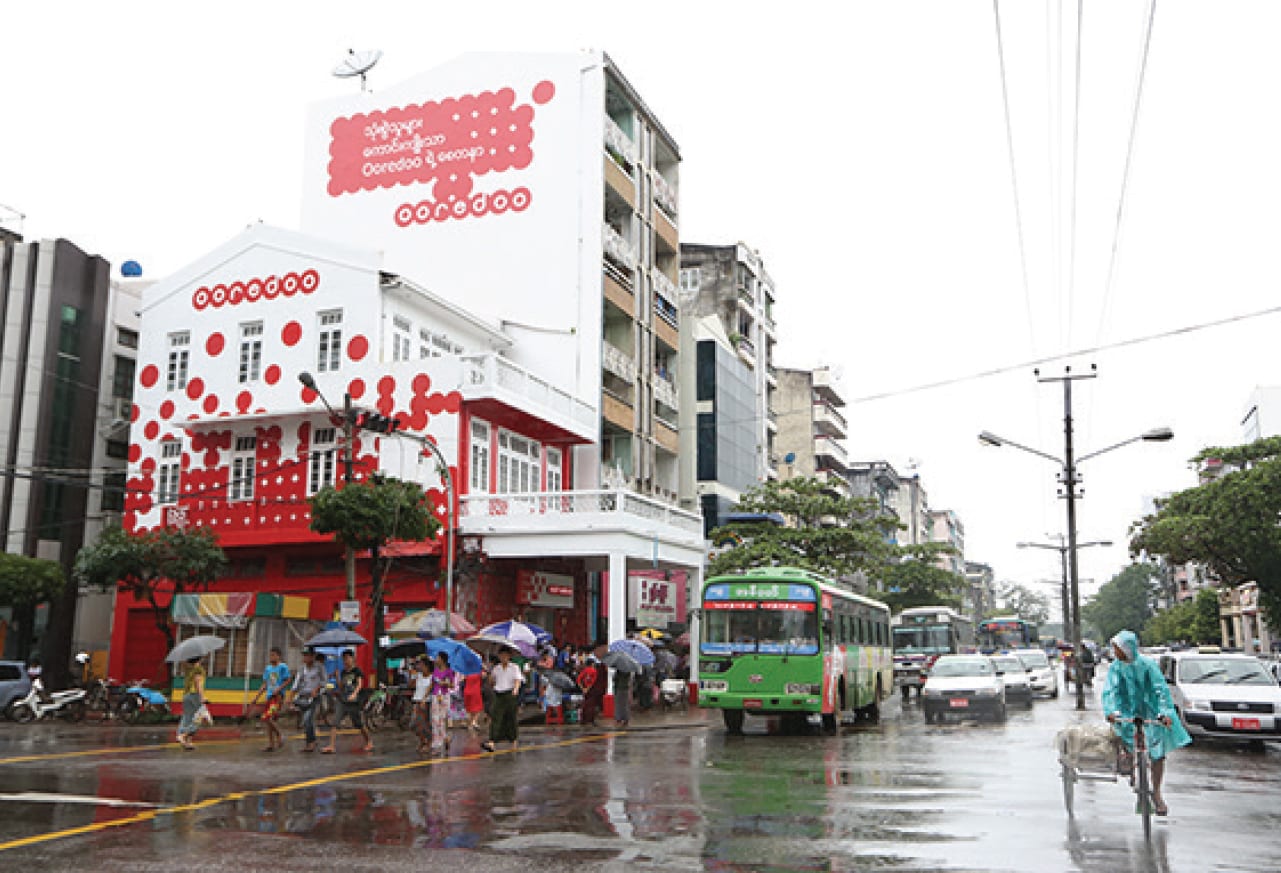
    Ooredoo Myanmar has added new channels for its subscribers to use to self-register, in line with a government directive that all SIMs in use in the nation be registered by next year.

    Customers now have four options for self-registering their SIMs.

    The four options involve dialing a dedicated hotline, downloading an application, using a call center with interactive voice response functionality or registering online via the Ooredoo website.

    Subscribers will also be able to visit an Ooredoo store and complete a registration with the assistance of a sales agent. They will need an NRC card, student ID or drivers’ license.

    Under a new mandate from the Ministry of Transport and Communications, all mobile SIM cards will need to be registered by the end of March. Any remaining unregistered SIMs will need to be deactivated after this date.

    The order brings Myanmar in line with a number of its peers in the Asian region also introducing mandatory SIM registration schemes, including Cambodia, Thailand and Pakistan.

    Thailand’s National Broadcasting and Telecommunications Commission is also calling for the introduction of a common regional SIM registration platform covering prepaid services in Thailand, Cambodia, Laos and Myanmar as a counter-crime measure.

  • Thailand to adopt fingerprint registration for SIMs

    Thailand to adopt fingerprint registration for SIMs

    Thailand’s National Broadcasting and Telecommunications Commission (NBTC) has revealed plans to require all mobile operators to introduce an online fingerprint ID system for prepaid and postpaid mobile SIM registrations.

    The regulator has given a tentative deadline of February for operators to support mandatory fingerprint ID registration.

    NBTC officials told the publication that the system is designed to ensure greater security in mobile banking and reduce the risk of fraud as Thailand continues to transition to a cashless society.

    Around 14 million of Thailand’s 103 million mobile subscribers are already using mobile banking services, according to the report.

    According to the report, while the operators will be required to implement a fingerprint registration system to complement their existing mandatory SIM registration systems, mobile customers will not be required to submit their fingerprints. The fingerprints will be stored on an NBTC database server.

    The fingerprint system was developed by the Engineering Faculty of Kasetsart University, which won a tender to supply the system for 15 million baht ($421,000).

    Operators will be able to deduct the costs of implementing the system from their annual universal service obligation fee, which amounts to around 3.5% of operators’ total revenue.