Tag: regulatory

  • Shein’s Hong Kong IPO Slashes Valuation to $25 Billion amid E-commerce Regulatory Challenges

    Shein’s Hong Kong IPO Slashes Valuation to $25 Billion amid E-commerce Regulatory Challenges

    Online fast-fashion retailer Shein is expected to have a company valuation of roughly $25 billion in its upcoming Hong Kong initial public offering (IPO), a significant decrease from its earlier valuation of approximately $100 billion four years ago. This change comes amid a slowdown in the company’s growth.

    Sources familiar with the situation have indicated that the current valuation of Shein, a company that made its name selling affordable clothing such as $5 dresses and $10 jeans, potentially lies between $25 billion and $28 billion. This represents a decrease from the initially projected valuation of $30 billion to $40 billion earlier this month.

    The Impact of Market Changes

    This reduction in valuation can be attributed to significant shifts in Shein’s most prominent markets, including an increased crackdown on e-commerce platforms selling inexpensive Chinese-manufactured goods. This has negatively affected the company’s growth prospects.

    Shein, which was established in China in 2012 and now sells to customers in approximately 160 countries, is poised to launch its eagerly-anticipated IPO this week.

    The company is reportedly planning to issue up to 8% of its total shares in the IPO. Should the company be valued at $25 billion, this would equate to an offering size of up to $2 billion.

    Economic Factors and Valuation

    Shein’s net income in 2025 stood at $2.06 billion, indicating that a $25 billion valuation would result in investors valuing the company at around 12 times its earnings.

    However, several factors have led to a decrease in Shein’s valuation. Slower growth, increased trade costs, tighter regulatory scrutiny, and heightened competition have all contributed to a decrease in investor appetite for the company.

    Shein’s net revenue saw a growth rate of 41.1% in 2023 and 20.7% in 2024. However, growth slowed dramatically to just 8% last year, resulting in total revenue of $41.8 billion. In the first quarter of this year, revenue growth was a mere 1.1% due to the impact of US customs duties and tariffs implemented in May last year.

    Questions & Answers

    What is the expected valuation of Shein in its upcoming Hong Kong IPO?
    The expected valuation of Shein in its upcoming Hong Kong IPO is around $25 billion.

    What factors have contributed to a decrease in Shein’s valuation?
    Factors such as slower growth, higher trade costs, increased regulatory scrutiny, and intensified competition have contributed to a decreased valuation.

    What was Shein’s net income in 2025, and what does this mean for its valuation?
    Shein’s net income in 2025 was $2.06 billion. If the company is valued at $25 billion, this would mean investors value Shein at around 12 times its earnings.

  • Shein Defies French Regulatory Resistance, Expands Fashion Footprint in Five More Cities

    Shein Defies French Regulatory Resistance, Expands Fashion Footprint in Five More Cities

    Despite facing opposition from the French government, low-cost fashion brand Shein is extending its footprint to five additional cities in France. This expansion is being carried out through a collaboration with department store chain BHV.

    Continued Expansion

    The Chinese fast-fashion retailer is now marking its presence in Angers, Dijon, Grenoble, Limoges, and Reims. This move comes on the heels of comments from Serge Papin, France’s Minister for Small and Medium-sized Businesses, who criticized Shein’s business practices. Papin has publicly deemed Shein a “disturbance to public order,” citing the brand’s low pricing as a form of “unfair competition.”

    Shein first set foot on French soil last November, when it opened a flagship store in Paris, located within BHV. The expansion into the additional five cities was initially slated for December.

    Postponed Plans Amid Media Pressure

    However, SGM, the operator of BHV, decided to delay the regional store openings. This decision came just ten days after the opening of the Paris flagship store, amidst mounting pressure from the media.

    Despite the controversy and delays, BHV is continuing its partnership with Shein. As part of this arrangement, Shein will independently operate its business within the BHV stores, while the department store will retain a commission on the sales made by the brand.

    Questions & Answers

    What is Shein’s latest expansion move in France?
    Shein is expanding its presence to five more French cities – Angers, Dijon, Grenoble, Limoges, and Reims, through a partnership with department store chain BHV.

    Why did Shein face criticism from the French Government?
    Shein faced criticism from Serge Papin, France’s minister for small and medium-sized businesses, who described the company’s low-cost strategy as a form of “unfair competition” and a “disturbance to public order.”

    How will Shein operate its business within the BHV stores?
    Shein will independently operate its business within the BHV stores, and the department store will earn a commission on the sales made by the brand.

  • Woolworths Faces Potential New Zealand Regulatory Breach Amid Alleged Grocery Industry Competition Act Violations

    Woolworths Faces Potential New Zealand Regulatory Breach Amid Alleged Grocery Industry Competition Act Violations

    Woolworths, a prominent supermarket chain, has recently been cautioned about potentially violating the Grocery Industry Competition Act. This situation arose due to the delisting of certain products in its New Zealand branches.

    Grocery Industry Competition Act: Purpose and Management

    The Grocery Industry Competition Act is governed by the New Zealand Commerce Commission (NZCC). Its primary objective is to regulate the relationship between suppliers and supermarkets. By demanding greater transparency when products are delisted from store shelves, it seeks to protect the interests of smaller suppliers.

    The act, which was established in 2023, is expected to incorporate the Grocery Supply Code in May. Non-compliance with the code could lead to penalties, as per the statement from the commission.

    Investigation into Non-Compliance

    The NZCC has been scrutinizing the product-range review methods of leading supermarkets to ensure they are complying with the code.

    A spokesperson commented on the situation, saying, “Through this process, we identified and investigated situations where it appeared that Woolworths New Zealand might not be fulfilling its responsibilities.” Post investigation, Woolworths New Zealand was issued a warning for a probable breach of the Grocery Industry Competition Act. However, the spokesperson noted that only a court can establish whether an actual breach has occurred. Since the warning, Woolworths has amended its procedures to comply with the regulations.

    Impact on Groceries and Suppliers

    Alice Hume, the head of groceries at NZCC, stated that this action was taken in response to suppliers’ concerns. She highlighted the pressure on suppliers with the possibility of their products being delisted. This situation could further exacerbate the imbalance of power between major supermarkets and smaller suppliers.

    “The fear of losing market access can pressure suppliers into accepting unfavorable conditions and foster distrust towards supermarkets’ decision-making processes,” Hume explained. “The code is instrumental in equalizing the power dynamics between large supermarkets and smaller suppliers, so we treat compliance with the utmost seriousness.”

    Hume also mentioned that the NZCC continues to assess the product ranges available at supermarkets, inviting any worried suppliers to reach out to the commission.

    Questions & Answers

    What is the purpose of the Grocery Industry Competition Act?
    The Grocery Industry Competition Act is designed to govern the relationship between supermarkets and suppliers, with a demand for more transparency during product delisting to protect smaller suppliers.

    What are the consequences of breaching the Grocery Supply Code?
    Non-compliance with the Grocery Supply Code, which is part of the Grocery Industry Competition Act, can result in penalties.

    What are the concerns of the smaller suppliers?
    Smaller suppliers are concerned about potential product delisting, which could reinforce power imbalances with major supermarkets, pressurize them into accepting unfavorable conditions, and induce a lack of trust in supermarkets’ decision-making processes.

  • Mandatory addition of micronutrients hurting Vietnam’s food industry

    Mandatory addition of micronutrients hurting Vietnam’s food industry

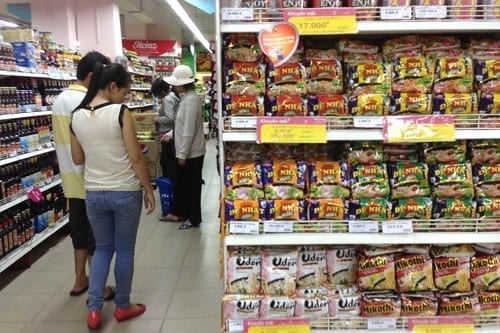
    A decree requiring the addition of micronutrients to food products is making them unattractive and more difficult to sell, industry insiders say.

    The decree, which went into effect last year, requires businesses to include iodine in salt and iron and zinc in wheat flour.

    Asahira Keita, deputy marketing director of food firm Acecook Vietnam, said the mandatory inclusion of minerals like iron or zinc in flour has hurt his company.

    Keita said the resulting flour has a darker color than normal flour. Its texture also changes and makes the end product less appealing to customers, he added.

    “To make our food products more appealing, we would have to research new recipes, which would certainly cost us more,” he said.

    Keita had other concerns too. Several countries don’t allow the inclusion of micro-nutrients in food products, so Vietnamese food firms would need to go through lengthy procedures to export food products with micronutrients into such countries. Foreign customers are also not fond of food products with micro-nutrients, he said.

    “This is a tough challenge for businesses like ours. We might even have to stop exporting products into these long-time partner countries, just because they don’t have the same requirements as Vietnam does,” Keita said.

    He said one solution could be to create two types of flour separately; one for domestic use and another to be exported. But doing so would be too costly and expensive, as the firm, which is currently deploying an automation-focused production model, can only afford one automated system. Right now, it is being used to make flour infused with iron and zinc for domestic use.

    Therefore, flour without iron or zinc that is used for export products, must be manually packaged.

    “This is too costly, time-consuming and inefficient,” said Keita.

    Processing challenges

    Businesses are also finding it hard to follow the decree’s guidelines as the processing method could change the levels of micro-nutrients in the products.

    Lam Ba Nhi, quality control director of Vietnamese meat processing firm Vissan, said the application of heat during food processing could destroy the iodine included in food products.

    Therefore, when food products are tested, levels of iodine present could be lower than the decree’s mandates, Nhi said.

    Lam proposed that the inclusion of iodized salt should not be made compulsory in food processing.

    Last month, the government had said the Health Ministry should carry out further research so that appropriate changes can be made to the decree, in which the inclusion of micro-nutrients in food products should only be encouraged, and not made compulsory.

    The Ministry of Health has not responded since.

    “We want the Ministry of Health to take action and follow the government’s suggestion,” said Nguyen Hoai Nam, deputy general secretary of Vietnam Association of Seafood and Producers.

    The decree came in the wake of advice from the Iodine Global Network, which ranks Vietnam among the top 19 iodine-deficient countries.

    The network had advised that Vietnamese people use iodized salt directly in food seasoning, food processing, and livestock feeding.

    Prolonged iodine deficiency can cause nerve damage among infants and children; and make pregnant women suffer miscarriages or go into preterm labor. Adults can also suffer goiter, nerve damage and mental illness.

  • GrabTaxi reiterates Vietnam-wide operations completely legal

    GrabTaxi reiterates Vietnam-wide operations completely legal

    Ride-hailing firm Grab Vietnam insists that its GrabTaxi service is legally allowed to operate nationwide.

    Grab Vietnam countered that GrabTaxi is an app for an e-commerce platform, so its operations would be in accordance with the government’s e-commerce laws.

    Grab Vietnam made the statement after the Transport Ministry has recently shot down a GrabTaxi plan to extend its services to provinces like Ninh Thuan, Dong Thap and Gia Lai. The ride-hailing firm now is allowed to operate in the five cities and provinces of Hanoi, Ho Chi Minh, Da Nang, Khanh Hoa and Quang Ninh.

    However, the firm said its GrabTaxi service is quite different from the GrabCar, which operates in the five above-mentioned provinces and cities, as a part of the ministry’s pilot plan for tech-based transportation services.

    Both GrabTaxi and GrabCar operate under the same Grab application, but GrabTaxi offers a run-of-the mill taxi service, while GrabCar is a service which connects customers with private cars for ride-hailing purposes.

    Therefore, GrabTaxi should be allowed to operate nationwide, stressed the firm.

    This isn’t the first time the ride-hailing firm has clashed with the Transport Ministry. In January, when Grab Vietnam wanted to extend its GrabTaxi service to provinces like Thua Thien Hue, Ba Ria – Vung Tau and Lam Dong, the firm also released a similar statement.

    Grab is currently under an investigation by Vietnamese authorities who say that its acquisition of Uber’s Southeast Asia operations shows signs of breaching local antitrust laws.

    A Vietnam Competition Authority (VCA) investigation found that Grab’s market share in Vietnam had exceeded 50 percent after its ride-hailing rival Uber left the Southeast Asian market in April.

    Under Vietnamese law, mergers and acquitions that result in a company gaining over 50 percent of the market share are restricted in Vietnam.

    The investigation, which began on May 18, is estimated to take 180 days and can be extended for another 120 days.

  • Singapore F&B sector ‘running out of manpower’

    Singapore F&B sector ‘running out of manpower’

    The Singapore F&B sector is set for a radical transformation under the government’s Industry Transformation Maps, aimed at getting industry “future-ready”.

    Tharman Shanmugaratnam, deputy PM and coordinating minister for economic and social policies, revealed some insights in a speech at the opening of Select Group’s new corporate headquarters on Thursday.

    He said with 160,000 people working in the F&B industry, it was a significant employer in the city state, 205,000 if hawkers’ centres were included, more than 5 per cent of the nation’s workforce.

    “But that is also the industry’s biggest challenge. We are running out of manpower in the industry. Our strategies for the future have to address this squarely.

    “We must develop a food services industry that is highly efficient, with no loss in quality of food offerings, and with high quality jobs. It has to be a major makeover.”

    The Food Services Industry Transformation Map (ITM) would involve “intensive collaboration” between Spring Singapore, the Restaurant Association of Singapore (RAS), enterprises themselves and trade unions such as the Food, Drinks & Allied Workers Union.

    The Food Services ITM will aim to push ahead with more ‘manpower-lean formats’ in the industry and upgrade jobs and job satisfaction, while maintaining the quality and range of Singaporeans’ dining options.

    There are four main thrusts of the Food Services ITM:

    * Developing innovative formats like Ready-to-Eat meals.

    * Promoting mass adoption of technologies even within established business formats.

    * Raising employees’ skills and versatility, and making the industry more attractive through job redesign and clear progression pathways.

    * Expanding the footprint of Singapore F&B in overseas markets.

    “Spring estimates that by 2025 three out of eight dining experiences in Singapore will involve new formats such as grab-and-go and vending machines, as opposed to traditional dine-in options. It will be more efficient, and will also meet changing consumer demands.

    “Ready-to-eat (RTE) meals, for instance, are a viable alternative for consumers looking for convenience. The new generation of RTE meals is much more than just “microwavable food”. Utilising “cook-chill technologies” as well as innovations in packaging material, the taste, quality and nutritional content of foods can be retained well in RTE meals,” he said.

    “Last month, we launched VendCafé in Anchorvale. The response has been encouraging, with an average of 400 meals served per day in the first month. Residents have given feedback that they welcome the additional amenities. However, some have expressed concerns about the noise patrons generate, sometimes late at night.”

    Coffee shops are not immune to new systems, he said.

    “Spring and the HDB have reviewed the tender requirements for new coffee shops. The requirements will now include productivity proposals, in addition to a good variety of affordable food. I urge operators to make use of this opportunity to rethink how existing coffee shop models can be redesigned. For a start, the new system will be piloted at two sites, in Tampines and Choa Chu Kang. The tender will open from mid-September onwards.”

    Manpower challenge

    The minister said employers have to work on the basis that there will be no further manpower growth in the Singapore F&B industry.

    “The heavy reliance on low-skilled workers also cannot continue. New entrepreneurs have to come into the business knowing how tough it is to find workers. The industry sees a high churn of enterprises. On average, 28 per cent of food establishments are replaced yearly. Some churn in the industry is not a bad thing – it adds vibrancy and reflects Singaporeans wanting to do their own thing as entrepreneurs. But every new enterprise has to be aware of the realities of the labour market before they get started.”

    One of the ways forward is to embrace digital service, including electronic payments.

    “In Sweden, cash transactions represent less than 2 per cent of the value of all payments made. From retailers to street level vegetable and fruits traders, Swedish businesses have embraced the use of electronic payments via credit cards or mobile apps. This enables companies to increase productivity through payments integrated with business processes. We will be promoting this very actively.

    “We must transform the food services industry so that it achieves. Spring together with its partners plans to have at least 50 per cent of the industry having adopting technology-enabled operations by 2020. They estimate that it will make possible productivity growth in Food Services of 2 per cent per year on average from now until 2020.”

  • More protection to be offered to wealthy Singapore investors

    More protection to be offered to wealthy Singapore investors

    Wealthy investors in Singapore may soon be able to choose to be covered by the same protections as retail investors under proposals from the Monetary Authority of Singapore (Mas).

    First announced by the regulator in September 2015, Mas intends to table amendments to the legislation in Parliament by the fourth quarter of 2016, reports Bloomberg. If passed, the changes would come into force in 2017.

    Current framework

    Under Singapore’s current law, it is assumed that wealthy (accredited) investors are better informed and have greater means to protect their own interests. Therefore, banks are exempt from having to provide as much information about financial products as they would to retail investors.

    Accredited investors

    Currently, an individual with personal assets exceeding S$2m (£1.1m, $1.5m, €1.3m) or an annual income of at least S$300,000 is classified as an accredited investor. The ‘opt-in’ regime proposed by Mas would require those meeting accredited investor status to make a conscious decision to be treated as such, with the full knowledge of the lower level of regulatory protection afforded to accredited investors.

    Investors opting to be treated as accredited investors would sacrifice the benefits of stronger regulatory safeguards to have easier access to a wider range of complex and risky products.

  • Rare reef fish brought in illegally

    Rare reef fish brought in illegally

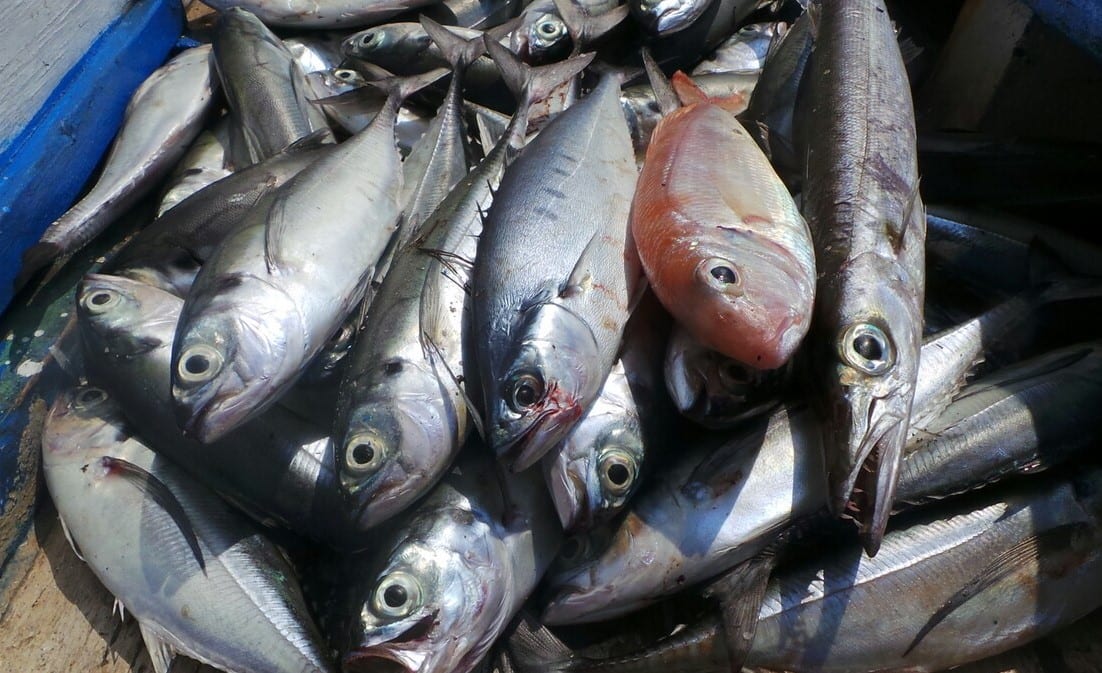
    More than 1,000 endangered but highly valued reef fish sold in Hong Kong last year were imported illegally, a university study shows.

    It was released yesterday and funded by the University of Hong Kong and the Convention on International Trade in Endangered Species.

    More than 1,000 humphead wrasse, also known as Napoleon fish, were on sale in Hong Kong live fish shops from January to December 2015, said the study.

    Since no official imports occurred in 2015 and the species is typically sold within a few weeks of import, the survey suggests that many of these fish illegally entered the SAR, said professor Yvonne Sadovy of HKU’s School of Biological Sciences.

    Humphead wrasse is one of the biggest reef fish in the world. It is reported to grow as long as two meters and can live longer than 30 years.

    The retail price of live humphead wrasse in the local seafood markets was HK$1,550 to HK$1,600 per kilogram.

    “Failure to act to ensure legal and sustainable trade in this globally threatened species will ultimately result in higher prices for humpheads and fewer fish available to consumers and to the poor fishermen. Nobody wins,” Sadovy said.

    She called for urgent action by the government to ensure that imports and sales of humpheads are legal.

    FLORA CHUNG