Tag: reits

  • Scentre Group Lifts Full-Year Guidance to 23.79 Cents on High Mall Occupancy

    Scentre Group Lifts Full-Year Guidance to 23.79 Cents on High Mall Occupancy

    Scentre Group lifted its full-year earnings forecast after generating $612 million in first-half funds from operations across its Westfield shopping centres in Australia and New Zealand.

    The Sydney-headquartered landlord now projects full-year funds from operations to rise at least 4.25 per cent to 23.79 cents per security, with distributions tracking the same percentage increase. Operating earnings reached 11.73 cents per security during the six months to June 30, while distributions rose 4.9 per cent to $481 million.

    Sales and Footfall Gains

    Customer traffic across the portfolio rose 3.5 per cent to 347 million visits during the first half. Westfield membership expanded to 5.2 million users, supporting higher transaction volumes across managed retail space.

    Occupancy reached 99.8 per cent, gaining 10 basis points from the prior year and holding at its highest rate in more than a decade. Specialty retailer sales grew 5.1 per cent over the half, while total partner sales increased 3.7 per cent across the network.

    Property Valuations and Portfolio Value

    Statutory profit for the half finished at $975 million, supported by an unrealised property valuation increase of $478 million. Total portfolio assets stood at $33.7 billion at the close of June.

    The performance reflects solid rental retention across primary retail hubs, matching the previous year’s 4.9 per cent earnings growth when operating funds reached $1.18 billion. Chief Executive Elliott Rusanow confirmed the group will focus on expanding land-use yield and commercial partnerships across its existing properties through the remainder of the fiscal year.

  • Nomura Real Estate Master Fund Buys Tokyo Best Western for $55 Million

    Nomura Real Estate Master Fund Buys Tokyo Best Western for $55 Million

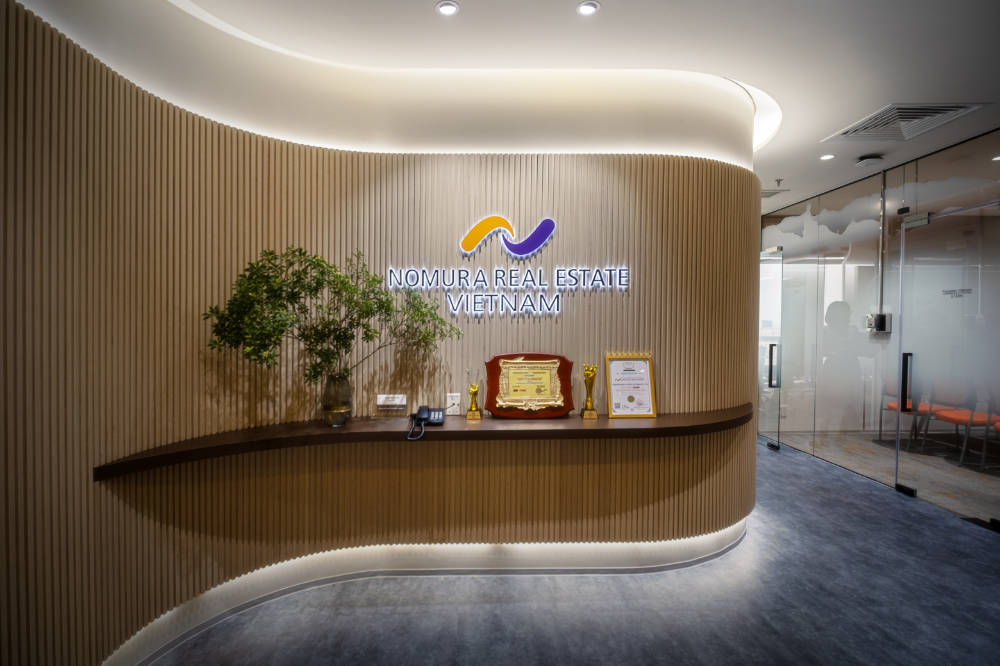
    Nomura Real Estate Master Fund has agreed to acquire the Best Western Hotel Fino Tokyo Akasaka from developer Ichiken for JPY 8.7 billion ($55 million). That prices the 87-key property at JPY 100 million ($626,000) per room. The price represents a 20 percent discount to its July appraisal value of JPY 10.9 billion.

    Settlement will take place on 1 September following signing on Thursday, funded with cash on hand. Ichiken carries the asset at JPY 5.3 billion on its books. The sale delivers a gross spread of JPY 3.4 billion before transaction expenses.

    Property Cash Flow and Operator

    Completed in March 2020, the 13-storey building spans 2,385 square metres in Minato ward. It sits three minutes on foot from Akasaka and Akasaka-mitsuke subway stations. Double rooms make up 86 percent of the inventory. That space includes 22 moderate doubles, 53 superior doubles, 11 superior twins and one accessible deluxe twin.

    Polaris Holdings operates the property under a lease where rent is calculated as a fixed percentage of gross operating profit. Foreign visitors represent 95 percent of all guests and stay an average of 3.7 days. Based on an appraisal net operating income of JPY 385 million, the asset yields 4.4 percent on the purchase price.

    Portfolio Shift Toward Hospitality

    The acquisition expands the trust’s hotel holdings by 31 percent to JPY 37 billion across nine properties. Hospitality now accounts for 3.3 percent of total portfolio assets, up from 2.6 percent. Greater Tokyo hotel exposure increases to JPY 11.1 billion from JPY 2.4 billion. Master Fund holds JPY 1.1 trillion across commercial, logistics, residential and lodging assets.

    Recent portfolio moves include Master Fund’s sale of eight residential buildings to Integral Real Estate for JPY 10.8 billion in March 2025 and its March purchase of two Tokyo properties for JPY 8.9 billion. Looking ahead, Minato ward is targeting more than 9 million overnight stays in 2026, up from 8 million in 2024.

  • Bigger Is Better for Singapore REITs Facing Consolidation

    Bigger Is Better for Singapore REITs Facing Consolidation

    Singapore’s real estate investment trust market is set to consolidate as smaller vehicles merge to cope with rising regulatory costs, according to Cambridge Industrial Trust.

    “The wave of consolidation for Singapore REITs is about to begin,” Philip Levinson, chief executive officer at Singapore-listed Cambridge Industrial, said. The trust has a market capitalization of S$730.5 million ($536 million) and focuses on industrial real estate assets.

    The city-state’s monetary regulator has tightened rules that could raise costs and lower revenues for REITs, making mergers between such trusts the most viable option for them to thrive, Levinson said. Morgan Stanley last year said consolidation in the Singapore REIT market was “unavoidable and necessary” to develop sufficient scale and stock liquidity for individual REITs to effectively compete on a global scale.

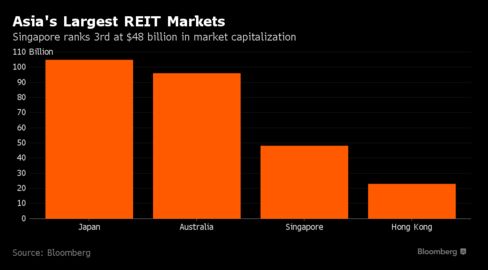
    Since 2002, when they were first started, Singapore REITs have grown into a $48 billion market, the sixth-largest globally by market capitalization, according to data compiled by Bloomberg. More than half of the 35 REITs listed in Singapore have a market capitalization of less than $1 billion, the data show. The city-state’s largest REIT, with assets of $5.6 billion, is the CapitaLand Mall Trust.

    New rules put in place last year by the Monetary Authority of Singapore, requiring higher levels of disclosures, especially on fees, entail higher compliance costs and lower revenue potential for REIT managers. The new rules are especially punitive for smaller-scale REITs and the gradual widening of the gap with larger REITs would make conditions even more conducive to consolidation, Morgan Stanley said.

    REITs that are not part of a broader index are significantly disadvantaged, Levinson said. Markets are bifurcating to such an extent where investors will only look at REITs that are included in indexes, he said.

    Shabby Sheds

    Cambridge Industrial will continue to focus on its Singapore assets and consider selling some to reinvest in other markets such as Australia and Japan, Levinson said.

    “We will look to buy ‘shabby sheds,’ B-grade assets in A-grade locations” in Australia, he said. Yields for its Singapore industrial assets range between 6.6 percent and 6.7 percent, while Australian assets may potentially yield about 7.5 percent to 8 percent, Levinson said.

    “Japan is a very deep market with enormous spreads, but that’s the next step after Australia because it is expensive at the moment,” he said.

    Industrial occupancy and rental rates in Singapore will remain under pressure in 2016 as new supply outpaces demand growth, according to Rachel Chua, a Moody’s analyst. Singapore REITs in the industrial space will continue their overseas acquisition spree in 2016 as they pursue asset growth, yield accretion and portfolio diversification amid challenging business conditions, Moody’s said in January.

    Unit prices of Cambridge Industrial, with 51 properties located across Singapore valued at S$1.4 billion, dropped 17 percent last year and the shares were trading at a roughly 17 percent discount to the net asset value, or NAV, as of Dec. 31. The FTSE Straits Times Real Estate Investment Trust Index slid 11 percent last year, its biggest decline since 2011.

    Levinson, who set up Blackstone Group LP’s Australia operations in 2009 before joining Cambridge Industrial, said he’s been meeting with investors who want to see the REIT work on lifting its unit price and the firm is exploring all options to help achieve that.

    “Our real focus is to bridge the divide, reduce the gap between our current unit price and NAV,” Levinson said.

  • Will Reits save or kill Singapore’s shopping malls?

    Will Reits save or kill Singapore’s shopping malls?

    REAL Estate Investment Trusts (Reits) were once hailed as the saviours of Singapore’s shopping malls. The theory was that single-owner malls would never match malls run by Reits. And at first, that seemed obvious. After all, compare malls like Sim Lim Square and Ming Arcade (single-owner) to Plaza Singapura and Bugis Junction (run by CapitaLand). The latter command higher rents, are more actively promoted, and don’t expose you to at least seven different diseases when you sit on the toilet bowl. But in a recent Business Times report, there’s a hint that the opinion has changed:

    How are Reits turning into the villain of retail?

    In a recent Business Times report, a number of people were consulted on the reasons for Singapore’s struggling retail scene. With a vacancy rate of 8.8 per cent in the Orchard area, it’s become a hot button topic. Most of the responses covered the oft-repeated reasons: a decline in tourism, the rise of online shopping, economic uncertainty, and so forth. But some responses, such as these, stood out:

    The decline of mainstream retail can be explained by Reits, lack of transparency and online retailing. Most of the retail space in Singapore is owned by Reits whose singular objective is to maximise profits in the short to mid-term.” – Paul Lim, Chief Executive Officer, Secura Group Ltd.

    Also:

    The biggest problem is that investing in real estate is still considered to be a relatively easy way of making money…Together with Reits, this inevitably leads to an oversupply of retail space. That there is now much empty retail space is partly self-created by players in the real estate industry.”  – Lim Soon Hock, Managing Director, PLAN-B ICAG Pte. Ltd.

    Putting the blame on Reits is not a recent development. In fact, we already heard grumbling back in 2014. During the Budget Debate that year, Worker’s Party Non-Constituency Member of Parliament Yee Jenn Jong brought up the issue. He was addressing the perception that Small and Medium Enterprises (SMEs) were being pressured out of business by Reits, which constantly seek to raise rental rates.

    In order to understand the conflict, we need to grasp the basic idea behind retail Reits.

    The role of Reits

    It’s hard to find common ground here. Depending on who you ask, Reits are either the great hope for Singapore’s malls, or abusive landlords who beat their tenants like stepchildren in a fairy tale.

    The point of a retail Reits is to let investors play landlord, without actually buying property themselves. When you buy units in a Reit, you pool your money with other investors to buy retail space (e.g. Malls like Funan Centre). You, along with other shareholders, get dividends based on the rental income that the Reit is able to collect. The more profitable the Reit’s malls are, the more money you make.

    Retail Reits use property managers to decide which malls to buy, and undertake Asset Enhancement Initiatives (AEI) to make the mall more attractive. This is why malls run by Reits are all shiny and clean, and why they constantly have the best Christmas decorations, New Year promotions, Valentine’s events, etc.

    In theory, this means Reits are good for malls. Now I’m not going to name and shame, but we all know there are malls in Singapore that look like post-war Stalingrad. Run down, with entire floors of vacant shops, and the sole decoration being a Christmas tree the security guard put up in 1978.

    Reits mean active asset management, and state of the art malls that are built to pull shoppers. That should be a good thing; the better a mall looks, the more business its shops will get. But then, there’s also…

    The dark side of Reits

    One reason Reits are so attractive is that they’ve been great passive investments (at least, until recently.) By law, Singapore Reits have to pay out 90 per cent of their profits as dividends. They need to publish quarterly reports that detail foot traffic, the profitability of various malls, and the expenses and returns on AEI.

    This places a lot of pressure on the Reits managers. They need to constantly weed out less profitable tenants, and they’re compelled to keep rental rates high. Not only does their bonus depend on it, they have shareholders to answer to. Picture how that affects the insides of a mall:

    Supermarkets take up too much floor space, and generate fewer dollars per square foot. Boom, your favourite Giant or Cold Storage is closed. Now it’s replaced with a dozen smaller shops, all selling branded crap that costs four times your annual income.

    Bookstores don’t make as much money as before. Well we all love literacy, but they can’t cope with the 20 per cent rental rate hike next month. So they’re gone too, replaced with equally short-lived stores. (The new stores will stick around until the next rental rate hike, which is perpetually around the corner.)

    Love little fashion boutiques? Well you’d better blow half your pay cheque in there, before a chain like Uniqlo or Desigual comes along and offers way more money for the space.

    Retail Reits, you see, are relentless, profit-generating machines. And it’s increasingly common to hear complaints that SMEs are driven out of brick and mortar stores by their rent raising antics. Pretty soon, every mall will be a bland mix of the same giant brands, and Din Tai Fung (which apparently wants to be in every mall on the planet).

    Who’s right?

    So far, the situation is unclear. On the one hand, Reits may have the expertise and muscle to bring back the crowds, even in the face of declining tourism and economic struggles. On the other, Reits’ insatiable appetite for rental income may be the very cause of malls dying.

    At present, all we’re hearing are desultory remarks by the occasional business owner or retail space expert. That’s because there are bigger issues to contend with, such as adapting to the online shopping market. That’s a common enemy that both Reits and brick and mortar stores face.

    But as the situation gets worse, ready your popcorn. The accusations and yelling will eventually go into full swing.