Retail News CRM

Tag: renewable energy

  • Southeast Asia Poised for Wind Power Surge: 26 GW of Onshore Capacity Expected by 2030

    Southeast Asia Poised for Wind Power Surge: 26 GW of Onshore Capacity Expected by 2030

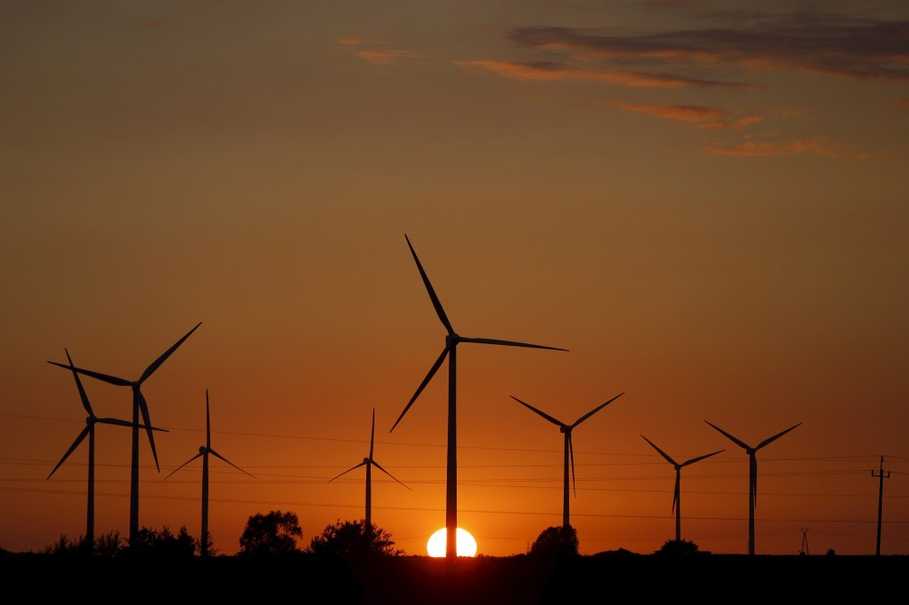
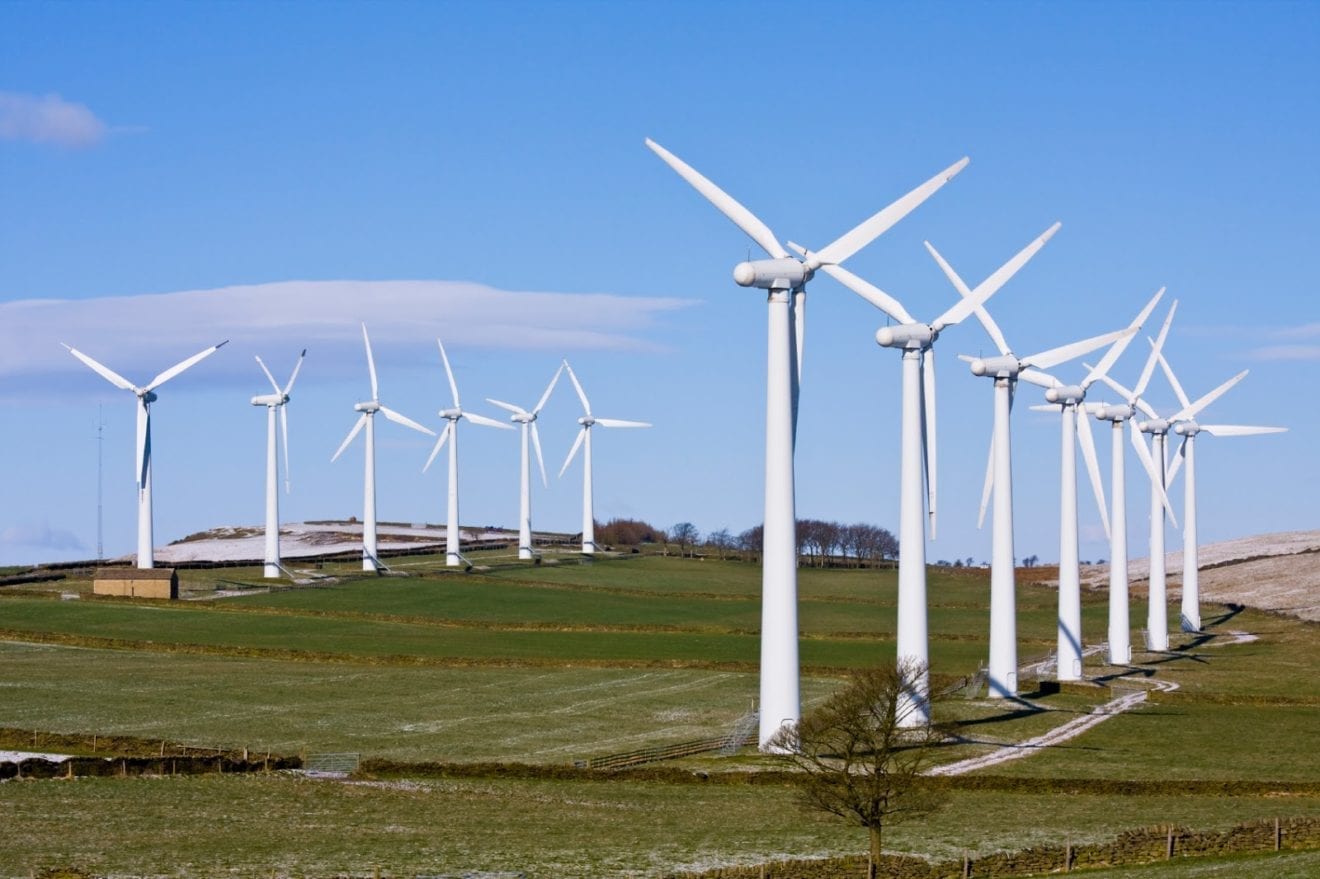
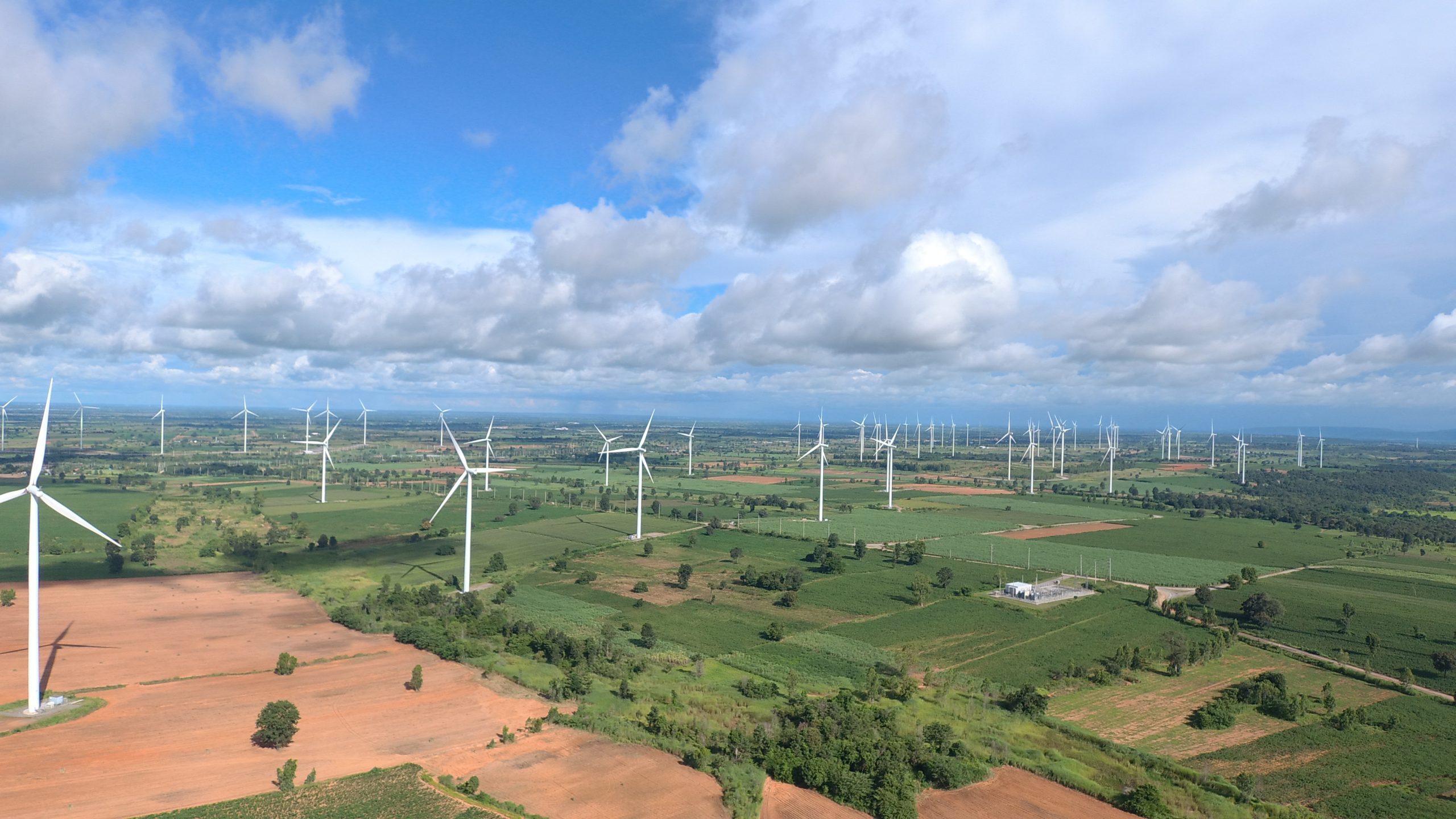
    Onshore wind capacity in Southeast Asia is set for a remarkable transformation, with projections indicating a surge to 26 gigawatts (GW) by 2030, according to Rystad Energy. This figure represents an impressive leap of 19.5 GW from the current 6.5 GW anticipated in 2024.

    Supportive Policies Fuel Expansion

    This soaring expansion is primarily driven by a combination of short-term policy initiatives, including auctions and project awards, paired with attractive feed-in tariffs (FITs). Additionally, the growing acceptance of mainland Chinese wind turbines is playing a significant role in this renaissance of onshore wind energy.

    Technological Advancements Empower Competition

    Raksit Pattanapitoon, lead renewables and power analyst for APAC at Rystad Energy, highlights that “with more mature technology, falling equipment costs, and improved performance at lower wind speeds, onshore wind is increasingly a competitive option for meeting renewable energy targets.”

    Vietnam Leads the Charge

    Currently, Vietnam stands out as the largest market in the region, despite facing some policy-induced fluctuations. It is trailed by the Philippines and Thailand in the onshore wind race. Notably, Laos has just made its entrance into this dynamic market with the commissioning of Southeast Asia’s largest wind project in August, designed specifically for power export to Vietnam.

    Learning from Regional Experiences

    Rystad emphasizes that countries such as Laos, Cambodia, and potentially Indonesia, have much to gain from the experiences of their more established neighbors like Vietnam, Thailand, and the Philippines. The experience in these countries has seen an initial rapid rollout of projects—around 4 GW in Vietnam, 1.5 GW in Thailand, and 400 MW in the Philippines—only to be followed by a frustrating drought of new developments. This stagnation occurred due to inconsistent policy frameworks, leaving Vietnam with no new construction since 2021, Thailand since 2019, and the Philippines since 2015.

    Strategies for Long-Term Success

    Looking forward, Rystad acknowledges that the long-term success of onshore wind in Southeast Asia will be contingent on several factors: consistent policies, stronger grid integration, and the establishment of local supply chains. As they aptly put it, “continued government support and collaboration within the industry are crucial to building a resilient wind market and ensuring wind energy becomes a key pillar of the region’s renewable transition.”

    Questions & Answers

    What is the projected onshore wind capacity in Southeast Asia by 2030?
    Southeast Asia’s onshore wind capacity is projected to reach 26 gigawatts (GW) by 2030, a significant increase from the current estimate of 6.5 GW in 2024.

    Which country currently leads in onshore wind energy development?
    Vietnam is currently the largest market for onshore wind energy in Southeast Asia, followed by the Philippines and Thailand.

    What factors are crucial for the long-term success of onshore wind in the region?
    Consistent government policies, improved grid integration, and the establishment of local supply chains are essential for the sustained growth of onshore wind energy in Southeast Asia.

  • Facebook just made the world a better place: 100% renewable energy

    Facebook just made the world a better place: 100% renewable energy

    It’s a big day in the book of the Earth! Facebook has officially reached the goal of one-hundred-percent renewable energy for its global operations. The social media giant might have come under fire for security issues and political scandals, but we’ll give it to them on this one.

    According to the company’s own news channel, the journey was gradual. It started back in 2011 with a ‘wind project’ in Iowa, and about ten years later, it has come full circle. At least as far as Facebook’s own operations are concerned, they are now operating with net-zero emissions!

    We recognize the urgency of climate change. We know the next ten years will be the defining time for a reduction in greenhouse gas emissions and that we have a role to play in this effort—both as a platform that connects people to information and as a global company that supports climate action.

    Mark Zuckerberg and the company have already set another goal for a more sustainable future. The social media platform aims to bring emissions down to zero, but this time across its entire value chain, including suppliers, business travel, and employee commuting. This goal has been given a due date of 2030. The part about zero-emission employee commuting, for one, sounds particularly interesting. We’re wondering how exactly they plan to do that; are they going to give away Teslas? Bicycles? Or maybe accommodate employees so they never have to leave the office? Theirs is indeed a very ambitious goal, but also very ambiguous—we call it “ambiguities.” Try saying it out loud!

    The transition will be handled by their Responsible Supply Chain Program, which works to discover innovative ways for making operations greener. Whatever they have in mind, we are curious to see how it turns out. If you are too, Facebook’s team has released a video dedicated to the long journey from 2011 to today. Take a look for yourself:

    As reported by Facebook’s Director of Renewable Energy, Urvi Parekh, the company’s goal for 100% renewable energy was set back in 2018.

    We couldn’t help but notice that this timeframe coincides with Apple’s move towards greener operation. Back in April 2018, the company from Cupertino announced that their global facilities were finally powered with one-hundred-percent clean energy.

    Whether Facebook took inspiration from Apple or not, we applaud their commitment. Google and Amazon have also taken steps in that direction, and we’d be happy to see more tech corporations follow suit.

  • Asean’s Power Landscape Expected to Transform in 2019

    Asean’s Power Landscape Expected to Transform in 2019

    Member states of the Association of Southeast Asian Nations are on a path to transform their power landscapes as energy demand continues to rise to match the region’s economic growth potential, a power management company said this week. “In the pursuit of a robust digital economy, Asean is heralding in an era of unprecedented innovation … 2019 will see power play an indispensable role in shaping the evolution of the region’s economy,” Ireland-based power management company Eaton said in a statement.

    In Southeast Asia, technology will have to meet increasing demand for clean, renewable energy and remote power management, support the arrival of 5G connectivity, and provide resilience against growing cyberthreats.

    Asean’s evolving energy demand, which according to the International Energy Agency will grow by almost two-thirds by 2040, will go together with the projected boom in the region as part of the fourth industrial revolution.

    Development of the region’s smart cities network has already made way for some significant changes in regional power management, Eaton said.

    “We are seeing a seismic shift in the region’s power management outlook as cities gear up on technology as the foundation of smart and sustainable urban development,” the company said.

    Eaton said batteries would continue to develop in this part of the world beyond their traditional use as a backup energy source.

    “At present, heavy investments in Asean are being made in preparation for such technologies in the years to come,” the company said.

    Singapore, for example, has embarked on a public-private partnership through its Energy Market Authority to speed up the deployment of energy storage systems.

    Though new technology seems to demand new assets, Eaton also highlighted the importance of making the most of existing assets.

    “Only by devising new and innovative solutions can the industry progress amid drastic changes in power demand and supply,” the company said in the statement.

  • Vietnam solar power investment rush poses an overload risk

    Vietnam solar power investment rush poses an overload risk

    The investment rush in solar energy could end up testing Vietnam’s weak power infrastructure, experts say. They say that both transmission capacity and the ability of grids to absorb the energy produced by new projects are suspect, as of now. The 9.35 U.S. cents per kWh Feed in Tariff (FIT) for solar power in Vietnam has sparked an investment rush.

    The latest project to be completed is the 49MW Krong Pa plant in the Central Highlands province of Gia Lai. It began operations last week.

    The investor, TTC Group, a corporation that invests in real estate, energy and education projects, has 19 other solar power projects underway.

    Other corporations have also been rolling out ambitious plans. The Xuan Cau Group plans to invest in a 2,000MW solar power project in southern Tay Ninh Province, while the Xuan Thien Corporation plans a 3,000MW project in the Central Highlands province of Dak Lak.

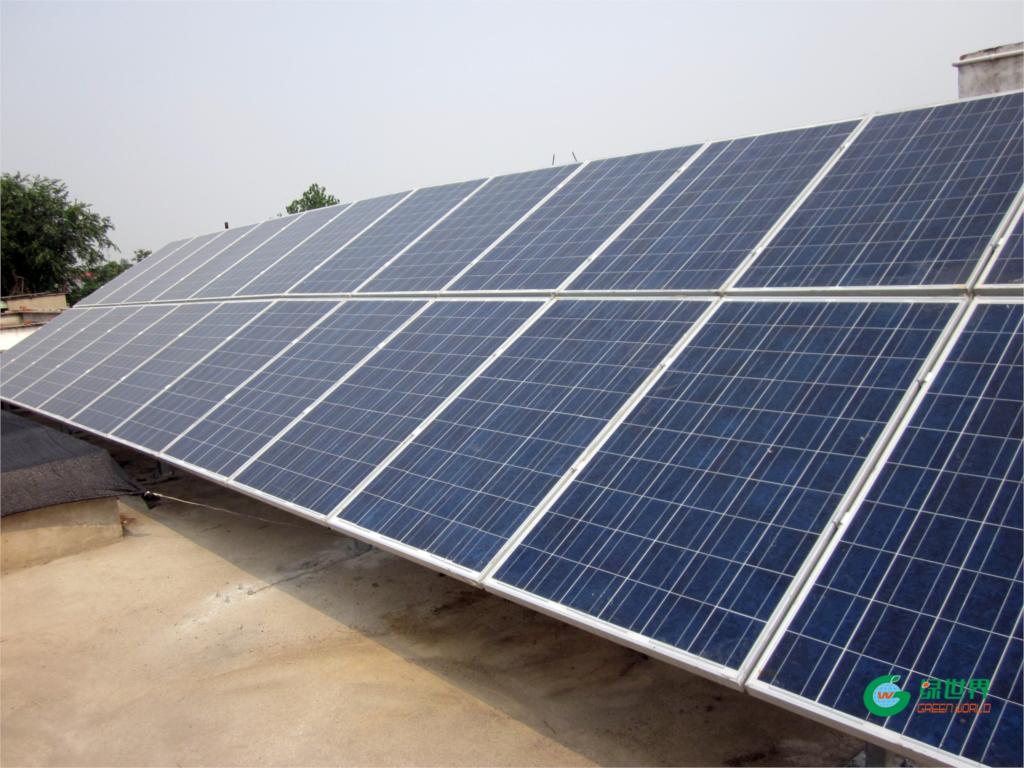
    September statistics from the Ministry of Industry and Trade show that 121 solar power projects been approved, which are expected to add 6,100 MW of output by 2020 and another 7,200 MW by 2030.

    Of these, 25 have signed power purchase agreements with Vietnam’s biggest power producer and sole distributor, Vietnam Electricity (EVN).

    In addition, another 221 projects await authorization, with a combined 13,000 MW of potential output.

    At this rate, the combined solar power output would accounts for 60 percent of Vietnam’s total output from all power sources kinds of power. It also far exceeds the country’s plan for solar energy output of 850MW by 2020, and 4,000 MW in the 4 following years.

    “There is an investment boom in solar power projects, but this is not good,” said Toby Couture, an expert of the German Corporation for International Cooperation (GIZ).

    He said authorities should come up with a balanced forecasting framework, rather than letting the market overheat.

    On top of the race to get projects completed before June 30, 2019 to enjoy the preferential FIT, the explosion of investment in solar power is also raising concerns over overloading of the power grid once the projects become operational.

    According to Vu Ngoc Duc of the Energy Institute under the Ministry of Industry and Trade, the fact that most projects are concentrated in central provinces of Ninh Thuan and Binh Thuan, and Dak Lak carries the risk of overloading the current power grid.

    Power plants cannot be plugged in without considering the capacity of each power transmission line, he said.

    Dinh Quang Tri, acting general director of EVN, admitted that 9.5 cents a kWh was still cheaper than electricity from oil, but the main problems the utility faces are infrastructural.

    Central Vietnam has relatively weak electricity infrastructure because of low consumption, but it is where the new renewable energy projects will be concentrated, he said.

    “The lines cannot take thousands of megawatts at the same time,” said Tri, adding that EVN had petitioned the government to plan and approve additional transmission lines.

    However, the procedures for planning, land clearance and construction will take a long time, so the existing grid will not be able to keep up with capacity of new solar plants.

    “This is a huge challenge. If we don’t purchase electricity from these solar plants, there will be a shortage. But if these projects are completed too quickly, the grid will not be able to load it all,” Tri said.

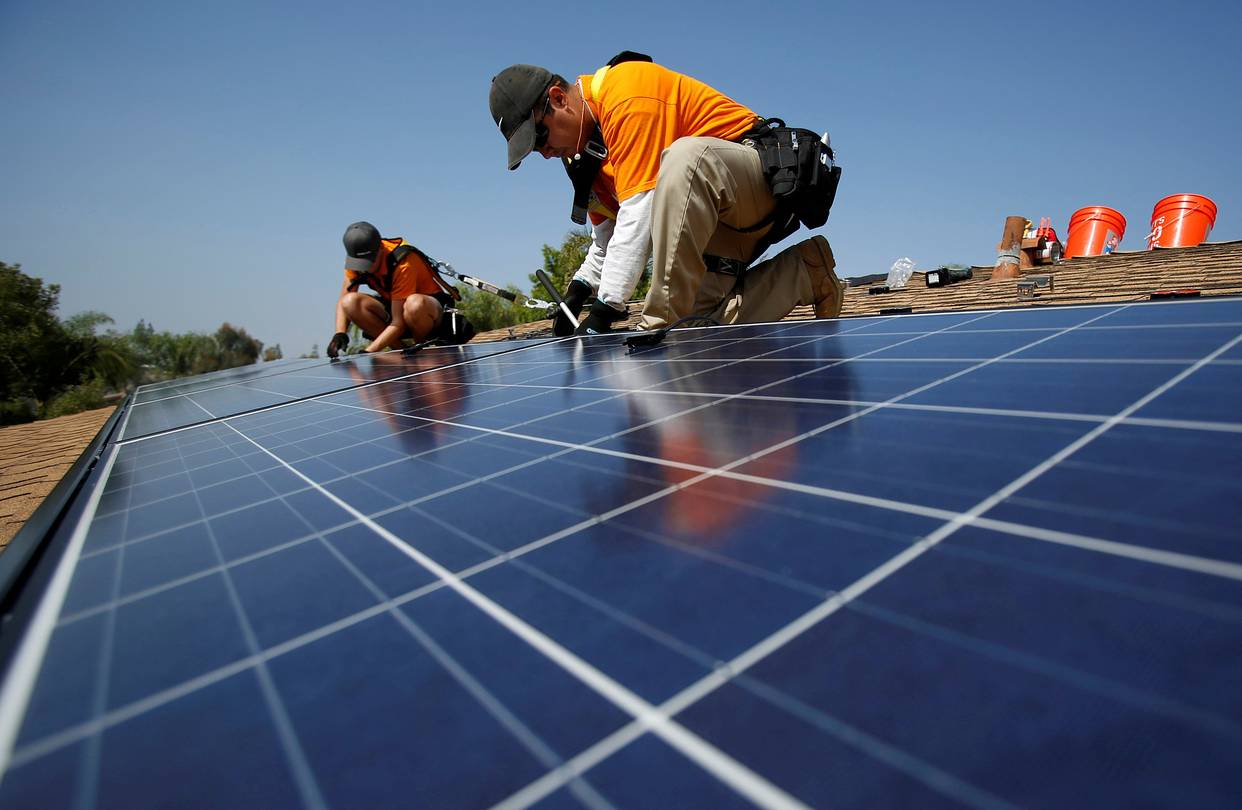
    He said that to avoid overloading the transmission grid, the Government should promote household solar panels, suitable for the low voltage grid, so that no additional investment into the transmission grid is required.

    Deputy Minister of Industry and Trade Dang Hoang An said that the ministry was directing the re-planning of local and national power development. It is assigning grid development units the task of resolving infrastructural bottlenecks to support approved solar power projects, he added.

    Solar power currently accounts for just 0.01 percent of the country’s total power output, but the government plans to increase the ratio to 3.3 percent by 2030 and 20 percent by 2050.

  • Vietnam’s wind power tariffs attractive, but concern rises

    Vietnam’s wind power tariffs attractive, but concern rises

    Vietnam’s new feed-in tariffs are attracting great interest in wind power, but investors are concerned about grid connection and purchase agreements. The new feed-in tariffs (FIT) are expected to be attractive to domestic and foreign investors, Tommaso Rovatti Studihard, South East Asia sales director for wind power developer Vestas Asia Pacific said.

    The government recently approved tariff revisions under Decision 39 on support mechanisms for the development of wind power.

    The decision, effective from November 1 this year, raises the tariffs from 7.8 US cents per kWh to 8.5 US cents for onshore and 9.8 US cents for offshore generation respectively.

    “Electricity demand will grow at an estimated 8 – 10 percent a year from now to 2030. This represents realistic opportunities for investors,” Studihard said.

    Conjecturing that the national plan envisages adding 1,000 MW of wind power by 2020 and 6,000 MW by 2030, he said the targets are achievable.

    “Vestas is excited about the Vietnamese market, probably this is the most promising market in the Asian region with very good wind resources,” he said.

    Vestas has so far put three wind power projects into operation in Vietnam and plans to have another project come online by 2019 and “do a lot more in the future.”

    Studihard noted that over the next three to five years there are huge opportunities in Vietnam to have some gigawatts of wind power, but the bankability of the power purchase agreement (PPA) remains an issue with many investors, especially international investors, and banks finding it a little difficult to be comfortable with.

    There are no clear termination and force majeure clauses in the PPA, which hinders the attraction of foreign investment, especially from banks and credit institutions, he explained.

    “One more problem is Vietnam’s weak grid capacity, which would become a bottleneck for developing wind and other renewables. The grid needs to be upgraded to tap the great potential Vietnam has for offerable, sustainable and reliable wind power.”

    Bui Van Thinh, CEO of the Thuan Binh Wind Power JSC (TBW), said having gained success in developing the 24MW Phu Lac wind power project in the central province of Binh Thuan, TBW is completing procedures to start construction of a 30MW wind power project in neighboring Ninh Thuan Province.

    But the weak grid capacity is the biggest challenge to expanding renewables like wind and solar power, he said.

    The transmission line near Phu Lac site could handle 100MW, compatible with two 50MW wind power projects.

    Overload capacity is imminent once a solar power project connects with the transmission line, Thinh noted, citing the concerning fact that there are eight solar power projects in the locality approved to connect with the grid.

    “The government should instruct the state-run Electricity of Vietnam (EVN) to install transmission lines to cope with the renewable power projects across the country, especially those in Ninh Thuan and Binh Thuan.”

    Ninh Thuan and Binh Thuan are central provinces that have the greatest potential for renewable energy in the country.

    While 2,000 MW of solar power are proposed to be generated in Ninh Thuan, the local transmission line can only handle a few hundred megawatts. Thus, 110 kV or 220 kV transmission lines need to be installed before pushing the power to the 500kV transmission line and sending it to Ho Chi Minh City or Danang City, Thinh added.

    Nguyen Van Thanh, deputy head of the Ministry of Industry and Trade’s Electricity and Renewable Energy Authority, said demand for energy, wind power in particular, has been growing rapidly.

    The need for ensuring energy security but also sustainable development has changed Vietnam from an energy seller to buyer, with the country’s dependence on imported energy sources also rising, he said.

    Vietnam also faces a shortage of primary energy, with coal imports posing many risks related to supply, price and transportation, he noted.

    “Given that, efficient exploitation of new and renewable sources would play a key role in the country’s socio-economic development, energy security and sustainable development.

    “The country is working diligently to draft policies for the efficient and economical use of energy, diversification of energy sources and increasing application of new and eco-friendly technologies,” Thanh added.

    Under the revised Power Development Plan VII, power stations in the country are expected to generate a total of 60,000 MW by 2020. Of these, coal-fired stations would make the largest proportion of 42.7 percent, followed by hydropower (30.1 percent), gas-fired plants (14.9 percent) and renewable energy sources (9.9 percent).

    By 2030, the total capacity would soar to 129,500 MW, with coal and gas-fired plants accounting for 42.6 percent and 14.7 percent respectively, similar to the figures set for 2020. But the ratio of renewable energy sources is set to double to 21 percent by then.

  • Renewable project facing criticism in Korea

    Renewable project facing criticism in Korea

    The government’s plan to build a renewable energy complex at Saemangeum, North Jeolla, is generating controversy as it deviates from plans to develop the reclaimed tidal flat into a regional economic hub and is being pursued without public approval.

    The controversy flared up as President Moon Jae-in announced Tuesday that the government will construct a solar and wind energy complex at Saemangeum.

    The government argues that around 10 trillion won ($8.7 billion) in private investment will flow into the project and that two million workers will be employed annually in the building of the facility.

    Despite the optimistic forecasts, the move is being criticized as an abrupt policy shift.

    When President Moon Jae-in visited Saemangeum last year, he mentioned developing the area into an economic hub for the Yellow Sea region but said nothing of solar or wind power. Opposition lawmakers have raised concerns about the projects.

    “The government’s plan to make Saemangeum, previously touted to be developed into an economic center for the Yellow Sea, into a mecca of renewable energy means a policy change,” said Chung Dong-young, a lawmaker for the Jeolla-based Party for Democracy and Peace. “This is the same as abandoning plans to expedite the development of Saemangeum.”

    The Party for Democracy and Peace, with 14 lawmakers from the Honam region, is especially angry about being bypassed.

    In light of such concerns, the government has explained that plans for Saemangeum’s renewable energy complex, which will cover an area comparable to the size of four nuclear power plants, will not interfere with existing initiatives.

    “The government’s determination to develop Saemangeum into an economic hub of the Yellow Sea area remains unchanged,” Minister of Land, Infrastructure and Transport Kim Hyun-mee said during the annual audit by lawmakers on Monday.

    A spokesman for the state-run Saemangeum Development and Investment Agency explained that it was not the right time for consultations with local residents and the general public.

    “Taking comments from local residents is done during the construction approval process. We are not yet at the development stage, so we haven’t asked for [comments], but we are obviously planning to do so,” he said.

    Opposition lawmakers and energy experts are suspicious that the plans for Saemangeum were changed to accommodate the Moon administration’s pledge to reduce nuclear power dependency.

    The new Saemangeum initiative is part of the government’s 3020 renewable energy plan, which established a renewable target of 20 percent by 2030. With current renewable energy output at just 8 percent of the total, the government is in need of more solar and wind power plants.

    “[The government] seems to be developing Saemangeum as there aren’t vast plots of land in the country suitable for solar or wind power complexes,” said a professor of nuclear energy who requested anonymity.

    Questions regarding the feasibility of the energy project have also been raised.

    “The electrical output produced by the energy complex will be little, at around 60 percent of a nuclear power plant,” said Kim Sam-hwa, a lawmaker for minor opposition Bareunmirae Party. “If it means building six-tenths of a nuclear power plant by spending 10 trillion won, wouldn’t it just be better to continue operating the Wolsong 1 plant?”

    Wolsong 1 is a nuclear plant set to be decommissioned.

    At the moment, renewable energy is less economical when compared with nuclear energy, explained Roh Dong-seok, a senior researcher at the Korea Energy Economics Institute. As the efficiency rate for solar power is about 15 percent, the actual production output of solar power plants is much lower than their rated capacity.

    The government’s promise to return the plots of land to their original state after operating solar and wind power plants at the location for 20 years is in doubt as the energy produced will have to be replaced.

    Local residents remain divided over the new project.

    “Even if it’s a government project, I can’t accept something that is pushed without prior notice,” said Ko Yoon-seok, a local leader of a town adjacent to the tidal flat. “There isn’t enough information to determine whether it’s right or wrong, but it’s difficult to say that everyone is against it.”

  • Malaysia to have ore renewable energy projects in near term

    Malaysia to have ore renewable energy projects in near term

    More renewable energy (RE) projects are expected to come up for bids in the near term as the new Energy, Green Technology, Science, Climate Change and Environment Ministry is committed to push up the nation’s RE capacity.

    MIDF Research, which recently attended the Minister Yeo Bee Yin’s maiden townhall, said the latter pointed that the country already attains abundant reserve capacity of 30%, which is much higher than most countries.

    “While there is no indication of an ideal or target reserve capacity, the new Minister indicated that the abundant reserve capacity gives the industry decent time to build up its RE capacity within the next three to seven years, without the need for much more major new plant-ups in the near-term.

    “This suggests in the near future, sector opportunities could tilt heavily towards RE project awards and a dearth of future fossil fuel plants,” the research firm said in its report last Friday.

    MIDF added that the ministry aims to reduce the reliance on imported fuel by aggressively increasing the RE contribution to the mix from just 2% currently to 20% “in the future”.

    It said the push for RE is not entirely new and efforts had been taken previously to increase RE contribution to the system such as the Large Scale Solar (LSS) projects.

    “Solar accounts for the bulk of Malaysia’s RE. However, there is the issue of getting RE sources to reach grid parity for it to be cost competitive and gain a larger share of generation mix without burdening end-consumers,” it said.

    MIDF also noted that given the indication of excessive reserve capacity, the pace of any major plant-ups in the near-term is likely to be impacted.

    It added that although the new Minister’s intention is to champion RE, it opined that the shift is for RE to eventually dilute contribution from fossil fuel rather than near-term, outright replacement.

    “There is the issue of feasibility to induce RE in a big way into the system too which will have to be sorted out,” it added.

    Positively, MIDF said that most of the incumbent players such as Tenaga Nasional Bhd (TNB) and Malakoff Corp Bhd are already paving way into the RE space (in particular, solar), while Cypark has been moving aggressively into RE in recent years.

    Meanwhile, the research house also highlighted that the four Independent Power Producer (IPP) projects cancellations are likely to hit selective players, the majority of which are likely to be non-listed.

    “Among the major projects in the pipeline, we think Edra’s Track 4B with a massive 2242MW capacity in Malacca could come under scrutiny given that it was a directly awarded project.”

    “While Track 4A (TNB-SIPP) was a controversial project awarded on a directly negotiated basis (previously to the TNB-YTL-SIPP consortium) back in 2014, the project is already well underway (28% completion),” it said, noting that Tadmax is another directly negotiated power plant project at Pulau Indah.

    MIDF said, others might involve LSS project awards such as Quantum Solar which was the first to be awarded LSS projects under the LSS initiative on a direct award basis.

    “Ranhill was recently awarded a 300MW CCGT project in Sandakan Sabah. There has yet to be any development announced on the project so far,” it added.

    Nonetheless, MIDF said it remained positive on the power sector while its top pick include TNB and YTL Power.

  • Southeast Asia’s largest solar project to be built in Vietnam

    Southeast Asia’s largest solar project to be built in Vietnam

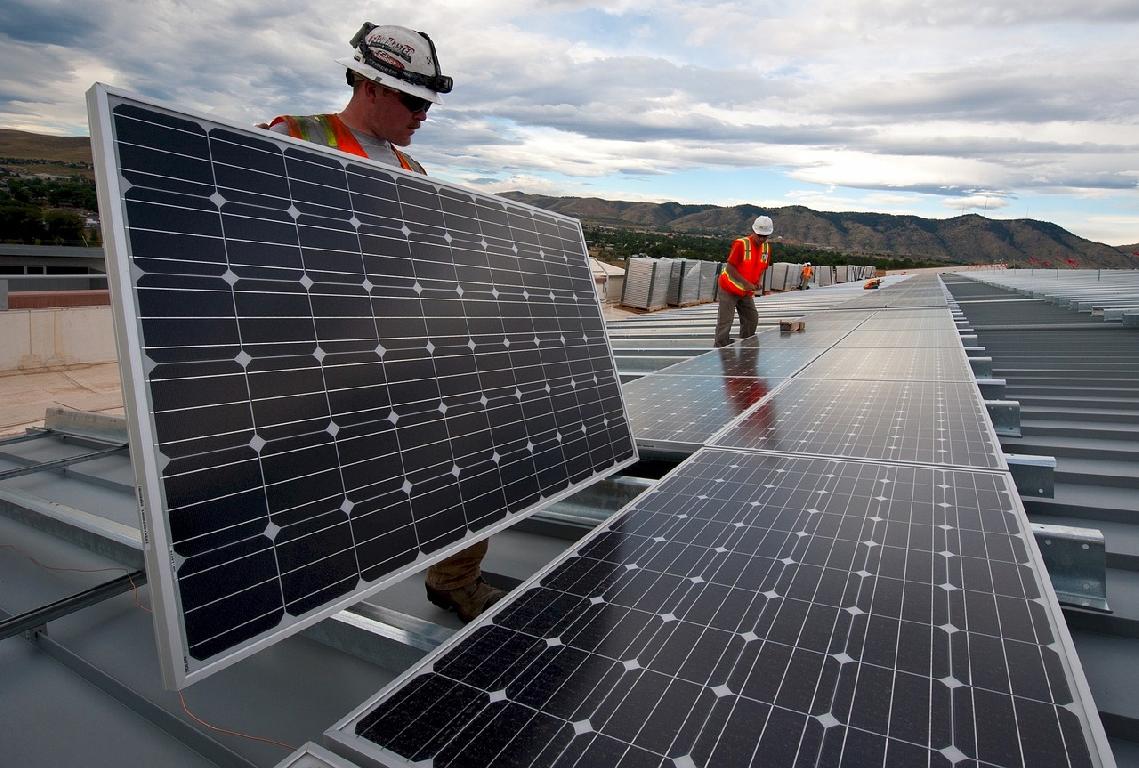
    Vietnamese construction firm Xuan Cau and Thailand conglomerate B.Grimm have teamed up to build Southeast Asia’s largest solar power plant in Tay Ninh Province.

    The signing of the joint venture agreement in Bangkok was witnessed by the prime ministers of both countries.

    The $420 million, 420MW project is set to be commissioned in June 2019, said Preeyanart Soontornwata, CEO of the B.Grimm Power Public Company.

    With Vietnam’s electricity demand growing significantly, B.Grimm estimates that the project will eventually account for 30 percent the company’s total income.

    Solar power currently accounts for 0.01 percent of the country’s total power output, but the government plans to increase the ratio to 3.3 percent by 2030 and 20 percent by 2050.

    Vietnam depends largely on hydropower and thermal power plants for its electricity demands, but the projects have often drawn criticism from both local and international communities due to environmental concerns.

    Vietnam is aiming to produce 10.7 percent of its electricity through renewable energy by 2030, mainly through solar and wind energy.

    Earlier this month, Prime Minister Nguyen Xuan Phuc said that Vietnam aimed to increase the number of households using solar energy from the current 4.3 percent to 26 percent by 2030.

  • Vietnam’s renewable energy yet to get wind in its sails

    Vietnam’s renewable energy yet to get wind in its sails

    Vietnam is far away from realizing its short and medium term wind power goals, with no ready solution in sight to several impediments, experts say.

    They said at a recent conference on wind energy development in Vietnam that high interest rates, low selling prices and inadequate power purchase agreements from the investors’ point of view were major stumbling blocks to realizing set targets.

    Vietnam plans to produce 800 megawatts of wind energy by 2020 and 6,000 megawatts by 2030.

    However, the country has just 7 functioning wind energy projects with a total capacity of 190 megawatts, noted Nguyen Van Thanh from the Ministry of Industry and Trade.

    Tran Vinh Thong, technical officer for wind energy firm Thuan Binh, which is currently investing in the Phu Lac wind energy project in southern Binh Thuan Province, said the project’s initial cost was VND1.1 trillion ($49 million) and it generated an annual revenue of about VND100 billion, of which VND70-80 billion goes for just interest payments.

    “We only have VND20-30 billion left each year to pay our employees’ salaries and meet maintenance costs,” he said.

    Low electricity selling prices are also an issue, Thong added.

    Currently, electricity derived from wind energy costs about 7.8 cents per kilowatt per hour. At this price, the Phu Lac wind energy project would need 14 years to recoup its initial cost, while a typical wind energy project only lasts 20 years before it is replaced as maintenance costs soar, he said.

    Meanwhile, the buying price for wind power is 20 cents in Thailand, 29 cents in the Philippines and 30 cents in Japan.

    However, disadvantageous power purchase agreements remain the biggest obstacle to grow Vietnam’s wind energy industry, said Bui Vinh Thang, business development officer for Irish sustainable energy firm Mainstream.

    Currently, businesses in Vietnam who want to produce electricity can only sell their output to national distributor Vietnam Electricity Corporation (EVN), which has a monopoly on the service. Worse still, EVN can cancel the power purchase agreement at any time, regardless of the time agreed upon in the contract.

    “That is too much of a risk,” Thang said.

    Moreover, EVN unilaterally gets to temporarily suspend electricity distribution for energy grid maintenance should it deems necessary to do so.

    “During the time electricity distribution is temporarily suspended, we don’t make any money. And EVN doesn’t have to reimburse us at all,” Thang said.

    Last year, the Ministry of Industry and Trade proposed an increase in selling prices for wind energy. Land and sea projects would have their selling prices increased to 8.77 and 9.95 cents per kilowatt per hour, respectively.

    Vietnam is trying to generate enough energy to sustain the country’s growth and connect those who still do not have access to power, while gradually shifting towards clean and low-carbon energy.

    It aims to produce 10.7 percent of its total electricity through renewable energy by 2030, mainly through solar and wind sources.