Tag: renting

  • Hundreds queue to buy social housing in Hanoi

    Hundreds queue to buy social housing in Hanoi

    At a building in Hanoi’s Cau Giay District on Wednesday evening, many queued up outside to register to buy an apartment at NHS Trung Van, a new social housing project that has been available since the end of March.

    The project is being built on a 2,700-square-meter area in Nam Tu Liem. When completed it will have 32 floors and two underground levels, with 275 apartments, in which 225 are social housing units

    The developer of the project, NHS, has received over 1,000 registrations since March 28. It had been accepting only 40 registrations each day, with the figure rising to 70 in the last few days due to high demand.

    Nguyen Tuan Long from Ha Dong District said: “I have been waiting for four days but still I have not been called to submit documents. I don’t know if I will be on the buyers’ list.”

    A NHS employee calls out the names of the people who register once every three hours to check if anyone has left. If someone does not respond after three calls they are removed from the list.

    Some people came to register after finishing their work day. Lien in Hoang Mai District said: “I have been coming here every day for the last four days. Some days I was not quick enough to be in the queue and had to leave.”

    A social housing apartment is legally required to only be sold to those on low incomes, though there have been reports of the middle-classes buying them.

    At NHS Trung Van, apartments are sold from VND19.5 million ($831) per square meter, substantially lower than an average project in Hanoi. The smallest apartment is priced at VND1.39 billion (nearly US$60,000).

  • Peer-to-peer rental marketplace MyRent launched in Singapore

    Peer-to-peer rental marketplace MyRent launched in Singapore

    Singapore’s first peer-to-peer on-demand rental marketplace MyRent has launched.

    The site allows Singaporeans to rent items including photographic and sporting equipment, seasonal apparel and video games. After a beta trial, it already has more than 2000 registered users with 800 active listings.

    “The idea behind MyRent is to allow users to own experiences instead of things,” said

    Ishwar Dhanuka, MyRent co-founder and CEO.

    “We want to decentralize ownership, and create a win-win for both listers and renters — where the former can earn money by renting what they own and rarely use, while the latter can rent a product without actually having to pay the full amount to use it.”

    With MyRent, customers can rent a piece of equipment without any deposit.

    The platform has built its own app, available for both iOS and Android users.

    According to a study jointly published by Google and Temasek, Singapore’s e-commerce market is valued at more than US$1 billion but is projected to soar to $5.4 billion by 2025.

    Peer-to-peer retail platforms have gained popularity in the industry, with platforms such as MyRent shifting focus towards providing consumers with experience versus the traditional ownership of goods.

    After Singapore, MyRent is eyeing expansion into Malaysia by the end of this year. It is also exploring merchant partnerships to help stores rent out unused inventory and ecosystem partnerships – such as in insurance and logistics.

  • Singapore’s First On-Demand Rental Marketplace ‘MyRent’ Launches

    Singapore’s First On-Demand Rental Marketplace ‘MyRent’ Launches

    MyRent, Singapore’s first peer-to-peer on-demand rental marketplace, has formally launched. MyRent allows Singaporeans to rent items including photography and sporting equipment to seasonal apparel and video games. For Singaporean consumers, you can now, for the first time, rent a Canon EOS 550D for as low as S$5 / day; a DJI Spark Drone for S$6 / day; a Nintendo Switch for S$8 / day and Ski Jackets for as low as $5 / day — these are just some of the current listings on MyRent. Meanwhile, Singaporeans can now avail of a safe rental platform and build up a community of sharing with the security of Lender Protection Guarantee.

    MyRent has been developed to address a shift in consumer behaviour, with an increasing number of people opting to rent items and engage in a sharing economy — rather than purchasing products for their own use. Since its soft launch in December 2018, MyRent now has more than 2,000 registered users in Singapore alone, with over 800 active listings.

    Ishwar Dhanuka, CEO and Co-founder of MyRent said: “The idea behind MyRent is to primarily allow users to own experiences instead of things. We want to decentralize ownership, and create a win-win for both listers and renters — where the former can earn money by renting what they own and rarely use, while the latter can rent a product without actually having to pay the full amount to use it. Simply put, why buy something when you can rent it?”

    According to a study jointly published by Google and Temasek, Singapore’s e-commerce market is valued at over US$1 billion. Of this, online shopping comprised 2.1 percent of all retail sales in 2015, but is projected to soar to US$5.4 billion by 2025. Meanwhile, peer-to-peer retail platforms have gained popularity in the industry, with platforms like MyRent shifting focus towards providing consumers with experience versus the traditional ownership of goods. With evolving consumer spending habits and increasing awareness of sustainability, Singaporeans are less likely to purchase seasonal one-off items for a quick getaway or a new hobby. MyRent has a good opportunity to capitalize on the Singapore market, with over 4 million people using e-commerce to purchase products.

    “Imagine being able to get the latest GoPro for all your vacations without being dragged down by huge upfront costs,” said Ishwar. “By purchasing an item, you’re essentially signing a long-term contract for using it. With short-term rentals, you get the flexibility of using the latest technologies and paying only per use!”

    “MyRent is currently the most affordable and efficient platform for me. Before I joined, customers would only come across my website by using search engines, so partnering with this rental platform has afforded me increased exposure,” said Maureen Knight, who rents out winter wear on MyRent.

    Sean Eng, a merchant who uses the rental platform, said: “Before our partnership with MyRent, customers had to pay a deposit to rent one of our GoPros for their holidays — which they were hesitant to do. With MyRent, we’ve now been able to get rid of the deposit requirement, so customers are happier and more than willing to rent with us via this platform.”

    “Tennis rackets usually retail for more than $200, so I worry about losing these items when I rent them out,” said Wayne Ko, who used to rent his items from a consumer marketplace. “I’m glad I switched to MyRent, because with their Lender Protection Guarantee, I know that I’m covered in case something happens to one of my rackets.”

    To be a mobile-first marketplace that gives both listers and renters convenience and on-the-go accessibility, MyRent is focused on being accessible everywhere — either via their web portal, or through a dedicated app that is available for both iOS and Android users. To further add to a seamless experience, MyRent is working on reducing the time it takes to list items on their platform, to less than a minute. It is the brainchild of three co-founders, each with their own experiences of growing and working in a variety of startups, including companies such as Funding Societies, and PropertyGuru.

    MyRent plans to make its peer-to-peer rental platform available in more markets, with a Malaysian release date slated for end-2019. It is also exploring merchant partnerships to help stores rent out unused inventory, and ecosystem partnerships (insurance, logistics sector), and is looking into the possibility of adding a delivery option in the future.



  • Canon Australia launches Renting Service for cameras

    Canon Australia launches Renting Service for cameras

    A picture may be worth a thousand words, but in terms of actual dollars, it could be worth many times that, once you consider the cost of all but the most entry-level DSLR cameras, lenses and other accessories. But now, a hefty price tag need not be an obstacle for budding photographers, thanks to a new sharing platform launched by Canon Australia on Tuesday. The platform, called Kyōyū, the Japanese word for “share”, aims to be the Airbnb for Canon cameras and accessories. Camera owners can use it to rent out their gear and get a return on their investment, and would-be owners can use it to borrow or try out items without needing to buy them outright.

    “At Canon, we believe in constantly innovating to create the ultimate user experience,” Jason McLean, Canon Australia’s director of consumer imaging, said in a statement.

    “We don’t want ownership to be the only reason to experience our goods and services,” he said.

    The platform was created in partnership with design agency, The Diner, and has been in the works for over a year.

    According to McLean, Kyōyū is an extension of the brand’s long-held goal of building a community of passionate photographers, which saw it launch the Canon Collective in 2013 to bring like-minded people together for workshops and other events, and open its first experience centre in Melbourne in 2018.

    “For years, we’ve been looking at our brand and how can we do more with the products people buy. We created Canon Collective and opened the experience centre for that reason, and this is the next evolution of that,” he said. 

    The concept is currently exclusive to Australia, but McLean said it could be rolled out in other markets if it proves successful.

    More than 230 members have already signed up to the platform, primarily across Sydney, Melbourne and Brisbane, and the company aims to have 1500 registered users by the end of 2019.

    Canon charges a small fee on each transaction to cover the cost of managing the platform and providing up to $15,000 of insurance on every rental.

    “One of the greatest concerns we heard through our early research was what happens if something goes wrong, if something accidentally gets damaged, or stolen,” McLean said.

    Canon has taken this same “test and learn” approach to its other offerings, such as the experience centre that opened in Melbourne last year.

    “It’s hitting the mark,” McLean said about the store, a 320sqm space where customers can touch and feel Canon’s product range without having to ask store staff to take them out of a locked cabinet.

    “Customers love the staff, they love that staff are not pushy. What we’re working on now is building awareness. It’s the best kept secret in Melbourne,” he said.

    Canon Australia will continue testing the offering in Melbourne for another six or so months before deciding whether to launch experience centres in other capital cities around Australia.

    Meanwhile, the Canon Collective has taken on a life of its own. According to McLean, nearly 50,000 people are part of a closed Facebook group, where they share advice and support one another, without needing much moderation or guidance from Canon itself.

  • Myeong-dong ranked as world’s 8th most pricey retail area

    Myeong-dong ranked as world’s 8th most pricey retail area

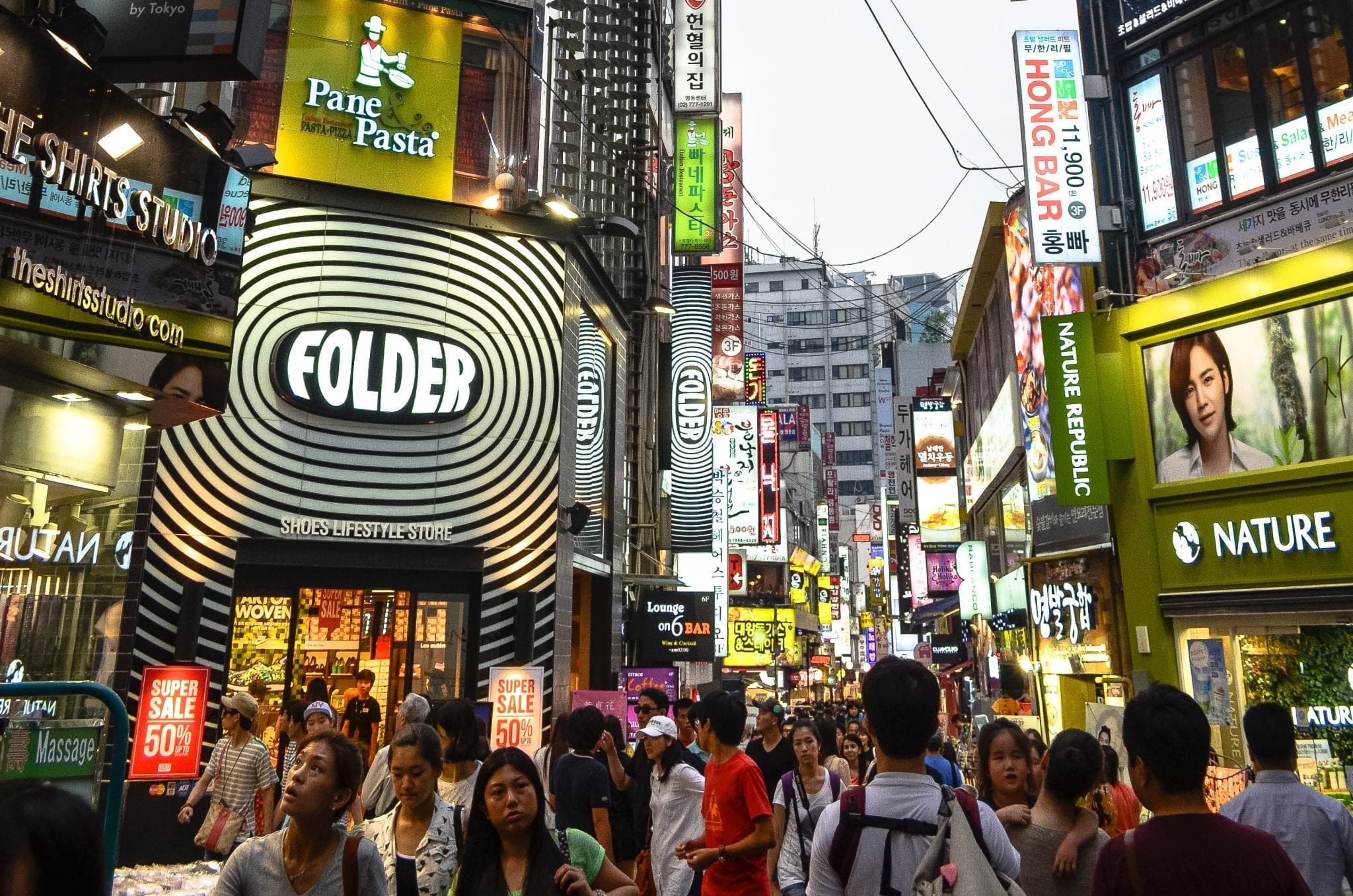
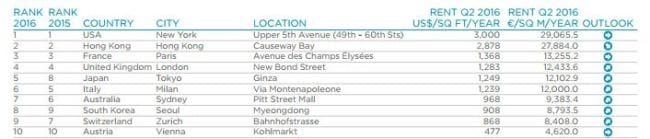
    Seoul’s Myeong-dong street was ranked the eighth most expensive retail street in the world, according to a report by real estate service company Cushman & Wakefield Thursday.

    (Cushman & Wakefield)

    Cushman & Wakefield’s “Main Streets Across the World 2016/2017” priced real estate in Seoul’s shopping district Myeong-dong at $908 per square foot (0.093 square meter) per year, with an outlook to further rise. Although consumers in South Korea are increasingly turning online for shopping, the report said the “inflow of Chinese tourists” is supporting the demand for shop units.

    Other major shopping streets noted in Korea were around Gangnam Station and Garosu-gil, as well as the trendy Hongdae district.

    The Nature Republic cosmetics store in Myeong-dong has been the most expensive plot of real estate in Korea for the past 12 years, according to the Ministry of Land, Infrastructure and Transport this year.

    According to the Cushman & Wakefield report, the most expensive shopping district in Asia is Hong Kong’s Causeway Bay at $2,878 per square foot, followed by Japan’s Tokyo Ginza district at $1,249. The most expensive shopping street in the world is Upper 5th Avenue in New York City, at $3,000 per square foot.

  • Ho Chi Minh City is the second most expensive retail location in Southeast Asia

    Ho Chi Minh City is the second most expensive retail location in Southeast Asia

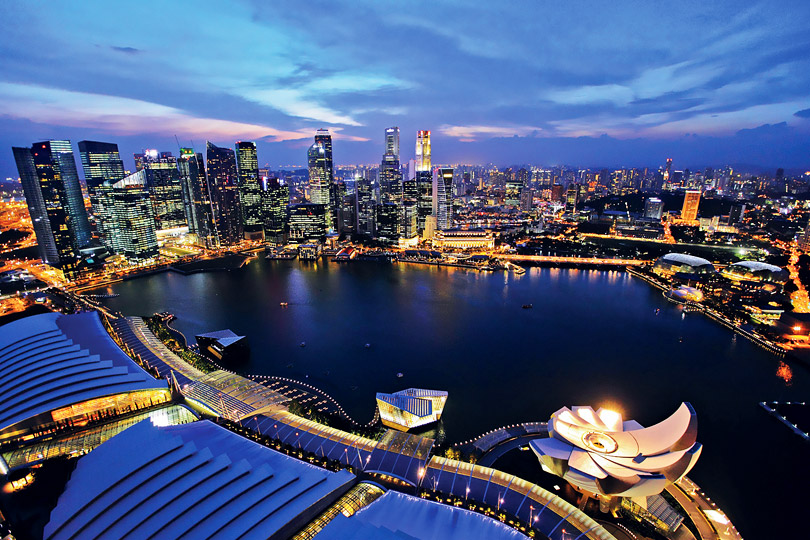
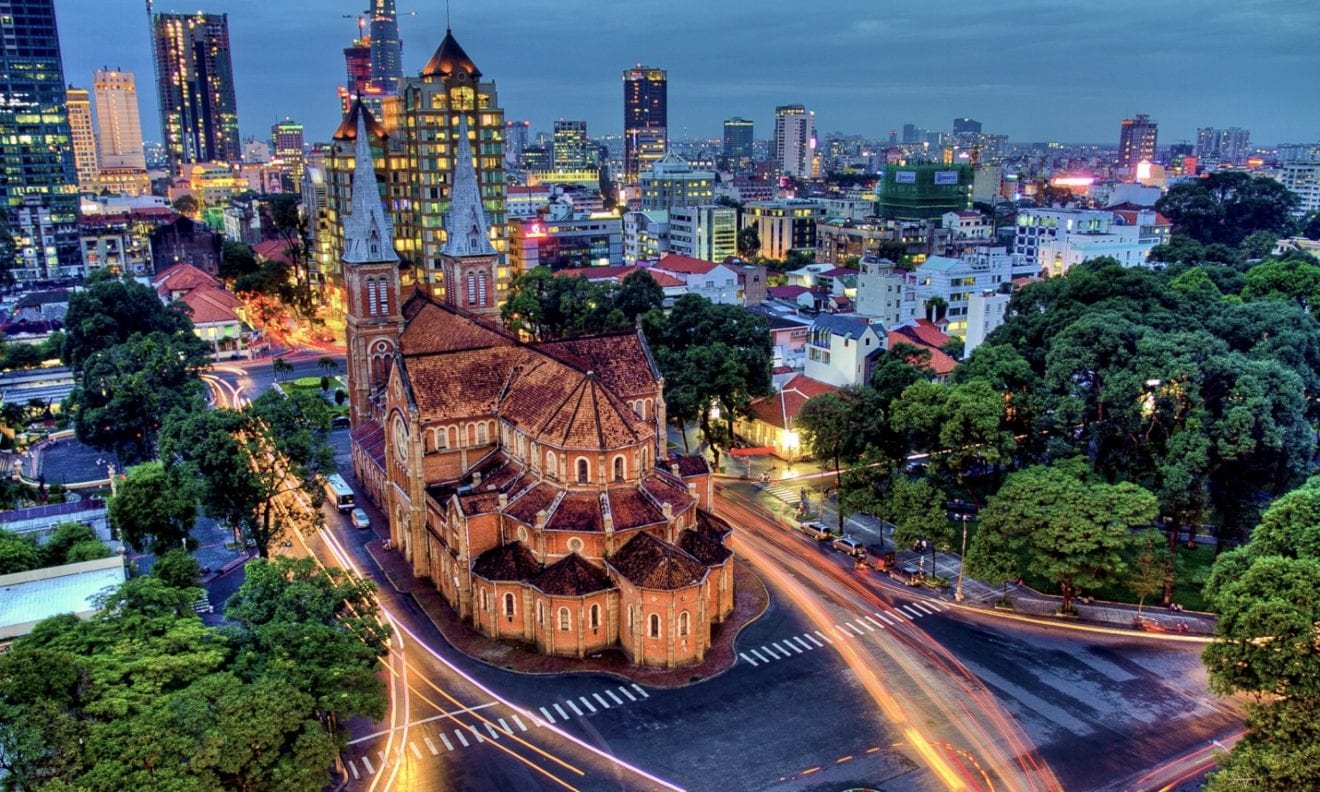
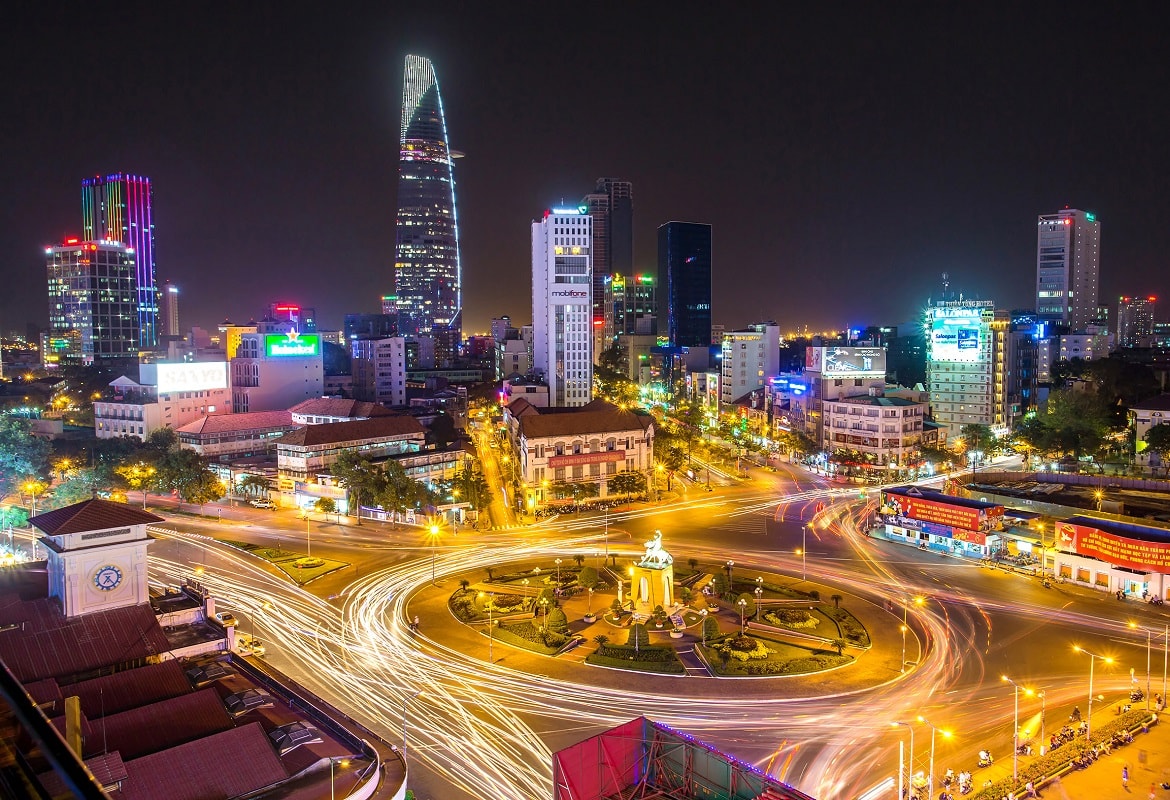
    A downtown spot costs $150 a square feet a year, even more than prime locations in Bangkok. A global property survey has named Ho Chi Minh City downtown as one of the most expensive retail locations worldwide.

    The southern metropolis, which is the largest commercial center in Vietnam, ranks 32 out of 65 cities featured in the latest version of Cushman & Wakefield’s annual research “Main Streets Across the World.”

    Locations on a “prime high street” in the city, such as Le Loi, Nguyen Hue or Dong Khoi, cost an average of US$150 a square feet a year. In Southeast Asia, that rate is after Singapore’s $336.8.

    That compares to $125.4 in Bangkok, $111.3 in Kuala Lumpur and only $56.4 in Metro Manila.

    It is equal to the rent in Israel’s Tel Aviv, whose GDP per capital in 2014 was $42,614 and more than eight times that of Ho Chi Minh City.

    The world’s most expensive road, according to the research, is Upper 5th Avenue in New York, followed by main streets in Hong Kong, Paris and London.

    Streets in Tokyo and Seoul are also in the top ten.