Tag: rents

  • Singapore rents dip, says DTZ Research

    Singapore rents dip, says DTZ Research

    First-storey rents throughout SIngapore have fallen by 1.2 per cent to about $30.50 a square foot, according to the DTZ Research South-east Asia fourth-quarter report on the retail sector.

    This is the third consecutive decline since the second quarter of last year, says the report, released today. For the whole of 2015, average first-storey rents fell at a faster pace (5.9 per cent) compared to the 0.3 per cent decline the previous year. The fall was mainly attributed to weakened consumer sentiments amid uncertain global economic conditions.

    Orchard Road rents were the most resilient. Average first-storey rents in Orchard and Scotts Roads saw a more gentle decline than other areas, falling by 1 per cent quarter-on-quarter and 5 per cent year on year to $38.05 a sq ft in the fourth quarter. The Orchard/Scotts Road rates were buoyant because of the likelihood of no new completions for the next four years. Only pockets of new retail spaces will be added through asset enhancement initiatives and other mixed-use projects.

    Average first-storey rents in suburban areas were relatively resilient, says the report, dipping by 1.2 per cent q-o-q and 5.7 per cent y-o-y to $30.70 a sq ft in the same period. In contrast, average first-storey rents in the other city areas had a greater decline – 1.4 per cent and 6.9 per cent to about $21.80 a sq ft, mainly because of the dependence on the weekday office crowd for sales volume.

    Although islandwide rental values have softened over the past year, occupancy rates stayed healthy for the first three quarters of last year as landlords become more flexible. In fact, according to the latest Urban Redevelopment Authority statistics, overall retail occupancy inched up 0.3 per cent to 92.1 per cent in the third quarter. Occupancy rates in Orchard/Scotts Road were unchanged at 92 per cent q-o-q in Q3, while rates edged up in the other city and suburban areas by 0.6 per cent q-o-q and 0.1 per cent y-o-y to 90.6 and 93.1 per cent respectively.

    Looking forward, says the DTZ report, expected completions this year coupled with consumer sentiment are expected to exert further downward pressure on rental values, especially in the other city areas. About 743,000 sq ft of net lettable area (NLA) of retail space (or 60 per cent of the 1.2 million sq ft of NLA in this year’s pipeline) will be added to the existing stock of retail space in other city areas. This is more than double the annual net demand (302,000 sq ft) for retail space in other city areas between 2009 and 2014. Retail developments heading for completion in the other city areas include OUE Downtown Gallery, The Heart at Marina One and Tanjong Pagar Centre, each a mixed-use development comprising more than 100,000 sq ft of retail NLA.

    “While the pending completions will pressure retail rents in other city areas to fall, the decline is likely to be temporary,” says DTZ director of research Dr Lee Nai Jia. “We anticipate retail rents will recover when the residential components in the mixed-use developments receive their temporary occupation permits. The increase in resident population in the other city areas will support the retail trade.”

    Despite many retail completions lined up for the new year, 2015 also saw the exit of such brands as Goods of Desire, Lowrys Farm and M)phosis because of the challenging operating environment within the retail sector. Additionally, big players like Isetan, FJ Benjamin and Metro also reported disappointing sales figures in the same period. In a bid to revitalise the retail scene, landlords have collaborated with online retailers such as Zalora and Love Bonito via pop-up stores to reignite consumer interest. During the year, brick-and-mortar retailers extended their market outreach by adopting omnichannel marketing amid competition from e-commerce.

    “With the softer market, landlords have certainly become more open to exploring new retail concepts,” says DTZ director of retail Anna Lee. “As landlords become more flexible, brick-and-mortar retailers have more leeway to experiment with new retail offerings to improve the overall shopping experience.”

    Anna Lee cites the launch of Café&Meal Muji in September at Paragon, next to its Muji store. After opening the F&B outlet, Muji recorded a y-o-y increase of about 40 per cent in its store sales. At the same time, lifestyle concept store Latulle also introduced a full-service cafe.
  • Retail property sales climb in two main cities, but not rents

    Retail property sales climb in two main cities, but not rents

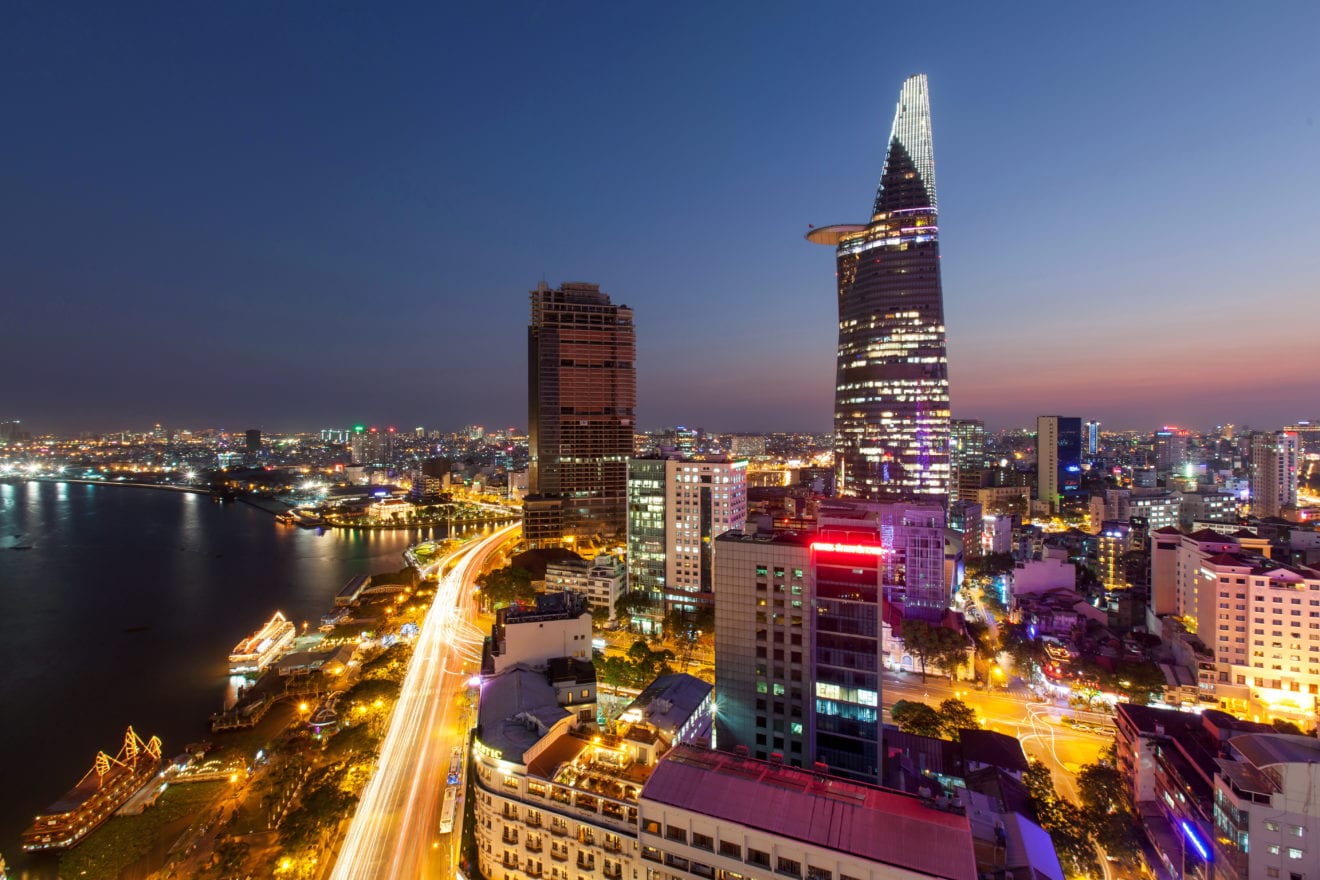
    The retail property segment in the two major cities of Ha Noi and HCM City saw recovery in occupancy but not in rent, Savills Viet Nam said.

    In its quarterly report on the two cities, the consulting firm said in Ha Noi, the occupancy was 84 per cent, stable quarter-on-quarter (q-o-q) and up 7.2 percentage points year-on-year (y-o-y). Meanwhile, the average rent was VND841,000 (US$38.7) per sq.m per month, decreasing 0.9 per cent q-o-q and 10 per cent y-o-y.

    Department store occupancy increased by one percentage point q-o-q, while shopping centre occupancy remained stable q-o-q. In the first half of 2015, Ha Noi’s retail sales were approximately VND210 trillion ($9.63 billion), increasing 10.3 per cent y-o-y.

    Without inflation, the real growth rate was 9.6 per cent y-o-y. With free-trade agreement participation and the expected signing of the Trans-Pacific Partnership in 2015, the competition between domestic and foreign retailers would continue, Savills Viet Nam said.

    In the second quarter, Ha Noi’s retail supply was approximately 950,000sq.m, increasing by 3 per cent y-o-y.

    In the second half of this year, approximately 353,000sq.m from 16 projects will enter the market. Two notable projects are Vincom Nguyen Chi Thanh and Aeon Mall Long Bien, which will provide more than 165,000sq.m. Meanwhile, the retail property segment in HCM City showed positive signs in the year’s second quarter, with average occupancy rising by seven percentage points to reach 92 per cent, Savills Viet Nam said.

    The average rent decreased by one per cent q-o-q to touch VND1.3 million ($59) per square metre per month. Shopping malls and department stores’ occupancy rates have been stable since the previous quarter at 92 per cent and 97 per cent, respectively.

    Department stores

    Retail podium occupancy was at 82 per cent, down two percentage points q-o-q, but this decrease had no impact on the overall occupancy.

    The average rent for department stores increased by one per cent to reach more than VND1.3 million, while it fell by two per cent to touch VND1.33 million in shopping malls.

    The rent for department stores increased by three per cent year-on-year, but decreased by two per cent in shopping centres and retail podiums.

    In the first half of the year, HCM City retail sales increased by 11.8 per cent y-o-y to touch VND256 trillion ($11.75 billion), significantly higher than the 7.7 per cent rate a year earlier and higher than the national figure of 10.2 per cent.

    The growing population and middle class in HCM City are driving the growth in retail demand.

    In Q2, two new shopping malls and one new supermarket entered the market, increasing the total retail stock by five per cent q-o-q to reach 940,000sq.m.

    The retail market is expected to expand faster in secondary and suburban areas than in the central business district due to upgrades in infrastructure and new residential projects.

    According to the second report in the series, Asia Pacific Consumer Survey – How We Like to Shop Online, released last week by CBRE, online shopping has overtaken bricks-and-mortar retail as the most popular method of purchase in certain Asian markets.

    Consumers in the 18-24 age group — known as ‘Generation Z’ — are also set to play an influential role in the regional retail market in the coming years. As a result of factors such as these, landlords and retailers would need to be proactive in order to remain competitive, the survey reported.

    “For emerging markets, given the lack of quality retail space — particularly in lower-tier cities — advances in technology and logistics networks mean that online retail is often the most efficient way for retailers to reach their customers,” Jonathan Hsu, head of Occupier Markets Research, CBRE Asia Pacific, said.

    The ability to compare products without having to physically visit individual stores is another key factor for the region’s consumers when shopping online. This trend is more prominent in emerging markets such as Viet Nam, China and India, where quality shopping centres or shops are often located far from each other.