Tag: replacement

  • SK Telecom Innovates with Streamlined SIM Replacement Process: A Step Forward for Customers!

    SK Telecom Innovates with Streamlined SIM Replacement Process: A Step Forward for Customers!

    SK Telecom is taking bold steps to engage with government authorities about lifting the ban on new subscriber registrations, as the company approaches the completion of its ambitious universal subscriber identity module (USIM) replacement initiative following a significant cyber attack. With the clock ticking, the telecom giant is eager to reassure customers and shareholders alike.

    Customer Replacement Surge

    In a significant update, SK Telecom announced that over 6.18 million customers have successfully replaced their USIMs, with an impressive 150,000 swaps completed just yesterday. This progress has slashed the number of customers still awaiting their replacements down to 3.16 million.

    Restrictions in Place

    Since May 5, SK Telecom has been operating under administrative guidance from the Ministry of Science and ICT, resulting in a total suspension of new subscriptions and number transfers across more than 2,600 T World stores and online platforms nationwide. The ministry has clarified that this limitation will remain until the backlog of USIM replacements is fully resolved.

    Facing the Deadline

    Looking ahead, SK Telecom is targeting June 20 as the date for finalizing all outstanding USIM replacements. Text messages confirming reservations will be dispatched by June 16. However, roughly 440,000 customers have not yet visited a store to complete the process after receiving their notifications. Excluding these, an estimated 2.7 million customers are still actively waiting.

    Hope on the Horizon

    With the final stages of the free USIM replacement program underway, there is optimism that the suspension on new subscriptions could soon be lifted. Lim Bong-ho, head of the MNO Business Division at SK Telecom, revealed that the company is in active discussions with the government to not only lift the restrictions but also to establish compensation mechanisms and financial support for impacted distribution partners.

    The Cost of Recovery

    The financial outlay for issuing 20 million USIMs at no charge is projected to reach around KRW 150 billion. Each unit costs KRW 7,700, coupled with distribution and handling expenses of KRW 300-400 per unit.

    Investing in Cybersecurity

    In light of the cyber attack, SK Telecom is significantly boosting its investment in network security. Ryu Jeong-hwan, head of SK Telecom’s Network Infrastructure Center, confirmed plans to enhance both funding and personnel dedicated to security efforts, with specific numbers yet to materialize depending on the ongoing investigation’s findings.

    As SK Telecom navigates this challenging landscape, the question remains: will they turn this crisis into an opportunity for growth and innovation? Only time will tell!

    Questions & Answers

    What is the current status of USIM replacements at SK Telecom? Over 6.18 million customers have replaced their USIMs, with around 3.16 million still awaiting their new ones.

    When does SK Telecom expect to lift the ban on new subscriptions? The company is hopeful that the ban will be lifted soon after they complete all pending USIM replacements, which are expected by June 20.

    What steps is SK Telecom taking to improve network security after the cyber attack? SK Telecom plans to increase its budget and personnel dedicated to network security, although specific figures are still being determined pending investigation outcomes.
  • Apple issues statement regarding third-party battery replacements for iPhones

    Apple issues statement regarding third-party battery replacements for iPhones

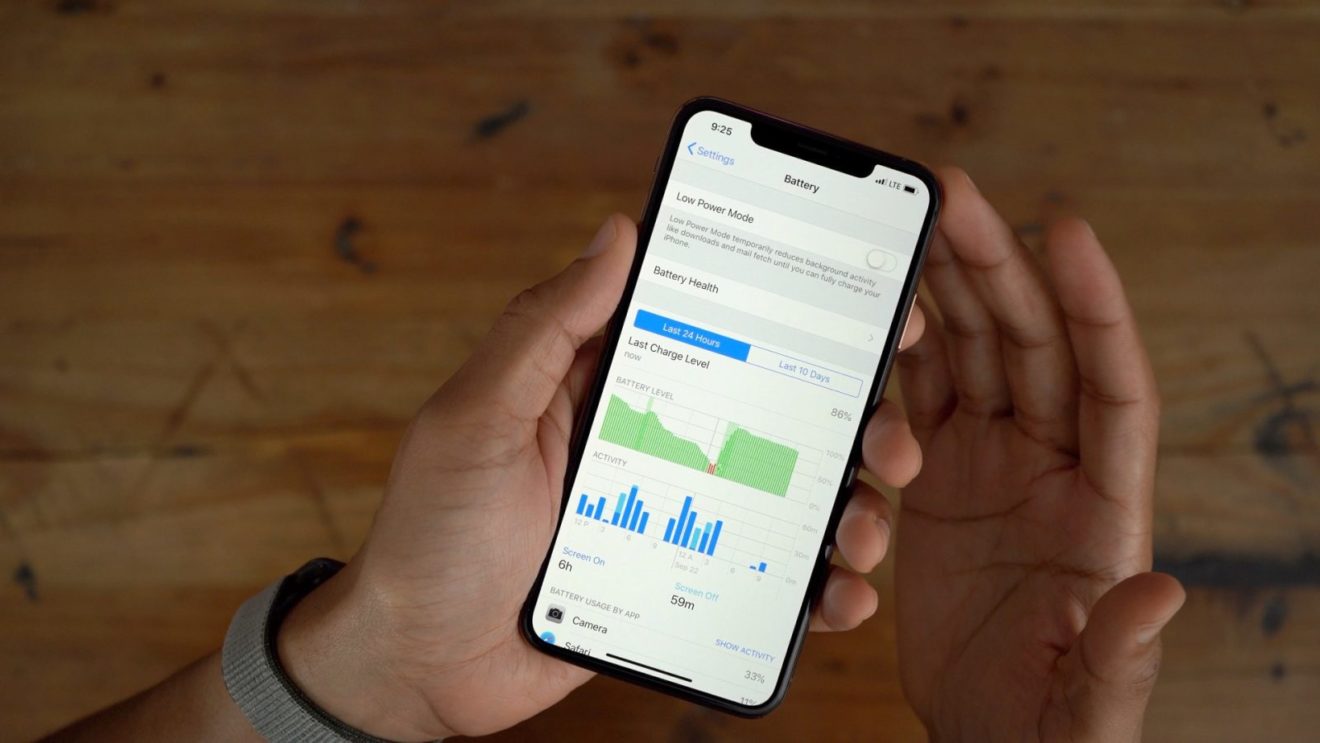
    The folks over at iFixit discovered that Apple introduced a software lock in iOS, which will prevent iPhone users from checking the health of the battery if it was replaced by an unauthorized third-party.

    Instead of showing them the health of the iPhone battery, a message would pop up that would inform them that such information is not available: “Unable to verify this iPhone has a genuine Apple battery. Health information not available for this battery.”

    Moreover, the message would pop up even if the battery would be replaced with a genuine one from another iPhone, and the reason is that the chip used in newer iPhone batteries includes an authentication feature that stores the info for pairing the battery to the phone’s logic board.

    There were so many iPhone users who voiced their disappointment about Apple’s approach that the company felt the need to issue a statement on the matter to iMore, which you can read below:

    We take the safety of our customers very seriously and want to make sure any battery replacement is done properly. There are now over 1,800 Apple authorized service providers across the United States so our customers have even more convenient access to quality repairs.Last year we introduced a new feature to notify customers if we were unable to verify that a new, genuine battery was installed by a certified technician following Apple repair processes. This information is there to help protect our customers from damaged, poor quality, or used batteries which can lead to safety or performance issues. This notification does not impact the customer’s ability to use the phone after an unauthorized repair.

    Obviously, that doesn’t solve the “issue,” but at least it sheds some light on the reasoning behind Apple’s decision to include a locking software for third-party iPhone battery replacements. Many will not like it, while others will feel Apple’s explanation is enough to quench any fears they might have had.

  • Apple’s Tim Cook has a clear replacement

    Apple’s Tim Cook has a clear replacement

    August 24th marks eight years since Steve Jobs stepped down as CEO of Apple and Tim Cook assumed the position’s full responsibilities. The company has since more than doubled its market value and sold products to millions of customers across the globe. But with growth now slowing, Bloomberg suggests a clear successor to Tim Cook has begun emerging, even though the latter is unlikely to step down anytime soon Chief Design Officer Jony Ive was often considered to be the most important person at Apple after Tim Cook. But following the announcement last month that he was departing the company to start up.

    a design studio, this position appears to have been filled by Chief Operating Officer Jeff Williams who is currently seen as the perfect Tim Cook replacement. Speaking on the condition of anonymity, many current and former colleagues described Williams as a “modest, disciplined, demanding leader in the current CEO’s style.” Since taking over the role of COO – a title once held by Tim Cook – he has prioritized operational efficiency and worked closely with suppliers across the globe. Williams has also adopted a more hands-on role when it comes to product development and schedules weekly reviews for future products to track progress and brief CEO Cook of developments. These meetings are officially called New Product Reviews but some employees now call them “Jeff Reviews.”

    The COO, just like Cook, is very good at watching and listing to other employees. He has built up the reputation of being soft-spoken but when required, Williams isn’t afraid of asking sharp questions or insisting on further improvements until Apple’s standards are met. This is especially the case when it comes to the design teams. Williams “comes from the operations side, and the metrics being applied there often have very little meaning in design.” Because of this, he isn’t always as understanding when things aren’t up to scratch, although colleagues say he doesn’t quite have the temper of Steve Jobs. Back when Apple was developing AirPods, the executive purposely continued wearing wired EarPods until he was happy with the fit of their wireless counterparts to get his point across rather than creating a storm inside the company.

    Williams currently overseers Apple’s entire supply chain, fitness and health research and app development, AppleCare customer support, and the development of all hardware products including the next-gen iPhones. Before taking over as COO, however, Williams primary focus was the first Apple Watch which quickly became his biggest test at the company. Mere months before the original’s release in April 2015, some employees testing the wearable began reporting allergic reactions to the type of nickel Apple had used. This is a common issue in the watch industry but Williams chose to scrap the thousands of devices that had already been produced in favor of restarting production from scratch with a different metal.

    Around this time, the now-COO also had to deal with another issue regarding the company’s Taptic Engine. The feature, which was a priority for Williams and allowed the Watch to vibrate more quietly than the counterpart used inside phones, was prone to corrosion which ultimately led to long-term failure. Instead of shipping the wearables, Williams decided to gift the affected models to employees and fix the issue ahead of release.

    The move led to delays and made the Apple Watch difficult to find shortly after launch. Nevertheless, it avoided potentially defective units hitting shelves and was ultimately the right move for consumers.

    Over the past few years, Apple has completely transformed the way it operates with the help of Tim Cook. Product design used to be the priority but the company’s operations team now appears to be running the show and influencing every other department. According to a former senior Apple executive, Jeff Williams is “the closest thing at the company to Tim Cook, and you’ll get more of that. If you think Cook is doing a good job, then it’s a good choice.” Another person who knows him said, “Jeff is 95% operations and 5% product.”

    This strategy has worked incredibly well for the company over the past few years but, with growth slowing, many now wonder if it’s sustainable. Michael Gartenberg, a former Apple marketing executive, believes “one doesn’t necessarily need a visionary as CEO of Apple as long as there’s a visionary in the company that the CEO can work with. had Jony Ive. The question is, with Ive gone, who is the visionary at the company that can guide the next big thing?”