Tag: research and development

  • Proya Opens 450 Square Metre Research Lab in Paris Suburb

    Proya Opens 450 Square Metre Research Lab in Paris Suburb

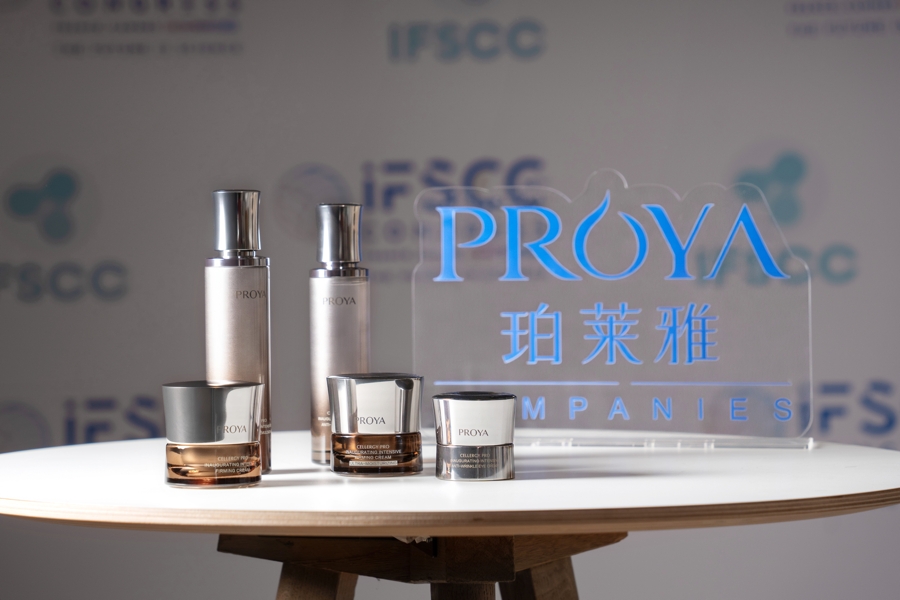
    China’s Proya Cosmetics opened a 450-square-metre research and development laboratory in Suresnes near Paris on October 13, 2026, putting seven researchers and 76 scientific instruments into service outside its domestic manufacturing base.

    The suburban Paris site links directly into formulation work at the Hangzhou-based group’s primary development hub in Longwu, feeding European biochemical research into its mass-market skincare pipelines in Asia.

    Technical operations at the French facility focus on skin biology, longevity mechanisms, biotechnology and sustainable ingredient processes. The scientific staff coordinates testing with Proya’s existing Hangzhou facility, which oversees core chemical formulations and consumer safety data, alongside a dedicated Shanghai site that handles scalp microbiome research and haircare lines.

    Targeting Active Ingredients in France

    European cosmetic science gives Chinese personal-care groups access to specialised ingredient supply chains that remain difficult to replicate domestically. Western groups like L’Oréal and Puig continue to defend their pricing power in Greater China through clinical skincare claims, forcing local brand owners to back their mass products with verifiable dermatological research rather than pure digital marketing spend.

    Setting up shop in Suresnes allows the Hangzhou company to collaborate directly with European biotechnology suppliers and academic testing houses. The facility serves as an operational extension of the broader European Innovation Centre that the group founded in France in 2024, converting regional partner agreements into physical bench testing.

    “This Europe Innovation Center Laboratory connects the European and Chinese ecosystems to draw on combined strengths and create new innovation capabilities through the interaction of scientific, cultural and consumer perspectives,” said Hou Juncheng, Founder and Chairman of Proya Cosmetics.

    Shifting Beyond Fast Digital Marketing

    Chinese beauty brands built their initial scale on quick domestic supply chains and heavy promotion across Douyin and Tmall. That model is hitting its limits as domestic consumer spending tightens and shoppers demand clinical validation before paying higher price tags for anti-ageing creams.

    By establishing physical research assets in France, Proya takes direct aim at premium international rivals that have long used European heritage to defend market share across tier-one Chinese cities. The risk for the Hangzhou group lies in execution. A team of seven researchers is a modest footprint against the thousands employed across multinational technical centres, meaning the lab must produce distinct ingredient discoveries quickly to justify the overseas overhead.

    Building Out Domestic and Foreign Hubs

    The Paris opening follows two years of corporate infrastructure work in Europe. Proya established its European Innovation Centre in France in 2024 to scout partnerships, then showed its initial collaborative work at the Cosmetics 360 trade exhibition in Paris immediately following the Suresnes opening.

    Work completed at the Suresnes laboratory will feed raw materials into clinical verification trials across Proya’s Shanghai and Hangzhou networks.

  • Estée Lauder Hits 98 Percent Regional Sourcing for Core Lines as R&D Speeds up

    Estée Lauder Hits 98 Percent Regional Sourcing for Core Lines as R&D Speeds up

    The Estée Lauder Cos. Has shifted 98 per cent of production and sourcing for its core foundation franchise to local regional hubs. The change cuts product development cycles by half.

    That setup covers high-volume lines including the Double Wear franchise. Following a reformulation, it ranked as the top makeup launch in the United States during the first half of 2026.

    Supply chain and research teams now operate across five innovation centers in Shanghai, Long Island, Toronto, Paris and Blaine, Minnesota. They work alongside nine manufacturing plants in the United States, Switzerland, England, Belgium and other markets. By shifting from a sequential stage-gate model to parallel workflows, development time for premium skincare lines like the Re-Nutriv Ultimate Diamond face oil essence fell from 30 months to 15 months. Factory floors now run on a proprietary generative artificial intelligence assistant called ELLA. The system provides historical data so line operators can reconfigure machinery without halting production runs.

    Parallel Development Across Global Hubs

    This overhaul links early ingredient discovery directly to plant-level tooling trials. Traditional cosmetics manufacturing separated research, packaging design and factory scaling into discrete stages. Estée Lauder now runs formulation and industrial scaling concurrently across its research centers and production facilities.

    In hybrid skincare and makeup categories, the group transferred oil-control technology from its skincare laboratories into foundation lines, extending wear time to 36 hours. Brand teams at MAC and The Ordinary used similar acceleration methods. Both rolled out stick formats and high-concentration serums within months of emerging ingredient trends.

    Regionalising Supply to Shield Margins

    Trade barriers and cross-border transport costs forced the group to abandon centralized production for mass-volume product lines. Sourcing and manufacturing now sit directly within the consumer markets where inventory is sold.

    For retailers and department store operators across Asia and the West, localized manufacturing reduces out-of-stock risks during demand spikes. It also cushions wholesale margins against currency swings. However, localized sourcing concentrates inventory risk in individual regional hubs, requiring precision forecasting to prevent gluts.

    Independent beauty labels in South Korea and China continue to cycle new formulations to store shelves in under six months. Established prestige operators moving research hubs closer to regional factories are attempting to match that speed without sacrificing clinical testing standards.

    Expanding Fragrance and Cross-Category Formulations

    To support higher-margin categories, the company added dedicated infrastructure, opening a fragrance atelier called La Maison des Parfums in Paris in 2025. The site develops exclusive scents for Jo Malone London, Le Labo and Kilian Paris. Formulation teams pair proprietary botanical extractions with synthetic molecules to prevent direct imitation by fast-beauty competitors.

    Brand extensions have also branched into adjacent premium consumer categories. These include pet care grooming products developed through third-party specialist partnerships.

    Parallel working means we’re going faster in identifying ingredients, in having the right lead times; in [conducting] line trials at the factories…we’re accelerating these activities by doing them in parallel.

    Tracking Output Across Nine Manufacturing Plants

    Years of tariff disputes and logistical bottlenecks triggered this operational pivot. Earlier distribution networks relied heavily on centralized production facilities in Europe and North America before shipping finished goods overseas.

    Plant managers now face the task of maintaining factory uptime as ELLA and algorithmic formulation tools expand into all nine manufacturing sites ahead of the next financial reporting cycle.

  • Panasonic Energy Opens Osaka Battery Hub to Double Development Efficiency

    Panasonic Energy Opens Osaka Battery Hub to Double Development Efficiency

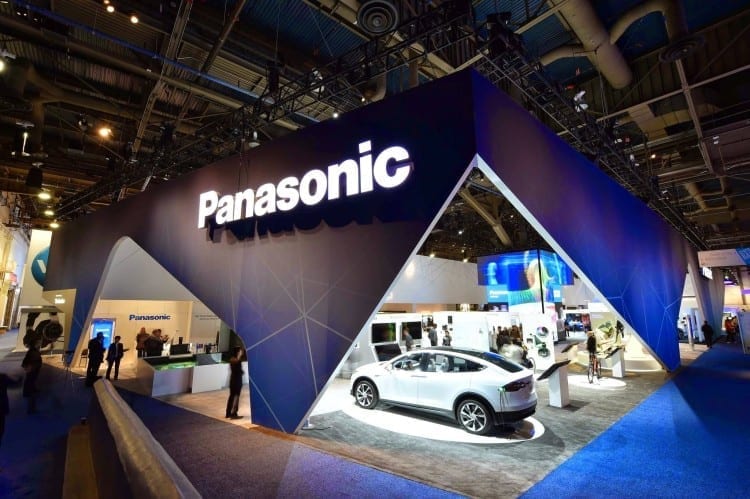
    Panasonic Energy opened a research hub in Kadoma near Osaka to double battery development efficiency by March 2031. The site brings material design, cell engineering and prototyping under one roof.

    Around 500 staff will work at the facility, named Energy Innovation Square, alongside 300 manufacturing engineers at the nearby Suminoe site. Together, the 800-person Osaka cluster represents one of Japan’s largest battery research networks.

    Consolidating cell design in Kadoma

    The facility integrates design and testing operations that were previously dispersed across separate locations. Panasonic Energy expects this centralisation to cut development times and associated transit requirements by more than 15 per cent.

    Engineers at the Kadoma hub will use a digital platform that combines computer simulations with physical test data. Continuous monitoring and statistical analysis are designed to refine digital modelling, allowing faster handoffs from initial cell prototypes to commercial assembly lines.

    Deploying Osaka technology to US plants

    Process improvements developed in Osaka will feed directly into the company’s manufacturing footprint. That network includes domestic Japanese plants alongside high-volume battery facilities in Nevada and Kansas.

    For supply chains, the consolidation tightens the link between Japanese material engineering and North American vehicle assembly. Automakers buying from Panasonic’s US factories require cells with higher energy density and extended operating lifespans to compete against cheaper lithium iron phosphate chemistry.

    Beyond automotive cells, Panasonic is targeting server farms. Expanding artificial intelligence infrastructure requires high-performance backup power systems, giving battery suppliers an alternative revenue stream outside passenger vehicles.

    Defending global battery market share

    Panasonic faces sustained pressure from Chinese battery makers that dominate global electric vehicle supply chains. Data from SNE Research shows Panasonic held 3.7 per cent of the global electric vehicle battery cell market in 2025.

    Market leader CATL held 39.2 per cent and BYD took 16.4 per cent over the same period. Panasonic ranked behind LG Energy Solution, CALB, Gotion High-Tech and SK On, reflecting the rapid growth of Chinese manufacturing capacity across Asia and Europe.

    Energy Innovation Square will serve as a core hub for Panasonic Energy’s battery development, strengthening collaboration from next-generation product development through mass production and enhancing our global competitiveness.

    The Osaka site is now operational, with the company tracking productivity metrics against its FY2024 baseline as it works toward the FY2031 doubling target.

  • Unilever Cuts Beauty Formulation Time to Two Days Using Artificial Intelligence

    Unilever Cuts Beauty Formulation Time to Two Days Using Artificial Intelligence

    Unilever cut product formulation cycles from six days to as little as 24 hours across its beauty division. The shift followed the deployment of predictive artificial intelligence tools across 4,500 research staff.

    The business arm generated EUR 12.8 billion in 2025. That accounted for one-quarter of the consumer goods giant’s global turnover across brands including Pond’s, Dove, Vaseline, Dermalogica and Nutrafol.

    Concept-to-brief design timelines have shrunk to a few days, and scientific claims generation is 75 per cent faster, the group said. In-house systems mine external retail, social media and search data across more than 1,000 sources every month. This tracks beauty trends 60 per cent faster than traditional market research methods.

    Accelerating Lab Work to Shelf

    Products built on these algorithmic models are already selling across mass retail channels. Pond’s Skin Institute Hydra Miracle line uses the company’s Cera-Hyamino formula. It emerged after machine learning models processed 30 terabytes of microbiome data to identify ingredient pairings. A recent Dove hair damage range drew on algorithmic analysis of 100,000 structural hair data points.

    Scientists at the division also cross-reference 150,000 internal research documents accumulated over several decades. Virtual cohorts simulate test outcomes across 2,500 digital subjects before physical trials begin. To embed the workflow, the company ran internal AI training programs for more than 40,000 employees worldwide.

    Today, AI plays a role across the entire innovation journey: from understanding emerging consumer needs to scientific discovery and product validation.

    Compressing Mass Market Timelines

    Speed matters in Asian beauty aisles. Agile domestic brands in China, South Korea and Southeast Asia regularly take new personal care concepts from idea to retail checkout in under four months. Legacy multinationals traditionally operated on multi-year development cycles. That left them flat-footed when ingredient fads or application formats caught fire on social platforms.

    Linking live social sentiment directly to formulation labs is Unilever’s strategy to close that speed gap. The company used that mechanism for its Vaseline Originals expansion, turning viral social media beauty hacks into packaged products sold via TikTok Live, including specialized jelly primers and brow cosmetics. The operational risk shifts downstream. Accelerating formulation does little if contract packaging and regional supply chains cannot scale production at the same pace.

    The Multi-Year Data Pivot

    This deployment builds on multi-year investments in consumer data infrastructure and algorithmic ingredient modeling. Unilever reorganized its corporate structure into five category-focused business groups in 2022, isolating Beauty & Wellbeing to give it dedicated research budgets and faster commercial clearance.

    Competitors like L’Oreal and Procter & Gamble have made parallel investments in skin diagnostics and automated chemistry labs across the region. The race now turns on whether predictive formulation translates into durable repeat purchases or merely floods store shelves with short-lived trend products.

    Unilever is currently testing predictive digital twin models and agentic software across its R&D pipeline. The next slate of AI-designed skincare lines is scheduled for regional retail distribution through 2027.

  • World Bank Urges Thailand to Lift 12% AI Adoption Rate for 2037 Goal

    World Bank Urges Thailand to Lift 12% AI Adoption Rate for 2037 Goal

    Thailand must lift its corporate artificial intelligence adoption beyond the current 12 per cent rate to hit high-income status by 2037, according to the World Bank.

    Only about one in eight Thai businesses currently deploys AI tools, despite recent data centre investments and an established electronics manufacturing base. Speaking at the Bangkok Business Summit, World Bank vice-president for East Asia and Pacific Carlos Felipe Jaramillo warned that commercial adoption remains too concentrated among large corporations in the capital.

    Closing the SME technology gap

    Small, medium and micro-enterprises outside Bangkok account for the bulk of employment but lag in digital capabilities. The multilateral lender presented its “Building Thailand’s Future Today” report at the summit, hosted by the Joint Standing Committee on Commerce, Industry and Banking, setting out reforms for enterprise competitiveness.

    Thailand spends roughly 1 per cent of gross domestic product on research and development. Across the East Asia-Pacific region, that average sits at 2.5 per cent. World Bank senior economist Katherine Stapleton said closing that divide requires redirecting state R&D incentives toward smaller firms rather than limiting innovation programmes to top-tier conglomerates.

    RetailNews Asia notes that enterprise technology providers across Southeast Asia face a similar bottleneck: high digital consumer penetration alongside sluggish software uptake inside merchant supply chains. While Bangkok ranks among the region’s most connected consumer markets, commercial software integration across provincial retail and logistics networks remains sparse.

    Raising growth targets

    Meeting the government’s 2037 high-income target will require annual real GDP growth to jump to 5.4 per cent per person. Thai economic expansion has averaged 2.2 per cent per person since the pandemic.

    Exports generate roughly 70 per cent of Thailand’s gross domestic product, yet foreign direct investment continues to generate weak spillover gains for local suppliers. The World Bank argues that upgrading domestic software capabilities and fostering regional commercial hubs will determine whether the economy escapes middle-income stagnation.

    The Joint Standing Committee and state planning agencies are now reviewing corporate tax breaks and startup development programmes ahead of the next fiscal policy cycle.

  • Google to Roll Out Two AI Chips a Year and Expand Taiwan Hub

    Google to Roll Out Two AI Chips a Year and Expand Taiwan Hub

    Google will accelerate its custom artificial intelligence chip rollout from a two-year cycle to two processors annually while expanding its Taiwan research footprint by 60 per cent.

    The revised schedule shifts the company away from its traditional multi-year hardware cadence as competition for proprietary cloud computing silicon intensifies across the tech sector.

    Faster Silicon Cadence

    Amin Vahdat, Google’s senior vice president and artificial intelligence infrastructure chief, announced the accelerated timeline during a keynote address at Semicon Taiwan in Taipei on Wednesday. The company plans to release two bespoke chips every year and expects to lift that frequency even further over time.

    Backing the faster production tempo requires more engineering capacity on the ground. Google is growing its dedicated research and development floor space across Taiwan by 60 per cent to house expanded design and testing teams.

    Regional Hardware Footprint

    Taiwan sits at the centre of global advanced semiconductor fabrication and packaging. By enlarging its local engineering hubs, Google tightens operational proximity to key foundry partners, contract assemblers and component supply chains that manufacture its custom processing units.

    For cloud platforms and enterprise services operating across Asia-Pacific, in-house silicon helps control operational power costs and workload efficiency in regional data centres. Competing tech operators across the region are running similar programs to secure custom processing capacity.

    The company will now focus on staffing the expanded Taiwan design facilities ahead of its next scheduled processor rollouts.

  • China’s Chery Automobile to Open UK Research and Development Centre This Year

    China’s Chery Automobile to Open UK Research and Development Centre This Year

    Chery Automobile, a prominent Chinese car manufacturer, plans to open a new research and development centre in the United Kingdom later this year. The facility, situated at the UTAC Millbrook vehicle development and testing site in Bedfordshire, is scheduled for a late autumn 2026 launch.

    This strategic move comes as Chinese car brands see increasing demand in the UK market, with their share of new car registrations rising to approximately 15% in the first half of this year, up from 10% for all of last year. This growth is largely attributed to competitive pricing.

    Tailoring To British Drivers

    The initial focus of Chery’s new Bedfordshire centre will be on developing vehicle chassis and advanced driver-assistance systems specifically tailored for British drivers. Future plans include expanding into autonomous driving technologies and artificial intelligence. Gary Lan, CEO of Chery International UK, highlighted that UTAC Millbrook will enable the company to translate UK customer insights into product development, covering aspects from ride and steering to active safety systems.

    This R&D investment follows Chery’s recent agreement with Japanese carmaker Nissan to explore manufacturing its UK passenger vehicles at Nissan’s Sunderland facility in Britain. The establishment of local R&D capabilities suggests a deeper commitment to the market beyond just sales. Chinese brands such as SAIC Motor’s MG, BYD, and Chery’s own JAECOO and OMODA are currently among the leading Chinese marques in the UK.

    Regional Context And Future Growth

    The expansion into the UK market with both manufacturing considerations and a dedicated R&D hub reflects a growing trend among Asian automotive players to localize key functions beyond their home markets. This approach allows companies to better understand and adapt to regional consumer preferences and regulatory environments, fostering stronger brand loyalty and market penetration. For RetailNews Asia readers, this signifies the increasing global ambition and technical sophistication of Chinese automakers, potentially setting new benchmarks for competition and innovation in Western markets, and impacting how Asian brands are perceived globally. This strategic investment in R&D indicates a long-term engineering commitment, as noted by Kirsty Andrew, vice president, UTAC UK.