Tag: resilience

  • Kraft Heinz Reports $8 Billion Loss Amid Rising Costs And Impairment Charge: A Resilient Sales Performance Amid Turbulence

    Kraft Heinz Reports $8 Billion Loss Amid Rising Costs And Impairment Charge: A Resilient Sales Performance Amid Turbulence

    In the second quarter of 2025, multinational food company Kraft Heinz reported a net loss of $8 billion (AUD$12 billion). This financial downturn was primarily due to a $9.3 billion impairment charge. However, despite significant market challenges, the company’s overall sales exhibited resilience.

    Sales Performance

    Kraft Heinz saw a slight decline in its net sales by 1.9%, dropping to $6.35 billion. Organic sales also fell by 2%, where increased pricing countered a 2.7% volume decrease across various product categories. These categories included cold cuts, coffee, lunchables, frozen snacks, and powdered beverages.

    Operating Loss and Adjusted Income

    Operating income sharply fell into a loss of $8 billion. Similarly, adjusted operating income experienced a 7.5% decrease, landing at $1.3 billion. Kraft Heinz attributed these decreases to rising commodity costs and unfavorable volume and mix. However, these pressures were somewhat alleviated by price increases, reductions in advertising expenditures, and beneficial effects from foreign exchange.

    The company pointed to the impairment charge as the main factor driving their losses. This was largely due to a consistent decrease in share price and market capitalization.

    Strategic Initiatives

    Despite these challenges, Kraft Heinz remains committed to its long-term strategic plans. These include targeted investments in their brands, innovative product development, and improvements in operational efficiency. These initiatives aim to counterbalance the softness in volume and cost inflation.

    Carlos Abrams-Rivera, CEO of Kraft Heinz, commented on the company’s Q2 results, stating, “Our second quarter top-line results reflect this dedication, improving from the first quarter. We are delivering value and driving improvement, underpinned by our Brand Growth System and our Go To Market model.”

    Earlier in the year, it was rumored that Kraft Heinz was considering a spinoff of parts of its grocery division, as it continues to adapt to changing consumer preferences and a general shift away from processed foods.

    Questions & Answers

    What were Kraft Heinz’s net losses in Q2 2025?
    Kraft Heinz reported a net loss of $8 billion (AUD $12 billion) in the second quarter of 2025.

    What factors contributed to the company’s financial downturn?
    The company’s financial downturn was primarily due to a $9.3 billion impairment charge. Other contributors were rising commodity costs and an unfavorable volume and mix.

    What strategic initiatives is Kraft Heinz focusing on to combat these challenges?
    Kraft Heinz is focusing on strategic initiatives like targeted brand investments, product innovation, and operational efficiencies to help counterbalance volume softness and cost inflation.

  • Gold Prices Experience Slight Uptick, Signaling Market Resilience

    Gold Prices Experience Slight Uptick, Signaling Market Resilience

    Gold prices in Vietnam experienced a modest uptick Thursday morning, influenced by a slight rise in global gold rates amidst a weakening dollar. The Saigon Jewelry Company reported a 0.25% increase in gold bar prices, bringing them to VND119.8 million (approximately US$4,584.94) per tael. Meanwhile, gold rings climbed 0.34% to reach VND116.7 million per tael, contributing to a remarkable 42.3% surge in gold values since the year’s onset.

    Globally, gold prices edged upward on Thursday, buoyed by the declining dollar and increasing uncertainty following reports that U.S. President Donald Trump may have mulled replacing Federal Reserve Chair Jerome Powell as soon as September or October, according to Reuters.

    Spot gold rose by 0.2% to $3,339.20 per ounce, while U.S. gold futures increased 0.3% to $3,353.10. With the dollar slipping to its lowest level since March 2022, gold priced in dollars became more affordable for international investors, adding to its appeal.

    Typically, gold thrives during uncertain times and low-interest-rate conditions. Market analysts suggest that the prospect of a dovish Fed Chairman under Trump’s potential influence may further suppress the dollar’s strength. Tim Waterer, Chief Market Analyst at KCM Trade, noted, “Trump clearly wants a dovish Fed Chairman next time around, so the increased likelihood of an aggressive rate-cutting cycle is pinning down the USD.”

    For now, gold markets are in a holding pattern, awaiting fresh insights from upcoming U.S. macroeconomic data, including GDP and core PCE figures. Gold seems to be taking a breather, but that doesn’t mean investors are taking a nap — they are wide awake, scanning for the next clue!

    Questions & Answers

    What drove the recent increase in gold prices in Vietnam?
    The rise in gold prices in Vietnam can be attributed to a modest increase in global gold rates and a weakening dollar, which made gold more affordable for international buyers.

    How much have gold prices increased since the beginning of the year?
    Gold prices in Vietnam have surged by an impressive 42.3% since the start of the year, reflecting strong market demand and global economic conditions.

    What factors are influencing the current gold market trends?
    The gold market is currently influenced by uncertainties surrounding U.S. economic policies and potential changes within the Federal Reserve, alongside the typical behavior of bullion during low-interest-rate environments.

  • CITIC Bank International Demonstrates Resilience with Strong Capital and Liquidity, Analysts Confirm

    CITIC Bank International Demonstrates Resilience with Strong Capital and Liquidity, Analysts Confirm

    China CITIC Bank International is showcasing a robust ability to weather the ongoing challenges in Hong Kong’s sluggish property market, as reported by Moody’s. The bank is expected to uphold its solid asset quality, strong capital base, and excellent liquidity throughout the next 12 to 18 months.

    Property Development Exposure

    At the close of 2024, the bank’s exposure to property development and investment in Hong Kong represented 13% of its total gross loans. Fortunately, these loans are considered low-risk due to the strong profiles of the borrowers and conservative loan-to-value ratios. This strategic positioning could provide breathability in unavoidable market fluctuations.

    Improved Loan Metrics

    Moody’s highlights that the bank has actively reduced its exposure to mainland Chinese developers, which has been bolstered by enhanced provisioning. The impaired loan ratio also showed improvement, dropping from 2.3% in 2023 to 2.1% in 2024.

    Solid Capitalization and Liquidity

    Capitalization remains robust, backed by moderate internal capital generation alongside controlled growth in risk-weighted assets. With a liquidity coverage ratio of 200% in Q1 2025—well above the regulatory minimum of 100%—the bank’s liquidity position appears to be nothing short of impressive, like an Olympic gymnast.

    Deposit Growth and Profitability Outlook

    Total deposits for the bank surged by 9% in 2024, with current and savings account deposits climbing to 27% of total deposits, up from 25% the previous year. However, profitability in 2025 may face headwinds as the narrowing net interest margin (NIM)—which slipped slightly to 1.79% in 2024—will likely exert pressure on earnings. Nevertheless, the bank expects some relief from increased fee and commission income.

    Financial Resilience and Future Prospects

    While CITIC Bank International leans moderately on wholesale funding, its overall liquidity framework indicates resiliency. Steady deposit growth complemented by high-quality liquid assets has fortified the bank’s financial health. The bank continues to rely significantly on its parent company, CITIC Bank, and Moody’s foresees continued indirect support from the Chinese government, albeit not universally across all liability classes.

    An analysis of Loss Given Failure reveals a low to moderate risk across most liabilities. However, the recent redemption of US$500 million in Tier 2 subordinated debt has heightened the potential severity of losses for some instruments.

    Questions & Answers

    What percentage of gross loans does the bank have exposed to property development in Hong Kong?
    At the end of 2024, China CITIC Bank International’s exposure to property development and investment in Hong Kong accounted for 13% of its gross loans.

    How did the bank’s impaired loan ratio change in 2024?
    The impaired loan ratio improved to 2.1% in 2024, a decrease from the 2.3% reported in the previous year.

    What is the outlook for the bank’s profitability in 2025?
    Profitability is anticipated to be pressured in 2025 due to a narrowing net interest margin, although increased fee and commission income may provide some relief.

  • Taipei Fubon Commercial Bank Poised to Thrive Amid Market Volatility with Strong Financial Resilience

    Taipei Fubon Commercial Bank Poised to Thrive Amid Market Volatility with Strong Financial Resilience

    The landscape of corporate lending at Taipei Fubon Commercial Bank (TFCB) is set for a period of modest turbulence, but the institution is firmly grounded in its financial foundation. According to Moody’s Ratings, the bank is projected to maintain solid solvency and robust liquidity through 2026, navigated by the stormy waters of global trade tensions and their potential impact on Taiwan’s economy. As the new Taiwanese dollar strengthens, TFCB is well-positioned to weather these challenges.

    Steady Outlook Amid Challenges

    As of March 31, 2025, TFCB’s problem loan ratio stood at a commendable 0.42%. Moody’s anticipates a “very mild increase” in this ratio over the next year and a half. Meanwhile, caution is warranted for corporate lending, particularly among borrowers heavily reliant on revenue streams from the United States, which may see a moderate dip in asset quality.

    Residential Lending Remains Stable

    On a brighter note, the bank’s residential mortgage and property-related lending—accounting for nearly half of its gross loans—shows promising stability, with low levels of non-performing loans. While growth in this sector is expected to be modest, sitting in the low single digits, this largely stems from credit control measures recently instituted by the government in 2024.

    Profitability Projections

    Looking ahead, TFCB’s profitability is predicted to see a modest rise, thanks to steady flows from non-interest income streams, particularly from wealth management and credit card fees. This positive trend underscores the bank’s ability to diversify and strengthen its earnings base.

    Strong Funding and Liquidity

    Moody’s also highlights that TFCB’s funding and liquidity continue to be significant credit strengths. The bank’s funding structure remains robust, with customer liabilities representing 88% of its total liabilities. Furthermore, its liquid banking assets make up approximately 29.5% of tangible banking assets as of March 31, 2025. This financial cushion, coupled with the government’s readiness to bolster the banking system, provides a reassuring backdrop for TFCB as it grapples with the changing economic landscape.

    So, while clouds may gather, it seems that TFCB is more than ready to dance in the rain!

    Questions & Answers

    What are the predictions for TFCB’s problem loan ratio?
    The problem loan ratio is expected to see a very mild increase over the next 12 to 18 months, remaining stable at 0.42% as of March 31, 2025.

    How stable is TFCB’s residential mortgage lending?
    The asset quality of TFCB’s residential mortgage and property-related lending remains stable, with low non-performing loan formation; growth is expected to be in the low single digits due to government credit control measures.

    What are the main sources of income driving profitability?
    Profitability is predicted to improve modestly, bolstered by steady growth in non-interest income from wealth management and credit card-related fees.

  • Some Vietnam coffee farms thrive despite drought

    Some Vietnam coffee farms thrive despite drought

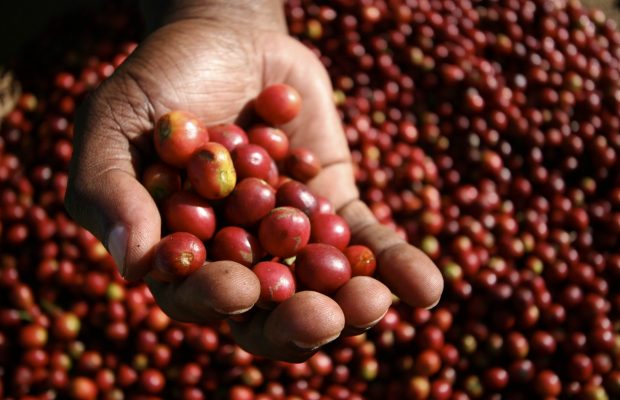
    Vietnamese coffee growers have been hit hard this year by the worst drought in nearly a decade, raising concerns of pricier espressos across the world, even as some farmers keep yields healthy with clever countermeasures.

    Domestic forecasts for next season’s harvest in Vietnam, the world’s second biggest coffee producer, remain grim.

    The Mercantile Exchange of Vietnam (MVX) expects a 10-16% fall in output because of the extreme heat that hit the Central Highlands coffee region between March and early May, according to deputy head Nguyen Ngoc Quynh.

    However, a return of rains in recent weeks has improved the outlook, boosting confidence among farmers and officials. But it remains unclear whether the improved weather will help boost output and drive down prices of robusta beans, the variety most commonly found in espressos and instant coffees, of which Vietnam is the world’s top producer.

    “I expect the country’s output to fall by 10-15%, but my farm will increase production”, said Nguyen Huu Long, who grows coffee in a 50-hectare plantation in Gia Lai, one of the top coffee-producing provinces in Vietnam.

    To protect his trees during the heatwave, he kept the soil around the plants moist by covering it with leaves. Contrary to the local practice of cutting trees after a few years to boost soil quality, he keeps his growing for decades. As a result, plants have deeper roots and broader access to underground water reserves.

    Farmers in his plantation also soften the soil around plants to improve absorption of rainwater and fertilisers, said Doan Van Thang, 39.

    Tran Thi Huong, a tenant farmer who works in another plantation 20 km from Pleiku, Gia Lai’s capital, resorted to using more water than usual. Thanks to abundant reserves from canals built by local authorities, she could keep her plants sufficiently irrigated during the heatwave.

    Coffee cherries are smaller than in previous years, but she expects the overall output to be unaffected. It also helped that she timely intervened with biopesticides against bugs that were more numerous than usual because of the extreme weather.

    That is in line with the forecast from the United States Department of Agriculture (USDA) which estimates Vietnam’s next harvest would be roughly steady versus the current season’s output – far less pessimistic than domestic projections.

    Bitter price effect?

    Whatever the impact on the harvest will be, coffee prices for drinkers around the world are likely to rise.

    Wholesale prices in Vietnam and London-traded robusta futures have risen to record highs earlier this year mostly after an underwhelming harvest in Vietnam and because of fears over the country’s next harvest after the drought, according to multiple traders and analysts.

    Record wholesale prices have so far had a limited impact on consumer prices, with coffee inflation up by only 1.6% in the 27-country European Union in April, according to the latest Eurostat data, and 2.5% in robusta-loving Italy.

    While well below price rises from a year earlier, it was higher than 1% in the March E.U. reading, a sign roasters may have started to pass their higher costs on consumers.

    Besides, worries about Vietnam are far from over, as insufficient rains after the drought or excessive downpours before the upcoming October harvest season could further reduce output, warned a Vietnam-based trader.

    The high wholesale prices may also be there to stay, as robusta demand is growing globally and farmers have boosted their leverage in the current circumstances, with many hving also replaced coffee plants with pungent smelling durian, a tropical fruit experiencing huge demand in China.

    “They have the financial ability to hoard and hold on goods, so they will not be in a hurry to sell,” said Le Thanh Son, of Simexco, one of Vietnam’s biggest coffee exporters.