Retail News CRM

Tag: results

  • Vietnam’s Coffee Exports Hit $4.78B Despite Challenges: A Closer Look at H1 2026 Results

    Vietnam’s Coffee Exports Hit $4.78B Despite Challenges: A Closer Look at H1 2026 Results

    In the first half of 2026, Vietnam’s coffee exports amounted to US$4.78 billion, marking a decrease of 14.4% compared to the same period in the previous year. This decline in value comes despite a 9.7% year-on-year increase in exported volume, reaching 1.1 million metric tons. June alone accounted for shipments of 150,000 tons, valued at $552.6 million.

    Coffee Export Market Dynamics

    The average coffee export price during the first half of the year was around $4,435 per ton, a 22% year-on-year decrease after a period of elevated prices in 2024-25, as reported by the Ministry of Agriculture and Environment. The three largest markets for Vietnam’s coffee exports remained Germany, Italy, and the U.S., accounting for 14.1%, 7.9% and 6.9% of total exports, respectively. However, the first five months of the year saw a decline in shipments to these markets by 21.7%, 9.6% and 2.2% in value respectively, compared to the previous year.
    On the other hand, exports to China experienced a significant 70.7% surge in value, representing the strongest growth among the top fifteen importers of Vietnamese coffee.

    Domestic Coffee Market and Global Trends

    Domestically, coffee prices have rebounded to over VND90,000 (US$3.42) per kilogram, but trading remains cautious as the remaining inventory is limited. The Vietnam Coffee Cocoa Association indicates that the global coffee market is moving into a challenging phase where supply growth, largely driven by Brazil, is outpacing moderate consumption growth.

    Moreover, the association predicts that the large supply will continue to put downward pressure on prices in the coming months, particularly in the Robusta segment, which is Vietnam’s principal export product. This situation poses a challenge to achieving the year’s export revenue target due to the continuous fall in export prices and the historically lower shipments in the second half of the year.

    However, the association also highlights an opportunity for the industry to shift its focus from increasing output to enhancing value. This can be done by exporting higher quality coffee beans with sustainability certifications, and increasing exports of roasted, instant, and blended coffee products. Currently, around 30% of Vietnam’s coffee-growing area is certified under sustainable production standards, which provides a strong basis for meeting the increasingly rigorous requirements in export markets.

    In addition to this, the association recommends stronger trade promotion in promising markets such as China, Russia, South Korea, Algeria, and Nordic countries. It also encourages expanding connections with major retail chains in Asia and Europe to foster processed coffee exports.

    Questions & Answers

    What is the current state of Vietnam’s coffee exports?
    The value of coffee exports from Vietnam declined by 14.4% in the first half of 2026 despite an increase in export volume.

    Who are the major importers of Vietnamese coffee?
    Germany, Italy, and the U.S. are the three largest markets for Vietnam’s coffee exports, but exports to these markets have declined in value. Alternatively, exports to China have surged by 70.7%.

    What adjustments does the Vietnam Coffee Cocoa Association suggest for the coffee industry?
    The association suggests a shift in focus from output expansion to value enhancement. This could be achieved by increasing exports of sustainably certified, high-quality coffee beans and boosting shipments of roasted, instant, and blended coffee products.
  • Grab Powers Through 2026 with Record Q1 Results and Bold Expansion Beyond Southeast Asia

    Grab Powers Through 2026 with Record Q1 Results and Bold Expansion Beyond Southeast Asia

    Southeast Asian superapp, Grab, has reported its strongest first quarter to date, with plans to expand beyond its home market for the first time. It plans to do so with an investment of $600 million.

    Grab’s CEO and co-founder, Anthony Tan, expressed his satisfaction with the results, stating that the company achieved its objective of starting 2026 robustly. Grab recorded a revenue of US$955 million for the first quarter, which ended on March 31, representing a year-on-year increase of 24%. Its adjusted EBITDA reached US$154 million, up by 46% from the same period in the previous year, marking the company’s seventeenth consecutive quarter of EBITDA growth.

    Despite the period being typically quiet due to the Ramadan fasting month and Lunar New Year celebrations, the company managed to increase its number of monthly transacting users by 16% to 51.6 million.

    Growth Across Segments

    The overall gross merchandise value of Grab’s deliveries and mobility segments rose to US$6.1 billion in the quarter, with the delivery sector growing by 25% and mobility by 23%, year-on-year. The company’s financial services also observed a 43% leap in revenue to US$107 million.

    However, the company faces operational challenges due to the regional surge in fuel prices—an issue with no straightforward solution for a business model that depends on daily refuelling by millions of driver-partners. To navigate this issue, Grab launched various initiatives in March, including multi-partner fuel discount programs and restructuring incentive models to maximize driver earnings. Grab also collaborated with governments to ensure driver-partners could access available transport-worker fuel subsidies.

    Recently, Grab became the first platform to offer point-to-point cross-border taxi services between Singapore and Malaysia, one of the world’s busiest international land border crossings.

    Expansion Plans

    During the quarter, Grab agreed to acquire Delivery Hero’s foodpanda delivery business in Taiwan for US$600 million in cash. This represents Grab’s first expansion beyond Southeast Asia in its 14-year history. The acquisition is expected to be finalised in the second half of the year, expanding Grab’s presence across 21 cities. Upon completion, Grab would hold a market share of just over 50%, positioning it as a formidable competitor to Uber Eats.

    Moving forward, Grab’s full-year guidance remains unchanged, with predictions of 20% to 22% growth in revenue and 40% to 44% growth in adjusted EBITDA. The company expects in-demand GMV growth in each remaining quarter of this year.

    Questions & Answers

    What is Grab’s first quarter revenue for 2026?
    Grab reported a revenue of US$955 million for the first quarter of 2026.

    What operational challenges is Grab facing?
    Grab is facing operational challenges due to the regional surge in fuel prices affecting millions of its driver-partners.

    What is Grab’s expansion plan?
    Grab plans to acquire Delivery Hero’s foodpanda delivery business in Taiwan, marking its first expansion beyond Southeast Asia.

  • Metcash Battles Tough Trading Climate: Mixed Results and Strategic Market Gains Detailed in Interim Report

    Metcash Battles Tough Trading Climate: Mixed Results and Strategic Market Gains Detailed in Interim Report

    In the first half of the fiscal year, Metcash released a diverse range of results as the firm navigated a challenging trading period. The group’s revenue for the six months concluding on October 31 saw a slight increase of 0.1%, amounting to $8.5 billion. This figure rose to $9.6 billion, an increase of 0.4%, when charge-through sales were included.

    Segment Performance

    Metcash’s food segment, with the exception of tobacco, witnessed a 7.2% surge, indicating growth in both its supermarket business (IGA) and foodservice and convenience operations (Campbells & Convenience and Superior Foods).

    However, when tobacco was included, food sales decreased by 0.8%. This decline in tobacco sales, which accelerated to 35%, was reportedly due to the implementation of new regulations in July.

    In the liquor sector, Metcash saw sales rise by 1.4%, reflecting a growth in market shares in Australian packaged liquor and a surge in wholesale sales to on-premise patrons.

    The hardware segment of the business also experienced growth, with sales rising by 2.4%. Similarly, Total Tools sales saw a 3% increase.

    Financial Outcomes

    Regarding the bottom line, the group’s EBITDA increased by 2% to $367.2 million. Contrarily, the underlying profit after tax witnessed a decline of 5.9%, amounting to $126.7 million. This decrease was due to a combination of lower hardware and liquor earnings, an increase in finance costs, and increased depreciation and amortization.

    Future Prospects

    Despite the challenging trading conditions, Metcash group CEO Doug Jones expressed satisfaction with the company’s results. According to Jones, the company has been making substantial progress in their strategy of extending through the value chain and ‘winning with independents’. This strategy presents opportunities to extend their addressable markets while also providing attractive margins.

    Jones went on to express optimism about Metcash’s future prospects, stating that the company is well set for continued success. He emphasized the company’s robustness, diversity, and resilience, as well as the considerable opportunities for accelerating growth.

    Questions & Answers

    What was the increase in Metcash’s revenue for the first half of the fiscal year?
    The revenue saw a slight increase of 0.1%, amounting to $8.5 billion.

    How did the new regulations in July affect Metcash’s tobacco sales?
    The decline in tobacco sales, which accelerated to 35%, was reportedly due to the implementation of new regulations in July.

    What is Metcash group CEO Doug Jones’s outlook for the company’s future?
    Jones expressed optimism about Metcash’s future prospects, emphasizing the company’s robustness, diversity, and resilience, as well as the considerable opportunities for accelerating growth.

  • Google will allow you to hide ads in your search results, but only after scrolling

    Google will allow you to hide ads in your search results, but only after scrolling

    Google is modifying the display and functionality of text advertisements in search results. The biggest development is that Google will now give users the option to hide sponsored search results if they are uninterested. However, there is a small caveat to this new feature.

    Scroll to Hide Sponsored Results

    At present, paid search results on Google are individually tagged as “Sponsored”. Google has revealed that moving forward, text ads in search results will be collectively displayed in a collapsible section at the top of the search page. This section will carry a single, more noticeable label that remains apparent as you scroll through the results.

    Arguably the most significant change is a new feature that allows users to hide all sponsored results with just a single click. This button is located at the base of the text ad section. Once clicked, the advertisements will hide under the sponsored heading. With another tap, users can reveal these ads again if they choose.

    Changes to Search Result Appearance

    Over time, Google has made a series of adjustments to the appearance of paid search results, making them look similar to organic results. While these changes were not always popular among users, the new update is unlikely to elicit negative responses. Google’s aim, it says, is to “make navigation even easier”. However, this goal seems somewhat counterintuitive given the placement of the hide button at the bottom of the sponsored links.

    A constant feature in these developments is the escalating influence of artificial intelligence (AI) in Google Search results. Google has pointed out that the Sponsored results label will now appear above or below the AI Overviews. This means users might have to scroll even further to hide the ads.

    Global Rollout of Google Search Update

    The update to Google Search is already being rolled out worldwide to both desktop and mobile users.

    While hiding ads may improve the scrolling experience in search results, it does not address a central issue some users have: the diminishing usefulness of Google Search. This has led some to experiment with other search engines and AI tools to find the required information.

    Questions & Answers

    What is the main change in Google’s ad display?

    Google is grouping text ads into a collapsible section at the top of the search page with a single, noticeable label. Users can hide or reveal these sponsored results with a single click.

    How is AI affecting Google Search results?

    AI is playing an increasingly important role in Google Search results. The Sponsored results label will now appear above or below the AI Overviews, which may cause users to scroll further to hide ads.

    Are there any concerns with the new update?

    The main concern is that while hiding ads may improve the scrolling experience, it does not enhance the overall usefulness of Google Search, causing some users to explore other search engines and AI tools.

  • Deloitte Under Scrutiny: Ai-generated Inaccuracies Found In Aud 440,000 Australian Welfare Report

    Deloitte Under Scrutiny: Ai-generated Inaccuracies Found In Aud 440,000 Australian Welfare Report

    A report commissioned by Australia’s Department of Employment and Workplace Relations, which was paid AUD 440,000 (around 231,200 Swiss francs), looked into an IT system intended to automate sanctions in the country’s welfare framework. The original report was published in July and was quietly updated on the ministry’s website last week. The updated version featured over a dozen deletions of non-existent references and footnotes, a refreshed reference list, and various typographical corrections.

    Report Inaccuracies

    Christopher Rudge, a researcher at the University of Sydney, discovered several inaccuracies in the report. He hypothesized that these inaccuracies could be due to instances of AI hallucinations, which occur when generative models fabricate information that appears to be factual.

    Findings Deemed Unreliable

    While the report now includes a disclaimer that generative AI was utilized to address “gaps in traceability and documentation”, the trust in the report’s findings has been undermined as a result of the reported inaccuracies. “The firm acknowledged the use of generative AI for a significant analytical task but did not initially disclose it,” said Rudge. He expressed concern that the recommendations made in the report could not be fully trusted.

    Nonetheless, the ministry maintained that “the essence of the independent review remains unchanged and there will be no alterations to the recommendations”. There are also reports that Deloitte forfeited the final payment for the report, although the amount was not specified.

    Impact on Deloitte

    This incident does more than just create a financial dent; it also represents a significant blow to Deloitte’s reputation. The firm, which advises corporations, governments, and institutions worldwide on the proper utilization of AI, is now facing scrutiny for the responsible use of these technologies.

    Questions & Answers

    What inaccuracies were found in the report?
    Christopher Rudge from the University of Sydney found several inaccuracies in the report, suggesting they could be the result of AI hallucinations – when generative models create information that appears factual.

    What was the initial reaction to these inaccuracies?
    While Deloitte admitted to using generative AI and added a disclaimer in the updated version of the report, there has been a decline in trust regarding the report’s findings. The ministry, however, maintained that the core of the review and its recommendations remain unaltered.

    What impact has this had on Deloitte?
    Beyond the financial implications, this incident represents a significant reputational setback for Deloitte, a firm that advises on the responsible use of AI worldwide.

  • Puig Shatters Fiscal Year Predictions: Robust Sales Boost And Profit Surge In First Half Of 2025

    Puig Shatters Fiscal Year Predictions: Robust Sales Boost And Profit Surge In First Half Of 2025

    Global beauty conglomerate Puig has announced robust interim results for fiscal year 2025, surpassing predictions with a stable surge in sales and a significant boost in profitability.

    In the first half of the year, net revenue increased by 7.6% to reach €2.3 billion (~US$2.7 billion), primarily boosted by a weaker US dollar. The adjusted net profit climbed to €247 million (~US$289 million), while the reported net profit witnessed an impressive leap of almost 79% to €275 million (~US$322 million).

    Impressive Growth and Noteworthy Profitability

    The group’s adjusted EBITDA also saw an increase of 8.6%, amassing €445 million (~US$521 million). The EBITDA margin improved to 19.4%, bolstered by revenue enhancement, cost management, and strategic promotional investments.

    The company’s fragrance and fashion sectors led the growth, making up 73% of the total revenues. Exceptional performances were seen from niche brand Byredo and the prelaunch of Carolina Herrera’s new perfume, La Bomba.

    After a period of stagnation, the makeup sector experienced a resurgence with a 2% like-for-like growth, driven by high demand for Charlotte Tilbury’s Super Nudes and Unreal collections. Skincare also experienced a substantial increase of 8.6%, propelled by Uriage’s sun care range and an expanded product line from Charlotte Tilbury.

    Geographic Expansion

    Puig has experienced considerable growth across different regions. The Americas saw a 10.9% like-for-like increase, Asia-Pacific revenues grew by 16.5%, and EMEA witnessed a 3.6% rise.

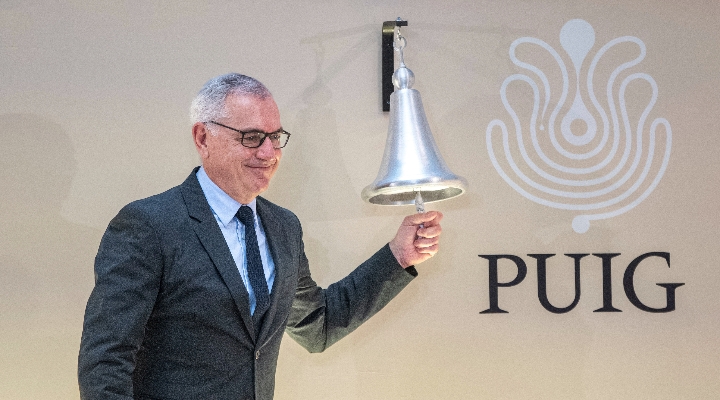
    The company also announced the appointment of Jose Manuel Albesa as the deputy CEO to supervise all divisions. Albesa, a veteran in the company since 1998, and instrumental in rebranding major labels, will directly report to Marc Puig, the chairman and CEO.

    Forecast for Second Half of FY 2025

    Puig anticipates maintaining its upward trajectory in the second half of the year, powered by the holiday season and the full launch of La Bomba. The firm aims for a 6-8% like-for-like revenue growth, alongside further expansion of adjusted EBITDA margin, with a keen focus on M&A strategies.

    Marc Puig, Chairman and CEO, expressed that the second half is typically their most active period, with holiday demand and the full launch of Carolina Herrera’s new fragrance, La Bomba still in the pipeline. He added, “The appeal of our brands, combined with our ongoing cost discipline, enables us to invest in them to ensure sustainable long-term growth. This reaffirms our optimism for the year’s forecast.”

    Questions & Answers

    What led to Puig’s strong first-half performance in FY 2025?
    A weaker US dollar, strategic marketing investments, and cost control strategies contributed to Puig’s impressive performance. Noteworthy performances from the fragrance and fashion sectors also played a key role.

    What are the growth expectations for Puig in the second half of FY 2025?
    Puig aims to continue its momentum by targeting a 6-8% like-for-like revenue growth. This will be largely driven by the holiday season and the full release of Carolina Herrera’s new fragrance, La Bomba.

    Who has Puig appointed as the new Deputy CEO?
    Puig has appointed Jose Manuel Albesa as the deputy CEO. Albesa has been with the company since 1998 and has played a crucial role in repositioning major brands.

  • Sigma Healthcare Resets Merger Synergy Target With Chemist Warehouse Amidst Significant Revenue Surge

    Sigma Healthcare Resets Merger Synergy Target With Chemist Warehouse Amidst Significant Revenue Surge

    Sigma Healthcare has revised its merger synergy target with Chemist Warehouse, following a significant increase in both its top and bottom line results last year.

    New Merger Synergy Targets

    Sigma Healthcare has now set its synergy target for the merger at $100 million per annum, a substantial increase from the previous target of $60 million. The company aims to attain this goal within a span of four years.

    The last fiscal year ending June 30 saw an 82.2 per cent surge in revenue to $6 billion. Chemist Warehouse reported a 14 per cent increase in retail network sales, and a notable 11.3 per cent rise in like-for-like sales across the Australian network.

    Brand Expansion and Financial Performance

    Over the past year, Sigma increased its portfolio of proprietary and exclusive brand products, with a notable release of 269 products in the Wagner generics range last November. The sales of proprietary and exclusive label products saw an increase of over 20 per cent.

    When it comes to the bottom line, statutory earnings before interest, taxes, depreciation, and amortization (EBITDA) increased by 33.6 per cent to $824 million, while the net profit after tax (NPAT) reported a slight decline of 2.1 per cent to $530 million. However, normalized EBITDA saw a rise of 41.4 per cent to $884 million, and NPAT also increased by 40.1 per cent to $579 million.

    By June 30, the net debt stood at $752 million, significantly lower than the initial net debt range of $1 billion to $1.3 billion as indicated in the merger prospectus.

    Anticipated Growth and Future Plans

    Sigma CEO and MD, Vikesh Ramsunder, stated that the merger with Chemist Warehouse has resulted in a more robust, integrated healthcare business with enhanced scale, capability, and market reach. He emphasized that the FY25 results highlight the group’s momentum and potential for sustained growth.

    As part of its plan for the new fiscal year, Sigma intends to continue the expansion of Chemist Warehouse stores both domestically and internationally at a steady pace. It also plans to introduce new proprietary and exclusive label products to enhance margins.

    Sigma also announced the closure of distribution centres in South Guildford, WA, and Port Adelaide, SA, with services being moved to existing centres in Canning Vale and Pooraka. The company also plans to gradually close brick-and-mortar Chemist Warehouse stores in China over the next few years, focusing on achieving profitable growth, with the Chinese market being serviced through online channels thereafter.

    Questions & Answers

    What is the new merger synergy target set by Sigma Healthcare?
    The new merger synergy target set by Sigma Healthcare is $100 million per annum, up from the previous target of $60 million.

    What are Sigma Healthcare’s plans for the new fiscal year?
    Sigma plans to expand Chemist Warehouse stores in Australia and internationally, launch new proprietary and exclusive label products, and shift services from closing distribution centres to existing ones.

    What is Sigma Healthcare’s strategy for the Chinese market?
    Sigma Healthcare plans to gradually close Chemist Warehouse physical stores in China over the next few years, focusing on servicing the Chinese market through online channels.

  • Danone Shares Skyrocket 7% On Back Of Strong Q2 Sales, Chinese Demand For Infant Formula

    Danone Shares Skyrocket 7% On Back Of Strong Q2 Sales, Chinese Demand For Infant Formula

    Shares in Danone, the renowned French consumer goods manufacturer, escalated approximately 7% following the release of second-quarter sales which outperformed predictions. This surge of success is largely attributed to a soaring demand for infant milk formula and medical nutrition products in China.

    Overcoming Challenges

    The impressive surge in demand offset challenges faced in other markets. There were sluggish sales in the water division in Latin America due to unfavourable weather conditions in Mexico, while a highly competitive market in the US resulted in slow coffee creamer sales. Nevertheless, Danone, known for household brands such as Evian water and Activia yoghurt, reported a 4.1% increase in second-quarter sales on a like-for-like basis, outstripping anticipated growth of 3.8%.

    The financials revealed Danone’s recurring operating income for the first half of 2025 to be 1.811 billion euros (US$2.09 billion). This represents a margin of 13.2% of sales, an increase from 12.7% from the previous year. The company also reassured investors by restating its 2025 full-year forecast, in line with its mid-term goal of achieving like-for-like sales growth between 3% and 5%, and a faster growth rate for recurring operating income.

    Strong Portfolio and Future Growth

    Speaking about the company’s performance, CEO Antoine de Saint-Affrique commented, “The first-half performance reflected the strength and resilience of our health-focused portfolio.” The company’s aim, according to de Saint-Affrique, is to consistently perform while transforming and enhancing areas requiring attention. This includes the plant-based business and coffee creamers in the US.

    Sales in China, North Asia and Oceania also had an exceptional quarter, increasing 12.4% on a like-for-like basis. Specialized Nutrition also experienced double-digit growth, fuelled by strong demand in both the Infant Milk Formula and Medical Nutrition segments.

    North America also saw a 2.3% rise in sales for the quarter, bolstered by a surge in protein product sales such as Oikos brand Greek yoghurt. The coffee creamers sector also showed signs of recovery following supply chain issues in the first quarter.

    Danone has also been leveraging its cash reserves for strategic acquisitions to amplify its focus on health and science, and build resilience against market volatility. The company recently acquired the Akkermansia Company, a Belgian biotics firm and also holds a majority stake in Kate Farms, a US-based organic formula and shake manufacturer.

    Questions & Answers

    What contributed to Danone’s surge in shares?
    The surge in shares was primarily due to the impressive second-quarter sales that exceeded expectations, driven by a high demand for infant milk formula and medical nutrition products in China.

    How is Danone planning to boost its focus on health and science?
    Danone has been utilizing its cash for strategic acquisitions that align with the company’s focus on health and science. It has recently acquired a Belgian biotics firm, Akkermansia Company, and also holds a majority stake in Kate Farms, a US-based organic formula and shake manufacturer.

    What was the significance of the first half performance for Danone?
    The first-half performance demonstrated the resilience and strength of Danone’s health-centric portfolio and its ability to perform consistently while transforming and enhancing areas that require attention. This is evidenced by a 4.1% increase in second-quarter sales on a like-for-like basis, which surpassed the anticipated growth of 3.8%.

  • Allianz Achieves Unprecedented Financial Success with Record-Breaking Results

    Allianz Achieves Unprecedented Financial Success with Record-Breaking Results

    Allianz has kicked off 2025 with an impressive bang, announcing record results for the first quarter. The insurance giant posted an operating profit of €4.2 billion, despite facing a one-off negative tax impact related to the expected sale of its holdings in India. This remarkable achievement marks a 6.3 percent increase compared to the €4.0 billion recorded in Q1 2024, as growth dollars flowed in from all segments.

    Strong Results Across All Segments

    The numbers tell a compelling story of resilience and expansive growth. In the Property and Casualty Insurance sector, Allianz achieved an operating profit of €2.17 billion, up by 5 percent. Notably, the company also improved its combined ratio to 91.8 percent, well below its target of 93 percent. Meanwhile, the Life and Health Insurance segment reported an operating profit of €1.43 billion, rising 8 percent, with the value of new business soaring by 13.6 percent to €1.44 billion. In Asset Management, Allianz saw an operating profit of €811 million, marking a solid 4.8 percent rise, coupled with net inflows of €28.7 billion and steady third-party assets under management at €1.91 trillion.

    Sharing the Wealth

    Looking ahead, Allianz is optimistic about the financial year 2025, maintaining its outlook with a target operating profit of €16 billion, give or take €1 billion. In a bid to reward shareholders, the company initiated a share buyback program, repurchasing its own shares worth €0.1 billion out of a total planned investment of €2 billion.

    With these promising figures and a confident stance for the future, Allianz seems poised to steer through challenges and emerge as a formidable player in the financial landscape. Who knew the world of insurance could appear so vibrant?

    Questions & Answers

    What was Allianz’s operating profit in the first quarter of 2025? Allianz reported an operating profit of €4.2 billion for the first quarter of 2025.

    How did Allianz’s operating profit in Q1 2025 compare to Q1 2024? The operating profit in Q1 2025 marked a 6.3 percent increase from €4.0 billion in Q1 2024.

    What are Allianz’s plans for shareholder returns in 2025? Allianz has initiated a share buyback program targeting up to €2 billion, with €0.1 billion already repurchased in the first quarter.

  • Server-side update brings new look to Google Search

    Server-side update brings new look to Google Search

    Google has made a number of changes to the cards it serves up for certain search results. The headers are now pastel, and the cards feature new tabs that can provide more information about the subject. Categories ranging from the weather to sports, celebrities, and even food ingredients have these new cards. For example, the weather card has a smaller illustration but includes the temperature graph and the precipitation chances for the next day right at the bottom. Athletes have new cards with a stat tab that allows users to see how a player performed in recent games.

    Looking for a movie to see? Ask Google Search to show you movies in your city and you’ll see a list of films. Switch to the performance times tabs to see when and where the movies are playing near you. Search for a specific movie or television show and a new tab called People also search for will show sub-tabs containing related titles. Similarly, when you search for a book title, you can now hit a tab marked get book to purchase it, and more by author to see other books written by the same person.

    If you look up the name of a fictional character, the new Google Search result cards show more details. One of the new tabs will show you the name of the actor who portrayed this character in the movies or on television and the name of the television show and movies that the character appeared in.

    The update containing these changes are being pushed out to Android users via a server-side update, and there is a possibility that your phone has also received it.

  • Huawei continues to close in on Samsung with impressive Sales Results

    Huawei continues to close in on Samsung with impressive Sales Results

    2018 has been something of a roller coaster for Huawei, the highly controversial telecommunications equipment vendor that also somehow managed to beat Apple for second place in global smartphone shipments for two consecutive quarters. Ultimately, the China-based tech giant ranked third overall in the mobile device market last year, selling however a colossal 206 million units or so around the world, up from “only” 153 million in 2017.

    While market research firms like Strategy Analytics and the International Data Corporation (IDC) are not yet ready to release their full Q1 2019 reports, Huawei has just confirmed another impressive new set of numbers that puts the company on track to substantially narrowing the gap to Samsung by the end of the year and possibly reaching its most ambitious goal yet in 2020.

    No less than 59 million Huawei smartphones were shipped between January and March 2019 worldwide, up a staggering 50 percent or so from the 39 million third-party estimate of Q1 2018. That should be enough to open a big gap between the Chinese company and Apple, since only around 52 million iPhones were sold globally during Q1 2018, a number most analysts expect to take a bit of a plunge when 2019’s first-quarter reports start rolling in.

    It will then be pretty much impossible for Apple to catch up to the market’s silver medalist, as iPhone shipments may need a couple more quarters to start recovering, while Huawei’s figures are expected to continue growing. In total, Huawei could sell anywhere between 250 and 260 million units in 2019, which probably won’t be enough to secure the company first place over Samsung, but it might hint at a new leader next year.

    Until then, we should point out Huawei’s substantial boost in Q1 smartphone volumes crucially contributed to overall revenues of close to $27 billion, representing a 39 percent year-on-year jump. Incredibly enough, the company reported massive growth for its carrier and enterprise business departments, as well as the consumer electronics group, expecting all three divisions to post double digit increases in revenue throughout 2019. That means both smartphone and 5G equipment sales are going well, despite strong opposition from the US government.

  • Luk Fook announces interim results

    Luk Fook announces interim results

    The Board of Directors of Luk Fook Limited announced the unaudited consolidated interim results of the company and its subsidiaries for the six months ended 30 September 2016.

    During the Period under review, the Group’s revenue dropped 21.5 percent to HK$5,469,124,000. The continuing weak retail sentiment, together with the relatively high gold price and a relatively high base due to the small scale gold rush in certain months last year, resulted in gold sales falling more than expected.

    Overall gross margin improved by 5.3 p.p. to 28.0% as a result of relatively high gold price and higher gem-set jewellery sales mix. Gross profit therefore decreased by only 3.0 percent to HK$1.5 billion.

    Operating profit decreased by 6.0% to HK$558 million. Profit attributable to equity holders amounted to HK$429 million, a decrease of 7.4 percent. The Group’s overall gross margin significantly improved by 5.3 p.p. to 28.0 percent, as it concentrated on sales mix of gem-set jewellery products driven by a slowdown in demand for gold products and the improved gross margin of gold products as a result of the gold price rise.

    Mr. Wong Wai Sheung, Chairman and Chief Executive of Lukfook Group said, “During the Period under review, the slowdown in economic growth in Mainland China, the changes to the Individual Visit Scheme and the growing popularity of other tourist destinations as a result of currency devaluation, Mainland tourists tended to stay shorter period of time. Consumption expenditure per capita continued to fall with the poor macro-economic conditions and decreased spending power of consumers. ”

    The retail business continued to be the primary revenue source for the Group with its revenue declined year-on-year by 27 percent to HK$4,028,721,000, accounting for 73.7 percent (2015: 79.3 percent) of the Group’s total revenue. With a much improved gross margin, segmental profit in the retail business dropped by 6.7% only to HK$338,921,000 (2015: HK$363,235,000), representing 55.8% (2015: 53.9%) of the total.

    The overall same store sales growth of the Group was down 31.5 percent.

    The Hong Kong market remained to be the key source of revenue for the Group, which the revenue generated decreased by 28.6 percent to HK$3,003,443,000, contributing approximately 54.9 percent (2015: 60.4 percent) of the Group’s total revenue. The Group’s revenue generated from the Macau market decreased by 27.7 percent to HK$665,528,000. Revenue from the Mainland China market decreased by 2.7 percent to HK$1,722,787,000, and accounted for 31.5 percent (2015: 25.4 percent) of the Group’s total revenue.

    During the Period under review, the Group added a net total of 27 Lukfook shops worldwide of which 24 new stores were opened in Mainland China. This raises the global network of Lukfook shops to 1,455. Mr. Wong Wai Sheung, Chairman and Chief Executive of the Group said, “Looking ahead, the Group will maintain its pragmatic and prudent strategies, proactive response to challenges, thereby strengthening our leading position in the jewellery retail market.”

  • Hong Kong economy in worst shape in 20 years

    Hong Kong economy in worst shape in 20 years

    Billionaire Li Ka Shing said yesterday that Hong Kong’s economy is at its worst in 20 years, and warned that the city’s stock market could fall by more than half if the financial hub does not get backing from mainland China.

    Mr Li, who held court with reporters for over an hour at an earnings news conference, is the latest person to sound the alarm after Moody’s downgraded Hong Kong’s sovereign credit rating at the weekend, citing its links to China’s economic slowdown.

    “Today’s Hong Kong is getting worse… the worst I’ve seen in 20 years,” said Mr Li, 88, referring to the Asian financial crisis in the late 1990s. “Our home sales and retail now is worse than in the Sars period. During Sars, (the effect) was short-lived but now it is long,” he said, in a reference to the severe acute respiratory syndrome that crippled the city in 2003.

    Hong Kong retail sales, which suffered their worst decline in 13 years last year, have been hit by a slump in tourists from the mainland which has been blamed in part on increasing cross-border tensions.

    “If we respect tourists, no matter where they’re from, today our retail, hotels would not be this bad. So everyone has to reflect on themselves, there are a lot of issues the politicians need to reflect on how they can do better,” Mr Li said.

    Last month, Hong Kong’s Financial Secretary John Tsang said”political volatility” was threatening to undermine the economy and warned disputes would intensify ahead of this year’s elections.

    A former British territory, Hong Kong is ruled under a “one country, two systems” formula, but many in the city have voiced concern over what they see as increasing interference by Beijing. Mr Li, known as Superman for his deal-making savvy, said he does not think Hong Kong people want independence and urged residents to allow the city to be stable and prosperous.

    Earlier, Mr Li’s ports-to-telecoms conglomerate CK Hutchison reported a net profit of HK$31.17 billion (S$5.4 billion) for last year, in its first full-year earnings report after a reorganisation last year. The company also announced a full-year dividend of HK$2.55 a share, while analysts estimated HK$2.71.

    CK Hutchison shares dropped 0.3 per cent to close at HK$98.85 before it announced earnings, extending this year’s decline to 5.5 per cent. The benchmark Hang Seng Index fell 6.4 per cent last year.