Tag: retail bank

  • Fees, retail services to be banks’ main income

    Fees, retail services to be banks’ main income

    Commercial banks are expecting the revenue from fees and retail banking services to become their main income sources this year, as a result of rising market demands.

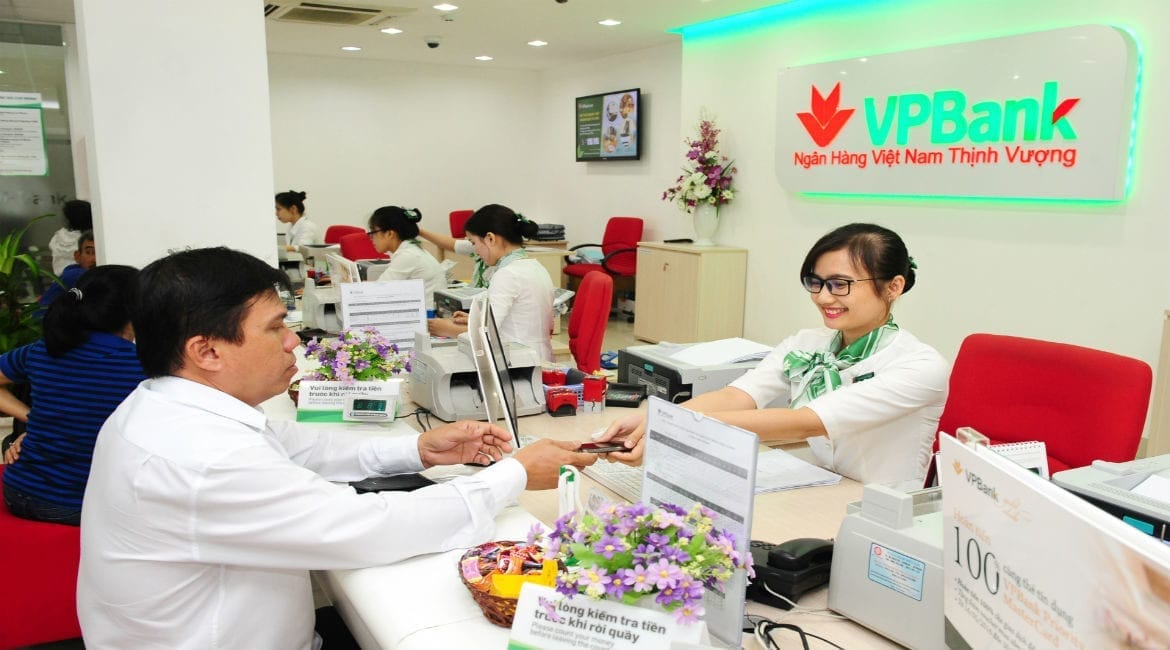
    According to Nguyễn Đức Vinh, general director of VP Bank, after years of investing in the financial company FE Credit, his bank was expecting to receive a large profit from the company in 2018.

    FE Credit started to gain profits from the retail banking segment in 2016, and the profit improved continuously last year. VP Bank’s financial reports showed that the bank’s profits last year hit a record high of more than VNĐ6.43 trillion (US$283.25 million), of which FE Credit made up some 51 per cent.

    Vietcombank also expects to better exploit the potential retail banking segment this year, as it recruited Thomas William Tobin, a Canadian foreign senior expert in retail banking, last year, to be its retail banking director. It was the first time the State-owned bank appointed a foreigner in its management board, showing its priority for the retail banking segment.

    Vietcombank’s chairman Nghiêm Xuân Thành hoped that the expert, who has expertise in global and Vietnamese finance, will help the bank make a leap in the retail banking segment.

    Vietcombank is targeting to become the country’s leading bank in retail segment in 2020, Thành said.

    According to Nguyễn Đình Tùng, general director of the Orient Commercial Joint Stock Bank, his bank is expected to earn a pre-tax profit of more than VNĐ1 trillion in 2018, thanks to specific strategies in the sales of financial products, especially in non-credit services.

    Some other banks have also planned to better exploit the potential business segment in 2018 through mergers and acquisitions last year. Typically, Shinhan Bank Vietnam acquired ANZ’s retail banking services or the Vietnam International Bank (VIB) acquired the HCM City’s branch of Commonwealth Bank of Australia.

    According to experts, banks are investing significantly in retail banking services, instead of only focusing on corporate lending in the hope of gaining higher profits from the potential segment this year.

    With more than 93 million people and sharply increasing consumption, Việt Nam is considered a hot destination for the retail banking segment, which is why banks have strategically planned to boost the segment.

    In fact, the in-cash habit of Vietnamese people is no longer an obstacle to the development of card network and non-credit services. Thus, several banks are aiming to give their customers a variety of non-traditional credit services, such as savings and transactional accounts, mortgages, personal loans, debit and credit cards.

    Notably from the beginning of this year, many banks have considerably improved the quality of their retail banking services to enhance competitiveness in the market. They are also focussing on other aspects such as marketing, technology and human resources to attract more individual customers to non-credit services.

    The move was decided after the retail banking segment contributed to a large amount of the total profits of many banks last year. BIDV and MB Bank, for example, gained high profits last year, thanks to a 34 per cent to 35 per cent rise in retail banking services.

    Nguyễn Thanh Nhung, general director of VietBank, said retail banking services would be a key to making a sustained and stable profit for the banking sector this year. The development of non-credit services contributes to diversifying bank’s services, thereby bringing more customers. This type of service will also disperse risks and create higher profits for commercial banks, said Nhung.

    According to Trần Du Lịch, a member of the National Financial and Monetary Policy Advisory Council, banks currently not only gain profits from lending but also from retail banking services, so the move to invest in retail services is inevitable in the future.

    Based on the results gained, leaders of commercial banks said they would continually apply this business strategy, with a focus on retail banking services next time.
     

  • Standard Chartered probed by US over Indonesia ‘bribes’

    Standard Chartered probed by US over Indonesia ‘bribes’

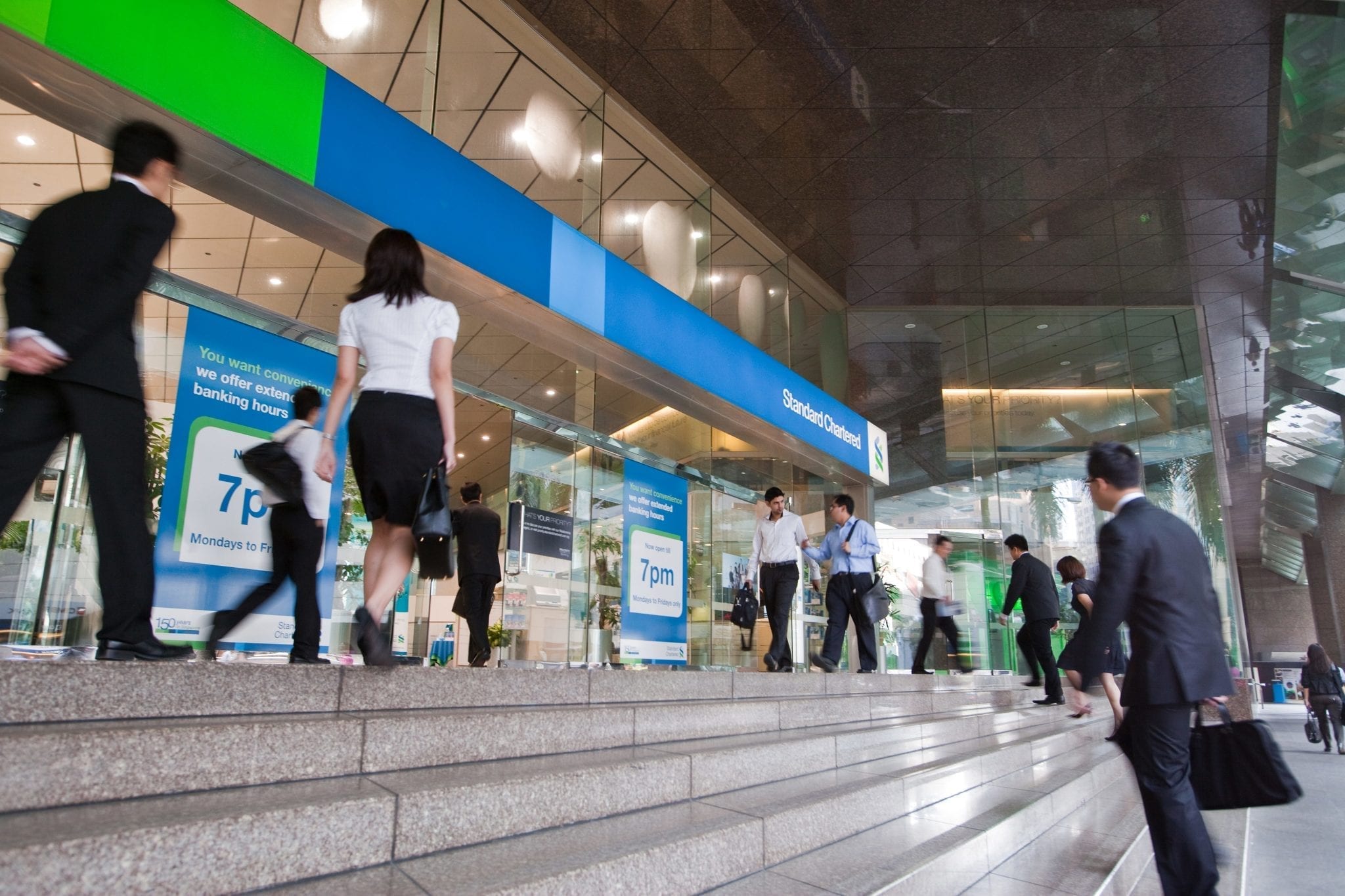
    Standard Chartered acknowledged on Tuesday (Sep 27) it was being investigated by the US Department of Justice over claims that an Indonesian subsidiary had paid bribes to secure contracts.

    The London-based, Asia-focused bank said in a statement that it had referred the matter to the “appropriate authorities” and launched its own review.

    The Wall Street Journal newspaper said that an internal audit at Indonesian energy company Maxpower Group found evidence of possible bribery and US prosecutors were examining whether Standard Chartered was culpable for not stopping it.

    “Standard Chartered takes very seriously allegations of impropriety in any of our private equity investments,” the bank told AFP in a statement when asked about the report.

    “We proactively referred this matter to the appropriate authorities and have conducted our own review.

    “When we receive allegations of improper behaviour in an investee company, we pursue those allegations vigorously and act appropriately, including sharing information and cooperating fully with government authorities and addressing any issues of internal conduct and accountability.”

    The Department of Justice did not comment when contacted by AFP.

    The Wall Street Journal said the Maxpower internal audit found that more than US$750,000 in cash advances needed to be examined as possible bribes, while lawyers who reviewed the audit found indications that employees made inappropriate payments to Indonesian government officials between 2012 and 2015.

    Standard Chartered began investing in Maxpower in 2012 and is the majority shareholder. There was no immediate comment from Maxpower.

    But a source close to the case told AFP the US authorities were indeed examining whether Standard Chartered, via its representatives on the Maxpower board, was aware of alleged bribes to win government contracts.

    The investigation would also look at why the bank’s alert procedures for spotting such matters had not been triggered.

    But the probe will focus on whether Standard Chartered has violated the terms of its 2012 deferred prosecution agreements with the Department of Justice.

    Standard Chartered paid US$667 million in 2012 to settle charges it violated US sanctions by handling thousands of money transactions involving Iran, Myanmar, Libya and Sudan.

    In August 2014, the bank was hit by US regulators with a US$300 million fine and restrictions on its dollar-clearing business for failing to detect possible money-laundering.

  • Many foreign banks have not complied with SMEs credit policy

    Many foreign banks have not complied with SMEs credit policy

    Bank Indonesia said many banks mainly branches of foreign banks have not complied with the call for setting aside at least 10 percent of their credits for micro, small and medium enterprises (SMEs) .

    Head of Bank Indonesias division for development of SMEs Yunita Resmi Sari in Jakarta said despite facility such linkage branches of foreign banks are still in difficulty in extending credits for SMEs as asked by the central bank.

    “We are aware that foreign banks have limited networks of branches and their capacity is not for SMEs,” Yunita said here on Thursday.

    In 2015, the central bank asked banks to increase the portion of their credits for SMEs by 5 percentage points a year to 20 percent in 2018.

    Yunita , the central bank is preparing a policy on SMEs credits from foreign bank branches.

    Until August, this year, more than 100 of the 119 banks in the country already set aside 10 percent of their credits for SMEs.

    Yunita said the SMEs credit market is still wide open , pointing out only 22 percent of 57.8 million units of SMEs have access to bank credits.

    SMEs account only 19.7 percent or Rp827.3 trillion of the total outstanding credits of banks in the country by the end of the second quarter of 2016.

    The SMEs credits grew 8.3 percent year-on-year in the second quarter of 2016.