Tag: retail finance

  • Sir Dickson Poon Explores Sale of Harvey Nichols as Losses Reach £34 Million

    Sir Dickson Poon Explores Sale of Harvey Nichols as Losses Reach £34 Million

    Hong Kong retail billionaire Sir Dickson Poon is exploring a potential sale of Harvey Nichols, appointing FTI Consulting to assess strategic options after 35 years of ownership.

    The British luxury chain is engaged in early-stage talks with multiple international parties regarding a potential transaction or new investment. The formal review follows Poon’s retirement as a company director last month.

    Advisers at FTI Consulting are evaluating proposals as the 195-year-old retailer contends with deteriorating earnings. In its 2024 financial year, Harvey Nichols saw turnover decline 5 per cent to £204 million while pre-tax losses widened from £21 million to £34 million.

    Widening Deficits Across the Flagship Network

    Harvey Nichols operates flagship sites across Britain, including Edinburgh, Leeds, Manchester and its core multistory property in London’s Knightsbridge. Internationally, the footprint extends to stores in Hong Kong and several Gulf markets, alongside London’s OXO Tower Restaurant, Bar & Brasserie. The overall group employs about 1,200 staff, but footprint limitations have steadily eroded margins relative to rivals.

    Pre-tax deficits increased from £21 million to £34 million in the 2024 financial year, according to company accounts. Footfall declines followed the British government’s withdrawal of tax-free shopping for international tourists. Competitors Harrods and Selfridges weathered that policy shift by deploying significantly larger retail floor plates that accommodate deep brand concessions and private client salons.

    The Limits of Mid-Tier Luxury Footprints

    For Asian retail conglomerates and luxury operators, the disposal highlights the structural vulnerability of traditional department stores that lack property ownership or mega-flagship scale. Retailers with tight physical footprints cannot extract the concession fees or exclusive boutique allocations demanded by tier-one European fashion houses. When operating costs rise, smaller department stores absorb inventory risk that broader department stores push directly onto luxury brand tenants.

    Prospective buyers face heavy capital expenditure commitments if they intend to turn the brand around. Chief executive Julia Goddard, who took over in 2024 after leaving Alexander McQueen, started refurbishing the London flagship and pushing floor space into high-margin fine jewellery. Preserving wholesale margins while funding store refits across secondary regional outposts represents a fragile balance sheet exercise for any incoming operator.

    From Knightsbridge Hub to Transformation Review

    Poon purchased Harvey Nichols from Burton Group in 1991 for £53 million. His leadership team, which included creative director Mary Portas, turned the Knightsbridge venue into a fixture of 1990s pop culture and fashion, attracting high-profile patronage from Diana, Princess of Wales. Regional and international franchising followed, expanding the brand to Asian and Middle Eastern retail developments.

    Recent years broke that trading momentum as pandemic disruptions coincided with shifting consumer spending patterns in core tourist corridors. The department store group declined to detail terms under discussion, noting: “We do not comment on market speculation. Harvey Nichols remains fully focused on delivering its transformation strategy.”

    Advisers at FTI Consulting are vetting preliminary proposals from international bidders, with binding terms and valuation multiples dependent on trading figures submitted for the current fiscal cycle.

  • David Jones Secures Emergency Cash from Hilco Global After Debt Breach

    David Jones Secures Emergency Cash from Hilco Global After Debt Breach

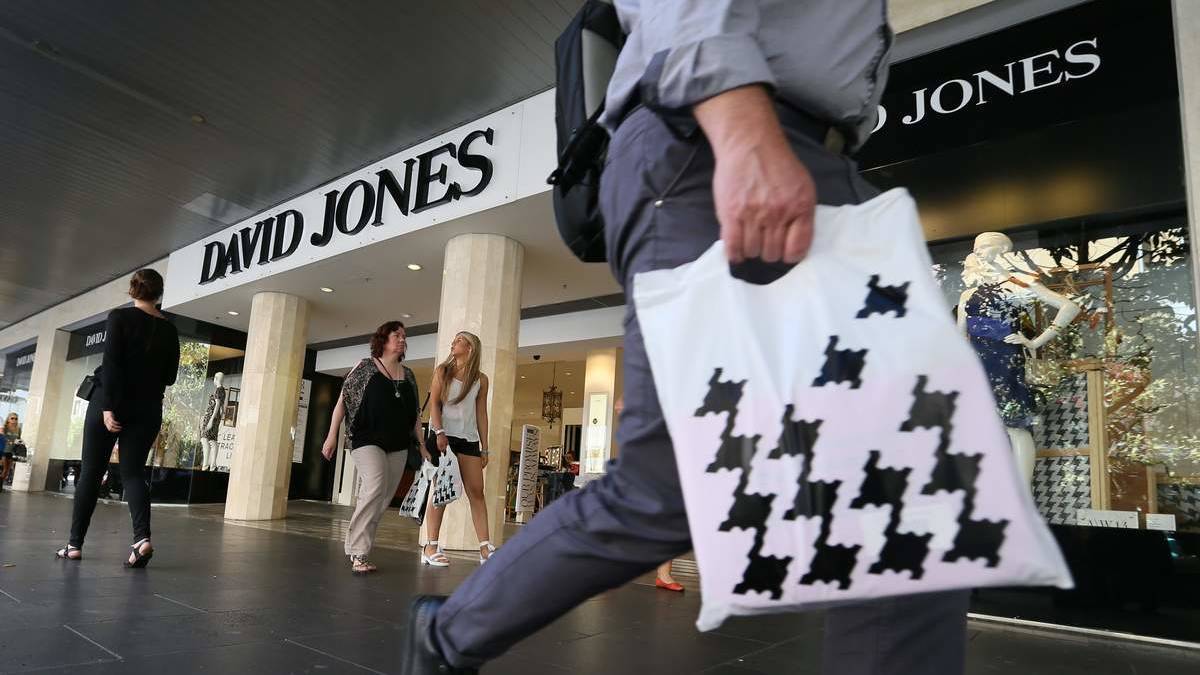
    David Jones received emergency funding from senior lender Hilco Global after breaching a loan covenant, as a $95.5 million pre-tax loss pushes Australia’s oldest department store chain to the edge.

    The cash injection keeps stock flowing ahead of the peak Christmas trading quarter following a drop of nearly 9 per cent in full-year sales across the network.

    UK special situations investor Hilco Global stepped in as the retailer’s primary lender in July, backing owner Anchorage Capital Partners. Instead of calling in the facility after the covenant breach, Hilco provided additional funding beyond its existing agreement.

    Lender Steps In to Stock Shelves

    The capital injection arrives at a critical juncture for chief executive Erica Berchtold. Department stores book the bulk of their annual margin between November and January, making inventory financing indispensable.

    Supply chain relations have deteriorated following months of speculation over delayed supplier settlements. A $250 million network overhaul failed to reverse declining store traffic, leaving the business short of liquidity to support seasonal merchandise orders.

    “Hilco has funded above the agreed facility to allow David Jones to increase stock holdings ahead of the busy Christmas trade and sales period. Hilco remains supportive of the business,” a company spokesperson said.

    Hilco’s decision temporarily protects the business from administration. Even so, the lender now holds use over the company’s operational assets and real estate positions.

    Brands Pull Concession Floor Space

    Brand owners are taking floor space back into their own hands across the Australian market. Country Road Group confirmed it will eliminate almost 100 of its 283 concession pads across David Jones stores, covering labels including Country Road, Witchery, Mimco, Politix and Trenery.

    Global luxury houses reached the same conclusion weeks earlier. Christian Dior halted sales of shoes and handbags in the chain last month, Gucci withdrew its brand space, and Chanel eliminated its footwear concession while retaining cosmetics counters.

    When anchor apparel brands pull out, the traditional department store business model collapses. Department operators depend on concession fees and luxury foot traffic to pull shoppers through multi-level city flagships, where high fixed rents and rising staff costs penalise low volume per square metre.

    For competing landlords and standalone mall operators in the region, the retrenchment accelerates a long-running shift toward direct-to-consumer flagship leases. Premium fashion labels prefer dedicated boutique footprints over subsidising regional department store floors.

    Private Equity Overhaul Under Pressure

    Australian private equity group Anchorage Capital Partners acquired David Jones in 2023 with plans to trim overheads and modernise the digital storefront. The investment firm is running out of options to engineer an operational turnaround.

    Earlier restructuring moves already shrank the retail footprint. In January, the group permanently shut its suburban stores at Castle Towers in Sydney and Tuggerah on the New South Wales Central Coast.

    Pressure is building inside the boardroom as directors weigh solvency requirements against trading liabilities. If customer spending remains subdued through December, the business will face immediate refinancing demands in early 2027.

    The Timeline to February

    The retail group faces its next operational cliff in February 2027, when Country Road Group executes the planned withdrawal of nearly 100 apparel pads.

    That exit will leave vacant space across multiple store levels, forcing management to recruit replacement brands or accelerate store footprint reductions.

  • Philippine Credit Card Bad Debts Jump to P68 Billion as Inflation Bites

    Philippine Credit Card Bad Debts Jump to P68 Billion as Inflation Bites

    Philippine commercial banks saw non-performing credit card receivables surge 11.8 per cent to P68.28 billion in June as living costs strained consumer budgets across the country.

    Bad loans outpaced overall card lending, which expanded 5.3 per cent over the same period to reach P1.294 trillion.

    Data from the Bangko Sentral ng Pilipinas, presented by First Metro Securities head of institutional research Estella Dhel Villamiel at a forum in Manila, showed non-performing card balances climbed from P61.07 billion in March. The share of distressed balances rose from 4.97 per cent to 5.28 per cent of total card receivables in three months.

    Accelerating Bad Debts Across Bank Books

    The expansion in card debt reflects both broader financial inclusion and growing household reliance on credit to manage monthly overheads. While higher transaction volumes naturally lift gross receivables, bad balances are expanding at more than twice the speed of new lending.

    A typical rollover balance of P20,000 incurs roughly P600 in monthly interest at standard 3 per cent card rates before penalties. When wages fail to keep pace with basic expenses, compounding finance charges absorb disposable income that would otherwise flow directly into retail cash registers.

    Mounting Pressure on Retail Margins

    For supermarket chains, department stores and consumer electronics retailers, deteriorating consumer debt signals a clear shift in shopper behavior. High-ticket discretionary purchases slow first as cardholders exhaust their credit lines on groceries, transport and utilities.

    Retail operators facing elevated freight and import bills cannot rely indefinitely on debt-financed foot traffic to protect their sales volumes. If banks tighten revolving credit limits to contain default ratios, store operators will face immediate downward pressure on average basket sizes across metropolitan malls.

    Slowing Investment and Sticky Price Rises

    Macroeconomic indicators highlight why household balance sheets are cracking under everyday pressure. Philippine inflation climbed to 7.2 per cent in September from 6.1 per cent in August, driven by fuel costs and a weaker peso.

    DBS Bank projects Philippine inflation to average 6.5 per cent in 2026 and 5.5 per cent in 2027, with the currency forecast to slide toward P64 per US dollar by late 2027. Labor market softness compounds the strain: August unemployment rose to 5.3 per cent from 3.9 per cent a year earlier, while underemployment climbed from 10.7 per cent to 11.9 per cent.

    Capital Formation Drops as Consumption Stalls

    Second-quarter national accounts revealed household consumption grew 2.8 per cent and gross domestic product expanded 2.3 per cent, but gross capital formation dropped 9.2 per cent. A sharp contraction in capital formation points to weaker future job creation, limiting the wage growth required to service existing card balances.

    Commercial lenders and retailers will look to fourth-quarter holiday spending figures to measure real demand, before credit statements arriving in January reveal whether repayment delinquency breaches the 5.5 per cent mark.

  • Vietnam Gold Prices Drop to Lowest Level Since July

    Vietnam Gold Prices Drop to Lowest Level Since July

    Gold prices in Vietnam dropped on Saturday morning to their lowest level since July 22, tracking an overnight tumble in global bullion markets.

    Saigon Jewelry Company gold bars declined 1% to VND148.7 million ($5,700.59) per tael, which equates to 37.5 grams. Gold rings slipped 0.99% to VND149.7 million per tael, bringing the total decline for domestic gold to 2.68% so far this year.

    Global Bullion Tumbles on Rate Bets

    The domestic retreat tracked sharp losses across international trading desks. Spot gold fell 2.9% to $4,567.23 per ounce on Friday, marking its lowest reading since August 20. U.S. Gold futures for December delivery settled down 2.9% at $4,529.9 per ounce.

    Traders liquidated positions after Federal Reserve Chairman Kevin Warsh indicated that inflationary pressure remains persistent. The comments prompted markets to price in higher odds of monetary tightening rather than immediate policy relief.

    Domestic Retail Demand Reacts

    The drop reversed an earlier weekly rally that lifted global prices to a high of $4,696.18 on Tuesday. Gold ended the week down 2.9% overall.

    In Vietnam, physical gold remains a primary retail savings vehicle and an inflation hedge. When global spot prices swing rapidly, domestic jewellery retailers adjust their buy and sell spreads within hours to protect inventory margins.

    Market participants now shift their attention to the upcoming Federal Reserve policy meeting in September to gauge whether physical bullion demand in Asia will face further currency and interest rate headwinds.

  • South Korea Faces Backlash over Planned 22 Percent Crypto Tax Rollout

    South Korea Faces Backlash over Planned 22 Percent Crypto Tax Rollout

    South Korea will enforce a 22 percent tax on annual cryptocurrency gains over 2.5 million won on Jan. 1. Retail traders across the country are pushing back hard.

    The policy targets earnings from trading and lending digital assets across domestic platforms serving an estimated 14 million registered users. Backlash intensified after the government scrapped a planned financial investment income tax on domestic equities. Retail investors argue the disparity unfairly penalises digital asset holders.

    Tax structure and revenue estimates

    Tax officials convened a closed-door expert panel to settle implementation rules. Yet questions remain. Traders and platforms want to know how the National Tax Service will assess earnings from staking yields and token airdrops.

    Parliamentary filings project annual tax revenue from digital assets between 400 billion won and 600 billion won. A prolonged market slump could drop that intake to 200 billion won. That lower sum represents less than half the corporate tax paid last year by Dunamu, the operator of South Korea’s largest digital asset exchange, Upbit.

    Local crypto trading volumes frequently rival main-board equity turnover in South Korea, one of the world’s most active retail markets. Regional rivals take a different path. Singapore and Hong Kong leave retail capital gains untaxed to attract capital, while Seoul pulls digital assets into its standard income tax net.

    Legislative push to delay rollout

    Political resistance is building ahead of the 2028 general elections. If the law takes effect in January, taxpayers will file their first returns in May 2028. That deadline falls just one month after voters cast ballots in the 23rd parliamentary elections.

    Opposition People Power Party lawmakers are moving to postpone the start date. Representative Jung Sung-kook introduced a bill on Aug. 10 to delay implementation by three years to Jan. 1, 2030. Representative Kim Sang-hoon is drafting a separate proposal for a two-year extension.

    Voters are also acting directly. A public petition on the National Assembly platform gathered more than 10,000 signatures within a week of its Aug. 21 launch. If the petition hits 50,000 verified signatures by Sept. 20, the parliamentary committee must open formal deliberations on whether to defer the start date.

  • Philippine Central Bank Lifts Key Rate to 5% to Tackle Sticky Inflation

    Philippine Central Bank Lifts Key Rate to 5% to Tackle Sticky Inflation

    The Bangko Sentral ng Pilipinas raised its benchmark policy rate by 25 basis points to 5 per cent on Thursday. The decision targets persistent price pressures across consumer staples and fuel.

    Overnight deposit and lending facilities climbed to 4.5 per cent and 5.5 per cent. That brings a third straight quarter of tightening, following rate increases in April and June.

    Headline inflation dropped to 6.2 per cent in July from 6.4 per cent in June, easing for a third consecutive month. Core inflation, which strips out volatile energy and food items, edged down to 4.2 per cent from 4.4 per cent. Both figures remain above the government target corridor of 2 per cent to 4 per cent.

    Pressures across food, fuel and wages

    Monetary officials warned that broader price pressures continue to build across supply networks. Volatile global oil benchmarks, potential crop losses from El Niño, and rising agricultural input costs threaten retail food prices nationwide.

    Labor expenses also sit high on the central bank’s monitoring list. A pending minimum wage increase for Metro Manila remains frozen in court. Even so, authorities noted that higher payroll expenses will filter into consumer prices if businesses pass on the cost.

    Bank of the Philippine Islands lead economist Emilio Neri Jr. Pointed out that monetary tightening cannot fix supply bottlenecks. Extreme weather, elevated fertilizer costs, and currency weakness threaten to drive import bills higher for retail operators and food manufacturers.

    Slower growth tests consumer demand

    Higher borrowing costs arrive at a delicate moment for consumer spending and commercial investment. Philippine gross domestic product expanded by 2.3 per cent in the second quarter, decelerating from 2.8 per cent in the first quarter. Gross capital formation shrank 9.2 per cent year-on-year.

    Across Southeast Asia, central bankers are balancing household purchasing power against softening corporate investment. While regional peers have paused rate adjustments to protect domestic commerce, Manila is prioritizing price stability. The focus is on preventing inflation expectations from taking root in retail checkouts.

    Average inflation will exceed the 4 per cent upper boundary through both 2026 and 2027 before settling near the 3 per cent target in 2028, according to central bank forecasts.

  • Shein Prices Hong Kong IPO at $26.5 Billion Valuation to Raise $1.73 Billion

    Shein Prices Hong Kong IPO at $26.5 Billion Valuation to Raise $1.73 Billion

    Shein priced its Hong Kong initial public offering at HK$48.56 a share, raising HK$13.6 billion ($1.73 billion) and valuing the fast-fashion retailer at $26.5 billion.

    The price sits near the midpoint of the marketed HK$47.60 to HK$49.50 range. That crystallises a sharp valuation reset, leaving the business worth roughly one-quarter of its $100 billion private market peak in 2022 and down from $66 billion in 2023.

    Valuation Reset and Shareholder Payouts

    Cornerstone investors committed about $383 million to the offering. Existing backers Boyu Capital, Tiger Global and General Atlantic led that group, joined by Tencent, Greenwoods, Taikang Life and UBS Asset Management. Shein plans to spend 80 per cent of the net proceeds on upgrading technology infrastructure and expanding its international market reach.

    Cash outflows will also head straight to legacy backers. The company agreed to pay up to $3.5 billion to settle obligations with investors who bought special share classes during earlier private fundraising rounds.

    The listing ends a four-year hunt for a public venue after regulatory hurdles blocked attempts to float in New York and London. For Asian equity capital markets, securing a $26.5 billion consumer tech platform provides welcome liquidity to the Hong Kong exchange, but the steep discount shows investors now demand hard profitability rather than runaway gross merchandise volume.

    Slowing Growth and Market Scrutiny

    Financial filings show operating momentum has cooled across key Western markets. Shein reported revenue growth of just 1.1 per cent in the first quarter, with management projecting first-half performance to match that pace alongside slightly weaker operating margins.

    Local retail demand in Hong Kong proved muted during the bookbuild following a broader regional equities retreat in July. Alvin Cheung, associate director at Prudential Brokerage, noted that retail investors questioned Shein’s expansion prospects as shipping expenses and competition climbed.

    Goldman Sachs, Morgan Stanley and JPMorgan served as joint sponsors on the deal. Final institutional and retail allotment figures will be published on Monday, ahead of the stock’s trading debut on the Hong Kong Stock Exchange on Tuesday.

  • China Launches Offshore Government Bond Futures to Boost Yuan Usage

    China Launches Offshore Government Bond Futures to Boost Yuan Usage

    China has initiated offshore trading in government bond futures from Hong Kong, a pivotal step in its ongoing efforts to internationalise the yuan. This new financial instrument is expected to enhance the currency’s appeal by offering improved stability and hedging capabilities, particularly to investors outside Western markets.

    Expanding Yuan’s International Reach

    The introduction of offshore government bond futures is part of China’s broader strategy to gradually open its financial system to foreign participation. By providing more avenues for investors to engage with yuan-denominated assets, Beijing aims to bolster the currency’s global standing and reduce reliance on other major currencies for trade and investment.

    This development follows a series of measures designed to integrate China’s markets with the global financial system. Recent years have seen increased foreign investment in Chinese bonds and stocks through various connect schemes with Hong Kong, fostering a more accessible environment for international capital. The new futures contracts offer an additional layer of sophistication for portfolio management, enabling investors to mitigate interest rate risks associated with Chinese government debt.

    Implications for Asian Markets

    For retailers, consumer brands, and technology companies operating across Asia, a more widely used and stable yuan could simplify cross-border transactions and investments. As trade flows within the Asia-Pacific region continue to grow, a stronger international yuan provides an alternative to traditional reserve currencies, potentially reducing foreign exchange volatility for businesses with significant exposure to the Chinese market.

    RetailNews Asia has been tracking China’s deliberate steps to expand its financial influence, including the increasing issuance of yuan-denominated bonds by other nations and the growth of ‘panda bonds’ within its domestic market. This latest move with offshore bond futures reinforces China’s ambition to position the yuan as a major currency for global finance and trade, impacting how businesses structure their financial operations across the region.