Tag: Retail Food Group

  • Retail Food Group EBITDA Drops 31% as Network Trims 29 Stores

    Retail Food Group EBITDA Drops 31% as Network Trims 29 Stores

    Retail Food Group posted a 31.4 per cent drop in underlying EBITDA to $20.3 million for FY26 as weak consumer spending dragged down domestic sales.

    Domestic network sales across its franchise brands dropped 3.1 per cent to $489.5 million, while same-store sales slipped 0.7 per cent over the twelve-month period.

    The company, which owns Gloria Jean’s, Donut King, Crust, Brumby’s and Beefy’s, closed 35 underperforming stores and opened six new locations during the financial year. That left the group with a net reduction of 29 outlets across Australia as management trimmed non-core real estate.

    Rolling Out Firehouse Subs

    To reverse the sales slide, the franchisor is leaning into regional expansion and imported quick-service formats. It launched the US sandwich chain Firehouse Subs in Australia during the year, opening the debut site at Mt Gravatt in Queensland. The location produced the highest opening-day sales of any international Firehouse Subs restaurant to date, the company said.

    Retail Food Group plans to have four Firehouse Subs locations trading by December. Management aims to expand that footprint to 15 stores by the end of next year.

    Cost Targets and Franchise Margins

    Multi-brand franchise operators across Asia-Pacific face squeezed household discretionary budgets and rising labor costs, pushing holding groups to prune marginal mall sites in favor of higher-volume fast-food models. The group spent recent years re-engineering legacy bakery and coffee networks to stabilize store-level profitability following earlier portfolio contractions.

    Executive chairman Peter George said trading conditions remained difficult throughout FY26, with macroeconomic pressures hitting the second half. The company is now pursuing between $5 million and $7 million in cost savings in FY27, with capital focused on franchise partner economics, cash generation and the planned December store openings.

  • More refresh design for Pizza Hut Australia

    More refresh design for Pizza Hut Australia

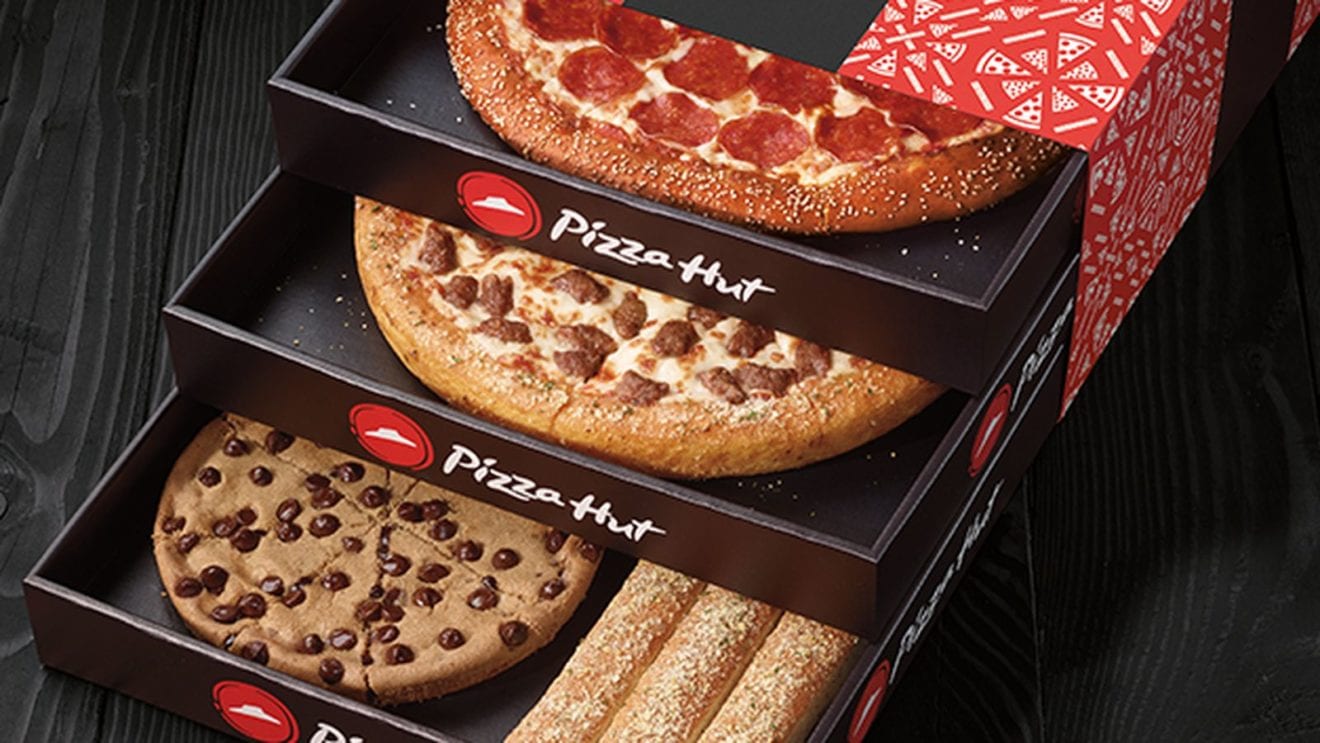
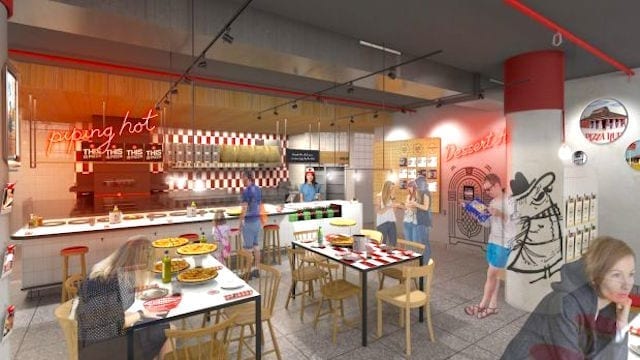
    Pizza Hut Australia has taken its next big step back into the fore, unveiling a new brand image and concept store in a bid to redefine its position in Australia’s highly competitive pizza market.

    The new store, launched yesterday in Sydney has been designed as a fresh take on contemporary Australia with ties to the brand’s US heritage and will inform a broader store refresh program, which began earlier this year.

    Its original brand icon Pizza Pete has also been reintroduced into signage and internal designs alongside several menu innovations, such as localised flavours, designed to cement its point-of-difference as a dine-in pizza option – juxtaposed to market leader Domino’s delivery-focused offer.

    The move is a sign that the chain’s owner, private equity firm Allegro Funds, is looking to bolster the consumer-side competitiveness of the chain, after it purchased the master-franchise license for Pizza Hut from American owner Yum! Brands in 2016.

    Under Yum! Pizza Hut began falling behind rival Domino’s technologically enabled fast-delivery model, prompting management to spend the last year undertaking a broad-based improvement plan within the business that included the acquisition of Eagle Boys outlets late last year.

    Allegro has also been busy bringing new talent into the business to reposition its future under the stewardship of former McDonald’s executives Peter Rodwell, Lisa Ransom and Chris Leslie. The chain’s new director of innovation, Matthew Sawyer, who was brought over from McDonald’s in December last year, said that the re-brand would deliver a local spin on a well-known brand with global credentials.

    “Pizza Hut in previous years had lost its direction and when we took over the business we clearly identified that there was a lot of love for the brand – in particular the old dine-in restaurants with the all you can eat buffets and the self-service desserts,” he said. “We knew we had to do something around that to reconnect with the Australian community.”

    Sawyer said dine in will be a point-of-difference for Pizza Hut’s new look, with franchisees given autonomy within a flavour toolkit to localise parts of the menu. He calls it ‘glocal’ – a play on the words local and global – a philosophy that will be rolled out through the 300+ store network.

    “Over the next few years you’ll see significant change in the brand, how fast we roll this out will depend on how fast we learn about how well certain items work in different communities,” he said. “That’s the thing about global, it’s going to be different everywhere.”

    In many ways the dine-in focus doubles down on Pizza Hut’s pre-existing market position, but made-to-order rather than pre-prepared pizzas as well as new delivery methods, such as electric bikes, will round out the new offer.

    Allegro has previously said it has no intention of contesting Domino’s market leading position, but does want to cement itself as the number-two in the Australian market, making Retail Food Group (RFG)’s Pizza Capers and Crust brands relevant competitors.

    RFG has been embarking on its own repositioning since last year, revamping its QSR division to focus more heavily on lunchtime business with new products and mobile food trucks. IBISWorld data from 2016 placed Pizza Hut’s share of the local market at just over 15 per cent after the Eagle Boys acquisition, compared to Domino’s 25 per cent share and RFG’s 4 per cent share.

  • Pie Face expansion plan in Japan and Korea

    Pie Face expansion plan in Japan and Korea

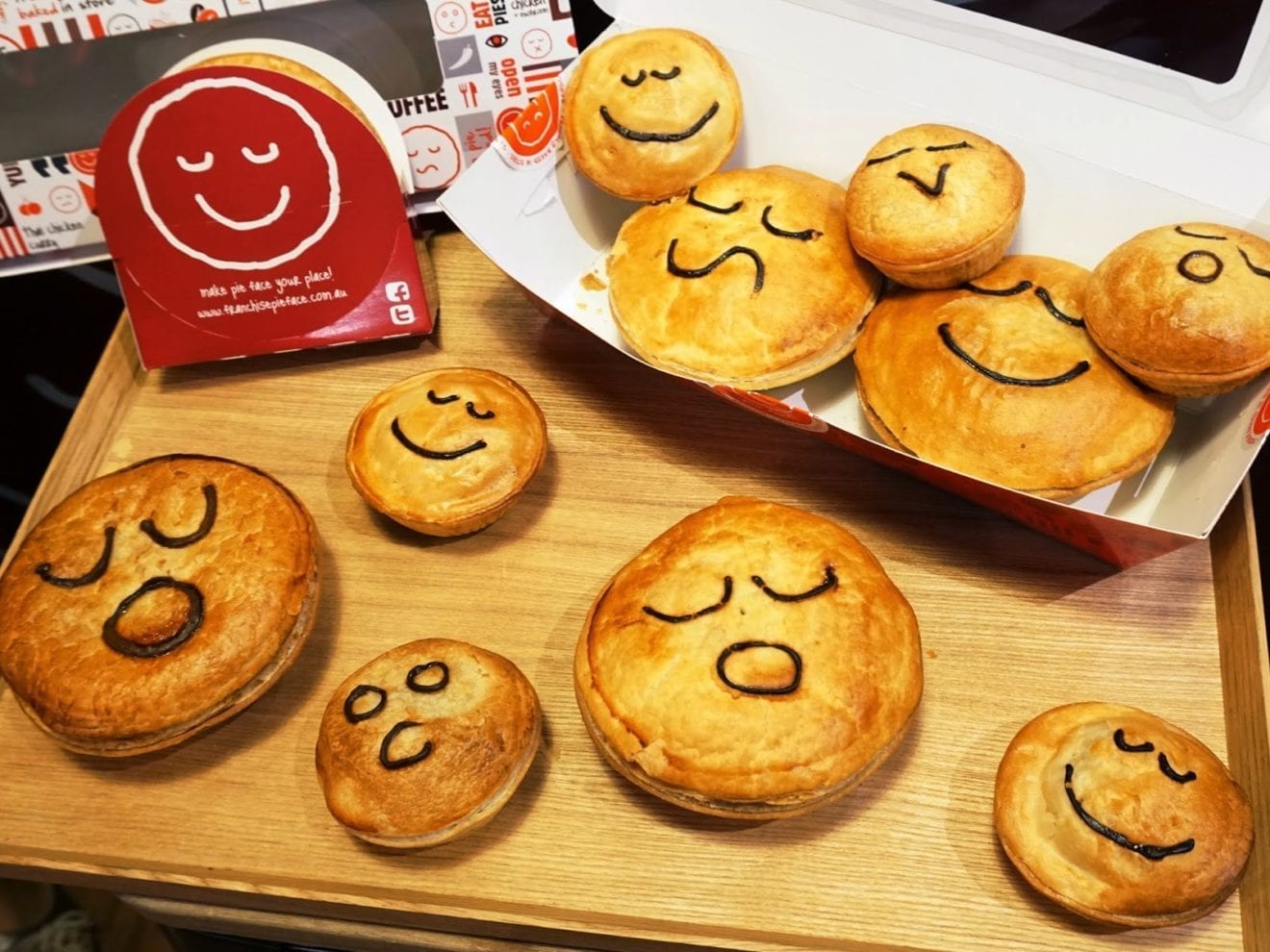
    As it turns around and heads toward profitability again, Australian fast-food chain Pie Face has plans to expand into Japan and South Korea.

    Its receiver flags the hot-pie business will be sold soon, but it has left behind a trail of destruction: secured debt is AU$4 million (US$3 million) and unsecured debt is estimated to be nearly AU$5 million, with employees alone owed more than AU$1 million.

    Also, listed Retail Food Group has made an application to the Queensland Supreme Court to wind up Pie Face Australia over an unpaid debt. But many creditors are unlikely to receive payment out of the receivership, says Pie Face trading entities joint receiver Liam Bailey, a partner at insolvency firm O’Brien Palmer.

    “I can’t speak to what the liquidator may be able to recover and pay them as a dividend, but it’s unlikely a surplus will be generated on the sale of the business, allowing funds to flow to unsecured creditors.”

    The Pie Face company runs a commercial kitchen and wholesaling business, Pie Face Holdings, which owns the intellectual property as well as Pie Face Franchising, which oversees its franchised business in Australia.

    US market

    Bailey became involved after Pie Face went into receivership for the second time in two years late last year. Founded in 2003 by couple Wayne Homschek and Betty Fong, after spreading through Australia the company moved into the US market and planned to open stores in the Middle East, Japan, Korea and the Philippines.

    Investors including retail entrepreneur Brett Blundy, Fat Prophets founder Angus Geddes and Rothschild Australia chairman Trevor Rowe had poured more than $35 million into Pie Face since 2009 with hopes of a sharemarket listing, reports The Age.

    In 2014, Pie Face collapsed owing tens of millions of dollars, sparking store closures, job losses, lawsuits and board changes. Pie Face then struck a deal with financier TCA Global, which took over loans to major lender Macquarie bank.

    Under a deed-of-company arrangement, unsecured creditors such as food suppliers agreed to receive between 14¢ and 19¢ in the dollar over several years, and Pie Face changed its focus to wholesale and direct retail sales.

    When this turnaround bid came unstuck, TCA Global appointed O’Brien Palmer in late October. The business was then restructured for sale. A new CEO and CFO were appointed, 11 unprofitable stores were closed and three franchised stores were opened. Nearly 100 staff members lost their jobs.

    Pie Face now has 30 franchised stores, about 10 people in its head office and 60 to 70 kitchen workers – and plans to expand overseas, particularly in Japan and South Korea.

    Bailey says seven or eight companies are now conducting due diligence, with binding offers due in at the start of next month.

    “We were very much taken aback by the level of interest in the business notwithstanding the bad press it has received over the years,” he says. “There’s a lot of recognition of the growth potential, if properly managed.”

  • RFG eyes India’s $24b franchise industry

    RFG eyes India’s $24b franchise industry

    Retail Food Group (RFG), has entered into an exclusive partnership with Franchise India, Asia’s largest integrated franchise solution company to launch its brand in India.

    Franchise India has extensive experience in pairing franchisors with qualified master franchise partners while creating a high level of interest from potential local franchisees to achieve successful international expansion for foreign brands. The organisation also runs the world’s leading franchise website.

    Andre Nell, CEO franchise of RFG, said RFG is targeting significant international growth with plans to open 130 outlets in international markets this financial year.

    “RFG’s Brand Systems are market leaders and award-winning brands in Australia, each possessing successful business models that have been proven over many years. Our goal is to replicate this success in global markets by working with motivated partners who share our vision,” said Nell.

    “RFG is looking forward to working with Franchise India and leveraging their extensive reach and intimate knowledge of franchising.”

    Franchising in India Gaurav Marya, chairman of Franchise India, said the country’s franchise industry is valued at $24 billion with year on year growth of 30 per cent.

    “India’s franchising industry continues to thrive, driven by a growing preference for internationally branded products and an emerging café culture,” said Marya.

    “The retail and food and beverage sectors have evolved over the last decade, leading to a high level of consumer interest in specialty and gourmet brands in particular. The market is expected to increase in value to around $35 billion by 2020.

    “With a rising global awareness and increasing spends on eating out among Indian consumers, the timing is opportune for RFG to enter the Indian market.”

    Under the new partnership Franchise India will use their extensive network, database and marketing systems to recruit Master Franchise Partners for RFG.

    Franchise India and RFG will be recruiting Master Franchise Partners for the Gloria Jean’s Coffees, Crust Gourmet Pizza, Donut King, Michel’s Patisserie, Brumby’s Bakery, and Pizza Capers Brand Systems.

    With the opportunity for a minimum of six licenses across India, Nell said he is confident RFG’s unique business model will be a major point of difference for potential partners.

    “RFG’s strength in brands philosophy positions us to enter the market with multiple Brand Systems, increasing our ability to effectively and efficiently provide enhanced support systems and resources to our partners in the region,” said Nell.

    “Our existing support team is currently based in India, made up of seasoned experts in franchising who, along with the experienced team at Franchise India, will be invaluable assets as we work with our prospective Master Franchise Partners to develop a successful model for their territory.”

    Behind RFG’s international expansion

    RFG’s international expansion model is based on recruiting master franchise partners who purchase a licence to develop a certain brand system in a defined territory.

    Nell said the master franchise partner model provided the company and local partners with the opportunity to forge sustainable partnerships to successfully develop RFG’s Brand Systems internationally.

    “We firmly believe our international licensees are more like our business partners. Our international model has become very collaborative and supportive as we work with partners on development schedules and growth strategies as well as marketing and training,” said Nell.

    “The benefit for partners is access to a wealth of experience in retail food franchising, proven systems and a global training and support framework, while RFG gains a partner with the strategic, operational and financial capabilities to expand each brand system within their territory.”

    Nell said RFG’s franchising expertise and strong established Brand Systems provided the company with the perfect opportunity for significant expansion into international markets.

    “Refined over 11 years and 40 global territories, RFG’s global franchising expertise and master franchise partner model provides the perfect springboard for the company’s established Australian brands to enter major new international markets.”