South Korean retail investors poured an estimated $10 billion into US used exchange-traded funds during the first half of the year. The buying gave them dominant stakes in several high-risk products. Korea Securities Depository filings show domestic accounts held $5.24 billion in the Direxion Daily Semiconductor Bull 3X Shares alone. That equals 27 per cent of the fund’s $19.3 billion market capitalisation.
This concentration spreads well past semiconductor tracking. Korean buyers hold 38.8 per cent of the Direxion Daily TSLA Bull 2X Shares and 37.6 per cent of the Direxion Daily MSCI South Korea Bull 3X Shares, alongside 20.9 per cent of the ProShares Ultra QQQ. Net buying of the semiconductor fund reached $2.43 billion this year. That outstripped demand for standard index trackers by a factor of 1.5.
Regulatory Caps at Home Drive Outflows
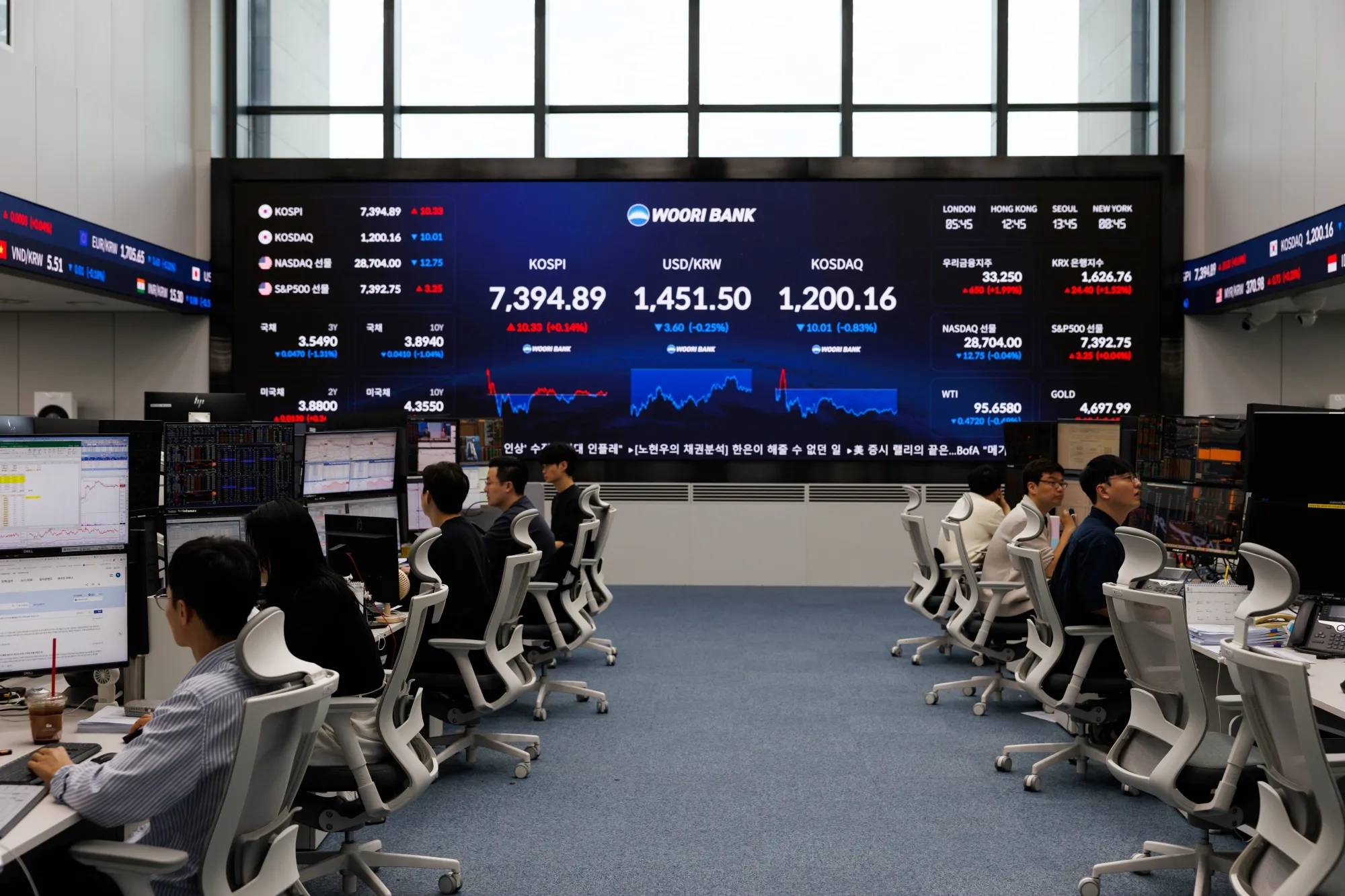
Financial regulators in Seoul prompted the overseas shift by imposing minimum deposit rules and volume ceilings on domestic single-stock used products. The restrictions failed to cool risk appetite. Capital flowed straight to US exchanges, where investors access uncapped daily use across individual equities, semiconductor benchmarks, and international country indices.
Total Korean equity holdings in the US stand at $112 billion. That is barely 0.2 per cent of total American market capitalization. In specialized used derivatives, however, concentrated buying turned Seoul day traders into the dominant liquidity provider.
Past retail surges across East Asia followed a similar pattern. Tighter domestic margin rules in markets like Hong Kong and Tokyo pushed speculative volumes into offshore derivatives whenever local platforms restricted margin access.
Night Trading Halts Force Blind Orders
Heavy order flow disrupted execution infrastructure on September 1. Alternative trading system Blue Ocean ATS suspended daytime trading for 18 securities, including the top semiconductor and Korea bull funds. The platform acted under the US Securities and Exchange Commission Fair Access Rule. That rule triggers extra regulatory burdens when an alternative venue handles 5 per cent or more of a single security’s volume over four out of six months.
Local brokerages including Samsung Securities and Toss Securities routed daylight orders to alternative platforms MOON and Bruce to keep order lines open. These backup venues do not deliver real-time quote feeds. Clients had to enter limit orders without viewing bid and ask spreads.
Blue Ocean reviews trading volumes monthly to determine when the 18 suspended securities can return to its platform. Meanwhile, brokerage houses in Seoul are building backup order-routing networks to prepare for further liquidity limits.