Tag: retail investors

  • Korean Brokerages Offer 24-Hour US Stock Trading from Dec. 6

    Korean Brokerages Offer 24-Hour US Stock Trading from Dec. 6

    South Korean brokerages will launch round-the-clock trading in US equities on Dec. 6, pairing Nasdaq’s expanded 23-hour schedule with alternative trading venues to provide uninterrupted retail access.

    The collective rollout across every domestic securities house follows a four-day buying spree in early November where Korean investors poured $2.20 billion into American equities.

    Under the structure assembled by domestic brokerages and the Korea Securities Depository, firms will run Nasdaq’s 23-hour official session and route the remaining hour through alternative trading system Blue Ocean. Trading begins at 9 p.m. Eastern Time on Sunday, Dec. 6, which translates to 11 a.m. In Seoul on Monday, Dec. 7. The setup also captures exchange-traded funds listed on NYSE Arca, which expands its own operations to 23 hours a day on the same date.

    How Custody and Data Flow Work

    Settlement pipes require coordination across time zones. The Korea Securities Depository instructed Citibank, its local custodian, to increase transaction monitoring and prevent trade breaks, while projecting that longer operating shifts will not lift domestic administrative overheads.

    Bringing daytime execution into official exchange tapes alters market depth. Korean retail traders previously accessed US shares during daylight hours through off-exchange alternative systems, primarily Blue Ocean, Bruce, and Moon. Under the overhaul, individual brokerages will pull real-time order books directly from the New York Stock Exchange and Nasdaq under bilateral commercial agreements, narrowing execution spreads.

    Retail demand justifies the engineering expense. Net buying between Nov. 2 and Nov. 6 reached $2.20 billion, outstripping the entire monthly tally for August of $1.96 billion and more than doubling September’s $1 billion total. October finished at $5.42 billion, leaving brokerages little choice but to automate overnight desks.

    Asia Diverges on Extended Hours

    Seoul’s universal adoption contrasts sharply with caution across rival Asian financial hubs. Japanese and Taiwanese brokerages are limiting 23-hour access to selected foreign-equity desks, while activity in China remains largely institutional. Retail brokers in Australia, New Zealand, and Europe have ceded the rollout to fintech platforms, pointing to low overnight liquidity and thin night-shift staffing.

    Southeast Asian brokerages have stopped work on retail extensions altogether, leaving access mainly to high-net-worth clients through global trading desks. Korea’s retail punters, long accustomed to non-stop trading on local cryptocurrency exchanges, pressured domestic platforms to match that availability.

    Kospi Faces Direct Daylight Competition

    The immediate operational risk shifts to domestic equity liquidity. With Wall Street open during Asian working hours, Korean capital faces a daily choice between domestic corporate shares and large-cap US technology stocks.

    Shinhan Securities senior researcher Park Woo-yeol pointed out the friction: “Nasdaq’s move to 23-hour trading will challenge the assumption that the domestic stock market is the only market open during Korean daytime hours. With cryptocurrency exchanges already operating around the clock, Nasdaq’s regular session will become a direct competitor to the Kospi.”

    Local capital outflow represents a structural headache for domestic market operators. When domestic savers can trade Apple and Nvidia during their morning commute with full market-maker support, domestic listings lose their geographical monopoly on day trading.

    Korea Exchange Prepares Defensive Response

    The regulatory foundation was set in April, when the US Securities and Exchange Commission approved Nasdaq’s plan to stretch its operating envelope to 23 hours across five business days. Wall Street platforms moved quickly to lock in retail volumes generated outside American time zones.

    Faced with persistent capital flight into US equities, the Korea Exchange is drafting counter-measures. Exchange executives outlined a phased roadmap toward continuous domestic trading at the Korea Premium Week conference in September.

    Work centers on upgrading local market pipes. The Korea Exchange expects to complete technical architecture for a unified trading board by the end of 2027, with an initial 12-hour operational window launching through an extended morning premarket session.
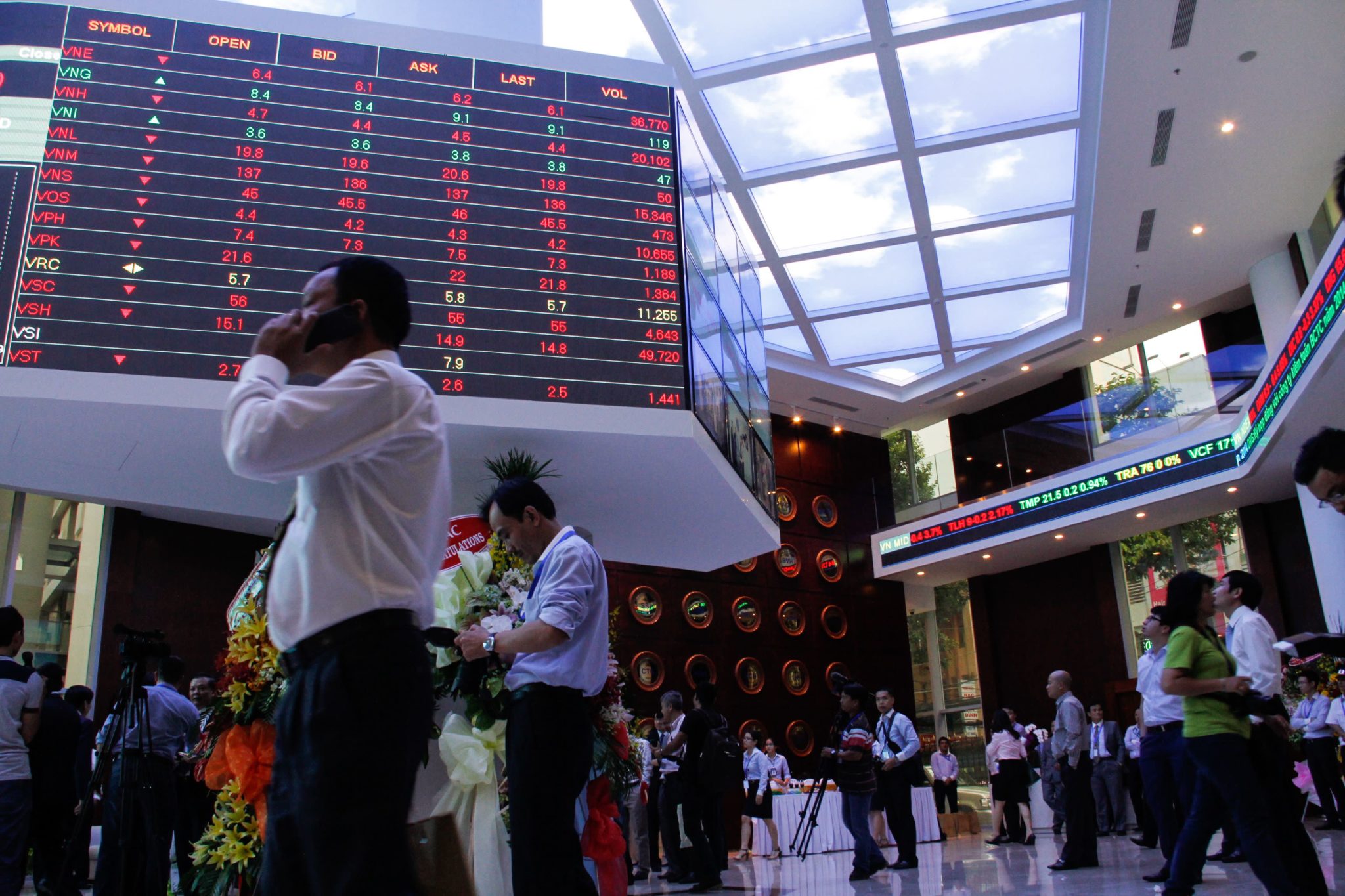

  • China Tech Stock Slide Wipes Out 3 Trillion Dollars in Household Wealth

    China Tech Stock Slide Wipes Out 3 Trillion Dollars in Household Wealth

    Chinese equities entered a bear market after shedding more than $3 trillion in market value, wiping out a year of tech-driven gains for approximately 250 million domestic retail traders.

    Trading volumes dried up across mainland exchanges following the longest unbroken selling streak on record, pulling major benchmark indices back toward levels recorded before Beijing introduced stimulus support in 2024.

    Individual accounts hold roughly 30 percent of Chinese equities by value but generate approximately 70 percent of total market turnover. That structural imbalance magnified swings throughout 2026, when millions of day traders rushed into initial public offerings tied to artificial intelligence, robotics, and semiconductors. Many of those listings were oversubscribed thousands of times over during the initial surge, before aggressive institutional selling quickly cut valuations.

    The Industrial Policy Trap

    State priorities continue to trigger aggressive capital allocation into targeted technology fields, but that factory floor expansion rarely safeguards margins for public shareholders. Local administrations across China race to fund identical supply chains, creating rapid manufacturing capacity that strips operating companies of basic pricing power.

    For consumer brands and retail operators, the equity retreat removes a vital support for household balance sheets already pressured by a multi-year property contraction. Domestic consumers who turned to equity trading to recoup residential real estate losses now face dual balance-sheet erosion, restricting discretionary spending across major metropolitan centres.

    Returns Lag Global Peers

    Over the past decade, the benchmark CSI 300 Index generated an average annual return of 4.2 percent, compared to 15.6 percent for the US S&P 500 Index. That performance trailed despite China expanding its nominal gross domestic product by roughly 7 percent annually over the same ten-year window and producing global manufacturing leaders like BYD and DeepSeek.

    “Policy support can build capacity without giving companies the pricing power to protect margins. It began as an earnings problem and has become a confidence problem.”

    Individual traders burned by volatile momentum trades have cut exposure dramatically. Allen Sun, a cross-border trade professional, reduced his domestic stock portfolio from a peak of 1 million yuan down to 100,000 yuan ($14,990), citing structural distrust in primary fundraising practices that favour early founders over secondary market participants.

    State Intervention Stalls

    State-backed funds known as the national team resumed direct equity purchases this week to halt the decline, while financial regulators deployed cheaper funding channels to encourage share buybacks. The response proved tepid, lifting the CSI 300 by less than 3 percent over the week as institutional managers continued unwinding positions.

    Professional domestic funds operate under tight quarterly performance cycles, prompting portfolio managers to dump speculative tech holdings at the first break in momentum rather than holding through extended drawdowns. Short-selling restrictions leave few hedging tools available, reinforcing sharp one-way selloffs across onshore bourses.

    The benchmark CSI 300 remains pinned near multi-month lows as market participants assess whether state capital purchases will expand beyond current intervention levels before the end of the final trading quarter.

  • South Korean Regulators Face Backlash as Margin Debt Hits 33.7 Trillion Won

    South Korean Regulators Face Backlash as Margin Debt Hits 33.7 Trillion Won

    South Korean financial authorities face mounting criticism after retail margin debt climbed to 33.7 trillion won ($2.53 billion) during a week of violent swings on the Seoul stock exchange.

    The benchmark Kospi tumbled through seven consecutive sessions before rebounding 2.05 percent to close at 5,668.05 on Friday, while retail cash reserves sank toward recent lows.

    Regulators Convene Emergency Session

    Financial Services Commission Chairman Lee Eog-weon convened an emergency review in Seoul with executives from the Financial Supervisory Service, the Korea Exchange, the Korea Capital Market Institute and the Korea Financial Investment Association. Officials reviewed risks tied to artificial intelligence semiconductor valuations, prospective United States interest rate increases and elevated crude oil prices.

    Lee instructed brokerage houses to tighten their lending standards to curb speculative exposure during volatile trading cycles.

    “Financial companies should refrain from extending credit indiscriminately and make every effort to protect customers and manage risks,” he said.

    Margin Loans Surge Above Thresholds

    Outstanding margin loans have remained above 30 trillion won for an extended run, touching a three-month peak by Wednesday. Retail accounts expanded their borrowed exposure even as the Kospi breached the 6,000-point threshold and briefly threatened the 5,500-point mark.

    Cash deposits held by retail investors dropped toward recent cyclical lows over the same period. The divergent metrics reveal that individual traders committed further to used bets rather than holding cash cushions during severe market sell-offs.

    Volatilities spilled into tech equities across North Asia as market participants reassessed capital expenditure on AI infrastructure. In Seoul, Samsung Electronics edged up 0.23 percent while SK Hynix slipped 1.26 percent, tracking broader weakness in semiconductor components.

    Market Participants Demand Concrete Steps

    Institutional desks in Seoul argue that rhetorical warnings fail to alter trading behavior when foreign funds offload local equities. Repeated government sessions without structural measures risk desensitizing domestic market participants.

    Used retail positioning poses liquidity threats to mid-cap listings if forced liquidations accelerate across secondary brokerages. Margin calls triggered during intraday slides drain trading volume from high-growth tech firms that depend on domestic retail capital.

    Index Swings Trigger Circuit Measures

    The Thursday session delivered a plunge of more than 7 percent across the Kospi, culminating in a seven-day losing streak before Friday’s technical rebound. The tech-heavy Kosdaq index jumped as much as 5 percent intraday on Friday, activating a buy-side sidecar mechanism that temporarily suspended automated program trading.

    Investor anxiety remained elevated despite the Friday bounce, with the Kospi 200 Volatility Index recording its third-largest single-day increase on record and hitting a six-week high.

    Brokers now track whether margin balances stay above the 33 trillion won line as third-quarter earnings reports from key tech exporters roll out across the region.

  • Korea Exchange Extended Session Triggers 5,354 Trading Halts in First Week

    Korea Exchange Extended Session Triggers 5,354 Trading Halts in First Week

    South Korea’s new evening equity session triggered 5,354 volatility interruptions during its first week. Retail traders dominated thin trading books.

    Daily turnover across the extended four-hour window averaged 1.1 trillion won ($811 million) between Sept. 14 and Friday. That represented 4.6 percent of total equity trading value across the Korea Exchange.

    Trading runs from 4 p.m. To 8 p.m. To help domestic investors trade outside office hours, the exchange created the window. Instead, speculative retail flow concentrated into illiquid listings. The evening block generated 77.17 percent of all circuit-breaker style volatility interruptions recorded across the entire exchange over the five-day stretch.

    Retail Concentration Drives Market Friction

    Individual accounts generated more than 90 percent of all executed trades during the inaugural evening sessions. Foreign investors accounted for 6.7 percent of volume. Domestic institutions and pension funds contributed just 2.6 percent.

    Institutional market makers stayed away, leaving order books vulnerable to sharp imbalances. An average of 54.85 million shares changed hands daily across the late session. Volume was spread across hundreds of main-board Kospi and junior Kosdaq listings without offsetting bids to absorb retail momentum.

    Kosdaq Small Caps Suffer Wild Swings

    Distortions hit smaller counters on the tech-heavy Kosdaq board fastest. Thin order books let minimal volume drive outsized price jumps. These gains evaporated by the next morning’s regular open.

    Pony Link illustrated the structural gap on Sept. 14. After finishing daytime trading at 2,400 won, the Kosdaq-listed stock hit its daily upper price limit of 3,150 won in after-hours trading. That jump took just 1,417 shares, roughly one-tenth of its daytime volume of 15,641 shares. The gain vanished the next morning, and the stock closed regular hours down at 2,365 won.

    Exchange Defends Auction Mechanics

    Bourse officials rejected claims that the high number of volatility interruptions pointed to structural failure. The mechanisms pause continuous trading for short single-price auctions. This prevents transactions at distorted levels and restores orderly pricing.

    Halts cooled over the week. The market recorded 1,112 volatility interruptions on Sept. 14, dropping by half to 553 events by Friday.

    The number of volatility interruptions should not necessarily be interpreted as an indicator of market volatility, as the measures help curb excessive price movements by preventing trades at abnormal prices and facilitating price discovery through single-price auctions.

    Surveillance Team Deployed Through December

    Regulators at the Korea Exchange have assigned a dedicated task force to monitor the evening session through the end of the year. The unit will track order patterns for spoofing, price manipulation, and artificial momentum in thinly traded counters.

    Brokerages in Seoul will watch whether institutional desks deploy automated liquidity before year-end, or if the evening window stays an exclusive arena for retail day traders.

  • Global Used ETF Managers Court South Korea as Retail Assets Hit 25 Percent

    Global Used ETF Managers Court South Korea as Retail Assets Hit 25 Percent

    Global ETF managers are expanding in South Korea. They want to reach retail investors, who now account for up to 25 percent of their total assets.

    Russell Tencer, president of Tradr ETFs, visited Seoul on Thursday to meet investors. His trip followed a promotional roadshow by Tuttle Capital Management last week.

    Direct pitches in Seoul

    Tradr operates as an ETF brand under AXS Investments. It oversees roughly $500 million across about 60 used products, with South Korean retail accounts making up approximately 10 percent of that pool.

    Individual Korean traders took note of the issuer in 2022. That interest followed the launch of single-stock inverse vehicles for Tesla and Nvidia under tickers TSLQ and NVDS. Today, its catalogue covers single-stock used funds tied to Coupang, SK hynix, SanDisk and SpaceX.

    “We want to meet with our investor base,” Tencer said at a press briefing in Seoul. “We would love to meet and educate Korean investors.”

    Tuttle Capital Management holds an even larger share from the country. South Korean accounts represent 25 percent of the firm’s $5 billion in assets across 70 active funds, which include its double-exposure T-REX series. The US firm ran its own investor presentations in Seoul earlier this month.

    Trading volumes eclipse direct shares

    Korean retail activity in used overseas instruments now beats direct equity buying in major global tech firms. Direxion Daily Semiconductor Bull 3X Shares, traded under ticker SOXL, generated $72.64 billion in combined buy and sell volume from Korean traders this year.

    That turnover was nearly six times the $12.6 billion worth of Tesla shares traded locally over the period. High-beta exposure drives these offshore flows across Seoul desks.

    Domestic brokerage houses are aiding the shift. Many host issuer seminars and marketing events for offshore managers seeking local distribution.

    Domestic curbs push capital abroad

    Local regulations helped push retail capital into US-listed instruments. Financial authorities allowed domestic single-stock used funds to trade in late May. However, they attached heavy friction to the rollout.

    Regulators enforced minimum cash deposits and mandatory order-size caps on domestic single-stock used instruments. These rules slowed domestic turnover. Individual accounts turned to offshore equivalents instead, using standard global brokerage accounts to trade higher use multiples.

    Shifts in currency added extra volatility. The South Korean won recently strengthened into the 1,300 won range against the US dollar. That move led some retail traders to trim dollar gains, but overall trading velocity stayed high.

    New products tied to Korean tech

    Appetite from Seoul is reshaping product design in the US ETF market. Foreign managers now build instruments tailored directly to retail demand for domestic tech and semiconductor names listed abroad.

    Filings from Tradr show additional funds coming for the country’s hardware sector. These target active trading in memory chips and display components.

    US regulators will review incoming offshore single-stock filings as foreign issuers test how deeply South Korean retail capital backs specialized tech funds heading into 2027.

  • Seven China IPOs Hand Retail Investors over 100,000 Yuan This Year

    Seven China IPOs Hand Retail Investors over 100,000 Yuan This Year

    China’s boom in initial public offerings has handed individual investors first-day trading profits exceeding 100,000 yuan ($14,900) across seven separate stock debuts this year.

    The run represents the most six-figure retail listing windfalls in at least six years. Investors who secured standard 500-share allocations and sold on debut day captured gains equivalent to six months of salary in a single day.

    Robotics and Tech Lead the Surge

    Individual investor Stacy Wei earned about 380,000 yuan after securing an allocation in the listing of Unitree Robotics and selling on debut day, enough to upgrade to her dream car.

    Hardware manufacturers and artificial intelligence supply-chain companies continue to draw the heaviest speculative retail subscriptions across domestic exchanges. Bidders flip shares instantly rather than holding long positions, treating mainland debut pops as liquidity events rather than valuation anchors.

    Shifting Liquidity in Mainland Markets

    Institutional allocators face a different calculation. While retail flippers bank quick cash, fund managers buying secondary tranches absorb the risk of sharp post-debut pullbacks once initial euphoria clears from the order book.

    Sellers who take profits on opening day bypass subsequent price volatility. That trading pattern concentrates quick consumer liquidity in Tier 1 and Tier 2 cities, diverting trading gains directly into private purchases and big-ticket household spending.

    The Trajectory of New Offerings

    Regulators spent recent quarters calibrating the pace of new equity issuance to stabilise broader secondary market indices. That restricted pipeline funnelled intense speculative capital into the select batch of tech and robotics candidates cleared for listing.

    Trading desks now track subscription ratios for the next pipeline of advanced manufacturing and consumer tech filings scheduled for domestic exchange review this autumn.

  • South Korea Retail Investor Deposits Drop Below 100 Trillion Won

    South Korea Retail Investor Deposits Drop Below 100 Trillion Won

    South Korean retail investor deposits fell below 100 trillion won ($72.4 billion) as individual stock traders increasingly turned to borrowed money to finance equity purchases in Seoul.

    Deposits held by individual investors reached 98.92 trillion won on Wednesday, shedding 3.62 trillion won in a single session, according to data from the Korea Financial Investment Association. The contraction marks the first drop below the 100 trillion won threshold since Aug. 12, reversing a brief rebound that peaked at 106.58 trillion won on Aug. 19.

    Margin Debt Climbs for Seven Sessions

    While cash balances shrank, margin debt climbed to 33.1 trillion won, adding 254 billion won on the day. The figure crossed the 33 trillion won mark for the first time in nearly a month, following an upward run across seven consecutive trading sessions that started Aug. 18. Outstanding margin balances had dropped to 27.4 trillion won on Aug. 4 before reversing course.

    Retail market participants offloaded a net 2.25 trillion won worth of shares on the benchmark Kospi on Aug. 26. The combination of falling cash deposits and persistent net equity sales indicates that individuals are pulling direct liquidity out of their trading accounts even as debt-financed exposure expands.

    Credit Stress and Index Resistance

    Short-term credit transactions climbed to 1.15 trillion won, an increase of 146.9 billion won from the previous trading day. Forced liquidations triggered by unpaid credit, known as margin selling, reached 12.7 billion won, representing 1.3 per cent of total short-term credit balances outstanding.

    Across regional equity desks, high domestic retail use often amplifies market swings when local indices stall at major technical barriers. Individual retail flows in Seoul remain heavily sensitive to market momentum, and rapid debt accumulation during rangebound periods leaves trading portfolios exposed to sharp forced selling if share prices drop.

    Trading desks in Seoul are now tracking whether the Kospi can break past the 7,000-point level or if margin liquidations will expand beyond the current 12.7 billion won daily threshold.

  • Indian Women Triple Gold ETF Holdings as Mutual Fund Assets Reach 15.88 Lakh Crore

    Indian Women Triple Gold ETF Holdings as Mutual Fund Assets Reach 15.88 Lakh Crore

    Women investors in India expanded their gold exchange-traded fund holdings to 16.4 percent of their passive portfolios in March 2026, up from 6.4 percent a year earlier. The reallocation accompanied a surge in total mutual fund assets managed by women to ₹15.88 lakh crore, up by ₹10.04 lakh crore over five years.

    Data from the AMFI-Crisil Factbook 2026 shows women accounted for 1.61 crore of India’s 6.09 crore mutual fund investors by March 2026. Gold ETF net inflows across the industry reached ₹0.69 lakh crore during fiscal 2026, more than double the combined ₹30,213 crore recorded across the preceding five financial years. Precious metal funds drew more fresh capital than equity ETFs during the period, driven by price rallies and global volatility.

    How Portfolios Shift Across Age Groups

    Asset allocation among female investors showed clear differences by age bracket. Investors under 25 directed 88.3 percent of their capital into equity funds, with 5.4 percent going to hybrid funds and 2.1 percent to debt. In the 25 to 44 age bracket, equity allocations stood at 76.2 percent, while passive funds took 6.6 percent.

    Older demographics moved toward income stability. Women aged 45 to 58 allocated 64.8 percent to equities and 20.1 percent to hybrid funds. Investors above 58 lowered equity exposure to 51.2 percent while raising hybrid assets to 29.6 percent and debt holdings to 12.0 percent.

    Folio Sizes and Hedging Strategies

    The turn toward precious metals reflects a broader shift across Indian retail finance, where digital distribution and systematic investment plans have converted traditional jewellery buyers into paper commodity holders. Retail investors overall saw gold ETF assets rise to 14.9 percent of their passive portfolios in fiscal 2026, up from 4.6 percent in fiscal 2021.

    Average folio sizes for women tracked higher than those of men in March 2024 and March 2025 before reaching parity at the end of fiscal 2026. The next indicator will be whether gold inflows sustain their share against monthly domestic equity systematic investment plans running above ₹30,000 crore.

  • SoftBank Plans Record $6.3 Billion Retail Bond Issue for AI Acquisitions

    SoftBank Plans Record $6.3 Billion Retail Bond Issue for AI Acquisitions

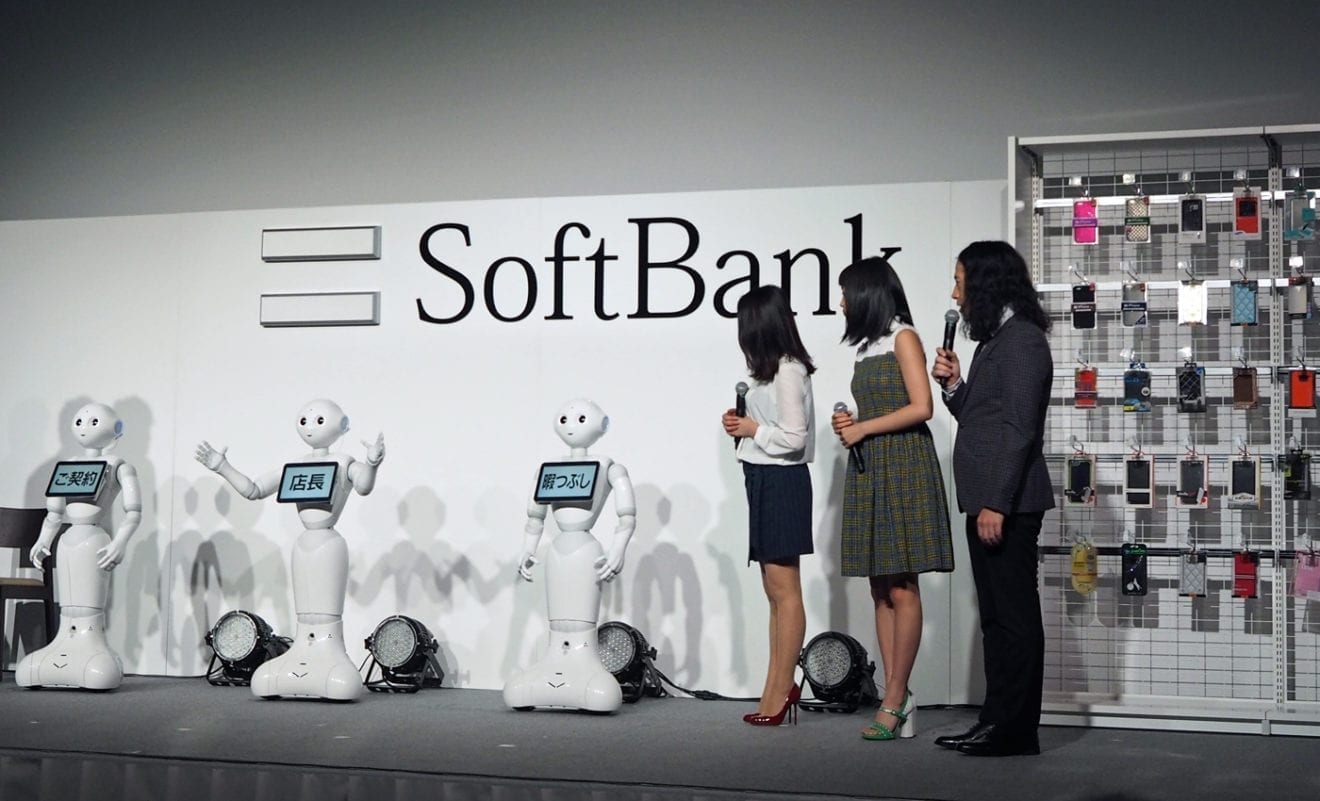
    Japanese technology conglomerate SoftBank Group is set to issue around 1 trillion yen, or approximately $6.26 billion, in corporate bonds targeting retail investors within Japan. This planned offering would represent the largest ever retail bond issue by a Japanese company, signaling a bold move by the firm to secure capital for its strategic investments.

    The substantial funds generated from this bond sale are earmarked for an aggressive expansion into the ‘physical AI’ sector. SoftBank’s Chairman and CEO, Masayoshi Son, has consistently championed AI as a critical area for future growth, and this financing move aligns with his vision to bolster the company’s position in advanced technological fields.

    Funding Strategic AI Expansion

    SoftBank’s focus on ‘physical AI’ indicates an interest in artificial intelligence applications that interact directly with the real world, potentially through robotics, autonomous systems, or smart infrastructure. This investment direction could see the company acquiring firms specializing in these areas, deepening its technological capabilities and market presence. The retail bond structure allows SoftBank to tap into domestic Japanese savings, diversifying its funding sources beyond institutional investors or venture capital rounds.

    The strategy reflects a broader trend among major Asian tech players to aggressively fund and acquire innovative technologies, particularly in the AI space. RetailNews Asia has observed similar capital-raising efforts and strategic investments from other regional giants, all vying for leadership in emerging tech markets that promise to reshape consumer experiences and business operations across the continent.

    Boosting Investment in Physical AI

    Masayoshi Son has been a vocal advocate for significant investment in artificial intelligence, previously stating that the AI boom would necessitate trillions in annual investment. This record bond issuance underscores SoftBank’s commitment to transforming that vision into reality. The company’s prior investments in various tech startups globally have positioned it as a key influencer in the digital economy, and this latest move reinforces its determination to lead the next wave of technological innovation.

    For retail investors in Japan, these bonds represent an opportunity to participate in the growth of a prominent domestic tech firm while potentially seeking more attractive returns than traditional savings options. The success of this large-scale offering will be closely watched as an indicator of both investor appetite and SoftBank’s ability to finance its ambitious AI-driven future.