Retail News CRM

Tag: retail market

  • Covid-19 cuts US$420 billion from China’s retail market

    Covid-19 cuts US$420 billion from China’s retail market

    The Covid-19 pandemic has erased US$420 billion from China’s retail market this year – but an analyst predicts a rebound in the second half.

    Vijay Bhupathiraju, a retail analyst at GlobalData says before the coronavirus came along, Mainland China was on track to achieve 7.7 percent retail growth this year. But the resulting lockdowns from the pandemic wiped RMB3 trillion (US$420 billion) off total retail sales.

    The lockdown was eased progressively from March 18 and in the epicenter, Wuhan city, was completely lifted on April 8, at which point malls, restaurants and retail stores rushed to reopen and recover some of their losses. By April 3, according to Chinese government data, some 80 percent of restaurants and 90 percent of commercial facilities had resumed operations.

    But cautious consumers have remained confined to their homes, worried about the potential to be infected, meaning footfall at stores and restaurants reopened has been insufficient to ensure profitability for many companies in China’s retail market.

    “Despite easing lockdowns, immediate increase in consumer sentiment is unlikely in the second quarter of this year, particularly for discretionary goods, as consumers remain cautious about visiting busy locations such as shopping malls,” said Bhupathiraju.

    “A rebound in consumer sentiment can be expected from the second half, which will be translated into a faster sales pick up in the country. In fact, the rebound will be more positive than those we forecast for mature western countries such as Italy, Spain, the UK and the US, where consumer willingness to spend and financial stability will be weaker.”

    By year-end, GlobalData projects China’s retail sales will be down by 1.8 percent – a far cry from the 7.7 percent growth expected, but if the estimate proves correct, it should be significantly better than many western retail markets can expect.

    Next year, GlobalData predicts China’s retail market will bounce back, with sales growth of 8.3 percent against this year.

    Examples of the weak footfall in the post-lockdown era include Walmart in Shanghai, which reported less than half the usual levels on March 28, and H&M, which recorded a 23-per-cent sales decline for the week commencing March 26 against the same week a year ago, despite 99 percent of its stores reopened. And customer footfall at Suning’s physical stores was running at less than half normal.

    Meanwhile, a senior executive of e-commerce giant JD is predicting “unprecedented challenges” to the supply chain in the wake of the Covid-19 crisis as consumer behavior reshapes China’s retail market.

    Bing Fu, logistics head of strategy says new consumption demands are constantly emerging, and product life cycles are shortening.

    “Increased uncertainties caused by emergencies like natural disasters and pandemics lead to supply chain disruptions.”

    During the coronavirus, customers bought products in any way available, turning to online solutions immediately if they could not get what they wanted offline.

    “While Covid-19 is not welcomed, it promotes digitization of consumption, which concurrently drives supply-chain upgrade,” he said. “Only by shortening and digitizing the fulfillment process can we increase efficiency and access customers faster with increased precision.”

    In recent years, he argues, the line between online and offline has become increasingly blurred. “In fact, many new channels such as WeChat’s mini-programs can’t be considered exclusively online or offline; omnichannel is the future trend.”

    Fu says to adapt to the new environment, companies must take an integrated inventory approach to manage all sales channels, integrate supply-chain planning and optimization, use consumption data to design a more efficient supply chain to deliver goods to consumers more quickly, use big data and algorithms to optimize supply-chain performance and use a transparent parcel-tracking system.

  • Foreign retail companies rushing into tap China retail market

    Foreign retail companies rushing into tap China retail market

    Continuously more and more retail companies of foreign market are looking for speeding up their business in China’s retail market. The expansion is taking place at a great speed as China has proved to be a good thriving ground for expansion of businesses. China has been hugely and dedicatedly developing the structure of its consumption which has been reported in studies. Many foreign retail companies have opened their branches in the China market in recent years. Many online casinos like happylook have opened their site in China.

    This has been done by introducing new flagship stores of famous brands plus innovative business structures. The very famous retail giant of the US, Walmart, has started with the trend. Subsequently, many other companies have invested in China’s retail market because if the growth and benefits. It has been reported that, in the next 5 to 7 years, Walmart has proposed to open up at least 500 more new stores in China. Walmart has taken this decision so as to double its footprint in the country which is an effective move.

    Furthermore, Walmart also announced that they will add almost 200 plus stores, in the following 3 years, in China. Along with this, they also planned to upgrade their stores and add many hi-tech features for maximum customer satisfaction. This will further include a first class digital experience for payment which can only be done through face recognition. Walmart has been growing tremendously at a 6.3 % which is on a year to year basis with respect to the sales. This was their third quarter earnings, only in China, as compared to global sales of 2.5 %.

    The main contribution to this growth has been done by the Sam’s club, since the last 5 years, in China retail market. Costco, another retail chain in the US, inaugurated their first store in Shanghai, China. This was in August when the first day itself everyone made go berserk and crazy. Such is the impact and such is the market in China and it is right to say that they are a hit in the retail sector.

    Aldi, a well known fresh vegetables and fruit retailer of Germany, has also entered the market of China. They have opened 2 new stores in the last 6 months, in Shanghai and have drawn huge number of consumers. Steps like these are taken to show how the Chinese retail market is open and reciprocating and the end result is known to all. The growth that is being measured is beyond expectations and rapid. The report of the sales only indicates that the market of China’s retail sector is constantly flourishing which also invites other opportunities in the foreign market.

    The January to October period has shown a growth in sales at an 8.1 percent which is 4.8 trillion dollars. This amount equals to almost 33.48 trillion Yuan and has been included in studies by the NBS. The NBS or National Bureau of Statistics conducted a study in the Chinese retail market. This growth percentage accelerated to a 9 % which excludes the automobile industry and its sales.

    Meanwhile, some foreign retailers have taken this in a different manner and have stopped from venturing into the sector. They could see the immense competition and the challenges that they could face with this expansion. The perception of each retailer is different and they do what they think is best for them. However one can venture and see the results for themselves. A couple of months back, Metro, German wholesaler giant, sold off a major share to the Chinese operational team. They did this by selling off around 80 % of their shares to Wumei technology. Wumei technology is a Beijing based industry and Metro retained only 20 % of their shares.

    A similar step has been taken by Carrefour, the chain of French supermarket by selling off 80 % of their stakes. They sold their stakes to Suning International Group Co., which is a big and important unit of the Chinese retail market giant Suning.com. These stakes were approximately 4.8 billion Yuan. Carrefour China has seen some major decline in its sales from its 24 and 210 convenience stores and hypermarkets, respectively. It is estimated that the transaction will be complete by the end of this year.

    The Chinese retail market welcomed these international retail giant’s many years ago, but the acceleration has been noticed recently. Apart from the growth, there have been cases where retailers have faced huge losses too. Many of them struggled to keep up with the ever increasing and competitive market and hence died out soon. The major reason behind this was that they were unable to keep up with the up gradation of their business strategies and plans. It was also important on their part to do some research on the Chinese consumers and the market there.

    A vital step to become successful that they should have applied was the use of innovation and creativity. This directly implies to the use of technology as the time has been continuously changing over the last two decades. A business house can only go wrong when their homework about the market they are venturing into is not complete. China’s retail market is undoubtedly a good base for international retailers to look for as a business opportunity. Yet, many have seen a downfall and this is because of their shortcomings. Most of the Chinese consumers procure many items that also include luxury goods.

    This sector had gone down for sometime but there are chances that this might bounce back. What is required is an understanding of customer needs as with each passing year, the sales are increasing. Around 3 years back, in 2016, it was recorded to contribute only 7 percent on global luxury goods sales and this data has increased positively. That said, Chinese retail consumers contributed to 30 percent of the cumulative global sales of luxury goods. Business houses that are shooting their sales have a good understanding of their customer requirements and cater accordingly. It is pivotal that one constantly updates and brings innovative ideas to their business models to benefit both ways of the scale.


  • Hong Kong’s retail leasing market easing

    Hong Kong’s retail leasing market easing

    Hong Kong’s retail leasing market is showing signs of slowing in tandem with easing retail sales.

    According to real estate advisor Savills says shopping-mall rents changed little in the second quarter, while prime streetfront retail rents fell by 1.9 per cent.

    Savills does not expect any “big headline deals” in retail rentals during the second half of this year.

    “The market lacks the momentum for active growth with unstable external factors having a powerful effect,” said Nick Bradstreet, MD and head of leasing.

    Hong Kong retail sales are down 1.8 per cent during the first five months of this year. Over a similar time frame, prime shopping street rents fell by 1.2 per cent quarter on quarter, with Central district dropping the most, by 3.8 per cent.

    In the major shopping-mall segment, base rents remained generally steady. This was helped by deals with major food-and-beverage tenancies at the newly opened OP Mall in Tsuen Wan:  Ruby Tuesday taking 5000sqft of space and Hadilao Hotpot 8000sqft at HK$400,000 per month.

    The lull in Hong Kong’s retail leasing market comes at a time shopping-centre landlords and retailers are reviewing their offer to shoppers.

    Savills says new market trends are emerging rapidly in Hong Kong and Southeast Asia: brands are turning to augmented reality (AR) to enhance the customer experience and retailers are thinking of new green initiatives with consumers responding positively.

    “Despite the slowdown in retail figures, we see that new technologies are being adapted to upgrade the customer experience, changing the retail landscape,” said Bradstreet.

    AR examples include an Ikea app which allows users to ‘place’ 3D furniture in their homes to scale, Benefit Cosmetics is encouraging customers to try on different eyebrow shapes before they shape their real ones; and MAC has launched an AR Beauty Try-On campaign.

    On the green front, the use of banana leaves for packaging vegetables and other fresh produce was initiated by Rimping Supermarket in Thailand, and then adapted by major supermarkets in Vietnam and Indonesia (including Big C, Lotte Mart and Bintang). Although still in its testing phase, the idea is being well received by shoppers and retailers have reported a boost in sales for products packaged this way.

    Simon Smith, senior director, research & consultancy at Savills, said trade tensions are hitting businesses across southern China and consumers are spending less on big ticket items as a result.

    “Landlords today seem to be more flexible when renewing existing tenants and are open to reducing rents if necessary.”

  • E-commerce sales up in New Zealand with 16 per cent last year

    E-commerce sales up in New Zealand with 16 per cent last year

    New Zealand consumers spent $4.2 billion online last year, a 16 percent increase in 2017, according to the latest e-commerce report from NZ Post.

    This compares to just 2 percent annual growth in bricks-and-mortar shopping, the postie said in a statement released last week.

    The rise in spending was driven by Kiwis shopping online more often, with consumers hitting the ‘buy’ button 22 times each.

    Last year also saw the emergence of ‘super shoppers’ – with nearly 10 percent of the 1.8 million Kiwis who shopped online last year spending over $9000.

    The report found that spending with New Zealand online stores grew nearly twice as fast as spending with international online stores, though roughly a third of the dollars consumers spent online in 2018 overall went overseas.

    Around 12 percent of online shoppers used to buy now pay later methods, such as Afterpay, last year – with younger users and women being the majority of users.

    The most prominent online shoppers in New Zealand are women aged between 30 and 45 who live in rural areas, NZ Post found.

    “NZ Post is delivering well over half of all parcels bought online in New Zealand and we’re proud to be integral to that moment of joy when your online shopping parcel arrives,” Bryan Dobson, NZ Post’s chief marketing officer, said.

  • Vietnam’s retail market is promising, but there are pitfalls

    Vietnam’s retail market is promising, but there are pitfalls

    Family Mart has had losses in Vietnam, Thailand and Indonesia. Reuters quoted Koji Takayanag, president of FamilyMart UNY, which now owns the second largest convenience store chain in Japan, as saying that the chain has decided to stop injecting more money into Family Marts in Vietnam.

    According to Tri Thuc Tre, Parkson reported another loss of VND20 billion in Vietnam in the first quarter of the year, which means a total loss of VND50 billion in the last nine months of the fiscal year.

    Parkson Retail Asia has two subsidiaries in Vietnam – Parkson Hai Phong Co Ltd and Parkson Vietnam Company Ltd. The latter has two subsidiaries – Parson Vietnam Service Management Company Ltd and Parkson Hanoi Company Ltd.

    Parkson Hanoi which manages two buildings Parkson Keangnam and Parkson Viet Tower. Both shopping malls have shut down (the former in January 2015 and Viet Tower in mid-December 2016). Also in 2016, Parkson Paragon in HCMC also stopped operation.

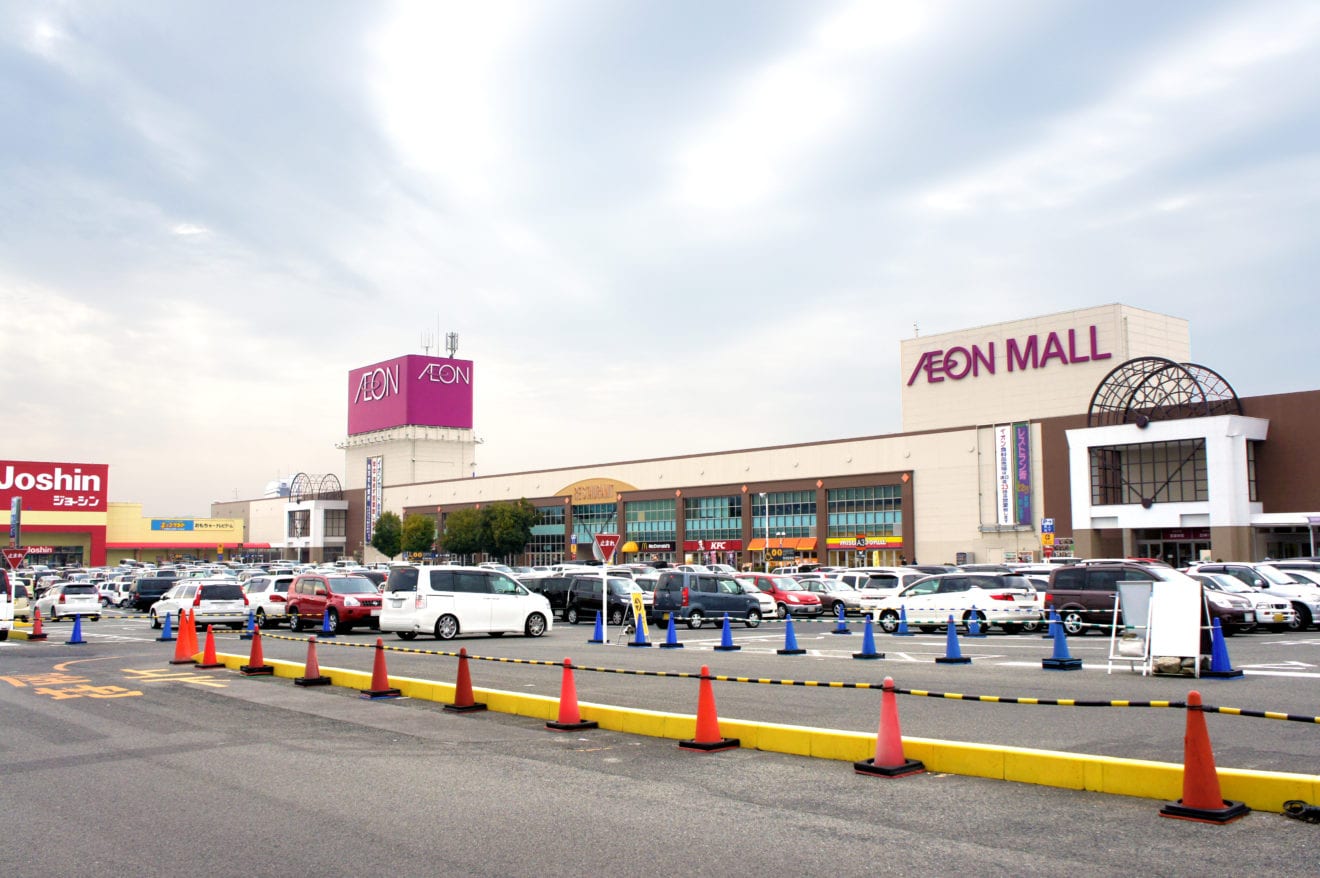
    Though FamilyMart has taken a big loss, it will stay in Vietnam. While some retailers have left, others have arrived. Aeon Mall has announced the construction of a second mall in Hanoi.The Malaysian retailer’s fiscal year will end in three months, but analysts don’t think the business performance of the year will be satisfactory. Parkson’s managers have admitted that it is more and more difficult to do business in Vietnam as the market is getting more crowded.

    Other retailers have left, including Metro Cash & Carry, Best Carings, Wonderbuy, HomeOne and Sapomart.

    Meanwhile, market analysis firms, in their latest reports, say that Vietnam is a lucrative market.

    Phap Luat quoted Pham Thanh Cong from Nielsen Vietnam as saying that it is among the top three markets of investors.

    David Tan, CEO of Abeo Vietnam, said the Vietnamese retail market in 2016 was valued at $118 billion with the 10 percent growth rate. Of this, revenue from food service reached acrecord high of $41 billion.

    In fact, though the Vietnamese market is attractive, it has become ‘cramped’ with the presence of many retailers, both foreign and Vietnamese.

    According to Cong, there are 20 supermarket brands in Vietnam, while other countries have only five.

    A report of the Ministry of Industry and Trade shows that Vietnam has more than 700 supermarkets, 132 shopping malls and hundreds of convenience stores. By 2020, Vietnam is expected to have 1,200-1,500 supermarkets and 180 shopping malls, while traditional markets still exist.

  • Vietnam risks losing entire retail market to Thailand

    Vietnam risks losing entire retail market to Thailand

    Industry insiders have warned that Vietnam is on the brink of losing its entire retail market to neighbor Thailand. Made-in-Thailand goods, from confectionery to luxury items, are making their largest-ever ‘invasion’ of the Vietnamese market, and many local firms are looking like being acquired by Thai investors.

    Last month, Thailand’s TCC Holding Co. officially acquired Metro Cash & Carry Vietnam’s operations from Germany’s giant retailer Metro Group for an enterprise value of €655 million (US$712.14 million).

    The business includes 19 wholesale stores and related real estate portfolios across Vietnam.

    Another major Thai investor, Berli Jucker (BJC), is also is keen to buy the Big C Vietnam supermarket chain from its French operator, Casino Group.

    The French company reportedly wanted to sell its Vietnam business after completing the transfer of its business in Thailand, Thai Big C, to home player TCC in a $3.5 billion deal earlier this month.

    “If Big C Vietnam is sold to a Thai investor, it can then be said that the entire Vietnamese retail market is in Thailand’s hands,” said Vu Kim Hanh, chairwoman of the Business Association of High-Quality Vietnamese Goods.

    In 2013, BJC acquired the Vietnamese convenience store chain from Japan’s Family Mart and renamed it B’s Mart.

    Later that year, Family Mart teamed up with a new Vietnamese partner to keep the Family Mart chain running, not to be confused with the Thai-operated B’S Mart.

    “A supermarket chain is the missing piece at a time when Thai companies are already running wholesale markets, convenience stores, and even traditional retail channels in Vietnam,” Hanh told us recently.

    With multiple retail channels under their control, Thai investors can easily cut costs and increase competitiveness, and “it will be more difficult for Vietnamese goods to enter Thai-controlled retail outlets,” Hanh said.

    In fact, Thai goods are currently dominating the B’s Mart chain in Vietnam following its acquisition from Family Mart, according to the director of a processed food company.

    “There have been huge changes in the way these stores source products, with Thai candies, snacks and packaged food dominating shelves,” she told Tuoi Tre.

    A real threat

    Shelf space for Thai goods has also increased in other Thai-owned retail channels in Vietnam.

    One executive from a Ho Chi Minh City-based frozen foods trading firm said they had stopped making private-label products for Metro late last year, even before the cash and carry business was sold to TCC.

    Private-label goods are typically those manufactured or provided by one company sold under another company’s brand name.

    “Several procedures have taken longer than usual since the Thais have controlled Metro,” she added.

    “It took me six months to pull some products from their shelves, and requests to adjust prices also took a long time to be effected.”

    Other Vietnamese businesses said the trading policies of Metro, under the new owner, have changed a lot.

    “We are offered higher commissions, but sales have been much slower,” one company director said.

    N.T.C., director of a fresh food producer, said Metro Cash & Carry Vietnam has a new marketing policy that openly favors Thai suppliers.

    “Across product categories, only the Thai ones are subject to repeated promotional campaigns, which leave Vietnamese suppliers like us in shock,” he said.

    The presence of Thai-made products has even increased in retail outlets not owned by the Thais, including South Korea’s Lotte Mart and Co.op Mart, which is Vietnam’s largest supermarket chain.

    “Thai businesses are receiving huge support from the government, in terms of both policies and capital, in their ‘invasion campaign’,” said Vo Xuan Trung, director of IBP Co., a local distributor of Thai snacks.

    While there used to be only one annual Thai goods fair in Ho Chi Minh City, the event has been held four times annually since 2014, Trung said.

    “Having said that, we should acknowledge that most Thai products are of better quality and available at more attractive prices than their local competitors,” he said.

    Tran Anh Tuan, general director of Pathfinder, a Ho Chi Minh City-based market consulting firm, said it was a real threat for Vietnam to lose its home market to Thai retailers.

    “Once Thai retailers are in Vietnam, it is certain that they will try to increase the presence of their goods,” he said.

    Tuan underlined that timely policies should be made before the second, bigger risk comes.

    “Soon we will see not only our consumers rush to buy Thai goods, but also Vietnamese firms acquired by Thai investors,” he warned.

  • Vietnam seen among Asia’s top 5 retail markets

    Vietnam seen among Asia’s top 5 retail markets

    Final consumption expenditure (percent of GDP) in Vietnam was estimated at 70 percent last year by the World Bank with household consumption accounting for 90 percent, making the country among Asia’s top 5 retail markets. The country’s middle class, the most promising consumers of retailers, is forecast to triple by 2020.

    Speaking at the forum, Duong Duy Hung, deputy head of the Department of Domestic Market under the Ministry of Industry and Trade, said Vietnam has opened its door to dozens of multinational retail groups since the country joined the World Trade Organisation (WTO) five years ago.

    Domestic retailers, despite previous concern over their passive acts amid fierce competition, has tailored themselves to the new context and gradually improved their competitiveness, he noted.

    He warned that huge investment waves from foreign firms are posing numerous challenges to the local ones, which was urged to foster innovation to survive.

    President of the Vietnam Retailers Association DinhThi My Loan agreed, stressing that domestic retailers still lag behind foreign peers as they lacklong-term strategies and financial resources.

    She called on the local firms to learn from international practices, especially in Japan, the Republic of Korea, Singapore and Thailand, while restructuring themselves and set up chains of shops, small- and medium-sized supermarkets, and convenient stores to regain market share in the home playground.

    Echoing these opinions, Chau Ngoc Hanh, head of Retailer Service at Nielsen Vietnam said big fish eating little fish is only a has-been, it’s time for the fast fish to eat the slow one.

    More and more consumers in Vietnam prefer online shopping and getting their orders brought to the door thanks to its convenience, she explained, saying that today any firm which can serve it faster will have competitive edges.

    About 22 percent of responded consumers in the country said they would rather go shopping in convenient stores than shopping malls.

  • Philippine firms on billion dollar global shopping spree

    Philippine firms on billion dollar global shopping spree

    Philippine firms are on an unprecedented global shopping spree spending billions on everything from vineyards to food manufacturers and casinos reflecting the nation’s recent economic rise.

    A combination of strong domestic growth bargain prices in retreating economies abroad and rock-bottom borrowing rates have fuelled the acquisitions analysts said.

    The Southeast Asian nation has for years exported shopping malls and junk food to the region but cashed-up Filipino firms have diversified in recent years with acquisitions around the world and in many sectors.

    “It has not happened in this rapid succession. It’s like a colonial mentality in reverse” said Luis Limlingan research head at Manila stock brokerage Regina Capital.

    The pace of the acquisitions has startled both local and foreign investors according to BDO Unibank chief market strategist Jonathan Ravelas.

    “Filipino companies are moving into the global space and it’s not limited to just one sector. The opportunities abound” he said.

    In one of the most-recent big-ticket acquisitions local instant noodle firm Monde Nissin said last month it was buying British meat substitute manufacturer Quorn for 550 million pounds (833 million).

    In the last two years the private company also snapped up popular fruit juice brand Nudie and chilled dips manufacturer Black Swan both from Australia for undisclosed amounts.

    Monde Nissin is owned by Betty Ang who started her company 30 years ago and is now the nation’s 19th richest person with a net worth of 900 million according to Forbes.

    Meanwhile Emperador a company controlled by the Philippines’ fourth richest man Andrew Tan and which specialises in cheap brandy at home is looking to spend more than one billion dollars on diversifying in Europe.

    In May the company said it would bid to acquire French cognac maker Louis Royer SAS.

    There has been no resolution in that attempt yet but last year it paid 430 million pounds (726 million) for Scottish whisky maker Whyte and Mackay.

    Emperador also spent 60 million euros (82 million) last year for half of Spanish brandy producer Bodega Las Copas.

    The Philippines’ third-richest man Enrique Razon has made headlines by expanding on the port operator business that has made him his fortune by setting his sights on the Asian gaming market.

    He opened a billion-dollar casino in Manila in 2013 and then in March this year his Bloombery Resorts firm announced it was buying AN island and part of another one in South Korea for his first overseas gaming foray.

    Analysts said these were some of the highest-profile acquisitions overseas but there were many others in a wide range of sectors including telecommunications power fast food and oil.

    Awash with cash

    Filipino firms are leveraging their earnings from a robust local economy to snap up bargains in countries where growth has slowed analysts said.

    “These companies have huge stashes of cash and they are maximising it to compliment their existing businesses” said Astro del Castillo managing director at Manila stock brokerage First Grade Holdings.

    The Philippines had for decades endured low economic growth compared with other Asian tiger economies partly due to crippling corruption and red tape.

    But in recent years the economy has been one of the strongest in Asia averaging growth of 6.3 percent between 2010 and 2014.

    President Benigno Aquino whose six-year term ends in 2016 has been widely credited overseas for the economic gains due to his efforts to tackle graft and stifling government bureaucracy.

    This year the economy has slowed but still expanded by 5.3 percent in the first half.

    But many of the enduring problems remain at home and these are forcing the local firms to look elsewhere according to Victor Abola an economist at the University of Asia and the Pacific.

    “It’s not so much a lack of growth opportunities (locally)” Abola said explaining why Filipino companies were investing abroad.

    “It’s about the government changing the rules of the game midstream… and slow action on proposals.”

    The Philippines ranks 95th out of 189 economies based on ease of doing business according to The World Bank’s International Finance Group.

    But that is a huge improvement: under Aquino’s reign the Philippines has moved up 53 spots in the last four years.

  • Five trends in Vietnam retailing

    Five trends in Vietnam retailing

    Vietnam’s retail market is set to grow by 8.4 per cent annually until 2020, making it one of the fastest-growing markets in south-east Asia.

    Against a backdrop of increased disposable income, rapid urbanisation and an appetite for change among younger shoppers, we take a look at five trends defining the marketplace for pan-Asian retailers right now.

    Confident investment

    January 2015 marked the first time non-domestic retailers could take full ownership of commercial property in Vietnam, following commitments made to the World Trade Organisation. Now, new trade agreements with Japan, Korea and the countries that make up the Association of South-East Asian Nations (ASEAN) look set to support further growth for international retailers in Vietnam:

    Tailoring the best of international retail

    Domestic retailers may have the advantage when it comes to local shopper knowledge but
    international retailers are drawing on their own strengths to help them compete.

    Dairy Farm, FamilyMart and Aeon have brought their expertise in loyalty schemes, private label and innovative marketing to their stores in the region.

    Other points of difference include appealing to busy office workers with a fast food to go counter (seen at Family Mart and B Mart) and bringing an international flavour to the in-store hot food offer (Aeon Mall).

    Alternative store concepts

    Many retailers have established themselves in Vietnam with a hypermarket presence in one of the major retail hotspots like Hanoi or Ho Chi Minh City.

    Lotte and hypermarket chain Aeon are appealing to families and experimental shoppers with department store formats that act as wider shopping and entertainment destinations. Aeon is also making its mark with a loyalty scheme that includes tailored offers for mums – such as birthday treats or discounts on baby care.

    In the convenience channel, Guardian is the first combined-format health, beauty and drugstore in Vietnam. The store is making waves with its clean layout, colourful signage, bold promotional activity and sales assistants offering a superior level of service.

    Product innovation for a changing market

    A new concept in Vietnam, private label is appealing to young, experimental shoppers thanks to its lower prices and alternative products.

    Aeon has introduced its TopValu private label range, which taps into the popularity of Japanese culture by offering authentic Japanese ingredients and home cooking kits. The retailer is now working with local suppliers to explore domestic production.

    An increasingly affluent middle class is also supporting demand for exclusive and imported novelties. Dairy Farm is well-known for attracting these shoppers with its packaged food, household, health and beauty ranges.

    Expanding to national coverage

    A priority for most retailers is to create a nationwide presence. Lotte has built a network of ten hypermarkets spanning six big cities across Vietnam, making them the first pan-Asian retailer to achieve such a spread of coverage. Meanwhile, Ministop (Aeon), Guardian (Dairy Farm) and Shop&Go are pushing their convenience format in retail hotspots.

    Major retailers are seeing good growth from their franchise models, making partnerships, mergers and acquisitions hot topics.

    Aeon has partnered with local retailers Citimart in the south of the country and Fivimart in the north. The domestic chains are helping Aeon speed up its expansion plans by using their existing store networks. In return, their own customers are benefitting from the retail giant’s private label ranges and investment in infrastructure.