Tag: retail media

  • ShopX Launches Global Retail Media Group Across 27 Markets

    ShopX Launches Global Retail Media Group Across 27 Markets

    ShopX has launched as a global retail media group combining Shopfully, Flipp and MEDIA CENTRAL into a unified parent organisation reaching 400 million shoppers across 27 markets, including Australia.

    The combined business employs more than 1,000 people and works with thousands of retailers and consumer packaged goods brands. While the parent entity centralises technology and scale, each of the three regional businesses continues operating under its established commercial brand.

    Led by Group Chief Executive Officer Michael Silverman and Group President and Chief Operating Officer Stefano Portu, the platform targets a USD $200 billion global retail media sector where spending remains heavily tilted toward e-commerce rather than physical checkouts.

    Consolidating Store-Led Ad Spend

    Each of the three regional businesses retains its standalone operating brand and existing commercial accounts. The parent entity pools backend engineering, measurement tools and cross-border audience data.

    Physical shops account for roughly 80 per cent of all retail transactions globally, climbing to nearly 90 per cent for fast-moving consumer goods. In Australia, Shopfully research tracks 83 per cent of shoppers researching products online before completing transactions inside brick-and-mortar stores. Connecting those digital search signals to checkouts remains a central operational hurdle for consumer goods suppliers.

    Global retail media ad spending has reached USD 200 billion, though brands spend most of that capital across e-commerce marketplaces rather than physical storefronts. ShopX aims to capture those budgets by aggregating multi-retailer inventory instead of forcing advertisers to negotiate separate data-sharing agreements with individual supermarket operators.

    Management and Platform Integration

    Group Chief Executive Officer Michael Silverman leads the executive board alongside Group President and Chief Operating Officer Stefano Portu. Jaclyn Welsh serves as Group Chief Financial Officer, while Ingo Wienand retains his position as Chief Executive Officer of MEDIA CENTRAL alongside a board seat at the parent group.

    Aggregators provide consumer brands with scale across catalogue apps, publisher networks and digital circulars that single supermarket operators struggle to replicate independently. The risk sits in data verification, because closed-loop attribution for physical checkouts requires point-of-sale integration that supermarket chains guard closely.

    The Race for Off-Platform Budgets

    Major grocery operators run proprietary retail media units to monetize their first-party loyalty card records. Intermediaries like ShopX offer an alternative channel for mid-tier retailers that lack the software budgets required to build bespoke ad networks.

    Consolidation has driven the company’s expansion to date, with the constituent businesses completing 10 acquisitions prior to unifying under the ShopX umbrella.

    Stefano Portu, Group President & Chief Operating Officer, ShopX, said: “What we have built so far is the starting point. Most shopping still happens in stores, and most of it is invisible to the brands that pay to influence it. At ShopX, we are here to change that by connecting shoppers, retailers, brands, and publishers around physical retail.”

    Expansion Targets

    The operating units previously built independent footprints, including in Australia, through digital catalogue syndication. Unifying them allows global brand manufacturers to run single international advertising campaigns across shared retail networks.

    Management plans to deploy fresh capital into attribution software, enter additional geographic markets and target further acquisitions to absorb fragmented local promotional platforms.

  • Southeast Asian Online Retail Revenue Climbed 21% in Q4 2025

    Southeast Asian Online Retail Revenue Climbed 21% in Q4 2025

    Online retail revenue across Southeast Asia rose 21% year-on-year in the fourth quarter of 2025, driven by higher conversion rates rather than website traffic gains.

    Commerce platform Criteo revealed that regional consumers spent an average of 22 days researching items between their first product view and completing an order around Singles’ Day.

    Sukesh Singh, Managing Director (SEA) at Criteo, noted that shoppers have learned to take their time across monthly discount cycles, extending consideration windows beyond those seen in Western markets.

    Southeast Asian shoppers evaluated an average of 3.8 brands within a single retail platform during the month before buying, almost double the two brands averaged by American and European consumers. When checking across multiple merchants, regional shoppers examined 5.8 brands before committing capital.

    Traffic Stalls While Checkout Rates Rise

    Merchant web traffic across the region remained largely flat throughout the quarter, shifting the burden of expansion entirely onto basket completion and repeat orders. Singapore recorded a 15 per cent year-on-year decline in retail website visits, yet merchant sales grew 18 per cent because conversion rates jumped 39 per cent.

    Malaysia emerged as the regional growth leader over the period. Conversion rates and retail revenue in the country both increased 34 per cent year-on-year.

    Western digital storefronts tracked in the opposite direction. Retail traffic in the United States grew 3 per cent while conversion rates fell 10 per cent, and European platforms saw visitor numbers rise 6 per cent alongside a 2 per cent drop in conversions.

    Marketplace and department store platforms collected the bulk of regional gains, expanding online revenue by 41 per cent year-on-year during the quarter. Mass-market merchants grew revenue 36 per cent, while online apparel suffered a 21 per cent contraction.

    Singles’ Day Retains Crown Over Western Sales

    Singles’ Day on 11 November retained its position as Southeast Asia’s dominant revenue generator, recording a 132 per cent lift in transaction volumes above baseline averages. Order values rose 212 per cent on the day as platform visits increased 73 per cent.

    Malaysia produced the largest single-day order lift with sales up 155 per cent, while Singapore recorded a 299 per cent jump in order value. The event also drove customer acquisition, lifting first-time buyers 130 per cent above baseline levels, a pace that outstripped repeat buyer expansion of 106 per cent.

    Across the entire fourth quarter, first-time shoppers accounted for roughly 40 per cent of all buyers. The 12.12 event followed with a 79 per cent gain in new buyers, while 10.10 delivered 33 per cent.

    Western promotional events failed to match regional dates. Black Friday delivered an average sales lift of 38 per cent across Southeast Asia, trailing behind the 84 per cent uplift generated during September’s 9.9 sales and the 51 per cent gain posted during 10.10.

    The Pre-Sale Buying Spike

    Transaction records reveal that buying concentrated heavily on the evenings before designated sale dates. Sales jumped 76 per cent on 10 November and 62 per cent on 11 December, establishing the eve of each major event as the second-highest sales day of each month.

    Product category demand split along clear seasonal lines. Health and beauty items jumped 268 per cent during the 11.11 window, while December shifted spending toward home goods and gifting, where cosmetic set orders climbed 467 per cent, television sets gained 430 per cent and karaoke systems rose 406 per cent.

    In Thailand, spending dispersed evenly across consecutive double-day dates rather than concentrating on a single day. Thai sales grew 115 per cent during 9.9 and 102 per cent on 12.12, running close to the market’s 129 per cent lift during Singles’ Day.

    Southeast Asian shoppers have a sale to look forward to almost every month, so they’ve learned that a good price will always come around again.

    The Read-Across for Brands and Marketplaces

    For brand managers and marketplace operators, the decoupling of web traffic from revenue growth exposes a structural shift in regional commerce. Platform expansion in Southeast Asia no longer relies on bringing fresh eyes onto retail pages, because smartphone penetration and digital commerce habits have reached operational maturity across key metropolitan centres. Growth now depends on basket conversion and retaining shoppers who treat retail marketplaces as comparison engines rather than transactional endpoints.

    This dynamic penalises mono-brand stores and rewards multi-brand marketplaces that aggregate merchant pricing. When consumers examine nearly four competing labels on the same site before paying, stand-alone retail sites face higher customer acquisition costs that they cannot offset through single-transaction margins. Consumer goods brands must redeploy budget toward in-platform sponsored search and product comparison visibility, or risk losing shoppers during the three-week consideration window.

    Pre-Sale Window Shapes Ad Allocations

    The concentration of checkout volume on promotional eves upends traditional media scheduling that loaded budgets onto the day of the sale itself. Retailers running campaigns that launch at midnight on 11 November miss the initial transaction wave, which forms 24 hours earlier as consumers clear saved digital carts.

    The integration of conversational AI into shopping journeys adds another preliminary filter. Criteo rolled out sponsored product placements within conversational AI systems across six Southeast Asian territories in September, reporting that over 80 per cent of traffic coming through those listings consisted of new users.

    Merchants face the next test during the fourth quarter of 2026, as brands attempt to protect margins against rising marketplace commission fees while shoppers stretch comparison cycles even further.

  • FairPrice Deploys 3,000 Smart Trolleys as Retailers Turn to In-Store Media

    FairPrice Deploys 3,000 Smart Trolleys as Retailers Turn to In-Store Media

    Retailers are expanding into advertising, fintech services, and data monetisation as intensifying competition puts pressure on product margins.

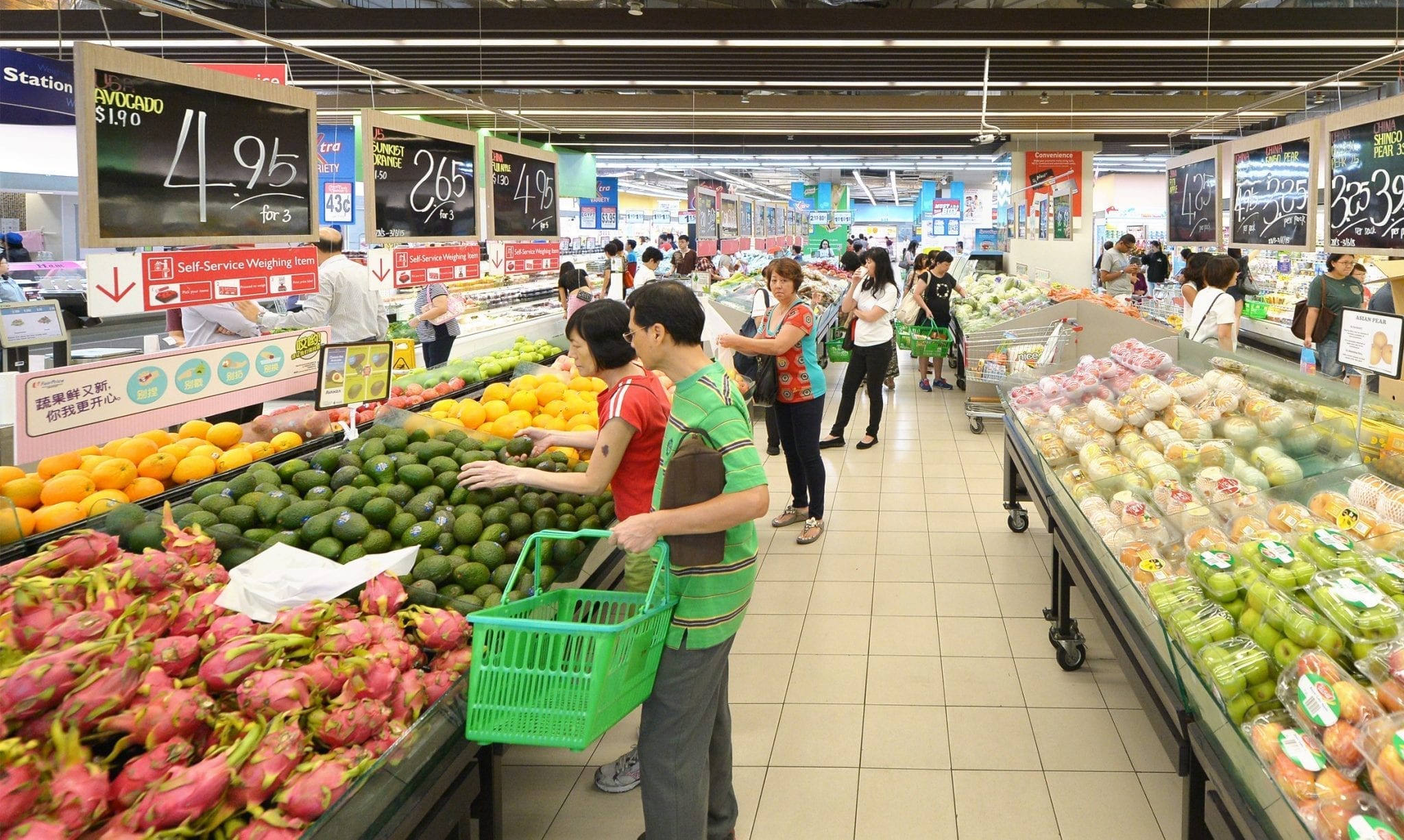
    FairPrice Group has deployed about 3,000 smart trolleys across selected stores ahead of a wider rollout planned for 2027, linking carts to shopper app accounts to personalise ads and offers.

    Speaking at the Retail Asia Summit 2026 in Singapore, Sanjay Singh, senior vice president for the Investor Transformation group at Frost & Sullivan Asia Pacific, said retail media can become a profit engine for physical stores by connecting demand, inventory, payments, and fulfilment.

    Smart Carts and Targeted Health Campaigns

    Grocery operators are using point-of-sale data to sell brand campaigns inside physical aisles. Rajiv Singh, head of the retail media network at FairPrice Group, said an in-store initiative run with Singapore’s Health Promotion Board shifted 12 percent of approximately 500,000 targeted shoppers toward lower-sodium product alternatives. The state health agency is now doubling the budget and scale of the campaign.

    Ad deals are benchmarked on incremental return. The grocer measures exact sales generated per marketing dollar spent. Linking smart shopping trolleys directly to the FairPrice mobile app allows the chain to trigger personalized promotions as shoppers navigate aisles.

    Packaged goods manufacturers gain direct access to verified purchase histories through these retailer-owned networks. Brands pay premiums for verified basket conversions rather than broad digital impressions across open web platforms.

    Extending Sales Windows Beyond the Store

    Duty-free and department store operators are adjusting checkout rules to capture spending outside physical premises. The Shilla Duty Free now allows travelers to purchase merchandise via the iShopChangi platform up to 30 days after their trip, according to Joanne Soh, head of consumer marketing and e-commerce at the travel retailer.

    A wider post-travel purchasing window lets airport retailers recover sales lost to tight flight schedules and carry-on luggage limits. Physical airport storefronts become discovery showrooms backed by centralized domestic delivery.

    Department store operator Metro Singapore is reallocating floor space toward targeted customer problems. Henry Christian, head of loyalty, marketing and partnerships at Metro Singapore, pointed to the retailer’s Sleep Lab concept, launched on World Sleep Day on 15 March. The format evaluates brand participation and customer discussions alongside standard sales volumes.

    Micro Occasions and Quick Commerce Channels

    Food makers are mining retailer transaction data to generate sales outside traditional peak holidays. Kenneth Lau, global digital commerce excellence lead at Mondelēz International, said digital commerce accounts for roughly 41 percent of the company’s sales this year. That channel delivers 61 percent of its total growth.

    In China, Mondelēz partnered with on-demand delivery giant Meituan to target office afternoon tea breaks, tailoring Oreo product selections specifically for immediate local fulfillment. The confectionery group also created an exclusive digital-commerce gift box for its BTS brand collaboration priced at about $15, selling out 20,000 packs on Shopee across Southeast Asia within seven days.

    Furniture retailer Castlery is focusing investments strictly on measurable omni-channel systems. Leah Howatson, general manager for international markets at Castlery, said the company synchronizes online shopping carts with physical store systems so staff can complete purchases started online, while scaling back curated experiential events that failed to deliver adequate return on investment.

    Balancing Capital Outlays Against Ad Revenue

    Retail media networks are creating a split between high-volume grocers and discretionary specialty chains. Supermarket operators control the recurring transaction volume required to justify in-store screens, trolley hardware, and data infrastructure. Discretionary chains lack that visit frequency. They struggle to build ad scale, forcing them to focus on cart synchronization and extended checkout windows instead.

    Physical rollouts still face operational hurdles from hardware maintenance, screen vandalism and basement mobile network dead zones. Retailers that over-invest in in-store hardware without securing long-term brand ad commitments risk adding capital costs without lifting net margins.

    Attention now turns to FairPrice’s planned 2027 fleet expansion for smart carts across its full Singapore footprint, which will test whether ad-supported trolley systems generate sustainable yields across suburban store formats.

  • FamilyMart Hires Lady Gaga for Nationwide Japan Recruitment Drive

    FamilyMart Hires Lady Gaga for Nationwide Japan Recruitment Drive

    FamilyMart launched a nationwide recruitment campaign featuring Lady Gaga across Japan on September 25, marking the convenience store chain’s 45th anniversary. The promotional push runs across approximately 11,600 stores equipped with the chain’s in-store digital network, FamilyMart TV.

    The television commercial features the American pop singer styled in an outfit inspired by the retailer’s store uniform and signature striped socks, demonstrating daily store duties in a monochrome setting. FamilyMart is pairing the broadcast spot with exclusive interview segments on its internal digital signage network, where Gaga discusses convenience store work and workplace individuality.

    Screen network and store reach

    FamilyMart is utilizing its proprietary FamilyMart TV network to deliver the recruitment messaging directly to shoppers and prospective store employees at the point of sale. Deploying the video content across 11,600 outlets gives the chain immediate nationwide reach inside high-footfall metropolitan hubs and regional locations alike.

    Using in-store retail media for human resources and brand positioning turns standard customer checkouts into direct recruitment channels. Convenience chains throughout East Asia increasingly use digital signage networks to promote private-label merchandise, app downloads and staffing needs to the same foot-traffic base.

    Changing the convenience store workforce

    Convenience store operators across Japan face severe labor shortages caused by demographic contraction, forcing chains to rethink shift structures, store automation and recruitment appeals. FamilyMart has framed this campaign around attracting workers who want a flexible workplace where staff can embrace individuality.

    Rival operators Seven-Eleven Japan and Lawson have responded to the same demographic headwind by expanding self-checkout kiosks, testing automated night operations and loosening traditional dress codes. For franchisees, staffing stability remains the single largest operational expense and risk to maintaining 24-hour schedules.

    Design push follows Azabudai Hills flagship

    The campaign follows a string of design-oriented branding projects by FamilyMart. In July, the operator opened a flagship store directed by fashion designer Nigo at Tokyo’s Azabudai Hills complex, showing updated apparel lines and experimental retail layouts.

    Pairing high-profile cultural partnerships with core convenience operations shows FamilyMart attempting to elevate its brand equity above routine neighborhood commerce. That strategy supports its Convenience Wear private-label apparel business, which has turned everyday items like socks and basic garments into high-margin revenue drivers across its domestic estate.

    What to watch in Japanese retail labor

    Japan’s convenience store sector continues to measure recruitment yield against rising minimum wage adjustments across prefectures. Operator disclosures in upcoming quarterly earnings will show whether digital recruitment pushes translate into lower franchisee turnover or reduced store operating costs as competition for frontline staff intensifies.

  • McDonald’s Tests Third-Party Ads on Screens Across 13,700 US Stores

    McDonald’s Tests Third-Party Ads on Screens Across 13,700 US Stores

    McDonald’s is testing third-party ads on digital menu boards and ordering kiosks in select company-owned US restaurants. The trial targets the gap between payment and collection across a domestic footprint of more than 13,700 outlets.

    Drive-thru boards and self-service kiosks display commercial promos once a customer completes an order. Reserving that post-purchase window for outside brands lets the chain build a high-margin ad business without slowing down the ordering queue.

    Sales growth has decelerated sharply. Second-quarter global comparable sales rose 1.3 per cent for the period ended June 30. Domestic comparable sales slowed to 0.8 per cent, down from 3.9 per cent in the first quarter.

    Turning Customer Wait Times into Ad Inventory

    The system relies on idle visual time. After an order is logged and paid for, the display switches from item selection to third-party commercials while the kitchen prepares the meal.

    McDonald’s reaches roughly 26 million daily customers in the US. It interacts with nearly 90 per cent of the country’s population each year. That physical footfall provides an audience density rival digital networks struggle to match at the point of sale.

    A company spokesperson confirmed the test in an email statement:

    “This limited menu board advertising pilot at select company-owned restaurants is exploring ways to share post-purchase content that customers may find helpful, relevant, or interesting, while ensuring the McDonald’s experience remains at the center of every visit.”

    The Push into In-Store Retail Media

    Supermarket operators have spent years converting aisle footfall into retail media revenue. Media margins now generate between 3 per cent and 10 per cent of total operating profit for grocers, according to McKinsey & Co.

    Fast-food chains have lagged behind supermarkets in building dedicated advertising arms. A study by Forrester Consulting found restaurant operators have been slow to commercialise transaction data and screen interactions, leaving physical point-of-sale displays underutilised.

    In-store hardware is already deployed. Digital board rollouts began roughly a decade ago. By 2019, dynamic screens sat in more than 11,000 drive-thru lanes alongside self-ordering kiosks inside dining rooms.

    Implications for Asian Master Franchisees

    Asian master franchisees and licensed operators could use the pilot as a blueprint to extract auxiliary revenue from capital-intensive store refits. High-density markets such as Japan, South Korea, Taiwan and the Philippines already run heavily digitised ordering environments with dense foot traffic.

    Monetising screen real estate introduces friction with store operations. Franchisees run the vast majority of outlets globally. Operators will demand a clear split of ad revenues if corporate headquarters mandates third-party messaging on store hardware.

    Clutter presents another hurdle. Displaying non-food advertisements in dining areas risks degrading store environments. Promoting outside consumer goods at drive-thrus can also distract drivers during meal rushes, forcing operators to balance ad income against speed-of-service metrics.

    Traffic Squeeze and Hardware Modernisation

    Mounting margin pressure from rising input costs and softening store traffic drove the ad pilot. McDonald’s responded earlier this year by introducing value-oriented meal bundles to counter customer resistance to menu price increases.

    Modernising the digital footprint formed the first phase of this strategy. Over the past decade, capital poured into indoor touchscreens, drive-thru automation and mobile loyalty programmes to lower labour requirements and capture first-party consumer data.

    An investor day, the company’s first in three years, is scheduled for September 23. Management is expected to outline whether third-party screen advertising will expand across franchised locations or remain confined to company-operated pilot stores.

  • DFI Retail Group Names Kshitij Mulay as Chief Digital and Yuu Rewards Officer

    DFI Retail Group Names Kshitij Mulay as Chief Digital and Yuu Rewards Officer

    DFI Retail Group has named Kshitij Mulay as its new Group Chief Digital and yuu Rewards Officer across its network of 7,659 outlets. The appointment takes effect on 17 September 2026, placing Mulay in charge of the group’s digital commerce, loyalty operations, customer analytics and retail media units.

    Based in Hong Kong, Mulay will sit on the group management committee and report directly to Group Chief Executive Scott Price. He succeeds Wee Lee Loh, who is stepping down after three years with the business to return to Singapore.

    From Sephora to pan-Asian retail networks

    Mulay joins DFI from Sephora Asia, where he served as Chief Information Officer overseeing digital and technology operations across multiple Asian markets. His background covers more than 25 years in retail and consumer technology, including senior roles at Procter & Gamble and Sephora focused on cloud migration, omnichannel commerce and artificial intelligence deployments.

    At DFI, his brief covers a sprawling multi-format retail footprint spanning 12 markets and more than 81,000 employees as of June 2026. The portfolio includes convenience chain 7-Eleven, health and beauty banner Mannings, grocery brands Wellcome and MarketPlace, as well as home furnishings and restaurant operations.

    Scaling digital operations and retail media

    Loh steps down after steering the group’s digital ecosystem through an aggressive build-out since 2023. During his tenure, DFI expanded the yuu loyalty programme to millions of active members and scaled daily online order fulfilment to more than 100,000 transactions across its operating territories.

    Regional retail conglomerates are leaning hard into retail media networks and unified loyalty schemes to generate higher-margin income from grocery and convenience footfall. For operators running thousands of physical checkouts, monetising first-party shopper data through targeted digital advertising has shifted from an experiment into a core balance-sheet priority.

    Mulay begins his role following a handover period with Loh in mid-September, with the group targeting further expansion of its retail media business and automated fulfilment systems heading into the final quarter of the year.

  • Perion Network Boosts AI Platform for Retail Media, CTV Growth

    Perion Network Boosts AI Platform for Retail Media, CTV Growth

    Digital advertising firm Perion Network is intensifying its focus on artificial intelligence (AI) to optimize ad campaigns for retailers and brands. The company is using its Perion One platform, which includes an AI-driven engine called Outmax and a client interface called Ask Perion, to navigate the fragmented digital advertising ecosystem.

    Perion’s strategy addresses the challenge advertisers face in gaining clear insights and managing performance across various platforms, formats, and audience segments. The AI layer analyzes campaign data, identifies inefficiencies, and provides recommendations to improve media investment returns.

    This move reflects a broader industry trend where technology providers are enhancing their offerings to support sophisticated retail media strategies. As retailers in Asia increasingly invest in both online and in-store advertising channels, platforms like Perion One become crucial for unified campaign management and performance measurement.

    Accelerated Growth in Key Ad Channels

    Perion Network reported substantial growth in spending across its newer advertising channels during the second quarter. Retail media spend increased by 60% year-over-year, while connected TV (CTV) rose by 56%, and digital out-of-home (DOOH) grew by 45%. Perion One’s overall spending saw a 15% increase, with its AI-driven optimization technology, Outmax, experiencing over 130% adoption growth.

    Outmax evaluates campaign performance across channels, creative assets, and key performance indicators, then suggests changes such as budget reallocation or creative adjustments. The company also introduced Ask Perion, an interface allowing clients to interact with the platform, submit campaigns, and review results. Perion aims to integrate Outmax with platforms like ChatGPT and Google Shopping, and plans to add more channels.

    Expanding Reach and Agency Partnerships

    Perion has secured new agency agreements expected to contribute significantly by late in the third quarter, following extensive testing. These partnerships demonstrate the platform’s ability to perform across diverse campaigns and channels, creating a competitive barrier for others. The company plans to replicate this model with additional clients.

    Digital out-of-home remains Perion’s largest channel, with the company operating technology for in-store inventory at retailers like Best Buy Canada. Perion views in-store media as a significant growth opportunity, allowing advertisers to engage consumers near the point of purchase. The company’s network connects to over 1.6 million screens in more than 40 countries, and it aims to further expand this global access for advertisers. Also, CTV is a fast-growing product for Perion, supporting activity across major streaming services and platforms with its cross-channel approach.

  • ANA Introduces Framework to Standardise Retail Media Measurement

    ANA Introduces Framework to Standardise Retail Media Measurement

    The Association of National Advertisers (ANA) has unveiled a new framework designed to tackle measurement challenges within the rapidly expanding retail media sector. This initiative comes as over US$100 billion is now invested globally in commerce media, with retail media networks struggling to provide consistent and comparable performance metrics across platforms.

    The ANA’s Retail Media Measurement Standardization report proposes a path towards a unified measurement ecosystem. It advocates for common standards across diverse retail media networks, increased transparency in performance calculations, and a greater reliance on independent third-party measurement providers. Leading brands, including PepsiCo, Hershey’s, Clorox, Kimberly-Clark, Mondelez, Bayer, and Intel, contributed to the framework’s development through the ANA’s Retail Media Working Group.

    Addressing Fragmentation in Retail Media

    Retail media has become one of the fastest-growing segments in the media mix, attracting significant brand investment. However, the fragmented nature of the ecosystem makes it difficult for marketers to compare the effectiveness of their spending across different platforms. This new framework seeks to establish a foundational measurement standard, allowing brands to better understand what truly drives results and to optimise their media strategies more effectively.

    For retailers and brands operating in Asia-Pacific, where e-commerce and digital retail media are also experiencing explosive growth, standardisation is crucial. As platforms like Lazada, Shopee, and regional supermarket chains expand their advertising offerings, consistent measurement practices would enable brands to allocate budgets more strategically and demonstrate clear returns on investment across diverse Asian markets. This move by the ANA provides a potential blueprint for similar efforts in the region, helping to mature the retail media landscape.

    Call For Transparency And Independent Verification

    The framework highlights three key areas for improvement: the establishment of common measurement standards that all retail media networks can adopt, enhanced transparency regarding how performance metrics are calculated and presented, and a wider acceptance and use of independent third-party measurement solutions. These recommendations aim to instill greater confidence among advertisers and foster healthier competition within the retail media space.

  • Australian Retail Media Growth Needs Surgical Approach, Not Broad Strokes

    Australian Retail Media Growth Needs Surgical Approach, Not Broad Strokes

    Australian retailers and brands are being urged to adopt a more precise, data-driven approach to retail media, moving away from traditional broad-stroke advertising. Experts from Omnicom and Flywheel Australia highlight that significant growth in the Australian market is often missed by conventional spending, which fails to identify specific products, shopper segments, and critical moments that drive compounding sales.

    According to Mohammad Heidari Far, Managing Director of Flywheel Australia, the unit of precision required for effective retail media is much smaller than most current strategies allow. He emphasizes that treating diverse shopper groups, such as grocery, marketplace, and quick commerce customers, as a single audience is a misstep. Instead, surgical growth begins with identifying the initial product a customer buys, as this ‘point of market entry’ can predict their long-term value (CLTV) to the brand portfolio.

    Targeting Hidden Growth Pockets

    This refined approach relies on connecting product-level purchase data directly to a customer’s identity, transforming targeting from probabilistic guesswork into a near-deterministic process. An example cited involves a consumer health group with two related brands. Cross-purchase analysis revealed that 24 per cent of new-to-brand customers for the first brand bought a product from the second brand within three months, often on a different day, showing a sequential path that a single-brand view would not typically detect.

    Such insights allow brands to deliberately engineer customer journeys rather than leaving them to chance. Other insights reveal that shoppers who convert more than a day after seeing an advertisement tend to have larger basket sizes, indicating that plans solely focused on same-day returns may undervalue their most valuable customers.

    using Data and Automation

    In Australia, precision data access varies significantly. While Amazon offers self-service access to product and customer signals, similar insights from other major retailers typically require collaboration with their internal media teams, introducing potential delays and interpretation layers. Far suggests that brands should utilize mature environments like Amazon to develop frameworks and ‘muscle memory’ for precise targeting, preparing them to exploit similar capabilities as other retail media networks in the region evolve.

    Managing thousands of micro-segments manually would be overwhelming, so automation is key. Flywheel Commerce Cloud provides a standardized layer that handles repeatable decisions, freeing human teams to focus on critical judgement calls, such as identifying key ‘front door’ products or strategic cross-brand paths to fund. This blend of automation and human insight proved effective for the consumer health brand, which re-sequenced its plan around these signals for a major sales event. By retargeting first-brand buyers with the second brand at opportune moments and applying negative targeting at pharmacy retailers to ensure incremental sales, the brand saw new-to-brand sales rise by 47 per cent and return on ad spend more than doubled year-on-year. This precision also led to a fall in cost per click during peak trading due to hour-by-hour bidding adjustments.

    The Australian retail market is highly concentrated, with five major retailers commanding roughly a third of all sales. In this environment, brands that can surgically identify and pursue growth opportunities will gain a competitive edge over those with broader, less targeted spending. The focus shifts from simply measuring sales volume to understanding customer entry points that can build sustained growth over several years.

    Retailers across the Asia-Pacific region, many of whom are developing their own retail media networks, could benefit from similar data-driven strategies. As e-commerce penetration and digital advertising grow across markets like Southeast Asia and India, the ability to turn broad customer data into actionable, surgical campaigns will be a crucial differentiator for brands seeking to optimize their marketing spend and deepen customer relationships.