Tag: retail restructuring

  • IKEA, A.O. Smith and Moen Reshape China Footprints as Direct Retail Retreats

    IKEA, A.O. Smith and Moen Reshape China Footprints as Direct Retail Retreats

    IKEA China, water-heating brand A.O. Smith, and Fortune Brands, the parent company of Moen, have carried out sweeping operational shifts across China in 2026. IKEA announced in January that it would close seven shopping malls to focus on urban small formats, A.O. Smith agreed in late October to transfer an 81 per cent controlling stake in its local business, and Moen confirmed in early November that it will exit regional commercial operations.

    The moves dismantle traditional consumer-facing retail setups across three distinct home improvement sectors. A.O. Smith’s transaction with private equity firm CPE Yuanfeng carries a 400 million US dollar valuation, while Moen’s parent Fortune Brands is winding down local commercial sales desks through 2027.

    Multinational suppliers are moving away from capital-heavy suburban flagships and company-run showrooms to curb direct commercial overhead. Operators are shifting toward neighborhood boutique stores, long-term brand licensing, or converting mainland production sites entirely into export back offices.

    IKEA Shrinks Store Formats and Accelerates Digital Pilots

    IKEA dismantled part of its traditional suburban destination model in January 2026, closing large retail properties including sites in Baoshan, Shanghai and Panyu, Guangzhou. The Swedish furniture group is replacing them with urban small-format stores ranging between 1,500 and 4,000 square meters.

    The company opened four small-format outlets during the 2026 fiscal year in Dongguan, Changying, Changping, and Tongzhou in Beijing. These downsized urban formats generated roughly 7 million visits, while IKEA’s digital sales reached 29.7 per cent of total China revenue in fiscal 2026.

    Online expansion has supported the network reduction. IKEA established flagship digital channels on Tmall in 2020, opened an official storefront on JD.com in August 2025, and tested an instant retail delivery network through JD.com across nine cities in January 2026. Subsequent rollouts included a Taobao flash shopping trial in July 2026 and a live-commerce storefront on Douyin in October 2026, paired with its proprietary website and WeChat mini-programs.

    Fortune Brands Cuts Asian Sales to Feed North American Supply

    Fortune Brands confirmed an internal directive in early November 2026 to shutter local commercial selling operations for its Moen plumbing and fittings brand across Asia. The group will terminate most of its Asian regional sales and marketing jobs by the end of the second quarter of 2027.

    Remaining commercial cuts will finish by the end of 2027. The brand owner will not close its regional industrial base, choosing instead to retain its manufacturing and logistics facility in Changshu, its research and development centre in Guangzhou, and its regional procurement divisions.

    Those operational assets will shift exclusively to supplying products for Moen’s core North American market. Fortune Brands reported group sales of 1.1137 billion US dollars during the third quarter of 2026, down 3.1 per cent year-on-year, or 2.4 per cent lower when stripping out the Chinese market, prompting headquarters to eliminate low-margin Asian retail overhead.

    A.O. Smith Converts Direct Sales to Private Equity Licensing

    Water-heating and appliance manufacturer A.O. Smith took a separate path to strip out operating risk, agreeing on October 27 to sell 81 per cent of its China business to private equity firm CPE Yuanfeng for 400 million US dollars. Including the net present value of long-term brand licensing, the total valuation tops 500 million US dollars.

    Headquarters retreated after successive sales contractions. Revenue from A.O. Smith’s China operations slid 12.9 per cent year-on-year in 2025 to 690 million US dollars, dropping its contribution to total group turnover down to 18 per cent. Local-currency sales in the Chinese market fell a further 17 per cent in the third quarter of 2026.

    The Shift to Refurbishment and Maintenance Operations

    The simultaneous retreats expose how the end of China’s residential construction boom broke the economics of traditional home retail. Suburban big-box stores and company-owned showroom networks relied on new homeowners buying complete packages of plumbing, water heaters and flat-pack furniture. Today, residential property demand centers on partial renovations, product replacements and aging apartment upgrades.

    Operating single large suburban warehouses carrying high floor-space lease costs makes little financial sense when consumer visits skew toward replacement parts and minor cosmetic changes. Running direct dealership tiers also leaves multinational headquarters exposed to regional receivables and inventory burdens that local buyout funds can manage more aggressively.

    Earlier earnings from global home appliance and fixture suppliers showed steady margin compression in mainland retail channels as domestic competitors captured entry-level and mid-tier renovation budgets. That margin erosion pushed boards to choose between funding complex store overhauls or transferring direct retail execution to domestic distributors.

    The next phase of the transition rests on network execution. IKEA plans to open more than 10 additional small-format urban stores across Beijing and Shenzhen over the next two years, while A.O. Smith and CPE Yuanfeng must resolve distributor terms ahead of their planned mid-2027 closing date.

  • SurfStitch Cuts Annual IT Costs to $400,000 in Marketplace Overhaul

    SurfStitch Cuts Annual IT Costs to $400,000 in Marketplace Overhaul

    In October 2026, ten months into a restructuring led by Olvera Advisors, Australian online retailer SurfStitch has rebuilt its operating model as a curated marketplace, cutting annual fixed IT costs from close to $1.2 million to around $400,000.

    The business now hosts roughly 75 predominantly domestic labels on a variable-cost architecture powered by Shopify and HubSpot, ditching wholesale inventory risk to arrest years of margin erosion.

    Rewriting the commercial terms for brands

    Under the restructured model, participating labels manage their own fulfillment and pricing rules while agreeing to keep core product lines at full price outside scheduled promotional windows. The platform prohibits wholesale inventory dumping, preventing suppliers from using the digital storefront as a discount clearance outlet. Brands must match their own direct-to-consumer digital pricing rather than undercutting the channel.

    Restructuring lead Damien Hodgkinson has limited total seller onboarding to protect vendor visibility. Rather than competing against thousands of merchants on catch-all apparel portals, sellers on the platform retain category focus across surf, outdoor, street and coastal lifestyle lines.

    Building utility to drive repeat visits

    Traffic generation has shifted from discount email blasts to editorial and activity hubs designed to capture search intent. The storefront now operates three recurring services: a daily surf report tracking swell and tide across 100 Australian beaches, a dedicated trail guide for hikers, and a coastal live music directory.

    These utility features funnel organic visitors directly into targeted product categories such as apparel, technical footwear, surfboards, water bottles and electric bikes. Customer browsing history across the guides feeds behavioral profiles, replacing broad discounting campaigns with targeted gear suggestions.

    Shifting wholesale pressure across Asia-Pacific e-commerce

    Pure-play apparel retail across the Asia-Pacific region is colliding with the limits of discount-led customer acquisition. Regional aggregators that built scale on debt and perpetual clearance sales have faced severe margin contraction as performance marketing costs climbed and global labels pulled back inventory allocations. By offloading inventory risk directly to brand partners, marketplace operators shift working capital burdens back upstream.

    The critical vulnerability sits in customer retention. Retraining a legacy database conditioned on clearance coupons to pay full retail price routinely triggers high churn rates. If converted shoppers bypass the marketplace to transact directly on brand websites once discovery happens, take rates will not cover customer acquisition overhead.

    From insolvency proceedings to solvent platform

    Best Markets Group acquired SurfStitch from Alquemie Group in March 2025 before a dispute with a landlord and petitioning creditor Nike forced the business into voluntary administration. Turnaround firm Olvera Advisors took control of the asset, securing creditor approval for a Deed of Company Arrangement before overhauling the underlying software stack and vendor contracts.

    Management plans to expand the product catalogue into winter snowsports next season, with overall transaction volume on the restructured platform serving as the benchmark for sustained solvency.

  • Cue Clothing Loses CEO and CFO as Hilco Puts 51-Store Retailer on Market

    Cue Clothing Loses CEO and CFO as Hilco Puts 51-Store Retailer on Market

    Cue Clothing Co is operating without a chief executive or chief financial officer as owner Hilco Capital attempts to sell the 51-store Australasian fashion retailer.

    CFO Josephine Barbaro departed during the sale process, followed shortly after by CEO Melanie Remai, leaving the Sydney-founded owner of Cue and Veronika Maine without top executive leadership.

    Executive Exits During FTI Advisory Mandate

    Advisory firm FTI Consulting is managing the sale on behalf of Hilco, which placed the retailer on the market just over a year after acquiring it. Both departing executives spent less than two years combined at the company.

    Hilco put the retail network on the market despite a 5 per cent annual sales increase that internal forecasts project will continue. The UK turnaround firm has not issued an official rationale for the rapid divestment.

    Operational losses at the business have narrowed over the past year. They remain substantial enough to weigh on cash flow, while inflexible long-term store leases across Australia and New Zealand restrict further rent reductions.

    Turnaround Friction and Portfolio Track Record

    For private equity buyers and turnaround specialists in the Asia-Pacific apparel sector, the breakdown highlights the structural risk of inherited retail footprints. High street landlords across major Australian shopping centres continue to enforce long lease terms, limiting the room private owners have to restructure cost bases without formal insolvency processes.

    Hilco has run into similar operational friction across its consumer portfolio in recent cycles. The firm placed UK homeware chain Homebase into administration in 2024, and it offloaded accessories brand Cath Kidston to Next Plc in 2025 for 16 million Australian dollars, equivalent to 8.5 million British pounds.

    Legacy Leases and the Next Ownership Phase

    The Sydney fashion house built its reputation over five decades on local design and premium department store distribution before selling to Hilco. The private investment firm took control with plans to stabilise the brand following post-pandemic trading shifts.

    Prospective bidders reviewing the FTI sale memorandum must now price in executive recruitment costs alongside fixed store lease commitments across the 51 operating locations.

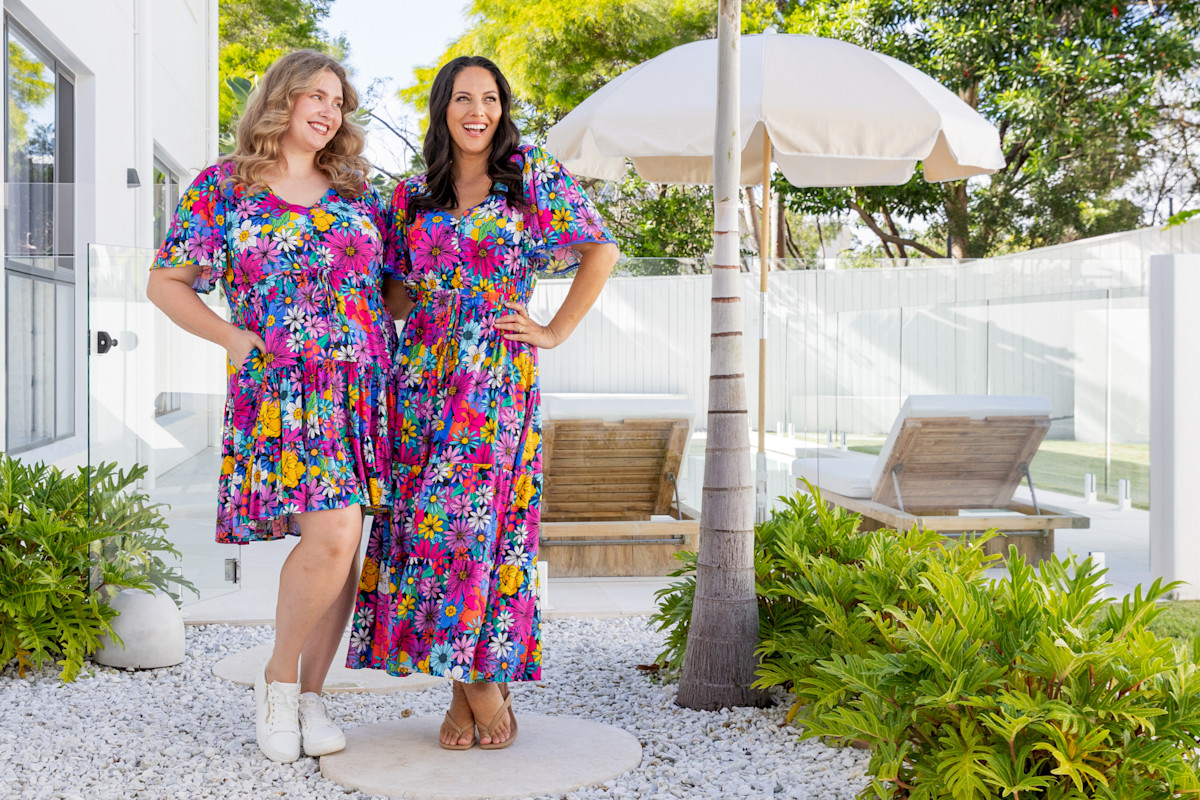
  • Tara McKeon Regains Control of Proud Poppy Across 3 Remaining Stores

    Tara McKeon Regains Control of Proud Poppy Across 3 Remaining Stores

    Proud Poppy founder Tara McKeon has regained control of the womenswear brand after creditors voted this week to approve a Deed of Company Arrangement.

    Creditors from Hall Chadwick voted to allow McKeon to continue owning and operating the business, following an initial creditors’ meeting held on August 17.

    Founded in 2019, Proud Poppy once operated seven standalone stores and will now trade online alongside three remaining retail locations.

    Downsizing The Store Network

    The approved arrangement formalises a sharp reduction in physical retail overhead. Proud Poppy built its initial scale around inclusive sizing ranging from Australian sizes six to 30, expanding quickly into standalone shopping locations before rising operational costs and softened apparel spending squeezed cash flow.

    By trimming four locations prior to and during the statutory process, management reduced fixed lease liabilities to protect inventory purchases. The remaining three doors now serve as localized collection points and brand touchpoints rather than a high-cost national footprint.

    “It feels very meaningful that each creditor voted to return the business to me. I want to especially acknowledge our staff and our suppliers. I know the level of support we have been shown is rare, and we do not take it for granted,” McKeon said.

    Pressure Across Mid-Market Apparel

    Australian independent fashion labels face persistent margin compression as commercial rents, freight charges, and digital customer acquisition costs stay high. For operators in the mid-market segment, maintaining extensive store networks without institutional equity backing has proven unsustainable under volatile consumer demand.

    Passing a deed of company arrangement offers a rare path back to solvency without an outright trade sale or asset liquidation. The risk shifts directly to working capital management, where trimmed product ranges must generate enough cash to settle legacy claims under the agreed deed timetable.

    Earlier Footprint And Next Milestones

    Established in 2019, Proud Poppy expanded its inclusive-size model over five years before cash strain forced management to close multiple locations and trim its garment range in mid-2026. McKeon placed the company into voluntary administration in early August to halt creditor actions and assemble a compromise package.

    Trading continues uninterrupted across the digital store and the three surviving physical doors as administrators finalize the formal execution of the deed.

  • Woolworths to Shift 130 Support Roles from New Zealand to Australia

    Woolworths to Shift 130 Support Roles from New Zealand to Australia

    Woolworths plans to shift roughly 130 customer support roles from New Zealand to Australia as part of a restructuring across the Tasman.

    The proposal includes shuttering the retailer’s dedicated customer care centre in New Zealand to streamline operations across its grocery division.

    Cost Cuts and Centralisation

    Closing the customer care facility will save the business $4.1 million by the 2029 financial year. Woolworths plans to absorb these contact functions into its Australian network rather than maintaining separate customer support centres across both countries.

    Union officials pushed back immediately against the announcement. The Workers First Union condemned the proposal as “corporate greed”, warning that local staff are paying the price for trans-Tasman cost rationalisation.

    Regional Margin Pressure

    Supermarket operators across Australasia face persistent margin pressure from elevated operating costs and cautious consumer spending. Consolidating back-office and contact centre functions allows major grocers to trim overheads, mirroring broader retail trends across the region where administrative operations are pooled into single hubs.

    Consultation over the proposed customer care shutdown remains underway ahead of the company’s 2029 financial milestone.