Tag: retail supply chain

  • Kimberly-Clark Completes Kenvue Buyout Targeting $2.1 Billion in Synergies

    Kimberly-Clark Completes Kenvue Buyout Targeting $2.1 Billion in Synergies

    Kimberly-Clark completed its acquisition of Kenvue on November 2, 2026, creating a personal care and consumer health group with 10 brands generating over $1 billion each in annual sales.

    The combined roster brings Huggies, Kleenex, Kotex, Depend and Scott together with lines including Neutrogena, Tylenol, Listerine and Johnson’s Baby under a single corporate umbrella.

    Synergy Targets and Financial Timelines

    Management reiterated an anticipated run-rate synergy target of approximately $2.1 billion following the close. The bulk of that figure rests on approximately $1.9 billion in operational cost reductions scheduled for extraction within the first three years of joint operations.

    Revenue synergies are projected to deliver roughly $500 million in incremental profit over four years. Those gains will be counterbalanced by approximately $300 million in planned commercial reinvestments over the same horizon.

    Chief executive Mike Hsu will direct the enlarged group, deploying what the Dallas-based manufacturer calls its Powering Care operating structure across Kenvue’s retail pipeline.

    Asia Shelf Space and Retail Realignment

    For supermarket chains, pharmacy operators and convenience retailers across Asia, the completed transaction consolidates bargaining power across everyday grocery aisles. Kimberly-Clark already holds entrenched shelf positions in personal care across markets such as Australia, while Kenvue brings commanding distribution in skin health and oral hygiene.

    Combining both portfolios gives the company broader negotiating use during annual supplier reviews against regional conglomerates and multinational rivals. Retail buyers now face a unified counterparty across baby care, adult incontinence, over-the-counter wellness and topical skincare.

    Category Overlap and Integration Drag

    Execution risks sit squarely in supply chain integration and localized market dynamics. The transaction binds high-volume, paper-pulp manufacturing cycles with regulated consumer healthcare lines that carry vastly different regulatory hurdles and pharmacy distribution models across individual Asian territories.

    In fast-developing Asian retail corridors, category boundaries between fast-moving daily goods and self-care products are blurring rapidly as consumers purchase more preventative health products. Global spending across everyday health and wellness categories now exceeds $500 billion annually, making scale in cross-category retail distribution essential to defend operating margins.

    From Spinoff to Final Sale

    The deal closes after months of integration planning and internal structuring designed to map cost cuts before day one.

    Investors and retail partners now turn to Kimberly-Clark’s first post-merger quarterly filings to track progress on the initial tranches of the $1.9 billion three-year cost elimination plan.

  • Tokyo’s Umios Buys High Liner Foods for C$804 Million

    Tokyo’s Umios Buys High Liner Foods for C$804 Million

    Tokyo-listed seafood manufacturer Umios announced an agreement on 26 October to acquire Canadian peer High Liner Foods for C$804 million ($573.6 million) in cash.

    Under the terms of the transaction, the Japanese group, formerly known as Maruha Nichiro, will pay C$27 per share to position the Nova Scotia-based processor as its core North American platform.

    High Liner operates three production plants, distributing frozen seafood to retail and foodservice customers across the US and Canada under its namesake label, private-label contracts, and brands such as Mrs. Paul’s and Van de Kamp’s.

    Controlling the Pollock Flow

    The deal ties raw ocean supply directly to grocery freezers. Umios, known as Maruha Nichiro until its recent corporate rebranding, controls approximately 26 per cent of the total allowable catch quota for Alaska pollock in the US Bering Sea. That volume historically moved through third-party processors and trading intermediaries, leaking margin along the chain.

    High Liner gives the Japanese conglomerate immediate processing capacity and shelf access across North American supermarket aisles. The Canadian company generated consolidated net sales of roughly $1.03 billion for the full year through December, converting that into an attributable net profit of $36.5 million. By pushing its raw catch through these facilities, Umios captures processing margins and direct distribution revenue inside the world’s most lucrative consumer market.

    For Japanese seafood majors, the domestic horizon is bleak. Japan faces persistent population decline, aging households, and shrinking fish consumption per capita, forcing legacy ocean operators to seek foreign downstream footholds. Competitors have steadily built up proprietary distribution networks across North America to shield earnings from domestic retail deflation. Umios is executing the same defensive playbook on a heavier scale.

    The Downstream Shift

    Buying downstream retail assets brings inventory volatility that pure-play fishing groups rarely handle smoothly. High Liner faces stiff competition from private-label supermarket lines and volatile cold-storage freight rates across North America. If consumer spending softens in North American grocery channels, branded breaded fillets and fish sticks feel margin compressions quickly, leaving the parent group exposed to retail discounting rather than insulated by wholesale catch prices.

    Umios has promised to preserve High Liner’s corporate headquarters in Nova Scotia, keeping its operational workforce, distribution channels, and commercial labels intact.

    “Combining with High Liner Foods will fundamentally transform Umios.”

    Masaru Ikemi, CEO of Umios, said the merger establishes an integrated supply chain connecting upstream harvest quotas directly to retail buyers. High Liner president and chief executive Paul Jewer noted that joining the Japanese group provides immediate scale and investment backing for expanding value-added product lines.

    From Pet Food to North American Retail

    The Canadian buyout comes during an aggressive acquisition phase across regional food categories. Umios bought a 25.1 per cent stake in Thailand-based pet food and canned seafood producer Pataya Food Industries in September. Three months earlier, in June, it picked up a 51 per cent controlling stake in Malaysian pet food maker Pet World International.

    Those Southeast Asian investments targeted fast-growing pet care categories across emerging Asian markets. The High Liner transaction represents a different lever: locking in mature, high-volume consumer protein demand across developed Western supermarket networks to monetise marine harvest rights.

    The transaction will proceed under a court-sanctioned plan of arrangement, with High Liner’s board voting unanimously to recommend the offer. Shareholders holding 45.4 per cent of outstanding stock, including major backer Thornridge with its 41.4 per cent stake, have pledged their votes in favor. Umios requires 75 per cent shareholder support alongside statutory regulatory clearances to close the transaction by January.

  • Thailand Caps Retail Credit Terms at 45 Days

    Thailand Caps Retail Credit Terms at 45 Days

    Thailand’s competition regulator has capped trade credit terms at 45 days for large retailers dealing with small suppliers, backing the rule with fines of up to 10 per cent of revenue.

    The Trade Competition Commission of Thailand (TCCT) issued the binding notification in the Royal Gazette this month, taking aim at wholesalers and retailers generating over 500 million baht in annual turnover across department stores, specialty shops, supermarkets, hypermarkets, cash-and-carry outlets and convenience networks.

    Under rules taking effect in November, payment windows between large retail operators and commercial, manufacturing or service SMEs cannot exceed 45 days unless a shorter schedule is agreed. For agricultural produce and basic processed farm goods, settlements must conclude within 30 days. Consignment terms start when agreed volumes sell in full, whereas standard shipments begin the cycle once deliveries arrive complete with proper documentation.

    Violators of this notification could face a fine of up to 10% of their revenue in the year in which the offence occurred, or up to 1 million baht if the offence occurs during their first year of operation.

    Investigating Encroachment on Franchisees

    Beyond payment terms, the TCCT is deploying investigative teams to Phetchaburi and Lampang provinces to inspect convenience store networks and traditional mom-and-pop grocers. Evidence gathered through the regulator’s Mobile Competition Clinic revealed parent chains frequently open company-owned corporate outlets directly beside existing franchisees, cannibalising store traffic after collecting upfront licensing fees.

    Retail operators told authorities that extra units meet high local shopper density that single stores cannot serve. Pol Col Songsak Raksaksakul, vice-chairman at the TCCT, dismissed the contractual defense during preliminary hearings.

    Even if contracts allow this practice, the fairness of such agreements is questionable under fair-trade principles, Pol Col Songsak noted.

    The commission is also scrutinising whether dominant supermarket operators abuse consignment arrangements. Multiple SME groups reported that after their packaged items established strong sales on modern trade shelves, chains launched copycat house-brand alternatives, while the TCCT is examining whether unilateral changes to product shelf positions constitute an unfair trade practice.

    Pressure on Working Capital Models

    Thai retail chains have long operated by funding store rollouts through supplier credit. Forcing payments out within 30 to 45 days removes cheap short-term financing that supported rapid network expansion across provincial capitals. Chains must now decide whether to reallocate working capital or prune marginal product lines to keep cash conversion cycles tight.

    Suppliers gain needed balance sheet relief, but small brands risk immediate pushback from category managers. Supermarket buyers faced with strict payment liabilities often rationalise stock keeping units, favouring larger multinational consumer goods conglomerates that supply higher volumes and absorb rebate deductions without dispute.

    Zoning and Local Sourcing Mandates

    The field investigations in Phetchaburi and Lampang wrap by late November, alongside focus groups scheduled early in the month to measure consumer and merchant sentiment. Data from those sessions will shape an enforceable retail code of practice and feed policy guidance to urban planning authorities and local administrative organisations.

    The Turn from Voluntary Guidelines

    The statutory credit notification replaces voluntary terms that big retailers routinely bypassed. TCCT commissioner Warawan Chitaroon said that while the watchdog published voluntary guidelines previously, extended payment delays persisted because corporate buyers faced no statutory teeth. Formal publication in the Royal Gazette converts credit schedules from advisory best practices into enforceable law.

    The statutory credit rules take effect in November, while the TCCT plans consultations with retail operators before drafting the formal code of conduct on store positioning and franchising practices.

  • Global Food Prices Climbed 5.8 per Cent in September Despite Near-Record Grain Output

    Global Food Prices Climbed 5.8 per Cent in September Despite Near-Record Grain Output

    Global food commodity prices climbed 5.8 per cent year-on-year in September 2026, driven higher by energy shocks, shipping bottlenecks and surging fertiliser expenses across major Asian trade routes.

    The Food and Agriculture Organization Food Price Index reached 136 points during the month, up 1.5 per cent from August, despite worldwide cereal output tracking toward 2.979 billion tonnes, the second-highest harvest recorded.

    Global cereal inventories remain stable at roughly 950 million tonnes for the 2026-27 season, yet distribution costs and input pricing have broken the link between grain abundance and retail shelf prices. The divergence exposes supermarket chains, food processors and institutional buyers to compounding margin pressure as wholesale commodity jumps filter directly into wholesale procurement.

    Input Shocks Ripple Through Maritime Corridors

    Maritime trade disruptions in the Middle East and the Black Sea have inflated transportation and processing overheads throughout the year. Tanker freight rates jumped more than 90 per cent following security conflicts around the Strait of Hormuz, a passage handling one-quarter of seaborne crude and one-third of seaborne fertiliser trade. Bunker fuel costs doubled over the same period, forcing commercial carriers to add war-risk surcharges to bulk grain and oilseed shipments.

    International urea prices climbed 80 per cent between February and April to surpass $850 a tonne, while diammonium phosphate gained over 10 per cent. Those input spikes hit crop economics across South and Southeast Asia just as planting cycles began. Logistical friction in the Black Sea and dry weather in North America lifted global wheat prices 6.3 per cent in September alone. International maize prices rose 5.6 per cent month-on-month, compounded by smaller Brazilian export volumes and lower yields in the United States.

    Vegetable oils and sugar followed a similar upward path. The FAO Vegetable Oil Price Index gained 0.9 per cent in September on firm palm oil buying and dry conditions in Southeast Asian growing basins, while sugar prices jumped 6.1 per cent.

    Indian Retail Shelves Absorb Upstream Inflation

    In New Delhi and across major Indian metropolitan centres, retail food inflation accelerated to 7.74 per cent in September from 5.97 per cent in August. While central grain warehouses held 87 million tonnes of wheat and rice on September 1, shielding staple cereal retail prices to a 3.94 per cent rise, perishable and imported categories recorded sharp increases.

    Edible oils and fats inflation reached 8.35 per cent in September. The combined category for vegetables, tubers and pulses rose 9.18 per cent, while fruits and nuts climbed 10.75 per cent. At the consumer level, Crisil Intelligence calculated that the cost of preparing a standard home-cooked vegetarian meal rose 10 per cent year-on-year to 30.8 rupees in September, driven by higher prices for cooking oil, onions and liquefied petroleum gas.

    India’s trade account shows the scale of the cost transfer. National crude oil imports totalled $74.8 billion between April and August, up 48.4 per cent in value despite import volumes slipping 0.4 per cent. Fertiliser import expenditure jumped 53.25 per cent to $8.21 billion during the five-month span, while vegetable oil purchases grew 11.28 per cent to $9.18 billion. Domestic urea output fell 27 per cent in March to 1.8 million tonnes when feedstock natural gas deliveries dropped to 60 per cent of normal capacity before stabilizing.

    Weather Risks Threaten Export Allocations

    Climate factors are tightening the outlook for the next crop cycle. The National Oceanic and Atmospheric Administration projects an 83 per cent probability that a strong El Nino pattern will persist through the first quarter of 2027. In India, the 2026 southwest monsoon concluded with rainfall 13 per cent below historical averages, marking the driest seasonal performance since 2015. Southern states faced a 24 per cent deficit, while eastern and northeastern territories recorded a 26 per cent shortfall.

    Reduced reservoir levels pose direct operational hurdles for winter sowing. Crisil forecasts a 5 to 6 per cent decline in domestic paddy production due to lower planted area and thinner yields. Because India supplies roughly 40 per cent of the cross-border rice trade, production shortfalls in the domestic basin carry immediate pricing consequences for food distributors across the Middle East, Africa and Southeast Asia.

    Government subsidies have so far absorbed a portion of the shock, with central budget spending on fertiliser support rising 20.7 per cent to 1.03 trillion rupees between April and August. Food manufacturers and commercial retailers nonetheless face higher cold-chain logistics costs, packaging inflation and inventory holding expenses as raw materials turn costlier.

    Trade Metrics to Track Through 2027

    Retail grocers and packaged food companies across the region enter the final quarter of 2026 with little room to absorb further wholesale increases without adjusting shelf prices. Operating margins will depend heavily on whether winter rainfall restores reservoir capacity across key agricultural belts.

    Over the next 6-12 months, I would watch pulses, edible oils and vegetable prices; rabi sowing and soil moisture; reservoir levels; crude oil and fertiliser prices; the rupee; freight costs; and government decisions on food imports, exports and stocks. The key signal will be whether inflation remains concentrated in a few commodities or starts spreading across the wider food basket.

    Market participants are now tracking weekly acreage numbers for India’s rabi crop, alongside monthly palm oil stock levels in Malaysia and Indonesia, to gauge whether retail food inflation stabilizes before the 2027 harvest cycle opens.

  • Woolworths Expands Soft Plastics Scheme to over 700 Stores

    Woolworths Expands Soft Plastics Scheme to over 700 Stores

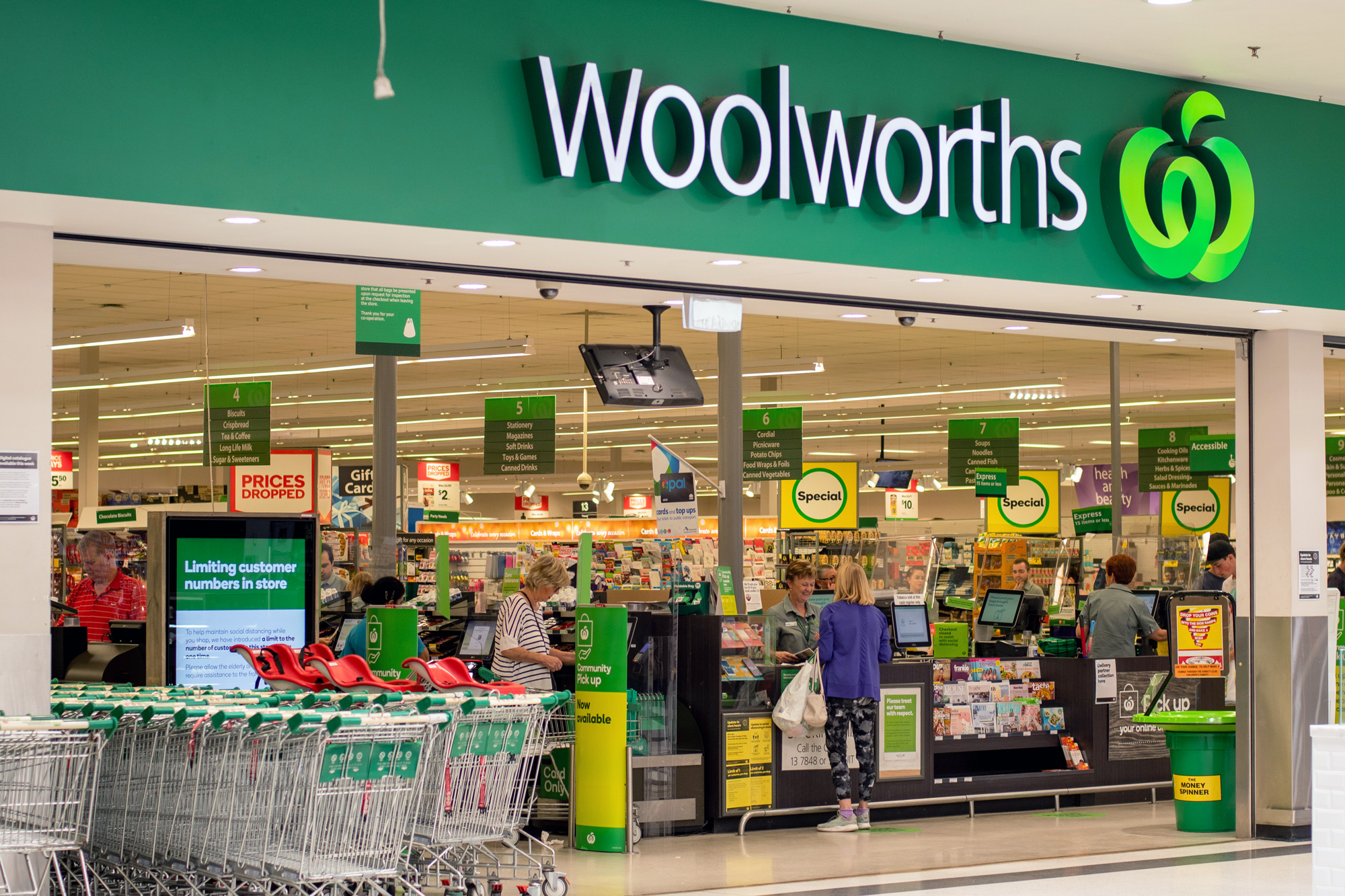
    Woolworths Group has collected more than 50 million pieces of soft plastics across Australia since February 2024. The retailer has expanded its in-store recycling network to more than 700 supermarket locations.

    Domestic recycling processors received the recovered packaging, diverting approximately 415,000 kilograms of material from landfill.

    Scaling the supermarket drop-off network

    The program started as a five-store trial. It has since expanded across the grocer’s national store network. Shoppers drop flexible plastic wrapping, bags and food pouches into designated collection points inside participating outlets.

    Woolworths runs the scheme through Soft Plastic Stewardship Australia. The company works alongside rival supermarket chains and major packaged goods manufacturers to manage collection logistics and downstream processing contracts.

    Managing packaging waste after REDcycle

    This initiative replaces REDcycle, Australia’s previous national soft plastic collection framework. REDcycle collapsed in late 2022 after stockpiling thousands of tonnes of material. Instead of warehousing inventory, the current model distributes processing loads across verified Australian recyclers capable of handling mixed polymers.

    Consumer goods manufacturers can use the network to meet emerging packaging mandates without building independent collection channels. Diverting 415,000 kilograms proves operating viability, though processing capacity in Australia remains tight for heavily contaminated household films.

    Shifting commercial responsibility to brand owners

    Retailers and brand owners fund the stewardship model directly, sparing municipal waste collectors the operational expense. Supermarkets gain foot traffic from collection bins while managing the front-end sorting burden at store level.

    Downstream remanufacturing demand remains the main operational risk. Recyclers must turn recovered flexible films into commercially viable industrial products, asphalt additives or packaging materials to keep collection points open.

    Next steps for national collection targets

    Jasmine Medwell, head of sustainable impact at Woolworths Group, oversees the rollout as the consortium evaluates store collection volumes and recycling throughput. Participating operators are monitoring regional processing capacity before extending collection points into remaining regional stores.

  • Nippan Group Confirms Book Sales to US AI Firm Anthropic

    Nippan Group Confirms Book Sales to US AI Firm Anthropic

    Nippan Group Holdings has confirmed that it sold books to US artificial intelligence firm Anthropic, sources familiar with the matter said on Wednesday, October 7, 2026.

    The Japanese book wholesaler confirmed the sale in a letter addressed to the Japan Book Publishers Association, an industry group.

    Nippan Group did not disclose how many books were sold or the total purchase amount.

    The Paper Trail in Project Panama

    Filings in a US copyright lawsuit brought the commercial relationship to light. Internal records submitted in court identified a deal with an entity listed as Nippan Japan under Project Panama, an initiative to purchase and digitise print volumes across international markets.

    Briefings to trade representatives omitted the volume of books supplied and the financial value of the transaction. The industry association then circulated the wholesaler’s written statement to approximately 380 domestic publishing houses.

    Publishers Face Downstream Copyright Exposure

    The disclosure shifts a dispute over AI scraping from digital web crawlers directly into physical supply chains. Wholesalers in Japan sit between content creators and readers. Bulk sales of catalog backlists can channel proprietary print into training clusters without separate licenses from authors.

    Publishing houses in Tokyo now face an audit problem across their distribution channels. Standard export contracts may allow unmonitored mass digitisation under foreign fair-use or research clauses. When that happens, domestic rights holders lose the ability to negotiate commercial data fees for models that eventually compete in their home market.

    Scrutiny Mounts Over Model Inputs

    Developers have pursued physical procurement to source high-grade, non-English training text absent from public web archives. Japanese print media holds dense, structured vocabularies. General web scrapers struggle to harvest this material cleanly from behind paywalls and regional access controls.

    Across Japan, financial institutions and systems integrators are rolling proprietary models into operational software. These commercial integrations rely on stable copyright foundations. Contested bulk purchases of print stock leave those foundations vulnerable.

    Publishers Demand Commercial Clearances

    Nippan Group told member firms of the publishing association that it will respond directly to corporate inquiries from copyright owners affected by the shipments. Industry groups in Tokyo are now reviewing whether standard distributor contracts provide sufficient controls over secondary usage by corporate technology buyers.

  • Boots Fast-Tracks 44 Brands Through Ignite Programme

    Boots Fast-Tracks 44 Brands Through Ignite Programme

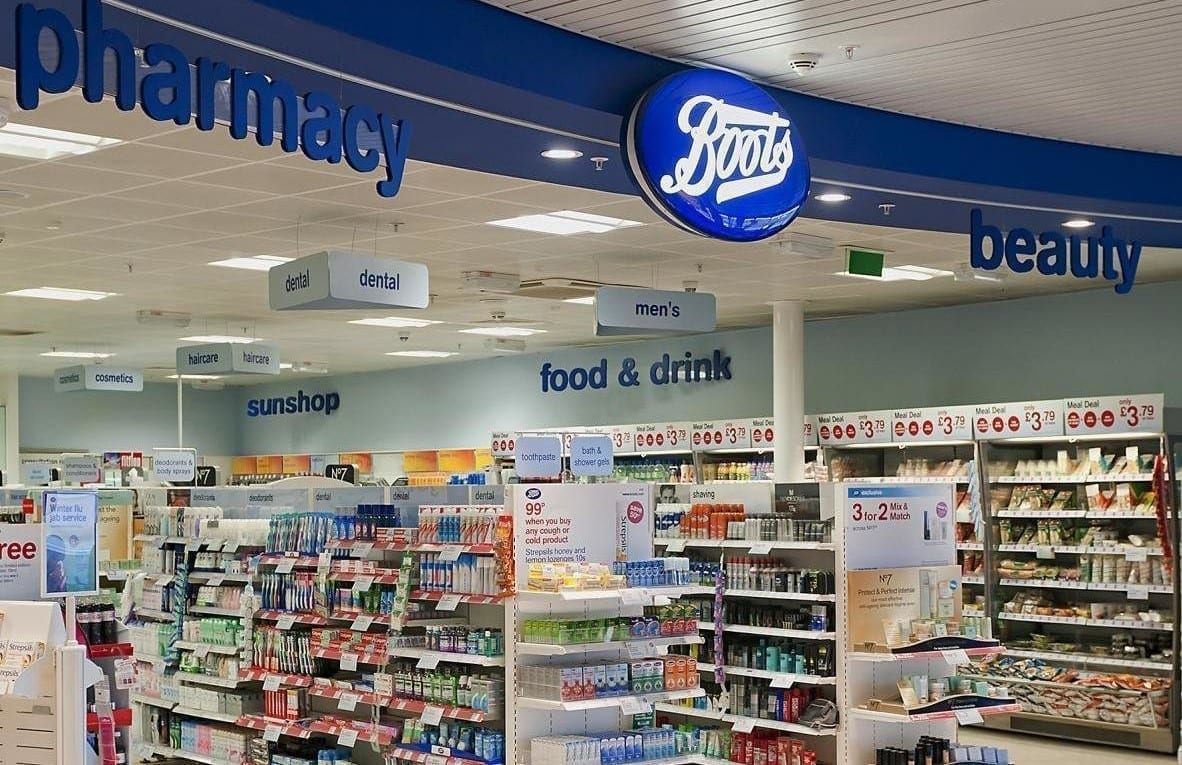
    Boots has launched 44 emerging beauty and wellness brands through its Boots Ignite programme since introducing the initiative in December 2024, cutting onboarding turnaround times to eight weeks.

    About 95 per cent of the participating labels have expanded into wider retail space across the chain’s store estate, according to Grace Vernon, head of global foresight and trends at Boots.

    Accelerating viral supply chains

    The fast-track framework relies on AI-led platforms scanning TikTok, Instagram, Google and Reddit, combined with insights from 17 million active Boots Advantage cardholders. Weekly trend review meetings help determine intake decisions, allowing the retailer to move quickly on viral movements. South Korean sheet-mask brand Biodance became an early success for the incubator after selling out within two weeks of launch.

    Physical stores feature dedicated Trending on Social bays and Korean beauty zones, complete with instructional guide cards to demystify active ingredients for multi-generational shoppers. In-store beauty advisers receive targeted product training on formulation trends, including barrier repair and exosome skincare, to convert social discovery into physical transactions.

    Implications for Asian brand exporters

    For South Korean, Japanese and regional contract manufacturers, the eight-week turnaround eliminates the six-month listing hurdles that historically blocked indie labels from legacy Western retail chains. Independent Asian brands no longer need costly European distributor networks or massive production runs before proving product viability in major high-street locations. The compressed listing window lets agile laboratory brands scale inventory incrementally, minimizing initial working capital risk while securing tier-one distribution.

    Western pharmacy majors are recalibrating their merchandising to defend market share against cross-border e-commerce platforms like Musinsa, YesStyle and TikTok Shop. Asian suppliers holding viral formulas now gain direct bargaining power with legacy chains, though the burden of rapid replenishment shifts entirely onto contract packagers and air-freight logistics corridors.

    Building beyond short-lived social cycles

    The incubator builds on a retail strategy launched in December 2024 to capture fast-moving wellness movements without compromising quality standards across the 176-year-old chain. Grace Vernon, head of global foresight and trends at Boots, noted that data surveillance alone cannot replace timing: “Tracking trends is the easy bit. The hardest bit is identifying when the right time to respond to that trend is,” she said.

    Next benchmarks for shelf expansion

    Boots is evaluating its next intake of indie cosmetics and functional skincare labels for nationwide rollouts in early 2027. Sourcing teams are monitoring whether brands entering through online-only channels can sustain double-digit repurchase rates before clearing them for multi-store floor allocations.

  • Pakistan Rolls Out Fuel Subsidies for Delivery Riders as Crude Tops 100 Dollars

    Pakistan Rolls Out Fuel Subsidies for Delivery Riders as Crude Tops 100 Dollars

    Pakistan rolled out a nationwide fuel relief scheme on Wednesday offering a 100-rupee discount per litre to cushion delivery riders and small-vehicle operators against surging crude oil prices.

    International oil prices climbed past 100 dollars per barrel following maritime disruptions in the Strait of Hormuz and Bab El-Mandeb, pushing Islamabad to subsidise local transport.

    How the Fuel Relief Scheme Works

    Deputy Prime Minister Ishaq Dar led the National Steering Committee on Fuel Subsidy to finalize operational details ahead of the midnight rollout. Under the mandate, commercial fuel stations must receive reimbursement payments within 24 hours of dispensing discounted fuel to registered motorists.

    The system allocates five litres of subsidised petrol weekly to motorcyclists, while owners of passenger cars with engine capacities up to 800cc can draw ten litres every ten days. Climate Change Minister Musadik Malik noted that the 100-rupee per litre concession offsets a combined 85 rupees in state taxes, comprising an 80-rupee petroleum levy and a five-rupee carbon levy.

    Malik cited food couriers and transport operators as primary targets for the measure. A rider covering standard delivery routes gains roughly 2,000 rupees in monthly operating margin under the quota, offsetting fuel bills that surged after recent statutory price hikes.

    Last-Mile Pressure and Supply Chain Margins

    Last-mile logistics networks and quick-commerce platforms across South Asia operate on razor-thin margins where transport fuel constitutes up to 40 per cent of route expenses. While the state cap shields gig couriers from immediate distress, the five-litre weekly quota covers only a fraction of full-time commercial driving schedules. Fleets must still absorb market rates for extra distance.

    Retail suppliers face compounded pressure through secondary freight routes. Transport contractors moving packaged goods between regional hubs and urban distribution centres do not qualify for the small-vehicle subsidy, forcing freight carriers to either push transport surcharges onto FMCG distributors or trim delivery frequencies outside tier-one cities.

    Power Generation and Grid Stability

    Power costs present a parallel risk to brick-and-mortar retail and refrigerated storage networks. Energy Minister Sardar Awais Ahmad Khan Leghari reported that spot prices for imported liquefied natural gas climbed to 23.25 dollars per million British thermal units during the shipping bottlenecks.

    Domestic power generation relied on local energy sources for 72 per cent of total output during August 2026, led by hydroelectric output at 38 per cent, domestic coal at 11 per cent, nuclear at 10 per cent, and domestic gas at seven per cent. Leghari confirmed that diverting local gas into power generation prevented an extra hour of daily load shedding across commercial grids.

    The steering committee directed provincial administrations to complete district-level station verification, with daily sales volume monitoring set to begin across all four provinces from midnight on Thursday.

  • Powtek Brings 2 Million Unit Factory Output to European Trade Shows

    Powtek Brings 2 Million Unit Factory Output to European Trade Shows

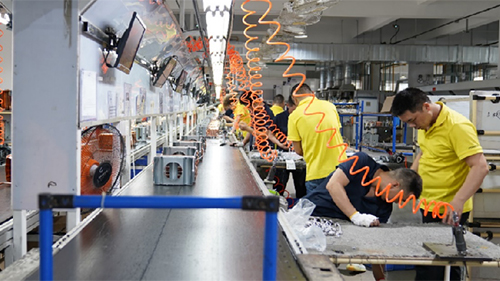
    POWTEK Group presented three appliance brands at trade shows in Warsaw and Istanbul. The show follows the commissioning of a production facility that lifts its capacity to 2 million units per year.

    The export drive relies on 12 automated assembly lines. These lines produce heating, hot water and kitchen appliances for clients across more than 50 international markets.

    Splitting Brands Across European Trade Hubs

    Commercial pitches were divided by product category across two simultaneous industry events. In Warsaw, Poland, POWTEK deployed its Kaltec label at Heating Tech Expo 2026 to present customized heating, ventilation and air-conditioning equipment directly to European contractors and commercial buyers. In Istanbul, Turkey, the group staged its Morrtop and X-Crafter lines at the Zuchex International Home and Kitchenware Exhibition to pitch domestic kitchen appliances to retail distributors.

    Kaltec operates an established regional base through its Spanish subsidiary, Kaltec-Confort S.L.U., a member of Spain’s HVAC industry body FEGECA. That local standing gives the brand direct access to Spanish wholesale channels. Most Asian original equipment manufacturers reach these accounts only through third-party intermediaries.

    Manufacturing Capacity and Channel Pressure

    For European retail buyers and regional HVAC distributors, the shift from standard contract manufacturing to distinct branded lines alters pricing for mid-tier appliances. White-label suppliers that build specialized sub-brands can sell directly to regional distributors below the prices of legacy European brand owners. That puts gross margin pressure on domestic incumbents in Southern and Eastern Europe.

    Direct trade show participation also exposes the Asian producer to tighter European regulatory scrutiny. The new manufacturing plant operates under ISO 9001 quality management and ISO 14001 environmental certifications, meeting basic compliance thresholds required by European Union retail buyers. Even so, the group still faces the challenge of building consumer brand recognition outside its original equipment manufacturing contracts.

    Building Out the European Distribution Footprint

    Founded in 2003, POWTEK built its business as an original equipment and design manufacturer of domestic water heaters and small kitchen appliances. It later launched proprietary brands for export markets.

    “Europe and international markets have long been important to POWTEK’s business development,” said Michael Chan, Chief Executive Officer of POWTEK. “By bringing different brands to specialized exhibitions, we aim to demonstrate the Group’s capabilities in product development, R&D and manufacturing while exploring long-term cooperation with more international partners.”

    POWTEK is now negotiating commercial supply agreements with distributor networks across Central and Eastern Europe. Initial deliveries from the 12-line factory will roll out across the coming trade cycle.

  • Pakistan Raises Petrol to Rs349 and Diesel to Rs374 per Litre

    Pakistan Raises Petrol to Rs349 and Diesel to Rs374 per Litre

    Pakistan raised the retail price of petrol by Rs2.84 per litre and high-speed diesel by Rs2.28 per litre, effective September 4.

    Petrol now costs Rs349 per litre. High-speed diesel stands at Rs374.31 per litre. State fuel taxes add Rs114 per litre in duties on petrol and Rs100 per litre on diesel.

    Daily Pricing and Middle East Volatility

    Fuel rates now change daily under a system the government introduced on July 17. Petroleum Minister Ali Pervaiz Malik instructed the Oil and Gas Regulatory Authority to adjust prices every day based on international crude fluctuations.

    Both fuels remain well below their spring records. High-speed diesel peaked at Rs520.35 per litre on April 3, up from Rs281 before hostilities between the United States and Iran escalated in late February. Petrol reached Rs458.41 per litre on that same April date after opening March at Rs266.

    Impact on Freight and Retail Transport

    Transport costs feed directly into retail operations across Pakistani cities. High-speed diesel fuels long-haul freight trucks, intercity logistics fleets, agriculture machinery, and backup commercial generators. Petrol runs commuter motorbikes and urban delivery networks.

    Monthly consumption of petrol and high-speed diesel combined runs between 700,000 and 800,000 tonnes, compared to 10,000 tonnes for kerosene. Fleet operators and logistics providers are watching the next daily OGRA notices as global oil benchmarks shift.