Tag: retaila

  • Hong Kong: more than just retail

    Hong Kong: more than just retail

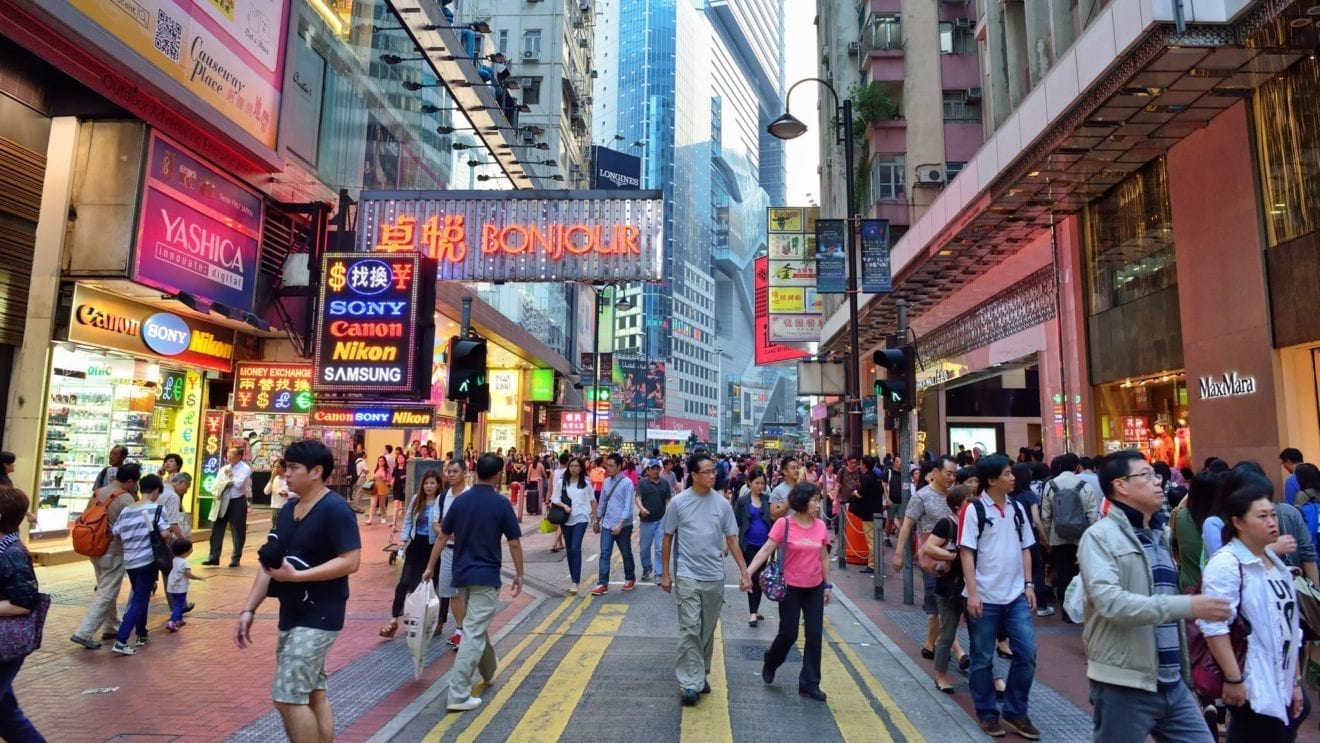
    There has been no shortage of ink spilt in recent years about the negative impact of China’s anti-corruption crusade on Hong Kong’s retail sector.

    Visitor arrivals from the PRC represented 76 per cent of all tourists in 2016, when those numbers fell 6.7 per cent. Taken with aggressive campaigns to lure mainland tourists elsewhere — Japan, Singapore, South Korea — and a strong Hong Kong dollar, life has become harder for the SAR’s retailers and landlords.

    Or has it?

    Despite currency fluctuations and fleeing Chinese travellers, overnight visitors to Hong Kong spent an average of approximately HK$6600 a head during their stays, funnelling nearly $300 billion in related capital into the economy that year according to the Hong Kong Tourism Board — and that was down from 2015. Though Mainland Chinese arrivals declined, short-haul markets (Taiwan, South Korea, Japan, the Philippines, Singapore and Thailand) registered an increase of 3.4 per cent, long-haul market arrivals (the US, Australia) rose by 2.3 per cent, and MICE and cruise passenger visits increased by 10 per cent and 50 per cent respectively.

    People are still coming to Hong Kong –  and they’re still shopping.

    Put very simply, Hong Kong’s one-two punch of consumer-friendly retailing and a great deal to offer visitors seeking to complement their shopping are the primary reasons the retailing scene remains vibrant. An open door business policy and historical connections make international brands a must-stop for regional expatriates and curious regional visitors alike. Stop outside a Marks & Spencer Food Hall on any given afternoon if you need proof.

    The new Italian outlet mall, Florentia Village, at Kwai Chung and the imminent Citygate expansion add to choices for bargain hunters, alongside guidebook hotspots like Ladies’ Street. An added bonus: all of this is free of sales tax. In some form, 12 per cent is added to goods in the Philippines, Koreans and Australians can pay as much as 10 per cent in levies, the Japanese 8 per cent and Thais 7 per cent according to tax advisory Deloitte. Twelve cents may not be a lot on a dollar, but it makes an enormous difference on a genuine Prada handbag.

    A travel ban that actually benefits Hong Kong…

    While it’s true the recent diplomatic spat between China and South Korea over defence deployment has proven a boon to Hong Kong shopping (Chinese travel to Korea fell 40 per cent in the year to April 2017 on the back of Beijing directives to halt travel packages to the Hermit Kingdom) it is in all likelihood a temporary glitch.

    Ultimately it is the city’s extras that keep Hong Kong a shopping option. When not browsing boutiques, stellar food and beverage breaks are available at every turn, and leisure parks, cultural outlets, nature and excursions can all be found in an easily navigable, compact space.

    If there’s a silver lining to the city’s retail property woes it’s the newly available space for international restaurant groups to move into. Finding room on the dining scene so far this year are Japan’s Michelin-starred ramen eatery Tsuta, fresh-local burger shack Honbo, Royal favourite Thai Brassiere by Blue Elephant, Moi Moi by Vietnamese Sydney celebrity chef Luke NguyenLilya Moroccan Lounge and Bar and venerable American dessert cafe The Cheesecake Factory are just a few. Anyone travelling with children (cruise operators are quick to point out the burgeoning family demographic) will be glad to have the amusements at Hong Kong Disneyland and perennially popular Ocean Park — with real animals — an MTR ride away.

    Art & culture

    Admittedly not everyone travels to Hong Kong with family or has a soft spot for amusement parks, and for those shoppers the SAR’s reputation as a cultural wasteland is quickly disappearing. The two-year old PMQ regeneration has put local, artisanal and independent design a shoppers’ fingertips, and the forthcoming West Kowloon Cultural District has just opened its first gallery: M+. Soon to be a few minutes’ walk from the PMQ is the Central Police Station redevelopment on Hollywood Road, Tai Kwun. The 16 buildings will comprise art galleries, boutiques, dining, and leisure spaces with an eye towards highlighting local heritage. Tai Kwun and the WKCD are set to be destinations in of themselves.

    Need some hiking and more?

    Finally, tourists are drawn to Hong Kong from around the world for its renowned urban hiking, traversing over 250km on just the Hong Kong, Lantau, Wilson and MacLehose routes. In no other city in the world can you be on a lush, seemingly remote trail one minute, and ensconced in the glamorous shopping of the Landmark an hour later.

    Also an hour away: Macau, which beckons as a Disneyland for adults, where luxury spas and more Michelin-starred dining awaits. It’s no surprise shopping in Hong Kong is as healthy as ever.
  • Retail businesses ‘count success’ accurately with Cashmaster One

    Retail businesses ‘count success’ accurately with Cashmaster One

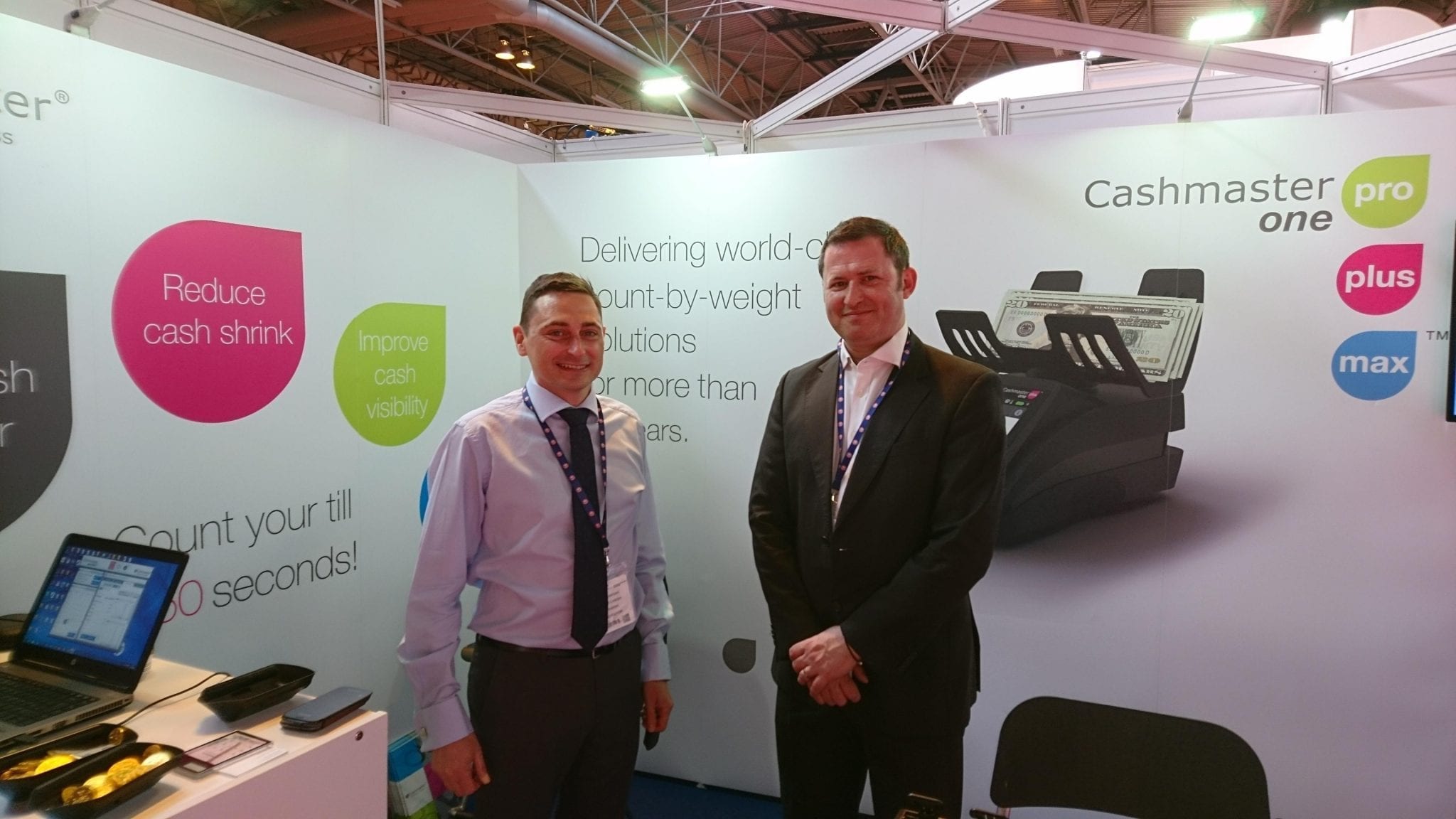
    Cashmaster, one of the leading companies in the global cash-management sector, is demonstrating the transformational cost and time savings that retailers can enjoy when using its latest range of cash-counting scales, Cashmaster One, at Retail Asia Expo (RAE). It is also unveiling Cashmaster Connect, its new cash management application which gives retailers greater ‘real time’ visibility of their cash.The UK-based company is exhibiting for the first time at this year’s RAE which is being held on 13-15 June 2017 in the Hong Kong Convention and Exhibition Centre (Booth L12).

    Gordon McKie, CEO at Cashmaster, commented. “In the last year, we established our Asia Sales and Support headquarters in Hong Kong so it’s the perfect time for us to be participating in such a key exhibition.”

    “All our devices are designed and manufactured in Scotland but we work with businesses world wide, most recently with large retailers in Asia. We understand the highly competitive nature of the markets where our customers operate, which drives them to seek efficiency and process improvements across their organisations. This is where count-by-weight products can help make a tangible and significant difference – driving accuracy and efficiency in cash-management processes and ultimately making a positive impact on their bottom line.”

    Mr McKie pointed out that retailers counting their tills using a Cashmaster count-by-weight device can transform how they manage their day-to-day cash counts and cash-management processes. Manual counting is still commonplace in many retail outlets and it can take up to 10 minutes to perform a single count. Using a count-by-weight device allows organisations to count their tills in less than a minute, helping to drive efficiency improvements that deliver cost savings, reduce cash shrinkage and provide much tighter control and visibility of their cash.

    “Count-by-weight technology delivers measurable cost and staff time savings almost immediately and our customers typically see a return on their investment in 8-12 weeks,” he concluded.

    UK design and manufacture Cashmaster has over 30-yearsexperience in the cash-management sector, designing and manufacturing all its products in the UK. Its latest range of devices, Cashmaster One, incorporates a smart-phone style touch-screen and a highly intuitive icon-driven user interface, making it the easiest to use cash counter on the market. With its optional integral printer, Cashmaster One is the smallest footprint device the company has ever made, ideal for retail environments where space is at a premium.

    New Cashmaster Connect The availability of pertinent, ‘real-time’ management information (MI) is fast becoming a key prerequisite of the physical cash-management sector. The growth in software platforms is a clear indicator that good MI and greater cash visibility is becoming more important to all businesses whether large or small.

    The new application, which allows users to connect their Cashmaster cash counter to their Windows PC, laptop or tablet, gives retailers a simple way to record cash-count data from tills accurately and efficiently in a matter of seconds. Cashmaster Connect allows users in busy retail environments to automatically output till counts in Excel format. This means retailers can capture important cash data, making financial reporting easier and more accurate than ever.

    Working in partnership

    As part of the company’s wider strategy for providing a complete cash-management solution for its customers in small and large enterprise organisations, 2017 will see Cashmaster working in close partnership with key providers of both software and hardware product solutions that target retail and other sectors.

    Amanda Treend, Group Product and Marketing Director at Cashmaster, commented “We receive daily feedback from our customers on how our Cashmaster count-by-weight devices have an immediate impact on their cash management with real improvements in efficiency, accuracy and cost savings. Managing your cash successfully tends not to be a single product fix. Cashmaster technology is designed to integrate seamlessly with a variety of cash-management hardware.

    “We’re delighted that our Cashmaster Connect application and the strategic partnerships we are developing will significantly expand our cash-management solutions offer to retailers of all sizes around the globe, whether they are sole traders or large enterprises.”

  • Only 57% of consumers feel rewarded with their loyalty programmes

    Only 57% of consumers feel rewarded with their loyalty programmes

    And here are three ways on how financial firms can improve their loyalty services. A research from Collinson Group research revealed three things ways on how financial services loyalty programmes could be improved.

    Three in five, or 60% of respondents in Singapore said they want a simpler user experience, whilst 52% noted that they would want the ability to combine points with cash. Forty-nine percent indicated that they want a larger selection of rewards.

    “This indicates that usability and accessibility of rewards are top of mind for financial services loyalty programme members,” Collinson Group said.

    The study said the two of the strongest categories of reward that are most popular with global financial services customers are travel and leisure.

    It added, “In Singapore, customers consistently place a high value on benefits such as airport lounge access, concierge services and unique social and cultural leisure experiences. Collinson Group research reinforces that customers value products and experiences offered outside of company core inventory as part of a financial services loyalty programme.

    Meanwhile, the research also revealed that only 57% of bank and financial service loyalty programme members in Singapore feel rewarded for their custom. Customers are looking for more opportunities to earn loyalty currency and more choice when redeeming their points.

    Here’s more from Collinson Group:

    Reward and recognition are becoming increasingly important for customer retention and revenue growth. As regulators encourage greater competition in the financial services market, new competitors emerge and consumers are given more opportunities to compare and switch services. Brands must consider how best to remain attractive to this sophisticated set of consumers who have a greater access to information and are always after the best value for money.

    The Collinson Group research with 2,250 consumers across the United States, United Kingdom, Singapore and the UAE revealed that more than three quarters of respondents (77 percent) look for loyalty programmes with a greater choice of rewards. Furthermore, four in five respondents (82 percent), said that the value of a programme decreases when there is only a limited range of rewards available.

    An enhanced redemption experience is delivered through a programme that offers the customer the ability to redeem in retail outlets and leisure stores, as well as an e-commerce platform. Survey respondents were clear that the value of a loyalty programme decreases if points cannot be redeemed in physical retail outlets, with 49 percent in Singapore agreeing.

    Chris Rogers, Director at Collinson Group said: “Traditional financial services models continue to evolve, with a focus on improved digital services and experiences, but a key area brands need to consider is how they recognise and reward existing customers. Other sectors such as travel and retail are demonstrating new ways of offering more personalised, timely and relevant rewards.

    “A key element in enabling this is providing customers with more ways to earn and redeem loyalty currency. Offering the opportunity to ‘spend’ points against non-financial products such as travel, leisure or more altruistic rewards is increasingly attractive to programme members. The chance to redeem points in physical stores such as retailers and to part-pay with loyalty points and cash all make programmes more relevant and therefore more valuable to consumers.”