Retail News CRM

Tag: retailproblems

  • Retail Sales growth holds steady in April

    Retail Sales growth holds steady in April

    Economy-wide spending remained stable in April, apparently unaffected by the election period, according to the Commonwealth Bank’s latest Business Sales Indicator (BSI).

    Spending rose 0.5 per cent in trend terms in April, after gains of 0.6 per cent in both February and March, and a 0.5 per cent increase in January.

    Annual trend sales growth remained steady at 5.3 per cent for the 4th straight month, just below the 5.5 per cent long-term average growth rate.

    The seasonally-adjusted measure of the BSI, which measures debit and credit card transactions at Commonwealth Bank merchant facilities, rose 0.3 per cent in April, the 10th gain in the past year.

    The continued momentum in April was driven by strong growth in the amusement and entertainment and utilities sectors, which were both up 1.0 per cent, and hotels and motels, which was up 0.9 per cent, likely due to the Easter and Anzac Day holiday period.

    Retail stores also recorded spending gains in the month, though sales in clothing stores were down 0.3 per cent, making it the sector with the biggest drop, followed business services and repair services, which were down by 0.2 per cent.

    Sales were stronger across all states and territories in April except Northern Territory, where spending was down 0.4 per cent. Queensland saw the strongest growth, up 0.9 per cent), followed by Victoria and Tasmania, both up 0.8 per cent, South Australia, up 0.5 per cent, and Western Australia, NSW and ACT, both up 0.3 per cent.

    In annual terms, all states and territories had sales above a year ago except Northern Territory, where sales were down 5.4 per cent. Tasmania had the strongest annual growth, up 7.1 per cent, followed by Western Australia, up 7 per cent. South Australia had the slowest growth, up 3.1 per cent.

  • Omnichannel startup CitiXsys Opening Offices

    Omnichannel startup CitiXsys Opening Offices

    Fresh from a US$20 million funding injection, omnichannel-solutions startup CitiXsys plans to open six offices across Asia, eyeing region-wide expansion. CitiXsys’ new offices will be located in Singapore, Jakarta, Ho Chi Minh City, Manila, Bangkok, and Kuala Lumpur.

    “Southeast Asia offers an ideal business climate today, with massive opportunity in this important region,” said Kamal Karmakar, CitiXsys CEO.

    “Purchasing a retail-management solution is one of the most important decisions a retailer can make since the future of the entire business hangs on its success.”

    Southeast Asia is the world’s fastest-growing internet region with the e-commerce market expected to reach US$53 billion by 2023.

    “By opening up more local offices and bringing on local product expertise we will be able to better support the needs of our fast-growing client, partner, and distributor base in Southeast Asia,” added Paula Da Silva, executive VP of global partnerships and alliances at CitiXsys.

    “Already this year, the CitiXsys channel partner ecosystem in this region has grown by 30 percent, signaling a need for solutions designed to complement the way retail works in Asia today.”

  • Sephora Hong Kong plans Eight More Store Openings

    Sephora Hong Kong plans Eight More Store Openings

    Sephora Hong Kong has confirmed not one, but eight stores in its return to brick-and-mortar retailing in the territory – but shoppers will have to wait until August for the first outlet to open.

    As previously reported, the LVMH-owned chain will open a 4200sqft store in IFC Mall after a 10-year absence from the city.

    In an announcement confirming its plans, Sephora Hong Kong says it will open a second store at Windsor House in Causeway Bay in the fourth quarter of this year and expand its online offer.  Six more stores will follow over a three-year timeframe, their locations as yet not revealed.

    In a statement, Benjamin Vuchot, president of Sephora Asia, said the company currently operates in 12 countries and during the next three years sees its retail presence expanding by almost 50 per cent across Asia.

    “Hong Kong, being strategically located in the Greater Bay Area, allows us to meet the growing demands from Hong Kong consumers, as well as tourists from Mainland China and Southeast Asia,” he said.

    “We believe that Hong Kong will be a key market … giving Sephora the opportunity to amplify global beauty trends locally, elevate the in-store retail experience and to bring in digital touch points within the brick-and-mortar format to create a virtuous customer centric cycle.”

    Sephora said the retail landscape in Hong Kong has changed significantly over the 10 years since Sephora last had a store there.

    “Conventional retail with a physical presence has proven higher chances of winning in a market with strong digital development. Moreover, the re-launch of Sephora brings to Hong Kong’s department store-focused retail landscape a much-needed prestige retail chain for an authentic omni-channel experience,” the statement said.

    Sephora Hong Kong plans to make beauty “more personalised, fun and interactive” upon its return, allowing customers “the freedom to experience products that work for them, learn tips and tricks, as well as to have access to unbiased beauty services from beauty advisors”.

    The company plans more than 40 brands of cosmetics exclusive to Sephora stores in the city, along with its own in-house label Sephora Collection. It has promised to include local Hong Kong brands in its offer as well, over time.

    Digital innovation will play an integral role in Sephora’s traditional retail experience, with vending machines to be located in stores to support the Beauty Pass loyalty program, an app powered by member insights to drive seamless customer service, a digital skincare consultation for immediate and accurate recommendations, and the opportunity to go online to book in-store makeovers.

  • Walmart trials new Online Store Format

    Walmart trials new Online Store Format

    Supermarket retailer Walmart has launched a new technology called Intelligent Retail Lab (IRL) that allows it to monitor its physical stores more efficiently and keep costs under control.

    The retail giant is testing this new technology, which includes artificial intelligence-enabled cameras, interactive displays and a massive data centre, in its 50,000-square-foot neighborhood market grocery store in Levittown, New York.

    According to IRL CEO Mike Hanrahan, the location is one of Walmart’s busiest stores and has more than 30,000 items and this allows them to test out the new technology concept in a real-world environment.

    “We’ve got 50,000 square feet of real retail space. The scope of what we can do operationally is so exciting,” Hanrahan said.

    IRL is set up to gather information about what’s happening inside the store through an array of sensors, cameras and processors. It has a combination of cameras and real-time analytics that will automatically trigger out-of-stock notifications to internal apps that alert associates when to re-stock, detect the products on the shelf and compare the quantities, among others.

    Hanrahan said the first thing this equipment will help the team focus on is product inventory and availability. In short, the team will use real-time information to explore efficiencies that will allow associates to know more precisely when to restock products, so items are available on shelves when they’re needed.

    “Customers can be confident about products being there, about the freshness of produce and meat. Those are the types of things that AI can really help with,” Hanrahan said.

    Walmart said with its new IRL technology, customers can trust that the products they need will be available during the times they shop.

  • The new golden rule for retailers to be Succesful

    The new golden rule for retailers to be Succesful

    The retail climate in Australia has long been a concern, but could there be a secret sauce to help brands reclaim valuable real estate in the minds of their consumers?

    Let’s face it — which brand doesn’t want to be like Nike? Its mass market, appeal and unique ability to stay relevant throughout its 50-year history have made it one of the most valuable brands amongst sports organisations. If Nike hadn’t already cemented its position as one of the biggest culture catalysts in the world, Colin Kaepernick has definitely made sure it has now.

    Commentators have waxed lyrical about the Kaepernick campaign and marketers have taken to it big time. But retail businesses too can take a leaf out of this book. You can’t fault the way Nike engaged with consumers on the basis of what motivates them, summed up by the campaign’s tagline: “Believe in something. Even if it means sacrificing everything.”

    This is the crux of value-based engagement: engaging consumers on the basis of what they want to do, not necessarily what they want to buy. Australian retailers need to think beyond the product, and instead provide experiences and solutions that support and enable fundamental consumer needs, desires and aspirations.

    Between the brand and consumer, the latter now has more influence over the other. The growth of online shopping means the challenge for retailers to surprise and delight is getting harder, and thanks to technology, consumers are more informed and more in control at every stage of the purchase process. They are more aware of what they want and don’t want, and their attention span depends on how well you can teach, entertain or guide them at every given moment they interact with your brand.

    Consumer loyalty and advocacy is won and lost through the quality of experiences that retailers can provide. Whether your consumer comes to you to be inspired, be motivated to do good, alleviate frustrations, fulfil desires or solve a problem, retailers now need to create and invest in experiences to retain their customers.

    There are four main types of in-store experiences:

    • Convenient: These involve removing unwanted friction and inconvenience in the shopping journey. Amazon set a new standard for frictionless retail with Amazon Go, where consumers can walk in, shop and leave without ever going through a checkout line. With time as the new currency, the retailer that removes the most painful features of the shopping journey and increases overall convenience can go a long way towards building consumer loyalty and trust.
    • Communal: Turn the store into a destination for loyal customers to gather, who orient themselves to particular causes, affinities or cultural distinctions. In Tokyo, Adidas’ RunBase concept stores work extremely well as a local runners’ hub on which customers can test new gear and receive customised training ahead of purchase.
    • Curated: The future of retail will not be about having a proliferation of choices as it has been in the past; rather, it will involve winning consumers over with thoughtful curation of products and experiences. With OPSM reminding you to order more contact lenses for the next three months, would you consider moving to another optometrist? No!
    • Immersive: While this type of experience is still in infancy, it’s a safe bet that more retailers are going to invest heavily in this space as the need for experience-based differentiation becomes paramount to survival and future growth. To promote Deadpool 2, 7-Eleven launched its first augmented reality (AR) in-store experience, which consisted of different points of engagement and encouraged customers to spend more time in-store. Deadpool could be seen through the app as guiding users around the store, and a selfie filter was available, plus scannable codes that unlocked in-store activities and loyalty points.

    The next frontier of retail will have shopper demands and desires be foreseen, processed and fulfilled before they are articulated or even consciously realised. The creation of unique experiences represents a chance for retailers to achieve true, meaningful engagement with their consumers. And by committing to helping them achieve what they want to achieve, retailers will ensure their relevance over a greater period of time.

  • South Korean E-Commerce Under Pressure

    South Korean E-Commerce Under Pressure

    Mounting losses in the South Korean e-commerce industry are calling local business models into question. Competitive pricing and fast delivery capacities have made the industry an ascendant phenomenon in the territory, with the purchase of a whole spectrum of consumables now possible via mobile phone. The industry hit a record high of KRW111.8 trillion (US$98.4 billion) in transactions last year, putting the economy among the top five e-commerce markets worldwide.

    But gigantic operational losses have emerged out of stiff competition on price and logistics set-up costs. Korea’s top e-commerce firm Coupang shattered its own records with KRW4.42 trillion ($3.8 billion) in sales last year, but made a staggering KRW1.1 trillion ($950 million) operational loss.

    While Coupang’s deficits have been widening for nine years, CEO Kim Beom-seok stubbornly insists the losses are planned and says investment will continue.

    “We have pushed for massive investment to impress our customers,” said Kim, “and will continue to aggressively invest in technology and infrastructure.”

    The firm has single-handedly changed the outlook for South Korean retail and put brick-and-mortar operators on red alert – but has yet to prove profitable.

    Rival operator Tmon faces a similar issue, with its KRW492 billion ($425 million) sales last year sad-tromboned by KRW125.5 billion (108.4 million) in operating losses that have been accumulating since the year 2000, now standing at KRW770 billion (665.5 million) in total. The firm’s latest nose dive was attributed to “investment in core technologies”.

    “Customers frequently visited our app on expectations for new products and promotions changing every hour, which raised their royalty and created a virtuous cycle,” said Tmon CEO Lee Jae-hu. “We will continue efforts to strengthen the market position and seek ways to improve profitability this year.”

  • Asians show greater propensity amongst global consumers in new technology adoption

    Asians show greater propensity amongst global consumers in new technology adoption

    Asians have emerged as the most enthusiastic adopters of new and innovative technology products globally. The latest findings released by GfK from the first of its kind study—the New Tech Adoption Index (NTAI)1, highlights Asia’s prominence in driving global new technology advancement; with the region’s high demand fueling growth of overall product category in majority of the region’s market by at least 35 percent in both volume and value terms in the past year.

    GfK unveiled detailed findings of their first ever study conducted around the New Tech Adoption Index, which provides a relative measure of the inclination by Asian consumers towards adopting technology and consumer products with advanced features or technology.

    The NTAI leverages GfK’s proprietary point-of-sales data to specifically analyze new consumer technology take-up across over 250,000 products in the consumer durables and technology industry across nine Asian and six key European markets. New consumer technology products categorized into four main baskets2 —Fun, Comfort, Freedomand Essential are analyzed accordingly, including hardware items and those with software-led features such as Ultra HD/4K and Gaming (Fun), Smart Appliances (Comfort), True Wireless, Wearables and AI Speaker (Freedom) and Screen sized larger than 5.5” for Smart + Mobile Phones (Essential)

    “To be competitive, more and more brands are introducing products with innovative features or functionality. In order to succeed in their innovation efforts, it is important for brands to understand where they can find their greatest potential of early adopters, who can then create a network effect for their products,” said Vishal Bali, Managing Director for Client Solutions and Innovation, APAC. “The New Tech Adoption Index can help brands identify these markets, and even pinpoint the specific cities and regions within each market.”

    New Technology Adoption: Different Shades of Asia

    GfK reported a wide ranging spectrum of NTAI between 46 and 146 for the nine Asian markets, highlighting the vast differing levels of new technology adoption in the region.While showcasing the rise of key markets in new tech adoption, it also reveals the fact that the region is home to some of the laggards in this area. The top three markets with the highest overall NTAIs are China (146), Singapore (134) and South Korea (128), while India (46) and Indonesia (67) took their positions at the opposite end of the scale.

    “The New Tech Adoption Index indicates a market’s propensity in new technology adoption based on how much higher or lower their calculated index is positioned from the baseline of 100. We see an obvious trend of market clustering among the developed and developing markets, whereby NTAIs are higher for the more mature markets, and lower for emerging ones,” observed Bali.

    A deeper dive into the Asia’s NTAI reveals that 24 of the total 70 cities evaluated in the study showed above average readings, with the 8 top cities all hailing from China (NTAI range:161-196) —led by Beijing (196) and Shanghai (193). Eight of Korea key cities followed next (NTAI range: 147-156) with Seoul (156), Chungcheong (156) and Inchon (153) showing the highest new tech adoption propensity within this market. Most diverse market within Asia is Indonesia ranging from 33 to 118 with Botabek being the city which sees the highest level of new tech adoption.

    Composition of the index analyzed by the four baskets reveals significant variations from country to country. Asia is clearly a “mobile first” region, which is why the Essentialcategory is the main driver of NTAI across the region. Unique market traits take center stage when it comes to adoption of new tech products for the other categories. For instance, NTAI for the Freedom category is led by Vietnam where the local populations are generally younger, while the mature markets of Korea, China and Singapore exhibit higher NTAIs for the Fun category due to their greater spending power. It is interesting to note that new technology adoption in Comfort category is only significant within Developed Asia.

    New Technology Adoption Index: Asia versus Europe

    GfK also did a comparison of new technology adoption trends between East (Asia) and West (Europe). Amongst the six European markets, the four which have indices reflecting higher propensity in new tech adoption are Great Britain, Spain, Italy and Germany, although their ranking still lag behind four of Asia’s markets. In addition, the gap between the highest and lowest NTAIs is much narrower, in comparison, for European countries—ranging from 80 to 111.

    Another notable difference between the two regions is the higher share of Fun, Freedom and Essential categories existing in the European region, whereas Comfort is practically a nonexistent category here.

    Bali added, “The wide variation of new tech adoption in Asia as compared to Europe continues to lend credence to the notion that there is no one Asia, but it is in fact a complex fabric of distinct countries. And the complexity deepens when we consider sub-national characteristics.”

    Implication for Brands in Asia

    GfK’s NTAI study also highlighted the distinct traits of Asian consumers that set them apart from the rest of the world. For instance, evidence from various GfK reports reveal that Asian shoppers tend to be less loyal, more experimental, and are growing in sophistication when it comes to making purchase decisions thereby making the markets in Asia an ideal haven for new product test marketing.

    GfK Asia’s NTAI offers a view on the market’s receptivity to new consumer technology products and help businesses make crucial decisions pertaining not just to market selections to launch innovative new products, but also provide valuable market intelligence that can help brands in their product conceptualization process to ensure that the new tech product features will go down well with their target market.”

    According to findings from another GfK study, nearly two in every three (64%) respondents surveyed in Asia said that they are less loyal to any one brand—a seven percentage point jump from two years ago. In comparison, the proportion of respondents in US and Europe who shared the same sentiments were significantly lower.

    “However, a one-size-fits-all strategy will not work for Asia’s highly diversified and fragmented marketplace,” emphasized Bali. “Instead, focusing on pivotal factors such as perfecting their distribution and pricing strategies across different cities and channels, and gaining a good grasp of their different consumers’ needs and adoption behaviors, will significantly up the success rate of new technology brands in the consumer tech and durable space.”
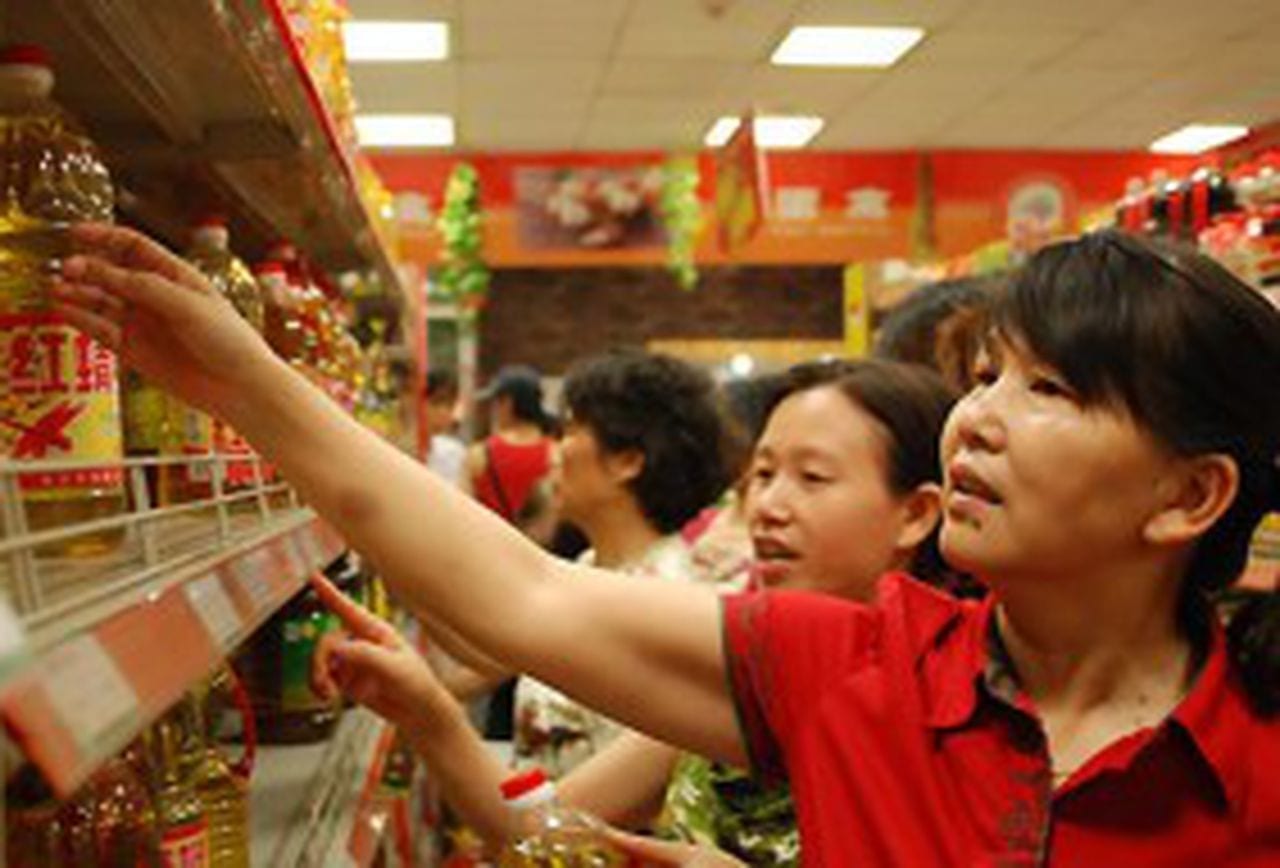

  • Giordano sales down in China

    Giordano sales down in China

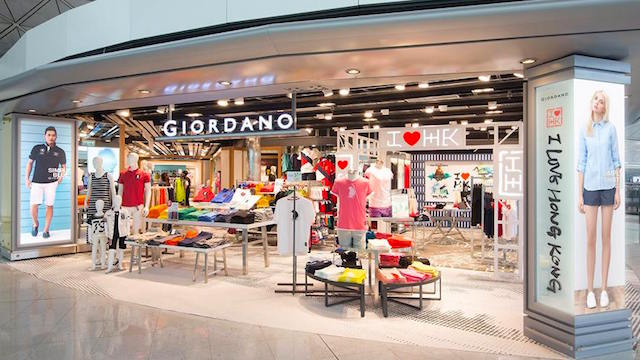
    Giordano sales in Greater China plunged by 17.7 per cent during the first quarter, dragging group-wide sales down by 10.8 per cent, or 8.5 per cent on a constant currency basis.

    In a stock exchange filing on the eve of the holiday weekend the casual apparel retailer blamed the downturn on “uncertainty stemming from the Sino-US trade dispute and abnormally warm weather”.

    Giordano sales in Indonesia, Thailand and Vietnam remained stable during the quarter, and in the fledgling Middle East market rose by 10 per cent to HK$80 million, slightly compensating for the heavy impact of China.

    By market, Mainland China sales fell from $378 million to $295 million, in Hong Kong and Macau from $248 million to $225 million and in Taiwan from $201 million to $161 million. In the rest of Asia-Pacific, they declined from $422 million to $398 million.

    In the three months to March 31, inventories rose from HK$507 million to $512 million.

    During the quarter, Giordano closed two stores in Hong Kong and Macau and reduced directly operated stores on the mainland by 31, but opened 19 franchised outlets.