Tag: Retails

  • Prime Day Phenomenon: How Amazon’s Mega Sale Is Reshaping The Retail Calendar

    Prime Day Phenomenon: How Amazon’s Mega Sale Is Reshaping The Retail Calendar

    The Evolution of Prime Day

    In the United States, Black Friday has long been seen as the ultimate shopping event. However, Amazon’s Prime Day has been increasingly gaining momentum among consumers since its inception. Launched on June 15, 2015, as part of Amazon’s 20th-anniversary celebrations, it initially offered a 24-hour window of exclusive deals to Prime members.

    Over the past decade, Prime Day has evolved from a one-day sales event to a multi-day shopping frenzy, significantly reshaping the US retail calendar. Melissa Minkow, Global Director of Retail Strategy at CI&T, observed that Prime Day has become an exceptional event where consumers feel inclined to splurge due to the impressive marketing around the event as a significant savings opportunity.

    This year, Amazon extended its Prime Day sale to four days, from July 8th to 11th, making it the longest sale in the company’s history. It is estimated that in 2024, Amazon achieved record sales of $14.2 billion during the 48-hour event, increasing 11 per cent year-over-year. This year’s extended Prime Day event is projected to drive $23.8 billion in spending, a rise of 28.4 per cent compared to the previous year.

    An Adobe spokesperson likened the event to “two Black Fridays,” which brought in $10.8 billion in online spending during the 2024 holiday shopping season. However, Amazon isn’t the only retailer capitalizing on this alternative “Black Friday” shopping season.

    Impact on Other Retailers

    Prime Day has become a pivotal date in the retail calendar, according to Neil Saunders, MD of GlobalData. He noted that many consumers eagerly anticipate the event to secure deals and bargains.

    To keep up with Amazon, other retailers such as Best Buy and Target have devised competing events like ‘Black Friday in July’ and ‘Target Circle Week.’ These events aim to attract consumers already excited by Amazon’s Prime Day.

    Recent data revealed that during Prime Day, 53.4 per cent of consumers intended to explore retailers other than Amazon. Furthermore, a 2024 survey revealed that 35 per cent of Prime members also shopped during Target Circle Week, another 35 per cent participated in the Walmart Deals event, and 12 per cent took part in Best Buy’s ‘Black Friday in July.’

    In response to Amazon’s Prime Day extension, competitors like Walmart and TikTok Shop have also extended their sales events. However, as noted by Daniel Reid, Senior Insights Analyst at Similarweb, merely extending the duration of discount periods isn’t enough to maintain competitiveness. Retailers must also provide a unique and credible value proposition that consumers cannot find elsewhere.

    The Competitive Landscape

    Many retailers, including Target, have adopted strategies such as releasing different deals each day to keep customers engaged and curious about what’s coming next. This year, retailers introduced new promotions to further attract consumers, such as Target allowing its Circle 360 members early access to Circle Week deals, TikTok Shop offering cash back to customers who watch ‘Deals For You Days’ live streams and find a lower price for a featured product elsewhere, and Walmart hosting its Deals event both in-person and online for the first time.

    While it’s unlikely that these retailers will match the sales numbers achieved by Prime Day, it’s evident that they must continue innovating to capture consumers’ attention during this busy shopping period.

    Questions & Answers

    How long was Amazon’s Prime Day event this year?
    Amazon extended its Prime Day event to four days, from July 8th to 11th, marking the longest sale in the company’s history.

    What strategies are other retailers adopting to compete with Amazon’s Prime Day?
    Retailers like Best Buy and Target are creating rival events, while others are extending their discount periods to match Amazon’s. Some are also releasing new deals daily to keep customers engaged and curious.

    What new promotions are retailers offering this year to attract consumers?
    Retailers are offering new promotions such as early access to deals for members, cashback offers, and hosting events both in-person and online.

  • Vincom Retail sets conservative business targets

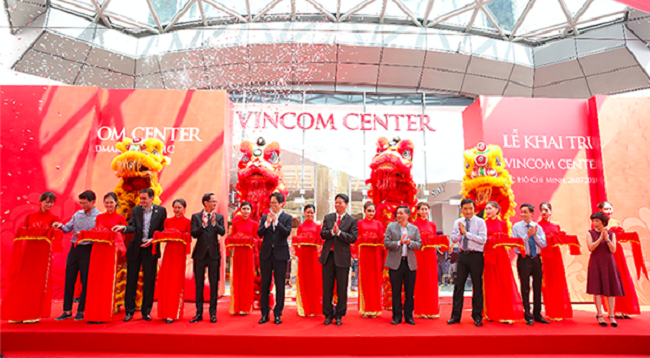
    Vincom Retail sets conservative business targets

    Vincom Retail targets a post-tax profit of VND2.5 trillion this year, up 5 percent from 2020 but lower than in 2019.

    The mall developer and subsidiary of conglomerate Vingroup eyes revenues of VND9 trillion, up 8 percent from last year but marginally below the 2019 figure.

    It has set these conservative targets after a challenging 2020 caused revenues from leasing fall by 14 percent as social distancing kept people away from malls.

    This year, it plans to focus on developing mega malls at Vinhomes’ urban complexes. Its Vincom Mega Mall Smart City in Hanoi is set to open in the third quarter.

    It also plans to open two Vincom Plaza malls in the southern localities of My Tho and Bac Lieu.

    Vincom Retail currently operates 80 malls.

  • AR will become very important to retailers

    AR will become very important to retailers

    Although take-up has been patchy so far, there is a bit of a buzz around augmented reality (AR) in the retail sector, and it is definitely getting louder.

    Kate Ancketill, the CEO and founder of GDR Creative Intelligence is something of an evangelist on the subject of AR in retail and the benefits of connecting the physical retail experience with the digital one. With 5G on the horizon, she is certain that AR’s importance is going to grow even faster, and she has some advice for retailers who want to implement AR.

    “I think AR is very important and becoming more important,” says Ancketill. “AR is relatively inexpensive to implement and it is getting cheaper all the time, and with 5G, when it comes on board we’ll have no latency issues.”

    Ancketill thinks AR is going to bring all the best advantages of browsing the web into the physical environment, and that means cracking the omnichannel.

    “A company that cracks omnichannel basically wins, and AR is a big part of that.”

    Ancketill lists retailers Show Fields, Beta, Neighbourhood Goods, and Storey, which she describes as a new generation of department store arriving mostly in the US, as examples of the trend.

    “Places like all of these have something in common, which department stores have been sadly lacking in. That something is frequent newness and uniqueness of the product. They have products that are never seen anywhere else in the physical world and are only available online.

    “So you basically have to go there if you want to physically experience them. They’re usually concession based so there’s a frequent turnover and they’re usually very high tech, so you get great data if you are the seller.”

    The idea of going somewhere where you see things that you’ve never seen before, cannot find anywhere else, will be changed in a month’s time and will have lots of experience-based activities going on makes for a compelling offer says Ancketill.

    “It is not rocket science that it is more appealing to today’s consumer with a very short attention span.”

    But to win with AR as a retailer, you need to reduce your portfolio by at least 30 per ce, nt, she says, and make sure what you keep is in high footfall areas in places where people have money to spend.

    “Make it different every month, make it highly experiential, and make sure you fully connect the physical with the digital experience,” says Ancketill.

  • Hong Kong’s retail sales plunge most in 17 years

    Hong Kong’s retail sales plunge most in 17 years

    Hong Kong’s retail sales in February plunged the most since 1999 as fewer Chinese tourists visited the territory during the Lunar New Year holiday.

    Retail sales dropped 21 percent in February to HK$37 billion (US$4.8 billion) year-on-year, according to a statement from the Hong Kong’s Department of Statistics.

    Combining January and February, sales fell 14 percent. The monthly decline is the worst since January 1999 when sales were also down 21 percent.

    “Apart from the severe drag from the protracted slowdown in inbound tourism, the asset market consolidation might also have weighed on local consumption sentiment,” the Hong Kong government said in a statement yesterday. “The near-term outlook for retail sales will still be constrained by the weak inbound tourism performance and uncertain economic prospects.”

    The government will monitor closely its repercussions on the wider economy and job market, it said.

    Chow Tai Fook Jewellery Group, the world’s largest listed jewelry chain, and Sa Sa International Holdings reported slumping sales over the holiday from Feb. 7 to Feb. 13 when Chinese tourists to the territory dropped 12 percent.

    The stock market rout and a slowing Chinese economy have affected consumer sentiment for luxury goods, Chow Tai Fook has said.

    Mainland China tourists “are unlikely to come back in the short term,” CCB International Securities analyst Forrest Chan said.

    Hong Kong residents are also consuming less due to stagnant property values and the weak stock market, he said.

    “Hong Kong’s retail market will continue to fall for the rest of 2016 as all the negative factors won’t be solved in the near term,” Chan said in a telephone interview.

    Chinese visitors are projected to fall 3.2 percent for the year, according to the Hong Kong Tourism Board, with average spending dropping 4 percent to HK$6,948.

    Sales of jewelry, watches and clocks, and valuable gifts dropped 24 percent, while those of electrical goods and photographic equipment plunged 27 percent, according to yesterday’s statement.

  • Luxury brands’ missed opportunity: YouTube

    Luxury brands’ missed opportunity: YouTube

    Luxury fashion brands sashayed their way to substantially more YouTube views in 2014. But they still have a lot of runway ahead for growth on the social media platform.

    According to a new report by think tank L2, conducted in partnership with YouTube ad buying platform Pixability, fashion brands increased views on the video site by 204 percent as of October, as compared to the prior year’s total. The 90 brands examined also boosted their subscriber base by 87 percent, with Chanel, Dior and Burberry leading the way.

    Despite this improvement, the report noted fashion brands “consistently fail to optimize their YouTube presence,” in part because the majority of their content fails to appear in the top slot of search results for their respective brands.