
Tag: revenue report

  • Higher revenue lifts Petronas’ Q3 net profit to RM14.3 billion

    Higher revenue lifts Petronas’ Q3 net profit to RM14.3 billion

    Petroliam Nasional Bhd’s (Petronas) net profit for the third quarter ended Sept 30, 2018 rose 43% to RM14.3 billion from RM10 billion a year ago due to higher revenue. The group said in a statement today that the higher revenue was partially offset by higher product costs in tandem with higher prices, coupled with increased depreciation and amortisation.

    Earnings before interest, taxation, depreciation and amortisation (ebitda) rose 25% to RM26.9 billion from RM21.5 billion a year ago.

    The state-owned oil company attributed the higher earnings to its continuous execution of business improvement activities, focused on increased operational excellence and supported by higher commodity prices.

    Revenue for the quarter rose 19% year-on-year to RM63.9 billion, mainly driven by higher average realised prices for key products coupled with increased efficiency throughout the group.

    Higher sales were partially offset by the strengthening ringgit and lower sales volume, mainly for liquefied natural gas (LNG). Capital investments for the quarter stood at RM6.7 billion, mainly attributed to upstream projects.

    For the nine months ended Sept 30, 2018, Petronas’ net profit rose 50% year on year to RM41 billion, due mainly to higher revenue, lower net impairment on assets as well as other expenses. These were partially offset by higher product costs in tandem with higher prices coupled with increased depreciation and amortisation as well as tax expenses.

    Revenue for the period rose 12% year-on-year to RM181.1 billion mainly due to the impact of higher average realised prices for key products as well as increased efficiency efforts, largely offset by the effect of the ringgit strengthening against the US dollar.

    Capital investments for the period stood at RM26.5 billion mainly attributed to upstream projects while total assets rose to RM623.1 billion as at end-September, compared with RM599.8 billion as at end-December 2017.

    Shareholders’ equity rose to RM402.1 billion as at end-September from RM389.8 billion as at end-December 2017. The gearing ratio remained at 16.1% while return on average capital employed rose to 12.6% from 9.8% during the same period.

    The Pengerang Integrated Complex achieved 95% progress as at end-September and successfully received its first crude oil cargo at the Pengerang Deepwater Terminal 2. The project is on track to be ready for startup in 2019.

    President and group CEO Tan Sri Wan Zulkiflee Wan Ariffin said Petronas is on track to deliver a strong year-end performance by maintaining focus on driving efficiency efforts across its operations.

    “The recent drop in oil prices demonstrate the volatile and cyclical nature of the industry and we will continue to maintain our prudent outlook amidst this landscape while remaining steadfast in pursuing our growth strategies to ensure the long-term sustainability and progress of the company,” he said.

  • Viettel’s foreign market earnings up in Q3

    Viettel’s foreign market earnings up in Q3

    Viettel earned gross profits of $57.25 million from overseas markets in Q3, a year-on-year increase of 8 percent. Its overseas investment arm, Viettel Global, reaped net revenues of nearly VND4.43 billion ($188.71) in the third quarter, up 5 percent over the same period last year.

    Accumulated net revenues reached VND12.43 trillion ($529.7 million) between January and September.

    The revenues include nearly VND5.61 trillion ($238.94 million) from African countries, including Cameroon, Tanzania, Mozambique and Burudi, VND4.54 trillion ($193.68 million) from Southeast Asia countries, including Cambodia and East Timor, and VND1.69 trillion ($71.82 million) from Latin America.

    The company’s revenues from its three continents rose 3-11 percent, with Latin America registering the greatest increase.

    The increase is attributed to the company’s development of 4G services, digital wallet and other information technology projects serving overseas businesses and governments.

    Viettel Global is providing 4G services in 9 overseas markets, and digital wallet services in 8 markets.

    Also, Viettel Global’s sales expense and management costs reduced 4 percent and 12 percent respectively in the first 9 months of this year, compared to the same period last year.

    Viettel Global was established in 2006 to spread Viettel Group’s presence in foreign markets. Eight out of Viettel Global’s 10 overseas markets have begun earning profits. It has taken up the largest market share of the telecommunications sectors in Laos, Cambodia, and Timor Leste.

    It plans to expand its overseas operations in the Southeast Asian region and foreign markets that share similar population sizes as Vietnam this year. The company also aims to achieve a 10-15 percent year-on-year increase in terms of the number of subscribers by the end of 2018.

  • Le Saunda closes stores as profit goes red

    Le Saunda closes stores as profit goes red

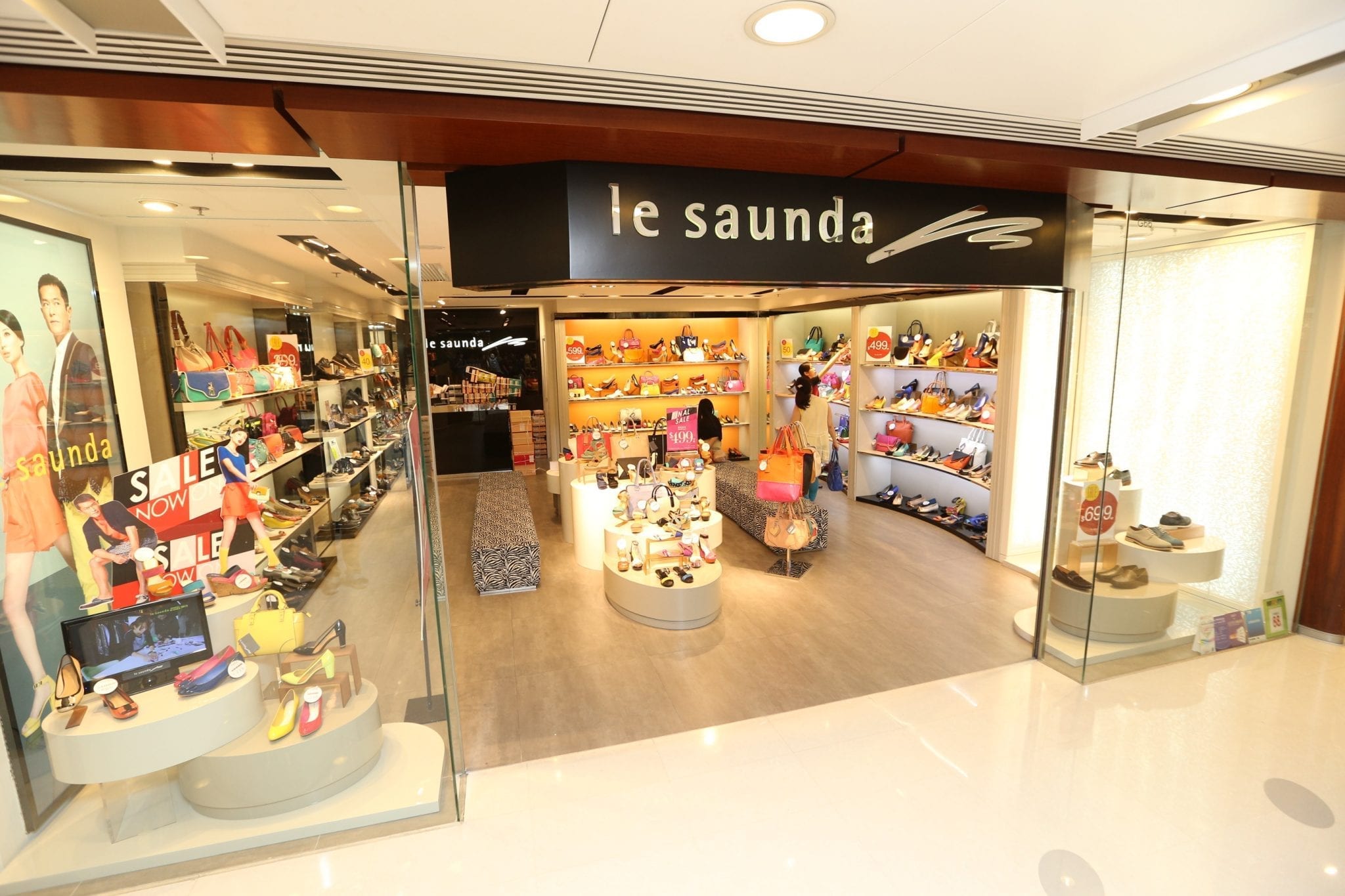
    Struggling shoe and accessories retailer Le Saunda has shuttered more than 100 stores on Mainland China in the last year as it tries to reduce overheads and return to profit. Group sales fell 14.4 per cent in the first half of this year, to RMB 460.4 million, (US$66.1 million), gross profit margin slipped 3 per cent and the company recorded a loss of RMB 9.6 million (US$1.4 million), compared with a profit of RMB22.9 million in the same period last year.

    The company blamed a slowing of retail sales in Mainland China for its poor result, with same-store sales down 10.2 per cent, as well as a decline from the closure of unprofitable stores.

    On the mainland, Le Saunda shuttered 96 of its self-run stores, cutting its network back to 549 and a further eight franchised outlets were closed, leaving a total network of 611.

    In Hong Kong and Macau, where sales rose 4.5 per cent, it closed one store leaving 10.

    Le Saunda chairman James Ngai said the company’s reduced gross profit margin was a result of lowering prices to meet market demand. The growth rate of fashionable ladies’ footwear sector had “slowed down significantly” on the mainland, Le Saunda’s core market, he said.

    “With a change in customers’ buying behaviour, the e-commerce segment experienced rapid expansion, striking a tremendous hit on the sales of traditional retail stores.

    “To cope with the ever-changing market environment, the group is fully committed to enhancing product quality, promoting a new pricing model, enhancing consumers’ shopping

    experience and thereby improving same-store sales,” said Ngai.

    “Facing the challenges posed by the economic environment, the group is determined to [return] to the basic principles of retailing, which include adjusting the pricing strategy, closing down low-profit stores, and actively exploring its franchise and wholesale businesses.”

    With Hong Kong and Macau sales up, totalling RMB 30.7 million, Ngai said the group would pursue growth there “in a proactive yet prudent manner and establish new stores in desirable locations”.

    Le Saunda designs manufactures and retails shoes and accessories under the Le Saunda,

    Linea Rosa, Pitti Donna and CNE brands.

  • Retail, service income will increase by 9.1 per cent

    Retail gross sales and repair income within the first 5 months of the yr totalled VND1,305 trillion (US$60.67 billion), based on the Common Statistics Workplace (GSO).

    The determine represents a 9.1 per cent improve on the yr, the GSO stated, including that it rose eight.2 per cent excluding inflation.

    Retail gross sales prior to now 5 months accounted for 75 per cent of the sector’s complete income, reaching VND997 trillion ($46.37 billion).

    The hospitality sector noticed an 11.2 per cent improve in income, or VND145.73 trillion ($6.78 billion), owing to the elevated spending in the course of the lengthy vacation.

    In the meantime, the tourism sector, which is valued at VND10.59 trillion ($zero.5 billion), fell 11.eight per cent.

    Buying energy progress stood at round eight per cent within the first 5 months. It elevated, inflation excluded, 9.2 per cent in March, 10.7 per cent in February and 11.9 per cent in January.

    The expansion of buying energy has declined and stood at eight per cent in April and Might.

    GSO statistician Vu Manh Ha stated these indices don’t mirror actual buying energy, as a result of they’re calculated based mostly on the buyer worth index (CPI).

    The CPI has been fluctuating. It decreased in January and February, however elevated once more by zero.15 per cent in March, zero.14 per cent in April and zero.16 per cent in Might. However the cash influx of consumption and providers didn’t fluctuate a lot.