Tag: rhode

  • ELF Beauty Raises Outlook as Q2 Net Sales Climb 51% to US$520.8 Million

    ELF Beauty Raises Outlook as Q2 Net Sales Climb 51% to US$520.8 Million

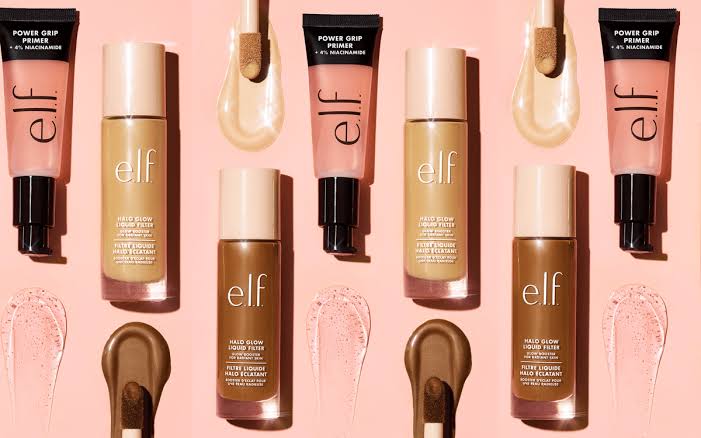
    ELF Beauty has raised its full-year outlook following a strong second quarter ended September 30, driven by organic momentum and expansion from Hailey Bieber’s brand Rhode.

    Net sales advanced 51 per cent year-on-year to US$520.8 million (A$755.9 million) during the three-month period. Over the same quarter, net income climbed to about US$30 million (A$43.5 million), up from just under US$3 million (A$4.4 million) a year earlier.

    The company now projects full-year net sales to increase between 22 per cent and 24 per cent, compared with an earlier projection of 18 per cent to 20 per cent. It lifted adjusted EBITDA expectations to a band of US$421 million to US$427 million, while adjusted diluted earnings per share are projected at US$3.82 to US$3.86.

    Wholesale Pipeline Drives International Volume

    International sales advanced 165 per cent during the period, lifted by initial stocking shipments for Rhode’s retail debut across European Sephora doors. Domestic net sales inside the United States rose 25 per cent.

    Organic revenue across the group climbed roughly 35 per cent. Rhode added 16 percentage points to total top-line growth during the final four weeks before e.l.f. Reached the one-year anniversary of the buyout on August 5, after which the brand rolled into organic calculations.

    Volume contributed 31 percentage points of overall company growth, while price adjustments and product assortment added 20 percentage points. Gross margin widened 160 basis points to 71 per cent, supported by a 30-basis-point lift from tariff refunds.

    Adjusted EBITDA rose 86 per cent to US$123 million. Adjusted net income reached US$73 million, translating to US$1.21 per diluted share compared with US$0.68 a year ago.

    Margin Pressures and Retail Channel Costs

    The financial payoff from rapid retail placement will narrow over the next two quarters. Management warned that adjusted EBITDA margins will settle in the low teens through the second half of the fiscal year.

    Operating costs are climbing as the group funds marketing programs alongside physical build-outs for Rhode across specialty beauty retailers. Price competition in mass retail also limits pricing flexibility, prompting leadership to redirect tariff recoveries toward shelf pricing and promotional spending.

    For retail buyers and department store operators across Asia-Pacific, Rhode’s rollout shows the operational strain of backing viral social brands. The group faces immediate working-capital demands to support store stock levels without dragging down profitability.

    Execution risks now sit inside inventory control. Retailers carrying colour cosmetics face tighter sell-through windows, meaning any plateau in consumer demand leaves distributor channels burdened with excessive inventory.

    Annualising Regional Expansions

    Second-half performance faces harder annual comparisons after heavy channel rollouts during the prior fiscal cycle. That base includes Rhode’s introduction into MECCA doors across Australia and New Zealand, alongside e.l.f. Shelf expansions at Ulta Beauty, German drugstore chain dm, and Naturium’s rollout across Walmart counters.

    Second-half net sales growth will moderate to between 7 per cent and 10 per cent, with third-quarter gains running ahead of that rate and fourth-quarter growth dropping below it.

    The company expects full-year organic sales growth of 9 per cent to 11 per cent, revised upward from earlier guidance of 6 per cent to 7 per cent. Digital and marketing investments absorbed 21 per cent of second-quarter net sales, lower than budget allocations due to campaign timing shifts.

    Attention turns to retail reorder patterns across overseas doors when e.l.f. Beauty reports third-quarter financial figures.

  • AI Concept for Hunter Boots with Rhode Lip Gloss Holder Sparks Demand

    AI Concept for Hunter Boots with Rhode Lip Gloss Holder Sparks Demand

    When AI studio Clauré Studio shared a concept of Hunter boots featuring a holder for Rhode lip gloss this week, consumer inquiries revealed immediate interest in buying the fictional item.

    Retail brand strategist Bethany Paris Ramsay and Triptk strategy director Frankie Margotta noted that while AI mockups show what shoppers want, social media buzz is no guarantee of sales and can create expectations real manufacturing struggles to meet.

    The trend mirrors past viral beauty experiments, such as Colourpop Cosmetics teasing a pickle-flavored lip balm in 2025 before rivals released real versions in 2026, proving that digital interest can occasionally highlight commercial opportunities.

    Separating Social Signals From Factory Orders

    Online traction offers brands an unprompted window into shopper tastes, yet social media metrics do not reflect commercial demand. Liking an image costs nothing, whereas tooling a factory line requires significant capital commitments and minimum order volumes.

    A flood of comments asking where to buy an item indicates brand affinity, but it does not guarantee customer follow-through at checkout. Retailers that mistake digital commentary for verified intent risk overproducing niche merchandise that fails on store shelves.

    Physical manufacturing imposes hard limits that synthetic imaging tools bypass. Generative models routinely display smooth material joins, impossible structural tolerances or incompatible chemical formulations that real factories cannot replicate at scale.

    The Cost of Falling Short on Physical Execution

    When physical products fail to match elaborate digital fantasies, customer sentiment quickly turns negative. Disappointment emerged when the official Swatch and Audemars Piguet Royal Pop collaboration debuted, with consumers comparing the final retail models unfavorably against synthetic renders circulating online.

    Such misalignments erode brand credibility. Shoppers who discover an appealing product image is entirely fictional may disengage from future marketing campaigns altogether.

    “Generative AI can visualise almost anything, including products that can’t actually be manufactured as represented,” Margotta warned.

    Clear communication policies are becoming necessary for commercial teams. Brands that comment on or lean into viral fan renders must evaluate whether an engineering path exists before teasing a commercial drop.

    Turning Novelty Into Commercial Releases

    Translating viral concepts into verified physical runs has precedent in the cosmetics and personal care sector. Makeup label Colourpop Cosmetics ran an April Fools’ Day campaign in 2025 teasing a dill pickle lip balm, which gathered enough sustained interest to push rival brands ELF Cosmetics and Burt’s Bees into launching real limited-edition versions in 2026.

    Rhode previously demonstrated the commercial power of functional novelty when it built a dedicated lip gloss slot into its branded mobile phone cases. The design generated substantial sales by turning everyday personal accessories into wearable cosmetic carriers.

    Merchandisers evaluating synthetic concepts must isolate the exact element driving online interest. Commercial value often rests on a specific colorway, an unexpected utility feature or the sheer novelty of combining two distinct product categories.

    Prototyping Takes Priority Over Digital Renderings

    As synthetic design tools become ubiquitous, rendering speed no longer provides a competitive edge for retail design studios. Basic image generation is now accessible to individual social media accounts and competing merchant brands alike.

    Market advantage will shift back to rapid prototyping, physical testing and nimble supply chains capable of delivering small test batches. Brands that can contract manufacturers quickly and deliver compliant physical goods will capture value that render creators leave on screen.

    Retail operators and sourcing teams are now tracking whether third-quarter concept spikes convert into commercial holiday licensing deals before fiscal 2027 budgets close.