Tag: rice export

  • India’s rice export ban gives Vietnam golden y

    India’s rice export ban gives Vietnam golden y

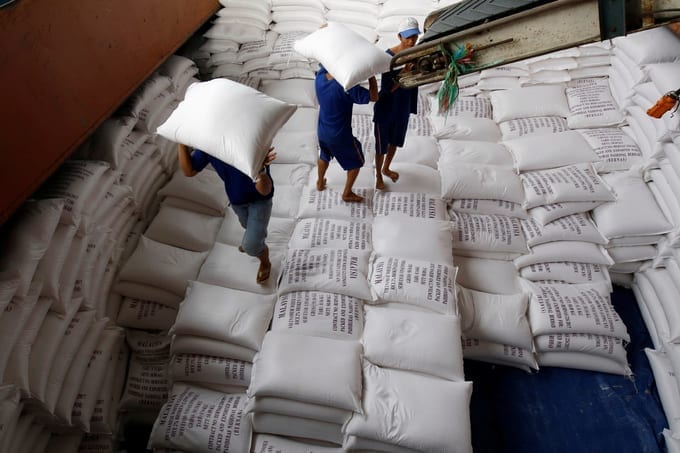
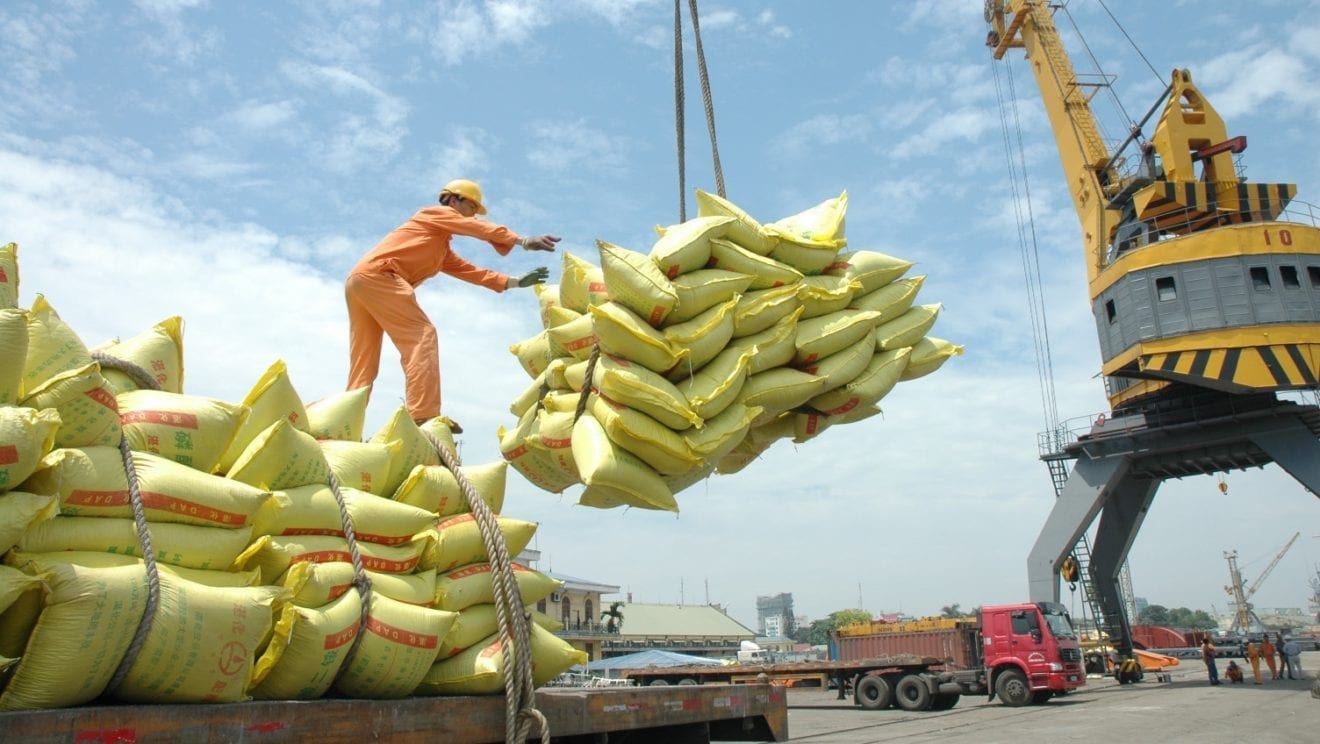
    Vietnam’s rice exporters could raise prices and sign long-term contracts with buyers now that India, the world’s largest supplier, has ordered an export halt.

    Indian government on July 20 announced a ban on non-basmati white rice as retail rice prices climbed 3% in a month after heavy monsoon rains caused significant damage to crops.

    India accounts for more than 40% of world rice exports, and non-basmati white and broken rice accounted for around 10 million tons of a total of 22 million tons of Indian rice exports last year, according to the U.S. Department of Agriculture. With the ban taking effect, global insiders have raised concerns about food price rises.

    Professor Vo Tong Xuan, an economist and expert in rice farming, said given the situation, the second half of the year will offer a golden opportunity for Vietnamese rice exports.

    In the first half of the year, the average export price of Vietnamese rice increased by 11% to US$539 a ton.

    After this ban, Xuan thinks the price could be as high as $600 per ton on average and high-quality varieties that can be sold at $700 a ton.

    The professor said India’s sudden export ban will “create big impacts” on importing countries because they cannot find replacing rice shipments from countries with small supply.

    Therefore, Vietnam and Thailand will be their next destinations. He forecast that Vietnam’s export turnover in the second half of this year could increase dramatically.

    The director of a rice export company in Can Tho said that in July, the company’s rice export orders increased by 20% from the previous month and by 30% compared to the same period last year.

    “Two days after the news that India banned rice exports, many buyers have asked us to sign them long-term contracts to ensure supply, but we’re still considering the offer,” said the director.

    He added that in the first half of this year, the company’s rice export price increased by 22% over the same period last year.

    After the ban, he forecasted that export prices could increase by 30-40% compared to last year.

    The Rice Exporters Association says that rice is a staple for more than 3 billion people, and nearly 90% of the water-intensive crop is produced in Asia, where the El Nino weather pattern usually brings lower rainfall. Global prices are already hovering at their highest level in 11 years.

    According to official data, India’s rice shipments reached a record 22.2 million tons in 2022, more than the combined shipments of the world’s next four biggest exporters of the grain – Thailand, Vietnam, Pakistan and the U.S. India exports rice to more than 140 countries.

    Nguyen Duy Thuan, CEO of Loc Troi Group, agrees that India’s ban on rice exports is an opportunity for rice-exporting countries and that Vietnam can take advantage of this opportunity to act as a sustainable rice supply source for the international food market.

    However, he noted that Vietnamese rice still has many challenges to face in terms of quality and export scale.

    “In particular, farmers are yet to have access to high-quality varieties and therefore the rice yield has not reached the optimal level,” Thuan said.

    Meanwhile, their farming techniques are still limited, resulting in many fertilizers and pesticides, affecting the rice’s quality and the environment.

    In addition, the large-scale management capacity of Vietnam’s rice industry is still limited, Thuan added.

    Thuan suggested that Vietnamese rice needs to improve quality and traceability in the supply chain to gain trust from consumers and regulators.

    Professor Xuan said the government needs to take specific actions to monitor planting areas and create favorable legal corridors to support businesses.

    “At the moment, in order to secure a large rice output for export, businesses need to associate long-term cooperation with traders and farmers, and ensure benefits for them,” Xuan said.

    With import partners, businesses should ask them to sign long-term contracts to ensure stable export activities and also help farmers feel more secure in production.

    Forecasting for this year’s supply, Xuan said that Vietnam has quite favorable weather and the yield could be high. He said that Vietnam can produce nine million tons of rice this year.

    Data from the Ministry of Agriculture and Rural Development shows that rice exports in the first six months reached 4.27 million tons in volume and $2.3 billion in value, up 22.2% and 34.7%, respectively against the same period last year.

    The U.S. Department of Agriculture has raised its forecast for Vietnam’s rice exports 2023 to 7.2 million tons, up from 7.05 million tons in 2022. Vietnam will rank third in the world in rice exports this year, after India and Thailand.
  • Vietnam eyes top 15 agriculture spot in 10 years

    Vietnam eyes top 15 agriculture spot in 10 years

    “Vietnam must strive to become a top 15 country in agriculture development in 10 years,” says PM Nguyen Xuan Phuc. “In particular, the agriculture processing sector should be in the top 10,” Phuc said at a conference held by the Ministry of Agriculture and Rural Development (MARD) on Thursday. “Vietnam must strive to become a global centre for wood processing and shrimp production,” he added.

    The PM also set a 3 percent growth target for the whole sector (agriculture, forestry and fisheries), and a $42-43 billion export target for 2019.

    Phuc asked the agriculture ministry to deploy the best measures and promote innovation to achieve targets set.

    “This is a difficult and challenging task but it must be done, a political duty, if we do not do it, our people’s lives will still remain difficult,” he emphasized.

    In order to achieve the goals, the ministry should develop good legal institutions and remove obsolete ones, the PM said.

    The ministry needs to step up efforts to restructure agricultural and rural development systems, including the creation of key national and provincial products, he added.

    It should also perform well its marketing functions, namely, forecasting, assessing supply and demand, developing new markets, and brand building for Vietnamese agricultural products like rice, shrimp and wheat, in which Vietnam is “a little slow compared to Thailand and Cambodia,” Phuc noted.

    He called for enhanced application of science and technology, hi-tech, biotech, artificial intelligence and other technological breakthroughs of Industry 4.0.

    Minister of Agriculture and Rural Development Nguyen Xuan Cuong said that the sector will maintain its good form while undertaking comprehensive and synchronous reforms.

    He said the sector still has several limitations that need to be addressed, including uneven development of different segments, limited innovation of existing processes, and inadequate managerial manpower for market regulation.

    The sector would aim to build a smart industry in 2019, foster international integration, adapt to climate change, increase value additions for products and services and ensure sustainable development through building better rural areas, he noted.

    Vietnam’s agricultural growth had reached 3.65 percent year-on-year in 2018, the highest since 2012, according to the General Statistics Office.

    Last year, the country earned $22 billion from agricultural and forestry product export, and $8.8 billion from fishery shipment, respectively increasing 10 percent and 6.3 percent over the previous year, said the office.

  • India rice rates hit more than three-month high, Chinese rules weigh on Vietnam

    India rice rates hit more than three-month high, Chinese rules weigh on Vietnam

    Rice export prices in India rose to their highest in more than three months as a key producing region hiked procurement rates for domestic paddy. Top exporter India’s 5 percent broken parboiled variety was quoted at $375-$382 per tonne this week, the highest since Sept. 7.

    The central state of Chhattisgarh, a leading rice producer, raised the minimum paddy buying price to 2,500 rupees per 100 kg, from 1,750 rupees earlier this week.

    “Importers are not ready to pay a higher price. Exports are likely to slow down in coming months,” said an exporter based at Kakinada, in the southern state of Andhra Pradesh.

    Prices of Vietnam’s 5 percent broken rice declined for the fifth straight week to $385 a tonne as activity remained muted, traders said.

    “Prices fell further because we are concerned that China’s move to impose stricter conditions on Vietnamese rice will have a long-term impact,” a trader based in Ho Chi Minh City said.

    “It’s not clear if China is buying more from Cambodia and Myanmar to compensate for the possible declining shipments from Vietnam.”

    Another trader said supplies from Vietnam will increase from late next month when the winter-spring harvest begins.

    In Thailand, benchmark 5 percent broken rice prices were quoted at $390-$391 per tonne, free on board Bangkok, versus $385-$393 a week ago, as the market is expected to remain quiet until well after the New Year period.

    “This is a reasonable level as we’re nearing the end of the year. There is not much overseas activity and we’re also in the harvesting season,” a Bangkok-based trader said.

    Meanwhile, Bangladesh, which emerged as a major importer of rice in 2017 due to stock depletion following floods, has stepped up efforts to procure more rice locally after output of the staple grain improved, a food ministry official said.

    “The response from farmers is very good and the procurement drive will be continued,” the official said.

    The country’s production for 2018/19 is expected to recover to 34.7 million tonnes, up 6.3 percent year-on-year, according to estimates from the U.S. Department of Agriculture attaché in Bangladesh.

    The South Asian country has procured more than 1.3 million tonnes of rice locally so far in the current season to build state reserves.

  • Vietnam, Thailand skip Philippines’ 203,000 T rice tender

    Vietnam, Thailand skip Philippines’ 203,000 T rice tender

    Rice exporters Thailand and Vietnam did not submit offers at a Philippines 203,000-tonne import tender, citing stricter terms. The tender by one of the world’s top rice importers was held to meet unfilled orders after a tender on Oct. 18 for 250,000 tons of rice by Manila’s state-owned National Food Authority (NFA) secured only 47,000 tons due to high offer prices.

    Thailand and Vietnam were the only government suppliers accredited for Tuesday’s re-tender. NFA officials said both submitted letters saying they would not participate due to the stricter terms set out by the Philippines food authority.

    NFA spokesman Rex Estoperez said import terms had been made more stringent to address concerns that arose from previous rice purchases, including health and safety issues, which would raise the cost for suppliers.

    “I can’t say if there will be another bidding,” Mercedes Yacapin, head of the tender panel, told reporters, adding the decision will be left to the NFA Council, which is made up of the country’s economic managers.

    President Rodrigo Duterte last month scrapped a 20-year-old government cap on rice imports to help curtail soaring prices of the Philippine diet staple by increasing supply.

    The Philippines is on a rice buying spree this year, with import approvals by the NFA hitting 2.4 million tonnes, just below the record 2.45 million tons bought in 2010 when rising global food prices stoked shortage fears.

    The NFA is set to hold another import tender for 500,000 tons of rice on Nov. 20.

  • Vietnam agriculture export shows progress

    Vietnam agriculture export shows progress

    Vietnam’s coffee exports grew 21.5 percent and rice exports 3.4 percent year-on-year in the first ten months, government data showed on Monday.

    Coffee 

    Coffee exports from Vietnam will rise an estimated 21.5 percent between January and October from a year ago to 1.58 million tons, equal to 26.3 million 60-kg bags, the General Statistics Office said in a report on Monday.

    Coffee export revenue for Vietnam, the world’s biggest producer of the robusta bean, rose 1.1 percent to $2.98 billion in the 10-month period, the report said.

    October coffee exports were estimated at 130,000 tons, worth $230 million.

    Rice

    Rice exports in January-October from Vietnam were forecast to rise 3.4 percent from a year ago to 5.24 million tons. Revenue from rice exports in the period was forecast to grow 16.1 percent year-on-year to $2.64 billion.

    October rice exports from Vietnam, the world’s third-largest shipper of the grain, were recorded at 350,000 tons, worth $180 million.

    Energy

    Vietnam’s January-October crude oil exports plunged 45.4 percent year-on-year to an estimated 3.22 million tons.

    Crude oil export revenue in the first 10 months of 2018 fell 24.8 percent to $1.82 billion.

    Oil product imports in the 10-month period were estimated at 10 million tonnes, falling 5.1 percent from the same period last year, while the value of product imports rose 20 percent to $6.77 billion.

    Vietnam’s January-to-October liquefied petroleum gas imports increased 5.7 percent from a year earlier to 1.2 million tons.

  • Vietnam rice exports to China drop

    Vietnam rice exports to China drop

    Vietnam’s rice export sector is showing signs of reducing its dependence on China with other markets picking up the slack, according the Ministry of Agriculture and Rural Development.

    In its monthly report for May, the ministry says that rice exports to China in the first four months of this year dropped to 33.5 percent of the total from 47.5 percent last year. The value of rice imported by China during this period fell 0.9 percent year on year to $370.8 million, it said.

    China still remains Vietnam’s top importer of rice.

    However, while the Chinese market shrinks, other markets in Asia are increasing their intake from Vietnam. Rice imported by Indonesia during the first four months went up 333 times over the same period last year, Iraqi imports increased by over 16 times, that of Malaysia tripled, of Hong Kong increased 41.5 percent and that of Singapore,15.7 percent.

    With the Philippines planning to import over 293,000 tons of Vietnamese rice in the coming months, rice export prices will stay positive, the report said.

    Last year, Vietnam exported almost 5.9 million tons of rice worth $2.66 billion. This number is likely to reach 6.7 million tons this year, according to the United States Department of Agriculture.

  • 2018 rice export to hit 6m tonnes

    2018 rice export to hit 6m tonnes

    Việt Nam’s rice export volume in 2018 is expected to increase by 400,000 tonnes from 2017 to reach 6 million tonnes, due to increased demand from Southeast Asia, especially from the Philippines, with China expected to be the country’s largest rice market.

    The Vietnam Food Association (VFA), in a report earlier in January, said countries in Southeast Asia will import a large amount of rice from Việt Nam, helping boost the country’s turnover this year.

    The VFA said Indonesia will import rice from Việt Nam and Thailand again in 2018 to increase reserves, as Indonesia’s rice price has been rising, almost double the floor price.

    Similarly, the National Food Board of the Philippines approved of up to 250,000 tonnes of imported rice to offset declining inventories, due to unfavourable weather in 2017.

    These developments are encouraging for Việt Nam’s rice export market, said the VFA’s report, with export price of 5 per cent broken rice rising to US$400 per tonne from $390.

    Domestic rice price also increased, with the average price between to $267 to $293 per tonne as of January’s end, having increased by $13 to $15 per tonne from December 2017’s price.

    According to the VFA’s data, throughout 2017, the country exported 5.7 million tonnes of rice worth $2.54 billion.

    As mentioned by the US Department of Agriculture (USDA)’s 2018 world rice production forecast, issued late 2017, the main factor behind this year’s rice trade expansion is increased output from Việt Nam, Pakistan and Myanmar, three of the world’s top six rice exporting countries.

    The USDA’s report stated that though 2017 global rice output fell by 20 per cent from 2016’s number, as a result of weak outlook for grain products, long, heavy rainfall and spring floods and other unfavourable weather, meaning there should be positive signals from traditional rice importing markets in Southeast Asia in early 2018.

    In Bangladesh and Sri Lanka, whose rice crops were heavily influenced by harsh weather, demand for rice imports will also increase in 2018. Rising import demand is supported by increased purchasing power in Africa and the Middle East, while China continues to be a leading importer of rice from neighbouring regions.

    As such, Việt Nam will witness an increase in revenue from rice exports to several large consumer markets.

    According to the Department of Crop Production under the Ministry of Agriculture and Rural Development, in early January 2018, the Mekong Delta’s rice producers harvested 860,000 hectares of rice, with an average yield of 5.3 tonnes per hectare.

    Nonetheless, problems remain for national rice production, the majority of which stem from farmers’ ignorance.

    Talking to Vietnam News Agency during a late 2017 agricultural conference in the Mekong Delta, Võ Tòng Xuân, former vice rector of Cần Thơ University and rice expert, emphasised growing competition in global rice markets.

    Xuân warned that Việt Nam needs to find ways to make its rice exports stand out if it wants to achieve export targets.

    Regarding export rice quality, he was convinced that since rice merchants often mix different batches from different farmers into one large batch, there is virtually no way to completely track the origin of any batch.

    Without clear origin, there are no certain product quality controls, and no major national rice brand for Việt Nam, Xuân added.

    He suggested issuing contracts between rice farmers and processing plants for sustainable production, via agricultural co-operatives instead of relying on middlemen.

    Xuân also said that there remain regulations acting as barriers to small and medium enterprises from entering the rice market. Exporting low quality rice and fragrant rice without a brand name is becoming increasingly difficult for Việt Nam, especially in finding niche markets to sell several thousand tonnes.


  • India, Vietnam race in rice market

    India, Vietnam race in rice market

    Rice prices gained this week in India as Bangladesh continued to lap up the staple grain from its neighbour, while prospects of deals with the Philippines saw rates climb for the first time in three weeks in a relatively quiet Vietnamese market.

    In Vietnam, benchmark 5 percent broken rice rose to $400 a ton, free-on-board (FOB) Saigon, ending a three-week flat trend within the $390-$395 range, and boosted by prospects of deals with the Philippines, traders said.

    “Prices edged up on market talk that the Philippines would invite tenders to buy 250,000 tonnes at the end of January,” a trader in Ho Chi Minh City said.

    However, trading remained thin due to depleted stocks in the world’s third-largest rice exporter, while Vietnam’s major winter-spring crop would be ready only by the end of February, traders said.

    Vietnam plans to sell close to a 23 percent stake in the country’s main rice exporter Vinafood II through an initial public offering.

    Top exporter India’s 5 percent broken parboiled rice prices rose by about $2 per tonne this week to $423-$427.

    Traders from Bangladesh are aggressively buying new-season crop since prices in Bangladesh are still elevated, said an exporter based in Kakinada in the southern state of Andhra Pradesh.

    India’s rice exports likely jumped 22 percent in 2017 to a record 12.3 million tonnes as Bangladesh ramped up purchases after flooding damaged its crops.

    As of the end of December, farmers in India had cultivated winter-sown rice on 1.88 million hectares, 44 percent higher than a year earlier.

    Prices were also higher in another major Asian exporter, Thailand, with the country’s benchmark 5 percent broken rice gaining to $395-$410, FOB Bangkok, from $393-$396 last week on an appreciating baht and lower supplies.

    The baht has gained 1.6 percent versus the U.S. dollar so far this year and been Asia’s best-performing currency.

    “Rice prices have increased due to a stronger baht, lower supplies due to the effects of floods, as well as a recent 200,000-tonne export deal with Indonesia,” a Bangkok-based rice trader said.

    The Ministry of Commerce forecast Thailand to export 9.5 million tonnes of rice, worth $4.7 billion, in 2018.

    “I think this target is achievable. It’s lower than last year’s record figure of over 11 million tonnes probably due to a stronger Thai baht and bad weather conditions affecting supplies,” said another trader based in Bangkok, adding, “Demand has remained fairly constant.”

    Thai prices are likely to be on an upward trend over the next few weeks, traders said.