The founding father of Philippine retail, Henry Sy, has passed away. Sy, who has topped the Philippines Rich List for the last seven years, was chairman emeritus of SM Investments, one of the country’s largest business conglomerates. A Chinese immigrant who arrived in the Philippines at the age of 12 with his parents, his introduction to retailing began with helping out in his father’s neighbourhood store. He saved enough money to open a shoe store which he named ShoeMart, and whose initials later became the most recognisable brand name in the nation.
From a single shoe store, his business expanded into department stores, the first of which opened in 1972, then into malls, with 70 shopping centres bearing the SM brand in the Philippines and more in Mainland China.
SM Investments also owns supermarkets, BDO Unibank, almost 50 residential developments, six hotels and nine office towers.
Sy, who died on Saturday, stepped down as chairman of the company in 2017, taking on the title chairman emeritus and leaving the business under the leadership of his family and his long-time business partner Jose Sio, who is now chairman.
He had six children: Teresita Sy-Coson, Elizabeth, Henry Jr, Hans, Herbert and Harley. Teresita and Henry Jr are vice chairpersons of SM Investments and Harley serves as executive director of SM.
Forbes last year estimated the 94 year old’s net worth at US$19 billion, ranking him the most wealthy Filipino and 53rd richest man in the world.
Chinese business news website Jiemian has released its annual China Rich List, detailing the country’s wealthiest individuals.
All 1,000 billionaires on the list have a minimum net worth of approximately RMB30 billion (US$4.7 billion), while Pony Ma, the Tencent founder who sits at the top of the list, is worth an estimated RMB282 billion.
While some of the names on the list will be familiar to many, one pattern that might not instantly jump out is the number of people at the top who started with nothing. Of the top six names on Jiemian’s list, five of them are self-made entrepreneurs who pulled themselves up by their bootstraps. Here’s how they made their billions.
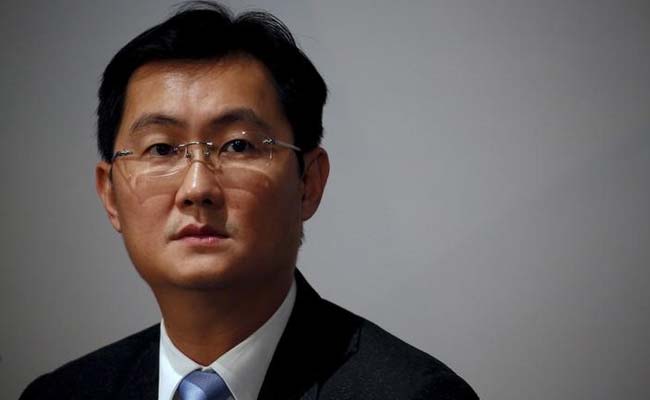
Ma Huateng, Technology and media, Net worth RMB282.0 billion
Ma Huateng, also known as Pony Ma, co-founded Chinese internet giant Tencent in 1998 with four Shenzhen classmates. Legend has it Ma was pulling in a monthly salary of US$176 at the time. Tencent’s breakout product was messaging service QQ, which was based on ICQ, the world’s first online messenger. Over a decade later, Tencent launched WeChat—now the most popular messenger service in the world and closing in on a billion users worldwide.
Xu Jiayin, Real estate, Net worth RMB260.9 billion
Xu Jiayin is the founder and chairman of Evergrande Real Estate Group, one of the largest property developers in the country with a footprint in over 170 cities nationwide. Born in small village in Henan province, Xu went on to found Evergrande in 1996, listing the company in Hong Kong in 2009. Despite being one of China’s most indebted companies, Evergrande’s shares surged almost 400 per cent in 2017, resulting in an estimated rise of 360.6 per cent, or US$26.7 billion, to Xu’s personal fortune.
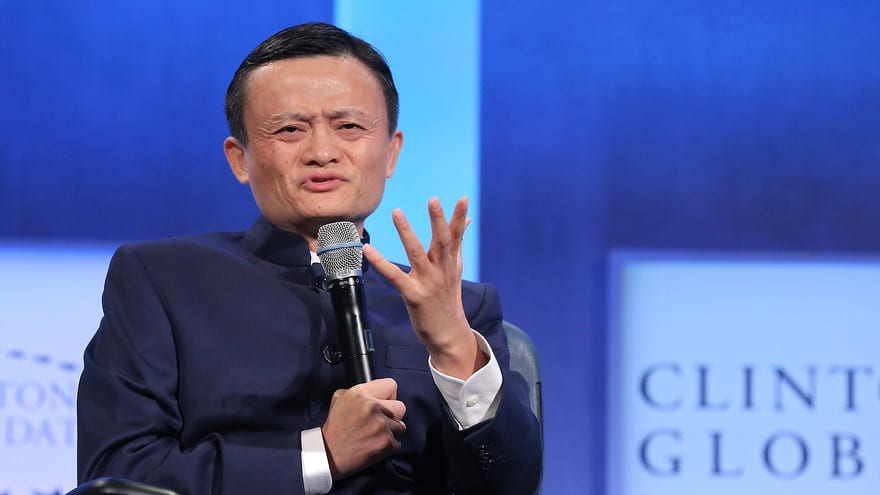
Jack Ma, E-commerce, Net worth RMB213.8 billion
Alibaba founder Jack Ma was an English teacher in his native city of Hangzhou before he made it big with the company’s first successful e-commerce platform, Taobao. Ma famously told the press that he was rejected from 30 jobs after graduating university, including at his local KFC. Today, Alibaba is one of the world’s biggest companies, dominating China’s e-commerce market. Its affiliate Ant Financial, which operates e-wallet service Alipay, is also the most valuable fintech company in the world, worth over US$60 billion.
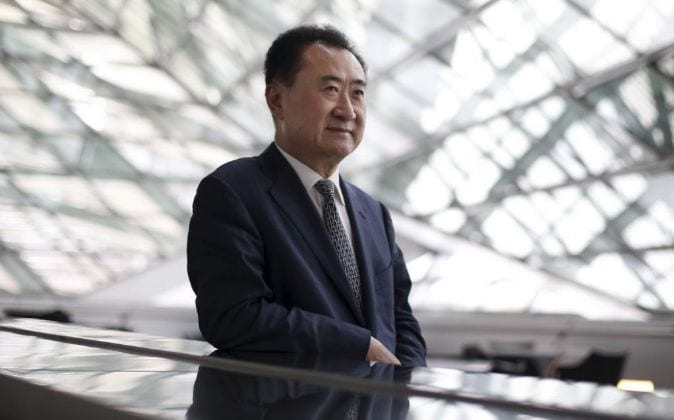
Wang Jianlin, Real estate and entertainment, Net worth RMB164.7 billion
Wang Jianlin is the founder and chairman of Dalian Wanda Group, one of China’s biggest real estate groups and the world’s largest cinema operator. After 16 years in the People’s Liberation Army, Wang entered the world of business in the late ’80s, eventually founding Dalian Wanda in 1992. Wang may have backed down from his famous posturing in 2016, where he said he wanted to “crush” Disney with his chain of theme parks, but Wanda remains a heavyweight in the world of entertainment—the group’s 2016 acquisition of Legendary Entertainment for US$3.5 billion, on top of its ownership of AMC, made Wanda Film Holdings one of the biggest film companies in the world.
Yang Huiyan, Real estate, Net worth RMB149.4 billion
Yang Huiyan stands out as the only person in the top six to have inherited their wealth. In 2007, at the age of 25, Yang became China’s richest person after her father transferred 70 percent of his ownership of real estate group Country Garden Holdings to her before taking the company public. Today, Yang holds the title of China’s richest woman, and hit headlines by making US$2 billion in under four days last month, thanks to a huge surge in the company’s share price.
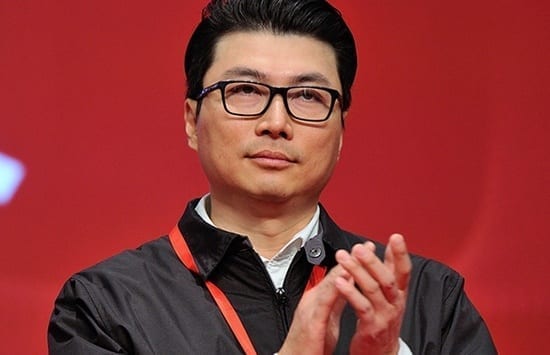
Wang Wei, Logistics, Net worth RMB144.4 billion
Wang Wei is the chairman and founder of Chinese delivery company SF Express. Wang was born in Shanghai but grew up in Hong Kong, eventually starting SF Express from a small shopfront in Mong Kok after realising how difficult it was to move goods across the border. When SF was launched in ’93, Wang would personally load boxes into vans with his six employees. Today, SF employees over 80,000 couriers and owns over 80 airplanes.
Jack Ma is one of China’s richest men, with a fortune valued at nearly $30 billion. As executive chairman of Alibaba Group, he leads the dominant force in Chinese e-commerce, a company with a market value of $264 billion and some 450 million customers. A global ambassador for Chinese business, he spent 800 hours aloft last year—visiting princes, Presidents, and Prime Ministers and lots of mere businesspeople too. “A professional pilot cannot travel that much, or so I’m told,” he boasts.
Even so, the rich and powerful people who meet with Ma tend to come away from the experience with a fresh nugget of information, either about him or about the still poorly understood digital conglomerate he started with a bunch of friends 18 years ago in the provincial coastal city of Hangzhou. Jim Kim, a physician who is the president of the World Bank, met Ma four years ago over a dinner lasting more than three hours and was startled to find the billionaire wearing sandals, holding Buddhist prayer beads, and sitting cross-legged on his chair. Kim was so taken with Ma’s passion for facilitating global trade by focusing on small-business people that he’s rethinking his international development organization’s approach.
Others are moved by Ma’s humanity. Jean Liu, president of Chinese ride-hailing startup Didi Chuxing, has known Ma for years and considers him a mentor. (Alibaba is a Didi shareholder.) She recently learned, through family connections rather than from Ma, about how he repeatedly visited a seamstress he had met after learning she was ill. Says Liu: “He genuinely cares about the people around him.”
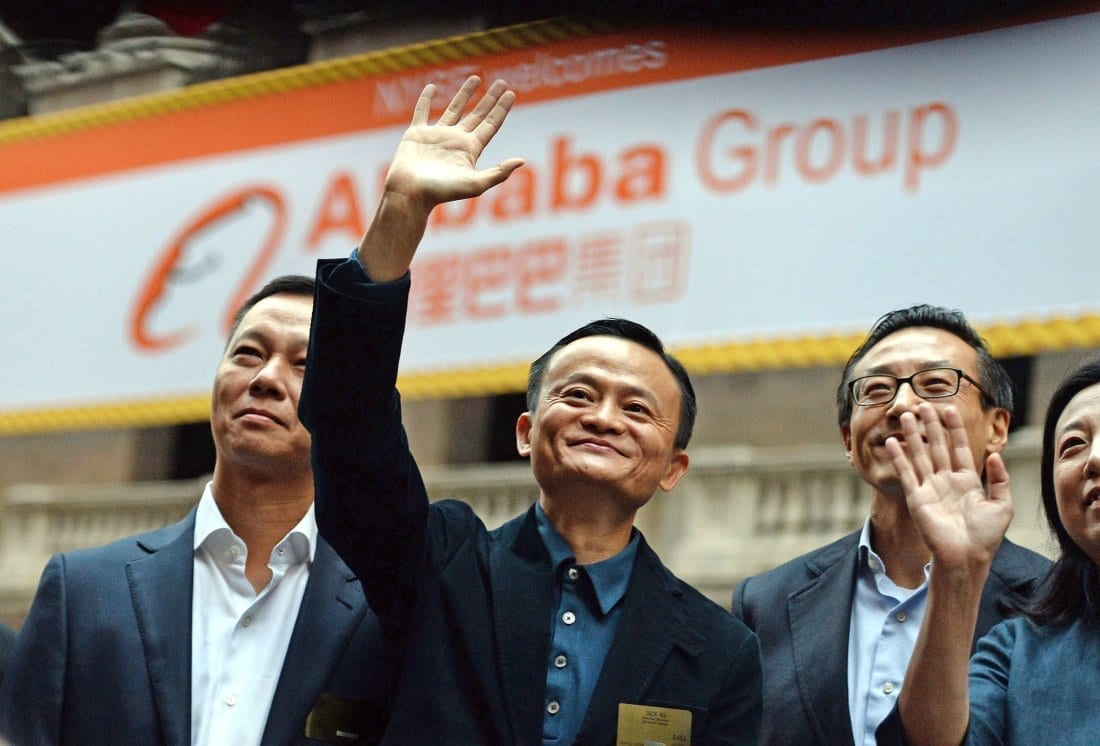
Then there’s the President of the United States, who met Ma for the first time a few weeks before his Inauguration. “Trump didn’t know that much about Alibaba,” reports company president Michael Evans, a former Goldman Sachs banker and Asia hand who helped set up the powwow. “He was fascinated to hear that Chinese consumers are interested in buying from U.S. small businesses. I don’t think that had occurred to him.” Ma used the sit-down to make a bold promise—that Alibaba would help create 1 million jobs in the U.S. over five years. The pronouncement was music to the President-elect’s ears. “It was a great meeting,” he declared before the cameras in the lobby of Trump Tower, a beaming Ma beside him. “Jack and I are going to do some great things.”
President Trump isn’t the only one who could stand to learn more about Alibaba. Despite its heft in China and the blockbuster 2014 public offering that raised $25 billion on the New York Stock Exchange and introduced Alibaba to Western investors, Ma’s company remains a mystery to most non-Chinese. There’s a simple reason for that: Few outside the world’s second-largest economy are Alibaba customers. Ma is aware of this knowledge gap. It’s part of what drives him to keep logging frequent-flier miles to educate people about his company and his plans.
To realize his vision—which relies on technology to buy, sell, finance, and deliver goods on Alibaba’s digital platforms around the world—Ma has been busily recasting himself of late as a global leader. Already he is the first Chinese business executive who can claim to have transcended his homeland for the world stage. In his travels, Ma promotes the lowering of trade barriers, touts his own brand of philanthropy, and supports causes such as primary-school education. His version of globalization is carefully calibrated and expansive enough to be consistent with the goals of his own President, Xi Jinping, as well as with Trump’s America-first positioning.
As with so many effective leaders, Ma’s motives are complex. China is already a huge consumer market and one that’s still growing fast, but Ma knows that eventually he will need to conquer new territories for Alibaba to continue on its current trajectory. Like other Chinese champions, Alibaba has thrived at home while foreign competitors have thus far been stymied from entering his turf. If that changes, foreign markets will be even more crucial. Ma also needs for Alibaba—plagued by criticism over the profusion of counterfeit wares for sale on its sites—to develop a reputation as trusted around the world as Jack Ma is cherished by his fellow bold-faced names.
Ma’s opportunity is unique. After centuries of stagnation, his country has recently reassumed its position as a world leader—just as Alibaba, one of its marquee corporate names, has joined the ranks of world-beating companies. With characteristic intuition, Ma, 52, seems to realize that this is his moment to go beyond merely being famous and take his place among the globe’s revered business leaders.
Business tycoon Henry Sy topped Forbes’ list of richest Filipinos, with a 2017 net worth of $12.7 billion. This is his 10th consecutive time to top the list.
However, this is lower than his 2016 net worth of $13.7 billion.
Sy is the 94th richest billionaire in the world. The global billionaires’ list released by Forbes magazine on Monday was topped by philantrophist Bill Gates with a net worth of $86.8 billion.
The 92-year-old billionaire founded Shoe Mart in 1958 and has expanded his business to retail, banking, and property. Forbes said that SM Investments is now the largest retailer in the Philippines. Sy’s children are now running his businesses.
John Gokongwei Jr. of conglomerate JG Summit also retained his spot at second place, with $5.8 billion net worth. The 90-year-old has interests in an airline, banking, food, hotels, power, chemicals, real estate, and telecommunications.
Lucio Tan moved from last year’s fifth spot to the third spot with $3.7 billion net worth, down from $4.9 billion a year ago. The LT Group has interests in tobacco, spirits, banking, and property development.
The youngest Filipino billionaire on the list is the man behind fastfood chain Mang Inasal, Edgar Sia. The 40-year-old businessman’s net worth this year is at $1 billion. He also owns a stake in DoubleDragon Properties.