Tag: ride handling

  • Grab Soars Past Quarterly Revenue Projections, Fueled by Consumer Adoption of ‘Superapp’ Services

    Grab Soars Past Quarterly Revenue Projections, Fueled by Consumer Adoption of ‘Superapp’ Services

    Grab Holdings Inc. surpassed projected revenues for the third quarter, thanks to strong consumer spending on its ride-hailing and food delivery services. The increase in user numbers can be linked to the company’s efforts in expanding its platform.

    Grab’s Superapp Transformation

    Grab’s initiative to transform into a “superapp” by integrating food and grocery delivery, ride-hailing, and financial services has proven successful. These integrated services offer consumers a comprehensive solution for their daily mobility and lifestyle requirements amidst an unpredictable economic climate. The concept’s popularity has surged, especially in regions where tariffs have reshaped the economy.

    In addition to offering standard services, Grab has been emphasizing more cost-effective options in ride-hailing and food delivery. This strategy aims to appeal to budget-minded consumers and provide a safety net against potential declines in consumer spending.

    According to CFO Peter Oey, approximately one-third of new monthly users in the deliveries segment are drawn from these affordable channels. Furthermore, about 40% of these users have subsequently upgraded to standard products. Oey noted, “We’re observing increased engagement from these saver platforms or these affordable products, and simultaneously, users are spending more frequently as we successfully upsell them.”

    Expansion into Autonomous Vehicles

    As the service sector in Southeast Asia becomes increasingly competitive, Grab is exploring new avenues for growth. One such venture involves leveraging its ride-hailing platform to penetrate the autonomous robotaxis market. Industry analysts predict that this sector will witness considerable growth in the near future.

    The company has also raised the lower limit of its annual revenue forecast from $3.33 billion to $3.38 billion, while the upper limit remains at $3.40 billion. Grab’s revenue for the period stood at $873 million, marginally beating analysts’ average estimate of $872.9 million.

    Additionally, the company has updated its yearly adjusted earnings before interest, taxes, depreciation, and amortisation (EBITDA) forecast. The new range is set between $490 million and $500 million, up from the previous projection of $460 million to $480 million.

    The third-quarter revenue for Grab’s deliveries segment stood at $465 million, slightly under the estimated $470 million.

    Questions & Answers

    What is Grab’s strategy for attracting cost-conscious consumers?
    Answer: Grab has introduced more affordable options in its ride-hailing and food delivery services to attract budget-minded consumers.

    How is Grab planning to expand amidst increasing competition in Southeast Asia’s service sector?
    Answer: Grab is planning to leverage its ride-hailing platform to expand into the autonomous robotaxis market.

    What has been the impact of Grab’s transformation into a “superapp”?
    Answer: The transformation has been successful, as it provides consumers with a one-stop solution for their daily mobility and lifestyle needs in the midst of an unpredictable economic landscape.

  • Grab Introduces Electric Car Service In Hanoi, Challenging Xanh Sm’s Market Dominance

    Grab Introduces Electric Car Service In Hanoi, Challenging Xanh Sm’s Market Dominance

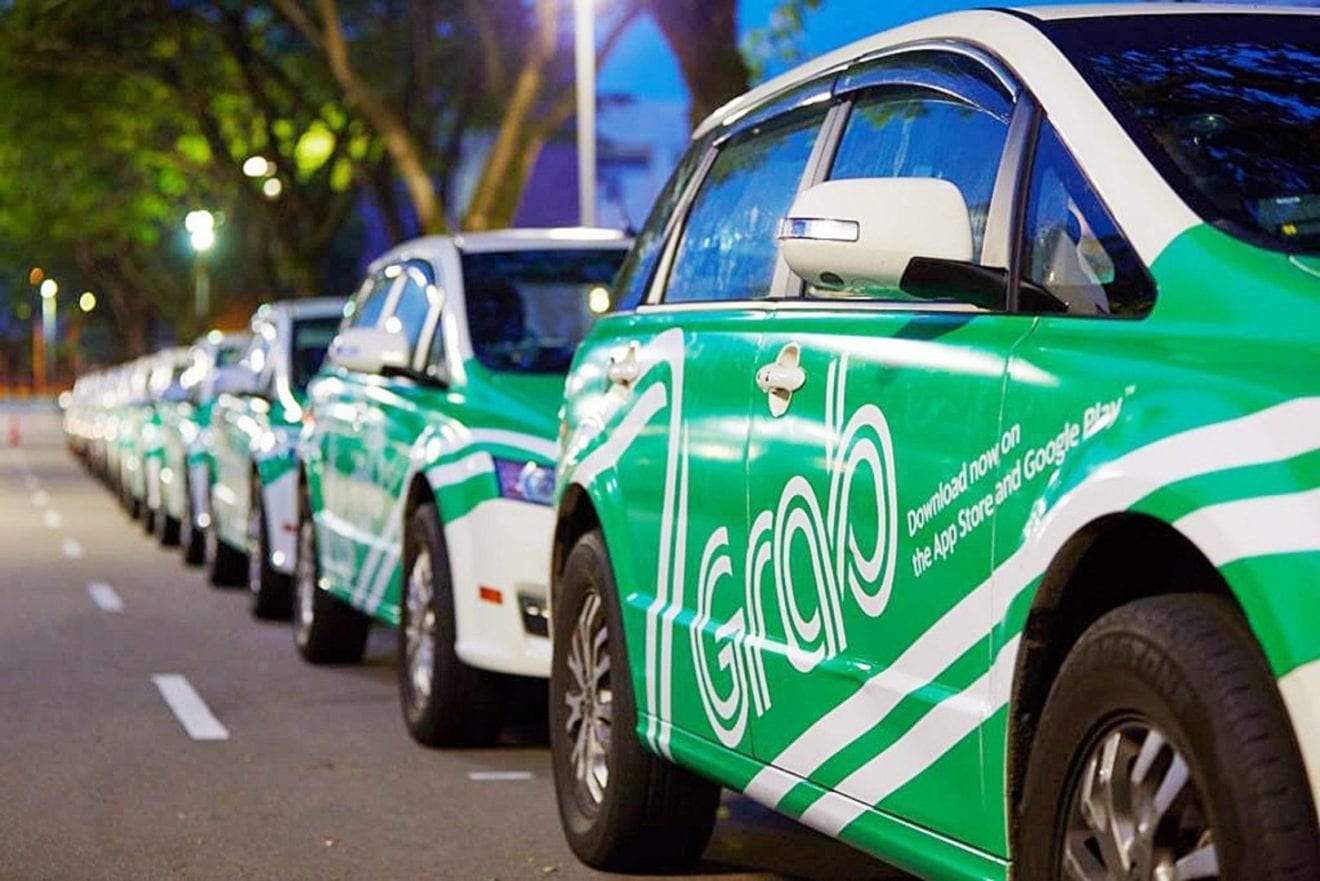
    Grab, the renowned ride-hailing company, has launched its electric car service in Hanoi, marking a significant entry into the predominantly electric taxi market, primarily controlled by Xanh SM. This move is a strategic approach by Grab to expand their customer base and champion sustainable transportation options.

    Strategies and Goals

    Nguyen Hanh Linh, the director of Grab Vietnam’s mobility division, revealed that the newly introduced service aims to diversify income opportunities for their driver-partners. This strategy is expected to boost their confidence to make a shift toward electric vehicles. After its launch in Hanoi, Grab has ambitious plans to roll out the service in HCMC.

    The current ride-hailing market in Vietnam is mainly controlled by three major players: Grab, Be, and Xanh SM. Xanh SM stands out by exclusively using electric cars constructed by its sister company, VinFast.

    Customer Choices

    It is noteworthy that Grab users do not have the option to specifically request electric cars. Whether the customer gets a VinFast or BYD electric car is a matter of chance. Grab’s decision to launch the electric vehicle service was influenced by the rising number of electric vehicles on its platform, a trend which has been encouraged by driver incentives in recent years.

    Market Trends and Predictions

    A 2024 report estimated Vietnam’s ride-hailing and food delivery market to be valued at US$4 billion, with the potential to reach up to $9 billion by 2030. A survey conducted in May indicated that 55% of users in major cities chose Grab for ride-hailing services, compared to 32% for Xanh SM and 9% for Be.

    A report by Mordor Intelligence stated that Xanh SM took the lead in the ride-hailing market in the last quarter of 2024, holding a 44.68% share in the second quarter of this year. Grab Vietnam, however, disputed these figures, claiming that the research methods used and data sources were unverifiable and misleading.

    Questions & Answers

    What was the strategic aim behind Grab launching its electric car service in Hanoi?
    The launch aimed to expand Grab’s user base and promote environmentally friendly transportation.

    What is the next city where Grab plans to roll out its electric car service?
    After Hanoi, Grab plans to introduce the service in HCMC.

    How did Grab respond to Mordor Intelligence’s report about Xanh SM’s market lead?
    Grab disputed the findings, claiming that the data sources were unverifiable and the research methods were inadequate, leading to misleading conclusions.

  • Gojek Co-founder And Ex-education Minister, Nadiem Makarim, Detained In $121 Million Corruption Probe

    Gojek Co-founder And Ex-education Minister, Nadiem Makarim, Detained In $121 Million Corruption Probe

    Former Indonesian Education Minister and co-founder of the ride-hailing company Gojek, Nadiem Makarim, has been detained and named a suspect in a corruption case. The case involves allegations of malfeasance concerning laptop procurement. Makarim will be held for 20 days while the investigation progresses.

    Makarim’s Role in the Alleged Corruption

    Makarim served as the Education Minister from 2019 to 2024 and is accused of misconduct in the procurement of Google’s Chromebook laptops for his ministry and students. According to Nurcahyo Jungkung Madyo, the lead investigator, Makarim is believed to have misused his ministerial authority for personal enrichment or the benefit of a company, in violation of Indonesia’s anti-corruption laws. The damages from this case are estimated to have cost the state around 1.98 trillion rupiah (US$121.85 million).

    Before his detention, local media reported that Makarim stated, “I did not do anything. God will protect me, the truth will come out,” as he was leaving the prosecutor’s office for the detention house. No comment has been received from his legal representative.

    Procurement Specifications and Meetings with Google

    Prosecutors claim that Makarim had issued a directive in 2021, specifying procurement conditions that only the Chromebook laptop could meet. Furthermore, it is alleged that Makarim had six meetings with representatives from Google Indonesia prior to the selection of the Chromebook. Google Indonesia, however, declined to comment on the case involving Makarim, emphasizing that it operates with resellers and partners to provide its technology, and government agencies transact with them, not directly with Google.

    Gojek and the Investigation

    In July, the attorney general’s office conducted a search at the offices of Indonesian tech firm GoTo Gojek Tokopedia as part of the investigation. GoTo’s director of public affairs and communications, Ade Mulya, clarified that Makarim’s duties as education minister, including the procurement of Chromebooks for the ministry, were never related to GoTo’s operations. Makarim had withdrawn from Gojek in 2019 when he was appointed minister. In 2021, Gojek merged with the e-commerce startup Tokopedia to form GoTo Gojek Tokopedia, becoming Indonesia’s largest tech company.

    Questions & Answers

    Who is Nadiem Makarim?
    Nadiem Makarim is the co-founder of ride-hailing company Gojek and former Indonesian Education Minister.

    What are the allegations against Makarim?
    Makarim is accused of corrupt practices in the procurement of Google’s Chromebook laptops for his ministry and students. He is alleged to have misused his ministerial authority for personal or company enrichment.

    What is the potential cost of the alleged corruption?
    The estimated damages from the case are around 1.98 trillion rupiah (US$121.85 million).

  • Ride-Hailing App Cabify Raises $110 Million For Expansion In Latam, Spain

    Ride-Hailing App Cabify Raises $110 Million For Expansion In Latam, Spain

    The company said on Tuesday that the Spanish ride-hailing app Cabify has raised $110 million in financing to accelerate its growth in Latin America and Spain.

    Cabify closed the funding round with participation from investors like Orilla Asset Management and AXIS, through Fond-ICO Next Tech.

    “This commitment by strategic investors is a recognition of Cabify’s positive impact and potential to continue creating long-term value for our investors and the cities in which we operate,” Cabify CEO Juan de Antonio said a statement.

    Cabify, whose business volume jumped 32% in 2022 from the previous year, said the capital injection will help increase its market share in more than 25 cities in Latin America and Spain with populations over 200,000.

    The company, which operates in more than 40 cities in Argentina, Chile, Colombia, Mexico, Peru, Uruguay and Spain, said in November it would invest more than $300 million through 2024 to strengthen its presence in Latin America.

    In December Cabify secured a 40 million euro loan from the European Investment Bank aimed at purchasing electric vehicles. The company aims for all rides through its app to be in zero-emission vehicles by 2025 in Spain and by 2030 in Latin America.

    With over 42 million registered users and 1.2 million drivers, Cabify employees over 1,000 people in Spain and Latin America.

  • China Beefs Up Rights Of Workers In Ride-Hailing Industry

    China Beefs Up Rights Of Workers In Ride-Hailing Industry

    China issued guidance on Tuesday to strengthen protection of employee rights and interests in new transport sectors.

    In a statement, the transport ministry said ride-hailing companies should improve income distribution mechanisms and provide social insurance for drivers.

  • Be Group appoints new CEO

    Be Group appoints new CEO

    Vu Hoang Yen has been appointed the new CEO of Be Group, which runs the eponymous ride-hailing app, starting Wednesday.

    She replaces Nguyen Hoang Phuong who has resigned citing personal reasons.

    A graduate of the London School of Economics, Yen has previous work experience in e-commerce, finance, banking, and digital conversion. She was one of Forbes Vietnam’s top 10 professional women managers in 2019.

    The group’s targets for the fourth quarter of 2021 and the next year include introducing optimal operational solutions for technology-based transport; and developing digital ecosystems including finance, banking, insurance, flight, and hotel bookings.

    The group says the Be app has been downloaded to 10 million mobile devices and the ride-hailing service currently has 300,000 drivers who work in nearly 30 cities and provinces.

  • China’s Didi says app takedown may hurt revenue

    China’s Didi says app takedown may hurt revenue

    China’s biggest ride-hailing firm Didi Global said on Sunday that the removal of its “DiDi Chuxing” app from smartphone app stores in China is expected to have an adverse impact on its revenue.

    Earlier on Sunday, China’s cyberspace regulator ordered app stores to stop offering Didi’s app after finding that the company had illegally collected users’ personal data.

    “The company expects that the app takedown may have an adverse impact on its revenue in China,” the company said in a statement.

    Meanwhile, on Monday the cyberspace watchdog said it is investigating online recruiter Zhipin.com, and truck-hailing apps Huochebang and Yunmanman, ramping up its crackdown on the mainland’s tech companies amid tightened regulations on data security.

    The removal of Didi’s app, which does not affect existing users, comes days after Didi made its trading debut on the New York Stock Exchange in an initial public offering that raised US$4.4 billion.

    In a June filing, Didi reported revenue of about 42.2 billion yuan ($6.5 billion) for the three months ended March 31. Of that, 39.2 billion yuan came from its China mobility division while about 800 million yuan came from its international business.

    Didi has a dominant position in the online ride-hailing business in China and operates in 4,000 locations across 16 countries.

    Didi said it will strive to rectify any problems, and will protect users’ privacy and data security.

    Since late last year, Chinese internet regulators have cracked down more sharply on the country’s tech giants for violations of rules.

    The Global Times, a tabloid published by the ruling Communist Party’s official People’s Daily newspaper, said in a Chinese-language commentary on Monday that Didi’s apparent “big data analysis” capability could pose risks to the security of individuals’ personal information.

    “No internet giant can be allowed to become a super database of Chinese people’s personal information that contains more details than the country, and these companies cannot be allowed to use the data however they want,” Global Times said.

    Didi gathers vast amounts of real-time mobility data everyday. It uses some of the data for autonomous driving technologies and traffic analysis.

    In its IPO prospectus, Didi said “we follow strict procedures in collecting, transmitting, storing and using user data pursuant to our data security and privacy policies.”

    A senior Didi executive said on Saturday that the company stores all China user and roads data at servers in the country and it is “absolutely not possible” that it passed data to the United States.

  • Ride-hailing firm Grab to launch electric cars in Vietnam

    Ride-hailing firm Grab to launch electric cars in Vietnam

    Ride-hailing firm Grab plans to launch electric car services in Vietnam and Indonesia after piloting a program in Singapore at the end of this year.

    Grab is partnering with South Korea’s automotive manufacturer Hyundai Motor to encourage the adoption of electric vehicles in Southeast Asia.

    Both parties will test new business models including battery and electric vehicles leasing, thus lowering the entry barrier for its driver as the cost to own an electric car is high.

    Grab had said in an earlier report that some of the concerns that make drivers reluctant to use electric vehicles are their price, lack of charging stations and long waiting time for the battery to be fully charged.

    Russell Cohen, Grab’s managing director of operations, said that the company hopes governments will have incentive policies and essential infrastructure like charging stations so that electric vehicles will have many opportunities to develop.

    Grab and Hyundai have been partners since 2018. In 2019, the ride-hailing firm purchased 200 Hyundai Kona electric cars for its car-hiring service GrabRentals in Singapore.

  • GrabBike riders strike over increased commission rate

    GrabBike riders strike over increased commission rate

    Hundreds of GrabBike riders on Monday turned off their app and gathered at the company’s office to protest its increased commission rate after the government raised tax.

    The office of ride-hailing firm Grab in Hanoi’s Cau Giay District was swamped by large, green-clad-rider crowds demanding the company reimpose its previous rate of commission.

    The gathering came after Grab increased its commission on each GrabBike trip from 20 percent to 27.27 percent starting December 5 following the government’s newly-imposed 10 percent value-added tax per general ride-hailing trip, a move seeking to create a level playing field for traditional tax firms.

    The Grab riders said they had called for a strike via Facebook over the weekend and on Monday morning shut down their apps, traveling around Hanoi in groups to protest the increased commission rate.

    Hung, a rider who asked to be identified by his first name only to avoid company retribution, called the new commission rate “cruel” since after fuel costs are taken into account, he only retains around 50-60 percent of the fare for each trip compared to the previous 70 percent.

    Son, who partnered with Grab last year, works 15-16 hours a day in Hanoi to be able to transfer VND6-7 million a month to his family in central Thanh Hoa Province.

    “I’m worried the increased commission rate will make it impossible to take care of my family. I support paying taxes but I want Grab to share the tax burden with drivers.”

    Before the new tax policy took effect, Grab drivers got to keep around 80 percent of the fare, while the company only paid 10 percent tax on its 20 percent income. The driver paid 3 percent VAT on his 80 percent.

    Although the new tax policy no longer requires drivers to pay their 3 percent VAT, they said their actual income per trip has dropped because Grab has raised its commission to make up for the higher VAT.

    Grab’s calculations show drivers’ income would have been reduced by around 7.3 percent with the new tax policy.

    However, a Grab spokesperson said the company on Dec. 5 had hiked its fares by 5-6 percent to reduce drivers’ loss of income to around 1 percent.

    “The new fares still ensure Grab’s competitiveness on the market. Grab already bears a part of VAT to share the burden with customers and driver partners during this difficult time,” the spokesperson stated.

    Vietnamese officials have long been pondering whether ride-hailing companies are technology service providers or transport companies, but the new decree makes it clear they are the latter.But this hike in rates does not satisfy drivers, who said the increase might see customers opt for competing services and make their income fall even more.

    Ta Thi Phuong Lan, deputy head of the department of tax administration for small and medium enterprises and individuals, said VAT rates for companies like Grab and Gojek have hitherto been too low and tax authorities need to raise it to the correct level.

    Although Lan said the new tax rate is not aimed at drivers, the latter say they are victimized now Grab raised the commission rate.

    “We just want Grab to go back to the 20 percent commission rate, maybe an increase of 2 percent or 3 percent would be fine, but over 7 percent is too much,” Hung said.

    The rider said he and his colleagues would continue to boycott the app and drive around Hanoi in the next couple of days, hoping to “put a dent” in the company’s revenues and urge it to lower the commission.

  • Electric Scooter Startup Bird Raises $275 Million In Latest Funding Round

    Electric Scooter Startup Bird Raises $275 Million In Latest Funding Round

    Bird, an electric scooter rental company, said on Thursday it had raised $275 million in a funding round led by Canadian pension fund CDPQ and Sequoia Capital, as it looks to take a bigger share of a rapidly growing transportation sector.

    The deal values the firm at $2.5 billion before the investment, Chief Executive Officer Travis VanderZanden told a tech conference in San Francisco.

    VanderZanden said Bird has been working hard to improve its financials, deflecting criticism that the company has been chasing growth at all costs.

    The company has designed its own rugged scooters, which last about 15 months on average, compared with the three-month life span it got from retail scooters, he said.

    Bird, known for its dockless scooters that riders can locate and unlock through a smartphone app, has enjoyed a stratospheric rise, while also causing mayhem in cities such as San Diego and San Francisco.

    It has raised the ire of regulators and residents because the scooters, which can be left anywhere, have littered sidewalks and parks and blocked driveways and doorways. Scooter riders on crowded sidewalks have also caused problems.

    A dozen electric scooter companies have received more than $1.5 billion in investments in total, according to a report issued earlier this year by Boston Consulting Group.

  • Amazon In Talks For Stake In Indonesia’s Ride-Hailing Startup Go-Jek

    Amazon In Talks For Stake In Indonesia’s Ride-Hailing Startup Go-Jek

    Amazon.com Inc is in early talks with Go-Jek Group to buy a stake in the Indonesian ride-hailing startup, a source familiar with the matter told Reuters on Wednesday.

    Details of the stake were not known and the source did not want to be identified as the talks are private.

    Both Amazon and Go-Jek did not respond to a Reuters request for comment.

    Indonesia’s first unicorn, Go-Jek, has up to 20 services and has evolved from ride-sharing to allowing its customers to make online payments and order everything from food to groceries.

    Earlier this year, Amazon also bought a stake in British online food delivery company Deliveroo as it competes with Uber Technologies Inc’s Uber Eats in the global race to dominate the market for takeaway meals.

    Reuters reported in July that Amazon is expanding its transportation prowess to do virtually everything short of building a car.

    Go-Jek, which counts Alphabet Inc’s, Alibaba Group Holdings Inc, Tencent Holdings and Visa Inc (V.N) as investors, last raised here funding in July at a valuation of around $10 billion.