Tag: ride

  • Singapore’s Public Transport Fares To Rise, Offset By Lower Monthly Pass Costs And Transport Vouchers

    Singapore’s Public Transport Fares To Rise, Offset By Lower Monthly Pass Costs And Transport Vouchers

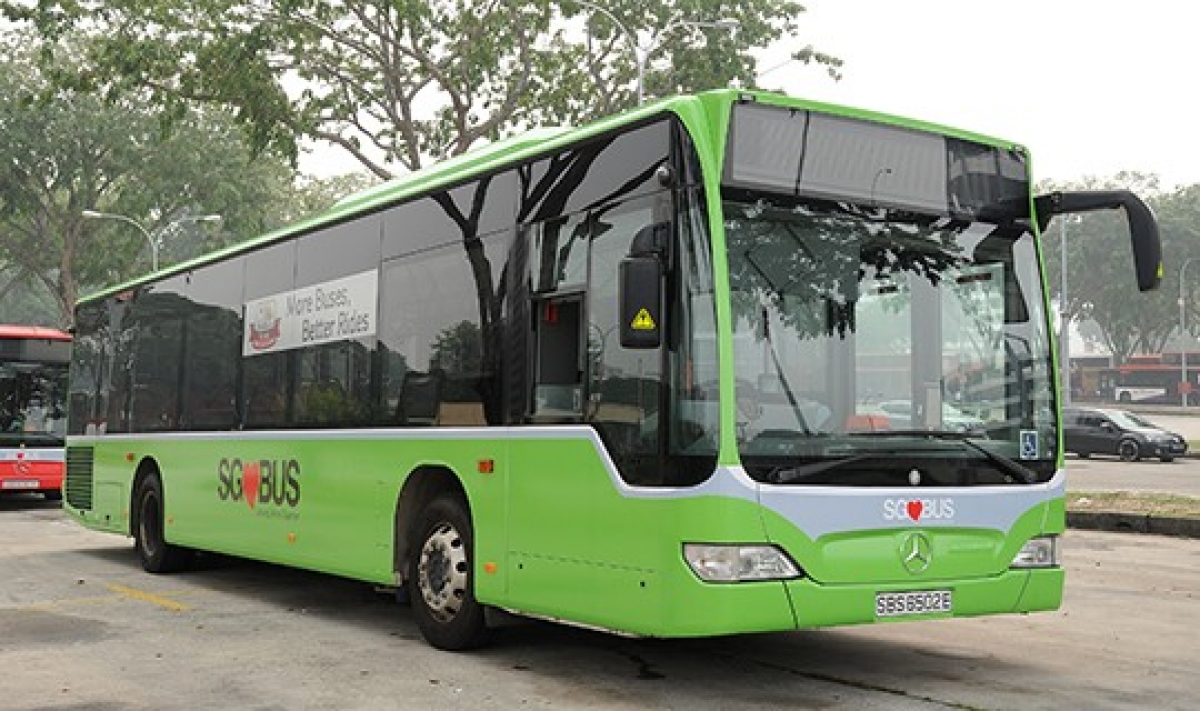
    Singapore’s adult commuters will soon face a 9-10 cent (0.07-0.08 USD) increase in their public bus and train fares per trip, corresponding to an overall public transport price increase of 5%.

    Rising fares from December 27

    Starting from December 27, the base fares for bus and train journeys for adults will increase by 9 cents for journeys up to 17.2 kilometers and by 10 cents for longer trips, according to a statement by the Public Transport Council (PTC) on Tuesday.

    Changes for concessionary card holders

    Fare changes will also affect concessionary card holders, including students, seniors, people with disabilities, and low-wage workers with workfare transport concessions. For these categories, the fare will increase by 3-4 cents for journeys longer than 3.2 kilometers, while fares for shorter trips will remain the same.

    PTC specified that more than a third of all concessionary trips, equating to around 450,000, are 3.2 kilometers or less. These short journeys are typically for commuting to school, work, or local amenities.

    Cash fares on public buses to rise

    Cash fares for public buses will likewise increase; adults will see a 20-cent rise, seniors and people with disabilities will face a 10-cent increase, and students will have a 5-cent increase. The council noted that fewer than 1% of all public transport trips are paid in cash.

    Express bus services fares to increase

    Fares for express bus services, which provide faster commuting options from residential areas to city centers and primary job hubs at higher rates than standard buses, will also see an increase. Adult passengers will pay an additional 49-50 cents per express bus trip, while passengers from concessionary groups will face a 20-24 cent increase. Cash fares for these services will rise by 60 cents per journey.

    Despite the increases, this year’s overall fare increase is less than the 6% and 7% increases experienced in 2024 and 2023, respectively.

    Reduced prices for monthly travel passes

    In an effort to support regular public transport users, the cost of monthly travel passes will decrease by 5% from December 27. The revised prices will be S$122 for adults, S$55 for seniors and people with disabilities, and S$92 for low-wage workers with workfare transport concessions. This discount is expected to benefit approximately 155,000 passengers, according to the council.

    Additionally, the government plans to issue S$60 public transport vouchers to households earning up to $1,800 per person per month to help offset the impact of the fare hikes. These vouchers can be used to top up fare cards or to purchase monthly passes.

    Questions & Answers

    When will the new fare rates take effect?
    The new fare rates will start from December 27.

    Who will be affected by the fare increases?
    The fare increases will affect adult commuters, concessionary card holders (including students, seniors, people with disabilities, and low-wage workers), and users of express bus services.

    What measures are being taken to ease the impact of fare hikes?
    To mitigate the impact of the fare hikes, the government will issue S$60 public transport vouchers to eligible households. Additionally, the price of monthly travel passes will be reduced by 5%.

  • Grab Introduces Electric Car Service In Hanoi, Challenging Xanh Sm’s Market Dominance

    Grab Introduces Electric Car Service In Hanoi, Challenging Xanh Sm’s Market Dominance

    Grab, the renowned ride-hailing company, has launched its electric car service in Hanoi, marking a significant entry into the predominantly electric taxi market, primarily controlled by Xanh SM. This move is a strategic approach by Grab to expand their customer base and champion sustainable transportation options.

    Strategies and Goals

    Nguyen Hanh Linh, the director of Grab Vietnam’s mobility division, revealed that the newly introduced service aims to diversify income opportunities for their driver-partners. This strategy is expected to boost their confidence to make a shift toward electric vehicles. After its launch in Hanoi, Grab has ambitious plans to roll out the service in HCMC.

    The current ride-hailing market in Vietnam is mainly controlled by three major players: Grab, Be, and Xanh SM. Xanh SM stands out by exclusively using electric cars constructed by its sister company, VinFast.

    Customer Choices

    It is noteworthy that Grab users do not have the option to specifically request electric cars. Whether the customer gets a VinFast or BYD electric car is a matter of chance. Grab’s decision to launch the electric vehicle service was influenced by the rising number of electric vehicles on its platform, a trend which has been encouraged by driver incentives in recent years.

    Market Trends and Predictions

    A 2024 report estimated Vietnam’s ride-hailing and food delivery market to be valued at US$4 billion, with the potential to reach up to $9 billion by 2030. A survey conducted in May indicated that 55% of users in major cities chose Grab for ride-hailing services, compared to 32% for Xanh SM and 9% for Be.

    A report by Mordor Intelligence stated that Xanh SM took the lead in the ride-hailing market in the last quarter of 2024, holding a 44.68% share in the second quarter of this year. Grab Vietnam, however, disputed these figures, claiming that the research methods used and data sources were unverifiable and misleading.

    Questions & Answers

    What was the strategic aim behind Grab launching its electric car service in Hanoi?
    The launch aimed to expand Grab’s user base and promote environmentally friendly transportation.

    What is the next city where Grab plans to roll out its electric car service?
    After Hanoi, Grab plans to introduce the service in HCMC.

    How did Grab respond to Mordor Intelligence’s report about Xanh SM’s market lead?
    Grab disputed the findings, claiming that the data sources were unverifiable and the research methods were inadequate, leading to misleading conclusions.

  • Philippines probes Grab over alleged sexual assault of Vietnamese passenger

    Philippines probes Grab over alleged sexual assault of Vietnamese passenger

    Philippine regulators have launched an investigation into the alleged robbery and sexual assault of a Vietnamese woman who booked a ride using the Grab ride-hailing app.

    The Philippines’ Land Transportation Franchising and Regulatory Board has requested the firm to explain the incident and given it five days to comply, quoting the agency’s chair Teofilo Guadiz III as saying on Wednesday. If found to be negligent, the firm could be suspended for at least 30 days and face fines.

    The robbery and sexual assault allegedly occurred on Sept. 5 when a Vietnamese woman booked a ride in Parañaque City.

    During the ride, the driver reportedly allowed another passenger to board the car.

    This passenger then reportedly took the woman’s phone and cash, which amounted to 35,000 Philippine pesos (US$623), before raping her inside the vehicle. The driver was arrested by the police on Sept. 7.

    Grab’s Philippine unit said on Thursday that the driver involved in the case has been permanently banned from the platform.

    It has reached out to the victim to offer assistance and will fully cooperate with the Philippine police in the investigation.

  • Singapore’s ride-hailing platform Tada sets sight on Hong Kong

    Singapore’s ride-hailing platform Tada sets sight on Hong Kong

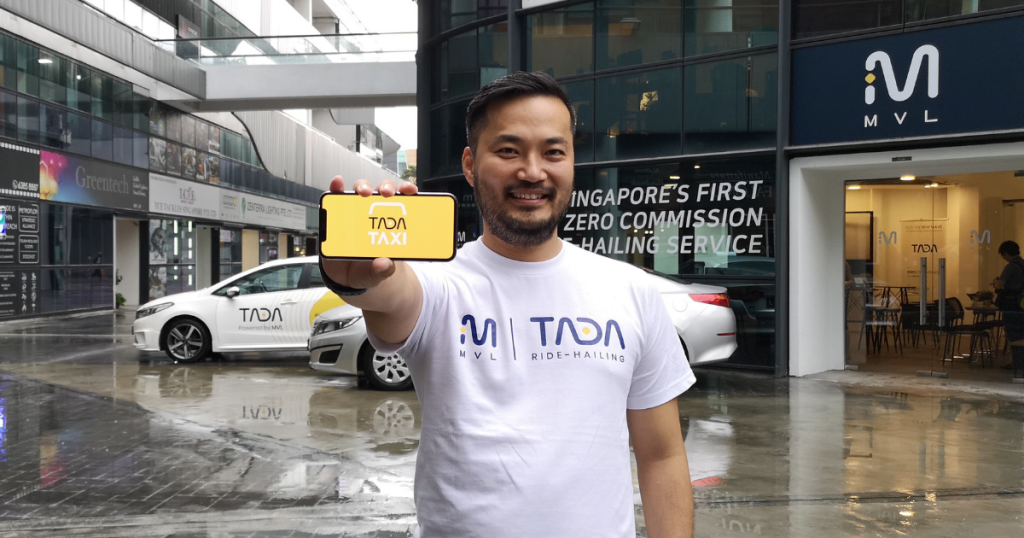
    Singapore-based ride-hailing company Tada will expand to Hong Kong in November with up to 4,000 vehicles as part of a collaboration with local taxi firms.

    “Singapore and Hong Kong share many similarities, which allows us to bring what we have learnt from our success in Singapore over to Hong Kong,” Tada’s chief executive officer Sean Kim said.

    As Hong Kong does not allow drivers to operate transport services without a taxi or car-hire permit, ride-hailing firms such as Uber have been focusing on partnering with taxi drivers.

    Tada charges a fixed platform fee per ride instead of a flexible commission as other ride-hailing apps.

    This policy appeals to drivers as it allows them to keep more of their earnings and will result in better service, Kim said.

    Tada was established in 2018 and is one of five ride-hailing platforms licensed in Singapore.

    Hong Kong has three services currently operating in the city, including U.S.-based Uber, Beijing-based Didi.

  • Ride-Hailing App Cabify Raises $110 Million For Expansion In Latam, Spain

    Ride-Hailing App Cabify Raises $110 Million For Expansion In Latam, Spain

    The company said on Tuesday that the Spanish ride-hailing app Cabify has raised $110 million in financing to accelerate its growth in Latin America and Spain.

    Cabify closed the funding round with participation from investors like Orilla Asset Management and AXIS, through Fond-ICO Next Tech.

    “This commitment by strategic investors is a recognition of Cabify’s positive impact and potential to continue creating long-term value for our investors and the cities in which we operate,” Cabify CEO Juan de Antonio said a statement.

    Cabify, whose business volume jumped 32% in 2022 from the previous year, said the capital injection will help increase its market share in more than 25 cities in Latin America and Spain with populations over 200,000.

    The company, which operates in more than 40 cities in Argentina, Chile, Colombia, Mexico, Peru, Uruguay and Spain, said in November it would invest more than $300 million through 2024 to strengthen its presence in Latin America.

    In December Cabify secured a 40 million euro loan from the European Investment Bank aimed at purchasing electric vehicles. The company aims for all rides through its app to be in zero-emission vehicles by 2025 in Spain and by 2030 in Latin America.

    With over 42 million registered users and 1.2 million drivers, Cabify employees over 1,000 people in Spain and Latin America.

  • Grab says it canceled heatwave surcharge

    Grab says it canceled heatwave surcharge

    Grab canceled its new heatwave surcharge on motorbike rides on July 7 just one day after imposing it, Vietnam Competition and Consumer Authority announced Monday.

    It had announced a surcharge of VND3,000-5,000 ($0.13-0.21) meant for drivers.

    The consumer watchdog told the Singaporean ride-hailing company that all fees and surcharges Grab payable by customers must be clearly explained before implementation.

    It called on other ride-hailing companies to be transparent about them.

    Grab was the first to slap such a surcharge after many localities recorded unusually high temperatures but had said merely it would apply it during “extremely hot weather” without describing what it meant by the term.

    Grab Vietnam had an accumulated loss of VND4.36 trillion as of last year.

  • Grab’s Ride-Hailing Services Disrupted In Southeast Asian Countries

    Grab’s Ride-Hailing Services Disrupted In Southeast Asian Countries

    Southeast Asia’s Grab on Tuesday said it was experiencing disruption to its services, with customers and drivers in Singapore, Indonesia, and Malaysia complaining that they were having trouble using the app’s ride-hailing functions.

    “Some of our services are not accessible at the moment,” Grab posted on its Facebook page.

    “We are looking into this and we will update when the app is back up and running.”

    Grab operates Southeast Asia’s most popular “super app”, which provides ride-hailing, food, and grocery delivery, and payments in over 400 locations in eight countries.

    “We are experiencing some technical difficulties with the app and our engineers are working to recover the issue,” Grab said.

  • China’s Didi says app takedown may hurt revenue

    China’s Didi says app takedown may hurt revenue

    China’s biggest ride-hailing firm Didi Global said on Sunday that the removal of its “DiDi Chuxing” app from smartphone app stores in China is expected to have an adverse impact on its revenue.

    Earlier on Sunday, China’s cyberspace regulator ordered app stores to stop offering Didi’s app after finding that the company had illegally collected users’ personal data.

    “The company expects that the app takedown may have an adverse impact on its revenue in China,” the company said in a statement.

    Meanwhile, on Monday the cyberspace watchdog said it is investigating online recruiter Zhipin.com, and truck-hailing apps Huochebang and Yunmanman, ramping up its crackdown on the mainland’s tech companies amid tightened regulations on data security.

    The removal of Didi’s app, which does not affect existing users, comes days after Didi made its trading debut on the New York Stock Exchange in an initial public offering that raised US$4.4 billion.

    In a June filing, Didi reported revenue of about 42.2 billion yuan ($6.5 billion) for the three months ended March 31. Of that, 39.2 billion yuan came from its China mobility division while about 800 million yuan came from its international business.

    Didi has a dominant position in the online ride-hailing business in China and operates in 4,000 locations across 16 countries.

    Didi said it will strive to rectify any problems, and will protect users’ privacy and data security.

    Since late last year, Chinese internet regulators have cracked down more sharply on the country’s tech giants for violations of rules.

    The Global Times, a tabloid published by the ruling Communist Party’s official People’s Daily newspaper, said in a Chinese-language commentary on Monday that Didi’s apparent “big data analysis” capability could pose risks to the security of individuals’ personal information.

    “No internet giant can be allowed to become a super database of Chinese people’s personal information that contains more details than the country, and these companies cannot be allowed to use the data however they want,” Global Times said.

    Didi gathers vast amounts of real-time mobility data everyday. It uses some of the data for autonomous driving technologies and traffic analysis.

    In its IPO prospectus, Didi said “we follow strict procedures in collecting, transmitting, storing and using user data pursuant to our data security and privacy policies.”

    A senior Didi executive said on Saturday that the company stores all China user and roads data at servers in the country and it is “absolutely not possible” that it passed data to the United States.

  • Russian ride-hailing app makes Vietnam debut

    Russian ride-hailing app makes Vietnam debut

    Russia’s InDriver has become the latest entrant in Vietnam’s growing but fiercely competitive ride-hailing market, joining several foreign and domestic firms in the fray.

    Starting this month, the company is offering car and motorbike ride-hailing services in the central province of Thua Thien Hue, the southern city of Can Tho, and the northern city of Hai Phong.

    It now has 260 car and 300 motorbike driver-partners. The company currently does not charge any fee from drivers, allowing them to receive in full the amount that customers pay.

    The biggest difference between InDriver and other ride-hailing apps is its real-time deal feature, which allows customers to offer an initial fare for the ride and send it to nearby drivers, who have the option to either accept the fares or propose a higher one.

    While other companies automatically select drivers, InDriver allows customers to manually choose one based on their proximity, reviews and price offers.

    A company spokesperson said this feature goes against popular algorithms which automatically increase fares during peak and high-demand hours.

    InDriver has over 50 million users worldwide. Its main competitors in Vietnam are currently Singapore’s Grab, domestic player Be, and Indonesia’s Gojek.

    U.S.’s ABI Research estimates Grab dominates the Vietnamese market with a 73 percent share, followed by Be with 16 percent and Gojek with 10.3 percent.

    In July, domestic player GV Taxi became a new player in the ride-hailing market, aiming to have 8,000 partner drivers in six months.

    Vietnam’s ride-hailing market was the fourth largest in Southeast Asia last year behind Indonesia, Singapore, and Thailand, according to a report by Google.

  • Taxis, ride-hailing apps hike Tet ride charges

    Taxis, ride-hailing apps hike Tet ride charges

    Taxis are refusing to charge by the meter and ride-hailing apps have doubled ‘peak hour’ prices and added surcharges as Tet draws close.

    Monday evening, five days before the Lunar New Year (Tet), Hoang Viet requested a car on ride-hailing app Grab. He was surprised to find that his 14-kilometer trip from an office block in Duy Tan street to the Gia Lam Bus Station cost VND280,000 ($12.11), more than double the usual price.

    When he tried to request rides on other apps like Be and Fastgo, he found that the prices were cheaper, but was unable to find a driver who would accept his request.

    Many others have reported running into similar situations since last week, especially during peak hours when travel demand is high as people rush to shop before Tet.

    Ngoc Mai, another resident, said it took her half an hour to call a taxi home after taking her child to a shopping center in downtown Hanoi.

    “Before opening the door, the driver asked me for VND120,000 ($5.2) for a 5-kilometer trip. This usually costs VND60,000-70,000 ($2.6-3) on regular days,” she said.

    Mai then asked three other taxis parked around the mall, but received similarly high quotes, with drivers saying they were charging more because of traffic jams around the city. Mai ended up requesting a ride on an app, but it took 20 minutes for the driver to come to pick her up.

    During the ride, Mai’s driver apologized and explained that the roads had become heavily congested over the last few days. Despite his company charging higher fees, he was making only VND1 million ($43) from less than 10 rides, while on normal days, his revenue could go up to VND1.5 million ($65), he said.

    “It’s not that we want to reject passengers, but roads are now very busy, especially in downtown streets, where it could take an hour to go just one kilometer. Yes, we have raised prices, but Grab has done so as well,” said the driver of a traditional taxi who did not wish to be named.

    Taxi prices are expected to go even higher, with most-ride hailing firms adding a surcharge to support drivers during the Tet holiday – from January 23-27.

    From Wednesday, passengers will have to pay an extra VND10,000 ($0.43) per trip on GrabBike and VND15,000 ($0.65) on GrabCar, the Singapore-based company has announced.

    Local ride-hailing firm Be also said it was adding a surcharge of VND20,000 ($0.86) per car ride during Tet peak times, 9 a.m.-12 p.m. and 4 p.m.-11 p.m.

    Meanwhile, Indonesia-based Go-Viet has said it will charge an additional VND20,000 ($0.86) for GoBike rides for the first 2 kilometers, and an additional VND5,000 ($0.22) for every kilometer after. It will also charge an additional VND10,000 ($0.43) fee per trip during the night.

  • 7-Eleven Malaysia buys into ride-hailing service

    7-Eleven Malaysia buys into ride-hailing service

    7-Eleven Malaysia Holding has acquired a 46.45-per-cent equity stake in local delivery firm Myinteractivelab (MSB) for US$1.8 million.

    According to a SEM’s spokesperson, the company entered into an agreement to accquire 490,030 shares of MSB with founder Nabil Fiesal Bamadhaj, who is the owner of Dego Rides, which launched on January 1.

    “The subscription represents an opportunity for the SEM Group to acquire a substantial equity stake in MSB, which will be undertaking the e-hailing bike services and to provide convenient delivery services for its 7-Eleven outlets,” SEM said in a stock-exchange filing.

    MSB, which operates Dego App, Dego Partners, and Dego Orders, is currently in the process of securing the licence and approval to run electronic hailing motorcycle-taxi services.

    The government had recently announced it would embark on a proof of concept trial for e-hailing bike services in the Klang Valley for the first six months this year.

    “The government’s initiative in undertaking the program is a positive step and augurs well with the proposed subscription as Dego Ride is the only company in Malaysia, besides Singapore’s GrabBike and Indonesia’s Gojek, which has indicated its interest in the program,” said SEM’s spokesperson.

    With 1500 riders and more than 60,000 users in three months before it was banned by the government in 2017, Dego Ride aims to increase its rider number to more than 4000.

  • Uber Stripped Of London Operating Licence

    Uber Stripped Of London Operating Licence

    Uber was stripped of its London operating license on Monday for the second time in just over two years as the city’s regulator said the taxi app was not “fit and proper”, having put passenger safety at risk.

    A change to Uber’s systems allowed unauthorized drivers to upload their photos to other drivers’ accounts, meaning they could pick up passengers as if they were the booked driver, which happened in at least 14,000 trips, Transport for London (TfL) said.

    “It is unacceptable that Uber has allowed passengers to get into minicabs with drivers who are potentially unlicensed and uninsured,” Director of Licensing, Regulation and Charging at TfL, Helen Chapman said on Monday, the day the firm’s license expires.

    The Silicon Valley-based company has 21 days to appeal the decision and can continue to operate throughout the process, which is likely to include court action.

  • Express delivery market gathers speed

    Express delivery market gathers speed

    Ride-hailing giant Grab has followed Russian delivery firm Dostavista and local ride-hailing app Be to invest in express delivery services. The Singapore-based ride-hailing firm announced last week that it plans to invest $500 million in Vietnam over the next five years to expand its transport, food and payment networks. The money will also go towards developing fintech, mobility solutions and logistics, it said.

    In the beginning of August, Grab signed a strategic partnership agreement with budget carrier Vietjet Air, tech-based courier Swift247 to launch an integrated express digital platform that provides delivery solutions by ground and air in Southeast Asia.

    The new service would allow goods to be delivered between Hanoi and HCMC in as little as five hours, Vietjet had said in a statement.

    In mid-August, Dostavista, a “crowd-sourced” same-day delivery startup founded in Russia, raised $15 million in its series B round to invest in Southeast Asia. Dostavista owns express delivery app MrSpeedy Vietnam, which was launched in June 2018 and now has 6,000 partner drivers and 2,000 supplier clients in Vietnam.

    With competition from foreign firms heating up, domestic enterprises have also been boosting their operations in this industry. On August 6, ride-hailing service Be Group launched the beExpress delivery service in Vietnam, focusing on e-commerce deliveries and aiming for 30 percent of Vietnam’s express delivery market by next year.

    In July, logistics startup Giao Hang Nhanh JSC (GHN) also opened a fully automated warehouse in Hanoi to support its quick delivery services. It will open a second in Ho Chi Minh City before November, and is currently building a third with an area of 50,000 square meters in Hanoi, GHN said.

    With competition heating up, delivery firms are trying to differentiate themselves by racing to offer increasingly fast shipping services.

    E-commerce platform Tiki has a shipping policy that offers delivery of over 100,000 products within two hours. Shopee, the biggest e-commerce player in terms of users, offers delivery of certain products in four hours, Sendo in three hours, South Korea’s Lotte, one hour, and electronics retailer giant Mobile World has committed to ship some items in as little as 30 minutes.

    This is a particularly fierce period for the express delivery market, and the advantage falls to large enterprises or those who can raise large amounts of capital from investment funds, Do Hoa, CEO of business consultancy IME Vietnam, told local media.

    “Speed is the most important factor in delivery. In this competitive stage, large apps with many services will have an edge because they can cross-subsidize express delivery with profits from other segments, allowing them to hang on for longer.

    “This is a long-term game, requiring large investments, partners and warehouse networks. Smaller businesses with fewer financial resources will be easily eliminated,” Hoa said.

    Growth in Vietnam’s e-commerce industry will drive demand for express delivery services, especially in the business-to-consumer segment, Ken Research said. The e-commerce industry itself is also recording robust growth, with online sales rising by 30 percent last year to over $8 billion, according to the Ministry of Industry and Trade.

    Vietnam’s express logistics market is expected to reach over $1.4 billion by 2022, growing at an average CAGR of 22.8 percent per year, according to market research firm Ken Research.

  • Uber now uses smartphones to detect possible car crashes in the US

    Uber now uses smartphones to detect possible car crashes in the US

    Uber started testing an interesting safety feature last year that would allow its team to detect unexpected long stops or possible crashes using a smartphone’s GPS and other sensors like gyroscope and accelerometer.

    One year after it debuted the beta test, Uber announced RideCheck is now live in the United States. The new feature is available for all Uber riders and drivers in the US, but the company has plans to expand it to more countries in the future.

    Since every trip is on the map, Uber knows where and when you’re riding and who’s driving you to your destination. Using this particular data and other sensors in drivers’ smartphones, Uber’s technology can detect possible crashes or if a trip goes unusually off course.

    Also, when a RideCheck is initiated, both a rider and driver will receive a notification asking if everything is alright. Through the app, either of the two can inform Uber that all is well, or take other actions like using the emergency button or reporting the issue to the Safety Line.

    Uber says that in the event of a crash, it can also help expedite the insurance claims process. Also, the company promises improvements to the current technology through additional scenarios to RideCheck.

  • Amazon In Talks For Stake In Indonesia’s Ride-Hailing Startup Go-Jek

    Amazon In Talks For Stake In Indonesia’s Ride-Hailing Startup Go-Jek

    Amazon.com Inc is in early talks with Go-Jek Group to buy a stake in the Indonesian ride-hailing startup, a source familiar with the matter told Reuters on Wednesday.

    Details of the stake were not known and the source did not want to be identified as the talks are private.

    Both Amazon and Go-Jek did not respond to a Reuters request for comment.

    Indonesia’s first unicorn, Go-Jek, has up to 20 services and has evolved from ride-sharing to allowing its customers to make online payments and order everything from food to groceries.

    Earlier this year, Amazon also bought a stake in British online food delivery company Deliveroo as it competes with Uber Technologies Inc’s Uber Eats in the global race to dominate the market for takeaway meals.

    Reuters reported in July that Amazon is expanding its transportation prowess to do virtually everything short of building a car.

    Go-Jek, which counts Alphabet Inc’s, Alibaba Group Holdings Inc, Tencent Holdings and Visa Inc (V.N) as investors, last raised here funding in July at a valuation of around $10 billion.