Tag: ringgit

  • Malaysian Ringgit on a Steady Rise: Expert Predicts Strong Appreciation Cycle by 2026

    Malaysian Ringgit on a Steady Rise: Expert Predicts Strong Appreciation Cycle by 2026

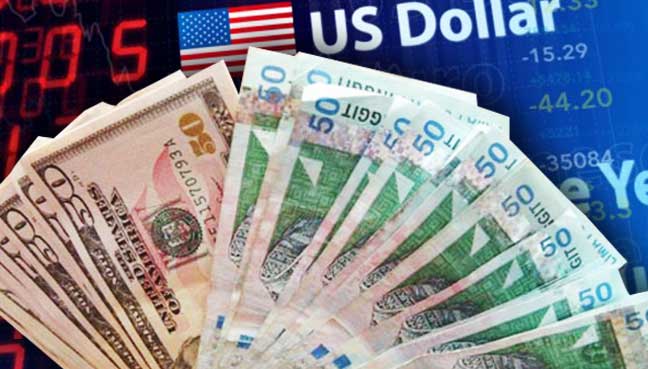
    MUFG Bank Ltd anticipates that the ringgit will fortify to 3.70 against the U.S. dollar by the end of 2026. This expectation is bolstered by an enduring appreciation cycle fueled by robust structural fundamentals.

    Predictions by Senior Currency Analyst

    Lloyd Chan, the bank’s senior currency analyst, claims that this forecast is rooted in the continuous inflow of investment in the Information and Communication Technology (ICT) sector. Other factors such as macroeconomic stability, supportive governmental policies, and enhanced capital flows also contribute to this prediction.

    Chan notes that there is a vigorous investment cycle currently taking place in Malaysia. This cycle, he believes, underpins the country’s prospects for medium-term economic growth.

    Rise in Investment Approvals

    Investment approvals in the manufacturing and services sectors have risen by 14.7% year-on-year during the first nine months of 2025. Foreign Direct Investment (FDI) has played a significant role in this upswing in capital expenditure.

    According to Chan, this increase signals a revived confidence in Malaysia’s policy framework, infrastructure, and role in regional supply chains.

    ICT as a Major Contributor

    The ICT sector has emerged as the primary contributor to the total approved investments within Malaysia. There has been a noticeable increase in foreign participation in this sector since 2022. Chan points out that the country’s ICT investment approvals experienced a year-on-year surge of about 32% in the first nine months of 2025.

    Macroeconomic Stability

    Chan observes that Malaysia’s macroeconomic stability has reduced risk premiums. Despite the rationalization of RON95 fuel subsidies and adjustments to sales and services tax, inflation has remained under control. This has allowed Bank Negara Malaysia (BNM) to maintain policy stability.

    On February 12, the ringgit ascended to a new high of 3.8995 against the U.S. dollar. This is its strongest level in nearly eight years. The last time it traded in this range was on April 23, 2018, when it was valued at 3.8965/8995 against the dollar.

    Questions & Answers

    What is the forecast for the ringgit against the U.S. dollar by the end of 2026?
    The MUFG Bank Ltd predicts that the ringgit will strengthen to 3.70 against the U.S. dollar by the close of 2026.

    Which sector has been the major contributor to total approved investments in Malaysia?
    The Information and Communication Technology (ICT) sector has been the primary contributor to the total approved investments in Malaysia.

    What factors have contributed to maintaining policy stability in Malaysia?
    The macroeconomic stability of Malaysia, reflected in their controlled inflation despite changes in fuel subsidies and sales and services tax, has allowed Bank Negara Malaysia to maintain policy stability.

  • Dollar eases as trade deal prospects bolster risk, sterling gains

    Dollar eases as trade deal prospects bolster risk, sterling gains

    The dollar was marginally weaker on Monday, as increasing expectations of a U.S.-Sino trade deal led investors to shift away from the safety of the greenback into riskier assets. Both the United States and China reported progress in five days of negotiations in Beijing last week, although the White House said much work remains to be done to force changes in Chinese trade behaviour.

    Negotiations will continue next week in Washington as investors hope for an end to the trade war between the world’s two largest economies.

    “Trade is the big focus for the markets…with talks shifting from Beijing to Washington, we could get more news flow,” said Michael McCarthy, chief markets strategist at CMC Markets.

    “I expect the euro to remain under pressure this week while dollar/yen could also fall if we see risk-aversion based on negative trade news flow.”

    In Asia, the yen was marginally higher versus the greenback at 110.53.

    The Aussie gained 0.1 percent to $0.7144, after gaining 0.48 percent on Friday on hopes of a trade breakthrough between the United States and China. The kiwi dollar also gained around 0.1 percent on the dollar to $0.6868.

    U.S.-China trade tensions have kept markets highly volatile since last year.

    U.S. duties on $200 billion worth of Chinese imports are set to rise from 10 percent to 25 percent if no deal is reached by March 1 to address U.S. demands that China curb forced technology transfers and better enforce intellectual property rights.

    The dollar index, a gauge of its value versus six major peers was marginally lower at 96.85. The index has gained 1.4 percent so far this month despite weaker-than-expected U.S. data as well as a cautious Federal Reserve which is widely expected to keep rates steady this year due to a slowdown in growth and muted inflation.

    The dollar index has gained mainly because of the euro , which has around 58 percent weightage in the index.

    The single currency was flat at $1.1292 in early Asian trade and has had two straight weeks of losses. Traders are betting on a weaker euro in the coming months as they expect the European Central Bank to keep its monetary policy accommodative due to low growth in the common area, tepid inflation and political uncertainties.

    On Friday, Benoit Coeure, a member of the European Central Bank’s executive board, said a new round of cheap multi-year loans to banks was possible. Coeure added that the euro zone’s recent economic slowdown is more pronounced than earlier expected, suggesting the path of inflation will also be more shallow.

    The ECB will next meet on March 7 and policymakers are widely expected to slash growth and inflation projections as the euro zone is suffering its biggest slowdown in half a decade.

    Elsewhere, sterling was up by 0.1 percent to $1.2903, building on its gains from Friday.

    The pound rallied 0.6 percent on Friday, helped by reports of some hedge fund buying, a conciliatory tone on Brexit from the Irish foreign minister and stronger-than-expected British retail sales data.

  • Ringgit likely to trade in cautious mode this week

    Ringgit likely to trade in cautious mode this week

    The ringgit is expected to face a challenging upcoming week as the market uncertainty over trade tensions and a slowdown in the global economy encourage investors to remain risk-off. FXTM Research Global Head of Currency Strategy Jameel Ahmad said that the local unit may face the risk of falling below RM4.15 against the greenback next week.

    “The local currency has actually performed reasonably well this week during a period of heightened market uncertainty due to concerns over a global economic slowdown in 2019, and I actually would have expected the currency to fall lower due to investor reluctance to invest in emerging markets when there is significant market uncertainty,” he said.

    He said the ringgit and its emerging market peers across the globe face significant downside risks heading into the next trading week, as global financial markets continue to be gripped by market turmoil.

    “The first few days of the new trading year have not been kind to financial markets, with a number of global stocks selling off and a “flash crash” in the currency markets leading to losses in a number of currencies including the British pound, Australian dollar and Turkish lira while the Japanese yen surged across the board,” he added.

    Although the ringgit and its Asian peers got away from the flash crash in the market unscathed, he said the prolonged risk-off environment that is hurting risk appetite is encouraging expectations that emerging markets are at risk to another round of selling off.

    “I would keep a close eye on whether the ringgit falls below 4.15 next week, because this will raise market expectations that the currency of Malaysia will gradually return to the 4.20 levels over the coming weeks,” he said.

    For the week just ended, the ringgit closed mostly lower against the US dollar with market sentiment moved by global economic uncertainties and weak Purchasing Managers’ Index (PMI) data released early this week.

    On a Friday-to-Friday basis, the local note strengthened to 4.1340/1370 from 4.1500/1550 against the greenback.

    It went down against the Singapore dollar to 3.0357/0395 from 3.0336/0384 but improved against the British pound to 5.2378/2432 versus 5.2468/2548.

    Against the euro, the ringgit jumped to 4.7144/7199 from 4.7488/7550, but eased versus the Japanese yen to 3.8260/8298 from 3.7597/7653.

  • Malaysian stocks, ringgit to remain under selling pressure

    Malaysian stocks, ringgit to remain under selling pressure

    The Malaysian stock market and the ringgit, which have seen constant pressure since the surprise outcome of the 14th general election, are unlikely to change course anytime soon as the US action to slap tariffs on imports from China is expected to increase risk aversion in the short term, say economists.

    Last Friday, the US imposed tariffs on US$34 billion (RM137 billion) worth of goods from China. Beijing was quick to retaliate, announcing levies on the same value of US imports. Bursa Malaysia’s benchmark index, the FBM KLCI, fell 1.6% or 26.79 points to close at its intraday low of 1,663.86 points in reaction to the news, while most emerging market currencies, including the ringgit, yuan, Indian rupee, baht, won and Singapore dollar traded lower. The Malaysian unit closed at 4.0465 to the US dollar on Friday.

    MIDF Amanah Investment Bank chief economist Dr Kamaruddin Mohd Nor said that the local currency as well as the emerging economies’ currencies are expected to remain under pressure this week amid heighten trade tensions between the two economic powerhouses.

    He said trade tensions would hamper investor sentiments towards emerging economies, which in turn would influence the flow of funds as investors assess the possible risks and adverse outcomes associated with the dispute.

    “Thus, selling pressure due to this factor as well as other external factors (faster than expected interest rate increases in the US and stronger dollar) will weigh on the ringgit and regional currencies in the near term,” he added.

    Meanwhile, FXTM global head of currency strategy and market research Jameel Ahmad said there is some risk aversion in the atmosphere following the announcement by US President Donald Trump, where emerging market currencies and stock markets appear to be struggling as a result of a cautious trading environment.

    “If Asian stock markets continue to trade cautiously in wake of the US trade tariffs on China coming into play, there is a likelihood that this could also negatively impact the European stock markets,” Jameel said.

    Socio-Economic Research Centre executive director Lee Heng Guie noted that emerging markets’ assets, including currencies, have been under pressure in recent weeks due to the trade tensions, damaging market volatility due to capital reversals on expectations of higher US interest rates ahead and US dollar strength.

    Additionally, Lee said the ringgit is expected to remain at the current trading range given the multifacet external headwinds amid domestic political and policy transition.

    He noted that among the potential long-term effects from the tariffs’ implementation are slowing trade and investment as trade activity lessens, which would weigh on firms’ profitability and investments’ returns.

    Lee added that domestic demand would also dampen as households’ income becomes affected by the weak performance of export-oriented companies and industries.

    “In addition, global financial market volatility will have negative spillover on domestic equity market,” he said.

    Therefore, Lee said the government needs to widen its trade relationships with countries that are committed to adopting fair and open trade practices while companies work on products and markets complexities to minimise the disruption amid the global network of supply and value chains.

    Kamaruddin said while the research firm which does not expect local companies to face devastating near-term disruptions, they will have to be prepared if the list of products involved are part of their value chain.

    Overall, economists said the continued trade spat between the US and China, the return of market volatility, and the reality of higher US interest rates pressuring emerging financial markets and currencies, are expected to weigh on Malaysia’s growth momentum this year.

    “The estimated impact on GDP growth is around 0.1-0.3 percentage point,” Lee said.

    However, Kamaruddin said MIDF is keeping its full-year 2018 GDP growth forecast at 5.5%.

  • Ringgit marches higher against US dollar

    Ringgit marches higher against US dollar

    The ringgit marched higher against the US dollar today, appreciating by 59% since it was last seen in April 2016, said Oanda Head of Trading for Asia Pacific, Stephen Innes.

    At 6pm, the local note ended at 3.8840/8870 against the greenback from 3.9110/9140 on Wednesday.

    Innes said the ringgit touched the 3.8 level, rising 15% from its weakest point in early 2017.

    It strengthened against the US dollar as it continued its depreciation amid the increase on the overnight policy rate by 25 basis points to 3.25% by Bank Negara Malaysia today.

    He said the increase did not have much impact on the ringgit as the markets had fully priced in the move.

    “However, we think the market found itself a little oversold and with what amounted to be a dovish rate increase by BNM, traders booked profits.

    “If we consider that we could be entering extended cyclical downtrend on the US dollar, the ringgit could still rally below 3.80 level in near term,” he told Bernama.

    On another note, Innes also said that oil prices, which has come off their highs, would remain above the budget’s forecast and continue to support ringgit’s strength.

    The ringgit was traded mixed against a basket of major currencies.

    It rose against the Singapore dollar to 2.9746/9781 from Wednesday’s 2.9803/9832 and gained versus the yen to 3.5630/5661 from 3.5658/5695 yesterday.

    It declined against the euro to 4.8286/8327 from 4.8242/8295 on Wednesday and went down against the British pound to 5.5491/5537 from 5.5110/5168 yesterday.

  • GST, ringgit decline hit retailers causing 40% drop in sales, says employers group

    GST, ringgit decline hit retailers causing 40% drop in sales, says employers group

    Retailers have experienced a major drop in sales with some registering a more than 40% decline over festive periods in the second half of the year, the Malaysian Employers’ Federation (MEF) said today.

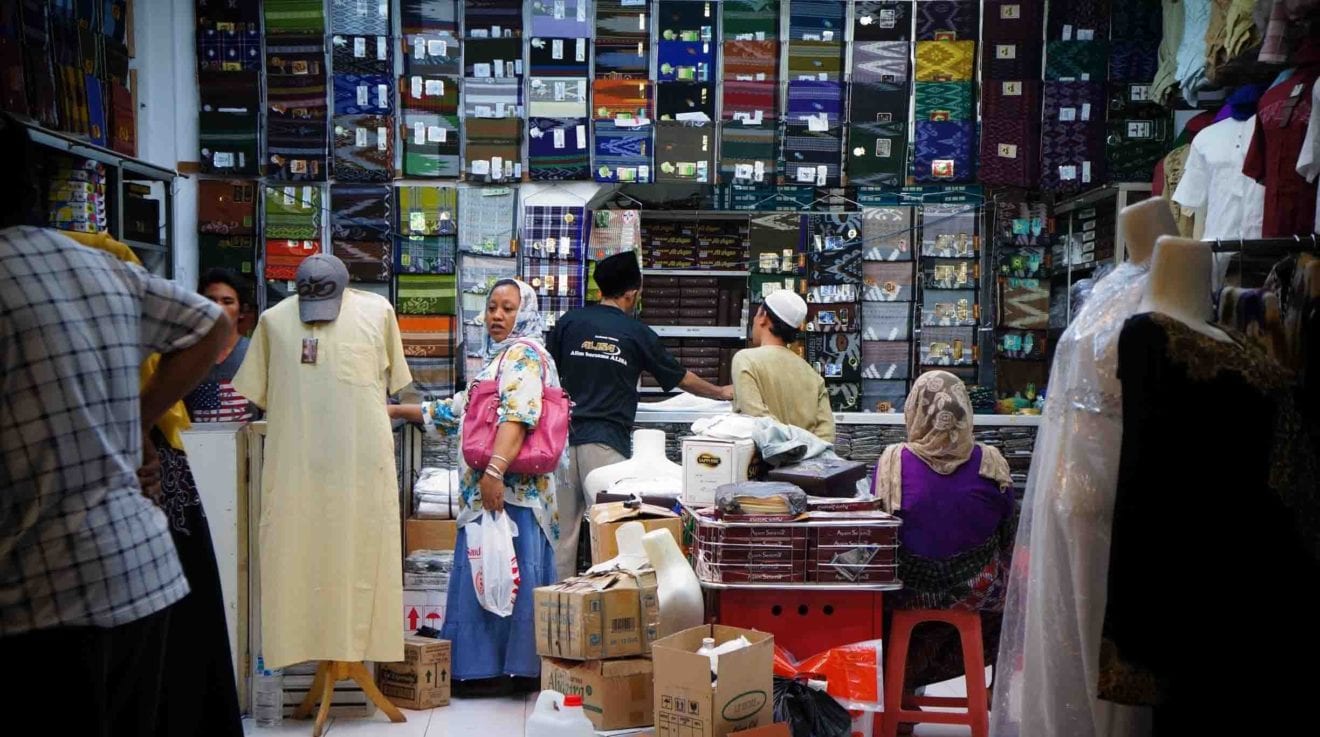
    MEF executive director Datuk Shamsuddin Bardan said retailers attribute the decline to the combined impact from the implementation of the goods and services tax (GST) in April and the ringgit’s depreciation against the US dollar. He added that consumers became more prudent in their spending after the GST came into effect and this was reflected in Hari Raya and Deepavali shopping in the second half of the year.

    The cost of goods were “seemingly” higher because the tax and the exchange rate had also affected all players in the retail sector, both big and small companies, he added. “The challenges are very high for the retail sector. The sector has very much to do with domestic market outlook, especially when the rakyat is very careful with their spending and choosy with their purchases.

    As such, the retail sector will be affected very much,” he told The Malaysian Insider. Poor consumer sentiment saw retailers grapple with a drop of more the 40% than the usual spending during the last two festive seasons in July and November.

    “You look at Hari Raya and Deepavali. Many retailers are saying that their sales were affected, some by more than 40%. “In this kind of revenue outlook, this sector has no choice but to actually restructure their manpower and, unfortunately, when they talk about restructuring, they are talking about retrenchment.”

    Shamsuddin said many retailers were struggling although MEF had yet to receive any reports on closures or retrenchments. The Edge Financial Daily last week reported that independent retail research firm, Retail Group Malaysia (RGM) has cut its forecast for retail sales this year for the fifth time, attributing it to poor figures in the second and third quarters of the year.

    The firm said the decision to revise its forecast downward was due to the weakening ringgit in the past few months, which led to higher import costs. RGM, however, forecasted that the Q4 (October to December) growth to 3.8% year-on-year is higher than Malaysia Retailers Association’s (MRA) forecast of 1.3% growth for the same period.

    This was because RGM believed that the higher cost of overseas travel would encourage domestic spending. MRA also said it did not expect its businesses to recover strongly for the period as they expected a 2.6% contraction in sales.