Tag: roaming

  • Tesco Mobile introduces roaming charges for EU travel

    Tesco Mobile introduces roaming charges for EU travel

    After Brexit became a reality, UK mobile operators were quick to promise that roaming charges for calls and data from within EU countries will not make a return. But, after the EU Trade Deal was finalized in 2021, it seems things changed.

    EE was first to cave and reintroduced EU roaming charges for its customers. Three, Vodafone, and Sky followed suit. Now, Tesco joins in.

    No announcement, no fanfare, Tesco changed its Terms & Conditions to include this change. Come January of 2023, any customers that have signed a new contract with the provider after June 6th 2022 (including) will need to pay for their mobile usage from within EU countries as follows — 10p per MB of data, 20p per SMS (no MMS while roaming), 55p per minute of regular voice calling.

    If you have entered a contract with Tesco before the aforementioned date, you will not be affected by the roaming charges until you renew or upgrade your service.

    Frequent travellers will be able to make use of various roaming bundles that Tesco will have on offer, making it cheaper for those that find themselves abroad more often.
    Out of all major carriers in the UK, Virgin Media and O2 have yet to introduce roaming fees for EU countries. In fact, so much so that you may be feeling tempted to check out some phone deals on Virgin or phone deals on O2. Vodafone’s Xtra plans can also include no-fee roaming for the EU and other countries abroad, so it’s great if you can find your favorite phone bundled with the right plan (Vodafone refreshes its phone deals once per month or so).
    By this point, EU roaming fees for all UK residents seem like an inevitability, with the only question being “when” the last operators will cave.


  • Gojek Vietnam GM reveals ambitions after launch of car service

    Gojek Vietnam GM reveals ambitions after launch of car service

    Launched amid the Covid-19 pandemic, GoCar is one of two big products Gojek planned to introduce this year to complete its golden triangle in Vietnam, including transportation, food delivery and payment.

    Phung Tuan Duc, Gojek Vietnam GM shared stories behind the launch of car service during the Nguy – Co talk show hosted by Thai Van Linh.

  • MTN, Smart extend 5G roaming of Philippines to South Africa

    MTN, Smart extend 5G roaming of Philippines to South Africa

    MTN South Africa network will be the first mobile operator in Africa to provide 5G access to customers from the Philippines through its international roaming agreement with the Philippines’ leading mobile services provider, Smart Communications.

    The agreement delivers on MTN’s and Smart’s commitment to keeping its travelers connected and providing them with access to 5G; both at home and when traveling as capable devices become available.

    “We’re excited to launch 5G roaming in South Africa with Smart’s network because of what it means for customers,” said Arne Casteleyn, general manager – international roaming, MTN GlobalConnect. “With MTN Y’ello Connect Roaming Hub and our central roaming team, we never stop innovating, developing and deploying faster roaming services to provide our customers with access to a next-generation network.”

    Casteleyn further explained that providing 5G services for visitors coming to Africa is crucial to get the same data speeds as at home and to harness trends such as the Internet of Things (IoT). “We continue to ramp up the roll-out of 4G, VoLTE, and 5G roaming with the world’s top operators which proves MTN’s commitment to provide excellent roaming services to its travelers as travel restrictions ease with mass vaccinations.”

    “This is part of Smart’s commitment to bring our world-class services anywhere in the world by expanding our 5G roaming coverage in Africa, after our successful rollout with 46 partners in Europe, USA, Middle East, and Asia,” said Ray Arsenal, AVP and head of roaming partnerships.

    Established in 2018, MTN GlobalConnect is based in Dubai and its team is made up of more than 25 nationalities.

  • FastGo announces Vietnam’s first helicopter ride-sharing service

    FastGo announces Vietnam’s first helicopter ride-sharing service

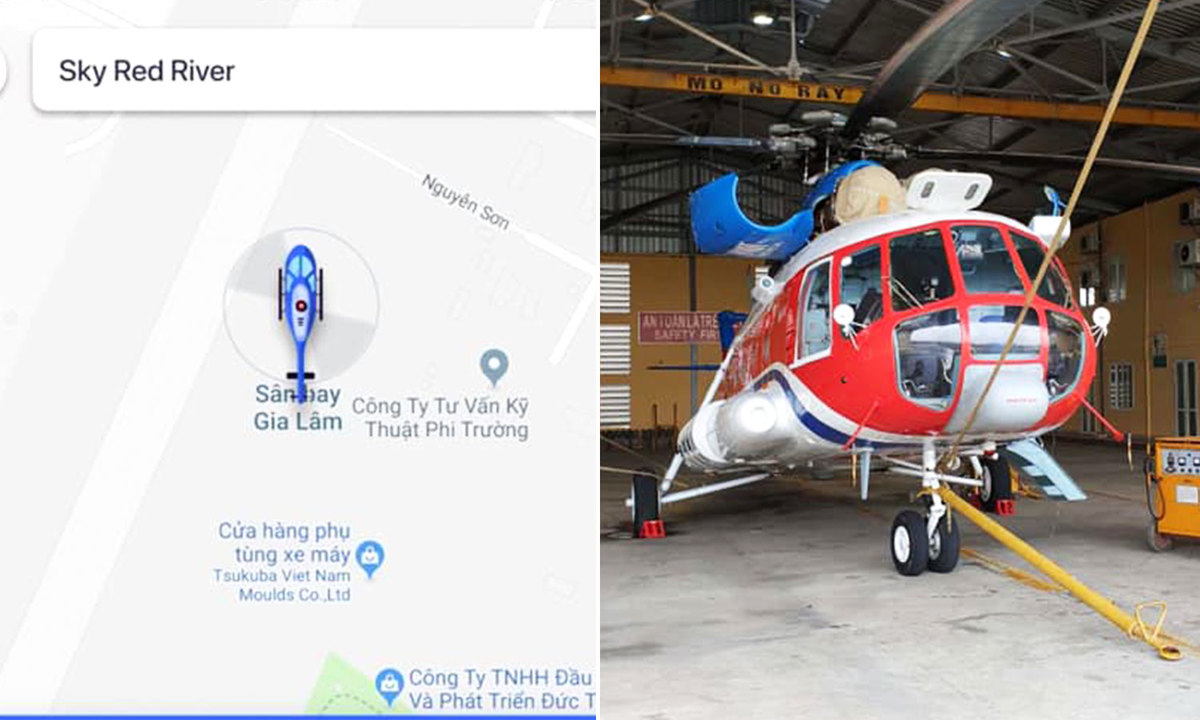
    Vietnamese ride-hailing firm FastGo plans to launch the country’s first helicopter ride-sharing service in Hanoi this month, focusing on tourism in northern provinces.

    CEO Nguyen Huu Tuat told that FastSky’s first flight will take off on April 25.

    With 12 passengers to a helicopter, FastSky will operate tours from Hanoi to northern tourist destinations such as the Red River and Ha Long Bay.

    “Apart from SkyTour, we’ll also operate SkyWedding services for wedding photography and SkySOS for emergencies in which helicopters will land on Hanoi skyscrapers to pick up patients,” Tuat said.

    Prices vary for each service. A tour will cost a minimum of $125 per person, which can be paid in installments over a period of 12 months.

    Tuat said: “We offer premium services for business people but also want everyone to have a chance to fly. FastSky will be a game-changer in the transport industry.”

    FastGo only provides technology solutions while helicopters and pilots are provided by a partner who is permitted to fly in Vietnam, he said, but declined to reveal the company’s name.

    FastGo began operations last June, a few months after Uber announced its exit from Southeast Asia.

    The company, part of Vietnamese technology start-up NextTech Group, expanded to Myanmar last December.

    It plans to launch operations in Singapore this month and in five other countries in the region, including Indonesia and the Philippines, by the end of the year.

    With almost 60,000 drivers on board, the company claims to be the second most popular ride-hailing firm in Vietnam after Grab.

  • Silent roamers in decline as “roam like at home” goes global

    Silent roamers in decline as “roam like at home” goes global

    A Juniper Research study revealed that operator revenues from international mobile roaming are expected to recover slightly, following a decline in 2017 after the introduction of RLAH (Roam Like at Home) in Europe and other markets.

    But overall roaming revenues are expected to stay flat over the next 4 years, representing around 6% of total operator billed revenues and $51 billion in value.

    RLAH enables mobile users to use their monthly voice, data and messaging allowance while roaming without incurring additional charges.

    RLAH going global

    The new research, Mobile Roaming: Regulations, Opportunities & Emerging Sectors 2019-2023, found that, driven by the introduction of RLAH packages in EU and other regions such as North America and Asia-Pacific, the roaming market witnessed a significant rise in data usage and traffic.

    In 2017, Juniper estimates that data traffic grew by 200% globally and by 260% in West Europe.

    Research author Nitin Bhas added: “While the overall proportion of silent roamers continues to fall in many markets, driven by RLAH and cheaper bundles, the market also witnessed operators extending RLAH to more countries over the past 12-18 months. Additionally, a number of neighboring countries are announcing roam-free intra-regional agreements, similar to the EU.”

    Juniper estimated that the proportion of silent roamers not using any data roaming services in 2018 accounted for 51% of total data roamers globally, down from 72% in 2013.

  • Telenor Myanmar extends non-stop roaming to Malaysia, Singapore

    Telenor Myanmar extends non-stop roaming to Malaysia, Singapore

    Telenor Myanmar has expanded its unlimited international data roaming service to Malaysia and Singapore, one month after the launch of the new service in Thailand.

    The company’s non-stop data roaming pack offers unlimited data in the three international markets for total fees of 999 kyats ($0.65) for three days of service. Speeds are uncapped for the first 1GB per day, and then shaped to 512kbps.

    Prepaid and postpaid customers can activate the service on the MyTelenor APP, sending a message to a dedicated number, or dialing a different number.

    “We are amazed by the support we have seen on our latest roaming product for visitors to Thailand. So we decided to extend this popular service to Malaysia and Singapore which we know as the other two most frequently visited countries in Southeast Asia,” Telenor Myanmar CMO Amaresh Kumar said.

    “We have made international roaming affordable for everyone and we welcome our customers to experience the only worry-free data roaming packs that users can get in Myanmar.”

    Thanks to the connections of parent company Telenor from Norway, Telenor Myanmar now offers roaming services with 171 partner operators in 125 countries, with its 4G roaming service currently available in China, Thailand, Malaysia, Singapore, Japan, UAE, Canada, Macau, Taiwan, New Zealand, Sweden, Belgium and Norway.

    Meanwhile subscribers to 227 operators from 134 countries can use their overseas SIMs with the Telenor network in Myanmar.

  • HKBN launches roaming-focused mobile plan

    HKBN launches roaming-focused mobile plan

    Hong Kong Broadband Network (HKBN) and free to air TV broadcaster Television Broadcasts Limited (TVB) have launched a new joint mobile service plan offering a shared data allocation for customers roaming internationally.

    The new plan includes a free Global Phone, an Android-based smartphone that uses CloudSIM technology to provide mobile network service across more than 60 countries and territories.

    The Global Phone also supports dual SIM technology to allow local mobile network service to be activated by inserting a local SIM into the device.

    Customers will receive 5GB of monthly global data usage, as well as between 3GB and 12GB of local data depending on plan tier. Prices start at HK$198 ($25.22) per month.

    New customers porting their mobile number from any other operator will be granted 2GB of bonus data on the base 3GB plan, and existing HKBN broadband, home phone or mobile service customers registering the plan will be provided a HK$58 monthly discount.

    Via the partnership with TVB, the Global Phone will come pre-loaded with a 24-month subscription to TVB’s MyTV SUPER App as well as its TVB Anywhere App for use in mainland China and other overseas markets.

    “Today, many Hong Kongers and companies are still paying a lot for roaming. We’re determined to put an end to the era of exorbitant roaming charges, so that Hong Kongers can enjoy high-speed, high-quality mobile data services at great prices, at home and abroad,” HKBN CEO William Yeung said.

  • CTM, csl launch VoLTE roaming between Hong Kong and Macau

    CTM, csl launch VoLTE roaming between Hong Kong and Macau

    Hong Kong’s csl, Macau’s CTM and PCCW Global have jointly launched the first service offering end to end VoLTE and video over LTE calling services between Hong Kong and Macau.

    The new service will be available to mobile customers of the csl, 1O1O and CTM brands at no extra charge. It makes use of csl sister company PCCW Global’s high-speed IP connection between the two markets.

    CTM and csl jointly launched he Call Macau Home Pass voice, data, SMS and video call roaming service last year. The service has a monthly fee of HK$138 ($17.75) or a daily fee of HK$38.

    “CTM was the first telco in Macau launching the VoLTE and ViLTE services last year. This year, we are delighted to have achieved new breakthroughs in the service level through the collaboration with and PCCW Global on a broader horizon,” CTM CEO Vandy Poon said.

    “Upcoming, we will continue to develop our local and roaming services to facilitate Macau’s trade and economic exchange with foreign countries and to promote the diversified development of the Macau economy as well as the enhancement of our customer experience.”

    Former monopoly CTM still dominates the Macau mobile market. Earlier this month, the Macau Business Daily published a collective statement from the operator’s rivals calling on the MSAR government to even the playing field by reducing the cost of leased line access and creating conditions that would encourage investments in competing network infrastructure.

  • China to end domestic roaming fees by October

    China to end domestic roaming fees by October

    China’s big three mobile operators have revealed plans to stop charging domestic roaming fees by October.

    China Mobile, China Telecom and China Unicom have announced they will end the practice of charging inter-province roaming voice and data fees.

    The operators are also planning to introduce discount pricing for small and midsize businesses in a bid to encourage corporate customers to adopt more network technologies such as cloud computing.

    The operators are responding to pressure from the government to reduce the price of telecoms services to spur consumer spending and encourage greater adoption of network technologies.

    China has also been seeking to encourage price competition in the mobile sector, and opened up the market to MVNOs in 2013.

    These efforts were also extended to the fixed broadband market in 2014.  According to the Reuters report, the government recently announced it has approved applications from 198 private enterprises seeking to provide broadband services under a pilot project.

    China’s move to abolish domestic roaming will take the industry one step closer to meeting current GSMA chairman and Bharti Airtel founder Sunil Bharti Mittal’s recent call and doing away with roaming altogether – including international roaming.

  • Sunil Bharti Mittal declares war on roaming

    Sunil Bharti Mittal declares war on roaming

    Sunil Bharti Mittal, chairman of the GSMA and India’s Bharti Airtel, has called for an end to international roaming charges.

    Speaking on Monday’s morning keynote session at Mobile World Congress 2017 in Barcelona, the newly elected GSMA chairman said the telecoms industry has “created a disaster” with high mobile roaming charges and pledged to resolve the issue of punitive roaming rates during his tenure.

    “As the chairman of GSMA, one of the major tasks to mind is to fix the problem of international roaming. The bill shocks are creating a lot of dishonest in the minds of customers,” Mittal said.

    “We have a global network…but very few people are allowed to enjoy it,” he said, noting that consumers turn off their phones or often buy local sim cards to avoid “bill shocks”.

    Mittal said 55% of people in the developed world switch off mobile data while roaming and he estimated 90% of travelers from the emerging markets switch off their mobile data, perhaps even voice when they travel.

    “It is a disaster our industry has created,” he said, adding that telcos should not stop regulators’ attempts to force down roaming rates.

    “What have we done to our industry? This must stop. As we leave this room we are going to shake this system. I can promise you within my term at GSMA, roaming charges and bill shocks will be a thing of the past,” Mittal said.

    Mittal’s comment came on the same day Bharti Airtel announced plans to scrap national roaming charges on call and data from April 1.

    In addition to roaming, Mittal also urged regulators to allow greater consolidation in the telecoms industry to leave it in a “healthier” shape.

    “Governments have got it wrong for too long. Regulators have always felt giving out new licenses means more money for the government and more competition for the customers. It’s quite the contrary,” he said, noting that large countries only need three telecoms service providers while smaller nations could be covered by two operators.

    “One doesn’t want a situation where there are one or two ‘healthy’ operators, while another similar number struggle… You really want a few sustainable solid operators, who can put out the investments that are required to deal with the new technologies, demand for data [and the] speeds that you want.”

    Mittal cited examples from the US and Europe, saying these issues are of concern to the telecoms industry globally.

    “In Africa, again and again when I meet regulators and ministers, they talk about issuing new licenses. The time for a license and 500,000 base stations creating a value is over. You can give as many licenses as you want but please allow consolidation,” he urged.

  • Vietnam telecom giant to scrap roaming fees with Laos, Cambodia from 2017

    Vietnam telecom giant to scrap roaming fees with Laos, Cambodia from 2017

    The company expects to lose $1 million a month but hopes to boost connections in Indochina. Vietnam’s biggest telecom firm Viettel has announced it will abolish roaming charges between Vietnam and neighboring Cambodia and Laos, where it has also developed strong networks.

    Nguyen Manh Hung, general director of the company, said that starting from next year its subscribers in the three countries will be able to phone each other at domestic call rates, local media reported. Viettel has developed the Metfone network in Cambodia and Unitel in Laos.

    Hung said the initiative is to facilitate cultural and trade connections in Indochina, but the company will lose around $1 million a month.

    In October last year, members of the European parliament also voted to scrap mobile roaming charges from mid-2017 to save holidaymakers among member countries from racking up massive phone bills.

    ASEAN ministers of communications raised the idea of abolishing roaming fees thoughout the bloc back in 2013, but no agreement was finalized.

    Besides Vietnam, Viettel operates mobile networks in ten countries in Southeast Asia, South America and Africa.

    Its brand value has been estimated at $973 million by UK-based intangible asset valuation consultancy organization Brand Finance. It is ranked seventh in Southeast Asia and 93rd globally.

  • Viettel pioneers free roaming in Cambodia, Laos, Vietnam

    Viettel pioneers free roaming in Cambodia, Laos, Vietnam

    Vietnam’s state-owned telecom Viettel will eliminate overseas roaming charges between its operators in Vietnam, Laos, and Cambodia from January 2017.

    “Users of Metfone in Cambodia, Unitel in Laos and Viettel in Vietnam will be charged at the local mobile fee when they make cross-border calls to each other,” said Nguyen Manh Hung, Viettel’s managing director, who regards the three countries as an economic and cultural bloc.

    Discussions about free roaming services started years ago in Australia, Europe, and New Zealand, but without bearing fruit. Free roaming within the Association of Southeast Asian Nations has also been discussed by regional ministers since 2013.

    Viettel has well-established infrastructure in the three countries, and is the first telecom to launch such a service within a regional economic bloc, promising cheaper cross-border rates for calls and data.

    In a statement released on Thursday, Viettel said it expected its individual operators to lose some revenue initially with the reduced charges, but provided no figures. The figure could be 2% according to one Europe model in 2013. Viettel expects users to become more active when they travel if they can continue paying domestic rates.

    Military-run Viettel posted revenue of $9.7 billion in 2015 with 13% year-on-year growth, and profits up 8% to $2 billion.

    As of September 2016, Viettel had 90 million customers, of which 26 million were in nine overseas markets: Burundi, Cambodia, Cameroon, Haiti, Laos, Mozambique, Peru, Tanzania, and Timor Leste. Viettel has targeted 25 countries by 2020.

    Cambodia and Laos were Viettel’s first foreign ventures, and remain its most profitable. By August, Unitel in Laos had $1 billion in accumulated revenue over seven years and aggregate profit of $300 million. Unitel has a brand value of $132 million, making it one of the 30 most valuable in the region and top in Laos, according to a report by UK-based Brand Finance in April. The company currently has more than 2.5 million customers. It accounts for 47% of Laos’s mobile market and 35% of the broadband market.

    Metfone in Cambodia has a brand value of $94 million and is the leading mobile service provider in the country with 5.5 million customers and 37% market share. It recorded $256 million in revenue last year.

    Viettel already operates in East Timor, and is about to launch in Myanmar with a $1.5 billion commitment and two local partnerships. It is also believed to be negotiating its entry into Indonesia.
  • StarHub launches data roaming to 9 APAC markets

    StarHub launches data roaming to 9 APAC markets

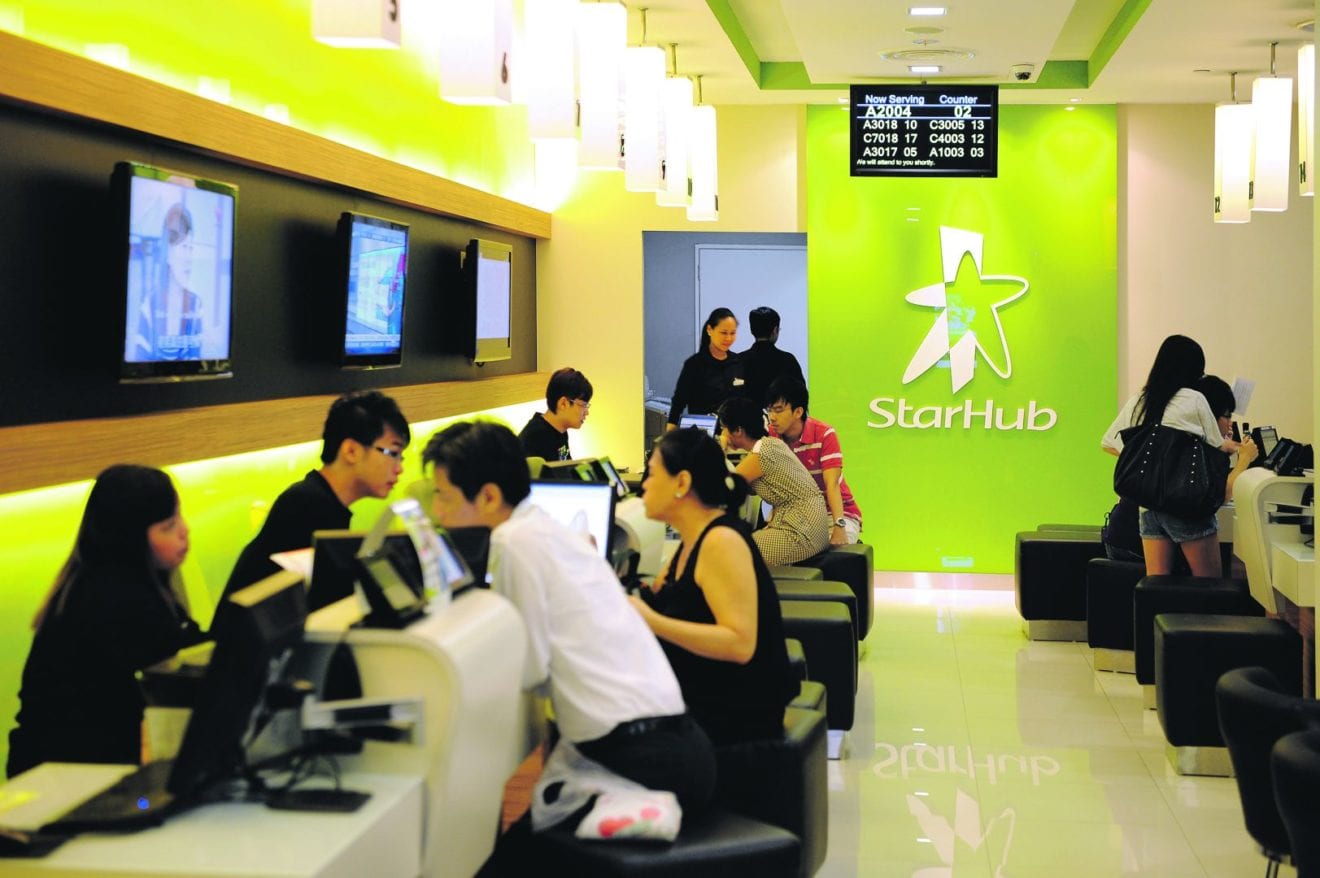
    Singapore’s StarHub has launched a new flat rate multi-destination monthly mobile data roaming plan covering all mobile networks in nine APAC markets.

    The DataTravel plan offers 2GB of data for 30 days when roaming to Australia, Hong Kong, Indonesia, Malaysia, New Zealand, South Korea, Taiwan, Thailand and The Philippines for a flat S$15 ($10.50), or 3GB for S$20.

    While roaming, customers will not need to manually search for specific networks and can instead leave their phones to connect to the strongest available signals.

    “With DataTravel, we are happy to free our customers from the common constraints of overseas data usage, that are cost and accessibility,” StarHub head of product and marketing Wang Li-Na said.

    StarHub will also send SMS notifications before a plan expires and depletes, and customers will be able to top up with additional 2GB or 3GB DataTravel plans. Any unused data will be carried forward for another 30 days when a new plan is activated.

    The operator’s move comes shortly after rival Singtel expanded its ReadyRoam mobile data roaming service to cover multi-destination roaming across 26 countries, including 11 Asian markets.

    In comparison to StarHub, Singtel’s base ReadyRoam service provides 1GB of data for 30 days’ roaming in the 11 Asian markets for S20.

  • Singtel expands ReadyRoam to 26 countries

    Singtel expands ReadyRoam to 26 countries

    Singtel has expanded its ReadyRoam mobile data roaming service to cover multi-destination roaming across 26 countries in Asia, Europe and North America.

    The ReadyRoam 1GB for 30 days service will allow customers to use the same pool of data while traveling between any of the supported countries.

    The base service supports roaming between 11 Asian markets – China, Hong Kong, India, Indonesia, Japan, Macau, New Zealand, the Philippines, South Korea, Taiwan and Thailand – for S$20 ($14).

    For customers traveling further afield, ReadyRoam USA and Europe supports roaming to the above countries, as well as Canada, Denmark, France, Finland, Germany, Ireland, Italy, the Netherlands, Norway, Portugal, Spain, Sweden, Switzerland, the UK and the USA.

    Excess usage will be charged at S$0.019 per MB or S$0.034 per MB depending on a customer’s plan.

    “It’s the holiday season and many of our customers and their families will be traveling,” Singtel VP of mobile marketing consumer Singapore Diana Chen said.

    “Our enhanced ReadyRoam 1GB for 30 days will allow them the convenience of remaining contactable via their Singtel SIM card number while roaming seamlessly across multiple destinations.”

  • Singapore testing SIM logins for US visitors

    Singapore testing SIM logins for US visitors

    The Infocomm Development Authority of Singapore (IDA) is piloting trials for US visitors to connect to the local wireless broadband network, Wireless@SG.

    The trials, which commenced yesterday and will run until September 21, will be conducted in partnership with the Land Transport Land Transport Authority (LTA), M1, Sentosa Development Corporation (SDC) and Singtel.

    Under the project, T-Mobile US subscribers can connect automatically to Wireless@SG after a one-time setup on their SIM devices. This would enable them to connect to around 290 hotspots in designated test areas – Sentosa and major MRT stations. Other US visitors who are not subscribers of T-Mobile can sign up for a free account in the government website.

    “Wi-Fi is fast becoming a daily necessity and Wireless@SG as the largest city-wide federated Wi-Fi network will be an important enabler to improve connectivity and liveability in Singapore as we move towards a Smart Nation,” said Khoong Hock Yun, IDA’s assistant chief executive.

    “Trialing the SIM-login method for foreign visitors is something new to us, and we hope to gather new insights, fine tune technical challenges, and enhance the Wireless@SG program further,” he added.

    IDA said the trial is taking place in conjunction with the Wireless Broadband Alliance (WBA) City Wi-Fi Roaming Project, which also allows Singapore visitors to the US to roam automatically and securely between free public Wi-Fi hotspots in participating US cities, namely, San Jose, San Francisco and New York for the same period.

    The City Wi-Fi Roaming Project is likewise a supporting activity of World Wi-Fi Day initiative. Both initiatives are backed by the Connected City Advisory Board, which aims to deliver the vision of Connected Cities around the world