Retail News CRM

Tag: Robinsons Retail

  • SEA gives struggle to Dairy Farm International

    SEA gives struggle to Dairy Farm International

    “Significant challenges” across the Southeast Asian supermarket business are continuing to test Hong Kong-listed multi-format retailer Dairy Farm International. In a management statement discussing the company’s third-quarter performance – which did not include any figures – Dairy Farm said its businesses produced “mixed results” with a strong performance in health and beauty and good results from home furnishings and restaurants divisions. However, the performance of the Hong Kong supermarkets business has softened.

    The company said the Southeast Asian grocery store business – Cold Storage and Giant stores in Singapore and Malaysia – is expected to continue for the remainder of the year with the group’s full year results expected to be impacted by increasing costs from ongoing investment in technology, supply chain infrastructure, stores and people in order to improve the long-term performance of the business. Sales and profits fell in its supermarkets in both countries. Falling sales in Indonesia were mitigated by management action which resulted in reduced losses there.

    In North Asia, sales from the food businesses were slightly ahead of the same period last year, but profits were lower as a result of weakening margins and continued cost pressures, particularly from increased rents.

    However, the health and beauty businesses in Hong Kong and Macau (Guardian stores) delivered “strong sales and profit growth”.

    The Philippines food business showed good sales growth, benefitting from the opening of several new stores, but profit was slightly behind the prior year due to increased operating costs. There was continuing good sales and profit improvement in the group’s health and beauty businesses, notably in Malaysia and Indonesia.

    Ikea’s sales and profits were ahead of last year in Taiwan and Indonesia. In Hong Kong, sales were higher, supported by the new store which opened last year; however profits were lower as a result of higher operating costs.

    In Hong Kong, Maxim’s delivered another record-breaking mooncake sales performance during Mid-Autumn Festival, which was earlier than last year, and helped drive sales and profit higher during the period. Supermarket Yonghui reported strong sales growth in the quarter but profit was lower than the prior year due to investment in new formats and the additional costs of the new employee incentive scheme.

    Approval was received from the Philippines Competition Commission in August for the combination of Dairy Farm’s Food business in the Philippines with Robinsons Retail Holdings, with completion expected to take place within weeks.

    In early October Dairy Farm agreed to acquire the remaining 51 per cent interest in Rose Pharmacy in the Philippines, which is now subject to regulatory approvals.

    Dairy Farm, together with its associates and joint ventures, operate more than 7400 outlets, including supermarkets, hypermarkets, convenience stores, health and beauty stores, home furnishings stores and restaurants – employing more than 200,000 people. Total sales last year exceeded US$21 billion.
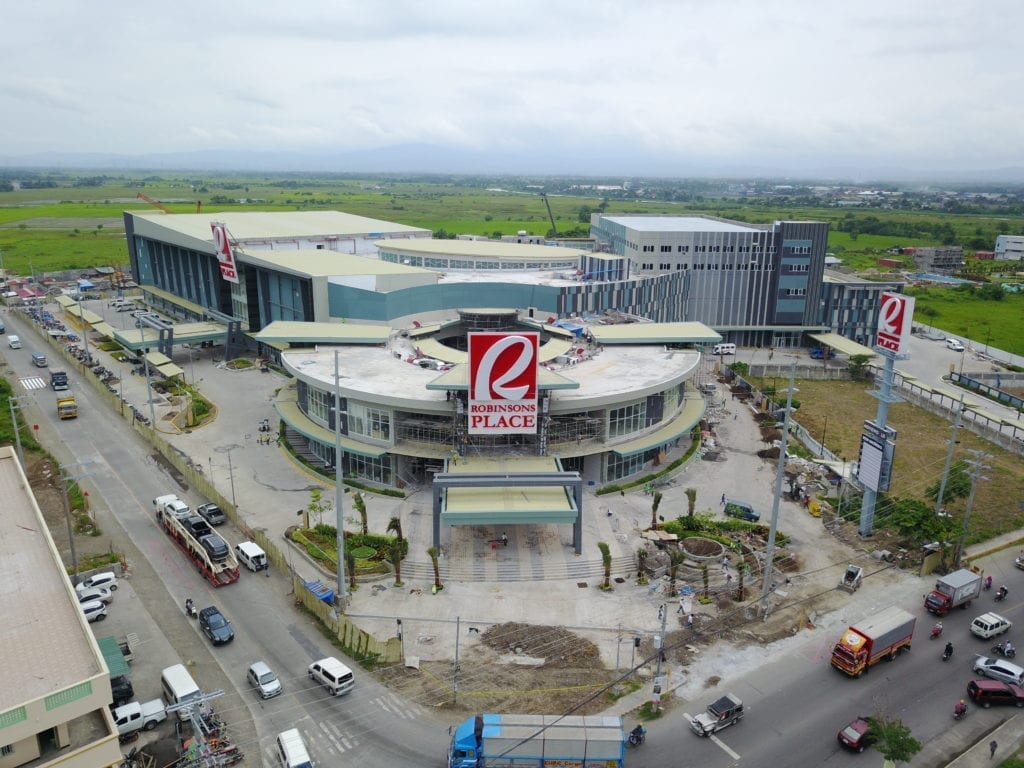
  • Robinsons Retail income raised by nearly 10 per cent

    Robinsons Retail income raised by nearly 10 per cent

    Robinsons Retail Holdings has boosted net income by 9.8 per cent in the first nine months of this year, to PHP 3.8 billion (US$70.97 million). The improvement followed on from a 13.1 per cent increase in sales for the period, to PHP 91.8 billion ($1.71 billion) which the company said was due to “robust” same-store sales growth of 6.6 per cent across all store formats, along with a contribution from new stores.

    Same-store sales rose by 8.6 per cent in the company’s supermarkets division, which accounts for 46.5 per cent of the group’s total turnover, and by 7.8 per cent in specialty stores and 6.1 per cent in DIY. Same-store sales in the convenience divison rose by 4.5 per cent, in drugstores by a more modest 2.9 per cent and department stores 2.4 per cent.

    Excluding franchised branches of The Generics Pharmacy, Robinsons Retail ended September with 1778 stores, comprising 158 supermarkets, 51 department stores, 206 DIY stores, 496 convenience stores, 499 drugstores and 368 specialty stores. Gross floor area increased by 9 per cent year on year to 1.199 million square meters.

  • Philippines grocery retail market ‘stands out in Asia’

    Philippines grocery retail market ‘stands out in Asia’

    According to retail analyst IGD, the Philippines is one of the fastest-growing countries in Southeast Asia, with its GDP growth hitting 6.9% in the first quarter of 2016, and further strong expansion predicted on the back of robust domestic consumption, rapid urbanisation and rising wages. A young and increasingly skilled workforce also has a major part to play in the country’s growth.

    The country’s newly elected president, Rodrigo Duterte, is expected to implement further economic reforms and provide a better business environment, through investments in infrastructure and the cutting of red tape.


    From these factors, IGD projects that the grocery market, currently worth US$99bn, will see a 10% compound annual growth rate to reach US$157bn by 2020.

    Similar to many developing countries, the Philippine grocery market is dominated by traditional trade. Modern retailing makes up around just 30%.

    Yet the Philippines’ leading retailers have made extraordinary progress in transforming the country’s modern retail landscape. These have strong financial backing and entrepreneurial spirit, says Jenny Li, a senior retail analyst for IGD.

    SM Retail, Puregold and Robinsons Retail are the top three domestic players in the country. All of them are scaling up their footprints with significant store network expansion and consistent sales growth,” she said.

    SM Retail, for instance, has opened 99 new stores in various formats in the past year; Puregold, with 305 stores across the country, has reported an impressive 20% increase in sales in the first quarter of 2016.

    IGD’s latest report, “Philippines in Focus: Retail Landscape and Channel Outlook”, has identified a number of key trends driving the country’s retail channel development. Among others, building a diversified portfolio strategy has been successful for most leading retailers.

    Modern retailing in the Philippines started with hypermarkets and supermarkets; increasingly, however, retailers are embracing a multi-format strategy by building their presence in smaller formats and online channels,” said Li.

    Source: IGD

    This enables them to create differentiated offers to target a broader audience, with unique demographic profiles and different shopping needs. Furthermore, emerging channels, such as convenience stores and e-commerce, are growing faster and are best placed to capitalise on the higher margins of discretionary spend categories.”

    A subsidiary of the pan-Asian retail giant Dairy Farm, Rustan’s Philippines is the leader in premium retailing and is well-established to target upscale shoppers. Over the past few years, the company has been developing Wellcome, which follows a neighbourhood supermarket format and combines daily staple products with competitive pricing.

    Meanwhile, Rustan’s convenience store network, created via a joint-venture with FamilyMart, is gaining popularity among busy office workers.

    It’s clear that the Philippine retail market presents great opportunities for future growth,” said Li.

    If you are looking to invest in Asia, or seeking to expand into new markets, the Philippines is one region to consider.”

    However, she warns that success lies in the ability to build a solid understanding of the local market and establish strategic partnerships with local players, as well as provide relevant and flexible solutions to support retailers’ multichannel strategies.


  • Acquisitions boost Robinsons Retail sales

    Acquisitions boost Robinsons Retail sales

    Newly acquired stores Savers Appliances and The Generics Pharmacy have given Robinsons Retail sales and profits a boost.

    Sales increased by 18.5 per cent from Php21.6 billion to Php25.6 billion in the second quarter of 2016, on the back of sustained high single-digit same-store sales growth (SSSG) and sales from stores acquired this year.

    For the first half of 2016, profit increased by 8.6 per cent to Php2.0 billion from Php1.9 billion last year.

    Net sales for the first half of 2016 reached Php48.3 billion, an increase of 16.9 per cent from Php41.6 billion last year. The robust blended SSSG of 9 per cent in the first quarter of 2016 was sustained in the second quarter brought about by the general bullish consumers sentiment on the back of successful and peaceful national elections, lower commodity prices and stable exchange and interest rates environment.

    The like-for-like sales in the second quarter were strong across all segments led by supermarkets at 8.9 per cent, department stores at 7.6 per cent, DIY at 8.3 per cent, specialty stores at 16.8 per cent, drugstores at 5.5 per cent and convenience stores at 2.9 per cent.

    From July 2015, Robinsons Retail added 128 stores to end at 1527 stores at the end of June 2016. GFA increased by 10.7 per cent year-on-year to approximately 998,000 sqm. Including The Generics Pharmacy’s franchised store portfolio of 1878 at end of June 2016, the store network hit 3405.

  • Philippines: the rising star of Asian retailing

    Philippines: the rising star of Asian retailing

    Global food and grocery specialist IGD visited Manila during the May 2016 presidential elections. Here IGD’s senior retail analyst, Jenny Li, examines what is giving the country’s retail sector such a positive outlook.

    The Philippines is one of the fastest growing countries in Southeast Asia, with its GDP growth hitting 6.9 per cent in the first quarter of 2016.

    The country’s newly elected president, Rodrigo Duterte, is expected to implement further economic reforms and provide a better business environment through investments in infrastructure and cutting of red tape.

    All these factors allow us to project that the grocery market in the Philippines, currently worth US$99 billion, will see a 10 per cent compound annual growth rate and reach US$157 billion by 2020.

    Exciting times for modern retailers

    Similar to many developing countries, the Philippine grocery market is dominated by traditional trade whilst modern retailing makes up around 30 per cent. Yet the Philippines’ leading retailers, those with strong financial backing and entrepreneurial spirit, have made extraordinary progress in transforming the country’s modern retail landscape.

    SM Retail, Puregold and Robinsons Retail are the top three domestic players in the country. All of them are scaling up their footprint with significant store network expansion and consistent sales growth. SM Retail, for instance, opened 99 new stores in various formats in the past year; Puregold, another major retailer with 305 stores across the country, has reported an impressive 20 per cent increase in sales in the first quarter of 2016.

    Multichannel as the winning formula

    In IGD’s latest report “Philippines in Focus: Retail Landscape and Channel Outlook”, we’ve identified a number of key trends that are driving the country’s retail channel development. Among others, building a diversified portfolio is a notable growth strategy for most leading retailers.

    Modern retailing in the Philippines started with hypermarkets and supermarkets, but increasingly retailers are embracing a multi-format strategy by building their presence in smaller formats and online channels. This enables them to create differentiated offers to target a broader audience, with unique demographic profiles and different shopping needs. Also, emerging channels such as convenience stores and eCommerce are growing faster and are best placed to capitalise on the higher margins of discretionary spend categories.

    A subsidiary of the pan-Asian retail giant Dairy Farm, Rustan’s Philippines is the leader in premium retailing and it’s well established to target upscale shoppers. Over the past few years, the company has been developing Wellcome, a neighbourhood supermarket format combining daily staple products with competitive pricing. Meanwhile, its convenience store network, created via a joint venture with FamilyMart, is gaining popularity amongst busy office workers.

    Further implications

    It’s clear that the Philippine retail market presents great opportunities for future growth.

    If you are looking to invest in Asia or seeking to expand to new markets, the Philippines is one region to consider. However, success lies in the ability to build a solid understanding of the local market and establish strategic partnerships with local players, as well as provide relevant and flexible solutions to support retailers’ multichannel strategies.

    • Jenny Li works in the Asia-Pacific team at IGD and is responsible for managing research programs and tracking the latest industry trends in Asia. She regularly travels across the region, gaining market insight from visiting new stores and meeting local retailers and suppliers.
  • Robinsons Retail Philippines eyes 200 stores

    Robinsons Retail Philippines eyes 200 stores

    Robinsons Retail Philippines has announced it will add 200 stores, mostly convenience stores and supermarkets.

    The boost in its retail chain will add to its existing 1506 stores.

    For 2016, Robinsons Retail Holdings has earmarked P5 billion in capital spending, nearly 60 per cent higher than the P3.14 billion in 2015.

    Robina  Gokongwei-Pe, president and COO of Robinsons Retail Holdings, said “2016 is expected to be a good year. With the national elections in May coupled with the rising purchasing power of consumers fuelled by low fuel prices, we expect same store sales growth to stay healthy for the whole of 2016,” Gokongwei-Pe said.

    “We however, foresee competition to remain intense as more retailers are expanding aggressively in areas outside Metro Manila to cash in on the still low modern retail penetration in these areas,” she said.

    robinsons storerobinsons supermarketRobinsons Townville facade 2

  • Robinsons Retail takes control of The Generics Pharmacy

    Robinsons Retail takes control of The Generics Pharmacy

    Robinsons Retail has acquired a 51 per cent controlling interest in The Generics Pharmacy (TGP), the Philippines’ largest and fastest growing generics drugstore chain.

    The acquisition of TGP’s over 1800 stores, combined with South Star Drug, will take the retail drugstore network of the group to nearly 2200 stores nationwide, more than Mercury Drugstore’s 1000+ network, making it the largest by store numbers.

    Robina Gokongwei‐Pe, president and COO of Robinsons Retail, said TGP strongly believes in its vision to offer quality products at very affordable prices and in convenient locations. “It is an honor to continue the company’s legacy and to further grow the business”.

    “As we profit from accomplishing this mission, we ensure our growth is shared among our franchisees, partners, suppliers and employees,” said Benjamin Liuson, founder and chairman of the board of TGP. “It is our hope to bring our business a step higher with our partnership with Robinsons Retail.”

    The Liuson family which founded TGP has been in the pharmaceutical business since 1959, initially as importer and wholesaler under the name Pacific Pharma. In 1983, Pacific Pharma shifted its focus to generic medicines after realizing the serious need of most Filipinos for quality medicine at affordable prices.

    In 2001, the Liuson family ventured into retail and set up The Generics Pharmacy (TGP). As demand grew, in 2007, TGP decided to bring affordable healthcare and medicines more accessible to far‐flung areas of the country through a franchising business model.

  • Asian retail leaders in Forbes most powerful businesswomen

    Asian retail leaders in Forbes most powerful businesswomen

    Two Asian retail leaders have been added to Forbes magazine’s annual list of 50 most powerful businesswomen in Asia – in The Philippines and Vietnam.

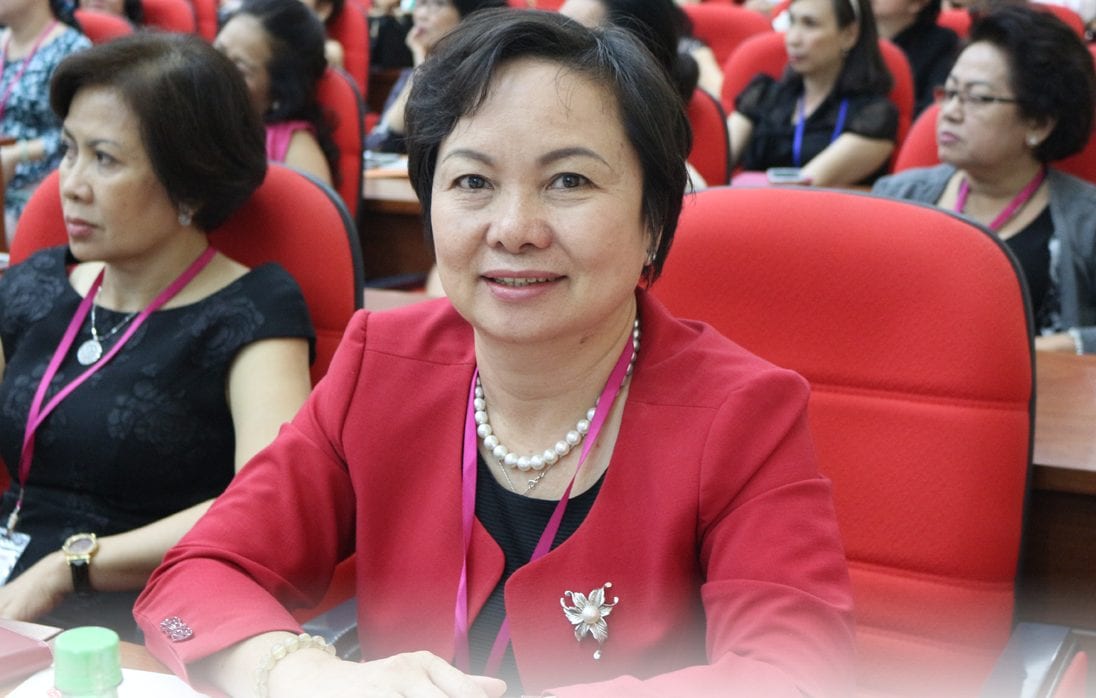
    They are Robina Gokongwei-Pe, the president and COO of Robinsons Retail Holdings, the second-largest multi-format retailer in The Philippines, and chairman/general director Cao Thi Ngoc Dung of Vietnam’s largest jewellery brand, PNJ, which she founded in 1998.

    Robinsons started as a department store in Manila in 1980, expanding into the supermarket business five years later. It entered the DIY business in 1994, the convenience store and specialty store businesses in 2000, and the drug store business in 2012.

    There are six business segments: supermarkets (Robinsons Supermarket and its two new subformats, Robinsons Easymart and Robinsons Selections); department stores (Robinsons Department Store); DIY stores (Handyman Do it Best, True Value, True Home by True Value, and the newly acquired big-box hardware subformat A.M. Builders’ Depot); convenience stores (Ministop); drugstores (South Star Drug and Manson Drug); and specialty stores (from consumer electronics and appliance retailer Robinsons Appliances and Savers Appliances to toys retailer Toys ’R’ Us, one-price-point retailer Daiso Japan, coffee chain Costa Coffee and international fashion brands such as Dorothy Perkins, Topman and Topshop, and international cosmetics brands such as Shiseido).

    Robina Gokongwei-Pe is also a director of Cebu Air, JG Summit Holdings, Robinsons Bank Corporation and Robinsons Land Corporation. She is a trustee of the Gokongwei Brothers Foundation, Immaculate Conception Academy Scholarship Fund and the Ramon Magsaysay Awards Foundation, and is also a member of the University of the Philippines Centennial Commission.

    After attending the University of the Philippines-Diliman, she obtained a Bachelor of Arts degree, majoring in journalism, from New York University in 1984. Pe joined the Robinsons group in 1984 as a management trainee. She is the daughter of the chairman and CEO of the company, John L Gokongwei Jr.

    Cao Thi Ngoc Dung founded PNJ as a store in 1998, and now has a 17 per cent stake of the company, which has more than 3000 employees in 200 stores. The group grossed $350 million in revenue and made a profit of $23 million in its latest trading year.

    Based in Ho Chi Minh City, PNJ opened its own jewellery factory in October 2012. A VND120 billion (US$ 5.38 million) investment, the factory has the capacity to produce 4 million items a year. PNJ’s national expansion started in 1994 with the establishment of a branch in Hanoi.

    This year’s Asia’s Power Businesswomen list represented 14 countries, with China and Hong Kong dominating (14 women), followed by India (8), Thailand (5) and Japan (4). Australia, Indonesia, Singapore and Vietnam each had three, while South Korea and The Philippines each had two. Macau, New Zealand and Taiwan had one each. There were 27 newcomers, about a quarter of them from the tech sector.

  • Robinsons Philippines income jumps 21.9 per cent

    Robinsons Philippines income jumps 21.9 per cent

    Robinsons Philippines has reported a 21.9 per cent increase in net income in 2015 to P4.3 billion ($90 million) on the back of same-store sales growth and sales from newly opened stores.

    Same-store sales growth for Robinsons Retail Holdings grew 4.1 per cent in 2015, exceeding the 2-3 per cent consolidated same-stores sales target for the year.

    The company’s consolidated net sales reached P90.9 billion last year, up 13 per cent from P80.4 billion in 2014.

    The retail holding firm of the Gokongwei group reported opening 2015 with 179 new stores and ended the year with a total of 1506 stores.

    “I am heartened by the strong same-store sales growth performance of all our retail formats in 2015, despite the intensifying competition,” Robinsons Retail President and CEO Robina Gokongwei-Pe said.

    “We have also gotten into a good start this 2016 with solid same-store sales growth for the first two months of the year as we benefited from increased consumer spending from a still robust domestic economy. We will continue with our footprint expansion, with focus on areas outside Metro Manila,” Gokongwei-Pe said.

    The opening of new stores expanded the company’s gross floor area by 9.7 per cent year-on-year, the company said.

  • Robinsons Retail takes control of Saver’s

    Robinsons Retail takes control of Saver’s

    Robinsons Retail Holdings, the Philippines-based department store operator, has taken a 90 per cent stake in home appliance chain Saver’s Appliance Depot.

    Saver’s operates 24 stores in Central Luzon and eight in Cagayan Valley

    Robinsons Retail president and COO Robina Gokongwei-Pe says partnering with Saver’s will strengthen and expand its exposure in the consumer electronics and appliance market.

    “As the economy expands, discretionary spending is seen to surge ahead and this format should be a strong beneficiary,” said Gokongwei-Pe. “Also, the increasing scale of the group is expected to strengthen our market position in the industry.”

    The settlement date of the deal and the purchase price has not yet been revealed.

    MD Jaime Uy will continue in his role after the purchase.

    “We are happy to become part of the Robinsons Retail Family. The group has proven track record in growing and retaining the equity value of the companies of businesses that they acquired,” Uy said.

  • Daiso wins Manila court battle

    Daiso wins Manila court battle

    Japanese discount retailer Daiso has won the right to use its name in the Philippines after a hearing in the Supreme Court.

    In a final ruling just issued, the court has blocked Filipino company Japan Home Center from using the trademark Daiso, confirming an earlier ruling by the Court of Appeals.

    The judges ruled that Japan Home Center had registered the name in “bad faith” in 2005 – largely to prevent the Japanese Daiso or its local franchisee from using it.

    Daiso Industries of Japan first filed a complaint with the Intellectual Property Office back in 2009 after it appointed Robinsons Retail Holdings as its local distributor and retail partner. Daiso Industries owns the brand name.

    This week’s Supreme Court decision thus ends a six year long legal battle to give Daiso and Robinson the legal right to use the brand.

    Robinsons currently operates 38 Daison stores in the Philippines.

    In another case in January this year, the Intellectual Property Office blocked MySmart One-Shop Daiso from using the brand name.