Retail News CRM

Tag: robo-taxi

  • Google’s Waymo Self Driving Car Unit Starts Robo-Taxis In San Francisco

    Google’s Waymo Self Driving Car Unit Starts Robo-Taxis In San Francisco

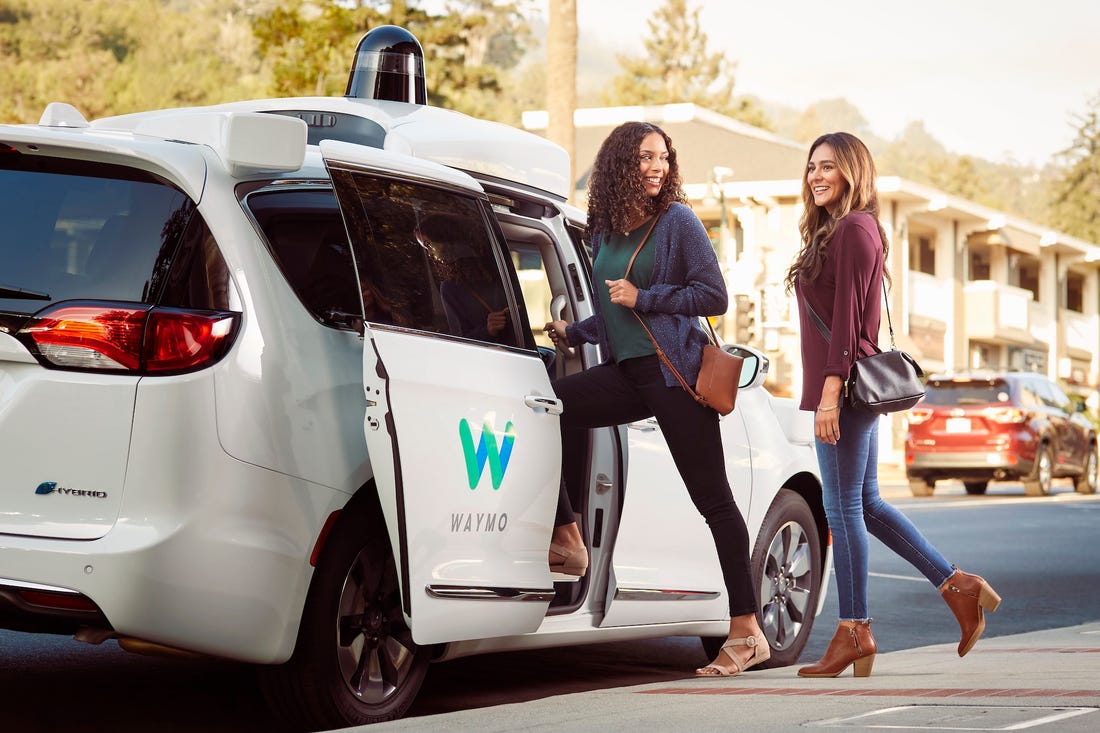
    Waymo is the pioneer of self-driving cars, but it has been beaten to the punch by Chinese rivals AutoX and Baidu to deploying robo-taxis. Well, this wasn’t going to stand for long as it has started tests of its robo-taxis in San Francisco.

    Waymo had deployed its ride-sharing service in Phoenix, Arizona earlier in 2020 called Waymo One. For the first time, it had also started testing the service without safety drivers in the area, but now a more full-fledged expansion is happening.

    Experts have predicted that the pandemic is accelerating the adoption of autonomous vehicles for transportation and delivery. Overall, global trust for autonomous vehicles has also grown by leaps and bounds in the last three years as the technology has progressed.

    Waymo has Chrysler Pacifica and Jaguar I-Pace electric SUVs which have driven over 20 billion autonomous miles through computer simulations and 20 million autonomous miles on public roads in 25 cities.

    Now Waymo employees in San Francisco will use the Waymo One app to hail rides. They will be prompted for pick-up and drop-off points before being given an ETA. This is similar to a typical ride-hailing app.

    Till 2019, Waymo had a fleet of 153 cars and 268 safety drivers in San Francisco alone, though its latest fleet size is unknown, though presumably, it has increased. These vehicles were deployed in San Francisco to deliver packages for non-profits after the pandemic induced halt in testing.

    “We’re beginning with a limited number of cars and riders and will scale over time. These rides are being offered with a single-vehicle operator,” a Waymo spokesperson said.

    “The initial program starts this week and will last for several, but we plan to grow it over time. We don’t have any specific timelines to share about when (or where) we’ll be offering a public service. It’s worth bearing in mind this is for early product testing and continuous improvement, and there are many further steps we’d need to go through … before we could deploy a service to the public,” Waymo added in a statement.

    Waymo has a permit from the public utility commission in California that’s part of the procedures to run an autonomous vehicle passenger service pilot. This is separate from the California Department of Motor Vehicles (DMV) under which 66 companies have permits.

    Waymo One currently delivers rides with a network of 600 autonomous cars from Phoenix 24 hours a day, seven days a week. It also has a partnership with LYFT to deploy 10 cars on the Waymo One platform.

    Currently, it is on track to having more than 60,000 Pacifica minivans from Chrysler and 20,000 i-pace electric SUVs from Jaguar. It also has a deal with Daimler for developing self-driving semis.
  • ‘Robo-taxis’ hold promise, and perils, for automakers

    ‘Robo-taxis’ hold promise, and perils, for automakers

    Are ‘Robo-taxis’ the future of public traffic?

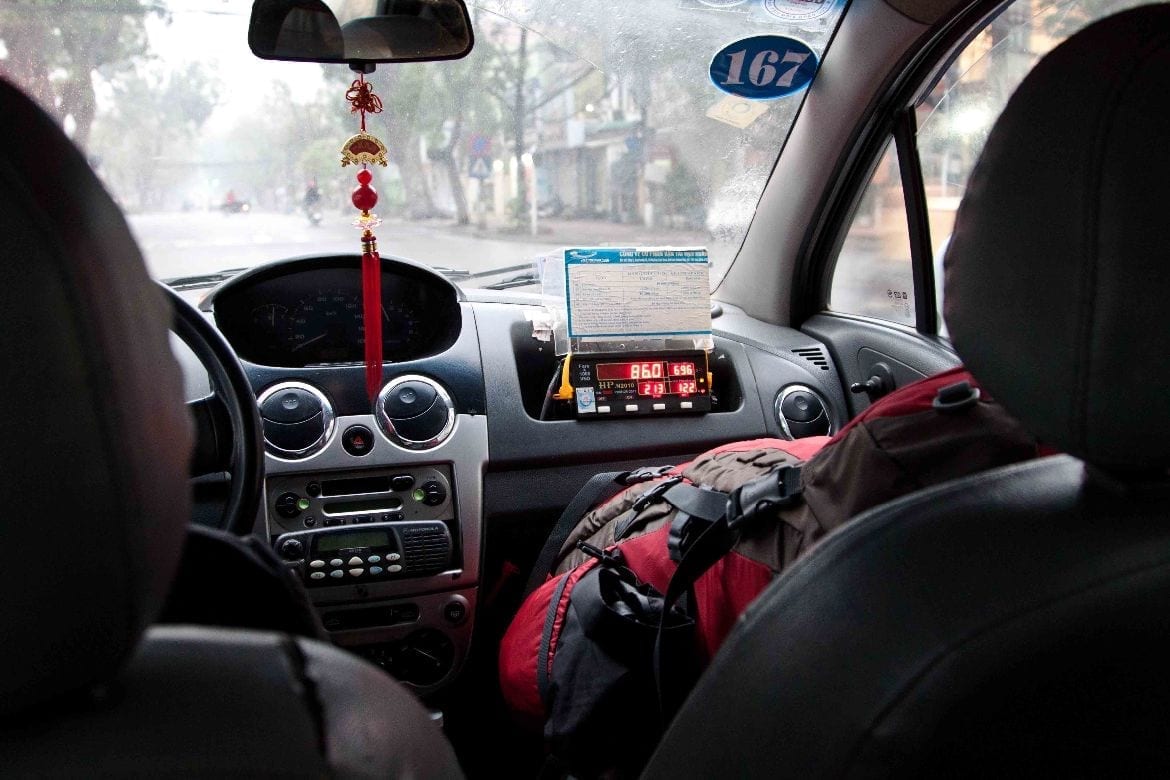
    It’s November 22, 2028 and Sarah, a young mother, gives her two children a kiss goodbye before buckling them into the driverless car that will bring them to school.

    Sarah doesn’t have a car and has no plans to buy one. Living in a suburb, she has run the numbers and the result is clear: It’s much cheaper to order a car only when she needs one.

    The “robo-taxi” has also made her life easier, but only after such vehicles upended the business models which carmakers had relied on for decades.

    The revolution is already underway, with every major brand racing to create autonomous electric cars and trucks that will always be just a few clicks of a smartphone away.

    Fully electric cars are expected to make up 12 percent of the global market in 2025, before jumping to 34 percent in 2030 and 90 percent by 2050, analysts at Bank of America Merrill Lynch forecast last month.

    Adapt or perish

    The motivations are clear: Smog is becoming a serious menace in cities around the world, with China in particular demanding cleaner vehicles for its rapidly growing market.

    Traffic jams are also eating up hours of commuters’ time, meaning car ownership is already no longer a given for many city dwellers.

    And carmakers have nimble new rivals: Apple, Google and Tesla — which last week unveiled an all-electric semi truck — see a chance to dominate a market that will soon depend as much on software as on engineering.

    Industry chiefs aren’t waiting: France’s PSA is betting on car-sharing and other “services” with its Free2Move division, which it hopes will let it get back into the huge US market.

    In Germany, Daimler is working with Bosch to develop self-driving electric cars that could be on the road by the early 2020s, and has already launched its own car-sharing service, Car2Go, in some two dozen cities worldwide.

    Its German rival Volkswagen has created Moia, a “social movement” unit exploring e-shuttles, ride pooling and car hailing.

    “Even if in the future not everyone is going to own a car, with Moia we’re trying to make sure everyone will be a client of ours one way or another,” VW’s chief Matthias Mueller said.

    Robo-taxis could generate 40 percent of auto industry profits by 2030, according to German consulting firm Roland Berger, which expects demand for private vehicles to drop 30 percent in the period.

    And industry experts warn that the automakers which fail to adapt to the shift risk might not survive.

    Lagging behind Asia

    But that means investing billions in batteries, charging infrastructure and autonomous driving technologies with little prospect of seeing a payoff anytime soon.

    VW announced Friday a plan to spend 34 billion euros ($40 billion) over the next five years on hybrid and electric cars and services in a bid to “reinvent” the automobile.

    But for now, so-called “zero emission” vehicles remain a tough sell: Renault’s Zoe range of electric cars, which is has offered since 2012, made up just 1 percent of its sales last year.

    Its chief, Carlos Ghosn, is hoping that figure will reach 5 percent by 2022.

    The contest will be costly for all automakers, with PriceWaterhouseCoopers estimating that production costs for the next generation of electric cars will be 20 percent higher than traditional models, while warning of “serious problems” for returns on investment.

    “The speed” of the shift toward an electric future “will have to be taken on by all automotive companies,” PSA’s chief executive Carlos Tavares said at the Frankfurt auto show in September.

    Yet Western carmakers and government officials already fear they are lagging behind Asian rivals, with China in particular making headway on electric motors and batteries.

    That led the EU Commission to urge the creation of an “Airbus for batteries”, with European companies joining forces for large-scale battery production.

    “This technology is too important to import it from overseas,” the commission’s vice president charge of energy, Maros Sefcovic, warned.