Retail News CRM

Tag: robotaxi

  • Pony, the Chinese Robotaxi Innovator, Gears Up for Exciting Mass Production Launch!

    Pony, the Chinese Robotaxi Innovator, Gears Up for Exciting Mass Production Launch!

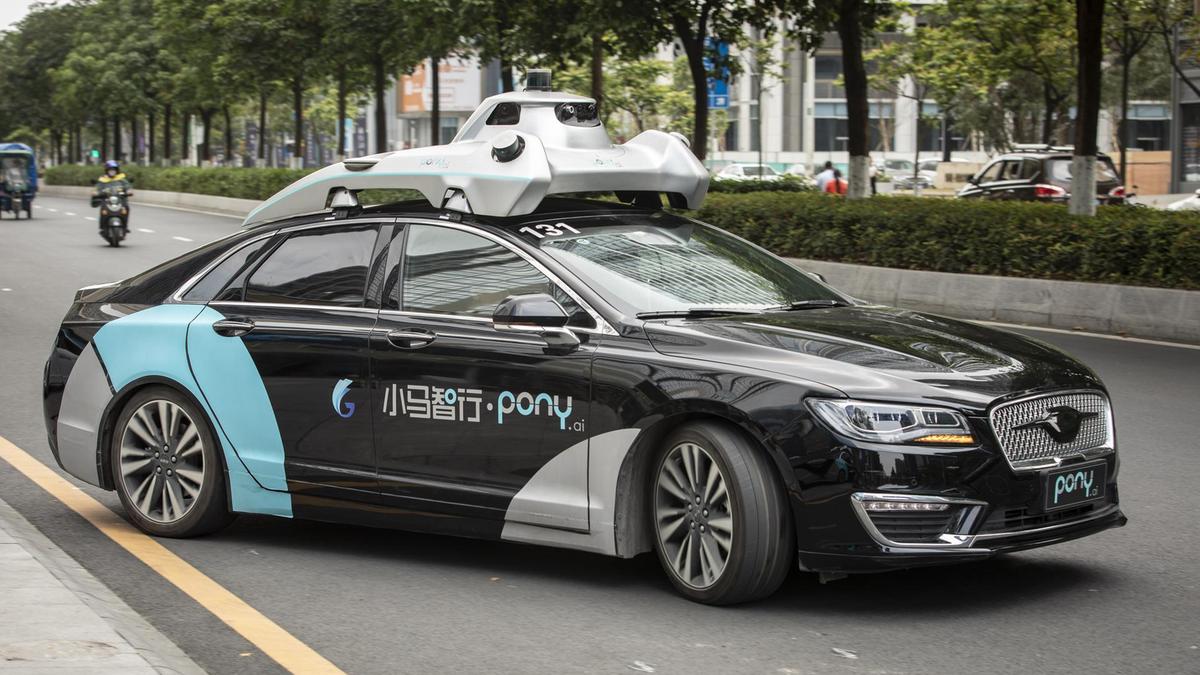
    Pony.ai, the Guangzhou-based autonomous driving company, is taking bold steps toward a new era of transportation by collaborating with state-owned giants Guangzhou Automobile Group and Beijing Automotive Group, alongside Japan’s Toyota. The ambitious goal? To roll out a fleet of 1,000 robotaxis by the end of the year, as revealed by Lou Tiancheng, co-founder and chief technology officer.

    “We are anticipating a pickup in production of robotaxis,” Tiancheng stated confidently, adding that the company has reinforced its partnerships with car manufacturers to validate the feasibility of scaling up driverless cab production.

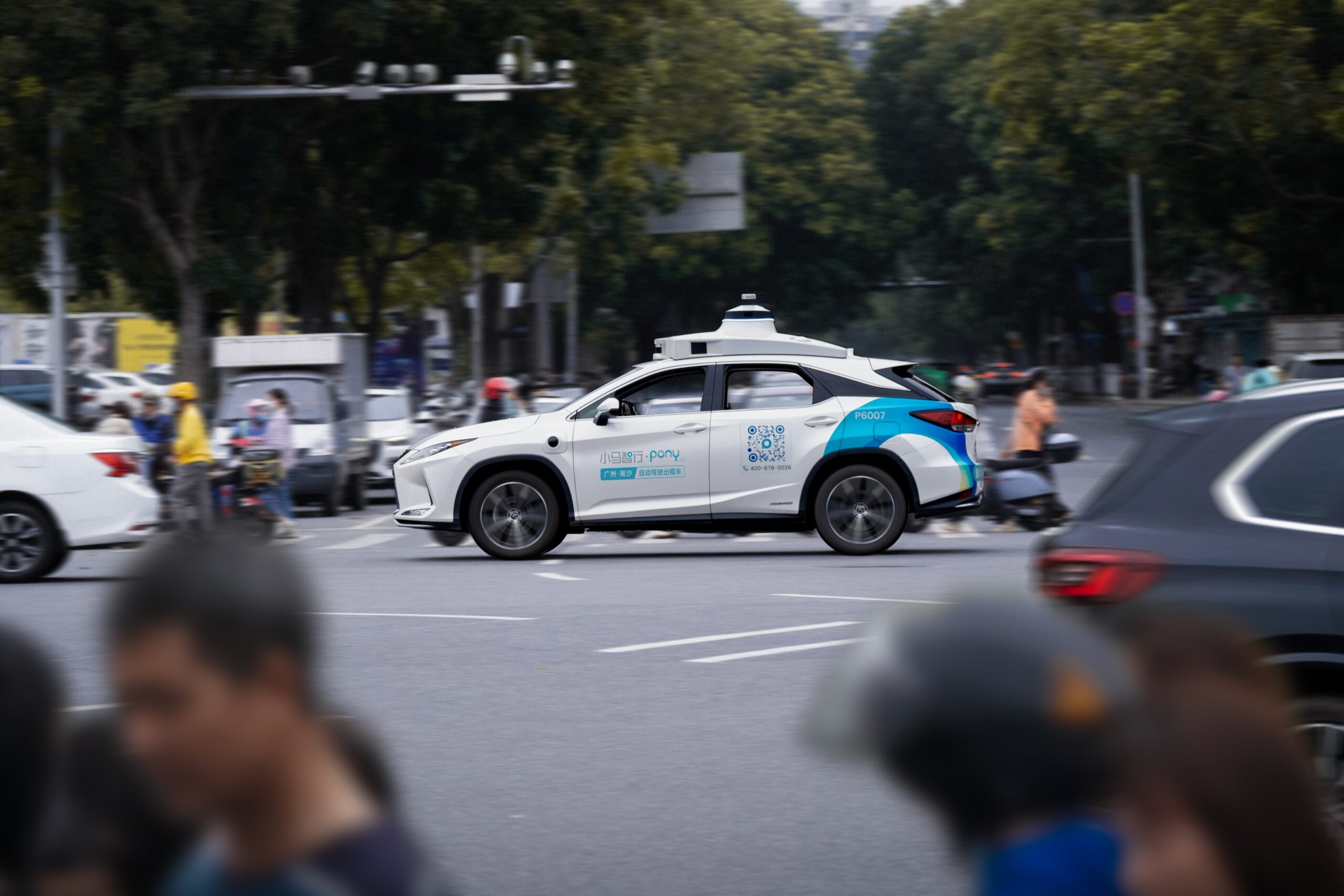
    The Nasdaq-listed startup recently secured a significant milestone by obtaining a permit to operate its robotaxis in Shanghai’s Pudong New Area, enabling it to charge fares—a first for China’s bustling financial hub. This strategic move places Pony.ai at the forefront of the nation’s race toward autonomous urban mobility.

    The company’s fleet will initially cover the Jinqiao and Huamu districts, enveloping a span of 40 square kilometers, with ambitious plans to extend service into broader areas of Pudong. This region stands as a testing ground for modern technological advancements in a socialist framework, making it a critical area for innovation.

    “Advances in technology and favorable regulatory conditions have transformed the landscape for our expansion,” noted Leo Haojun Wang, the company’s chief financial officer. “The vehicle production is becoming more streamlined, and current regulations in both the U.S. and China now permit us to charge fares publicly.”

    Founded in 2016, Pony.ai has rapidly broadened its footprint, offering services in major cities including Beijing, Guangzhou, and Shenzhen. Recently, the company transitioned to a 24/7 service model, increasing accessibility from its previous operational hours of 7 a.m. to 11 p.m.

    Despite boasting a 4.3% rise in revenue to $75 million last year, Pony.ai is also contending with challenges, as its net loss has more than doubled to $275 million. It seems that while robotic dreams might be within reach, navigating the profitability maze remains a tricky endeavor.

    Questions & Answers

    What new partnerships has Pony.ai formed for its robotaxi production?
    Pony.ai is collaborating with state-owned Guangzhou Automobile Group and Beijing Automotive Group, as well as Japan’s Toyota, in a bid to produce 1,000 robotaxis by the end of the year.

    What recent milestone did Pony.ai achieve in Shanghai?
    Pony.ai secured a permit to operate its robotaxis in Shanghai’s Pudong New Area, allowing it to charge fares for the first time in China’s commercial heart.

    How has Pony.ai expanded its service hours recently?
    The company has transitioned to a 24/7 operating model, moving away from its previous hours of 7 a.m. to 11 p.m., thus enhancing accessibility for riders.
  • Nissan to start robotaxi tests in China’s Suzhou in March

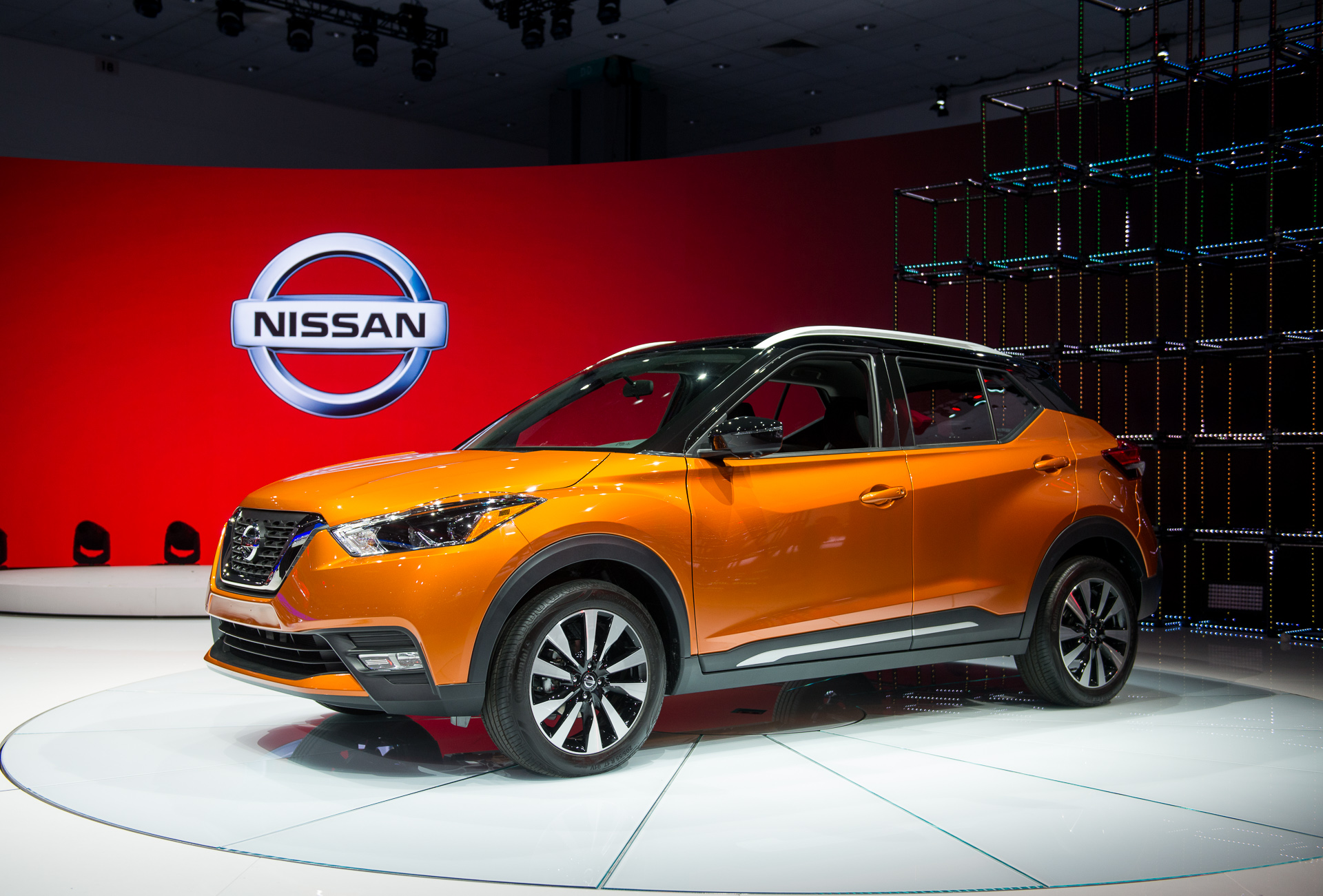
    Nissan to start robotaxi tests in China’s Suzhou in March

    Nissan (China) Investment Co., Ltd. (NCIC) today announced the establishment of Nissan Mobility Service Co., Ltd., a dedicated mobility service company, as part of its efforts to continue transforming its business in China. The announcement was made at the 5th China International Import Export (CIIE) show which opened on Nov. 5th here.

    The new company, headquartered in Suzhou, will be committed to investing in mobility services and deploying robotaxi services. By working with the Suzhou High-Speed Rail New Town, it will support intelligent transport initiatives in the country.

    “Introducing future technology, mobility solutions and products that enrich the lives of customers in China are an important part of Nissan’s long-term strategy in China,” said Shohei Yamazaki, Nissan Motor Co., Ltd. senior vice president and NCIC chairman. “The new company represents another milestone of Nissan’s nearly 50 years of development in China and a new commitment to the market.”

    “Leveraging our mobility services experience and expertise from the Japan market, we are transforming our business in China by tapping into the future mobility service sector,” said Hideki Kimata, president of NCIC. “Through the new company, we are aiming to provide all-new riding experiences with easier, more convenient mobility services for more consumers in China.”

    Nissan has a strong foundation in electrification for mobility services, a cornerstone of the company’s long-term strategy in China. Nissan is among the first international OEMs to establish a dedicated robotaxi company in China.

    “Suzhou High-speed Railway/Xiangcheng District was chosen for Nissan Mobility Service due to its strong support for business development, availability of collaborative opportunities, and its proximity to our existing Alliance joint innovation hub in Shanghai,” said Kimata.

    Zhiyao Liang, a senior official from Xiangcheng District, Suzhou City said: ”As one of the first global automakers that entered the Chinese market, Nissan has witnessed and participated in the growth and development of China’s auto industry. It has continuously introduced advanced technologies and products to actively contribute to market development since 1973. As an industry-leading company in the field of electrification, autonomous driving, connectivity and shared mobility services with rich technological expertise and powerful corporate presence, Nissan once again showcases exciting new products that will shape new trends for the industry.”

    WeRide, a leading, global autonomous and mobility service company that develops Level 4 autonomous driving technologies and that has a successful mobility service history in Guangzhou, will provide technology support to the Suzhou project.

    Li Zhang, COO of WeRide said: “WeRide will extensively participate and fully support the R&D, test and operation of Nissan Mobility Service’s robotaxi fleet, particularly in autonomous driving technologies. WeRide always puts safety as our top priority, and will work with Nissan to provide safer, more efficient and comfortable autonomous driving mobility experiences to Suzhou residents and improve quality of life with innovative technologies.”

    The 5th CIIE will be convened from November 5 to 10 at the National Convention & Exhibition Center, Shanghai, with Nissan’s booth at Hall 2.1. Nissan will fully demonstrate its latest achievements and practices in sustainability and showcase its innovation aimed to deliver diversified mobility solutions for customers in China seeking sustainable transportation options.

  • Uber, Motional Launch Robotaxi Service In Las Vegas

    Uber, Motional Launch Robotaxi Service In Las Vegas

    U.S. ride-hailing firm Uber Technologies Inc and driverless tech-maker Motional have launched their public robotaxi service in Las Vegas on Wednesday.

    Tough regulatory scrutiny and delayed commercial adoption of autonomous vehicle technology have delayed the deployment of robotaxi services, leaving investors worried.

    The launch is part of a non-exclusive 10-year agreement between both companies for driverless vehicles, with a rollout in Los Angeles expected to follow.

    In the multi-market deal, Motional’s autonomous vehicles would also ferry both passengers and delivery items for Uber and its Uber Eats division.

    The companies said they would have vehicle operators for now, but are working to make a fully driverless experience available to the public next year.

    Suppose an autonomous vehicle is available to complete the trip. In that case, Uber will match the rider to the vehicle and they will receive an offer to opt-in before the autonomous trip is confirmed and dispatched to pick them up.

    Uber is rekindling its robotaxi plans following a brief hiatus after selling its autonomous vehicle research division to San Francisco-based startup Aurora in 2020.

    Uber has also signed a 10-year deal with autonomous driving startup Nuro to use the company’s driverless delivery pods in California and Texas.

    Last month, rival Lyft said it would launch the robotaxi service in Los Angeles after it had rolled out in Las Vegas earlier this year.

    Motional, which uses Hyundai Motor Co’s IONIQ5 electric car for the robotaxi service, is a joint venture between the South Korean manufacturer and automotive technology company Aptiv, and has been testing autonomous vehicles without safety drivers for a couple of years.

  • Baidu Bags China’s First Fully Driverless Robotaxi Licenses

    Baidu Bags China’s First Fully Driverless Robotaxi Licenses

    China search engine giant Baidu Inc said on Monday it has obtained permits to operate fully driverless robotaxi services on open roads from two Chinese cities, the first of their kind in the country.

    The permits, awarded by the southwestern municipality of Chongqing and the central city of Wuhan, allow commercial robotaxis to offer rides to the public without human safety drivers in the car. They come into effect on Monday.

    Baidu said they marked a “turning point” in China’s policy-making towards autonomous driving.

    “These permits have deep significance for the industry,” Wei Dong, chief safety operation officer of Baidu’s Intelligent Driving Group, told Reuters in an interview. “If we think of the exploration of space, this moment is equal to landing on the moon.”

    At first, Baidu will deploy a batch of five fee-charging robotaxis in each city, where they will be allowed to operate in designated areas from 9 a.m. to 5 p.m. in Wuhan and 9:30 a.m. to 4:30 p.m. in Chongqing, the company said in a statement.

    The service areas span 30 square km (11.58 square miles) in Chongqing’s Yongchuan District and 13 sq km in the Wuhan Economic & Technological Development Zone.

    In April, Baidu’s Apollo and Toyota Motor Corp-backed Pony.ai said that they received permits in Beijing to deploy robotaxis without safety drivers in the driver’s seat on open roads within a 60 sq km area. But the Beijing permits  still require them to have a safety driver in the passenger seat. These services have started.

    Baidu is also in talks with local governments in Beijing, Shanghai and Shenzhen, to secure licenses within a year to test fully-driverless and unpaid robotaxis in those cities, according to Wei.

    China’s efforts to fast-track autonomous vehicle trials and permits come as U.S. regulators are also pushing ahead with milestone-setting autonomous driving policies.

    In January, self-driving company Cruise received a permit from the California Public Utilities Commission that allows it to offer paid and fully driverless rides from 10 p.m. to 6 a.m. in select streets in San Francisco.

    Apollo Go, Baidu’s robotaxi service, has operated over 1 million rides across 10 Chinese cities since its launch in 2020.

    Baidu has not reported any problems with the service and has not given a breakdown for how much it has invested in the project.

  • Musk Promises ‘Dedicated Robotaxi’ With Futuristic Look From Tesla

    Musk Promises ‘Dedicated Robotaxi’ With Futuristic Look From Tesla

    Electric carmaker Tesla will make a “dedicated” self-driving taxi that will “look futuristic,” Chief Executive Elon Musk said on Thursday, without giving a timeframe.

    The 50-year-old billionaire, wearing a black cowboy hat and sunglasses, made the comments at the opening of Tesla’s $1.1 billion factory in Texas, which is home to its new headquarters.

    “Massive scale. Full self-driving. There’s going to be a dedicated robotaxi,” Musk told a large crowd at the factory.

    Musk has several times missed his targets of full autonomy. In 2019, he said robotaxis with no human drivers would be available in some U.S. markets in 2020.

    In January he said he would be “shocked” if Tesla did not achieve full self-driving that is safer than that of humans this year.

    Tesla will expand its “Full Self-Driving” beta software to all North American FSD subscribers this year, he said on Thursday.

    Tesla now sells the advanced driver assistance systems for $12,000, with a promise of more features. It says the software does not make its vehicles autonomous, and requires driver supervision.

    The beta version, launched in late 2020, aims to enable cars to navigate city streets better. By January, it had been installed in nearly 60,000 vehicles in the United States.

    Musk said Tesla had started deliveries of Texas-made Model Y electric sport utility vehicles, with a goal of producing half a million a year at the Texas factory, which he said would be the biggest car factory in the United States.

    He gave no details of such Model Ys, but they are likely to be lower-priced versions to better take on cheaper competitors.

    Tesla will start production next year of its Cybertruck as well as a humanoid robot, Optimus, Musk said.

    The firm’s new giga factories in Texas and Berlin, which will make vehicles and its own battery cells, face challenges of ramping up production with new processes

    Musk said Tesla was simplifying car making by making a car using three major parts.

    Despite record deliveries in the first quarter, a recent COVID-19 spike in China has forced Tesla to suspend production at its Shanghai factory for several days.

    Thursday’s event comes after Musk surprised the market this week by revealing he had bought a stake of 9% in Twitter and will join the board of the social media network.

  • GM Boss Mary Barra Felt Surrel In Cruise Robotaxi

    GM Boss Mary Barra Felt Surrel In Cruise Robotaxi

    GM’s CEO Mary Barra recently took her first ride in a self-driving car which was shown off in a YouTube video on Cruise’s official channel. Of course, Cruise is owned by GM and is its self-driving car service which also operates a robotaxi service in limited parts of the US. “Last week our friends from Detroit took a midnight ride straight over the moon,” said the message on the video.

    Barra was visibly impressed by the flawless nature of the ride which was her first one. The ride took place in San Francisco, not Detroit which is the home of GM as Cruise operates its service right now in California. Barra rode is. Chevrolet Bolt EV named Tostada with Cruise Co-founder, interim CEO, and CTO Kyle Vogt.

    Both rode in the back seat of the car with the vehicle driving itself. Barra noted while she knew this was always going to happen, experiencing it for the first time felt surreal. In another Bolt EV, GM’s President Mark Reuss called the ride mind-blowing as he was a combined by GM’s Vice President of communications Craig Buchholz.

    Cruise is one of the pioneers of autonomous car technology alongside Waymo. It is closely working with GM towards developing a commercial autonomous vehicle for personal use which GM estimates will launch by the end of the decade.

  • Baidu’s JiDu Teases Level 4 Self Driving Car

    Baidu’s JiDu Teases Level 4 Self Driving Car

    Self-driving cars were invented by Google and the Google of China, Baidu, isn’t behind its American counterpart. It has created a new brand called JiDU which has announced plans for launching a self-driving car by 2023. They are calling it the robocar which will be fully unveiled at the Beijing auto show in April.

    “JiDU has completed the visual and functional design of the Robocar concept car, which will make its debut in April as planned. Let’s set off towards an infinitely possible future together,” said Yiping Xia, CEO of JiDu.

    In the teaser, one can easily see that the car is riddled with sensors that come out of its hood, almost like small turrets and they are retractable and hidden by flaps. The car also seems to have frameless doors that open outward.

    The robocar maker has also revealed that it has specifically designed a new logo called the Pixel J which it claims is the first logo that has been designed specifically for an autonomous vehicle.

    In China, autonomous cars are taking off as are robotaxi services. Already there is the Xpeng P5 which boasts some serious autonomous capabilities as it has become the world’s first production car with a LiDAR and has some advanced autonomous capabilities.

    Apart from JiDu, Baidu also has the Apollo robotaxis which leverages the QNX operating system.

  • Self Driving Startup Momenta Raises $500 Million

    Self Driving Startup Momenta Raises $500 Million

    Chinese self-driving startup Momenta has raised $500 million in a Series C funding. This round of funding comes after GM invested $300 million in the startup. This means now Momenta is valued at over $ billion.

    Momenta’s product portfolio includes advanced driver assistance systems which it sells to OEMs like GM and another tier 1 suppliers like Bosch. It also does R&D on unmanned level 4 ADAS systems. It has a high-profile constellation of investors including China’s SAIC group, GM, Toyota, Mercedes Benz and Bosch. It also has Temasek which is Singapore’s sovereign fund and Jack Ma’s Yunfeng Capital onboard as institutional investors.

    Momenta’s main point of differentiation is its relationship with automotive OEMs as many of the top ones are its investors as well. Many of its peers have taken a different path as they have developed in-house robotaxi fleets which is a more capital-intensive operation. It harvests data from its customers who are mass-producing vehicles.

    In China, it has Pony.AI and WeRide as its main rivals, and while they have raised a lot of money Momenta’s fundamentals are stronger because of its frugal operations.

    For GM, Momenta deploys a solution that is a mixture of consumer-grade millimeter-wave radars and high definition cameras which will be used in the automaker’s cars sold in China. Momenta also opened an office recently in Stuttgart in Germany probably because of its relationship with Mercedes Benz which is also based out of the same city.

  • Toyota-Backed Self-Driving Startup Pony.ai Considers Going Public

    Toyota-Backed Self-Driving Startup Pony.ai Considers Going Public

    Self-driving tech company Pony.ai, backed by Toyota Motor, is considering going public in the United States to help fund its goal of commercializing driverless ride-hailing services, its chief executive said. The startup, active in the United States and China, plans to install its technology in hundreds of vehicles next year, rising to tens of thousands in 2024-2025, he said.

    Self-driving startups such as Alphabet Inc’s Waymo and General Motors Co’s Cruise have been racing to raise capital as the industry prepares to scale up operations.

    Still, beyond the time taken to address technological challenges and the massive cost of producing self-driving cars, the industry still has to persuade global regulators as well as the public as to the safety of full automation.

    “For autonomous driving, it’s a big opportunity. But at the same time, it’s a long-term, big opportunity,” CEO James Peng said in an interview with Reuters.

    “So it requires a long lead way for spending. That means all the autonomous driving companies need to raise enough funding to support their operations,” he said.

    The comments come as Pony.ai on Friday said it had tapped Lawrence Steyn, vice chairman of investment banking at JPMorgan Chase & Co, as chief financial officer to help “accelerate its commercial growth and global deployment”.

    “We’re still debating and considering,” said Peng, when asked about the time frame for a public share sale.

    “It’s just a different way of raising funds.”

    Pony.ai, founded by former Google and Baidu Inc engineers Peng and Lou Tiancheng in 2016, has so far raised more than $1 billion, including $462 million from Toyota, valuing the startup at $5.3 billion as of late last year.

    Earlier this month, it said it had begun driverless testing on public roads in California’s Fremont and Milpitas ahead of the planned launch of a robotaxi service next year. It has also been testing driverless vehicles in Guangzhou, China.

    The firm has operated robotaxi services with safety drivers behind the wheel in some parts of China, as well as in Irvine, California. That has yielded diverse data which it could use to train its driver system and tap a talent pool in both countries, Peng said.

    He said the next big challenge is to reduce manufacturing costs for driverless vehicles while expanding into more cities and regions and ensuring safety in different environments.

  • Baidu’s Apollo Aims To Offer Robotaxi Service to 3 Million Users In 2023

    Baidu’s Apollo Aims To Offer Robotaxi Service to 3 Million Users In 2023

    Chinese tech giant Baidu said on Thursday its smart driving unit Apollo plans to cater to a total of 3 million users in China with a fleet of 3,000 robotaxis in 2023.

    Baidu also announced that it is partnering with BAIC Group’s electric vehicle (EV) brand ARCFOX to develop Apollo Moon, EV robotaxis that are set to be mass-produced at a cost of 480,000 yuan ($74,766.36) per unit.

    The duo will produce 1,000 Apollo Moon EVs in the next three years, Baidu told a press conference in Beijing.

  • Self-Driving Tesla Robotaxi Coming In 2020

    Self-Driving Tesla Robotaxi Coming In 2020

    Tesla CEO Elon Musk has said that the electric car maker is ready to fly autonomous robotaxis from 2020. Making a series of bold predictions during the Tesla Autonomy Day at the Palo Alto-based headquarters late on Monday, Musk said the company expects to get necessary approvals by 2020.

    “I feel very confident predicting that there will be autonomous robotaxis from Tesla next year — not in all jurisdictions because we won’t have regulatory approval everywhere,” reported Musk as saying.

    “In places where there aren’t enough people to share their cars, Tesla would provide a dedicated fleet of robotaxis,” the report added.

    Tesla Founder and CEO hoped that robotaxis would return home and automatically park and recharge.

    Tesla also unveiled a new Samsung-made microchip that, the company said, was being included in every new car.

    Musk said that by the middle of 2020, Tesla’s autonomous system will have improved to the point where drivers will not have to pay attention to the road.

    “We will have more than one million robotaxis on the road,” Musk said. “A year from now, we’ll have over a million cars with full self-driving, software… everything.”

    He said Tesla would soon develop cars that could last for at least one million miles with minimal maintenance.

    Taxi hailing company Uber is also planning the next generation of transportation – flying taxis.

    It has named Dallas and Los Angeles in the US as the first two cities for the commercial launch of its aerial taxi service by 2023 and has been on the lookout to select an international city as its third partner.

    Uber has shortlisted five countries — India, Japan, Australia, Brazil and France — and a city in one of them will become the first Uber Air City outside of the US.

  • Nissan, partner eye early 2020s robotaxi rollout

    Nissan, partner eye early 2020s robotaxi rollout

    Nissan is deepening collaboration with a Japanese mobile gaming and communications giant to develop self-driving taxis.

    Nissan wants the partnership to lift it ahead of its rivals in the nascent vehicle mobility services segment. But when it comes to realizing self-driving taxis that can pick up and drop off customers automatically on public roads without a glitch, the automaker acknowledges there is still a long way to go.

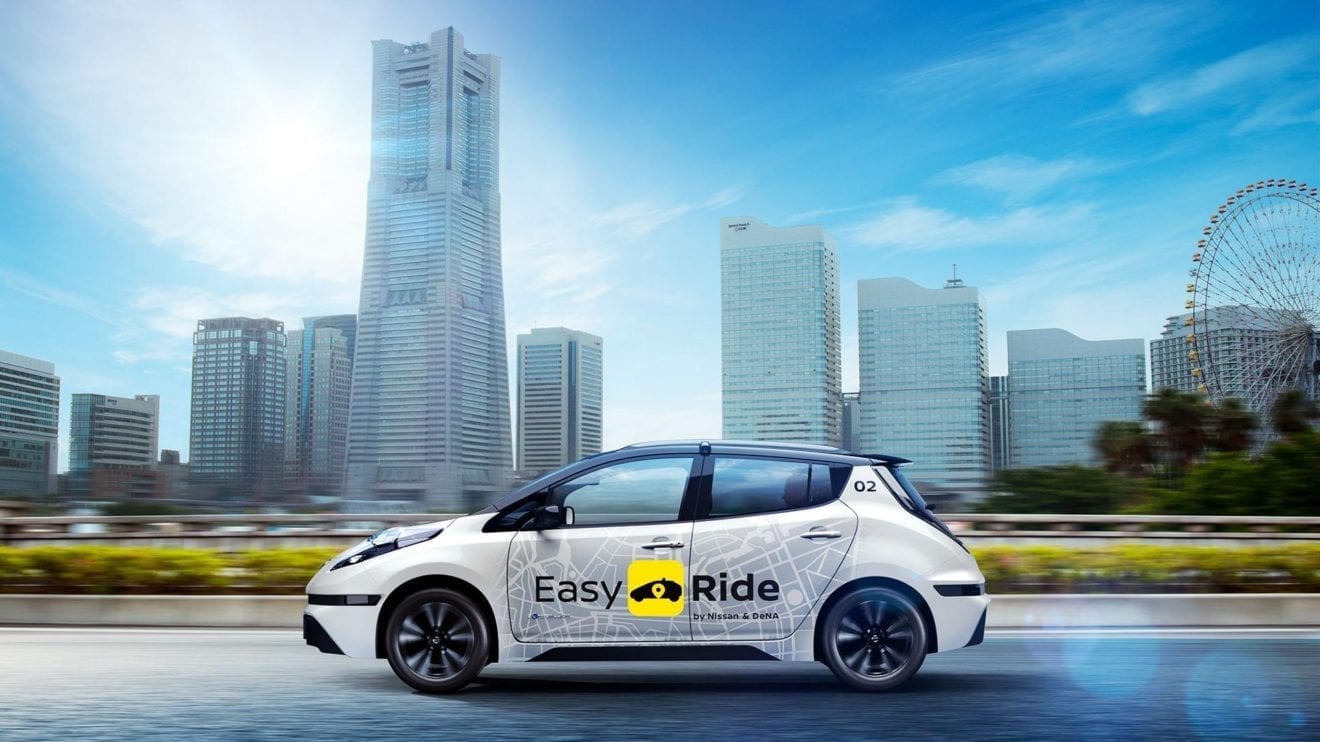
    Last month, Nissan Motor Co. and online tech company DeNA Co. field-tested Easy Ride robotaxis, involving some 300 participants.

    “This represents a big step toward enhancing self-driving cars and the mobility service operation system from the stage of just presenting a conceptual image,” Nissan CEO Hiroto Saikawa said during the launch. “This will help advance our business in offering a new mobility service for many customers in a variety of scenes.”

    The robotaxis are based on a modified Nissan Leaf electric vehicle. For their field testing, they traveled about two miles on a preset city route from Nissan’s headquarters in Yokohama to a nearby commercial facility.

    Collaborative effort

    Using a DeNA-designed smartphone app, users could hail a taxi by selecting a pickup time slot and specifying which of a list of preset destinations they wanted. A tablet computer installed inside the vehicle notified the passenger about recommended events in the area.

    Discount coupons for restaurants affiliated with Easy Ride were sent to the user’s smartphone.

    Such an online user experience could not have been possible without the help of DeNA, Nissan officials said.

    “Efficient and effective collaboration with partners who have expertise in their respective fields are the key to remaining competitive in the future,” Saikawa said. DeNA CEO Isao Moriyasu stressed that his company wants to bring innovation to the transportation system as a mobility service provider.

    The companies plan to introduce their robotaxi service commercially in the early 2020s. But they must resolve technical details before introducing a fully autonomous mobility service in a heavily congested urban environment.

    Easy Ride uses Seamless Autonomous Mobility, developed by Nissan from NASA technology, for its fleet operation system. That system allows vehicles to make decisions in unpredictable situations with the combined support of in-vehicle artificial intelligence and humans, according to Nissan. There will be a control center where people monitor Easy Ride fleets.

    Unexpected situations

    But technology challenges remain. Among them: perfecting the robotaxi’s ability to judge where it is most appropriate for loading and unloading passengers. Unexpected complications, such as road construction or a line of parked cars on the roadside, for example, wouldn’t faze a human driver. But altering behavior to accommodate unusual circumstances doesn’t come easily to an AI-powered, sensor-directed taxi without the aid of remote monitoring by humans at the control center.

    At a media test ride in mid-February, an Easy Ride vehicle unexpectedly stopped its self-driving mode just as it was about to get moving when a pedestrian walked in front of it. As a result, another test vehicle was brought in and the procedures had to be repeated.

    Nissan expected such glitches to occur during the field test, and is looking to incorporate the experiences into its development.

    Kazuhiro Doi, a global director of Nissan’s research division, admitted that the experiment was challenging, even in Yokohama’s waterfront area, with its wide streets and relatively light traffic.

    “Self-driving while trying to avoid so many parked cars is actually difficult,” Doi said of the research. “GPS signals are weak or cut off due to high-rise buildings. I thought it would be easy at first, but it has proven to be more challenging.”