Tag: router

  • Huawei Unveils Snow-Capped Mountain Inspired WiFi 7 Router: A Blend of Artistic Design, AI Intelligence, and Blazing Performance

    Huawei Unveils Snow-Capped Mountain Inspired WiFi 7 Router: A Blend of Artistic Design, AI Intelligence, and Blazing Performance

    Huawei has raised the bar for Wi-Fi routers with the introduction of its new product, the Huawei Wi-Fi Mesh X3 Pro. This device, which serves as a central hub for home internet connections, combines functional excellence with a stunning aesthetic design.

    An Artistic Masterpiece

    The Huawei Wi-Fi Mesh X3 Pro is endowed with an artistic design that embodies the beauty of a snow-capped mountain. This artistic look is further enhanced by lights that illuminate the router and mimic the radiant glow of sunset and sunrise. The device’s lighting system is designed to adjust automatically based on the time of day and prevailing weather conditions. It’s also customizable, allowing users to tap it on or off at will.

    A Fusion of Beauty and Power

    While the Wi-Fi Mesh X3 Pro is visually captivating, it is also a powerhouse of efficiency and cutting-edge technology. The router, equipped with the state-of-the-art Wi-Fi 7 technology, offers tremendous capabilities for a seamless and superior internet experience. It fully leverages the high-speed capabilities provided by gigabit+ fiber networks, enabling users to download large 4K/8K video files nearly instantly, enjoy lag-free 3A game streaming, and maintain simultaneous connections across multiple devices even in busy households.

    Extending Coverage and Enhancing Connectivity

    To ensure extensive coverage, the Wi-Fi Mesh X3 Pro comes with an extender that shares the router’s exceptional design. It operates using Huawei WiFi Mesh+ technology to keep devices connected to the strongest available signal as users move around the house. This ensures seamless roaming with very low latency below 50ms.

    The Huawei WiFi Mesh X3 Pro Suite, which includes the router and the extender mesh network, provides adaptable coverage suitable for various apartment layouts. It delivers up to 120+ square meters of whole-home Wi-Fi coverage, ensuring a strong signal in all rooms.

    The device supports Wi-Fi 7, which offers speeds of up to 3.6Gbps. Huawei has also incorporated advanced features such as Multi-Link Operation (MLO) for dual-band connections and 4K-QAM for efficient data transfer. Completing the device’s impressive feature set is a 2.5GE port that delivers speeds 2.5 times faster than standard Gigabit Ethernet.

    Smart Performance

    The performance of the Huawei Wi-Fi Mesh X3 Pro is powered by the first-party Gigahome SoC. The router’s operation is further optimized through the use of Artificial Intelligence (AI) capabilities, ensuring the network is smooth and efficient. This, combined with a powerful processor and 4-channel signal amplifiers, allows the router to maintain a reliable connection through multiple concrete walls.

    Questions & Answers

    What is the design inspiration for the Huawei WiFi Mesh X3 Pro?
    The Huawei WiFi Mesh X3 Pro is designed to resemble a snow-capped mountain and includes an automatic lighting system that emulates the glow of sunsets and sunrises.

    What are some of the advanced features of the Huawei WiFi Mesh X3 Pro?
    The Huawei WiFi Mesh X3 Pro comes with Wi-Fi 7, which delivers speeds of up to 3.6Gbps. It also features Multi-Link Operation for simultaneous dual-band connections and 4K-QAM for efficient data transfer, and a 2.5GE port for faster connectivity.

    How does the Huawei WiFi Mesh X3 Pro ensure extensive coverage?
    The device includes an extender that uses Huawei WiFi Mesh+ technology to maintain a strong signal throughout the home. The suite provides up to 120+ square meters of Wi-Fi coverage with a strong signal in every room.


  • Google Message Router is overloaded leading Gmail to go down on Thursday

    Google Message Router is overloaded leading Gmail to go down on Thursday

    Google first alerted Workspace users Thursday at 11:30 am ET that some Gmail users might see a delay in receiving emails. On DownDetector, the number of reports about Gmail went from 33 at 11:25 am ET to 761 by 1:55 pm. At 5:03 pm ET, Google issued an update that said, “the issue with email delays was mitigated for the majority of affected users at 2:45 PM” and “a few users may have observed delays until the full mitigation was done at 4:15 PM ET.”

    70% of those submitting a report on DownDetector said that the problem was receiving their email in a timely manner. 16% complained about sending email on the platform and 14% said that they could not connect with the Gmail server. One Gmail user on DownDetector with the username “Elizabeth” wrote, “Ah, glad to know that it’s Gmail and it’s not me, I was scared and lost why I couldn’t make one, so I guess I’ll wait whenever Gmail is back working again.”

    Another subscriber to the platform named Michael Hubert wrote, “My emails are not being delivered. it says they are sent but no one is receiving them.” As bad as this sounds, the issue appeared to be limited in scope. After all, 761 reports on DownDetector, while a decent jump from the 33 reports submitted two and a half hours before the peak number, indicates that most people weren’t affected or didn’t know that Gmail was having problems.

    Officially, Google says that the incident started at 11:30 am ET and ended at 4:15 pm ET. The issue lasted for 4 hours and 45 minutes. On the Google Workspace Status Dashboard, the company wrote, “Some Gmail users experienced a delay in sending emails globally for a duration of 4 hours and 45 minutes. Any emails that were delayed after entering our system were auto retried and should have been delivered within a couple of hours after mitigation.”

    As for the cause of the issue, Google wrote, “From preliminary analysis, the root cause of the issue appears to be an overload in Google Message Router (GMR). Google will complete a full incident report in the following days that will provide a detailed root cause.”

  • ZTE chosen by China Telecom in core router centralized procurement

    ZTE chosen by China Telecom in core router centralized procurement

    ZTE has been selected by China Telecom in the operator’s core router centralized procurement 2021, with the core router ZXR10 T8000 gaining a market share of 30% in the CR-A1 (single device) section, and winning the CR-A2 (cluster) section with the highest score in the overall ranking.

    The purchased equipment will help China Telecom build its super core nodes for the operator’s 163 backbone network.

    China Telecom, with the aim of building new information infrastructure based on cloud-network synergy, adheres to the ideology of “network as a basis, cloud as the core, and cloud-network integration”. China Telecom is carrying out the overall network architecture optimization of the MAN and the 163 backbone network, to improve the network capability and capacity, increase network utilization, and build efficient new cloud networks.

    ZTE provides ZXR10 T8000-18 core router, a large-capacity, high-performance platform, which is safe, reliable, and easy to maintain and expand to transport integrated services and support the full-service operation of China Telecom.

    As a high-end flagship router of ZTE, the ZXR10 T8000 core router has been operating stably for ten years and has been deployed in 26 provinces, including autonomous regions and municipalities, in China. In China Telecom’s first batch of core routers and switch centralized procurement in 2019, ZTE obtained the largest shares in both the single device and cluster sections.

    In the operator’s core router centralized procurement in 2020, ZTE won the second-largest shares in sections CR-A1 and CR-A2 to build the international egress nodes of the 163 and CN2 backbone networks. In November 2020, ZTE deployed the equipment in the Shanghai Information Park, Node I of ChinaNet, serving as the international ingress/egress communication hub of ChinaNet. In May 2021, the ZXR10 T8000 obtained a share of 30%, ranking ZTE second-place in the P equipment section in China Telecom’s CN2-DCI network expansion centralized procurement 2020.

  • Nokia to launch world’s fastest router

    Nokia to launch world’s fastest router

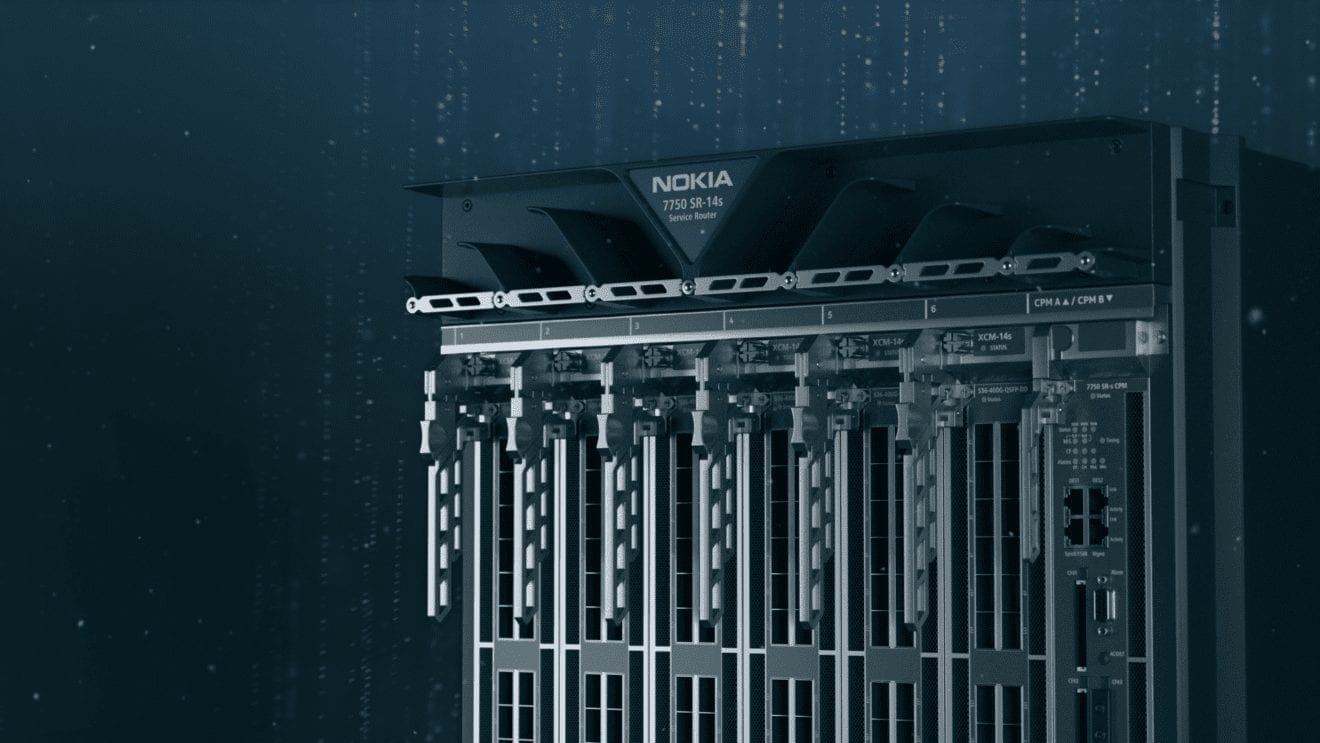
    Nokia has revealed plans to launch what it says will be the world’s most powerful network processor chipset, routing platform and router as part of its new IP routing portfolio.

    The company has unveiled new products based on its high-capacity FP4 silicon, featuring the first 2.4Tbps network processor, up to six times more powerful than processors currently available.

    A service router capable of supporting a 144Tbps configuration in a single shelf and an extensible petabit-class routing system scaling to 576Tbps in a single system using the new chipset will be launched in the fourth quarter.

    Nokia said these new platforms will be the industry’s first capable of delivering terabit IP flows, which will be a tenfold improvement over the existing 100Gbps links used for the internet’s backbone.

    The new routing platforms will have embedded packet intelligence and control technology that can be combined with Nokia’s Deepfield IP network analytics solution to minimize security threats such as DDoS attacks while improving network efficiency and 192.168.0.1 router management.

    “Nokia has managed to combine the raw horsepower required to run historic amounts of traffic between data centers with intelligent, secure and adaptable capabilities necessary for a cloud-connected environment,” ACG Research CEO and principal analyst Ray Mota commented.

    “The company has seemingly struck the right balance with silicon and systems innovations that address investment protection and now has the fastest router on the market.”