Tag: RT-Mart

  • Singles Day 2018 faces delivery challenges

    Singles Day 2018 faces delivery challenges

    Alibaba and its partner retailers will face a massive challenge ensuring flawless delivery of millions of parcels all over China and beyond given the expectations of further growth on Singles Day 2018 next week.

    “As the event grows, the logistics challenge becomes bigger and bigger,” observes retail analyst Pascal Martin, partner at OC&C Strategy Consultants.

    “During last year’s event 812 million parcels were delivered just on Tmall. Observers are betting that this year’s milestone might be more than 1 billion parcels.”

    And, says Martin, although brands don’t like to talk about it, there is also a huge challenge in taking care of large quantities of returned goods.

    “11.11 is a massive test bed for Alibaba’s backbone infrastructure: the network of partners that make it all possible, from payment to delivery to data management, as well as AI and cloud technologies that are put to work to ensure a successful event.”

    Alibaba’s Cainiao Smart Logistics Network says it has upgraded its technology to cope with the expected increased volumes from 11.11 this year. The company boasts more than 30 million sqm of warehousing worldwide and a logistics field force of more than 3 million people.

    Domestically, Cainiao has opened a new robotic warehouse, expanded its Internet of Things (IoT) systems and built out its platform’s last-mile reach. For cross-border deliveries, more than 1000 shipping containers and 51 charter planes are booked, ready to speed orders across the world.

    Cainiao VP Ben Wang says while nobody knows how many orders Singles Day 2018 will generate, the logistics company needs to keep upgrading systems, anticipating growth and seeking higher efficiency, because of customer expectations.

    “It was only five years ago that parcel orders surpassed 100 million for the first time. Back then it took nine days to deliver the first 100 million parcels,” said Wang. “Last year, it took less than three days (2.8 days) to deliver the same number of parcels. Consumers increasingly want faster, better delivery, so that’s what we’re doing. This year, we’re striving to achieve a new high, leveraging the beauty of scale and technology.”

    Delivery “within minutes”

    Cainiao’s preparations this year also reflect the changing demands of logistics in the New Retail era. For the first time, goods ordered during 11.11 will be delivered directly from stores to customers during the Festival – sometimes within minutes. Short-distance delivery services will be available in more than 280 cities.

    “Cainiao is the logistics backbone of Alibaba’s New Retail strategy,” Wang said. “We are providing an online and offline, cross-platform supply-chain solution to merchants and enabling them to cut inventory costs, while increasing operating efficiency, especially around 11.11 ­– the busiest season of the year. Ultimately, consumers will enjoy a brand-new shopping experience, as delivery service will always be on-demand.”

    Martin expects Singles Day 2018 to include more partners, not only online but also offline, leveraging Alibaba’s New Retail ecosystem. For example, Tmall 3000+ convenience stores, Hema and RT Mart supermarkets, Suning and Auchan, will be fully integrated into the event.

    The event will also be expanding beyond China through Lazada, the Southeast Asia online platform owned by Alibaba.

    “We expect to see participation of an increasing number of international brands that are taking advantage of the Tmall Global platform – number one by far among Chinese cross-border platforms – to get introduced to Chinese consumers without any direct presence in China for many of them.”

    And diversification will be another key factor in this year’s event, he says.

    “It’s not just about purchasing products, it’s also increasingly about purchasing a variety of services, from videos on Youku to mobile games on UC, theatre tickets on Taopiaopiao, music on Xiami music, travel on Feizhu, etc… All of this will not happen without challenges.”

    Yet another test, says Martin, is for Alibaba to expand the event beyond its group companies.

    “Right now, most of the non-Tmall companies participating in the 11.11 event are Alibaba Group companies. Getting non-group companies to embark on the 11.11 band wagon will be the next step to sustain continued growth of the event in future years.

    “Finally, to keep the event fresh and exciting, Alibaba will need to continue to surprise increasingly demanding Chinese consumers with entertainment and festivals to delight them around the event. 11.11 has become much more than a commercial fair, it is now a major annual milestone in China’s cultural calendar.”

    Last year’s 11.11 event saw GMV reach 254 billion RMB (US$36.6 billion) including 168 billion RMB on Tmall alone. That turnover represented a 43.5 per cent increase over the 2016 GMV.

    Singles Day 2018 will mark the event’s 10th anniversary.
  • Alibaba Digitizes 100 RT-Mart Stores with New Retail Solutions

    Alibaba Digitizes 100 RT-Mart Stores with New Retail Solutions

    Alibaba Group Holding Ltd. today announced a New Retail makeover for 100 RT-Mart stores, offering Chinese customers a seamless experience, whether they’re shopping online or offline.

    The hypermarkets, operated by Sun Art Retail Group, include 41 stores in eastern China and others in small cities across the country. The digital makeover underscores Alibaba’s commitment to empowering its partners to move up the value chain.

    The digitized RT-Mart stores will leverage Alibaba’s New Retail infrastructure, offering store operators customer insights, supply chain management, retail technologies, smart logistics and electronic payment.

    Customers will benefit from wider variety of products and better services. They’ll enjoy a frictionless shopping experience, whether buying through the Taobao app, which offers most of what’s on the RT-Mart shelves, or at a brick-and-mortar store.

    The upgraded RT-Mart stores will offer one-hour delivery for customers living within a three-kilometer radius. Delivery is powered by Hema supermarkets’ cutting-edge logistics and resources.

    Hema’s innovative fresh food supermarket and local delivery concept – introduced by Alibaba in 2015 – is the inspiration for the RT-Mart makeover. Hema has also partnered with RT-Mart on its supply chain, helping it source high-quality fresh produce directly from suppliers. This ensures RT-Mart shoppers find a host of Hema’s “Daily Fresh”-labeled products, including fruits and vegetables, meats and dairy products refreshed every morning.

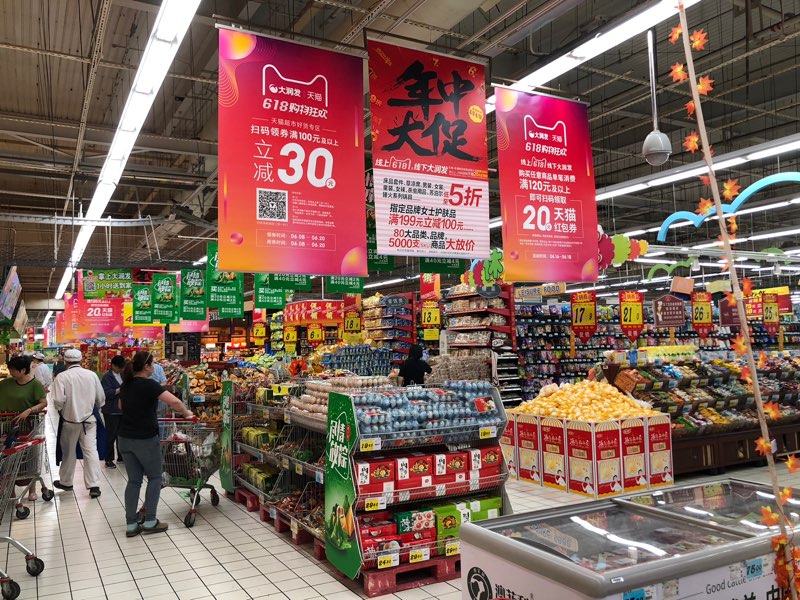
    The new RT-Mart stores also join Tmall’s 6.18 Mid-year Shopping Festival, offering coupons for either online or offline shopping.

    The upgrade of the 100 RT-Mart stores kicked off in March and is fully underway. By year-end, Alibaba intends to introduce its New Retail solution to an additional 300 RT-Mart stores. And there may be more to come.

    “RT-Mart is using the Hema business model to explore this new path of New Retail. If this proves to be successful, we will share our experience with our peers,” said Peter Huang, the chief executive of RT-Mart.

    In its ongoing push into the retail space, Alibaba late in 2017 invested US$2.88 billion to acquire a 36% stake of Sun Art Retail Group, which operates over 400 hypermarkets under the Auchan and RT-Mart banners.

  • Alibaba to buy major stake in Taiwan’s RT-mart business in China

    Alibaba to buy major stake in Taiwan’s RT-mart business in China

    Alibaba Group Holding Ltd., China’s biggest e-commerce company, agreed to acquire a stake in a hypermarket chain partly owned by the Taiwan-based company Ruentex Group in its effort to push into offline retail.

    Alibaba said on Monday that it would invest US$2.87 billion for a 36.16 percent stake in China’s top hypermarket operator, the Hong Kong-based Sun Art Retail Group, which operates more than 440 RT-Mart and Auchan stores in China, reported CNA.

    Under the agreement between the three companies, the deal would give French retailer Groupe Auchan, China’s Alibaba Group and Taiwanese conglomerate Ruentex 36.18 percent, 36.16 percent and 4.67 percent stakes respectively in Sun Art.

    According to Financial Times, the investment is the latest in a series of deals by Alibaba designed to blur the lines between online shopping and physical stores and explore new opportunities in China’s food retail sector.

    Ruentex, meanwhile, said the deal will help the three partners to create a strategic alliance in the retail market in China.

    Ruentex Vice Chairman Peter Huang said in a statement: “Ruentex is delighted to see the win-win collaboration between Sun Art and Alibaba with high synergies in online and offline that will meet the needs of consumers for a better life with better products and services and higher efficiency.”

    Ruentex Group is a Taiwan-based company principally engaged in the manufacture of textile products, the wholesales of commodities and investment businesses.

  • Alibaba, Auchan, Sun Art partnership goal in China market

    Alibaba, Auchan, Sun Art partnership goal in China market

    A new Alibaba, Auchan, Sun Art partnership will further strengthen Alibaba’s efforts to integrate online and offline, say analysts.

    China’s Alibaba Group Holding, France’s Auchan Retail and Taiwan’s Ruentex Group have formed a strategic alliance to bring together their online and offline expertise to explore opportunities in China’s food-retail sector.

    As part of the deal, Alibaba is investing HK$22.4 billion (US$2.8 billion) to obtain an aggregate direct and indirect stake of 36.16 per cent in Chinese food retailer Sun Art Retail Group by acquiring shares from Ruentex.

    Auchan Retail is also increasing its stake in Sun Art, with the transaction giving it, Alibaba and Ruentex about 36.18, 36.16 and 4.67 per cent economic interest respectively in the multi-format offline food retailer.

    Sun Art had a total gross floor area of about 12 million sqm in China at June 30. It has 446 hypermarkets as large as 17,000sqm across China under the Auchan and RT-Mart banners. It also has superstores and unmanned stores under the Auchan Minute brand.

    Alibaba says the alliance reflects its “new retail” concept, while Auchan Retail says it aligns with its “Auchan changes lives” vision.

    Alibaba Group CEO Daniel Zhang says the move aims to redefine traditional retail through digital transformation. “Physical stores serve an indispensable role in the consumer journey, and should be enhanced through data-driven technology and personalised services in the digital economy.”

    ‘Positive impact’

    “Bringing together the leaders of instore retail and of online retail will allow us to offer hundreds of millions of Chinese consumers a fully integrated, world-class shopping experience,” says CEO Wilhelm Hubner of Auchan Retail, which has a presence in 17 countries with 3715 points of sale.

    “Consumer demands have changed tremendously with the rapid growth of the mobile internet, and Sun Art is also trying to move from offline to online,” says Ruentex Group vice-chairman Peter Huang.

    “I think this deal will have a positive impact for all involved,” says OC&C Strategy Consultants associate partner Veronica Wang.

    “It will further strengthen Alibaba’s efforts to integrate online and offline,” says Wang. “Alibaba has been quite aggressive in investing offline in the past two to three years with its continuous investments in the likes of retailer Suning and mall company Intime, as well as its own launch of Hema supermarkets.”

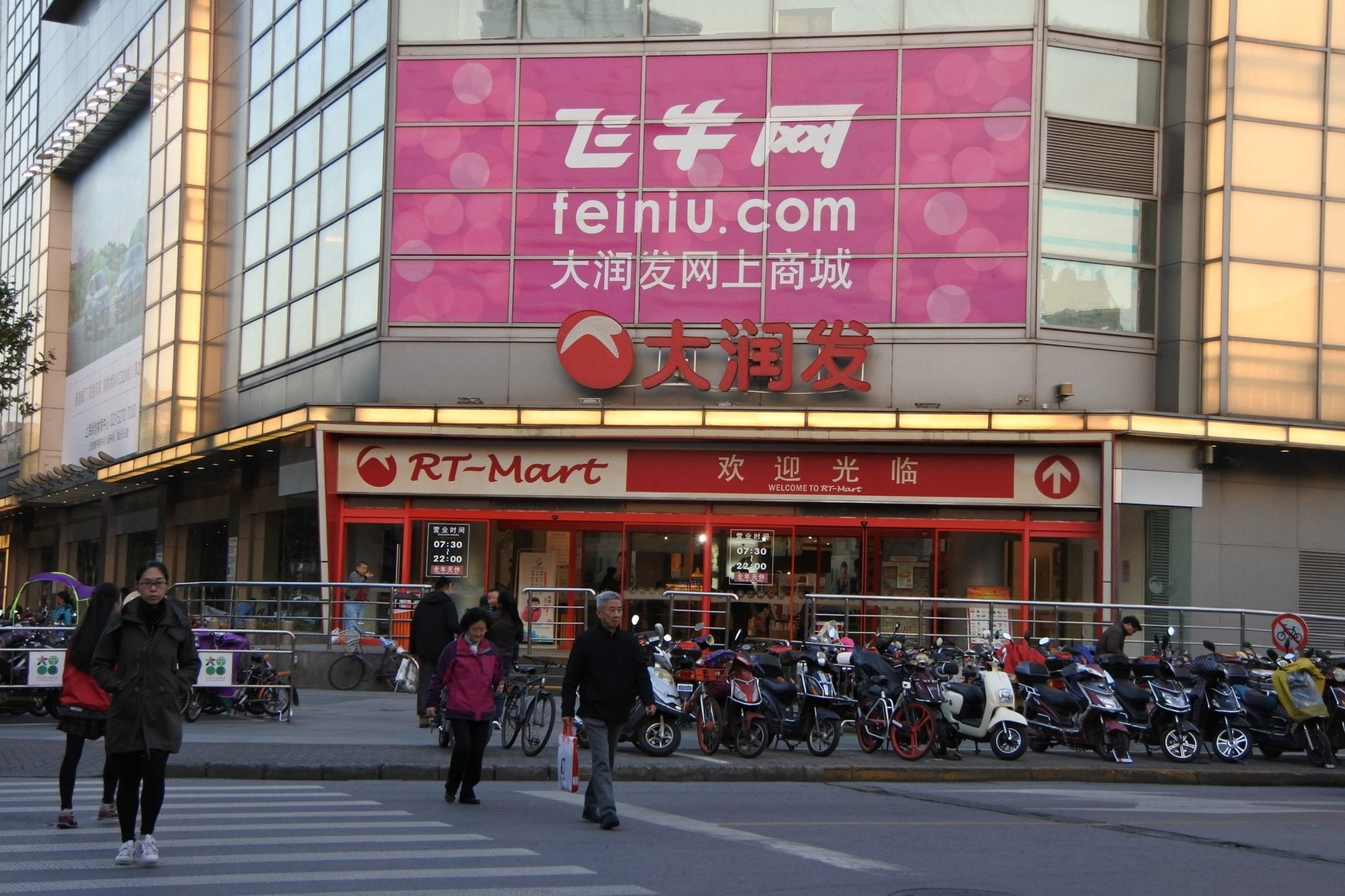
    She says the alliance could help Sun Art build digital capabilities, with the company trying to tap into e-commerce and build an O2O business since 2014, but with limited success. “Feiniu.com was the first attempt, which is still losing money after three years, and Sun Art launched cashier-free self-service convenience stores this year which are still in the stage of trial and error.”

    OC&C associate partner Steven Kwok says the move is no surprise “especially when retailers in general are finding that grocery retailing, unlike other categories thus far, has encountered greater barriers to the shift online”.

    He says Sun Art’s reach across China not only gives Alibaba an enhanced distribution network, but also serves as a testing ground for digital initiatives.