Tag: rubber

  • Vietnam rubber exports hit $1.7B in 8 months

    Vietnam rubber exports hit $1.7B in 8 months

    Vietnam exported 1.12 million tons of rubber worth US$1.76 billion in the first eight months of 2024, customs data show.

    This marked a 7.2% year-on-year decline in volume but a 8.4% growth in value from the same period last year, according to the General Department of Customs.

    Vietnam shipped out 209,726 tons of rubber worth nearly $345 million in August alone, up 12.7% in volume and 12% in value from the previous month.

    The average export price was $1,637 per ton, a 1.1% month-on-month decrease but up 26.8% from a year ago.

    Rubber exports are forecast to reach $3-3.5 billion this year, a $200-400 million increase from 2023.

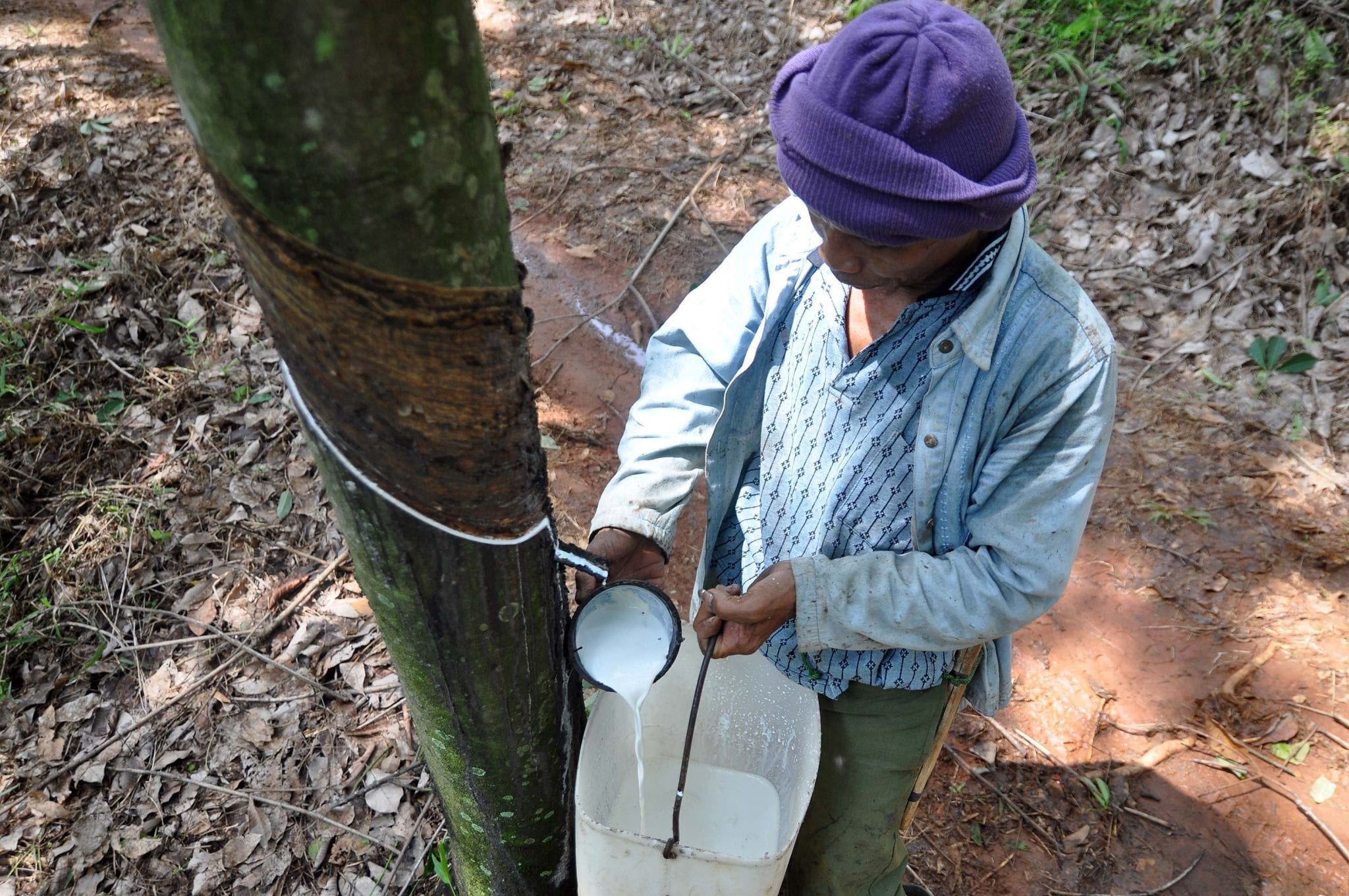
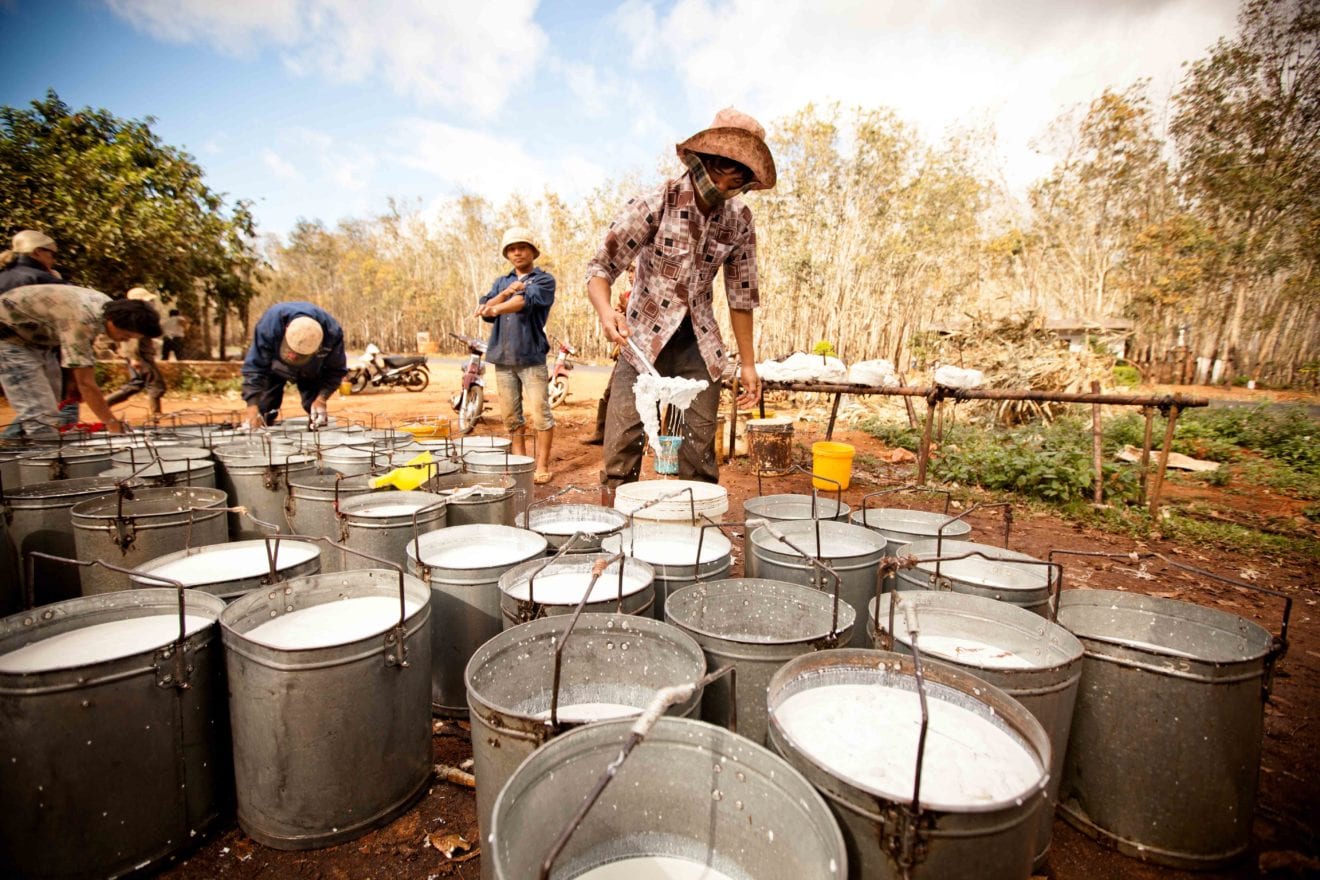
    The country currently has a latex output of 1.3 million tons per year from 910,000 hectares of rubber plantations, according to the Vietnam Rubber Association.

    Every year, more than 300,000 tons of rubber are used in processing and manufacturing, leaving a large amount of raw material for export. This has opened up considerable export potential for the local industry, especially in the context of potential global supply shortages in the 2024 – 2025 period.

  • Rubber export value rises 14%

    Rubber export value rises 14%

    Vietnam exported 499,000 tons of rubber for $743 million in the first 4 months of this year, up 6.4% in volume and 14% in value.

    China remained the largest consumer of Vietnamese rubber, accounting for 80% of the country’s total export volume, followed by India.

    The association said that with the recovery of the global automobile and tyre industries, especially in China, Vietnam’s rubber exports will likely enjoy favorable conditions and are expected to surge in the second quarter.

    The association’s general secretary Vo Hoang An said there remained room for Vietnam to increase its exports of rubber materials, as the country can produce 1.3 million tons of rubber latex annually but the local rubber processing sector only needs over 300,000 tons.

    Under a strategy to develop plant cultivation through 2030, rubber yield will be raised to 1.8-2 tons per hectare.

    According to figures from the General Department of Customs, Vietnam exported 2.14 million tons of rubber last year, earning $2.89 billion. The figures represented a year-on-year increase of 0.04% in volume but a decline of 12.7% in value.

    Rubber exports are forecast to reach US$3.3-3.5 billion this year, said the Vietnam Rubber Association.

  • Vietnam rubber exports go almost exclusively to China

    Vietnam rubber exports go almost exclusively to China

    Vietnam exported 757,600 tons of rubber for over US$1 billion to China in the first seven months of this year, accounting for 99.8% of its total rubber exports.

    Vietnam is China’s second largest rubber supplier after Thailand.

    Its shipments to China were up 12% in volume but down 10% in value year-on-year. The price in July was $1,291 per ton, down 17.9%.

    The Ministry of Industry and Trade’s import-export department forecast rubber exports to China to keep rising in the next few months due to a steady increase in demand.

    The Chinese government has rolled out a series of policies to support the economy after post-pandemic recovery slowed down.

    Vietnam exported over 2.1 million tons of rubber worth $3.3 billion last year, up 9.7% in volume and 1% in value from 2021.

  • Kim Kardashian prepares to open first Skims stores

    Kim Kardashian prepares to open first Skims stores

    Kim Kardashian’s underwear label Skims plans to open its first permanent stores next year as it plots retail expansion in the US and abroad.

    Skims is set to debut its first flagship store in Los Angeles in the first half of 2024, followed by a second opening in New York. The 5000-square-foot LA shop will be located in West Hollywood on Sunset Boulevard near streetwear stores such as Supreme and Kith.

    “Kim and I can envision a future where years from today there’s a Skims store anywhere in the world you’d find an Apple store or a Nike store,” said Jens Grede, co-founder and chief executive officer of Skims. “It marks the second chapter.”

    Skims began as a direct-to-consumer business in 2019, but it since has dabbled in physical retail through relationships with department stores such as Nordstrom and Saks Fifth Avenue. In recent months, Skims has opened temporary pop-ups in locations like London’s Selfridges department store and Rockefeller Centre in New York.

    Executives are looking to open at least four stores next year and speed up expansion once those are in place. They’re considering placing shops in domestic markets that attract regional tourism, including Dallas, Atlanta and Miami.

    The company is weighing international flagships as well, after tests in cities like Paris and Hong Kong. On its online shop, 20 per cent of Skims customers are from abroad.

    “Our strategy going forward is to open important stores in the world’s most important cities,” Mr Grede said.

    Skims expects to achieve net sales of about $US750 million ($1.13 billion) in 2023, up from nearly $US500 million last year. So far this year, the business has been trending at 75 per cent year-over-year growth, according to Mr Grede.

    Product expansion has boosted that growth, as Skims branched out from its original selection of shape wear bodysuits into categories like pyjamas and swimwear. Underwear now accounts for a sizeable chunk of its business, and it is now planning to launch a men’s line in October.

    Skims was most recently valued at $US3.2 billion in a 2022 financing round, with total funding now at nearly $US400 million. Investors include hedge fund Lone Pine Capital and venture firms Thrive Capital and Imaginary Ventures. Mr Grede declined to say if Skims is seeking additional capital at this time.

    Ms Kardashian and Mr Grede are interested in one day taking Skims public, but the CEO said there were no short- or medium-term plans for an initial public offering. The company hired a chief financial officer last year.

    “Skims deserves to be a public company – when the time is right,” Mr Grede said.

  • Rubber industry faces uncertain profit prospect

    Rubber industry faces uncertain profit prospect

    Rubber companies in Vietnam are facing a cloudy profit prospect for the remaining months as global demand falls and input costs surge.

    Vietnam Rubber Group expects profit to flatten at VND5.34 trillion ($225.13 million) this year and revenue to rise a mere 5%, as prices have been falling due to low consumption while input costs have been rising.

    Phuoc Hoa Rubber saw its second-quarter profit dropping by a third to VND54.80 billion and revenue plunging nearly 50% to VND231 billion, while Da Nang Rubber Company saw profit falling nearly 22% to VND83.88 billion.

    Both said that rising input costs and decreasing sales were the main reason for the profit drop.

    Global rubber prices have fallen by a third year-on-year to around $1,750 per ton due to geopolitical tensions, the shortage of containers, rising transportation and slow customs clearance globally.

    Vietnam export rubber prices had dropped by 7.6% year-on-year to $1,516 per ton in August, the fourth monthly fall in a row.

    China, the biggest importer of Vietnam rubber, paid 9.3% less year-on-year at $1,474 per ton. The decline in consumption in China is said to be the reason for the drop.

    But the Association of Natural Rubber Producing Countries is optimistic about the short-term prospect of the rubber market, as it estimates that the world is in short of 93,000 tons of natural rubber.

  • Vietnam’s largest rubber firm expects profit to go sideways

    Vietnam’s largest rubber firm expects profit to go sideways

    The Vietnam Rubber Group (GVR) expects revenues to rise by 5 percent year-on-year this year, but estimates profit will stay unchanged due to rising costs.

    Its overheads, including wages, fertilizer, logistics and electricity, have been surging, board member Pham Van Thanh said. Rubber, accounting for half of GVR’s profits, were most affected by price surges, he added.

    Low rubber prices despite recent input hikes, fierce competition affecting rubberwood sales and legal issues relating to land use would also drag profits down, the group’s management said in a document submitted at its annual shareholders meeting Friday.

    The group expected huge profits from converting rubber farms into industrial zones, but this has run into legal hassles, Thanh said.

    “If the legal problems can be solved, our profits will likely surpass plans.”

    The group also plans to sell stocks in two subsidiaries, VRG of Vietnam Rubber Industrial Zone and Urban Development and SIP of Saigon VRG Investment, but is yet to do so in the current bearish market.

    Stock sales usually account for 15 percent of profits, Thanh said.

    GVR’s pre-tax profits in the first quarter rose 15 percent year on year to VND1.5 trillion ($64.6 million).

    Last year, it posted VND28.35 trillion in revenue, and VND5.34 trillion in profit; and reduced dividend from 6 to 4.1 percent to reinvest in an industrial zone in the southern province of Tay Ninh.

  • Rubber firms’ profits surge

    Rubber firms’ profits surge

    Many rubber companies reported higher profits in the fourth quarter of last year as export prices rose sharply.

    The Vietnam Rubber Group Joint Stock Company’s gross profits were up 27 percent year-on-year to VND2.1 trillion on revenues of VND7.46 billion ($324.3 million), up 20 percent.

    The Thong Nhat Rubber Joint Stock Company reported a 250 percent rise in profits to VND6 billion as revenues more than doubled to VND32 billion.

    Hoa Binh Rubber Joint Stock Company saw a similar rise in profits to VND19 billion, and Dong Phu Rubber Joint Stock Company said it was up 6.8 times to VND278 billion.

    The rubbers industry saw profits surge since mid-2021 even as the Covid-19 pandemic peaked, thanks to the sharp increase in latex prices.

    According to the General Department of Vietnam Customs, rubber exports rose by 37.5 percent to $3.28 billion in full-year 2021, making Vietnam the third-biggest exporter. It sells rubber to over 80 markets, including China, India, South Korea, Germany, and the U.S.

    The Vietnam Rubber Association expects global rubber prices to keep increasing sharply in 2022-24 because of declining supply.

    But the Agency of Foreign Trade does not concur with this assessment, saying prices would continue to rise only in the short term as many countries grapple with the Omicron variant of Covid and cut auto production.

  • Rubber firms report surge in profits

    Rubber firms report surge in profits

    Rubber prices have soared by 30-50 percent this year, driving up profits for companies in the industry by triple digits in Q3.

    Subsidiaries of the Vietnam Rubber Group such as Daklak Rubber JSC, Tan Bien Rubber JSC, Ba Ria Rubber JSC, Phuoc Hoa Rubber JSC, and Dong Phu Rubber JSC saw profits surge by over 300 percent.

    Thong Nhat Rubber reported a rise of 466 percent.

    Vietnam’s rubber exports increased by nearly 24 percent to $970 million in Q3, according to data from the Ministry of Industry and Trade’s import-export department.

    Exports in the year-to-date were up 50 percent to $2.17 billion.

    A recent report by the Association of Natural Rubber Producing Countries said global demand for natural rubber would grow by 9 percent to more than 14 million tons this year.

    China, which buys over 70 percent of Vietnam’s rubber exports, is expected to import 1.7 million tons between September and December and another two million tons in the first four months of 2022, according to the ministry.

  • Rubber firms bounce back from poor 2020 as demand

    Rubber firms bounce back from poor 2020 as demand

    A 150 percent hike in rubber prices has sharply increased profits for the sector and pulled many companies out of the red.

    Vietnam Rubber Group reported a 182 percent year-on-year increase in net profits to VND2.4 trillion ($103.4 million) on revenues of VND10.5 trillion, a 77 percent rise.

    Its profits from core business activities were VND4.5 trillion as against a loss of VND2.6 trillion in the same period last year.

    Its subsidiaries also reported excellent results.

    Tan Bien Rubber Company saw net profits and revenues soar by 284 percent and 167 percent to VND120 billion and VND375 billion.

    Ba Ria Rubber Company also reported triple-digit growth in profits to VND35 billion.

    Dak Lak Rubber Company made a turnaround after losses a year ago, and was back in the black with profits of over VND76 billion.

    A rise in both demand and prices has been attributed to the industry’s outstanding performance.

    According to the General Department of Customs, earnings from rubber exports rose by 88 percent to $1.2 billion in the first half of this year.

    Average export prices increased to over $1,680 per ton as demand recovered after the slump in early 2020 even as supply decreased due to the Covid-19 pandemic and rising crude oil prices.

    ACB Securities forecast rubber prices to remain at $ 2,100 this year, 44 percent higher than last year’s average.

  • Vietnam’s PM demands answer on rubber firm sprung for stretching financial legality

    Vietnam’s PM demands answer on rubber firm sprung for stretching financial legality

    Prime Minister Nguyen Xuan Phuc has called for a report on potential fraudulent activity at the state-owned Vietnam Rubber Group (VRG) after government inspectors discovered misuse of state capital and assets at the group three years ago.

    The Ministry of Public Security has been instructed to submit the report by December 31.

    VRG, in which the Vietnamese government currently owns a 95 percent stake, has allegedly committed fraud worth up to VND8.4 trillion ($370 million).

    Between 2006 and 2011, the group spent over VND2.42 trillion, or 13 percent of its charter capital, on non-core businesses, such as cement, hotels, steel, hydropower projects and the stock market.

    Most of the investment came from the state budget, but the group reported that it did not generate any profits.

    Some VRG leaders have also been accused of contributing capital to establish and run a seafood import-export firm in the southern province of Dong Thap.

    VRG also raised its charter capital in 2010 and 2011, without government approval, by VND1.84 trillion.

    And although the inspection, completed back in 2014, was aimed at handling individuals and groups that committed fraud, VRG has yet to be held accountable.

    Thanh Nien (Young People) newspaper reported last month that where the money had gone, and how the group would make up for the massive sum, remained a questions that the public still has no answer to.

    In September, VRG rolled out a privatization plan, in which it declared a charter capital of VND40.7 trillion and 244,000 hectares (593,052) of lands in 18 cities and provinces across the country.

    The rubber giant, which has 103 subsidiaries, expects to earn VND13 trillion from selling one billion shares in its initial public offering.

    It also has a target of earning more than VND3 trillion in net profit this year, up 9 percent from last year.

    “There is a sense of urgency in Vietnam to privatize state-owned enterprises (SOEs) and use the money raised from public offerings to alleviate the government’s fiscal burden,” HSBC said in a report in August.

    Late last year, PM Phuc signed off on a decision which pushes for further divestment of state capital in existing SOEs by eliminating or reducing the minimum level of ownership that the government holds in certain industries.

    The decision provided a clearer roadmap for equitization by saying that the state will equitize 137 SOEs and sell its entire stakes in 103 firms. Equitization is the term Vietnam uses to describe the process of issuing shares to partially privatize state-owned businesses in which the government will still hold the majority stake.

    The Ministry of Finance said in June that the country’s public debt, which includes central government debt, government-backed loans and local government debt, may reach the ceiling set by the legislative National Assembly of 65 percent of gross domestic product from 2017-2018.
  • Thai Giant Rubber Maker’s Capacity in Indonesia Will be Raised by 60,000 Tons

    Thai Giant Rubber Maker’s Capacity in Indonesia Will be Raised by 60,000 Tons

    Sri Trang Agro-Industry, the world’s largest producer of natural rubber, plans to increase annual capacity by 20% to 2.9 million tons by year-end to take advantage of a market recovery.

    The company accounts for about 30% of output in its home market of Thailand, the largest rubber-producing country. It aims to expand its global market share from 12% now to 20% in two to five years, said Veerasith Sinchareonkul, an executive director.

    Sri Trang will invest 2.5 billion baht to 3 billion baht ($72.1 million to $86.5 million) in new production lines, including new manufacturing facilities for sheet, block and liquid rubber in northeastern Thailand with annual capacity totaling 86,000 tons.

    Capacity at Indonesian facilities will be raised by 60,000 tons. The company also intends to step up output of medical gloves made from natural rubber, of which it is among the top five manufacturers worldwide.

    Sri Trang operates 35 plants and owns rubber plantations spanning 80 million sq. meters. Consolidated sales grew 26% on the year to 77.2 billion baht for the fiscal year ended Dec. 31. The company booked a net loss of more than 700 million baht, down from a 1.1 billion baht profit in fiscal 2015.

  • North Sumatra`s rubber exports down 20 percent

    North Sumatra`s rubber exports down 20 percent

    North Sumatras rubber exports in the year to August 2016 plunged 20.84 percent compared to the same period last year.

    “By August 2016, North Sumatras rubber and rubber product exports fell to US$633.996 million from US$800.864 million in the same period last year,” chief of the production statistic section at the Central Statistics Agency (BPS) office in North Sumatra, Bismark SP Sitinjak said here on Saturday.

    The shortfall in foreign exchange earnings was the result of lingering global crisis, leading to low demand for the commodity in the global market. he said.

    With the decline, the provinces rubber exports will most likely drop throughout this year compared to a year earlier, he said.

  • Michelin plans 20% increase in tyre sales by 2020

    Michelin plans 20% increase in tyre sales by 2020

    Michelin said ahead of an investor day on Monday that it aims to increase tyre sales by 20 percent by 2020, pledging to outpace the growth of the market.

    The group also said it aimed to double services and solutions revenue to 2 billion euros ($2.27 billion) over the same time period.

  • Demand for North Sumatra`s rubber shrinking

    Demand for North Sumatra`s rubber shrinking

    North Sumatras exports of natural rubber has continued to shrink, down 8.23 percent in volume to 137,826 tons in the first four months of the year from 150,194 tons in the same period in 2015.

    “The decline in exports was on weak demand and as a result of an agreement by worlds largest producers to cut exports,” executive director of the North Sumatra branch of the Indonesian Association of Rubber Companies (Gapkindo) Edy Irwansyah said here on Sunday.

    Thailand, Indonesia and Malaysia which are grouped in the rubber cartel International Tripartite Rubber Council (ITRC), had decided to cut exports in a bid to drive up the commodity price.

    The three Asean countries, which account for around 80 percent of the worlds production of natural rubber decided to cut exports by 615,000 tons to be shared proportionally by the three ASEAN countries. Indonesia is to cut exports by 238,736 tons.

    The ITRC said it was optimistic the export cuts would drive rubber market to recovery after six years of being in deep slump.

    The price of natural rubber has remained low to follow the oil price fall.

    Edy said the export volume would likely fall lower not only because of the ITRC agreement but also because of weaker demand.

    The price of the commodity on May 13 was US$1.4 per kg for delivery in July down from US$1.417 for Junes delivery.

    The price of latex in North Sumatra has also dropped to around Rp13,477 per kg Rp13,477 – Rp14,201 per kg.

    However, reports said earlier that the price of rubber in othyer areas of the country had been picking up .

    In Lebak regency of Banten , the price rose in the fourth week of April reaching Rp21,500 poer kg of slab.

    “I think the price rise would encourage the rubber farmers,” said Rulyy Yanrila, head of the marketing section of the district Forestry and Plantation Office.

    The increase in price would at least help cover the production cost, Rulyy Yanrila said .

    Many rubber farmers have been on the brink of bankruptcy after years of slump, he said, adding some farmers already stopped tapping as the result was not worth the work.

    Jayadi (55),a rubber farmer in the village of Leuwidamar, said rubber production declined over the past several weeks as most of the rubber trees have been too old and on poor maintenance.

    In Kalimantan, Chairman of the South and Central Kalimantan branch of the Indonesian Association of Rubber Companies (Gapkindo)Andreas Winata said the price of natural rubber from that region has increased to Rp16,000 per kilogram from Rp12,000 earlier.

    Andreas said the cut in exports apparently has caused panic in international market on shortage in supply, resulting in surge in price. In addition, supplies from other countries also declined on long drought, he said.

  • Vietnam joins world`s largest rubber producers to cut exports

    Vietnam joins world`s largest rubber producers to cut exports

    Vietnam will join worlds largest natural rubber producers to cut exports in a bid to shore up the shrinking price of that commodity.

    Vietnam will follow Thailand, Indonesia and Malaysia to cut its imports of natural rubber by 15 percent starting March 1 until August 31, the Indonesian association of rubber companies (Gapkindo) said.

    Earlier the three member countries of the International Tripartite Rubber Organization (ITRO) which control 70 percent of the world supply of natural rubber agreed to cut exports by 615,000 tons from March to August.

    With Vietnam joining the cartel the price of natural rubber is expected to rise in international market, Executive Secretary of the North Sumatra branch of Gapkindo Edy Irwansyah said here on Monday.

    Under the arrangement, Thailand, the worlds largest producer is to reduce its exports of natural rubber by 324,005 tons, Indonesia, the second largest producer by 238,736 tons, and Malaysia, the third largest by 52,259 tons.

    North Sumatra, one of Indonesias largest natural rubber producing provinces, contributes to the scheme by cutting exports 38,000 tons.

    The decision of the four ASEAN countries would have impact on the rubber market, as they control more than 70 percent of the supply of natural rubber in the world, Edy said.

    Edy said rubber price has remained low but in March the price began to climb, adding, he was confident the price of that commodity would continue to increase .

    In January 2016, North Sumatras exports of natural rubber and rubber products fell again by 16.43 percent year-on-year in value.

    The province earned only US$78.083 million in January 2016 down from US$93.375 million in the same period last year, head of the regional office of the Central Bureau of Statistics (BPS) Wien Kusdiatmono said here last week.

    The production and price of rubber and rubber goods have continue to shrink, Wien said.

    According to Edy though rising, the price of natural rubber is still much below the level considered ideal of around US$1.90 per kg.