Tag: rules

  • Unveiling the Hidden Loophole in EU’s New AI Labeling Rules: A Threat to Authentic Online Content?

    Unveiling the Hidden Loophole in EU’s New AI Labeling Rules: A Threat to Authentic Online Content?

    The European Union (EU) understands the need for transparency in AI-generated content and has decided to enforce mandatory labeling of such content. However, this new ruling has not been without its own set of challenges.

    EU’s New AI Act

    The EU’s AI Act, first introduced in 2023 and approved by the EU Parliament in March 2024 with 523 votes for, 46 against, and 49 abstentions, aims to protect customers and democracy. As stated by EU parliament member Sergey Lagodinsky, the AI Act’s purpose is not solely to protect consumers but also to preserve democracy and the authenticity of online facts. The AI Act came into effect on August 2nd, requiring all AI-generated content to carry a specific label. This rule applies to AI systems that operate in the EU market, including AI-generated images, videos, audio, and text.

    The Loophole and Penalties

    However, the mandated labeling only applies to content designed to look real, creating a dilemma due to the subjectivity of what constitutes “real.” The law excludes personal content and “evidently artistic” works, including satirical and fictional content, making its interpretation even more ambiguous. The EU has also outlined penalties for violating the rule, with fines as high as €15m or 3% of a company’s global turnover, potentially resulting in billions of dollars for corporations such as Apple, Google, and Samsung. While the August 2nd deadline applies to new AI systems, existing systems will have an additional four months to comply.

    It’s worth noting that many companies, particularly large social networks and apps, already incorporate policies regarding AI-generated content. Google, for example, utilizes a special SynthID tool to label billions of images and audio content spanning 60,000 years. Despite these policies, AI images and videos frequently slip through the cracks, making their way onto people’s feeds. With the new EU policy in effect, these companies will need to enhance their enforcement or risk financial penalties.

    Questions & Answers

    What is the main purpose of the EU’s AI Act?
    The EU’s AI Act primarily aims to ensure transparency in AI-generated content, thereby protecting consumers and upholding the authenticity of online facts to safeguard democracy.

    What kind of content does the EU’s AI Act mandate to carry labels?
    The AI Act requires all AI-generated images, videos, audio, and text that are designed to appear real and operate in the EU market to carry a specific label.

    What are the penalties for non-compliance with the EU’s AI Act?
    Companies found in violation of the AI Act are subject to fines of up to €15m or 3% of the company’s global turnover, potentially resulting in billion-dollar fines for large corporations.

  • India Boosts Cybersecurity: Enforces New Compliance Rules on OTT Platforms and Smartphone Manufacturers

    India Boosts Cybersecurity: Enforces New Compliance Rules on OTT Platforms and Smartphone Manufacturers

    In a bid to enhance digital security due to increasing episodes of online fraud and mobile-related cybercrime, India has released two key directives. These new rules demand compliance from Over The Top (OTT) communication platforms and smartphone manufacturers.

    Ensuring Secure Communication

    The Department of Telecommunications (DoT) in India has instructed messaging platforms such as WhatsApp, Telegram, Snapchat, Signal, and Arattai to enable SIM binding within a 90-day timeframe. According to the Telecommunications (Telecom Cyber Security) Rules, 2024, these applications must remain connected to the mobile number and active SIM card of a user’s device. Moreover, web and desktop versions must log users out every six hours, requiring them to reauthenticate via QR code pairing. Non-compliance will result in penalties as stipulated by the Telecommunications Act.

    This decision has been made in response to the increasing number of cyber fraud cases involving OTT apps accessed without the corresponding SIM or from foreign locations. Such situations allow for identity spoofing and misuse. This order has been issued following nearly a year of discussions between government officials and OTT companies.

    Representatives of the industry have expressed concerns about the impacts on user experience and technical feasibility. They emphasized that not all platforms, particularly iOS, can consistently carry out SIM checks. They also warned about potential disruptions for legitimate uses, including eSIM and dual-SIM devices, international travel, small businesses relying on persistent desktop sessions, and elderly user accessibility. Companies are also unsure if SIM binding will effectively decrease fraud involving Indian SIM cards obtained through intermediaries.

    Demand for Preloaded Cyber Safety App

    On the same day, the telecom ministry of India issued another mandate for leading smartphone manufacturers including Apple, Samsung, Vivo, Oppo, and Xiaomi. They are required to preload the government’s Sanchar Saathi cyber safety app on all new devices sold in the country. Users will not have the option to delete or disable this app. Devices that are already in the supply chain must receive the app via software updates.

    Sanchar Saathi, launched in January, allows users to block and track lost or stolen phones, verify device authenticity, and detect fraudulent mobile connections. Government data reveals that the app has assisted in the recovery of over 700,000 phones, including 50,000 in October alone, and has facilitated the blocking of over 3.7 million lost or stolen devices. Additionally, more than 30 million fraudulent mobile connections have been disconnected using its systems.

    Questions & Answers

    What is the purpose of the new directives issued by India’s Department of Telecommunications (DoT)?
    The new directives aim to tighten digital security due to rising incidents of online fraud and cybercrime related to mobile devices. They introduce new compliance requirements for Over The Top (OTT) communication platforms and smartphone manufacturers.

    What measures are messaging platforms expected to implement under these directives?
    Messaging platforms such as WhatsApp, Telegram, Snapchat, Signal, and Arattai are required to implement SIM binding, which means these apps must remain linked to the user’s mobile number and active SIM card. Web and desktop versions of these apps must also log out users every six hours and require reauthentication through QR code pairing.

    What is the Sanchar Saathi app and why are smartphone manufacturers required to preload it on new devices?
    The Sanchar Saathi app is a cyber safety application launched by the Indian government. It allows users to block and track lost or stolen phones, check device authenticity, and identify fraudulent mobile connections. Smartphone manufacturers are required to preload this app on all new devices sold in India to enhance digital security.

  • Meta Triumphs in FTC Monopoly Lawsuit: Federal Judge Rules in Favor of Social Media Giant

    Meta Triumphs in FTC Monopoly Lawsuit: Federal Judge Rules in Favor of Social Media Giant

    In a significant legal triumph, technology giant Meta saw a favorable ruling from a federal judge in a lawsuit filed by the Federal Trade Commission (FTC). The lawsuit pertained to Meta’s acquisitions of Instagram in 2012 for $1 billion and WhatsApp in 2014 for $21 billion, comprising cash and Meta (formerly Facebook) stock. The final purchase price for WhatsApp had initially been $19 billion, but a surge in the Meta shares propelled it up to $21 billion.

    Monopoly or Fair Competition?

    The FTC’s contention was that Meta, which changed its brand name from Facebook in 2021, acquired these two prominent social media platforms to eliminate competition. The regulatory body viewed these acquisitions as possible infringements of anti-trust legislation. The seven-week trial witnessed the testimony from Meta’s founder, chairman, and CEO, Mark Zuckerberg, who posited that Meta faces stiff competition from other platforms such as YouTube and TikTok.

    These statements managed to draw the attention of Federal Judge James Boasberg, who in his ruling pointed out that YouTube and TikTok prevent Meta from monopolizing social media. He also highlighted that the dynamics of the social media market have transformed significantly since the FTC’s lawsuit was filed, with AI being the most notable shift. The judge argued that AI-generated content nullifies the FTC’s concerns, concluding that Meta does not hold a monopoly in the relevant market.

    Meta’s Market Share and Competition

    Judge Boasberg’s ruling stated that Meta’s apps only account for a “modest share” of the overall time spent on social media, which includes platforms like Facebook, Instagram, Snapchat, TikTok, and YouTube. The judge noted that this share is on a downward trend, and even excluding YouTube’s share, Meta would not constitute a monopoly. Boasberg’s ruling also acknowledged that TikTok, considered by Meta as its primary competitor, managed to penetrate the market a mere seven years ago and has been dominating the sector ever since.

    Reacting to the decision, Jennifer Newstead, Meta’s Chief Legal Officer, emphasized the beneficial nature of their products for people and businesses, and their embodiment of American innovation and economic growth. She expressed eagerness to continue collaborating with the Administration and to contribute to the country’s investment landscape.

    Instagram Acquisition and Market Valuation

    Meta’s acquisition of Instagram could be regarded as one of the most profitable tech deals in history. Instagram’s current estimated valuation ranges from $441 billion to $538 billion. Initially known for its ephemeral messages, Instagram gained user traction when people began using it to share photos of their meals. Instagram’s popularity soared when it incorporated the ‘Stories’ feature from Snapchat.

    Significance of Instagram and WhatsApp for Meta

    Meta argued during the trial that a forced breakup would have been catastrophic for the company. Instagram generates ad revenue for Meta, while WhatsApp provides business subscribers and enhances Meta’s international reputation. Zuckerberg also admitted that Facebook, the company’s flagship platform, is losing popularity. Meta’s argument that regulators had already approved the Instagram and WhatsApp acquisitions when initially proposed was also a crucial point in their defense.

    The Broader Tech Industry Implications

    This victory has considerable implications not only for Meta but also for the larger tech industry, as U.S. regulators have attempted to dismantle Google. The tech behemoth has been deemed a monopoly in two cases, one concerning the company’s search engine and the other its online advertising business. Other tech firms such as Apple and Amazon are also facing scrutiny from the government.

    Questions & Answers

    Why did the FTC sue Meta over its acquisition of Instagram and WhatsApp?
    The FTC claimed that Meta’s acquisitions of Instagram and WhatsApp were attempts to eliminate competition, which they viewed as a violation of anti-trust laws.

    What was Judge James Boasberg’s ruling on the case?
    Judge Boasberg ruled that Meta did not hold a monopoly in the relevant market. He noted that other platforms, such as YouTube and TikTok, prevent Meta from monopolizing social media.

    What is the significance of this ruling for the larger tech industry?
    This ruling is significant not just for Meta, but for the broader tech industry. With U.S. regulators attempting to dismantle other tech giants like Google, Apple, and Amazon, this victory could set a precedent for upcoming cases.

  • Court Sides With Nelly In Copyright Dispute Against Shein’s Subsidiary

    Court Sides With Nelly In Copyright Dispute Against Shein’s Subsidiary

    A recent legal dispute between two large fashion retailers, Shein and Nelly, has resulted in the court favoring Nelly on the grounds of copyright infringement. The court’s ruling states that Shein, through its Irish subsidiary Infinite Styles Ecommerce, utilized Nelly’s copyrighted photographs without obtaining permission.

    Copyright Infringement Verdict

    The Patent and Market Court announced the verdict last Friday, stating clearly that Shein’s subsidiary, Infinite Styles Ecommerce, had unlawfully duplicated and displayed Nelly’s copyrighted photographs on Shein’s Swedish website. The court stated in its ruling, “Infinite Styles Ecommerce is guilty of infringing Nelly’s exclusive rights to the photographs.”

    Nelly, the owner of the e-commerce platform Nelly.com and its own branded clothing line, initially filed a lawsuit against Shein for copyright infringement in September 2024. The court noted that Nelly demanded a penalty of 500,000 Swedish crowns (equivalent to $53,400), to which Infinite Styles Ecommerce did not object.

    A spokesperson for Shein stated, “We are dedicated to defending IP rights holders and treat all accusations of infringement seriously,” adding that the disputed images were promptly removed from their platform.

    Legal Costs and Future Actions

    In addition to the penalty, the court also ruled that Infinite Styles Ecommerce is obligated to cover all of Nelly’s legal expenses, along with the applicable interest. However, the court rejected Nelly’s claim against two other Shein establishments – the parent company Roadget Business and the Dublin-based entity Infinite Styles Services. Instead, Nelly was directed to pay the legal fees of these two firms.

    Reacting to the verdict, Nelly CEO Helena Karlinder-Ostlundh expressed mixed feelings. She welcomed the aspects of the ruling that favored Nelly, but displayed disappointment and surprise at the overall outcome. The CEO hinted that Nelly might consider appealing the court’s decision.

    Questions & Answers

    What was the basis of the lawsuit between Shein and Nelly?
    The lawsuit was based on copyright infringement. Nelly claimed that Shein’s subsidiary, Infinite Styles Ecommerce, had used copyrighted photographs belonging to Nelly without obtaining permission.

    What was the penalty imposed on Shein by the court?
    Shein, through its subsidiary Infinite Styles Ecommerce, was ordered to pay a fine of 500,000 Swedish crowns, equivalent to $53,400.

    What are the possible next steps for Nelly following the court ruling?
    Nelly’s CEO, Helena Karlinder-Ostlundh, indicated that the company might consider appealing the decision due to their dissatisfaction with some parts of the verdict.

  • Asics Boosts Indian Manufacturing Amid Regulatory Changes, Plans For Brand-owned Stores

    Asics Boosts Indian Manufacturing Amid Regulatory Changes, Plans For Brand-owned Stores

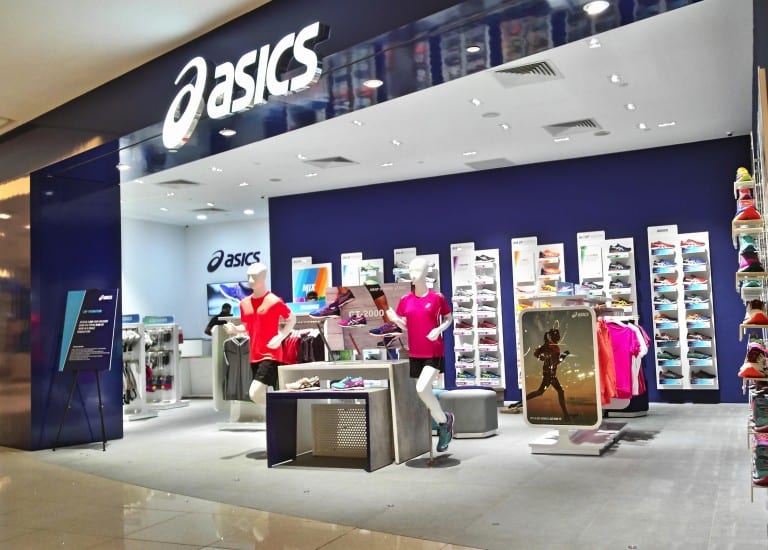
    Asics, the Japanese sportswear giant, has announced plans to increase its manufacturing operations in India from 30% to 40% over the coming years. This move is aimed at maintaining a stable supply chain, following changes in the country’s regulations that have led to a halt in footwear imports.

    The Indian government has recently introduced a set of standards for different footwear types. These regulations demand that both local and international manufacturers secure quality certifications. In response to these rules, Asics has paused its footwear imports, citing the impracticality of importing without the required government certification.

    Local Production Strategy

    In order to navigate this challenging situation, Asics is working towards enhancing its local production capabilities. “We are strategically developing local production capabilities,” stated Rajat Khurana, Managing Director of Asics India.

    During the 2024-25 fiscal year, Asics achieved 30% local production. This achievement meets the government’s required threshold, which permits foreign brands to run their own single-brand stores in India.

    Expansion Plans

    With approximately 125 stores currently being operated via franchise partners, Asics is now planning to open its first brand-owned store within the year. The company is actively exploring potential locations in and around major cities such as Delhi and Mumbai, with plans to establish a few more outlets in the years to come.

    In addition to directly owned stores, Asics also intends to open three new franchise stores every month until the end of the year. The brand, which competes with internationally recognized names such as Nike, Adidas, and Skechers USA in the Indian market, is set to capitalize on the country’s growing fitness culture.

    Financial Outlook

    Asics is optimistic about its financial prospects in India, predicting a revenue growth of between 35% and 37% for the fiscal year 2024-25. This projection follows a 26% increase in revenue during the previous fiscal year, which saw its earnings rise to 4.28 billion rupees (US$49.7 million).

    The company, which is particularly known for its running shoes, is benefitting from the rising interest in fitness, tennis, and pickleball among India’s affluent urban dwellers. The local market for sporting goods and apparel is anticipated to double by 2030, reaching US$58 billion, up from the 2023 levels, as per a 2024 report by Deloitte.

    Questions & Answers

    What is the reason behind Asics’ decision to increase manufacturing in India?
    Asics is boosting its manufacturing in India in response to new regulations that have halted footwear imports.

    What are Asics’ expansion plans in India?
    Asics plans to open its first brand-owned store in India this year and aims to establish more in the coming years. The company is also looking to open three new franchise stores every month until the end of the year.

    What is Asics’ projected revenue growth in India for 2024-25?
    Asics is expecting to see a revenue growth of between 35% and 37% in India for the fiscal year 2024-25.

  • Fruit Export Crisis: Major Markets Tighten Import Rules, Causing Significant Decline

    Fruit Export Crisis: Major Markets Tighten Import Rules, Causing Significant Decline

    Overall shipments of fruits and nuts have taken a significant hit, plummeting by 23% to a staggering US$1 billion, as exports of six out of the eight leading fruits face stark declines. Among the most affected is the beloved durian, which, following a surge last year, experienced a dramatic 61% drop in exports, falling to $183 million.

    Fruit Exports Dwindle

    The news gets even juicier; watermelon exports have dropped by 52% to $33 million, while jackfruit has seen a 20% decline, now at $98 million. Even bananas and dragon fruit shipments reflected slight decreases. The Fruits and Vegetables Association attributes this downturn largely to the tightening of import standards in key markets such as China, South Korea, the Netherlands, and Thailand.

    China, which is Vietnam’s largest buyer of agricultural goods, has ramped up its quarantine and inspection protocols. Durian has suffered greatly under these new regulations, with Chinese authorities now inspecting every shipment for cadmium residues and other potentially harmful substances. This has led to rising costs for exporters and lengthened customs clearance times, leaving many businesses reluctant to enter new contracts with buyers.

    Jackfruit, heavily dependent on the Chinese market, is experiencing similar issues, as stricter controls on chemicals push firms to limit purchases from farmers, focusing primarily on domestic consumption. Dragon fruit exports have also been hindered as China moves toward self-sufficiency, sourcing from Vietnam mainly during its off-season.

    Stinging Price Drops

    This slump in exports has hit domestic fruit prices hard. Off-season durian now averages VND40,000–80,000 per kilogram, which is a steep decline from the previous year. Jackfruit prices have hit rock bottom, plummeting to historic lows of VND4,000–10,000. These steep declines have placed many farmers in key growing regions in a precarious position, struggling to recover their costs—especially those who expanded their cultivation heedlessly.

    In a recent meeting, Minister of Agriculture and Environment Do Duc Duy underscored the urgent need for action, stating, “We must review cultivation areas to avoid uncontrolled expansion and misuse of forest land while tightening planning to ensure safe production and ecological protection.” The ministry aims to bolster the legal framework surrounding agricultural exports by tightening regulations on farms, packing facilities, and testing laboratories.

    The focus will be on standardizing technical processes from production to export, promoting deep processing to enhance value, and reducing reliance on fresh fruit exports. Businesses are also encouraged to diversify their markets in order to mitigate risks stemming from policy changes by major importing countries.

    It’s a challenging time for Vietnam’s fruit industry, but isn’t it also a reminder that the world of agriculture is as unpredictable as a fruit fly in a locker room?

    Questions & Answers

    What caused the sharp decline in fruit exports?
    The primary reason for the fall is the tightening of import regulations in major markets like China, which has intensified quarantine and inspection standards.

    How have these changes affected farmers?
    Many farmers are struggling to cover their costs due to plummeting prices. Those who expanded their production without planning are feeling particularly vulnerable.

    What actions are being taken to address these challenges?
    The Ministry of Agriculture plans to review cultivation areas, tighten regulations on agricultural exports, and encourage businesses to diversify their markets for greater stability.

  • EU Gets First Crypto Rulebook

    EU Gets First Crypto Rulebook

    Switzerland was early to adopt a regulatory framework for digital assets. Now Europe has approved an EU-wide crypto rulebook.

    The European Parliament is adopting the Markets in Cryptoassets (MiCA) regulation, scheduled to come into force from mid 2024 onwards, it said in a statement Thursday.

    The regulation aims to increase customer protection for crypto-assets that are not regulated by existing financial services legislation. It will affect crypto asset issuers, crypto asset service providers including exchanges, custody providers, investment advisors, and stablecoin issuers.

    While MiCA introduces harmonized regulation within the EU, «the Swiss Distributed Ledgter Technology Act goes further and provides additional legal clarity regarding the civil and insolvency law treatment of digital assets which are not present in the MiCA regulation,» Jan Brzezek, CEO and founder of Crypto Finance, an entity belonging to Deutsche Boerse Group, said.

    MiCA’s cap limiting stablecoin transactions to €200 million transactions per day, could impact institutional adoption, Brzezek added.

    EU regulation might draw companies away from the US, where companies, including Coinbase, have criticized the lack of clarity given by the Securities and Exchange Commission.

    By contrast, in Switzerland blockchain companies have benefited from the country’s early regulation of the industry as it helped professionalize the market.

    MiCA is an important step toward «legitimizing the asset class and opening the door for more institutional adoption and innovation,» Zug-based 21Shares wrote in an emailed newsletter ahead of Thursday’s parliament vote.

  • McDonald’s hit with breach of advertising rules over Instagram mix-up

    McDonald’s hit with breach of advertising rules over Instagram mix-up

    Ad Standards has found that McDonald’s Australia breached rules for distinguishable advertising, as set out in the Australian Association of National Advertisers (AANA) Code of Ethics, Section 2.7.

    The breach occurred in an Instagram post by @southaussiewithcosi, which featured a man, woman and two children in matching McDonald’s pyjamas and holding McDelivery bags. Andrew ‘Cosi’ Costello, who fronts the Instagram account, is also a co-host of SAFM’s breakfast show on the Hit Network in Adelaide.

    The post, which has since been deleted, had the following caption: “Verified @maccas_sa have been serving South Australians for 50 years. How cool is that? Tonight we are celebrating their birthday with delivery and my girls are wearing the @peteralexanderofficial limited edition maccas PJ’s”.

    In one of the complaints submitted to Ad Standards’ community panel, it was noted that it was unclear whether it was a sponsored post or not as it did not contain the hashtags #ad or #sponsored.

    In McDonald’s initial response, the company argued that the code was not applicable in this case as the products provided were gifts, and there was no formal agreement with @southaussiewithcosi to post on social media.

    In its response, McDonald’s said: “McDonald’s has a partnership with SAFM, which is a commercial radio station that broadcasts to Adelaide. McDonald’s gifted the products as a gesture of goodwill and to support SAFM. The talent in question is part of the breakfast radio crew with SAFM and has his own personal brand/TV show called ‘South Aussie with Cosi’. McDonald’s does not have any commercial relationship with “South Aussie with Cosi” or the talent directly. As such the content posted on the account ‘South Aussie with Cosi’ is entirely outside of the McDonald’s reasonable control.”

    McDonald’s continued: “Unlike the previous cases that the panel has determined, in the current case it is not reasonable to assume that the motivation to provide free products is that they will post about the products or otherwise draw the attention of their followers to the brand given that McDonald’s does not have any affiliation with ‘South Aussie with Cosi’”.

    McDonald’s also highlighted that if the post was found to be advertising, it was distinguishable as another brand is mentioned, the caption refers to McDonald’s delivery service and 50th-anniversary celebrations, and both the products and label on the products are clearly visible.

    A majority of the panel found the post did meet the definition of advertising as while the advertiser did not have direct editorial control over the post, “the influencer was motivated to publish positive content about his employer’s sponsor, and in the context of the relationship would not, for example, have posted similarly about a competitor to the employer’s sponsor”.

    The panel further found that tagging the brand in the caption was not sufficient to distinguish the post as advertising, as per its Practice Note for the Code. The post needed to be clear, obvious, and upfront as sponsored content.

    McDonald’s responded to the finding: “McDonald’s takes its responsibility as an advertiser seriously. We are disappointed with the outcome of the complaint, however, we respect the final decision from the panel. We have communicated with the influencer, and the influencer has agreed to remove the post.”

  • China Tightens Offshore Listing Rules

    China Tightens Offshore Listing Rules

    Chinese companies are set to face more even more pressures when listing abroad following a statement from the country’s cabinet that signaled tighter supervision.

    China will increase supervision over Chinese firms listed offshore, according to a statement from the State Council underlining a focus on cross-border data flows and security as well as illegal activities in the securities market such as fraudulent issuances, market manipulation and insider trading.

    The rule changes will empower domestic regulators to have influence over Chinese firms seeking to go public on foreign stock exchanges.

    The decision by Chinese authorities to revise listing rules follows ride-hilling giant Didi’s $4.4 billion market debut in New York last week.

    Shortly after Didi’s IPO, the Cyberspace Administration of China (CAC) launched a probe against the firm and banned it from accepting new users during the review.

    Didi’s stock price has fallen by a around quarter to $12.49 from its post-IPO peak of $16.40.

  • Twitter makes a change in Limiting your Followers

    Twitter makes a change in Limiting your Followers

    In an effort to stop spammers from taking over Twitter, the social media app is limiting the number of followers that can be added to an account on a single day. Previously that number was 1,000 and a tweet from the Twitter Safety account reveals that the new cap is 400. This is supposed to prevent spammers from adding a large number of followers and then deleting them in a “bulk, aggressive or indiscriminate manner” that violates Twitter’s rules.

    By adding all these followers, spammers hope that the majority will follow them back. Those that do will soon find a number of spams in their timeline. Those that don’t will soon be unfollowed by the spammers. This is a cycle that continues over and over again. In a series of tweets, Twitter’s Yoel Roth explains that lowering the number of followers a day from 1,000 to 400 won’t stop the spammers, but it will slow them down. The 400 limit will “make each spam account less effective, slower, and more expensive to operate.”

    Roth adds that Twitter decided to make the new cap 400 because it allows people to follow the accounts they’re interested in while it stops the most spam. Almost half of the accounts that were following 400 Twitter users per day were engaged in churning, which is defined as “repeatedly following and unfollowing the same accounts” in an attempt to grow the number of followers that a Twitter subscriber has. He adds that 99.87% of Twitter use will be unaffected by this new rule.

  • Indonesia to Regulate Ride-Hailing Rates Threatens Grab, Go-Jek Expansion

    Indonesia to Regulate Ride-Hailing Rates Threatens Grab, Go-Jek Expansion

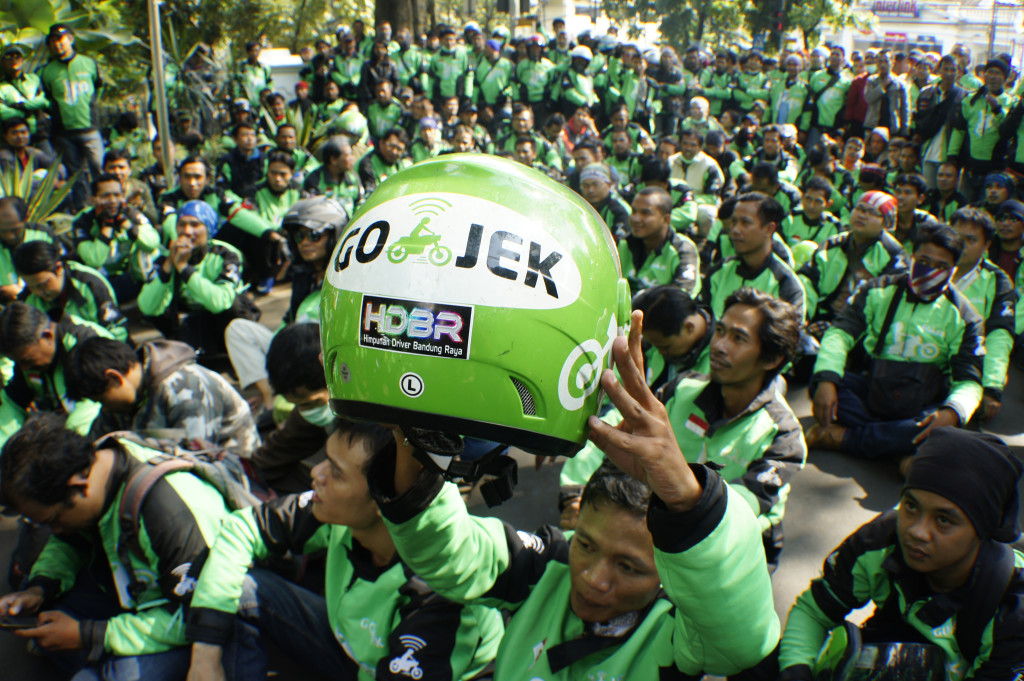
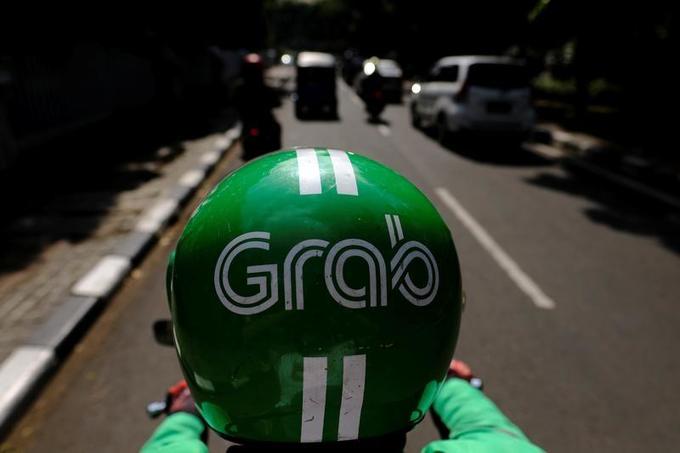
    The government is preparing to launch regulations fixing the rates drivers and riders for ride-hailing services such as Grab and Go-Jek receive, two officials said this week, creating potential obstacles for the companies’ expansion. The regulations would meet drivers’ demands for more oversight and higher rates but there are concerns that the rising costs to the companies could stifle their development as they battle to dominate the ride-hailing market in Southeast Asia’s biggest economy.

    Singapore-based Grab and homegrown Go-Jek have been locked in price wars in Indonesia, part of a wider fight to bring banking, e-commerce, ride-hailing, food-delivery and other services to every corner of Southeast Asia.

    However, since 2018, motorcycle taxi drivers working for Grab and Go-Jek in Jakarta have held protest rallies calling for higher fares and better conditions.

    The Ministry of Transportation plans to implement minimum and maximum tariffs for car and motorbike ride-hailing that will be “higher than Go-Jek and Grab’s current rates” and impose limits on promotional price cuts, said Budi Setyadi, director general of land transportation at the ministry.

    “This is for the safety and protection of drivers,” he said.

    Ahmad Yani, public transportation director at the ministry, said dependency on incentive-driven payments and low fixed rates per kilometer created a safety risk as it led to drivers overworking.

    He said Grab paid Rp 1,200 (8 US cents) per kilometer with a focus on bonuses, while Go-Jek’s rate was Rp 1,400 per kilometer.

    The officials said fixed fare ranges for motorbikes were still being finalized but would be implemented from March.

    Fixed rates for ride-hailing cars will start in June and be set at between Rp 3,500 and Rp 6,000 per kilometer on the islands of Java, Sumatra and Bali.

    The drivers were pushing for increases to a standard fare of Rp 3,000 to Rp 4,000 per kilometer.

    New Rules

    The firms said they welcomed the new rules, though they had not seen details of the motorbike regulations.”Grab believes the government will develop the best regulatory framework and hopes that all stakeholders will be included in the process,” said Tri Sukma Anreianno, the company’s head of public affairs .

    A Go-Jek spokesman said: “We support the government’s spirit to encourage our driver partners … and hope the regulation will have a positive impact on the sustainability of drivers’ income … and fair business competition.”

    However, both transportation officials said the companies are worried about the pending regulation since they have spent heavily on driver subsidies to slash their customer rates and build their businesses.

    “Grab and Go-Jek have told me they would prefer there was no regulation,” Ahmad said. “Due to the competition between them … they are scared what could happen if they don’t keep up with each other.”

    The Supreme Court blocked a previous attempt in 2017 by the transportation ministry to fix ride-hailing rates after drivers sued, saying the rules favored the taxi firms.

    Both ministry officials said the new regulations met anti-competition standards and followed extensive discussions with driver syndicates.

    Grab and Go-Jek drivers welcomed the prospect of standard fares.

    “I have been working for Grab since 2015. Before, I could earn Rp 300,000 to Rp 400,000 per day. Now, I can only get Rp 150,000,” said Hermansyah, a Grab motorcycle driver partner.

    Another driver, who had worked for both companies, said neither provided much protection, leading drivers to bear operational costs. He asked not to be identified since he had a role in organizing protests.

    The fixed rates will be a challenge to a business model that has depended on cheap passenger prices for growth and could undermine innovation.

    “Cheap fares has been the firms’ main way to attract customers,” said Yayat Suprityatna, urban and transportation observer at Trisakti University in Jakarta.

  • New E-Comm Rules: Flipkart India for broad market-driven framework

    New E-Comm Rules: Flipkart India for broad market-driven framework

    India’s largest online marketplace Flipkart has requested New Delhi that a broad, market-driven framework for the e-commerce industry be put in place after consultations with the relevant stakeholders. The request came a day after the federal government announced changes in the foreign direct investment (FDI) policy for the sector. On Wednesday, New Delhi took a series of measures to tighten the norms for e-commerce companies, such as Flipkart and Amazon, barring them from selling products of the entities in which they have a stake. The altered norms also restrict them from mandating any seller to sell products exclusively on their respective platforms.

    Flipkart said that the e-commerce ecosystem has created thousands of jobs apart from fostering innovations in MSME manufacturing, supply chain, warehousing, packaging, and digital payments.

    “Government policy changes will have long-term implications for the evolution of the promising sector and the whole ecosystem. It is important that a broad, market-driven framework through the right consultative process be put in place in order to drive the industry forward,” the Bengaluru-based online retail giant said in a statement.

    Flipkart was acquired by the US retail giant Walmart for $16 billion earlier this year in what was the country’s largest acquisition and the world’s biggest purchase of an ecommerce company.

    Amazon’s India unit said that the company was still evaluating the policy changes. The new policy aims to restrict any kind of control on inventory by an e-commerce marketplace entity, thus impacting Flipkart and Amazon as they have structured their group companies in a way that would help retain control on pricing and inventory.

    “For Amazon and Flipkart, this policy change brings massive challenges. They have to not only make changes into the business model and structure of how they are selling goods, but this will also affect the profitability due to limitations on private label products,” said Satish Meena, senior forecast analyst at Forrester Research.

    “Apart from this, the planned investment in the offline channel is going to be recalibrated after this change. All these will have an impact on how they scale up the business in India,” Meena added.

  • Grab Vietnam says Uber deal ‘no breach of competition laws’

    Grab Vietnam says Uber deal ‘no breach of competition laws’

    Ride-hailing firm Grab has asserted that it did not breach Vietnam’s competition laws, contesting authorities’ definitions and interpretations. The assertion was a response to the Ministry of Industry and Trade, which said Wednesday that it had evidence that Grab’s acquisition of Uber violated Vietnam’s Competition Law .

    In a statement released Thursday, Jerry Lim, country head of Grab Vietnam, said that the transaction between Grab and Uber earlier this year was conducted “in the good faith belief that there is no breach of competition laws, after diligent consultation with legal counsels.”

    Lim explained that the issue has become contentious because of differences in the authorities’ and Grab’s definitions of relevant market and what constitutes a competitive playing field.

    He said that the entrance of new ride-hailing companies into Vietnam shows that they believe there is a chance to succeed, with some of them claiming high market shares.

    In June, Vietnam’s first ride-hailing services FastGo and Aber were launched. Go-Viet, an affiliate of Indonesia’s Go-Jek, entered Vietnam in August, claiming to take 15 percent of the market share in Ho Chi Minh City within two weeks of launching.

    Vietnam’s top taxi operator Mai Linh and second-ranked Vinasun have also invested in a ride-hailing service to compete with Grab.

    Grab said that a ride-hailing app was just one of many options for customers. It cited a third-party survey, without revealing details, which said more than 59 percent of Vietnamese car ride-hailing users and 62 percent of motorbike ride-hailing users surveyed would switch to a different transport service other than ride-hailing if there was a 10 percent increase in prices.

    Lim also said that Grab was not the only ride-hailing company in the market, as the Vietnamese government has granted ride-hailing pilot licenses to nine other companies, including established taxi companies, to operate services in five cities and provinces.

    Both customers and drivers can respectively decide to switch to other forms of transport and join other companies if prevailing conditions such as pricing and income are not favorable to them.

    “The power of choice remains in the hands of customers,” Lim said.

    He said Grab has fully cooperated with the Vietnamese authorities for the purpose of a fair investigation and recommendation. “We fully understand that all governments seek to protect the best interests of consumers. Grab truly shares the same goals.”

    Lim said he hopes that the final verdict of the Vietnam Competition Committee will take into account the “vibrancy and contestability of the current Vietnamese market landscape and support the competitive business environment brought about by technology application and innovation.”

    Singapore-based Grab acquired Uber in Southeast Asia in return for a 27.5 percent stake in the U.S. company, with Uber CEO Dara Khosrowshahi joining Grab’s board.

    The 2004 Competition Law requires any merger or acquisition that results in a company gaining a 30 percent market share to be reported to competition authorities.

    If a company gains a 50 percent market share from the deal, it can only be implemented with express permission from the authorities.

    Preliminary investigations by Vietnamese authorities have found that Grab’s market share in Vietnam was in excess of 50 percent after Uber quit the market last April.

    But Grab has countered this, saying that since its combined market share with Uber in Vietnam was less than 30 percent, it did not have to “inform the competition authority before proceeding and completing this transaction in the country.”

  • Vietnam franchise rules under pressure to change

    Vietnam franchise rules under pressure to change

    At the end of the 1990s, franchise was still a strange concept to most people in Việt Nam. There were no opportunities to enjoy or even see the products and services of the world’s well-known brands in Việt Nam.

    KFC, McDonald, Starbucks and Lotteria were not familiar names for Vietnamese youth. However, this has changed.

    Now, you can start a beautiful morning with friends at a Starbucks or enjoy lunch with family at a KFC or Lotteria outlet. You could also purchase the latest Nike or Adidas products as well as those of other world famous brands at stores in Việt Nam.

    This change has been the result of a very effective business model – franchise.  After 40 years of  Đổi mới (Renewal) and more than 19 years since its entry into the World Trade Organization (WTO), Việt Nam has emerged as one of the most attractive countries for investors and franchisors, with a population of over 90 million, 65 per cent of whom are under 35 years old, and a very dynamic consumer class with a strong preference for foreign brands.

    Despite the global economic slowdown, thanks to its advantageous location, population size, and consumer habits, Việt Nam is now an ideal destination for many investors as well as franchisors.

    According to the Vietnamese Ministry of Industry and Trade (MoIT), around 160 franchises have entered Việt Nam so far. This is just the franchises that are required to register with MoIT before officially commencing their operation pursuant to the 2005 Commercial Law.

    The dominant business sectors for franchises are food services, retail, education, and entertainment. Food and beverage franchises account for 30 per cent of the registered franchises. The primary reason for the sustained increase in franchise activities in Việt Nam is the adoption of the 2005 Commercial Law and Decree 35/2006/NĐ-CP (later amended by Decree 120/2011/NĐ-CP), which, for the first time, provided a legal framework for franchising.

    Foreign franchisors are required to register their franchising activities before granting franchises in Việt Nam. If they carry out their franchise activities in the country without a certificate of franchise registration, they will face administrative sanctions, including fines ranging from VNĐ10 million to 20 million (approximately US$439-878).

    The franchisors must also consider the following conditions before registering their activities: The franchise network must have been in operation for at least one year.

    As regards Vietnamese sub-franchisors:

    – They must have operated the franchise business for at least one year before they initiate sub-franchising.

    – The goods or services that are the subject of a franchise agreement must not be on the Government’s list of banned goods and services.

    If they are on the list of goods and services subject to business restrictions, a special business license must be obtained before franchising is deployed.

    A franchise registration dossier must comprise:

    – An introduction of the franchise business containing the information as required by Circular 09/2006/TT-BTM guiding the commercial franchising registration;

    – A copy of the certificate of business registration or a legally equivalent document;

    – A copy of the certificate of protection of industrial property rights in Việt Nam or in foreign countries if the franchise includes a license of industrial property rights;

    – Approval from the primary franchisor to the sub-franchisee in case of a sub-franchisor;

    – Other documents required by the competent authority (including the franchise agreement or form of agreement).All documents issued in a foreign language must be notarized and legalized. The Vietnamese versions of such documents must also be notarized.

    According to Decree 35, the franchisor has an obligation to provide the franchisee with the information regarding the franchise system, namely a copy of a form of franchise agreement and an introduction of the franchise business, at least 15 days before signing the agreement. The franchisor must also notify the franchisee of all substantial changes in the franchise system.

    In case of a master franchise, in addition to providing the aforementioned information, the secondary franchisor must also provide a proposed franchisee with the following information in writing: (a) information about the franchisor which has granted the franchise; (b) contents of the master franchise contract; and (c) the manner in which secondary franchise contracts will be dealt with in the event of termination of the master franchise contract.

    If the parties select application of the law of Việt Nam, the franchise contract may contain the following main items:

    i. Contents of franchising;

    ii. Rights and obligations of the franchisor;

    iii. Rights and obligations of the franchisee;

    iv. Price and periodic franchising fee, and payment method;

    v. Term of the contract; and,

    vi. Extension and termination of the contract, and dispute resolution.

    The franchise contract must be made in Vietnamese. In the case of a franchise from Việt Nam to overseas, the parties must agree on the language of the franchise contract. Once registered, a franchisor must report any changes in the general information about the franchisor and/or changes affecting the relevant industrial property rights (i.e., changes in Part a) to the competent authority within 30 days after the date of change.

    In addition, by January 15 every year, a franchisor must send an annual report to the competent authority on the matters contained in the disclosure document.

    The above regulations regarding franchise activities in Việt Nam are provided in the 2005 Commercial Law. However, such regulations were issued in 2005 and there are some defects in this law: the definition of franchising is not clear for distinguishing between a trademark licence agreement or a technology transfer agreement; the conditions on franchisee and sub-franchisee do not offer sufficient protection for the rights of the sub-franchisees.

    In addition, the method and measures for controlling and checking the franchisee’s activities by the franchisor are not clear.

    Furthermore, numerous changes in the legal system, such as adoption of new investment and enterprise laws, the civil code, changes in the legislative mindset of lawmakers, have occurred in order to protect and ensure the freedom of enterprises as well as actual business conditions at a time Việt Nam is deepening its international integration.

    Therefore, the need to revise the said regulations should be taken into account. In fact, the drafting of a new commercial law is underway and, according to MoIT, the draft will be submitted to the Government in 2017 and publicised to collect feedback before it is submitted to the National Assembly for passage in 2018.

    The franchise business in Việt Nam has developed in a stable manner thus far. With a new commercial law to be adopted soon, this business will hopefully prosper further.
    Read more at https://vietnamnews.vn/economy/350237/vn-franchise-rules-under-pressure-to-change.html#wg0kz4K4qwK39BXg.99


  • App makers not ready for Apple’s new ATS rules

    App makers not ready for Apple’s new ATS rules

    A month before Apple is expected to enforce stricter security requirements for app communications in iOS, enterprise developers are not ready for the changes, a new study indicates.

    The study was performed by security firm Appthority on the most common 200 apps installed on iOS devices being used within enterprise environments. The researchers looked at how well these apps conform to Apple’s App Transport Security (ATS) requirements.

    The researchers found that 97% of the analyzed apps — 193 out of 200 — used exceptions and other settings that weakened the default ATS configuration.

    ATS was first introduced and was enabled by default in iOS 9. The standard forces all apps to communicate with internet servers using encrypted HTTPS (HTTP over SSL/TLS) connections and ensures that only industry-standard encryption protocols and ciphers without known weaknesses are used. For example, SSL version 3 is not allowed and neither is the RC4 stream cipher, due to known vulnerabilities.

    Before ATS, app developers implemented HTTPS using third-party frameworks, but configuring SSL/TLS properly is hard so implementation errors were common. These weakened the protection that the protocol is supposed to provide against traffic snooping and other man-in-the-middle attacks.

    Currently iOS provides a method for apps to opt out of ATS entirely or to use it only for specific connections, but Apple wants to change that. At its Worldwide Developers’ Conference in June, the company announced that it will require all apps published on the App Store to turn on ATS by the end of this year.

    The requirement won’t be enforced at the OS level, but through the App Store review process. Using some of the ATS exceptions will still be possible, but developers will have to provide a “reasonable justification” for using them if they want their apps to be approved.

    “Among the top 200 iOS apps that we analyzed, 166 apps (83%) bypass at least some ATS requirements by setting ‘NSAllowsArbitraryLoads’ attribute to ‘true’ in their Info.plist files,” the Appthority researchers said in their report.

    “However, not all of them bypass ATS requirements for all network connections. For instance, a company can still support ATS requirements for network connections with its domain, while allowing ATS to bypass all other connections.”

    Apps that didn’t use HTTPS for all of their connections include Facebook, Twitter, LinkedIn, Facebook Messenger, Skype, Viber, WhatsApp, Fox News, CNN, BBC, Netflix, ESPN, Hulu, Pandora, Amazon Cloud Player, Word, Excel, PowerPoint, and OneNote, but also utility apps like Flashlight, QR code readers and games.