Retail News CRM

Tag: rural

  • Elon Musk’s Starlink Takes Flight in Maharashtra: A Game-changing Leap for Rural Connectivity in India

    Elon Musk’s Starlink Takes Flight in Maharashtra: A Game-changing Leap for Rural Connectivity in India

    In an unprecedented move to combat the digital divide in India, the state of Maharashtra has pioneered a partnership with Elon Musk’s Starlink, a satellite-based internet service. The state government formalized this collaboration by signing a Letter of Intent (LoI) with Starlink Satellite Communications Private Limited. This is the illustrious debut of the SpaceX-affiliated venture in India.

    Expanding Internet Access

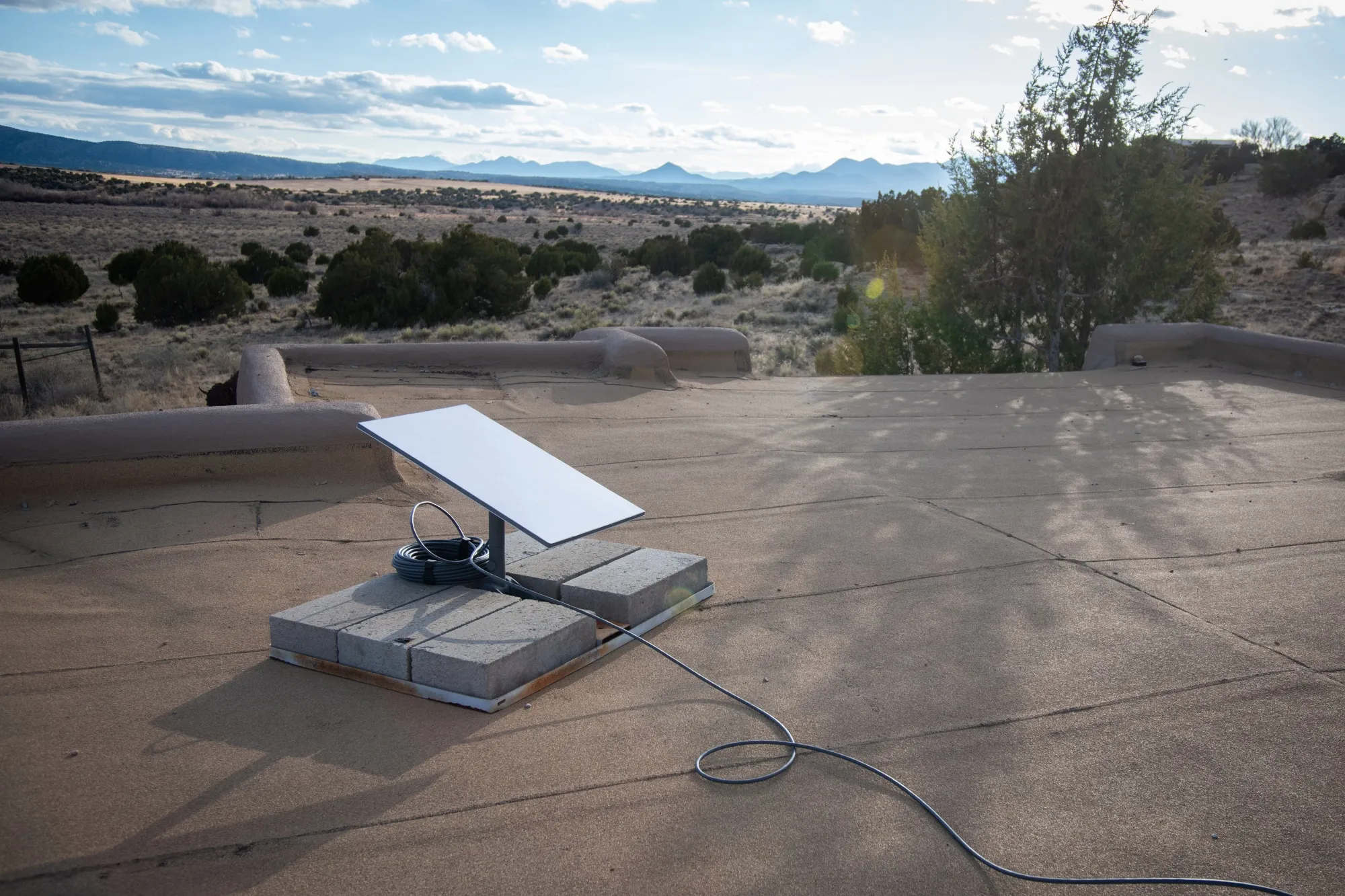
    The plan is to install Starlink’s satellite broadband across rural and remote sections of Maharashtra, thus offering high-speed, low-latency internet access to government bodies, public facilities, and neglected districts. This includes locations such as Gadchiroli, Nandurbar, Dharashiv, and Washim. This initiative is in line with the state’s Digital Maharashtra Mission, which seeks to ensure digital inclusivity across the state and enhance various sectors such as e-governance, education, healthcare, and intelligent agriculture.

    Devendra Fadnavis, the Chief Minister of Maharashtra, expressed his excitement about Starlink, stating it is a leading company in the ICT sector. He expressed his honor at welcoming the company to India and its partnership with Maharashtra.

    Improving Connectivity

    The collaboration between Maharashtra and Starlink is anticipated to dramatically improve connectivity in regions with challenging landscapes and inadequate telecommunication infrastructure. By utilizing low-Earth orbit (LEO) satellites, Starlink is capable of providing stable internet in areas where installing fiber or setting up mobile towers is not economically or logistically feasible. Officials have stated that the service will also heighten disaster response and emergency communication networks, especially in areas prone to floods or forested regions.

    As Starlink prepares to fully launch in India by the beginning of 2026, it plans to construct nine satellite gateway stations across India, including in Mumbai, Noida, Kolkata, Chandigarh, and Lucknow, to ensure uninterrupted national coverage. Starlink operates the world’s largest communications satellite network, boasting over 6,000 LEO satellites in orbit and providing broadband access in more than 70 countries.

    Competing in the Broadband Market

    Starlink is set to directly challenge Jio Satellite Communications and Eutelsat OneWeb, who are both undertaking comparable rural and enterprise broadband projects in India. Industry experts view the partnership between Maharashtra and Starlink as a significant development in India’s digital inclusion efforts, especially as the government is expediting the BharatNet project and advocating for universal high-speed internet access. If Maharashtra’s strategy proves successful, it could serve as a model for other Indian states and could potentially widen Starlink’s reach across the country’s most secluded regions.

    Questions & Answers

    What is the aim of Maharashtra’s partnership with Starlink?
    The goal of the partnership is to provide high-speed, low-latency internet access to rural and neglected areas in Maharashtra, aiding in the digital inclusion efforts of the state.

    How will Starlink improve connectivity in remote areas?
    Starlink aims to improve connectivity by using low-Earth orbit satellites to provide stable internet in areas where it is not feasible to install fiber or establish mobile towers.

    What are the broader implications of this partnership for India?
    If successful, the partnership could serve as a model for other states in India, expanding high-speed internet access and digital inclusivity efforts across the country.

  • Alibaba Stimulates China’s Rural Online Retail

    Alibaba Stimulates China’s Rural Online Retail

    Using its strengths in marketplace, big data and logistics, Alibaba Group will help rural communities sell their products to cities dwellers so they can stock up on Spring Festival supplies and along the way help give rural economies a lift. At the same time, quality products from all over the world will be brought to Chinese consumers as they celebrate the most important festival on the Chinese calendar.

    Highlights of this year’s upcomg Chinese New Year Shopping Festival include:

    Promotion of two-way trade:

    To promote trade between rural and urban regions, Tmall.com’s fresh food channel will introduce fresh fruit and meat produce from abroad, such as cherries from Australia, orange roughies from New Zealand and kurobuta pork from the US, to Chinese consumers. At the same time, poultry and meat from villages, including chicken from Qingyuan County of Guangdong Province, beef from the Horqin Grassland of Inner Mongolia, organic mutton from licorice-fed lambs in Gansu Province, yak meat from Aba of Sichuan-Tibet Plateau, and mutton from Yanchi County of Ningxia Hui Autonomous Region, will be brought to dining tables in the cities.

    Live broadcasts about rural produce:

    To give urban consumers peace of mind about rural produce, 12 “village celebrities” will conduct live broadcasts via Tmall and Taobao mobile apps and show urban consumers how some of the farm produce are harvested and processed before they end up as delicacies on the dining table.

    Rural family reunion photo project:

    For rural children whose parents have gone to cities to find work, Chinese New Year is often the only time when they get to see their parents when they return home. For communities where a family photo is often considered a luxury, Rural Taobao’s local services booking platform are mobilising its merchants to give away family portrait packages to 10,000 families across 20 counties as a first step that Alibaba says is to assist bring families closer together.

    Rural employment platform:

    A one-stop village employment platform will be launched by Rural Taobao in January to provide job information for workers returning to their home villages for the Chinese new year holidays. Through the project, it is hoped that some of them will be able to find work closer to home. As a part of the project, Rural Taobao representatives will assist job seekers in completing their résumés and entering their information on the platform.

    New Year Eve’s banquet:

    For the elderly and children who are left behind in villages, Rural Taobao is organising a Chinese new year’s eve banquet for 6,000 tables of guests so they can share in a moment of warmth and togetherness.

    Sun Lijun, Vice President of Alibaba Group who oversees the company’s rural business division, said, “Alibaba strives to create closer connections between urban and rural areas in China, narrowing the wealth gap and improving the living standard of those who live in villages.”

    Alibaba Group launched Rural Taobao in 2014, mainly as a platform to promote rural online trade. Alibaba Group Holding Limited is a Chinese e-commerce company that provides consumer-to-consumer, business-to-consumer and business-to-business sales services via web portals. It also provides electronic payment services, a shopping search engine and data-centric cloud computing services. The group began in 1999 when Jack Ma founded the website Alibaba.com, a business-to-business portal to connect Chinese manufacturers with overseas buyers. 

  • Australia plans controversial rural NBN levy

    Australia plans controversial rural NBN levy

    The Australian government is planning to impose a monthly levy on rival networks to the state-funded National Broadband Network (NBN) to help fund the roll out of the NBN to rural areas.

    Communications minister Mitch Fifield said the government will seek to pass legislation that would establish an A$40 million ($30 million) Regional Broadband Scheme.

    This scheme would be funded by a levy of A$7.30 per month for each fixed line connection provided by rival superfast broadband providers, increasing every year into 2022 when it reaches A$8 per month.

    The levy would not apply for small companies with under 2,000 customers. Australia’s largest operator Telstra and main rival Optus will also be exempt because they are transitioning their fixed line operations onto the NBN as part of separate deals with the government.

    But the government’s own advice indicates that such a levy will be passed on to consumers resulting in higher prices.

    High-speed providers have complained that the proposed levy could “cripple” their operations, destroying 30% of their revenue, the report adds. The proposal has also been slammed as extremely anti-competitive.

    The presence of competing fiber networks to the NBN has been a contentious issue since the project was first announced in 2007, with successive governments fearing that the rival services could “cherry pick” the network’s most lucrative customers in dense population centers without needing to invest large sums to reach sparse regional areas.

  • New Zealand to extend rural broadband initiative

    New Zealand to extend rural broadband initiative

    The New Zealand government has allocated a further NZ$150 million ($107.1 million) towards improving broadband connectivity in rural areas.

    The government has announced the next phase of the rural broadband initiative (RBI), a project to boost broadband coverage and speeds in the 25% of the population not due to be covered by the concurrent Ultrafast Broadband (UFB) project.

    Under the second phase of the RBI program, improved broadband will be delivered to communities unable to access broadband speeds of at least 20Mbps. The first phase of the program improved speeds for around 293,000 rural users.

    In addition, the government’s mobile black spot fund (MBSF) will improve the availability of mobile services in areas lacking coverage, including state highways and tourist areas.

    There are more than 200 blackspots listed in the government’s request for proposals, but not all locations will received coverage.

    “My aim is to provide high-speed broadband to the greatest number of under-served rural New Zealanders within the funding available, and give regional communities access to high-speed broadband. We also want to improve the reach of mobile services to support safety on State Highways and enhance the visitor experience for tourists,” communications minister Amy Adams said.

    “We’ve set an ambitious goal of ensuring that by 2025, 99% of New Zealanders will have access to broadband peak speeds of at least 50Mbps, and everyone will have at least 10Mbps. We’re interested in seeing how proposals for delivering coverage under the RBI2 and MBSF programmes show an upgrade path in line with this vision.”

  • Thailand sets terms for rural broadband project

    Thailand sets terms for rural broadband project

    Thailand’s ICT ministry has finalized the terms of reference for a tender auction for a 15 billion baht ($433.1 million) national broadband project.

    The project’s procurement committee is preparing the auction process and expects to name the winner by September 15, citing comments from ICT minister Uttama Savanayana.

    Whichever company is selected for the project will be a major supplier of fiber or copper broadband networks for the national project. State-owned operator TOT will be in charge of distributing the network to selected areas and hiring private companies to construct it.

    The national project aims to extend broadband infrastructure to the 39,000 villages that still lack broadband internet access. Uttama said the ministry aims to expand the network to at least 10,000 villages by the end of the year and to all 39,000 next year.

    While the ICT ministry first aimed to complete the terms of reference for the project by March, it was delayed by several months due to management issues, the report states. The project forms part of the government’s digital economy and Thailand 4.0 policies.

    TOT was selected to take sole responsibility for the project in April, despite initial plans to have the company jointly oversee the project with fellow state-owned operator CAT.