Tag: russian

  • Russian duo hail Stars Coffee as successor brand to Starbucks

    Russian duo hail Stars Coffee as successor brand to Starbucks

    A restaurateur and rapper duo unveiled Stars Coffee on Thursday, reopening the chain of coffee shops in Russia formerly owned by Starbucks Corp, the latest major company rebranding after a months-long Western corporate exodus from the country. At a packed launch in central Moscow, rapper Timati presented the new brand, whose logo features an image of a woman with a star above her head, alongside co-owner and restaurateur Anton Pinskiy, before shops start opening on Friday. Banned from using the

    Banned from using the Starbucks logo, Timati said they had sought to find some continuity, namely the circular shape and “female gender”, which he said contrasted nicely with the brown, cigar-like “masculine colour” in the new logo.

    “People’s perceptions may be different,” said Pinskiy. “But if you compare, then apart from the circle, you won’t find anything in common.”

    Starbucks declined to comment on the similarity of the logo and name, but referred to an earlier statement in which it said the company had made the decision to exit and no longer had a brand presence in the Russian market.

    Since Starbucks had its own resource and production base, Timati said the duo had to find new suppliers, but they had encountered no problems.

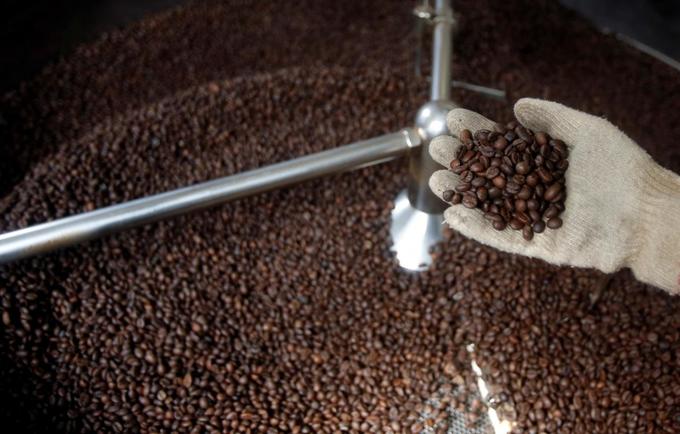
    Stars Coffee imports beans from Latin America and Africa, Pinskiy said, with suppliers of other items based in Russia.

    “We just found other suppliers, found the right roasters, and because the baristas mixed it all correctly, we have a product that we think will be competitive,” he said.

    Seattle-based Starbucks, which helped popularise takeaway coffee in a traditionally tea-loving society, said it would exit Russia after nearly 15 years in late May.

    Starbucks had 130 stores in Russia, operated by its licensee Alshaya Group, with nearly 2,000 employees in the country. Pinskiy said shops would gradually reopen throughout August and September.

    Wider Trend

    Global franchise operator Alshaya, established in Kuwait, had lost interest in doing business after Starbucks pulled its brand from Russia, Timati said. Alshaya did not immediately respond to a request for comment.

    “We won the tender – there were a lot of participants – acquired it and made our own brand,” he said.

    The deal mirrors a wider trend among Western brands, which has been changing the country’s retail and corporate landscapes as the conflict in Ukraine enters its sixth month.

    Renault sold its majority stake in carmaker Avtovaz to a Russian player for just one rouble, while McDonald’s Corp, whose restaurants have now become Vkusno & tochka, did not disclose a figure.

    Both of those deals included buyback options, but Pinskiy said that didn’t apply to Starbucks due to the franchise model it operated under in Russia.

    He declined to disclose figures concerning the deal with Alshaya. “We have invested as much as we paid them,” Pinskiy said. “This is (an) expensive pleasure.”

    The pair said they were interested in more acquisitions, but gave no further details.

    While the partnership may appear unlikely, Timati, one of Russia’s most famous rappers, co-founded the Black Star Burger chain in Russia, which sells a “Timati Burger”.

    He is also known for his support of the Kremlin and in 2015 released a track containing the lyrics “President Putin is my best friend”.

    Pinskiy, who earlier this month told Russian reporter and political activist Ksenia Sobchak that he had never tried coffee in his life, has a string of restaurants in his portfolio, including a joint project with Timati, REDBOX, which serves Pan-Asian cuisine.
  • AS Watson to shut down its Russian business

    AS Watson to shut down its Russian business

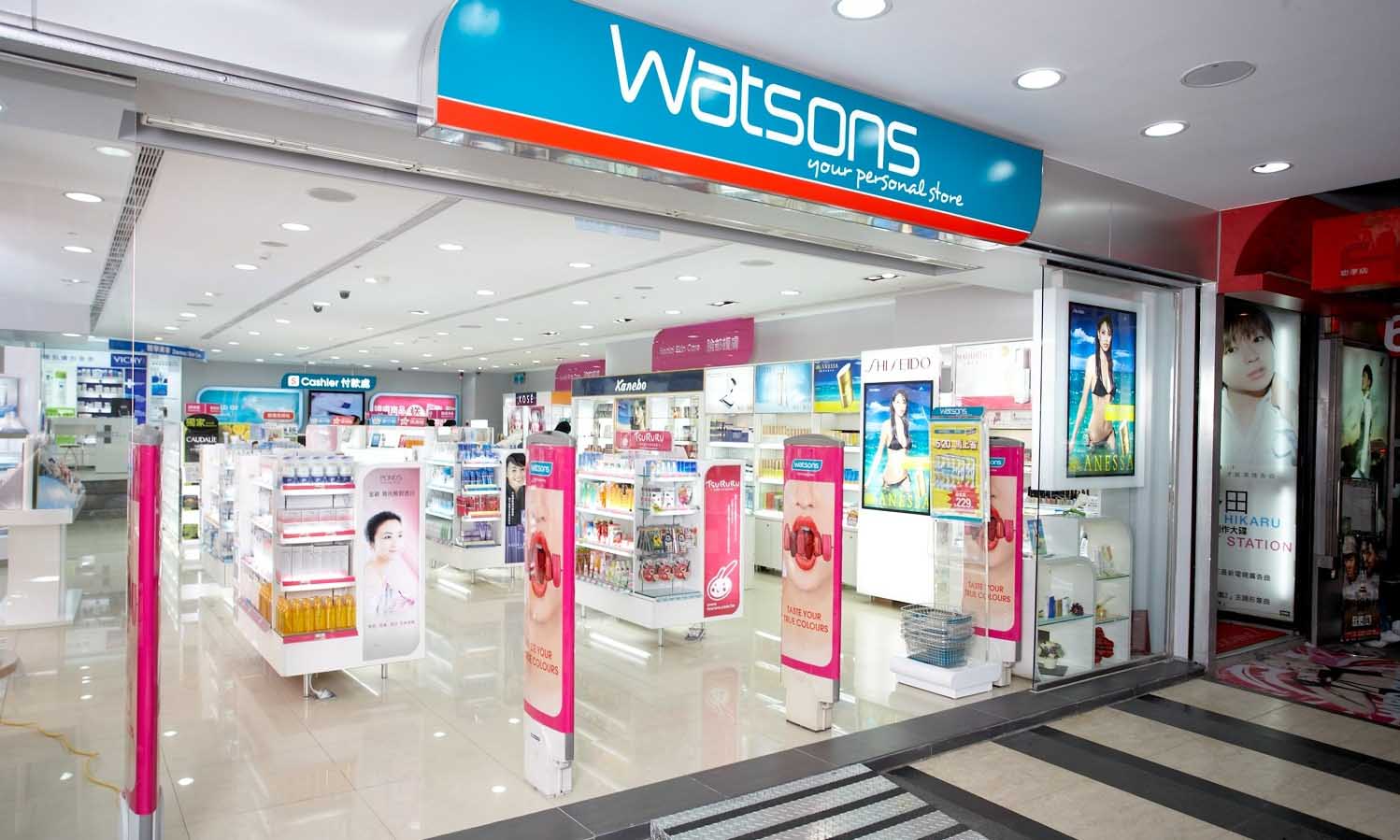
    A.S. Watson Group will be exiting the Russian market due to unsatisfactory business performance. The company did not relate its departure to the ongoing Russia-Ukraine war. In a statement, a spokesperson from A.S. Watson Group said, “After serious consideration, we decided to cease the operation of Watsons Russia by June 2022 and prioritize our investment in other markets.”

    The company added that it made the decision in late January due to the unsatisfactory business performance in the Russian market.

    Currently, Watsons Russia only has a presence in the city of Saint Petersburg with 47 stores. The company said although the local team had made many attempts to improve the business performance over the years, however, the results were not satisfactory.

    After leaving Russia, Watsons will still operate in other European countries, including Ukraine and Turkey. The spokesperson said the decision of quitting the Russian market will allow the brand to focus more on other key markets where it can generate a better return on investment.

    Many brands, including retail companies, from around the world are leaving the Russian market due to the ongoing Russia-Ukraine war. UNIQLO’s parent company, Fast Retailing, said it had become clear to the brand that it can no longer proceed its operations in Russia “due to a number of difficulties”. The fashion brand added that it is “strongly against any acts of hostility”. “We condemn all forms of aggression that violate human rights and threaten the peaceful existence of individuals,” said UNIQLO.

    UNIQLO initially announced on 8 March that it will continue to sell its clothes in Russia, with Fast Retailing’s CEO Tadashi Yanai defending the brand’s stance at that time. While other major corporations were quick to close their stores and halt operations in protest of Russia’s unprovoked attack on Ukraine, Yanai argued at that time that “Russians still needed access to daily necessities such as clothing.”

    Since the invasion, numerous companies have pulled out of the market. At the same time, other retail and luxury brands including Levi’s, Inditex, Hermès, Chanel, Cartier, LVMH, and Kering have temporarily suspended operations in Russia. LMVH’s Louis Vuitton has pledged to donate US$1.08 million to refugees, adding that it was “deeply touched by the tragic situation unfolding in Ukraine”. Chanel also cited “increasing concerns” regarding the current situation as well as the “growing uncertainty and the complexity to operate”.

    McDonald’s has also shut down its operations in Russia. However, the move is expected to cost the fast-food restaurant US$50 million a month, or about five to six cents per share, CFO Kevin Ozan said at the UBS Global Consumer and Retail Conference. McDonald’s has also closed 108 of its stores in Ukraine for the time being. Together, these stores account for about 2% of its sales, 9% of its revenue, and 3% of its operating income, CNBC reported. However, McDonald’s CEO Chris Kempczinski said in a statement that it will continue to provide salaries for all affected employees. Additionally, McDonald’s donated US$5 million to its Employee Assistance Fund to provide financial support to its employees in Ukraine.

  • Russian liquor pulled from shelves in response to invasion

    Russian liquor pulled from shelves in response to invasion

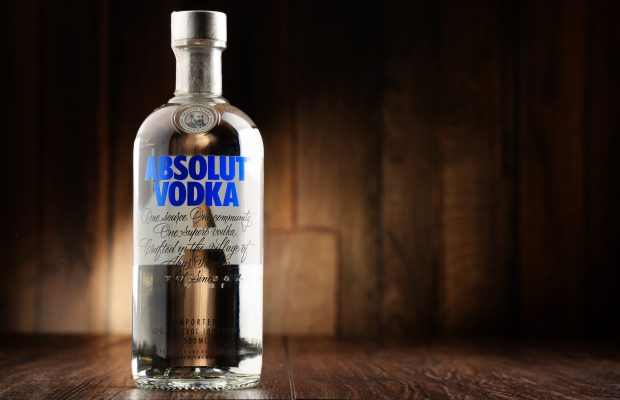
    British Columbia is removing Russian spirits from liquor store shelves, and putting a halt to importing more, in solidarity with Ukraine as Russia continues to wage war on the country.

    “Our province stands with those who understand Europe’s peace following two world wars depends on respecting international law,” Deputy Premier Mike Farnworth said in a media release Friday afternoon.

    Premier John Horgan says efforts are underway to help the people of Ukraine after the Russian invasion began this week.

    “My intergovernmental officials are working with Ottawa to see what we can do with respect to sanctions and what we can do with respect to providing safe harbour for those that are fleeing with the violence that’s been beset upon them by a government that has clearly lost its way.”

    Farnworth said the province is donating $1 million to the Red Cross campaign in support of Ukrainian people.

    Several provinces pulled Russian products from liquor store shelves Friday as a sign of solidarity with Ukraine.

    Opposition Leader Kevin Falcon called for the removal of Russian liquor from B.C. store shelves Friday morning.

    “What is going on in Ukraine is so totally unacceptable to all our democratic values and the things we hold dear,” he said.

    “I just think the province of British Columbia needs to do everything we can do to lend our support against those that are supporting Putin.”

  • Revolut Founders: a Russian and a Ukrainian

    Revolut Founders: a Russian and a Ukrainian

    Vladimir Putin could learn a thing or two about successful cooperation from the co-founders of Revolut.

    Revolut’s co-founders CEO Nik Storonsky and CTO Vlad Yatsenko, who are Russian and Ukrainian respectively, show what a successful collaboration between the two nationalities can accomplish.

    Founded in 2015, Revolut is both the fastest growing and widely used neo bank in Switzerland. While not a real bank itself, Revolut partners with Credit Suisse to provide its services.

    Like the connection of their Swiss neobank to Credit Suisse, both men also share a Swiss connection. Storonsky was an emerging markets equity derivatives trader at Credit Suisse, and Yatsenko worked at Paradeplatz rival UBS.

    On Thursday the U.K. revealed a list of sanctions against Russia, with Foreign Secretary Liz Truss stressing that it is an «unprecedented package of sanctions decisively delivers the highest economic cost we have ever imposed on the Kremlin.

    For now, the U.K. sanctions appear to be targeted at Russian President Vladimir Putin, his inner circle and raising finance on the UK financial markets. Both Storonsky and Yatsenko are certainly watching the conflict unfold in personal terms. The business side is also keeping an eye on developments.

    As a U.K. business subject to regulation by the Financial Conduct Authority (FCA), Revolut operates in compliance with all applicable sanctions law and legislation. We continue to monitor the situation in Ukraine carefully and will take any further actions required as necessary, a spokesman for Revolut told finews.com.

    But when you talk about destruction, don’t you know that you can count me out, to quote the Beatles.

  • Bank of Singapore Loses Russian Heavyweight

    Bank of Singapore Loses Russian Heavyweight

    A key private banker covering the Russian market has left Bank of Singapore.

    Vadim Bondarev, head for Russia and Eastern Europe, is leaving Bank of Singapore (BoS), sources familiar with his exit said.

    A spokesperson from the bank confirmed this information.

    Bondarev joined BoS in 2014 and was responsible for covering ultra-high-net-worth clients from Russia and CIS. He lately relocated from Singapore to build up the European headquarters of BoS in Luxembourg.

  • Business council expects 100 thousand Russian tourists to Indonesia

    Business council expects 100 thousand Russian tourists to Indonesia

    Russia-Indonesia Business Council expects an increase in the number of Indonesian tourists to Russia and vice versa in 2016 and the coming years, in order to strengthen relations and economic cooperation between the two countries.

    A statement from the Russia-Indonesia Business Council received by ANTARA here on Thursday said that tourism was a topic of particular concern at the annual Business Forum held on October 31 in Jakarta.

    Mikhail Kuritsyn, the CEO of Russia-Indonesia Business Council, expected 100 thousand Russian tourists to visit Indonesia in the coming years, and 18 thousand Indonesian tourists to visit Russia in 2016.

    He also called for the diversification of tourism in Indonesia, so that Russian tourists would not only visit Bali Island but also other tourist destinations, which are spread across various islands in the country.

    Direct flights from Jakarta to Moscow will be the first step in enhancing the tourism cooperation.

    The national flight carrier, Garuda Indonesia, is expected to become the operator for Indonesia – Moscow flight before the second quarter of 2017.

    The Russia-Indonesia Business Forum was attended by the Russian Federation Minister of Industry and Trade, Denis Manturov; the Indonesian Minister of Maritime Affairs and Fisheries, Susi Pudjiastuti; the Indonesian Coordinating Minister for Economic Affairs, Darmin Nasution; and the Russian Federation Ambassador Extraordinary and Plenipotentiary to Indonesia, Mikhail Galuzin.

    The forum was participated by 150 delegates from Indonesian companies and 100 representatives from Russian companies, including Russian Railways, United Shipbuilding Corporation, Rosneft, Rusal, Rusnano and Rostech.

    The Russia-Indonesia Business Council is a non-governmental organization which was established to bring together Russian and Indonesian businesses.

    Its main mission was to develop a mutually beneficial business relationship in order to strengthen and expand economic trade, investment and scientific cooperation between the two countries.