Tag: s

  • With 3D printed ‘steaks’, Spanish startup eyes the mass market

    With 3D printed ‘steaks’, Spanish startup eyes the mass market

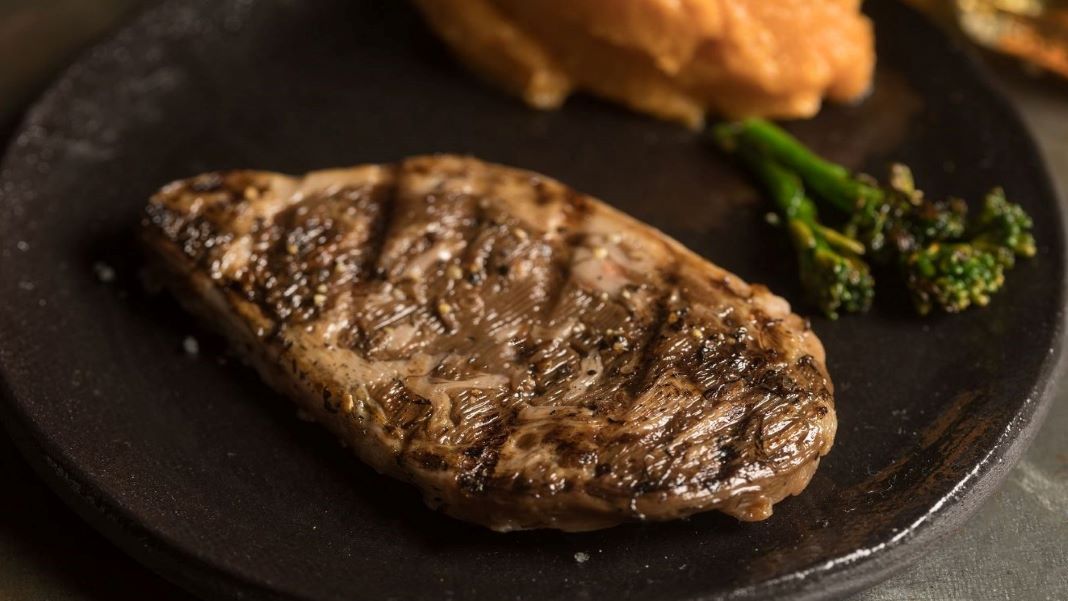
    As demand for plant-based alternatives to meat rises, Barcelona-based startup Novameat is using its 3D printing technology to manufacture vegetarian “steaks” that it hopes will reach the mass market next year.

    Novameat plans to sell its “steaks” directly to consumers and to businesses such as restaurants interested in producing plant-based meat, business development manager Alexandre Campos said.

    The Spanish company, which developed its technology in 2018, was showing how its latest 3D printer produced food at Barcelona’s Mobile World Congress (MWC).

    “It didn’t have the feeling of a traditional steak but I was positively surprised because I did not expect that the texture would be so well achieved,” said Ferran Gregori, after trying one of the “steaks” printed at Novameat’s stand at the world’s largest telecoms gathering.

    The company uses 3D technology to test recipes, introducing ingredients through capsules because it is a cheaper process than mass-producing, Campos said.

    Once a model is considered successful, it could then be produced on a larger scale in bigger machines not using 3D technology, manufacturing up to 500 kg of fake meat per hour, he added.

    Campos said the startup’s aim had been to recreate the muscle fibers of animal meat but using 100% plant-based ingredients. He forecast the plant-based industry would keep growing at double-digit rates in the foreseeable future.

    The company also said it was producing fake meat for environmental reasons.

    “We seek to replace animal meat for something that is better for the planet, ourselves and animals,” Campos said.

  • Indonesia Improves Ranking on Global Intellectual Property Index

    Indonesia Improves Ranking on Global Intellectual Property Index

    Indonesia has increased its ranking on the United States Chamber of Commerce’s 2018 International Intellectual Property Index this year, which shows that the government’s efforts to protect copyrights are starting to bear fruit.

    The sixth edition of the annual report titled “Create,” published last month, shows the state of intellectual property rights in the world’s 50 biggest economies.

    The index uses 40 indicators in eight categories to evaluate which policies and efforts have been effective in protecting intellectual property rights.

    Indonesia scored 12.14 compared with last year’s 9.64, putting it in 43th place – just above India (44), but below Thailand (41), Vietnam (40), Brunei (35) and Singapore (9).

    Topping the list are the United States, Britain, Sweden, France and Germany.

    Patrick Kilbride, vice president of international intellectual property for the Global Innovation Policy Center at the US Chamber of Commerce, said music and film are two of the sectors that have improved the most in Indonesia.

    “Indonesia does well [in the creative industry]. I think copyright helps to preserve [intellectual property]. It’s a vehicle for cultural experience,” he said.

    The report also notes that Indonesia has improved measures to control copyright infringements through an online system. The government and the creative and advertising industry established the Infringing Website List to address such cases in the creative industry.

    The report lauds the government’s framework for intellectual property rights, which was established across ministries. It notes that over the past decade, the country has had an inter-ministerial group tasked with the enforcement of these rights.

    Through a 2006 presidential decree, the government also created a national intellectual property task force, which is responsible for designing policies and measures to enforce intellectual property rights.

    The task force, which consists of cabinet-level officials from the ministries of industry, trade, finance, foreign affairs, justice and home affairs, reports directly to the president.

    Biotech, Software

    However, Kilbride said the biotechnology and software sectors are still vulnerable in the country.

    “Foreign companies operating in that space [biotech and software] may be less inclined to bring their products to Indonesia and must be less inclined to invest in domestic innovation,” Kilbride said.

    The report further highlights certain weaknesses Indonesia still has to address, such as limited participation in international intellectual property treaties, copyright piracy and a 2016 law that has proven to be a barrier to foreign companies entering the country, as it requires them to transfer all patented technologies and processes.

    Kilbride said 80 percent of research and development in Indonesia is currently state-funded, but that it should be the exact opposite. Private companies are deterred from investing or expanding in the country if there are no clear regulations on intellectual property rights.

    “The private sector doesn’t have enough confidence in the domestic system to take risks. Intellectual property is to enable risk-taking. If you are in a sector with a high cost of entry, maybe it takes a long time to take a product to market, from research to development and testing. It costs a lot of money. You won’t want to spend a lot of money without rock-solid rights,” Kilbride said.

    He said Indonesia will do well in the coming years as it has a large population, dynamic economy, young workforce and abundant natural resources. However, innovation is key.

    “With strong intellectual property protections, the industry would be willing to invest in Indonesia; to invest in R&D. [This will] put Indonesia on the cutting edge of global technology and help it to overcome the middle-income trap,” Kilbride said.
  • 2017 Mercedes-Benz S-Class facelift includes new engines

    2017 Mercedes-Benz S-Class facelift includes new engines

    Flagship saloon receives mandatory mid-life design tweaks and new inline-six and eight-cylinder engines.  The Mercedes-Benz S-class you see here in official pictures is a mid-life refresh of the current generation that’s currently making its debut at the Shanghai motor show.

    Stuttgart’s flagship saloon gets a more prominent face thanks to more accentuated air vents in the bumper. The interior has also been updated with new materials and sportier-looking steering wheel for AMG-trimmed models.

    Mercedes-Benz usually showcases its latest technologies in the S-class before letting them filter down into other models. And while the S-class can already do many things in a semi-autonomous manners, it has raised the bar of its so-called Distronic Active Proximity Control and Active Steering Assist systems.

    Apart from being able to automatically accelerate and brake within speed limits, the S-class can also self-steer for half-a-minute. These features are probably the most advanced driver-assist technologies available so far in a production-ready vehicle.

    After using V6 engines for many years, Mercedes-Benz has returned with a straight-six petrol and diesel engines. These 3.0-litre motors are said to be developments of the existing 2.0-litre four-pot motors and are hooked up to 48V electrical motor and compressor systems and lithium-ion batteries to help enhance performance, as well as reducing fuel consumption and CO2 emissions.

    There are two outputs for the diesel head including 286hp for the S350d and 340hp for S400d. The petrol version gets plug-in ability to allow for 50km of pure electric driving. This particular model is called S560e and replaces the S500e, which had 3.0-litre V6 petrol-electric hybrid.

    On the high performance front, the 455hp 5.5-litre twin-turbo V8 seen in the S500 has been superseded by a smaller 468hp 4.0-litre bi-turbo V8, now called S560.

    As the Thai government is now trying to lure carmakers in bringing EV technology to Thailand, Mercedes-Benz (Thailand) will continue to focus purely on plug-in hybrid for the revised S-class when sales start toward the end of this year.

    As reported earlier, this particular hybrid drivetrain will also appear in a performance-oriented version of the E-class Coupe. The rumoured Mercedes-AMG E50 is said to develop over 400hp when petrol power is combined with electricity.

  • Singapore Post launches eComm Log Hub

    Singapore Post launches eComm Log Hub

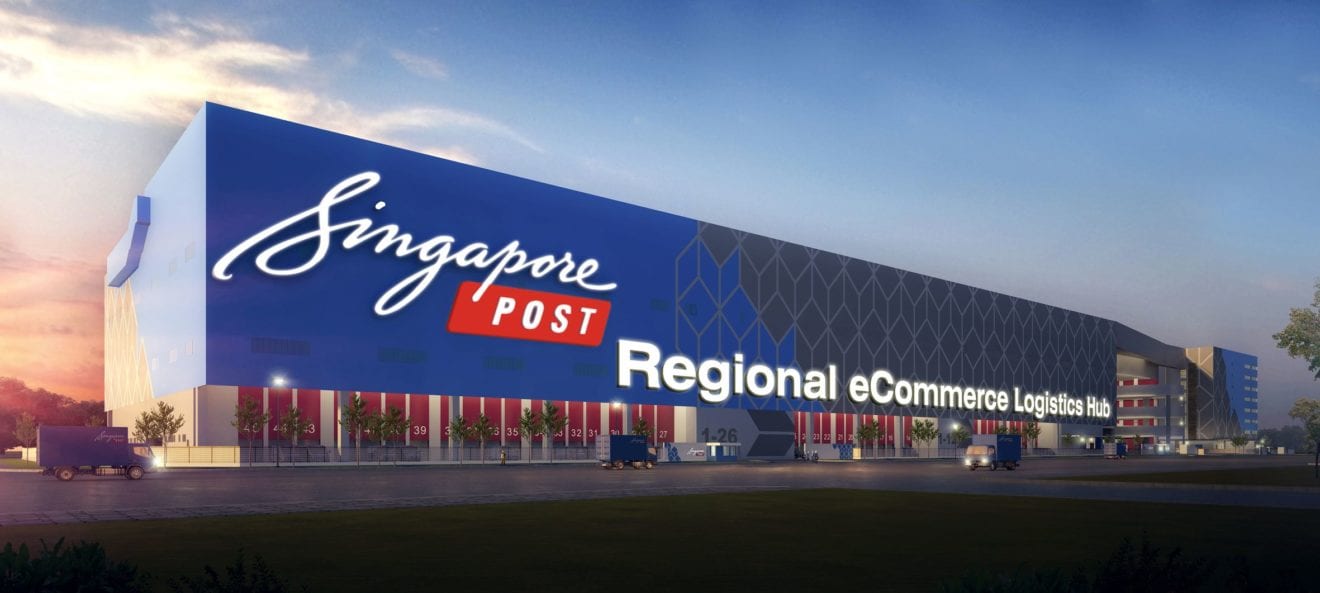
    Singapore Post has launched its Regional eCommerce Logistics Hub (eComm Log Hub) at Tampines Logistics Park.

    Costing S$182 million (US$131 million), the hub is SingPost’s largest eCommerce logistics investment in Singapore to date.
    Officially opened by Singapore’s deputy-Prime Minister and Co-ordinating Minister for Economic and Social Policies Tharman Shanmugaratnam, the three-storey hub comprises two warehousing floors, 150 simultaneous loading bays and an office block. The total built-up area covers 553,000 sqft (51,375 sqm).

    On the ground floor is a fully automated parcel-sorting unit that can handle up to 100,000 packages a day, while the second floor has the automated warehouse. End-to-end sorting, shipping and returns management capabilities enable quicker order fulfilment.
    The eComm Log Hub will process parcels for delivery within Singapore and those to be shipped internationally.
    “The opening of our Regional eCommerce Logistics Hub is another milestone in the expansion of SingPost’s eCommerce logistics network, which now spans 19 markets across Asia Pacific, Europe and the US,” says SingPost chairman Simon Israel. “Singapore’s regional connectivity makes it ideally positioned to be a centre for eCommerce.”

    He says everything in the new building is scalable, “which means we can keep upgrading it to meet the needs of the future”.
    Also at the opening ceremony, SingPost launched its Centre of Innovation (COI). This was set up last year with support from the Economic Development Board to research logistics and postal services and products, in collaboration with research institutions.
    Initiatives from the SingPost COI include:
    * Enhancements to the eCommerce logistics platform to help support smart logistics;
    * A new version of the Self-service Automated Machine (SAM) platform to enhance customer experience and provide a seamless omni-channel experience encompassing the kiosk and the digital postal office;
    * Taking the online and offline world of retail shopping to the SingPost mall, allowing retailers to experiment with customer interaction;

    • Digitally transforming the post office so customers can conduct transactions faster and easier;
    • Innovating last-mile delivery options through building next-generation PopStations and experimenting with drone delivery.
  • Affinity buys Burger King Korea

    Affinity buys Burger King Korea

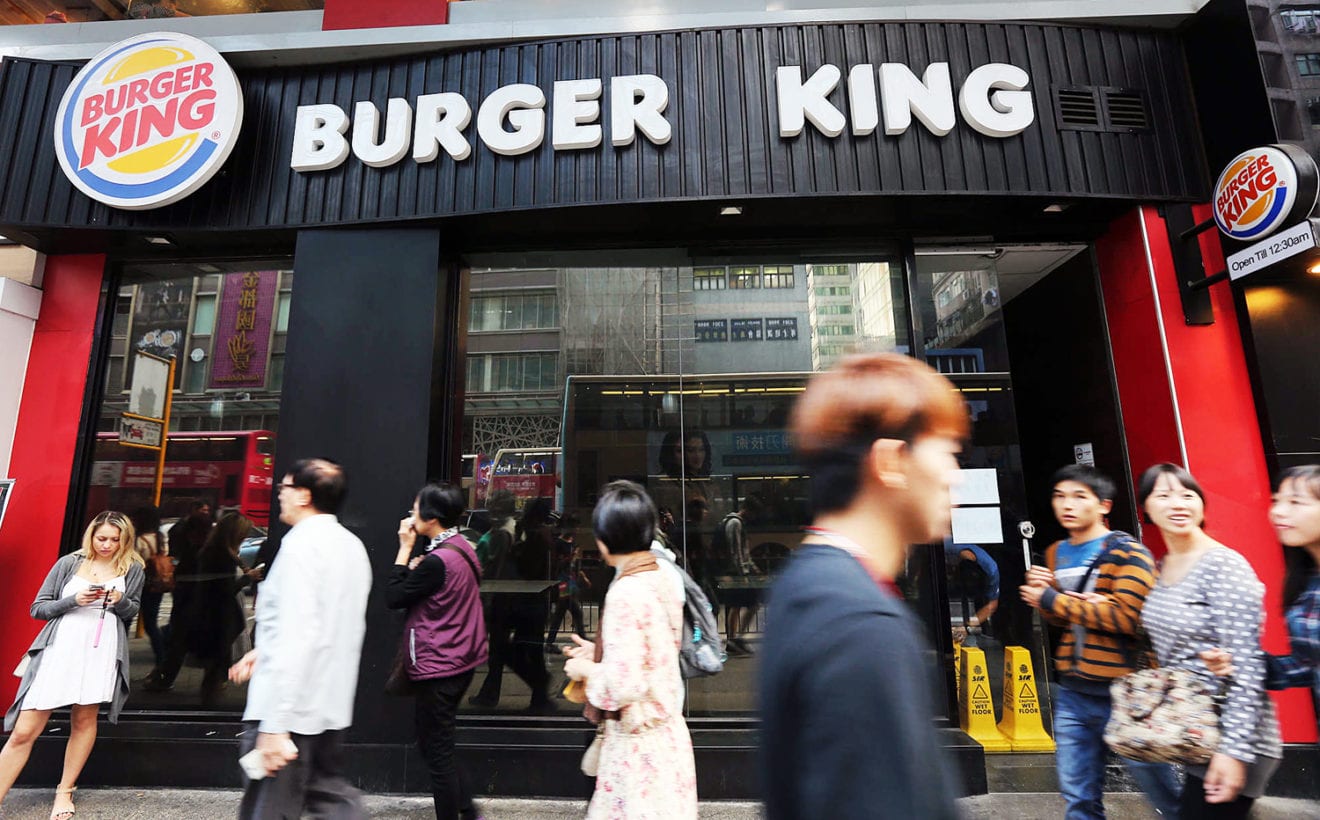
    Burger King Korea has been snapped up by private equity investors.

    Affinity Equity Partners has completed the buyout of the Korean business of the US fast food brand for 210 billion won (US$183.3 million), after agreeing to terms in February. The vendor was VIG Partners.

    Affinity is already planning to open new outlets as a first step in increasing sales.

    Meanwhile, Korean news media report rival fast food chain McDonald’s is seeking a strategic partner to run the local operation and speed up its network expansion.

    “We’re committed to Korea for the long-term and intend to combine our global brand with local insights and expertise,” said Steve Easterbrook, McDonald’s CEO and president.

    “This gives us the ability to enable faster decision-making, achieve restaurant growth and deliver a great restaurant experience for our customers in Korea.”