Tag: Sa Sa

  • Sa Sa’s Stock May Fall 50%

    Sa Sa’s Stock May Fall 50%

    Shares of Sa Sa International are up 27% in the past month as Chinese tourist arrivals to Hong Kong showed signs of a recovery – but it may not yet be time to put the marked down cosmetics retailer in the shopping basket.

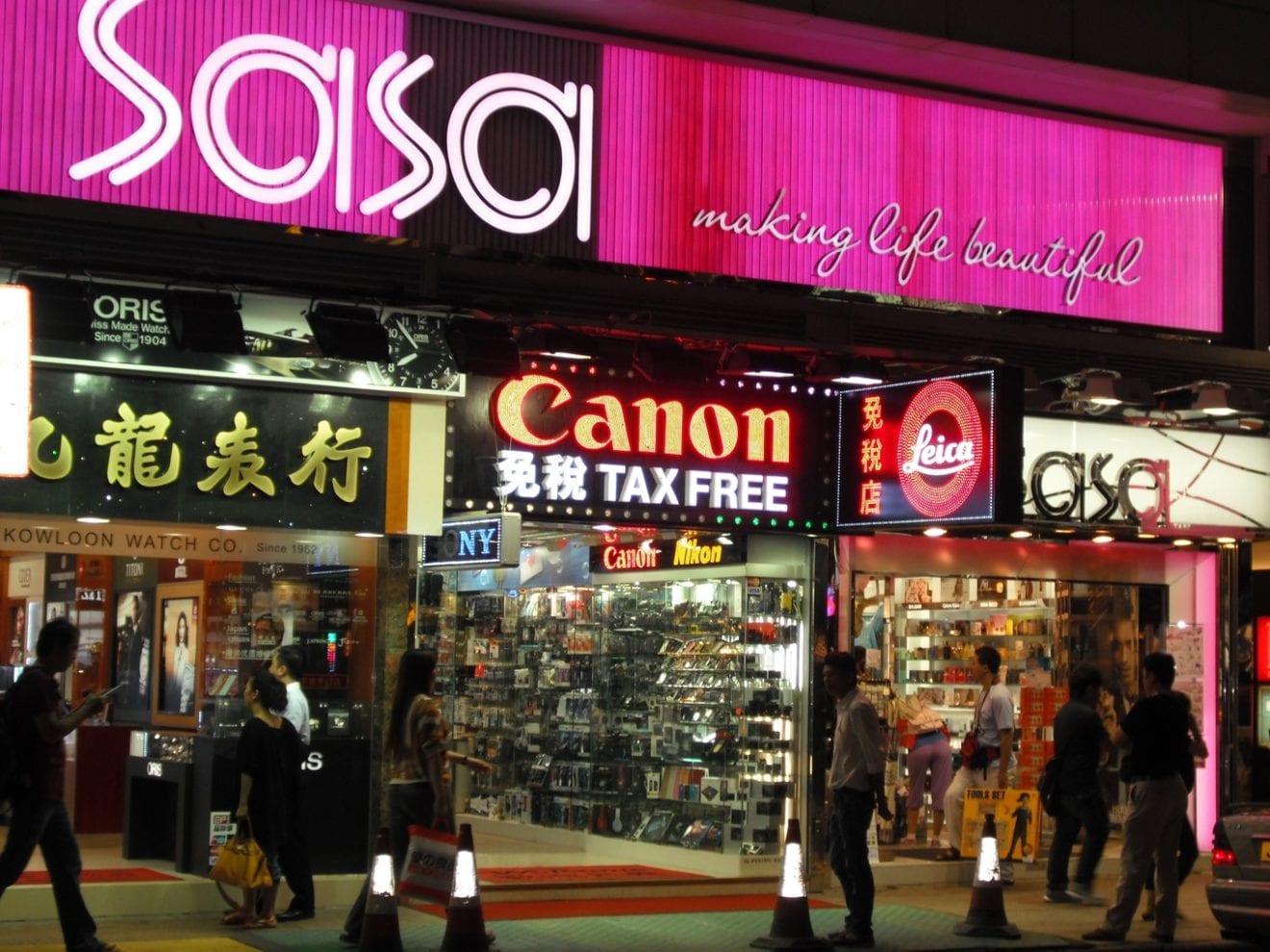
    Once a market darling, Sa Sa has sagged 70% from its peak in September 2013 as rising online competition and a fall in the number of mainland Chinese shoppers visiting its ubiquitous neon pink stores squeezed sales. Slumping sentiment and spending among Hong Kong consumers hasn’t helped. The cosmetics retailer released its full year results on Thursday and it wasn’t pretty: earnings plummeted 54% year-on-year as revenues slipped and margins were squeezed. However, there is stirring interest in Sa Sa as a recovery play as the slump in Chinese visitors appears to be waning, while investors also get paid to wait for a turnaround given the juicy 8% yield. But the stock may have rallied too hard, too fast as a recovery in mainland visitors – if it happens – doesn’t necessarily mean fuller tills at stores, while pressures on margins abound.

    Sa Sa’s yearly revenues suffered their first decline since its public listing in 1997. The retailer reported a 12.8% fall to HKD9 billion as same store sales in Hong Kong and Macau, which account for around 80% of revenues, fell 11.8%. While the volume of transactions decreased around 4%, a 10% fall in the average value of each transaction hurt the top line. Mainland tourists made around 8% fewer transactions and on average spent 11% less on each transaction. The weaker spending by mainland shoppers reflects the growing number of tourists from smaller cities who have lower disposable incomes. Additionally, restrictions limiting Shenzhen residents to only one visit to Hong Kong a week have shrunk the number of day trippers who account for the bulk of Sa Sa’s mainland clientele.

    But it’s not just mainland tourists who are weighing on Sa Sa’s top line: local shoppers, who account for around 48% of transactions, are also spending less amid Hong Kong’s weak economy. Consumer confidence is at its lowest level since 2013, while retail sales tumbled nearly 8% year-on-year in April after reporting the steepest plunge since 1999 in February. A weak finance sector and falling property prices threaten to further depress consumer sentiment spending. Transaction volumes for local shoppers slipped roughly 1% for Sa Sa last year, while average spending decreased just over 3%.

    Morgan Stanley analyst Edward Lui expects near term trends “to stay challenging” for Hong Kong retailers and expects Sa Sa to record a double digit decline in same store sales this year. The analyst said Sa Sa, as well as jeweler Chow Tai Fook, have the “greatest de-rating and earnings risks.” Lui has an underweight rating on Sa Sa with a HKD1.40 a share target price, which is 51% below the stock’s current level of HKD2.85 a share. Sa Sa shares also aren’t cheap: they trade at 19 times forward earnings, which is above a five-year average of 17 times and compares to 14 times for fast food chain Fairwood Holdings, which is geared to benefit from a weak economy.

    Competition between Sa Sa and rivals like Bonjour Holdings has also intensified. More aggressive promotions and discounts lowered Sa Sa’s net profit margin to roughly 7% last year from around 12% the prior year. Staffing costs as a share of sales also increased as the company forked out more remuneration to retain staff. Macquarie analyst Linda Huang is concerned about the outlook for profits as “margins will likely be under pressure” due to high rent, labor costs and promotional spending. Huang has an underperform rating on Sa Sa with an HKD1.80 a share target price. A weak Hong Kong property market could lower rent for the retailer, argues Core Pacific-Yamaichi analyst Kevin Tam. Tam – who is the lone analyst with a buy rating on Sa Sa – expects an 11% decline in rent this year to be a major earnings driver. However, Sa Sa management has indicated savings on leases would show up in total rent costs only over “an extended time of several financial years.”

    While Sa Sa has diversified away from Hong Kong and Macau with stores in Southeast Asia and mainland China, its Malaysia business was the only bright spot last year. Sa Sa has also hedged itself against the squeeze of ecommerce on brick and mortar retailers with its sasa.com portal but growth has been disappointing compared to dedicated online retailers such as Vipshop.

  • Hong Kong and Macau drag down Sa Sa International

    Hong Kong and Macau drag down Sa Sa International

    Hong Kong-listed beauty products retailer Sa Sa International says its retail and wholesale turnover fell 15.1 per cent in the last quarter.

    And in the Hong Kong and Macau markets, turnover tumbled 17.9 per cent for the quarter ended March 31, while same-store sales dropped 17.6 per cent.

    There were 5.2 per cent fewer transactions, with average sales per transaction sliding by 13.9 per cent.

    However, in other markets – including Mainland China, Malaysia, Singapore and Taiwan, and on its online store – trade was a shade more buoyant, easing just 2.8 per cent.

    Fourth-quarter retail sales in Hong Kong and Macau market continued their slide because of further impact by Mainland China’s new “one-trip-a-week” policy on the retail market. There was also weaker sentiment with a rise in outbound travel by locals.

    Responding to the slower market, Sa Sa will optimise product offerings and adjust sales strategies, says the group, which closed one store during the quarter. This was either in Hong Kong or Macau, but not specified in its report.

    Its total of 291 outlets comprises 113 in Hong Kong/Macau, 66 in Malaysia, 57 in China, 32 in Taiwan and 23 in Singapore.

  • Hong Kong’s Chow Tai Fook, Sa Sa saw sales fall over Lunar New Year

    Hong Kong’s Chow Tai Fook, Sa Sa saw sales fall over Lunar New Year

    Hong Kong’s top jewellery firm Chow Tai Fook and cosmetics retailer Sa Sa saw sales declines of at least 20 percent during the key Lunar New Year shopping season, as China’s slowing economy weighed on consumer spending.

    Chow Tai Fook Jewellery Group Ltd, Hong Kong’s largest jewellery firm by market value, saw its retail sales drop by almost a third in mainland China and by 23 percent in Hong Kong and Macau between Jan. 25 and Feb. 14, compared with the previous year’s Lunar New Year period. The buying spree usually happens a week or more before the start of Lunar New Year, which fell on Feb. 8 this year.

    Same-store sales were down 31 percent in mainland China and down 22 percent in Hong Kong and Macau, Chow Tai Fook said in a filing to the Hong Kong stock exchange on Wednesday.

    “The management anticipates the retail business environment will continue to be challenging for the fourth quarter and the sales performance will be worse than that of the third quarter,” the jeweller said.

    China’s economy, which posted the slowest growth since 2009 in the fourth quarter, and the government’s crackdown on corruption have stifled spending among Chinese consumers, who typically flock to Hong Kong to shop for everything from handbags to milk powder.

    On Wednesday, another prominent retailer in Hong Kong also reported dismal sales. Sa Sa International Holdings Ltd, which has a store in almost every corner of Hong Kong, posted a 20 percent drop in retail sales in Hong Kong and Macau over Feb. 8-14, compared with the previous year’s Lunar New Year period. Sa Sa’s same-store sales fell 19 percent over the same period, it said in a filing to the Hong Kong stock exchange. The announcements came after Hong Kong’s market closed on Wednesday. Chow Tai Fook’s shares ended 6 percent lower, while Sa Sa’s stock was down by 0.9 percent, versus the main Hang Seng index’s 1 percent fall.


  • Sa Sa feels pinch of Chinese policy

    Sa Sa feels pinch of Chinese policy

    China’s policy of one trip a week for mainlanders plus the strength of the Hong Kong dollar against a weaker yen have gouged sales for cosmetics retailer Sa Sa International.

    Both its retail and wholesale turnover dropped 14.2 per cent for the third quarter (October 1 to December 31), the company has announced. Turnover declined by 15.8 per cent in the Hong Kong and Macau markets, where same-store sales dropped 12.2 per cent.

    Overall, transactions were 7 per cent weaker, average sales per transaction fell 9.1 per cent and there was a 12.1 per cent dip in same-store sales. The group’s total turnover in other markets, including Mainland China, Malaysia, Singapore, Taiwan and online, dropped 6.7 per cent.

    Chairman/CEO Dr Simon Kwok says the impact of the “one-trip-per-week” policy had gradually gained momentum, leading to a notable year-on-year decline in the number of same-day visitor arrivals.

    “We expect the negative trend will continue to influence the local retail market.”

    In response, he says the group will optimise its product offering and enhance the shopping experience for its customers.

    Back in October, Sa Sa International Holdings already warned that its net profit for the six months to September 30 would be slashed in half because of the sluggish retail scene.

  • Qianhai Chow Tai Fook mall opens in Shenzhen

    Qianhai Chow Tai Fook mall opens in Shenzhen

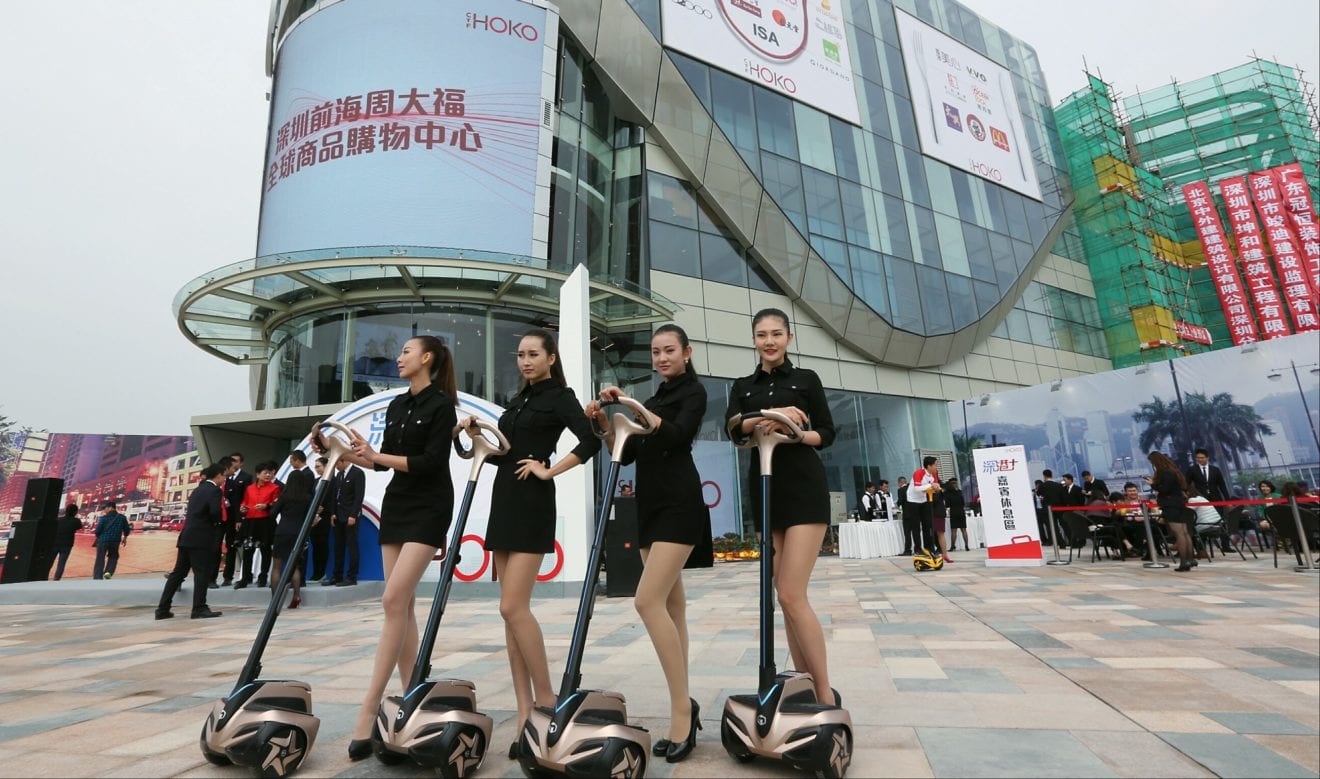
    The new Qianhai Chow Tai Fook mall opened its doors in Shenzhen on Monday – selling Hong Kong sourced goods to mainlanders at prices said to be cheaper than in Hong Kong.

    Officially named the Qianhai Chow Tai Fook Global Goods Shopping Center, the 19,000 sqm mall is a joint venture between jeweller Chow Tai Fook and two investment partners.

    A total of 21 retail brands opened stores in the first phase of the development opened yesterday, including beauty products chain Sa Sa, fast fashion brand Giordano and CRCare. They are joined by a range of food and infant formula retailers.

    More stores will join the development when stage two opens next summer.

    The HK$423 million shopping centre has been built inside the Shenzhen special economic zone, taking advantage of tax concessions and allowing mainlanders to buy Hong Kong sourced goods without crossing the border.

    Shenzhen has a population of 20 million creating a huge potential catchment for the development.

    Adrian Cheng Chi-kong, executive director of the Qianhai Chow Tai Fook mall, said it will not be competing with the border shopping mall planned for the Hong Kong side of the border, explaining the two properties will cater for different clienteles.

  • Sa Sa plans new store concepts

    Sa Sa plans new store concepts

    Hit by falling sales in the tourist downturn, Hong Kong beauty retailer Sa Sa plans new store concepts and diversification to restore growth.

    Reporting a 10.6 per cent decline in sales to HK$3.778 billion in the first half of the current year, and a 55 per cent plunge in profit to $153 million, Sa Sa revealed a strategy to “develop other businesses beyond traditional operations”, including tapping the opportunities of O2O and cross-border eCommerce.

    “The group’s O2O initiatives will initially launch in Hong Kong and gradually extend to mainland China. For the China market, the O2O initiatives will significantly broaden product offerings in its physical stores through online sales and cross border fulfillment. The group aims to use different channels and to leverage a variety of online partners to increase online exposure, including operating physical stores to promote O2O in Free Trade Zones, and cooperating closely with major China online operators, all with their unique positioning and correspondingly different opportunities,” the company said in its interim report.

    New store concepts are also on the drawing board.

    “The group’s strategy for new store concepts includes introducing more trendy and lifestyle concepts to attract young and trend-setting customers, much improved product display, and more emphasis on enhancing the shopping experience.”

    Sa sa says it also aims to place more emphasis on the unique shopping experience with Sa Sa through improved product displays, while changing the mindset of its beauty consultants to one that is more receptive to consumer preferences.

    “In addition, the group will substantially strengthen its online marketing efforts, including the use of social media channels to improve interactivity.”

    Hong Kong & Macau

    Sa Sa says its first half year was marked by pressure from a series of negative factors in the retail market of Hong Kong during the first half of the year. Retail sales in Hong Kong and Macau decreased by 11.1 per cent to $3.010 billion.

    “The cosmetics market in Hong Kong continues to face strong headwinds due to the slowing of mainland China tourist arrivals, their reduced spending, and weak local consumption sentiment. The one-visit-one-week policy for mainland visitors is gradually taking its toll on the market, while the strength of the Hong Kong dollar and depreciating yuan will continue to make shopping overseas more attractive for both mainland China and local consumers. Intensifying competition within the cosmetic industry is a further challenge, with ongoing discount and promotion programmes having an ongoing impact on profitability,” the company reported.

    “Although rental pressure is expected to moderate in a slowing market, rental reductions still lag behind weak sales performance. In the face of these challenges, The group rationalised its retail network from 287 to 281, a net decrease of three stores each for both “Sasa” stores and single-brand counters.”

    Mainland China

    In Mainland China, the stores’ profitability continued to improve, but weak operational and product management led to a decline in turnover, as well as an increase in the inventory provision. Overall turnover for Mainland China operations decreased to HK$148.9 million, a decrease of 8.7 per cent in local currency terms, while same store sales growth in local currency decreased by 9.8 per cent for the period. Loss for the period amounted to HK$24.5 million. The group has recognised the need for more management resources to improved management, and is currently using external management resources on a contract basis to allow for more time to develop its own management structure and training. The group is also seconding experienced staff from Hong Kong to improve attractiveness of product offerings and inventory management.

    Taiwan

    Turnover in the group’s Taiwan business decreased to HK$130.2 million during the period, representing a drop of 2.2 per cent in local currency terms. Same store sales fell 8.7 per cent in local currency. The number of mainland China consumers in Taiwan is expected to increase in view of the country’s enhanced infrastructure and retail space, and the introduction of unlimited visa quotas for high-end Mainland Chinese tourists who have greater spending capacity. The group has already opened stores in tourist locations to tap the potential of increasing in mainland Chinese tourist arrivals.

    Singapore & Malaysia

    Flat sales across the Sa Sa Singapore network has prompted a rethink of the brand’s local network.

    In the first half year, Sa Sa reported turnover of HK$112.8 million (S$20.445 million) in Singapore, remaining flat in local currency terms over the same period last year.

    “The group will continue to build scalability and profit potential by closing inefficient stores and opening stores in new malls with good potential,” the company said in its interim trading statement.

    Meanwhile, turnover for Sa Sa Malaysia was HK$141.9 million, an increase of 2.5 per cent in local currency terms over the same period last year. However, same store sales decreased 8.5 per cent in local currency.

    “Sales and profit growth were restrained by the implementation of GST [on April 1], which adversely impacted store productivity during the transitional period. This effect is expected to be normalised in the second half.”

    Chairman’s view

    Chairman and CEO Dr Simon Kwok put on a brave face on the results:

    “Sa Sa has a long track record of delivering outstanding success in all economic climates and in the face of the most severe headwinds and difficulties. We firmly believe that in spite of the current difficult business environment we are now facing, we can still turn challenges into opportunities and further consolidate our competitive advantages. The flexibility of our business model, with an ability to rapidly adapt to new circumstances, markets and trends, will continue to support our position as a leading provider of beauty products in the Asia Pacific. We also believe that the resilience and adaptability of our loyal staff and the forward vision of our outstanding management team will ensure that we deliver sustained, satisfying growth for many years to come.”

  • Sa Sa profit set to plunge

    Sa Sa profit set to plunge

    Beauty products retailer Sa Sa International has warned its half year profits will plunge by 50 per cent.

    A Sa Sa profit warning filed with the Hong Kong Stock Exchange said preliminary analysis of accounts for the six months to September 30 pointed to a record decline in profit for the group.

    It blamed “the worsening operating environment of the retail sector which has led to significant drops in both sales and gross profit and reduced operational efficiency as a result”.

    In the second quarter, to September 30, Sa Sa has reported a 12.4 per cent fall in retail and wholesale turnover.

    “Turnover in Hong Kong and Macau markets declined by 13.2 per cent, while same store sales decreased by 10.1 per cent. The number of transactions decreased by 5.7 per cent, while the average sales per transaction decreased by 7.9 per cent.

    “The group’s retail and wholesale turnover in other markets (including Mainland China, Singapore, Malaysia, Taiwan and sasa.com) recorded a drop of 8.9 per cent during this period.”

    Sa Sa said overall consumer sentiment and Mainland Chinese arrivals “continued to be adversely affected by a number of factors with no significant signs of improvement”.

    “The strength of the Hong Kong dollar and the weaker yuan adversely affected the attractiveness of shopping in Hong Kong for both local consumers and Mainland Chinese visitors. Furthermore, the impact of “one-trip-per-week” policy has gradually gained momentum, leading to a decline of 13.1 per cent and 10.1 per cent in the group’s retail sales and same store sales in Hong Kong and Macau markets during the second quarter respectively.

    “The number of transactions of Mainland Chinese customers decreased by 4.1 per cent, while their average sales per transaction decreased by 12.5 per cent on a year-on-year basis, dragging down the overall performance.”

    Sa Sa says it will work on optimising product offerings and enhancing its customers’ shopping experiences to strengthen its position.

    The company says it will release final results for the half before November 30.

  • Sa Sa profits down more than half

    Sa Sa profits down more than half

    The Hong Kong-based company has issued a warning for investors to prepare for a profit cut to around HK$170 mln

    Cosmetics sale company Sa Sa International Holdings Limited is expecting profits to plunge more than 50 per cent for the six months ended September, according to a filing sent to Hong Kong Stock Exchange.

    These results are explained by ‘the worsening operating environment of the retail sector which has led to significant drops in both sales and gross profit and reduced operational efficiency’.

    According to the previous interim report of the company, for the six months ended September 2014, Sa Sa posted a profit of HK$339.76 million (US$43.84 million), which at that time was also down by around 5 per cent from HK$357.38 million. Now, the profit for the period is expected to be less than HK$169.88 million.

    Regarding sales for the second quarter of fiscal 2015/2016, Sa Sa has announced in another filing that turnover for the Hong Kong and Macau market declined 13.2 per cent year-on-year to HK$1.59 billion. Over this period, same stores sales dipped 10.1 per cent, while average sales per transaction declined 7.9 per cent to HK$346.

    Second quarter results
    In the filing sent to the Hong Kong Stock Exchange with data for the second quarter, the company says ‘overall consumer sentiment and Mainland Chinese tourist arrivals continued to be adversely affected by a number of factors with no significant signs of improvement’.

    ‘The strength of the Hong Kong dollar and the weaker yuan adversely affected the attractiveness of shopping in Hong Kong for both local consumers and Mainland Chinese visitors’, the company explains. ‘The impact of the ‘one-trip-per-week’ policy has gradually gained momentum, leading to a decline of 13.1 per cent and 10.1 per cent in the Group’s retail sales and same store sales in Hong Kong and Macau markets during the second quarter, respectively.’
    It is also explained that the number of transactions of Mainland Chinese customers declined 4.1 per cent, and that their average sales per transaction went down 12.5 per cent year-on-year, dragging down the overall performance of the group.

    Regarding the group performance, including Mainland China, Singapore, Malaysia and Taiwan markets, turnover declined during the second quarter of the year, 12.4 per cent year-on-year to HK$1.96 billion. Of the group’s 281 shops and counters, 110 are in Macau and Hong Kong.

  • Sa Sa opens JD.com flagship

    Sa Sa opens JD.com flagship

    Sa Sa International says its online arm sasa.com will launch a Sa Sa flagship store on JD.com’s eCommerce platform, JD Worldwide .

    The move opens the way for more than 100 million JD shoppers to access Sa Sa products in the Mainland as well as in Hong Kong.

    “As a leading cosmetics retailing group in Asia, Sa Sa has been striving its best to provide quality products, best value and professional service to its customers,” said the company in a statement.

    “To flexibly respond to the huge demand from Mainland Chinese customers for cosmetics products and the increasing popularity of eCommerce in the mainland, the group proactively expands its eCommerce business in China through sasa.com and continues to improve its service, making every effort to offer a better shopping experience for more consumers.”

    JD.com is China’s largest online direct sales company with over 100 million active users. Its online shopping mall is content-rich, user-friendly and trustworthy and has an efficient delivery service.

    Sa Sa and JD.com say they share a common mission to provide consumers with the best shopping experience, which put the two parties together in forming this partnership.

    Dr Guy Look, CFO & executive director of Sa Sa, said: “By launching a flagship store on JD Worldwide, sasa.com will expand its customer reach in China, while over a hundred million JD users will be able to enjoy direct access to Sa Sa’s wide selection of globally renowned cosmetic and skincare brands.

    “We believe that the strengths of Sa Sa and JD will complement each other to realise synergies in this win-win partnership. We are looking forward to working with them to deliver a premium online shopping experience to customers throughout China.”

  • Beauty e-tailer JD.com plows ahead with strengthening its Asia reach

    Beauty e-tailer JD.com plows ahead with strengthening its Asia reach

    The Hong Kong office is intended to help JD.com expand its local market presence and warehousing capabilities, enabling it to better engage with brands and retailers across Singapore and major Southeast Asian markets, who are looking to tap the online retailer’s 118 million active users in Mainland China.

    The company plans to employ a team there to focus on targeting and attracting new retail partners from around the region.

    “We have seen rapid growth in demand from our customers for Asian brands and products, and from leading brands and retailers across the region who want to reach our huge base of upwardly mobile customers,” says JD.com’s chief human resources officer, Rain Long. 

    “This new office will expand our ability to attract and service brands from around the region, and ultimately to ensure that we continue to bring our customers the most exciting and diverse selection of international products.”

    To help with warehousing, customs clearance and shipping services from Hong Kong to Mainland China, JD.com has teamed up with logistics provider, Cosco Logistics.

    “This partnership gives our customers easy access to more of the best Asian and international products, and allows more regional and global retailers to target our unrivaled base of Chinese consumers directly from Hong Kong,” said Carol Fung, Vice President of JD.com.

    Sa Sa also jumps on board..

    As part of its efforts in Hong Kong, JD.com also announced that Asian cosmetics retailer Sa Sa will launch a flagship store on its platform offering a range of international cosmetics brands and products available online in China.

    It will be synchronized with the company’s global ecommerce portal, Sasa.com, to ensure that JD.com’s customers have easy and immediate access to the full range of products available on Sa Sa’s global site.

    “We’re excited to partner with JD.com and to give Chinese consumers more extensive access than ever before to Sa Sa’s huge selection of globally renowned cosmetics brands. JD.com has an unmatched reputation for guaranteeing quality, convenience, and service, and we’re looking forward to working with them to deliver a premium online shopping experience to consumers throughout China,” said Sa Sa Chief Financial Officer, Dr. Guy Look.

  • Sa Sa gross sales up, revenue trimmed

    Sa Sa gross sales up, revenue trimmed

    Hong Kong-based magnificence merchandise retailer Sa Sa has elevated gross sales regardless of the home market challenges.

    The group’s complete turnover elevated by 2.7 per cent from HK$eight.756 billion to HK$eight.993 billion within the yr to March 31.

    Retail gross sales in Hong Kong and Macau elevated by three.three per cent to HK$7.259 billion. However revenue slipped 10.three per cent to HK$838.eight million.

    The high-profile chain added a internet seven shops through the yr taking its community to 287, including only one in Hong Kong.

    In a telling signal of the problem dealing with Hong Kong retailers, because the demographic profile of Mainland Chinese language guests modifications, the variety of transactions in Hong Kong and Macau shops rose by 6.eight per cent, however the common ticket worth fell three.three per cent.

    “To put these figures in context, the variety of transactions of Mainland China vacationers elevated by 17.four per cent, whereas common gross sales worth per ticket decreased by 11.three per cent,” Sa Sa stated in its annual outcome.

    “The variety of transactions by native shoppers declined barely by 2.four per cent with a mean spending improve of four.three per cent. Briefly, gross sales progress for as soon as lagged behind the market.”

    In 2014, Mainland vacationer arrivals rose by a gentle 16 per cent. Similar day customer arrivals have been nonetheless the main engine of progress with a rise of 19.1 per cent, elevating gross sales in non-tourist areas, notably within the New Territories close to the border with the remainder of China.

    “Nevertheless, this was offset by an 11.three per cent drop within the common ticket gross sales of Mainland vacationer clients, which in flip was attributable to the weaker buying energy of vacationers originating from decrease tier cities and having much less spending functionality. One other issue was the growing demand for lower cost level merchandise, similar to Korean merchandise, which nonetheless diluted gross sales progress though driving retailer visitors.”

    Sa Sa stated, as well as, there was a better gross sales combine from day trippers whose spending is usually decrease than in a single day vacationers.

    “The change in consumption patterns was additional exacerbated by the rise of cross border eCommerce, which facilitated a lot quicker market penetration of cheaper and quick to market Korean merchandise with ideas which might be nicely appreciated by Asians, and particularly the more and more prosperous Chinese language shoppers.”

    Whereas Sa Sa reported 10.2 per cent retail gross sales progress within the first half of the fiscal yr, gross sales have been dragged by weaker shopper sentiment within the second half. Gross sales progress slowed within the third quarter and additional deteriorated within the fourth quarter with March 2015 being particularly weak due to anti-parallel items merchants incidents in residential areas, turning an in any other case constructive January to February two months’ interval into destructive territory for the fourth quarter.

    “As well as, the appreciation of the US greenback and the relative power of the Renminbi and Hong

    Kong greenback inspired extra Mainland vacationers to journey to markets with weaker currencies resembling Europe and South Korea. The relief of visa insurance policies by different nations strengthened their

    attractiveness to Mainland vacationers, whereas robust outbound travelling led to weaker native spending.”

    Sa Sa stated the Occupy Motion and anti-parallel items merchants incidents in Hong Kong broken Hong Kong’s profile and discouraged vacationers whereas additionally inflicting a drop in gross sales to native clients.

    Sa Sa’s general gross revenue margin dropped from 46.6 per cent to 44.eight per cent resulting from extra promotions being launched to drive gross sales in a slower market.

  • Sa Sa to simply accept WeChat funds instore

    Sa Sa to simply accept WeChat funds instore

    Magnificence merchandise retailer Sa Sa is to simply accept Tencent’s WeChat funds in 100 Hong Kong shops.

    Sa Sa thus turns into the primary international retail companion of tencent’s new offline WeChat-based cross-border cost service, TenPay.

    WeChat’s Tenpay permits account holders, principally Chinese language mainlanders, to scan the QR Code on their cell phone utilizing the WeChat app, and shortly make a cost on-line. Now the service is being rolled out offline permitting funds to be made in bodily shops, by comparable means. Each WeChat account holder has a singular QR code inside the app – which may also be used to scan different QR codes to entry web pages, particular presents and an entire vary of different providers and knowledge.

    Sa Sa says the transfer to simply accept TenPay demonstrates its dedication to exploring on-line to offline (O2O) enterprise alternatives.

    “The pioneering act is predicted to show over a brand new leaf within the improvement of offline cellular cost,” Sa Sa stated in a press release.

    “The group has been dedicated to selling O2O enterprise within the final yr, with the purpose of offering clients with a extra complete buying expertise involving a number of channels and touchpoints. The launch of cross-border offline WeChat Cost doesn’t solely show the group’s dedication in enhancing the usual of its providers, but in addition lays a key milestone within the improvement of the group’s O2O enterprise. The group will proceed to introduce new O2O experiences which are handy to clients in order that the group will be capable of seize alternatives and increase its enterprise underneath progressive deployment of various O2O purchasing experiences,” stated Sa Sa.

    “We hope to offer mainland customers of WeChat with a extra handy cost technique for purchasing in Hong Kong by means of our partnership with Sa Sa. In the meantime, Sa Sa’s in depth retail community all through Hong Kong in addition to its numerous buyer base will allow us to successfully promote WeChat Cost, with the goal of extending such revolutionary cellular cost to different retailers and ultimately gaining reputation in Hong Kong. The appliance of WeChat Cost shall be expanded to the remainder of the world following the footprint of Chinese language vacationers. ”

    A Tencent spokesman stated the transfer would supply added comfort for mainland WeChat customers.  “In the meantime, Sa Sa’s in depth retail community all through Hong Kong in addition to its numerous buyer base will allow us to successfully promote WeChat Cost, with the goal of extending such revolutionary cellular cost to different retailers and ultimately gaining reputation in Hong Kong. The appliance of WeChat Cost shall be expanded to the remainder of the world following the footprint of Chinese language vacationers. ”

    Sa Sa launches its WeChat Cost acceptance by giving clients a WeChat Pink Envelope of RMB10 upon a purchase order of HK$100 settled by WeChat Cost on smartphones throughout a promotion interval.

    Stated Dr Man Look, CFO and government director of Sa Sa: “Making good use of know-how is the important thing for native retailers to successfully improve providers and meet the purchasing wants of consumers underneath the ever-changing development of Web and cellular communications know-how. As Tencent’s first companion in introducing cross-border offline WeChat Cost, we consider that extra clients will undertake this progressive cellular cost upon full launch of such service. Clients can take pleasure in a extra handy and nice purchasing expertise with out the necessity to carry money or bank cards.”