Tag: SAAS

  • Intellisia Raises ₩3.4 Billion to Replace Consumer Panels with AI

    Intellisia Raises ₩3.4 Billion to Replace Consumer Panels with AI

    Intellisia has raised ₩3.4 billion ($2.5 million) in pre-Series A funding to scale its synthetic consumer research and retail simulation platform across Asia and North America. The round closed above its initial ₩3 billion target.

    Kakao Ventures led the investment, joined by Murex Partners, Capstone Partners, and founder Baek Seung-guk, who committed personal capital to the round. The Seoul-based company builds virtual consumer profiles trained on real-world purchasing data to answer product surveys, evaluate packaging, and simulate retail store behavior.

    Enterprise Traction and Accuracy Metrics

    Traditional consumer research takes weeks or months to recruit panels and return responses. Intellisia runs identical query sets through its platform, TheSurvey.ai, within hours. The company reports an average reproduction rate above 90 percent when testing its synthetic models against actual human survey results.

    That accuracy has converted pilots into commercial contracts across South Korea’s consumer sector. Intellisia has logged more than 200 project engagements, working with packaged food manufacturers CJ CheilJedang, Pulmuone, and Lotte Wellfood, as well as telecoms group LG Uplus, furniture maker Fursys Group, and convenience store operator BGF Retail. More than 60 percent of enterprise proof-of-concept trials converted into paid annual contracts.

    Baek previously co-founded content recommendation engine Dable, which scaled across seven Asian markets before selling to travel platform Yanolja in 2021. He founded Intellisia to apply similar predictive data modeling to consumer behavior testing.

    From Survey Panels to Store Twins

    Packaged goods manufacturers and retail chains across East Asia face compressed product lifecycles and rising sample recruitment costs. Using synthetic consumer cohorts allows brand managers to test dozens of packaging variations or pricing structures before committing physical inventory to supermarket shelves.

    Intellisia is now pushing beyond questionnaires into physical store simulation. The company is preparing trials for ParaStore, an AI digital twin platform where virtual shoppers interact with store layouts, shelf placements, and merchandising plans. BGF Retail, which operates South Korea’s CU convenience store chain, will test the system for store operations and category management.

    A commercial subscription-based software platform goes live in the fourth quarter of this year, followed by market launches in Japan and the United States next year.

  • Half of PaaS services now cloud-only

    Half of PaaS services now cloud-only

    A new Gartner report, “Platform as a Service: Definition, Taxonomy and Vendor Landscape, 2019” revealed that 48% of 550 PaaS offerings are cloud-only. Not a single vendor has a foothold across all 21 segments, and 90% of them only operate within a single PaaS market segment.

    “Business and technology leaders are shifting to strategic investment in cloud computing,” said Yefim Natis, research vice president and distinguished analyst at Gartner. “Cloud computing is one of the key disruptive forces in IT markets that is gaining mainstream trust.”

    Natis commented that although many organizations anticipate long-term retention of on-premises computing, the vendors of nearly half of the cloud platform offerings bet on the prevailing growth of cloud deployments and chose the more modern and more efficient cloud-only delivery of their capabilities.

    Gartner predicts that enterprise IT spending for cloud-based offerings will surpass spending on non-cloud IT offerings by 2022. The analyst forecasts total PaaS market revenue to reach $20 billion in 2019, and to exceed $34 billion in 2022.

    In this shift to the cloud, database and application platform services represent the largest market segments, with blockchain, digital experience, serverless and artificial intelligence/machine learning (AI/ML) platform services as the newest.

  • Logistics startup CarPal raises additional funding

    Logistics startup CarPal raises additional funding

    CarPal has raised an additional S$3.83 million (US$2.7 million) to further develop the SaaS solution CarPal Fleet and help businesses build and control their own fleet of drivers. The round is led by new private equity participants, and the existing investor, RB Investments, has re-invested as well. This round follows the pre-series A of SG$1 million raised back in January 2016.

    Launched in July 2014, CarPal is one of the pioneering on-demand logistics service based on sharing economy, headquartered in Singapore. Over the past 2.5 years, it has steadily grown into a popular and reliable last-mile delivery service for consumers and businesses alike, delivering anything from fresh food, flowers, clothing, household appliances to furniture items.

    The company has recently announced the official launch of its new SaaS delivery management solution: CarPal Fleet.

    “Over the past few years, we learned that many of our customers wish to build their own fleet of drivers. This is mainly due to specific requirements or SOP. Hence launching a product to give customers full control over the delivery operations made a lot of sense,” says Maarten Hemmes, founder and CEO of CarPal.

    By allowing businesses to optimise the routing of delivery orders and match the best available driver, CarPal Fleet can bring delivery costs down and help businesses to compete with industry giants such as Amazon, Lazada and Zalora. The logistics startup wants to give businesses more control over their delivery fleet and help them find a healthy mix between in-house and third-party drivers, without actually having to purchase any vehicles or hire additional staff.

    Today, the company has hundreds of customers all over South East Asia. including (full-service) logistics providers, parcel delivery services, food delivery services and others. Businesses use and pay for CarPal Fleet via volume-based pricing.

    The company is competing with others in the space like Bringg and Onfleet. The main aspect that sets CarPal apart from the others is the fact that the business actually recruits drivers in every market for customers to add to their fleet, taking away the initial recruitment efforts.

    The company now consists 15 people and is headquartered in Singapore. It plans to expand into new markets and new segments with this round of additional funding, which includes growing its R&D and sales team.

    To date, CarPal has raised S$4.83 million.

  • Telstra launches five new SaaS solutions

    Telstra launches five new SaaS solutions

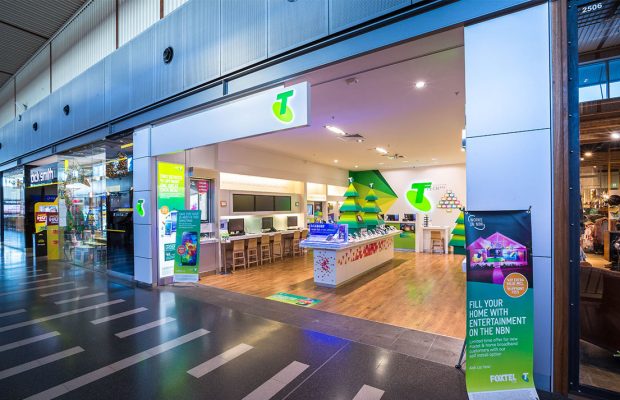
    Australian operator Telstra is drawing on the investments made through its venture capital arm Telstra Ventures to add five new SaaS solutions for its international enterprise customers.

    The suite of new applications is designed to better help companies as they go through digital transformation by offering solutions that reduce the cost and complexity of utilizing digital applications.

    The new range of applications are designed to improve the way organisations manage interactions with their customers and employees.

    New solutions include Near, a location intelligence platform that provides near real-time information on places, people and products, as well as all-in-one application delivery platform Nginx Plus.

    The new additions to the portfolio also include Panviva, a cloud-based platform that provides real-time process guidance to facilitate staff productivity and reduce human process errors, vArmour, a distributed security system delivering application-aware micro-segmentation, and mobile threat defense platform Zimperium.

    These applications are in addition to DocuSign, Guest Services, Kony, TeleSign and Whispir, which are currently available in the Telstra Applications Portfolio.

    This suite of new applications will be available in select locations in Asia, Europe and North America. Near, Panviva and Zimperium will be available from 30 March, while, Nginx Plus and vArmour will be available in June.

    “Organizations know they need to transform digitally to compete in today’s market, but there are challenges to overcome,” Teltra director of global applications Gianpaolo Carraro said.

    “Recent research commissioned by Telstra found 76% of organisations believed they would be more effective if their technology and network platforms were more flexible and agile, while 67% said their ability to work more collaboratively and effectively is hindered by rigid technology and network platforms.”

  • Level 3 to deliver NaaS solution for enterprise customers

    Level 3 to deliver NaaS solution for enterprise customers

    Level 3 Communications announced that it is delivering an on-demand network-as-a-service solution on the market using Cisco’s Network Services Orchestrator (NSO), enabled by Tail-f.

    The firm said its Adaptive Network Control Solutions suite leverages the benefits of network automation and Software-Defined Networking (SDN) to deliver technology solutions to customers in a rapid, self-service manner, empowering them to be more agile and competitive.

    Level 3 customers want faster, easier ways to bring applications from test environments to full-scale production. They’re looking to integrate new third-party cloud services and applications more easily, with less complexity and overhead. With the click of a button, Cisco’s NSO innovative capabilities are helping to enable Level 3’s customers to rollout new services in a matter of minutes or days rather than weeks or months.

    With the support of NSO, Level 3 developed a programmable wide area network (WAN). The service provider can automate the full range of data services and multivendor devices in its markets around the world. The company can also orchestrate the entire service lifecycle—including activation, testing and ongoing service-level assurance—through a single data model.

    Travis Ewert, SVP of network software development at Level 3, said “The power of agility in today’s competitive marketplace is not overstated.”

    “Global businesses need network resources that are flexible enough to be leveraged as a service, with the reliability and security they can rely on to deliver critical business applications. With Cisco NSO, Level 3 is making the once-distant dream of full lifecycle service automation a reality for enterprises around the world,” the executive said.

    The company further said Level 3 now manages more than 75,000 different network devices around the world. It is offering the same automated services, with the same scalability, high availability and redundancy across geographies, regardless of the underlying infrastructure.