Tag: Sabah

  • AirAsia eyes Sabah for route expansion

    AirAsia eyes Sabah for route expansion

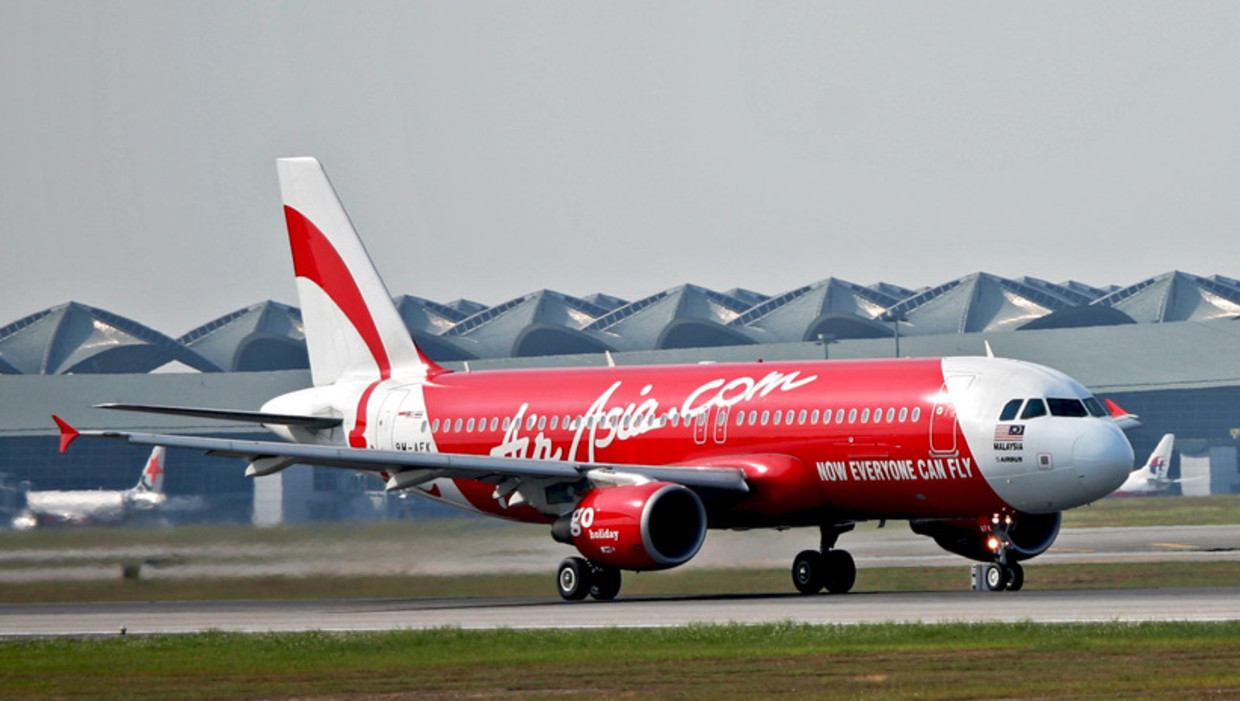
    Philippines AirAsia will introduce more direct flights to Sabah and is considering establishing a hub in Sandakan as part of its expansion ambitions.

    The airline is currently studying the potential for direct routes to Kota Kinabalu from Puerto Princesa and Davao in the Philippines. A possible connection between Zamboanga and Sandakan is also on the list of possible direct routes, according to an assessment in a media statement released by the Sabah Tourism Board.

    State Tourism, Culture, and Environment Minister Datuk Jafry Ariffin said Sabah welcomed the plan, which would help both countries in terms of economic spillover.

    “One of the Sabah Maju Jaya plans is to ensure Sandakan Airport is upgraded to the international airport. We should explore additional direct routes into the state.

    “Tawau, being a gateway to Semporna, might potentially serve as an operational hub too. So, whether it’s Sandakan or Tawau, we’ll let them study the viability,” he said.

    Jafry was speaking at a recent press conference on the joint collaboration between the Philippines AirAsia and Sabah Tourism Board (STB)

    Also present were Assistant Tourism, Culture, and Environment Minister cum STB chairman Datuk Joniston Bangkuai; Permanent Secretary of the Ministry of State Tourism, Culture and Environment Datuk Sr Yusrie Abdullah; STB deputy chairman Datuk Dr Jelani Hamdan; STB chief executive officer Noredah Othman; Philippines AirAsia chief executive officer Ricky Isla; and Philippines AirAsia SuperApp managing director Ray Berja.

    The press conference was in conjunction with the familiarisation trip to Sabah for the Philippines media.

    Speaking on the strategic partnership between STB and Air Asia, Jafry said the board is now finalising a collaborative technical campaign to encourage Filipinos to visit Kota Kinabalu.

    Ricky stated that Philippines Air Asia now flies twice weekly from Manila to Sabah, with plans to expand frequency.

    “We want to sustain the travel momentum, and for Sabah, we are not just looking at beaches but eco-tourism and agro-tourism, which are educational.

    “We are looking into the prospect of opening a new destination in Sandakan, which has one of the highest Filipino populations in Sabah, as part of our expansion plan,” he said

    Meanwhile, STB chief executive officer Noredah Othman said Manila has the potential to serve as another hub to attract international visitors and also to attract expatriates living in the Philippines.

    Although having certain similarities, she said Sabah and the Philippines each have unique contrasts that both sides should explore.

    Pre-pandemic, Noredah said the state of Sabah received 4.2 million visitors in 2019, with a promising rise in arrivals since the reopening of borders after two-year hiatus. Chinese visitors contributed the most arrivals in 2019, followed by South Koreans and Europeans.
  • Sabah to produce more sustainable palm oil

    Sabah to produce more sustainable palm oil

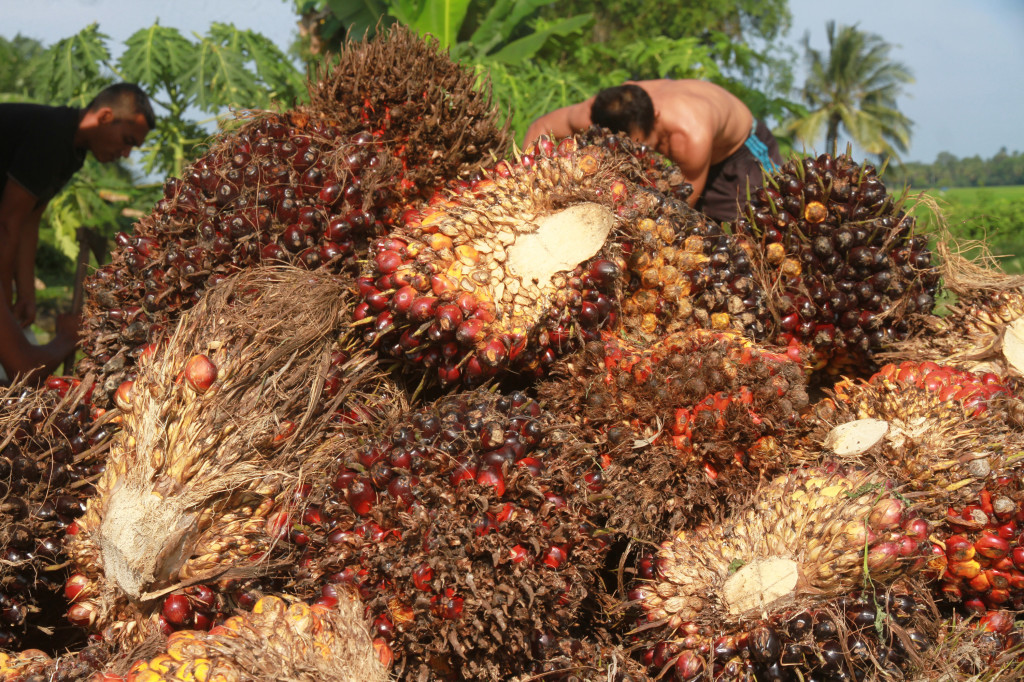
    Deputy Chief Minister of Sabah Datuk Seri Wilfred Madius Tangau said during his closing address at the 16th Annual Roundtable of Sustainable Palm Oil Conference today, the state is committed to having more palm oil produce to achieve both the Roundtable of the Sustainable Palm Oil (RSPO) and the local Malaysian Sustainable Palm Oil (MSPO), concurrently.

    In 2017, Sabah produced more than 5.2 million metric tons (MT) of crude palm oil (CPO) accounting for more than 30% of total Malaysian palm oil produced.

    Between January and October this year, Sabah produced some 1.55 million MT of CPO of which 28% were certified.

    About 400,000ha of plantations are RSPO certified, of which 3,960ha belonged to smallholders. Sabah has some 623 small players.

    “Therefore Sabah can play an important role in the sustainable palm oil industry. Sabah is one of the largest producer of RSPO certified palm oil,” said Tangau.

    On assisting smallholders in the state, he said while incentives such as grants for planting comes from the federal government, land titles fall under the state government’s purview.

    On the government’s move to make MSPO certification mandatory by end of 2019, Tangau welcomed the move.

    “We will assist in whatever (way) we can. I’m happy the federal government is spending money to do that, but whether we achieve that target, is another story,” he added.

    Sabah saw an economic growth of 8% last year and palm oil has played a part in it. Tangau said one of the biggest challenge in this country is the high dependence on foreign labour as it is difficult to get locals to work in plantations.

    The state government is also looking towards stepping up downstream activities instead of just being active exporters of CPO.

    On another note, RSPO co-chairman Datuk Carl Bek-Nielsen said the challenge lies on bridging the gap between supply and demand of sustainable palm oil as the uptake for certified palm oil globally stood only at 65%.

    “This is as disappointing as wet gunpowder and it sends a discouraging, hypocritical message of “do as I say but not as I do. And I will be clear, the growers expect action and whilst the grower fraternity has just shown a willingness to change, to innovate, to now halt deforestation, to now stop any new plantings on peat soils, they also expect that the NGOs, CGM, retailers alike, including the Secretariat of RSPO now direct just as much attention and energy towards improving uptake and not just pursuing higher standards for the growers,” he said in his closing remark.

  • AirAsia to step up flights within Sabah and Sarawak

    AirAsia to step up flights within Sabah and Sarawak

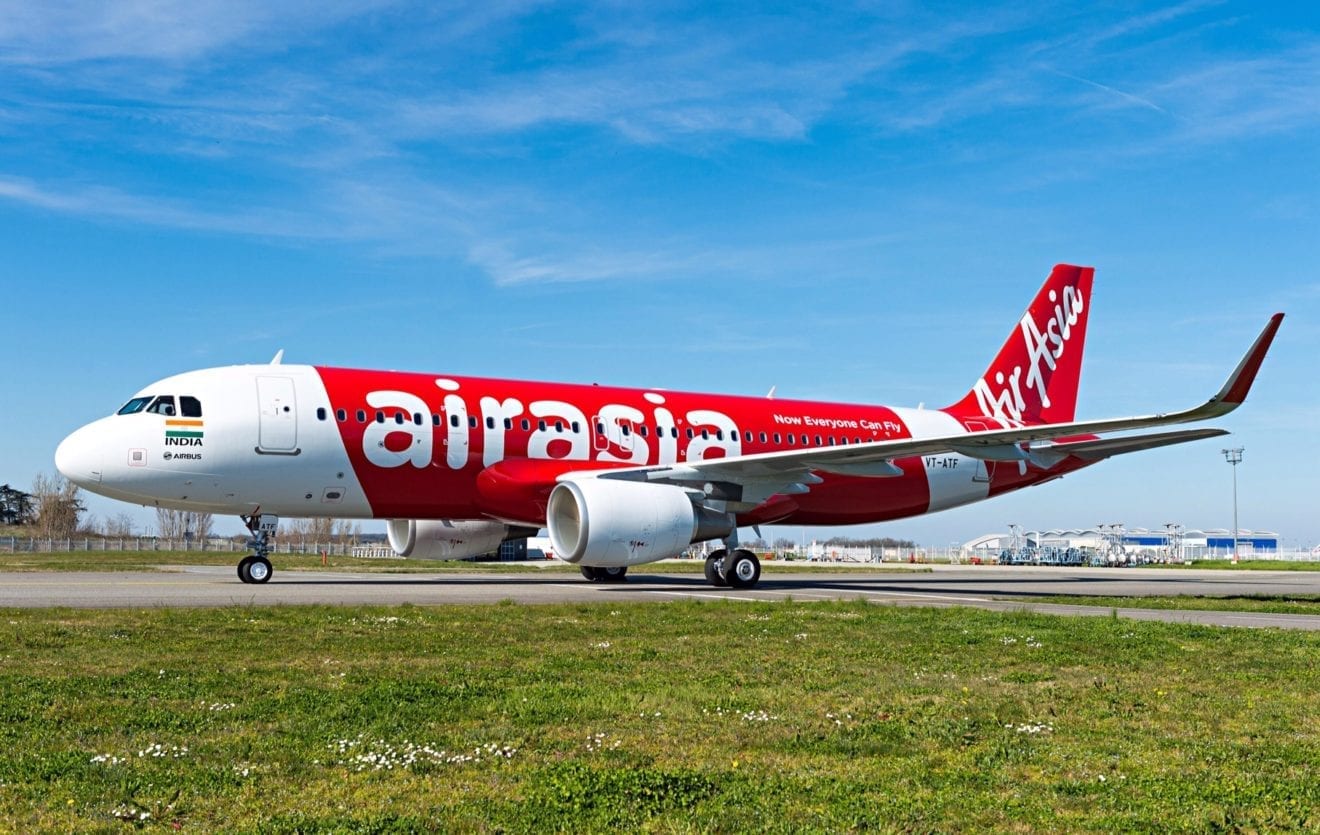
    Low-cost carrier AirAsia Bhd sees room for expanding its domestic operations, which contribute about 40% to its revenue currently, with intercity flights within Sabah and Sarawak.

    The airline’s CEO Riad Asmat (pix), who recently took over the reins of the Malaysian unit, told SunBiz in an exclusive interview that the airline has a strong foothold in Sabah and Sarawak, but there are areas where it could “still serve”.

    He said its domestic market share ranges between 50% and 60% depending on the state it operates in.

    According to international aviation research entity Centre of Asia Pacific Aviation (CAPA), AirAsia’s share in the domestic market has significantly increased “over the past six months, benefiting from capacity reductions by both of its competitors at Kuala Lumpur International Airport (KLIA)”.

    “AirAsia’s share of the domestic traffic at KLIA is now 66%, compared to 55% a year ago. KLIA accounts for 65% of total domestic traffic in Malaysia, which increased by 4% in 2017, to 25 million,” CAPA said.

    Domestic flights account for 31% of the flight breakdown based on the number of routes and international 69%. AirAsia Malaysia’s total number of routes stands at 114.

    “So we are working with authorities and state governments to see how we can get more rights to fly internally within the state … that is work in progress,” Riad, who marked his 100th day in office last week, said.

    “We have also committed ourselves to aircraft that we are likely to put into Sabah and Sarawak and that is to increase our frequency, again because the current ones will serve a certain expectation … what we have learnt and what we have studied now is that there are still a lot more passengers who want our services,” he explained.

    AirAsia, which has hubs in state capitals Kuching and Kota Kinabalu, its busiest routes, will look into timings, putting in the right aircraft and rescheduling flights once it obtains approvals for the routes, which Riad declined to reveal.

    According to the Malaysian Aviation Commission, airports which can accommodate passenger jets in Sabah are Kota Kinabalu International Airport, Sandakan Airport, Tawau Airport and Labuan Airport while in Sarawak, it is the likes of Kuching International Airport, Sibu Airport, Bintulu Airport and Miri Airport.

    Statistics provided by the commission showed Kota Kinabalu-Tawau as the busiest transcity route in Sabah while Kuching-Miri was the busiest for Sarawak. The least busiest are Kota Kinabalu–Lahad Datu and Miri–Sibu respectively.

    Malaysia Airports Holdings Bhd noted that passenger traffic from Kota Kinabalu to Tawau rose to 630,864 in 2017 from 586,570 in 2016, while Tawau to Kota Kinabalu rose to 630,949 from 586,567.

    As for Sarawak, Miri to Kuching increased to 546,235 from 543,295, and Kuching to Miri to 549,646 from 546,351.

    The route with the highest increase in passenger traffic is Bintulu-Kuching which saw a passenger traffic growth of 50,859, to 343,081 from 292,222.

    The airline has also been strategising its asset and resources utilisation, by releasing capacity from certain segments and increasing flights to routes with good pickup in terms of load factor and better earnings potential.
    Terengganu is one of the routes to have seen an increase in flights, to 24 weekly flights from 21 previously.

    On whether there are any untapped markets, Riad said the group is constantly on the lookout for new destinations.

  • AirAsia recognised for contribution towards Sabah tourism

    AirAsia recognised for contribution towards Sabah tourism

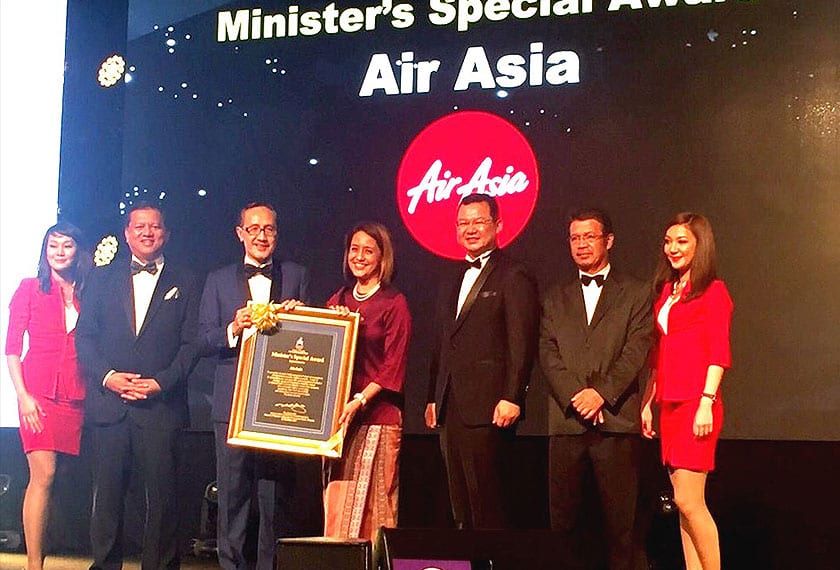
    AirAsia has been named ‘Best Airline’ and received ‘Minister Special Awards’ at the recent Sabah Tourism Awards 2015.

    AirAsia Berhad CEO, Aireen Omar received the award on behalf of the airline from Sabah Minister of Tourism Culture and Environment, Datuk Seri Panglima Masidi Manjun.

    The ‘Best Airline’ category recognised AirAsia’s contribution to Sabah’s tourism industry in terms of connectivity and bringing the highest number of visitors to Sabah over the past two years.

    The ‘Minister Special Awards’ was given to AirAsia for its bold expansion of direct air connectivity to Sabah both internationally and domestically with a total of 23 destinations and growing.

    On top of that, the airline also fully optimised Kota Kinabalu’s strategic geographical position, enabling visitors to discover and experience Sabah’s world-class attractions, apart from developing business opportunities in Sabah.

    In a press statement, Aireen thank the Sabah Tourism Board for recognising their hard work and contribution to the state of Sabah with two prestigious awards.

    “We have invested substantially in developing Sabah into becoming a key AirAsia hub and are very pleased that our efforts have paid off with the ever-growing numbers,”

    “We have big plans for Sabah and look forward to growing the current 3 million passengers per annum to at least 12 million passengers,” she said.

    She added that the company is confident in reaching this target with a proper low cost carrier terminal in place in Kota Kinabalu.

    “Sabah has tremendous potential to be a key regional hub and we want to make this a reality,” she said.

    AirAsia has flown over 8.4 million people in and out of Sabah in the past two years and currently serves 698 weekly flights to and from Kota Kinabalu, Tawau and Sandakan in Sabah.

    The airline has also seen a growing trend of guests travelling from the Asian region and Australia into Kota Kinabalu through AirAsia’s Fly-Thru service.

    Bangkok, Beijing, Shanghai and Perth are the top cities with people connecting into Sabah for the past year, and AirAsia currently has 24 Fly-Thru routes into Kota Kinabalu, providing easy access and convenience for visitors across the region to travel to the state of Sabah.