Tag: SAIC Motor

  • Audi Appoints Former Chery CEO Jeff Zhang as China President

    Audi Appoints Former Chery CEO Jeff Zhang as China President

    Audi announced on Thursday that former Chery brand CEO Jeff Zhang will take over as president of Audi China on November 1, replacing Johannes Roscheck.

    Rolf Michl, chairman of the management board of Audi Sport GmbH, steps in on the same date as chief operating officer to form a dual-leadership board of management with Zhang.

    Roscheck, who has led Audi China since April 2024, will hand over duties before returning to Ingolstadt in early 2027, while Rouven Mohr assumes interim leadership of Audi Sport GmbH on November 1.

    The Two-Brand Joint Venture Split

    The management overhaul accompanies an operational division of Audi’s manufacturing partnerships in China. Under the updated operating structure, SAIC Audi will handle exclusively the AUDI sister marque, while FAW Audi retains the legacy four-ring emblem covering combustion and global electric vehicle lineups.

    The standalone AUDI brand drops the classic four interlocking rings in favor of capital letters tailored specifically for buyers in mainland China. On September 3, Audi and SAIC Motor established the AUDI Innovation & Technology Center in Shanghai to engineer dedicated models for that portfolio.

    Zhang brings more than 20 years of automotive operations experience to the role. He previously served as vice president of Chery International, directed Chery’s European division, managed Chinese operations for Alfa Romeo and DS Automobiles under Stellantis, and worked at Nissan across Japan and North America. Between 2018 and 2020, Zhang worked within Audi China to build the sales footprint at SAIC Audi and steer joint projects with FAW Audi.

    Foreign Luxury Marques Under Local Pressure

    Foreign premium automakers in China face severe volume contraction as domestic electric brands eat away at traditional luxury segment dominance. By putting a Chinese automotive veteran at the helm, Audi is shortening regional reporting lines to counter pricing pressure and faster product iteration from domestic carmakers.

    German premium brands spent decades relying on centralized vehicle designs. That playbook failed to anticipate how fast Chinese buyers shifted toward connected software platforms, leaving legacy imported architectures exposed in dealership showrooms.

    Dual-Leadership Architecture at the Operating Level

    Michl balances the commercial side with product experience from Audi’s performance business. He has run Audi Sport GmbH since September 2022, managing RS high-performance cars and Audi exclusive customization programs after starting in product marketing in 2007.

    The split board answers directly to Audi chief executive Gernot Döllner, who is restructuring international divisions to defend Chinese sales volumes. Dividing the executive mandate allows Zhang to negotiate regional dealer networks while Michl protects component integration with global platforms.

    First Joint EV Platform Targets 2028 Debut

    The leadership transition follows two months of structural reorganisation across Audi’s Chinese corporate footprint. SAIC Audi and FAW Audi operated overlapping showrooms for years, complicating sales operations and discounting discipline across provincial dealer groups.

    SAIC and Audi plan to develop four production models on the co-developed ADP 2.0 platform through the new Shanghai engineering center. The first electric model from that pipeline is scheduled to reach the market in 2028.
  • China Cuts NEV Export Tax Rebates to 9% from 2027

    China Cuts NEV Export Tax Rebates to 9% from 2027

    China will lower its export value-added tax rebate rate for new energy vehicles from 13 percent to 9 percent on April 1, 2027. The four-percentage-point cut reduces the fiscal refund Chinese carmakers collect on every electric and plug-in hybrid vehicle shipped overseas.

    Customs declaration dates will determine whether shipments receive the older 13 percent rebate or the reduced 9 percent rate. The joint directive from the Ministry of Finance and the State Taxation Administration covers pure battery passenger cars, plug-in hybrid models, electric buses, and commercial electric truck tractors. Existing export consumption tax rebate and exemption rules for qualifying vehicles remain unchanged.

    Margin Squeeze for Export-Heavy Automakers

    The policy directly cuts the profitability of shipping cars from Chinese assembly lines to foreign showrooms. Research from Deutsche Bank calculates that the four-point rebate cut will reduce net profit at BYD by roughly 5,000 yuan ($743) on every vehicle exported once the rule takes effect in the second quarter of 2027. BYD shipped 1,342,468 vehicles overseas during the first nine months of 2026, representing approximately 43 percent of its total wholesale volume.

    Other major Chinese exporters face the same margin compression. The change will hit export earnings across a wide group of listed vehicle manufacturers, including Geely Auto, Chery, SAIC Motor, Great Wall Motor, Changan Automobile, Leapmotor, GAC Group, and Xpeng. Automakers exporting directly from mainland factories will either absorb the lost cash refund or attempt to raise retail prices in competitive destination markets.

    Divergence Between Domestic Slump and Foreign Demand

    Beijing is pulling back state fiscal support as export volumes surge while the domestic market contracts. Data from the China Association of Automobile Manufacturers shows Chinese NEV exports jumped 130 percent year-on-year to 4.006 million vehicles in the first nine months of 2026. September exports alone climbed 160 percent to 571,000 units. By contrast, domestic deliveries in China fell 9.4 percent in September to 1.252 million vehicles.

    Total passenger vehicle exports from China reached roughly 919,000 units in September, up 64 percent from the prior year. Weaker consumer spending and reduced purchase incentives at home have forced manufacturers to fill capacity by targeting buyers in Europe, Southeast Asia, Latin America, and Africa. That export surge has intensified price competition in foreign dealerships, accelerating regulatory resistance abroad and prompting Beijing to step back from subsidizing outward pricing wars.

    The Shift to Overseas Factory Floors

    Higher trade barriers and reduced export rebates will accelerate the migration of Chinese automotive capital into foreign manufacturing plants. Chinese electric vehicle production costs run near $20,000 per unit compared to roughly $31,000 for European equivalents, according to estimates by AlixPartners. But with importing jurisdictions raising duties and Beijing trimming domestic tax support, direct exports from China will become structurally more expensive to run.

    Automakers are already shifting assembly footprints closer to their primary regional sales networks. BYD has invested in vehicle manufacturing plants across Thailand, Indonesia, Brazil, and Hungary to assemble cars locally rather than shipping finished units out of Shenzhen. As trade policies tighten, regional factory networks will replace direct mainland car-carrier shipments as the primary channel for supplying Asian and international retail networks.

    Stepwise Rollback of Clean Energy Incentives

    The vehicle rebate reduction follows earlier retrenchments across China’s renewable energy supply chain. Beijing eliminated export VAT rebates for solar photovoltaic equipment on April 1, 2026, while lowering export rebates on battery products from 9 percent to 6 percent. Those battery export tax rebates will drop to zero starting January 1, 2027, three months before the automotive rebate reduction takes effect.

    Manufacturers and logistics operators now face an eighteen-month window before the April 2027 customs deadline to adjust supply contracts, pricing sheets, and overseas factory production schedules.

  • GM Korea to cut prices after disappointing sales

    GM Korea to cut prices after disappointing sales

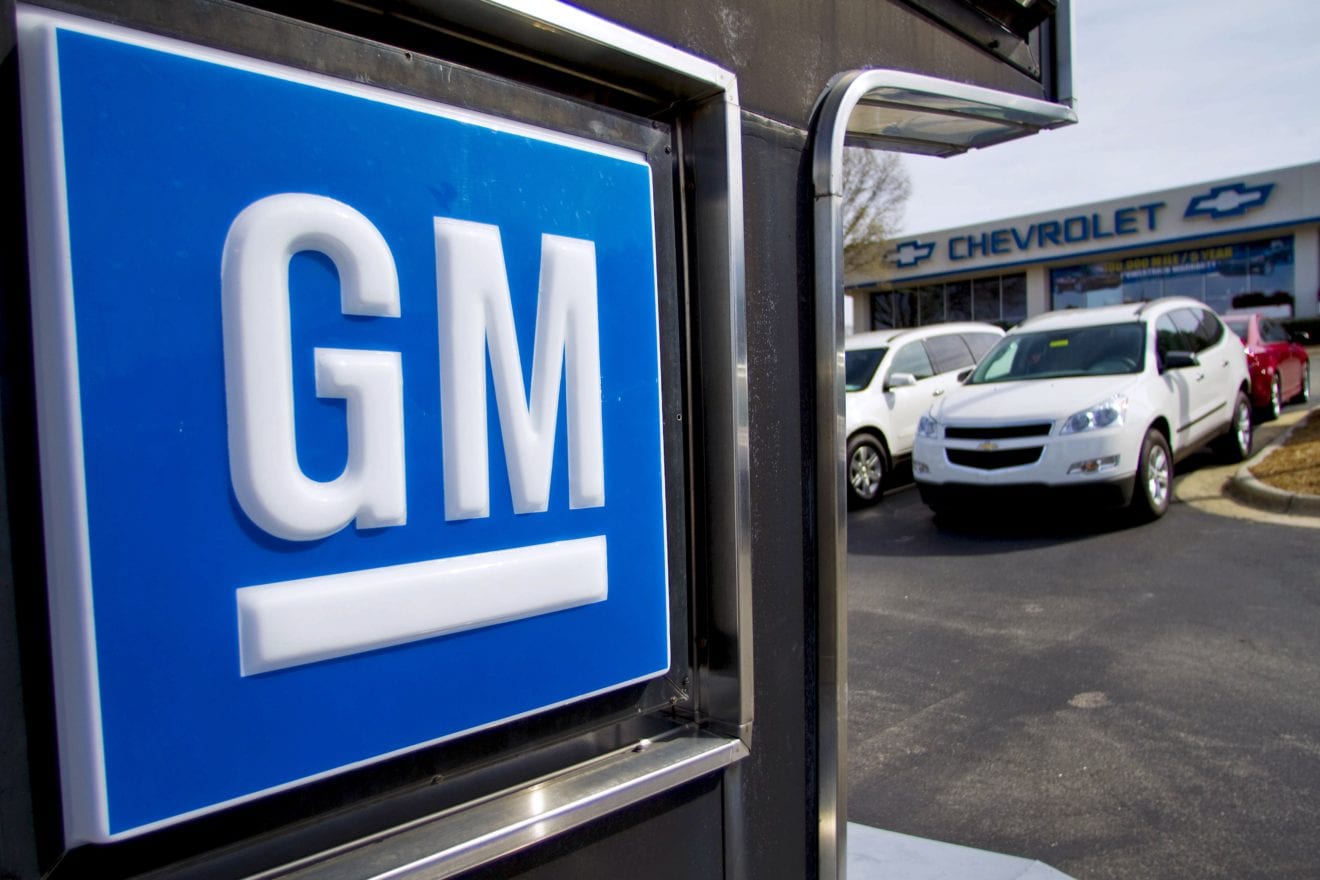
    GM Korea, the Korean unit of General Motors, said Tuesday it has cut the prices of mainstay models in an effort to revive lackluster sales. Starting Tuesday, GM Korea revised the prices of its major models — such as the Impala sedan, Trax, and Equinox sport-utility vehicles — by up to 3 million won ($2,700). The company expects its “customer-focused pricing approach” to strengthen the position of those key Chevrolet vehicles in the Korean market, Cesar Toledo, vice president in charge of sales, customer care and aftersales at GM Korea, said in a statement.

    “Winning more customers, growing market share and sustaining trust in our brand are all crucial ingredients in building a sustainable GM Korea for the long term,” he said.

    GM Korea struggled with weak sales in Korea due to a lack of new models and labor-management disputes over jobs last year.
    In the January-November period, GM Korea’s sales fell 12 percent to 420,447 vehicles from 479,058 a year earlier. Sales figures for December are set to be released today.

    To drive up sales, the carmaker plans to introduce 15 vehicles into the local market over the next five years. It has launched the U.S.-made Equinox and the upgraded Chevy Spark since June. The Traverse SUV will be the next model to be added to its lineup.

    GM holds a 77 percent stake in GM Korea, with the state-run Korea Development Bank and SAIC Motor controlling 17 percent and 6 percent, respectively.