Retail News CRM

Tag: SAIC

  • China’s biggest automaker SAIC eyes sales of 100,000 units in Vietnam

    China’s biggest automaker SAIC eyes sales of 100,000 units in Vietnam

    China’s biggest auto brand SAIC Motor will build a factory in Vietnam next year and hopes to achieve sales of 100,000 units a year within five years.

    “With 100,000 cars sold a year, SAIC can be the third biggest auto company in Vietnam,” SAIC Vietnam director of business and marketing, Tran Nam Thang, said.

    SAIC Vietnam is a subsidiary of Chinese state-owned company Shanghai Automotive Industry Corporation.

    It also plans to start selling MG cars in Vietnam in July, taking it over from Malaysian distributor Tanchong.

    SAIC owns MG, originally a U.K. company.

    The goal of selling 100,000 cars a year is considered bold, given that Toyota, the biggest player in Vietnam, sold only 91,000 vehicles last year, followed by Hyundai with 81,000 units.

    Last year only around 4,300 MG cars were sold in Vietnam.

    Selling more than one brand will be a key strategy to achieve this goal.

    “The plan to build a factory in Vietnam will help reach the goal,” Thang said.

    “SAIC owns many brands and can develop its products quickly to meet a range of demands.”

    The company is considering locating the plant in the north and completing it by 2025. It will not just manufacture cars for the Vietnam market but also for other Southeast Asian countries.

    SAIC is the third Chinese company to announce plans to build a plant in Vietnam after BYD and Chery.

    The latter plans to sell its first cars in the country by the end of this year.

    SAIC sold 5.3 million cars last year and has been the biggest auto company in China for 17 years.

  • Tesla, VW, SAIC Look To Recommence Shanghai Operations

    Tesla, VW, SAIC Look To Recommence Shanghai Operations

    Tesla VW and SAIC are among several companies that are looking to get production back up and running at their Shanghai facilities after almost three weeks of COVID-19 related shutdowns. The news comes following Beijing having drawn up a “whitelist” of companies prioritised to re-open or keep operations going in Shanghai. The list included a number of companies ranging from carmakers to semiconductor manufacturers and medical firms.

    As per Reuters, Tesla had already recalled workers to its Shanghai factory where they would be required to live on-site. The company had planned to commence production today though it has now been deferred to tomorrow citing logistical issues from a supplier. SAIC Motor meanwhile reported that it was commencing stress testing from Monday with an eye on recommencing production while VW said it was evaluating the feasibility of resuming production at its SAIC joint venture.

    However, with COVID-related closures in other cities in the country, it remains to be seen how manufacturers work around supply chain disruptions.

    Shanghai meanwhile aims to stop the spread of COVID-19 outside of quarantined areas by Wednesday with reports saying that the city had stepped up testing measures and transfer positive cases and their close contacts to isolation.

    Companies are being required to ensure ‘closed loops’ for workers being called into work while also maintaining medical supplies. Under ‘closed loops’ employers have been asked to minimise employee exposure to others while transiting to work or arranging for employees to live on their factory premises.

  • China Mobile, SAIC, Huawei demo 5G remote driving

    China Mobile, SAIC, Huawei demo 5G remote driving

    China Mobile, SAIC Motor and Huawei have jointly demonstrated the first 5G-based remote driving technology with a consumer car.

    The demonstration at Mobile World Congress Shanghai involved using a Huawei-provided 5G solution connecting SAIC Motor’s smart concept car the iGS, with China Mobile providing the connectivity.

    The remote driving field test involved a driver located over 30km away from the vehicle, and used HD video cameras installed on the vehicle to send multiple real-time video feeds to provide the driver with a 240-degree view of the vehicle’s surroundings, more than the average binocular peripheral vision.

    Control signals for steering, acceleration and brakes were also transmitted over the 5G network in real time using 5G’s ultra-low latency capabilities.

    End-to-end latency for all vehicle control functions was less than 10 milliseconds, providing an eight centimeter distance between breaking and actual deceleration when the vehicle was traveling at 30km/h.

    Remote driving can be used to augment autonomous vehicles and has a range of potential applications, particularly in harsh or dangerous environments like mining or waste disposal sites, Huawei said.

    The technology could allow a single person to manage a fleet of autonomous vehicles, providing human intervention as needed such as in emergency situations.

  • Volkswagen won’t make Audi cars with SAIC in China before 2018

    Volkswagen won’t make Audi cars with SAIC in China before 2018

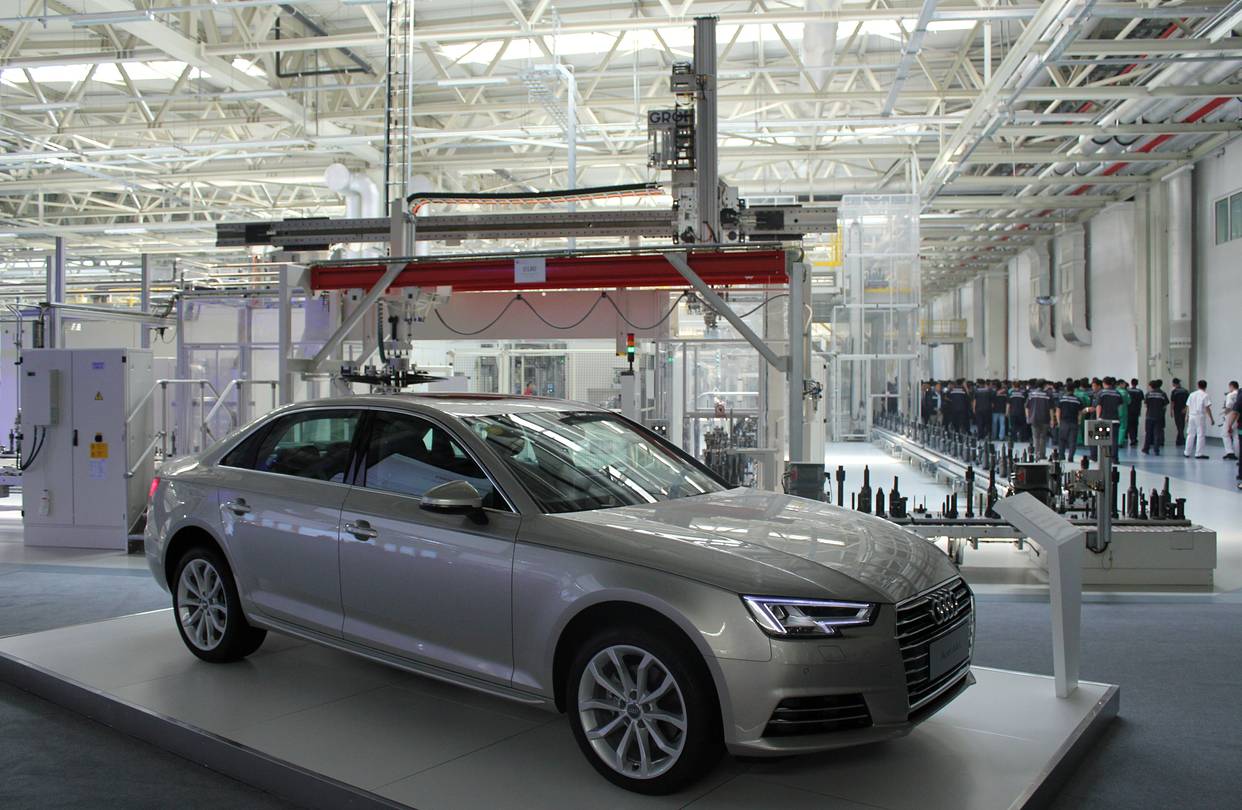
    German carmaker Volkswagen said on Wednesday it would not produce or sell any Audi cars with SAIC Motor until at least 2018, seeking first to strengthen ties with existing Audi partner China FAW Motor Corp .

    VW announced in November a non-binding agreement with SAIC to discuss a partnership regarding Audi AG, which is the best selling premium brand in China.

    Tying up with SAIC, China’s largest automaker, could boost slowing sales for the premium Audi brand as Daimler’s Mercedes and newer entrants such as General Motor’s Cadillac eat into its market share.

    “No sales, no production, nothing this year (2017),” state-owned China Daily on Wednesday quoted VW China chief Jochem Heizmann as saying.

    A VW spokesman confirmed Heizmann’s remarks, saying talks with SAIC were ongoing but that nothing “operational” would happen before 2018.

    “An agreement (with SAIC) could be reached in 2017 and there will be preparation with all the points for sales and production and so on,” an Audi spokeswoman told Reuters.

    “As soon as there is an agreement, there will be measures to fulfil this agreement, but right now we are just in talks and we have no agreement.”

    She added that while larger talks were ongoing, discussions about sales with SAIC were on hold until an agreement is reached resolving concerns of existing FAW dealers.

    Volkswagen gets a larger proportion of the proceeds from the 50-50 tie-up with SAIC than from its 40 percent stake in the venture with FAW.

    Joint ventures with VW and Audi have given FAW a lifeline as it struggles to create successful brands of its own.

    Existing dealers of Audi cars in a letter to the German firm last year said creating a new sales network would further damage an already tenuous situation as existing dealers suffer from slowing sales and generally operate at a loss.

    The Volkswagen spokesman said the priorities were first to strengthen ties with FAW, including with a recently agreed 10-year joint plan, second to resolve concerns of existing Audi dealers, and last, to move forward with a cooperation with SAIC.

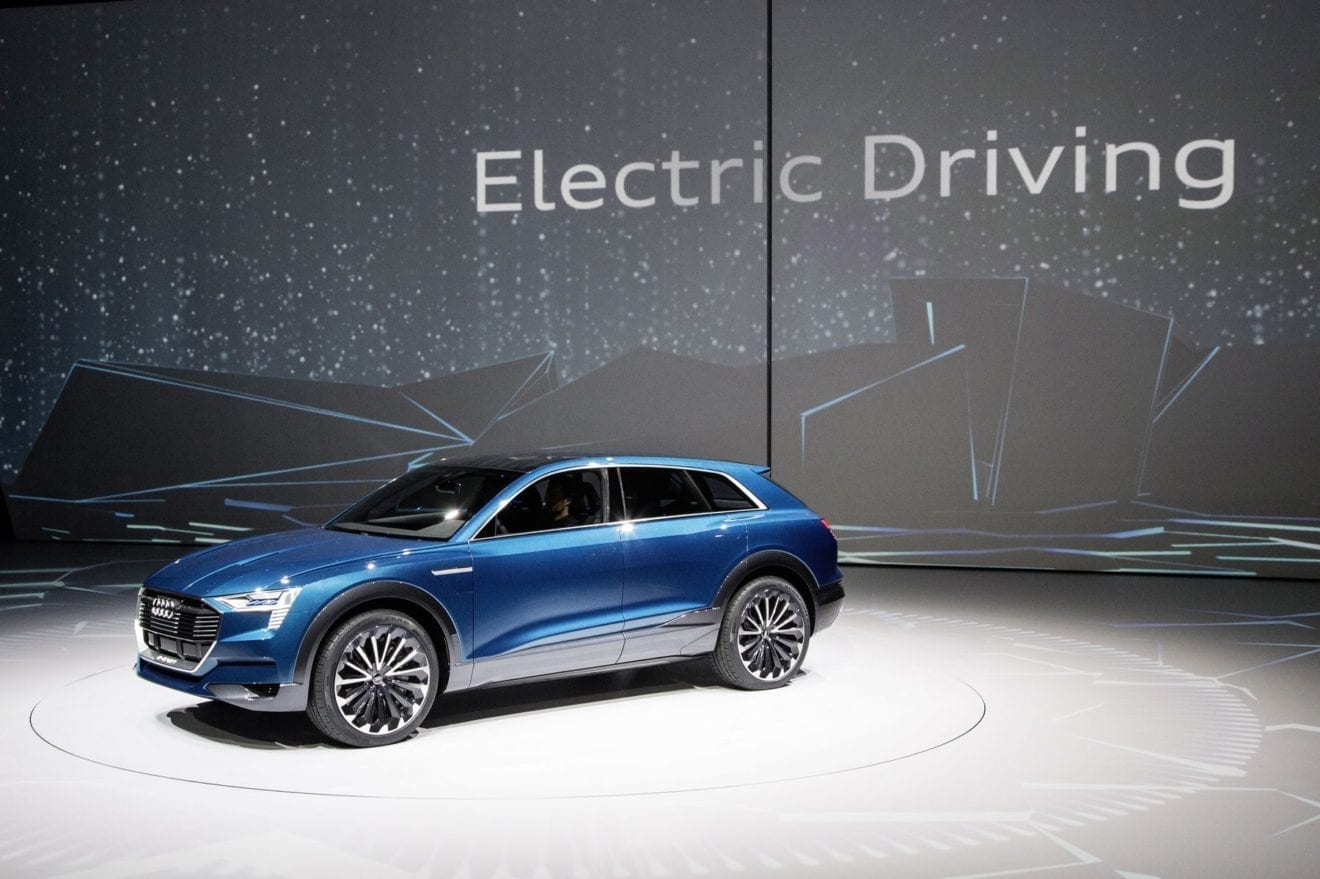
    Audi said on Tuesday that its joint venture with FAW would introduce five more plug-in electric cars in China in the next five years, following on FAW and VW agreeing to a 10-year roadmap for the venture.

  • Volkswagen’s Audi in talks with China’s SAIC Motor on tie-up

    Volkswagen’s Audi in talks with China’s SAIC Motor on tie-up

    Volkswagen’s Audi premium brand is in talks with China’s largest automaker, SAIC Motor, on a potential long-term collaboration, Audi said in a statement on Monday.

    Reuters reported on Saturday, citing a source familiar with the matter, that the two had signed an agreement that could pave the way for Volkswagen’s joint venture with SAIC to make Audi brand cars.

    An early entrant to China, the world’s largest car market, Audi is the best-selling premium car brand although it is rapidly losing ground to newer car models from Daimler’s Mercedes-Benz and non-German automakers like Toyota’s Lexus and General Motor’s Cadillac.

    Audi cars are now only made in China through a joint venture with China FAW Group, providing a lifeline to a state-owned company whose own brand cars have struggled with falling sales.

    Audi reaffirmed its commitment to FAW in the release announcing the talks with SAIC, saying it had outlined growth plans with FAW for the next 10 years that include making green energy SUVs and sedans in every major segment.

    Audi will also form a new joint venture company with FAW to be based in Beijing and focus on mobility and digital services, according to the statement.