Tag: Salim Group

  • Indonesia’s Salim Group Re-enters Banking with Local Takeover

    Indonesia’s Salim Group Re-enters Banking with Local Takeover

    Indonesia’s largest conglomerate, Salim Group, has acquired a majority stake in a local bank, marking its first return to the banking business since the 1998 Asian financial crisis.

    Through various affiliated entities, the group bought at least 51% of Bank Ina Perdana by subscribing to new shares issued by the Indonesia-listed lender. The acquisition value is estimated at 570 billion rupiah ($42 million). The bank has 22 branches in Java and had 2.3 trillion rupiah in assets as of December 2016.

    Salim took over Bank Central Asia in the 1970s and developed it into the country’s largest private lender on the back of deregulation policies under then-President Suharto, who had close ties with group founder Sudono Salim.

    But after the bank’s ownership was transferred to the government in the wake of the Asian financial crisis, the group focused on rebuilding its other operations, mainly through its core food company, Indofood Sukses Makmur. It has interests in the retail, automotive, telecommunications, infrastructure and other sectors across Indonesia and the Philippines.

    In recent years, the smartphone boom has created a new wave of demand for financial services such as electronic payments and peer-to-peer lending. Salim decided that operating its own bank and building a financial backbone would be crucial for running an end-to-end digital business, which it has been developing since 2013.

    “It makes sense for us to refocus on banking because the transactions carried out by the banks are becoming quite big,” said a Salim executive.The conglomerate may have targeted a smaller player because it wanted to venture into digital banking without spending a fortune.

    Developing digital services at large banks entails the risk of having reduce the number of employees and branches, according to a person familiar with Salim’s strategy. The group remains one of the biggest customers of Bank Central Asia, currently owned by another local conglomerate.

    Anthoni Salim, the group’s CEO, owns a small stake in Bank Central Asia but is not involved in its management. Salim will begin testing new services internally for its 500,000 employees during the second half of 2017.

    The trial will involve Bank Ina and various Salim Group companies, including Indomaret, a convenience store chain with 14,000 outlets nationwide. The trial will use fingerprint-recognition technology being developed by a joint venture between Salim and Tokyo-based startup Liquid.

    In one test case, Salim employees will open a bank account at Bank Ina and pay for goods at Indomaret using a fingerprint reader linked to their accounts.

    The group is also eyeing peer-to-peer money transfers and loans using Indomaret stores as a bank branch. Edy Kuntardjo, Bank Ina’s president, said the bank expects to roll out some of these services in 2018, subject to regulatory approval. Bank Ina is currently revamping its core banking system with the aim of improving processing transactions carried out at Indomaret stores.

    Not alone

    Salim’s return to banking follows a broader trend in which Indonesia’s biggest groups are moving back into the sector after recovering from the financial crisis. Lippo Group, which has focused on property and retailing since losing its flagship Lippo Bank in the financial crisis, acquired Bank Nationalnobu, a small local player, in 2010.

    “We must have inward creative disruption so that we can be transformed into a new area of growth, which is the digital economy,” James Riady, Lippo’s CEO, told  in November.

    Sinarmas Group, a paper and palm oil conglomerate, acquired a local bank in 2005 and has since renamed it Bank Sinarmas. The bank will reportedly funnel the bulk of its capital spending this year toward developing digital services.

    Industry observers will be watching closely to see how traditional family-owned businesses work with local and foreign startups, which have established a lead in emerging financial technology. Lippo is an investor in Grab, a Singapore-based ride-hailing app, and the two companies are co-developing an e-payment service.


  • Indonesia’s Lippo & Korea’s Lotte form e-commerce JV

    Indonesia’s Lippo & Korea’s Lotte form e-commerce JV

    Indonesia’s Salim Group is planning a major foray into e-commerce this year in partnership with South Korea’s Lotte.

    Indo Lotte Makmur, a 50-50 JV by the two conglomerates, will launch the iLotte online shopping platform as soon as July, putting US$88 million into the project initially. The service will be geared primarily toward women in their 20s and 30s, and feature name-brand cosmetics sold in South Korea as well as offerings from Lotte’s online mall.

    A robust infrastructure built up over the course of years will let Salim achieve economies of scale for the e-commerce business, says Indo Lotte CFO Dani Sumarsono, who is overseeing online business at Indonesia’s largest conglomerate.

    “E-commerce is not only about digital technology but about moving physical products,” he says. “We have been investing in infrastructure for a long time.”

    Indo Lotte president, a former executive at Lotte’s e-commerce business in South Korea, says Salim has a lot of infrastructure, while Lotte can bring know-how and technology.

    Indonesia’s e-commerce market is expected to grow to $46 billion in 2025 from just $1.7 billion a decade earlier, according to research by Google and Singapore’s Temasek Holdings. Under this scenario, Indonesia would make up more than half of the total Southeast Asian e-commerce market and would follow China and India as the third-largest national market in Asia, excluding Japan. A doubling of internet users, from 92 million to 215 million, is seen as the driver of this expansion.

    Expensive market

    With chronic congestion of its major cities and a lack of basic infrastructure on its islands, Indonesia is an expensive market to service. Logistics costs are 27 per cent of GDP, compared with 20 per cent in Thailand and 13 per cent in Malaysia, according to the World Bank.

    However, Salim’s 13,000-plus Indomaret convenience stores across Indonesia can be used as places to pay for and pick up goods ordered online. Meanwhile, a shipping unit that delivers instant noodles made by group member Indofood Sukses Makmur to more than 30,000 small towns nationwide can help bolster efficiency.

    Salim has also created a JV with Tokyo-based startup Liquid to explore payments using fingerprint authentication, with credit-card ownership of less than one in every 10 adults in Indonesia. Liquid’s system allowing pre-registered shoppers to pay via fingerprint scanner has been deployed at Japanese convenience stores. The JV will test the system for 500,000 Salim employees initially and targets commercial application within the year.

    Meanwhile, another Indonesian conglomerate, Lippo Group, is developing an electronic payment service for use on MatahariMall.com, which Lippo launched in 2015.

  • Charoen welcomes Salim Group into poultry feed business

    Charoen welcomes Salim Group into poultry feed business

    Salim Group’s decision to enter the poultry feed business in Indonesia in a bid to expand has yet to deter publicly listed poultry firm Charoen Pokphand Indonesia — whom currently holds 34 percent of the market share.

    Charoen Indonesia voiced optimism that its parent company, Charoen Pokhand Group will support the company, especially in terms of technology. The Thailand-based conglomerate is currently one of the biggest poultry business players in the world.

    “We have not prepared any special strategy to anticipate their entrance into the market. We welcome newcomers in the competition,” said Charoen Pokphand Indonesia president Director Tjiu Thomas Effendy on Wednesday.

    In December 2015, Salim Group purchased a controlling stake in Malaysia-based poultry firm CAB Cakaran Bhd. The conglomerate, through its shell company Plant Wealth Holdings Ltd, took 11.05 percent of shares in Cakaran.

    It plans to form a joint-venture in Indonesia this year. “Our Malaysian partner will do the technology transfer, while Indofood will support the operations,” Salim Group Chairman Anthoni Salim told thejakartapost.com recently.

    While Charoen is strong in poultry feed and day-old chicks, its poultry-based food business is low. This opens a door for Salim, as the big player in food industry, to enter especially as Salim has 35.8 percent shares in Fast Food Indonesia, the license-holder for the Kentucky Fried Chicken franchise in Indonesia.

  • Caffe Bene Korea losses soar

    Caffe Bene Korea losses soar

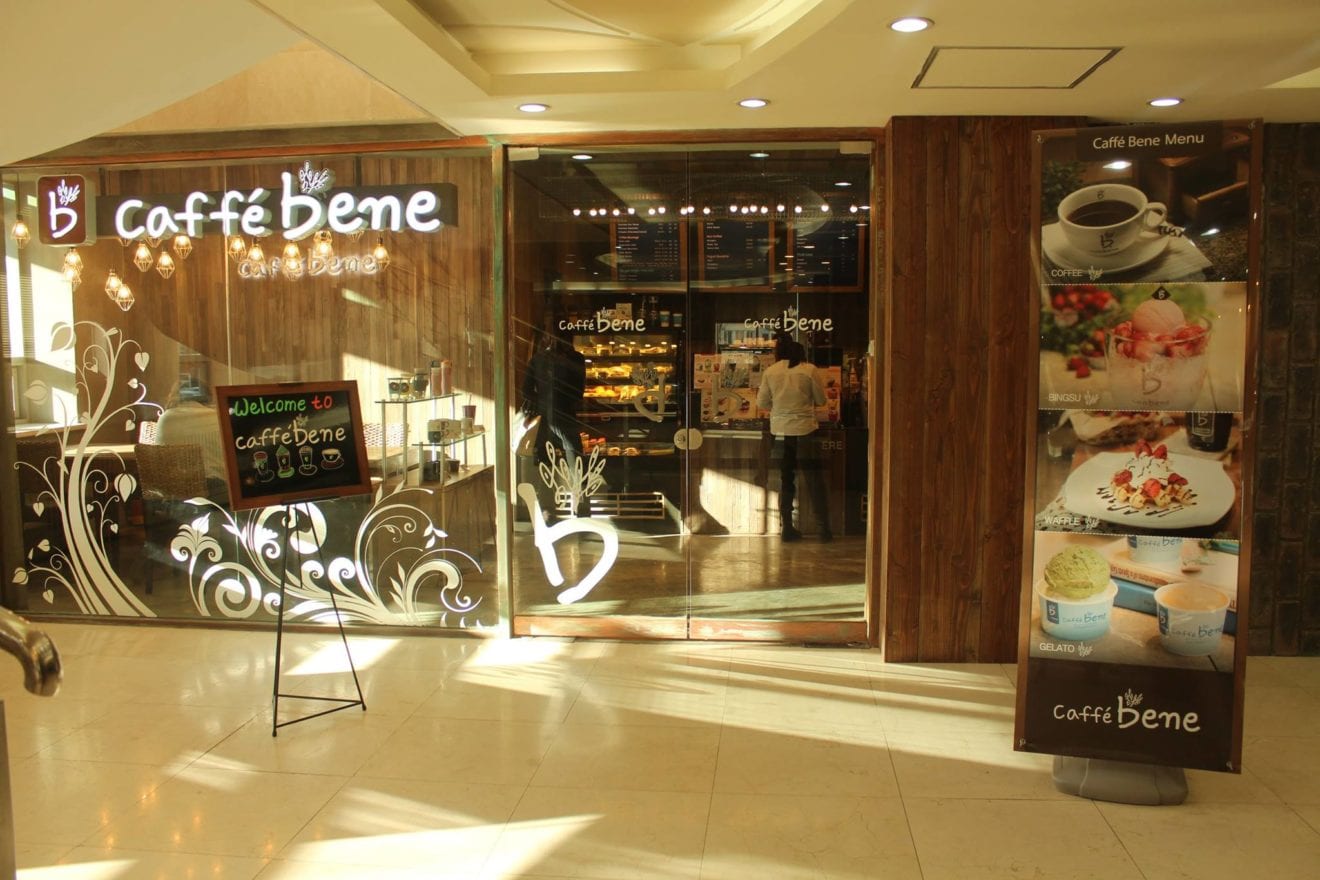
    Beancounting has taken a turn for the worse for Caffe Bene Korea, which has just reported a net loss of US$30 million.

    The coffee shop chain’s turnover was $97 million, according to a corrected annual report filed with South Korea’s Financial Supervisory Service. This was down from $122.5 million the previous financial year, when the net loss was $7.1 million.

    It has been three years since the company turned a profit.

    The chain – which specialises in iced desserts as well as hot and cold coffees – has culled its Mainland China network from 600 stores back to 400 during the last two years. It has apparently failed to find a partner with which to enter the Hong Kong market.

    For the quarter ending March 31, Caffe Bene had $15.6 million in sales, down from $23.7 million for the same period last year.

    According to the company’s latest count in April, its Korean outlets have fallen to 850, from a 912 peak two years ago. It is competing against about 30 coffee chains in Korea.

    “Too many menu items brought considerable operational burden to each outlet store,” says deputy-GM for Korea Jong Wook Kim. “To resolve this issue, Caffe Bene is reducing the number of items and focusing on what customers prefer most.”

    Founder Kim Sun-Kwon’s stake in Caffe Bene has dwindled from nearly 50 per cent to 4 per cent, and last year he stepped down as CEO in favour of Choi Seung-Woo, a former chief of Woongjin Food. In March, Kim was out as president.

    Meanwhile, Korean investment firm K3 Equity Partners converted enough preferred shares to take a 52 per cent stake in Caffe Bene, and in March, Hallyu Ventures – a joint venture between Singapore’s Food Empire and Indonesian conglomerate Salim Group – paid $13 million for an initial 38 per cent interest.

    Units worldwide, including a claimed presence in seven Southeast Asian markets, including the Philippines where it operates five stores after landing in 2008, and in Vietnam, stand at 1364, down from 1560 two years ago.

    Caffe Bene has also had a roasting in the US, where it has been the subject of several lawsuits by franchisees.

  • Singaporeans invest in Caffe Bene

    Singaporeans invest in Caffe Bene

    Days after being launched, Singapore’s Hallyu Ventures (HVPL) has spent US$13.8 million to take a 38 per cent shareholding in South Korean coffee chain Caffe Bene, which has outlets in 14 countries.

    HVPL is a joint venture between Future Investment Holdings (FIHPL), a wholly owned subsidiary of Food Empire Holdings, and Sweet Blossom Holdings (SBHL), a wholly owned subsidiary of Eastern Valley Group, part of Indonesian conglomerate Salim Group.

    FIHPL holds 51 per cent shares in the joint venture, launched with the aim of investing in F&B companies in east and north-east Asia, as well as South Korea.
    Hallyu Ventures is now Caffe Bene’s second-largest shareholder, and its involvement is expected to enable the brand to enhance its competitive power as the top coffee franchise company in Korea.

    “It will also make it possible to lead in both the local and global market, with Caffe Bene management in Korea focusing on the local market while the overseas partners expand its global market influence,” says the company.
    K3 is Caffee Bene’s largest shareholder with 52 per cent. However, Hallyu Ventures plans to invest further this year to strengthen its position as a strategic investor, reports The Korea Times.

    Caffe Bene Korea is focusing on international expansion after reaching saturation point in its own market with a network of 810 stores. It has more than 500 stores in China with a short term target of 1000, and two in the US. It will also take its brand to the Middle East after signing a franchise agreement with Saudi Arabia-based Keden Group.

  • Tough battle brews in Indonesian eCommerce

    Tough battle brews in Indonesian eCommerce

    Three Indonesian eCommerce platforms are about to be launched – by Astra Graphia, CT Corp and a joint venture formed by the Salim and Lotte Groups.

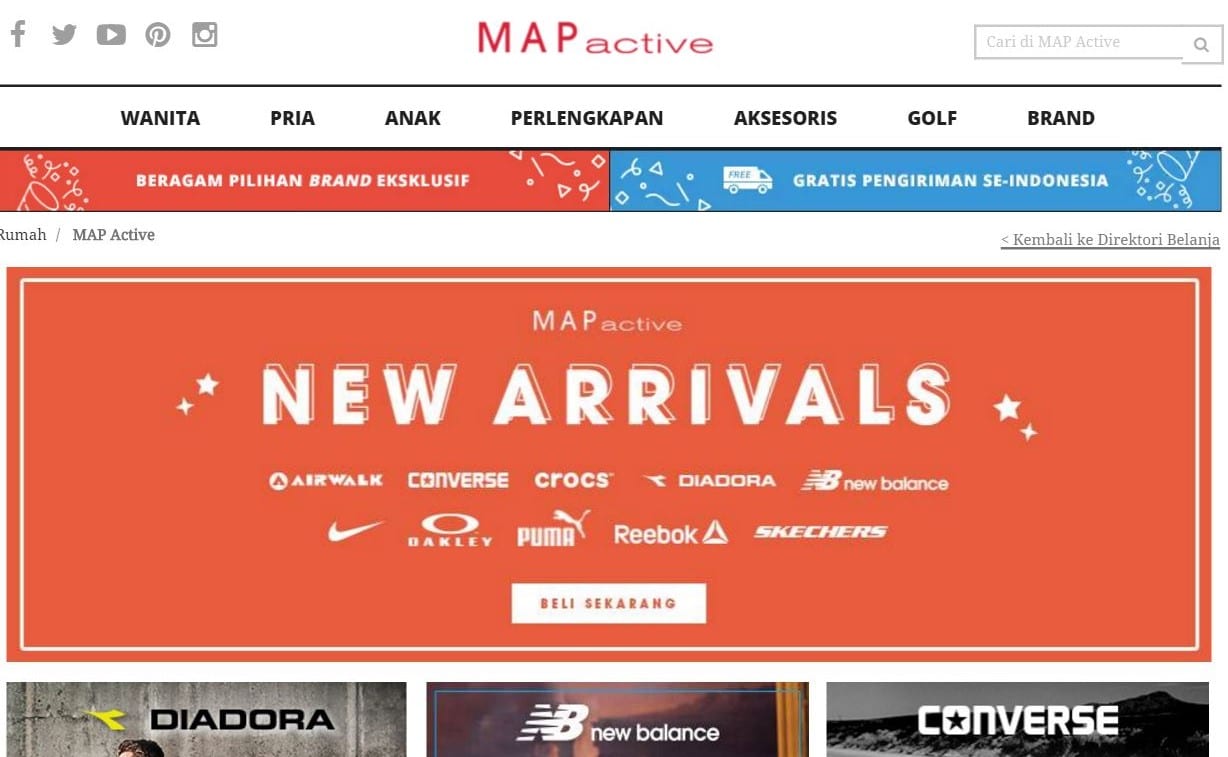
    This comes after forays into eCommerce in the past 12 months by such Indonesian conglomerates Lippo Group (MatahariMall and Venturra Capital), Sinar Mas Group (SMDV) MNC Group (BrandOutlet) and MAP Group (eMall), reports E27, which says Indonesia’s eCommerce market is predicted to grow to US$130 billion by 2020.

    Salim Group has signed an agreement with South Korea’s retail giant Lotte Group to form a joint venture for eCommerce business. Launching next year, it is the second such collaboration followingElevenia.
    Lotte Group’s portfolio in Indonesia includes a department store, 41 retail stores and 31 fast-food franchise outlets. Salim Group owns businesses in the F&B, infrastructure, logistics, telco, media and real estate sectors. It also has 11,000 Indomaret minimart outlets.
    “We expect ourselves to champion the market as soon as we walk into it, says CT Corp founder Chairul Tanjung, who has yet to reveal a launch date for the group’s online venture.

    CT Corp owns hypermarket chain Carrefour, the department store chain Metro, hotels and theme parks managed by TransStudio, media companies Detik and TransTV, and fashion and F&B outlets.

    Its new eCommerce platform will be a separate business entity from the group’s TransRetail subsidiary, which covers its retail businesses.
    Meanwhile, a subsidiary of Astra International specialising in office equipment and services, Astra Graphia has spent about IDR50 billion (US$3.6 million) on developing its Axiqoe platform.
    “The online shop will display thousands of items, initially for business-to-business,” says Astra Graphia’s chief of finance Panji Nurfirman.

  • Lotte Group in Indonesian confectionery push

    Lotte Group in Indonesian confectionery push

    South Korean confectionery manufacturer Lotte Group is planning an eCommerce joint venture with one of Indonesia’s largest conglomerates, the Salim Group, within the next few months with the aim of being up and running by early next year.

    This follows a new government policy on eCommerce that opens up a market of nearly 250 million people to foreign brands. According to the Korean media, the deal was formalised when Lotte Group chairman Shin Dong-bin met with Salim Group chairman Anthony Salim in Singapore during an Asia Business Council meeting.
    Under Shin, Lotte has been aggressively expanding its overseas businesses, and the Indonesian confectionery market is considered a key strategic opportunity, reports Deal Street Asia. The company hopes to secure a strong foothold in the eCommerce market through an omni-channel retailing strategy and establishing a stable delivery service via the partners’ offline stores.
    Also planning to introduce products popular in Korea, Lotte first became involved in the Indonesian market in 2008 when it acquired 10 stores of the Dutch discount chain Makro. Lotte has one department store in Indonesia and 41 retail outlets, while Salim Group has 11,000 Indomartconvenience stores. The Salim Group’s businesses cover such sectors as food, distribution, telecommunications, media, automobile manufacturing and property development.

    An eCommerce roadmap has been drafted by the Indonesian government as a basis for guidelines regulating the sector. It covers such aspects as funding, taxation, communication infrastructure, logistics, cyber security, consumer protection and education, with the aim of achieving eCommerce transaction value of $130 billion by 2020.

  • Lotte, Salim to set up e-commerce platform solution JV in Indonesia

    Lotte, Salim to set up e-commerce platform solution JV in Indonesia

    South Korea’s retail conglomerate Lotte Group said Sunday that it plans to form a joint e-commerce venture with Indonesia’s biggest conglomerate Salim Group to grab a pie of the rapidly growing e-commerce market in Indonesia.

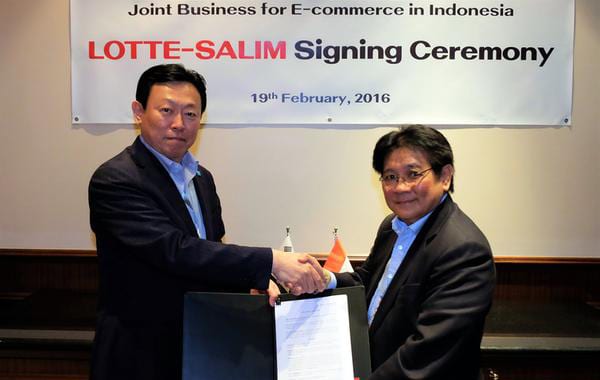
    According to Lotte Group, its Chairman Shin Dong-bin on Friday signed a memorandum of understanding (MOU) agreement with Salim Group Chairman Anthony Salim to establish an e-commerce platform solution joint venture in the first half of this year. They aim to officially launch the company early next year.

    The South Korean retail mogul expects the Indonesian online retail market to grow to 25 trillion won ($20.27 billion) in value by 2020 after the market grew to 3.2 trillion won in 2014. The two companies plan to set up a comprehensive e-commerce platform solution and logistics service that will allow Lotte’s 41 offline retail stores and one department store operating in the Southeast Asian country as well as Salim’s 11,000 offline convenient stores, Indomaret, to sell and deliver products to Indonesian consumers. They will also introduce some popular products of Lotte Mart and Lotte Department Store in Korea through the new platform.

    In Indonesia, Lotte is operating one department store, 41 retail stores (including two grocery stores), 31 Lotteria fast-food franchises, two Angel-in-us cafés and two Lotte duty-free shops (one in airport and the other in downtown). In 2010, the retail group acquired Titan Chemicals, one of the leading petrochemical company in Southeast Asia, to gain a foothold in the petrochemical industry in the region.

    Salim Group, the biggest Indonesian conglomerate, operates a diverse array of business ranging from food, infrastructure, logistics, telecommunications, media and automobile, to real estate.

  • Salim Group backed Indonesian bread maker forays into Philippines

    Salim Group backed Indonesian bread maker forays into Philippines

    Indonesia’s top bread producer Nippon Indosari Corpindo on Monday said it will enter the Philippines bakery market by setting up a joint venture factory with local food company Monde Nissin Corporation.

    A girl looks at breads shaped like roasted pigs, locally known as “Lechon”, sold for $3 at a bakery in Manila December 31, 2012. Lechon is a popular delicacy served during New Year revelries in Philippines. © Reuters

    Nippon Indosari will own 55% of the joint venture, Sarimonde Foods Corporation, which will have a total paid up capital of $12.5 million. It plans to start producing white and sweet bread in 2017.

    The Philippines marks Nippon Indosari’s foray into overseas markets. Established in 1995, the company produces the locally well-known Sari Roti branded sweet bread sold in local retail stores and commands a 20%-plus market share. The company logged 1.56 trillion rupiah ($109 million) in revenue for the nine months ended September, a 15% increase from the previous year, while net profit rose 46% to 192 billion rupiah.

    But competition at home is intensifying. A joint venture between Japan’s Yamazaki Baking and Mitsubishi Corp. began producing bread locally in 2014 under a partnership with Sumber Alfaria Trijaya, which runs a network of 12,000 convenience stores and mini supermarkets. Nippon Indosari wants to establish a new source of revenue in the Philippines, a populous and growing consumer market.

    “The Philippines is a very attractive market to serve as the company’s overseas expansion area because it has a very large population,” Nippon Indosari said in a news release. “The Philippines has a demographic profile that is no different from Indonesia, where 60% of the population is aged under 30 years, has a growing middle economic class, and has the trend for healthy and practical food that fits their busy lifestyle.”

    The Philippines is also a core market for Salim Group, which owns 31.5% of Nippon Indosari’s shares through its Indonesia-listed investment vehicle Indoritel Makmur Internasional. The group, controlled by Chinese-Indonesian billionaire Anthoni Salim, has interests in Philippine Long Distance Telephone, the country’s largest telecommunication company, and infrastructure developer Metro Pacific Investments. But its presence in the food industry was small.

    Japan’s Sojitz Corp. and Pasco Shikishima Corp. also have minority stakes in Nippon Indosari.

    Monde Nissin is a major snack maker in the Philippines. The privately held company produces packed instant noodles, biscuits, cookies and yoghurt drink. In most product segments, the company directly competes with Universal Robina, a leading producer of branded consumer foods.

    The 35-year-old company founded by entrepreneur Betty Ang has been expanding aggressively in the last few years by teaming up with other brands and acquiring companies. With vast distribution network and market presence, cereal maker Kellogs partnered with the company last month as its distributor. In October 2015, Monde Nissin signed a joint venture agreement with Thailand’s Malee Beverage Public Co. Ltd., a leading juice and canned fruit manufacturer. In the same year, it acquired British meat substitute maker Quorn and Australian food producers Menora and Black Swan.

  • Indra Philippines mulls tie up with Indonesia’s Salim Group

    Indra Philippines mulls tie up with Indonesia’s Salim Group

    Tech company Indra Philippines Inc is mulling business expansion in Southeast Asia with a possible tie-up with the Indonesia-based conglomerate Salim Group, reports said.

    Avionics and air defense radar systems are some of the main business targets of Indra in the region, according to Manuel Pangilinan, chairman of the Metro Pacific Investments Corp (MPIC).

    Headquartered in Jakarta, Salim Group has subsidiaries operating in agribusiness, food, distribution and retail, telecommunications, automobile, building materials, infrastructure, real estate, hotels and resorts, banking and financial services, international trade, including chemical manufacturing.

    Only last week, MPIC bought a 26 per cent stake in Indra from its unit the Manila Electric Company (Meralco) for $7.1 million, reducing the latter’s ownership to 24.95 per cent.

    Indra has worked on a number of large systems projects for various MPIC portfolio companies. MPIC is now seeking to further commercialize the expertise developed as part of these projects.

    Indra is a joint venture between Meralco and Indra Sistemas SA of Spain. It has been operating in the Philippines for the past 18 years as provider of information technology solutions to various businesses and industries with engagements in utilities and telecommunications, financial services and public administration.

    The company offers its customers management solutions – consultancy, project development, integration and implementation to IT outsourcing, and business process outsourcing (BPO).

    MPIC and Meralco’s last trading prices remained at P5.07 and P308 since Friday.

  • Shinhan Card to buy Indonesia’s Salim Group unit

    Shinhan Card to buy Indonesia’s Salim Group unit

    Shinhan Card will acquire a controlling stake in an Indonesian financial company as part of its expansion strategy into emerging markets, the credit card company said Thursday.

    “We will sign a deal next week in Jakarta to buy a 50 percent stake plus a share in Swadharma Indotama Finance from Indonesia’s Salim Group for a bit more than 10 billion won ($8.4 million),” a Shinhan Card spokesman said.

    Shinhan Card plans to hold a board meeting on Aug. 21 to approve the acquisition, with a signing ceremony scheduled on Aug. 26. It aims to launch a joint venture with a new name in Indonesia in November after receiving approval from financial authorities in the two countries in September, the company said.

    Shinhan’s local venture partner will be the existing shareholders who own the remaining stake in Swadharma Indotama Finance, the spokesman explained.

    The exact acquisition price will be decided at Shinhan Card’s board meeting next week, he said.

    “The acquisition is aimed at maximizing synergies between Shinhan Card’s 30 years of credit card business know-how and Salim Group’s nationwide retail networks,” the statement said.

    Salim Group’s businesses include telecommunications, automobiles, leasing, mining energy and foods. Salim Food is Indonesia’s largest food manufacturing company, it said.

    On top of strengthening Swadharma Indotama Finance’s existing businesses, Shinhan Card will seek an approval in Indonesia to enter the local credit card market late next year, the spokesman said.

    If everything goes as planned, Shinhan Card will be the first Korean credit card firm to sell its products and services to Indonesian customers. In fact, it is risky for a credit card company to begin business in foreign countries without accumulated customer data, it said.

    “We will beef up our overseas operations by making a presence in Indonesia following our recent advance to Kazakhstan. Particularly, we will focus on the credit card business in Indonesia in coming years,” Shinhan Card Chief Executive and President Wi Sung-ho said in the statement.

    In July, Shinhan Card opened its first overseas business entity, Shinhan Finance, in Almaty, Kazakhstan, initially to handle auto financing. It plans to sell small loans to individuals from September and introduce lease products from 2017, the spokesman said.

    In Kazakhstan, only banks are allowed to get into the credit card business. So Shinhan Card has to acquire a local bank if it wants to jump into the local credit card market, he said.

    Shinhan Card said it will continue to enter other emerging markets in Southeast Asia based on its experiences in Vietnam, Kazakhstan and Malaysia.

    In the January-June period, Shinhan Card posted a net profit of 352 billion won, up 11 percent from 318 billion won a year earlier, according to a regulatory filing.