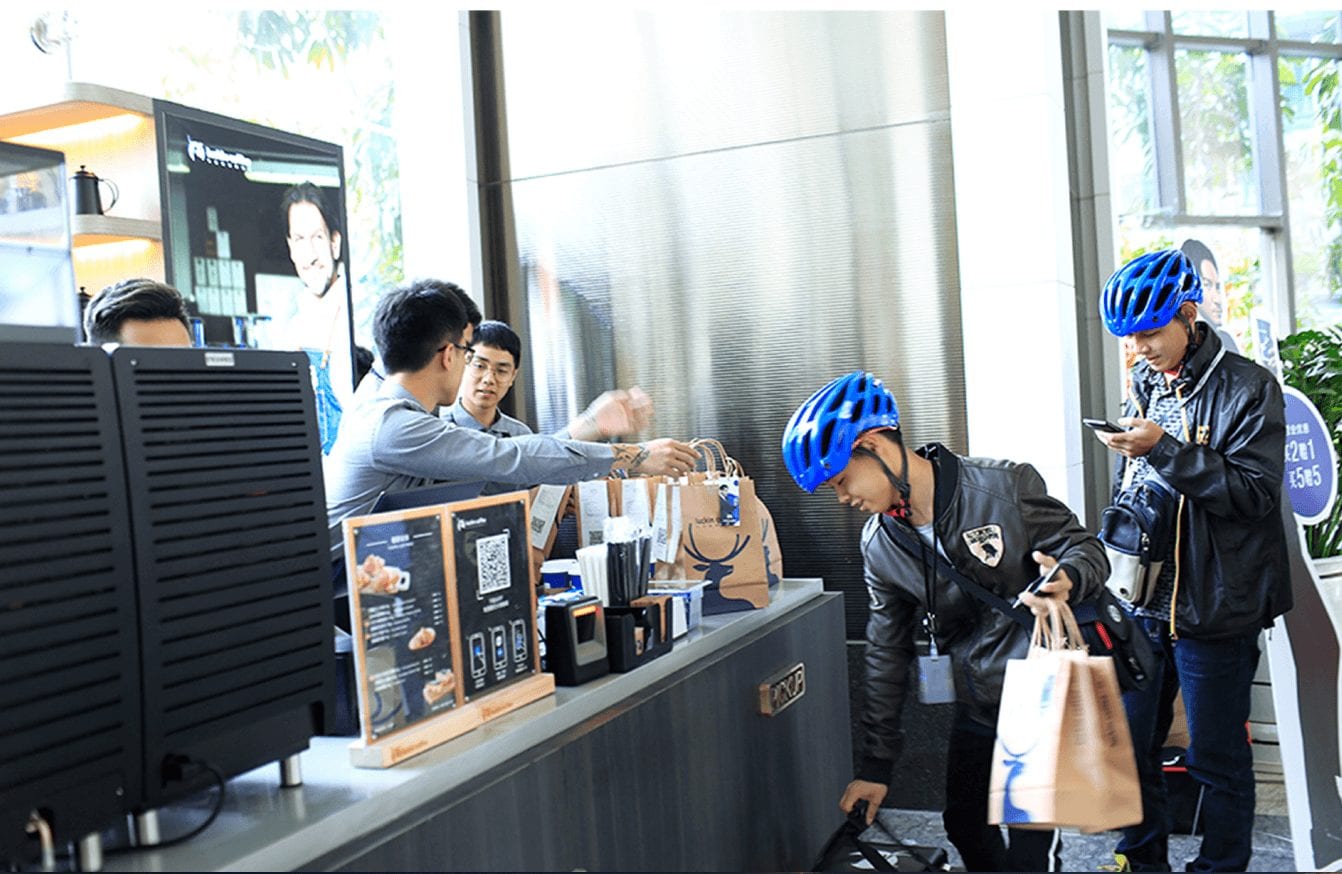
Luckin Coffee expanded its global network to 36,310 outlets by June 30, 2026. The chain added more than 5,000 net new locations in six months despite falling same-store sales.
China accounts for 36,087 of those stores, or 99.4 per cent of the total, leaving overseas operations with a negligible share of overall sales. Top-line revenue keeps climbing, but store-level economics are tightening. Same-store sales at self-operated locations fell 5.3 per cent year on year in the second quarter. That widened the decline recorded in the first quarter. Partner-operated units faced even sharper pressure on single-store receipts.
Store Density Dilutes Franchise Returns
At the end of the second quarter, the brand operated 23,734 self-managed locations and 12,576 franchised partner stores. Franchises made up 34.6 per cent of the global estate. That stayed close to the 34.8 per cent share logged at the close of 2025, but represents a net increase of 1,762 shops from 10,814 outlets six months earlier.
Revenue from partner stores reached 36.68 billion RMB in the second quarter, up 27.9 per cent year on year to generate 23.1 per cent of Luckin’s total net revenue. In the prior-year period, partner stores brought in 28.67 billion RMB across 9,238 locations. Store count jumped 36.1 per cent over that span while partner revenue grew only 27.9 per cent, showing dilution on the ground. In dense urban districts, new openings siphon foot traffic from established shops under the same brand.
This shift alters the math for prospective franchisees. Store construction and fit-out costs remain flat. However, longer payback windows mean operators face limited downside alongside lower profit ceilings.
Operational Friction in the Tea Shift
Management has pushed beyond coffee to build a broader ready-to-drink beverage platform. The pivot began in August 2024 when the chain launched Light Jasmine Light Milk Tea with a morning-coffee, afternoon-tea promotion. Diversification gathered pace throughout 2025. The company rolled out more than 140 new products that year and lifted non-coffee sales past 20 per cent of total cups sold.
Menu rollouts accelerated in the second quarter of 2026 with 28 ready-to-drink items and more than ten snacks. Non-coffee items made up nearly half of all new and returning drinks across the network during the first six months of the year.
Adding milk tea complicates daily operations for front-line staff. Standard coffee relies on automated, uniform inputs like beans and syrups. Fresh tea requires brewed bases, fruit prep, milk foams, and short shelf-life dairy. That increases waste and inventory oversight. Baristas now juggle dual workflows across morning and afternoon rushes, which pushes up labor hours and training needs. Franchisees also have to buy tea extractors, larger ice makers, and dedicated refrigerated displays.
Tea Chains Push Fresh Grinds
The boundary between coffee chains and tea specialists in China has collapsed entirely. While Luckin branches into milk tea, leading tea franchises are installing espresso machines to capture morning commuters.
Guming installed commercial coffee equipment across roughly 13,500 outlets by June 30, 2026, topping 90 per cent store penetration. The brand introduced 12 coffee items in the first half of 2026, pushing coffee past 20 per cent of total sales volume. Mixue Ice City upgraded to freshly ground coffee across its network, using heavy subsidies to replace older drip drinks.
Cha Baidao launched 15 coffee items in the first half, installing fresh-grind machines in more than 2,700 locations. Hushang Ayi added espresso stations to its core stores to boost breakfast tickets. Most tea chains sell coffee between 8 and 15 RMB. That overlaps directly with Luckin’s core price band while tapping deeper reach in third- and fourth-tier cities.
Narrowing Spreads for Store Partners
For landlords, Luckin remains a high-volume anchor tenant that pulls heavy foot traffic with standardized fit-outs. But the commercial risk has shifted onto operators. Prime business districts still generate steady yields. Outlying suburban sites and lower-tier municipal markets, however, are squeezed by internal cannibalization and tea rivals selling 10 RMB lattes.
Luckin’s central supply chain protects input costs, but it cannot stop localized sales erosion. Tea rivals use existing counter space to serve fresh coffee at low incremental equipment costs. In contrast, Luckin franchisees spend significantly more retrofitting coffee bars for fruit tea prep.
With the domestic network nearing 40,000 locations heading into late 2026, management must now protect the returns of its 12,576 franchise partners as store saturation sets in.