Tag: samsung note 7

  • iPhone 7 debut in South Korea hurts Samsung

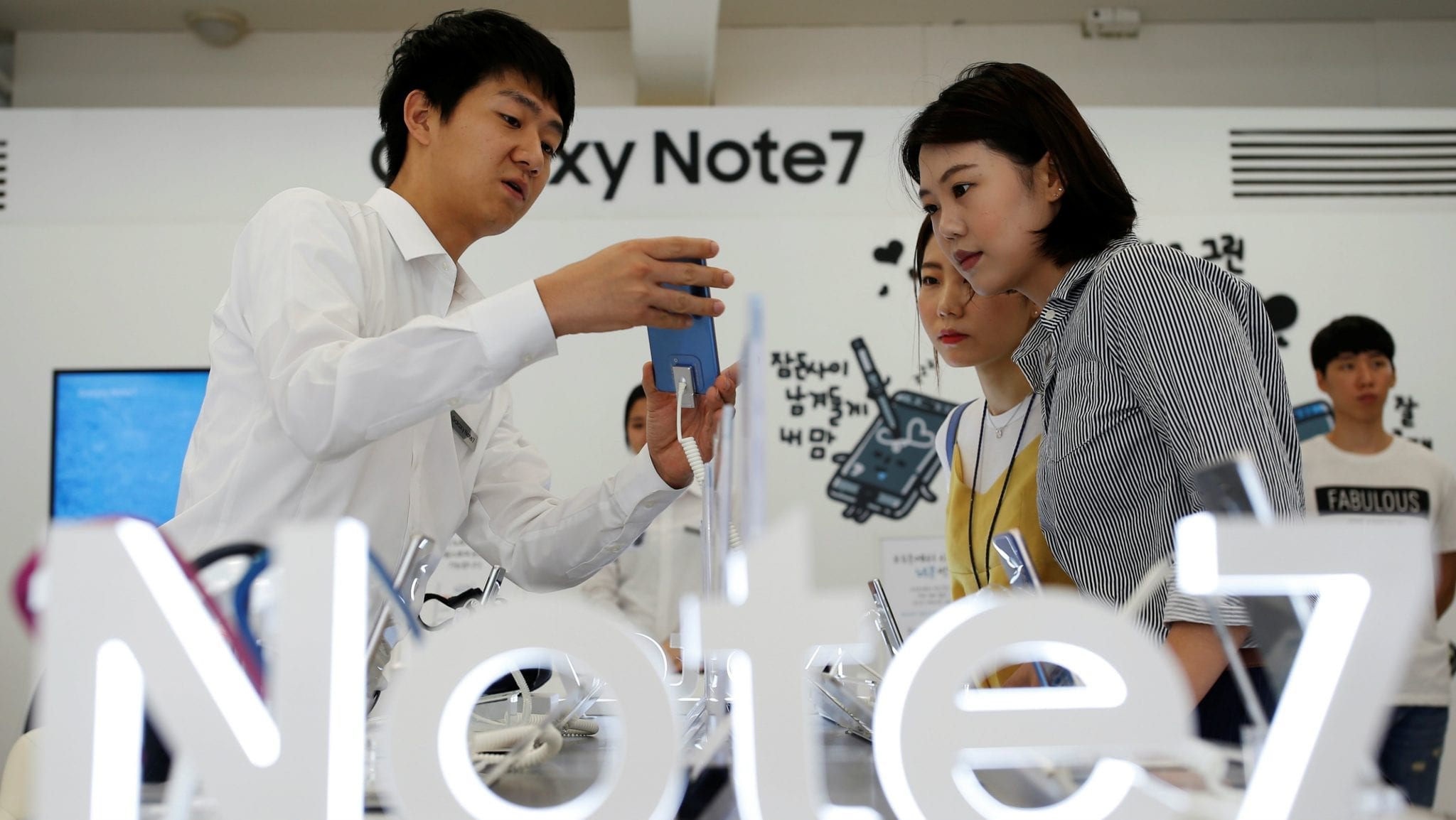
    Apple Inc’s iPhone 7 went on sale in South Korea yesterday, seeking to fill a void left by archrival Samsung Electronics Co on its home turf following a damaging recall fiasco over the Note 7 smartphone.

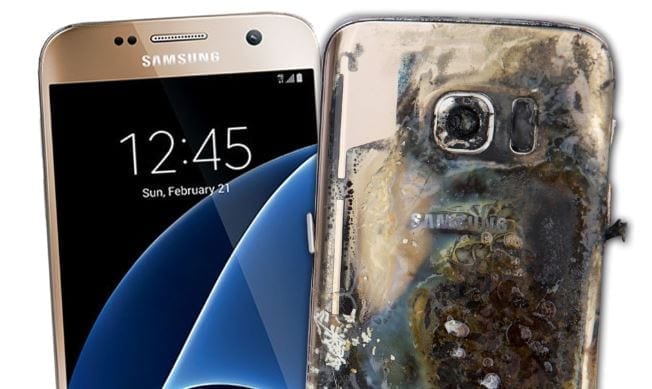
    The South Korean electronics giant discontinued the Note 7 — one of its key iPhone challengers — on Tuesday last week following reports that replacements for combustible models were also catching fire.

    The decision is set to cost Samsung billions of US dollars in lost profits and there are already signs that Apple is reaping some of the benefits.

    Samsung shares fell nearly 2 percent yesterday as iPhone 7 hit stores across the nation.

    An official at mobile carrier Korea Telecom said the first batch of 50,000 iPhone 7s it put up for preorder a week ago sold out in 15 minutes.

    “I would attribute part of that to the Note 7 effect,” said the official, who declined to be identified because he was not authorized to talk to the media.

    Customer defection is one of Samsung’s biggest concerns, especially as the Note 7 was specifically aimed at taking on the iPhone in the premium handset market.

    In the hope of retaining customer loyalty, Samsung had offered Note 7 users a 70,000 won (US$60) phone bill credit if they swapped their faulty phones for another Samsung handset.

    The half-dozen customers buying the new iPhone at a Korea Telecom store in central Seoul yesterday were all long-time Apple users who had preordered their handsets.

    Office worker Lee Kyung-hee, 34, said she had moved fast when the preorder service opened, fearing a surge of interest from unhappy Note 7 owners.

    “I set an alarm and was very quick,” Lee said.

    In South Korea, retail prices for the iPhone 7 and 7 Plus start from 869,000 won and 1.02 million won respectively for the basic 32GB models.
  • Samsung to compensate suppliers hit by Note 7 crisis

    Samsung to compensate suppliers hit by Note 7 crisis

    Samsung Electronics said Tuesday it would compensate suppliers hit by the decision to scrap its Galaxy Note 7 smartphones because of safety fears with exploding batteries.

    The South Korean electronics giant announced a week ago that it was discontinuing the Note 7 after a chaotic recall that saw replacement phones also catching fire.

    Samsung said the affair would cost the company an estimated $5.3 billion in lost profits over the three quarters beginning July.

    The crisis also hit its numerous suppliers — who produce everything from camera modules to casings — with their losses estimated at up to $1.7 billion.

    “We will offer full compensation for remaining inventories of Note 7 components among our suppliers,” the firm said in a statement.

    “We feel sorry for causing concern among our suppliers due to discontinuation of the Galaxy Note 7…we will complete the compensation quickly to minimise difficulty faced by them,” it said.

    The statement provided no specific figures, but said the payout would be calculated according to the different suppliers’ inventory volumes.

    Given the Samsung Group’s stature within Asia’s fourth-largest economy — it accounts for around 17 percent of GDP — the Note 7 debacle has had a national impact.

    The central Bank of Korea said it had taken the crisis into consideration when it trimmed South Korea’s 2017 growth outlook to 2.8 percent last week from its previous 2.9 percent forecast.

  • Samsung Recovers More Than 60 Percent Of Galaxy Note 7 Smartphones In US And South Korea

    Samsung Recovers More Than 60 Percent Of Galaxy Note 7 Smartphones In US And South Korea

    Galaxy Note 7 smartphones caused headaches and occasional burns to their owners, but only 60 percent of the defective devices sold in South Korea and the U.S. have so far been exchanged with new models, Samsung says.

    This means that 40 percent of the potentially explosive handsets are still in consumer hands, despite the fact that Samsung issued a worldwide recall on the smartphone almost a month ago.

    The percentage shows that the successful exchanges in the U.S. are slowing down.

    At the middle of last week, Samsung reported that 50 percent of the potentially hazardous smartphones were replaced with new models in the U.S. It would seem that the number of returns increased by 10 percent in five days, but keep in mind that the total figure takes into account South Korean returns as well.

    Last week, reports from South Korea indicated that the return percentage in the country is north of 50 percent.

    Samsung tried its best to motivate South Korean retail stores to accelerate the replacement of faulty Note 7 phones, and it even put financial incentives on the table. The Korea Times reports that vendors can earn 20,000 won (about $18) per exchanged phone. Stores can get an additional $18 per phone should they top an 80 percent exchange rate of the Note 7 handsets prior to the end of September.

    Even with the financial motivators in line, mobile customers in South Korea seem rather reluctant to let go of their Galaxy Note 7s. In the OEM’s home country, it took five days to see half of the Note 7 stock exchanged, whereas in the U.S. and Singapore the switch only took two days for 50 percent of devices.

    Singapore customers wasted no time and swiftly returned the fiery Note 7 models. Samsung’s recall program was open for 10 days in the country and it already ranked an 80 percent exchange of the Note 7.

    The recent battery scandal dented Samsung’s reputation as a reliable electronics manufacturer as well as its share value. However, 90 percent of Note 7 customers choose to replace their phones with a safe version of the same device. Of South Korean clients, only 4 percent chose a refund over an updated Note 7.

    As a reminder, the biggest smartphone builder announced on Sept. 2 that at least 2.5 million Note 7 smartphones are being recalled due to faulty batteries that can overheat while charging, causing some phones to burst into flames.

    According to the OEM, the replacement devices that are in stores are sporting safe batteries.