Tag: San Francisco

  • Anthropic Commits 5% Stake to New Public Benefit Fund

    Anthropic Commits 5% Stake to New Public Benefit Fund

    AI lab Anthropic, the developer of Claude, announced on Oct 18 that it will commit 5 per cent of its shares to a new public benefit fund to finance donations for the public good.

    The proposed vehicle will be established as a wholly owned limited liability company and could receive an additional 2 per cent of shares for every 50 per cent increase in company value above an undisclosed baseline.

    Anthropic structured the fund to support initiatives including non-profit donations, direct distributions to specific populations, and efforts to address artificial intelligence’s impact on the labour market.

    Scaling equity as valuation rises

    The equity pledge arrives as Anthropic prepares an initial public offering under a public benefit corporation charter. That corporate structure obligates directors to weigh social objectives alongside shareholder returns.

    Tech operators across Asia-Pacific face mounting scrutiny over governance and workplace automation as generative AI tools enter retail and corporate workflows. Anthropic is testing investor appetite. By anchoring equity to public initiatives, the firm wants to see if enterprise buyers and public market investors will accept lower equity claims in exchange for formal safety commitments.

    Standard Silicon Valley structures trigger escalating executive stock grants as valuations rise. Anthropic takes a different route. It redirects milestone equity pools into its public trust, creating a mechanism that dilutes commercial shareholders whenever market capitalization jumps.

    Labor disruption and safety risks

    Anthropic identified labor market stabilization as a primary target for fund disbursements. The initiative expands on an earlier US$200 million commitment. That program focused on studying and mitigating workforce displacement caused by AI deployment.

    Global technology companies have eliminated thousands of jobs following heavy capital spending on automated systems. Research from the International Monetary Fund indicates that artificial intelligence will augment, downgrade or eliminate roughly 40 per cent of jobs globally, rising to 60 per cent in advanced economies.

    Elon Musk, who runs competing artificial intelligence firm xAI, criticized the structure on social media platform X. Musk said he recommended “giving the shares directly to the public”.

    Founding pledges and employee matching

    Company founders committed 80 per cent of their personal equity holdings to public purposes when they established the lab. Anthropic also runs an internal matching program where approximately half of its workforce pledges equity to charitable causes.

    Combining founder commitments, staff pledges and the new 5 per cent allocation places roughly 20 per cent of total corporate equity into public benefit reserves before accounting for future milestone grants. The company stated that no equity held by the vehicle will fund political lobbying or campaign donations in the United States or overseas.

    Safety positioning remains central to the firm’s commercial identity. Anthropic devoted approximately 80 pages of its 261-page prospectus body to detailing operational and societal risks. It warned that frontier models could create catastrophic or existential hazards.

    Governance details and upcoming disclosures

    Regional expansion continues alongside capital planning, following the opening of Anthropic’s Singapore office and an agreement with the Singapore government to deploy safe AI frameworks across local industry. The company plans to publish details on the fund’s governance architecture, advisory leadership and valuation milestones in the coming months, followed by a formal public benefit progress report.


  • Pakistan Takes 20 Tech Startups to TechCrunch Disrupt in Silicon Valley

    Pakistan Takes 20 Tech Startups to TechCrunch Disrupt in Silicon Valley

    Pakistan brought 20 technology companies to TechCrunch Disrupt 2026 in San Francisco, pitching American venture funds and commercial clients across three days at Moscone West.

    The delegation set up a national pavilion at the annual startup conference from October 13 to 15, seeking direct commercial contracts and cross-border investment.

    Silicon Valley delegation

    Participating firms exhibited enterprise software, digital consumer tools, and custom IT services to early-stage founders and venture capital firms. Pakistan’s Ambassador to the United States, Rizwan Saeed Sheikh, visited the pavilion on October 15 to review commercial pitches and meet founders.

    Sheikh told company delegates that diplomatic missions across the US will provide direct operational support to help Pakistani tech founders establish client networks and corporate partnerships in North America.

    Commercial push in North America

    For South Asian software houses and startup founders, breaking into the US enterprise pipeline remains essential for dollar-denominated revenue. Indian IT exporters established this corridor decades ago, and Pakistani founders are now attempting to replicate that access by presenting engineering teams directly to Silicon Valley buyers.

    The structural challenge lies in conversion rates. Trade delegations and pavilion booths deliver visibility, but landing enterprise software contracts requires local corporate entities, US-based sales leads, and strict compliance structures that early-stage teams often lack.

    Regional export ambitions

    Islamabad has stepped up state-backed trade missions over the past year to lift software and IT services exports. Similar trade delegations pitched digital services in Riyadh earlier in the cycle, following domestic infrastructure drives including new tech parks backed by Prime Minister Shehbaz Sharif.

    Diplomatic missions in Washington and San Francisco will now track follow-up commercial contracts signed by the 20 participating firms as Pakistan prepares its next bilateral investment delegations ahead of the November minerals and industry forums in Islamabad.

  • Levi Strauss Hires Skechers Veteran John Vandemore as Finance Chief

    Levi Strauss Hires Skechers Veteran John Vandemore as Finance Chief

    Levi Strauss & Co. Named John Vandemore as executive vice president and chief financial officer on Wednesday. He joins the apparel maker after a nine-year stint at footwear group Skechers.

    Vandemore assumes the post on November 1. The San Francisco-based apparel maker wants to hit $10 billion in annual revenue, up from $6.3 billion recorded in 2025.

    At Skechers, Vandemore helped build the business into the world’s third-largest footwear brand. Net sales there reached nearly $9 billion across more than 180 countries and 5,000 retail locations. In his new role, he will oversee global accounting, financial planning, investor relations, tax, treasury, digital operations, information technology and supply chain logistics. Harmit Singh announced his retirement in April after serving as chief financial and growth officer. Singh stays in office until Vandemore starts, then serves as a special advisor through November 30.

    Building Out Direct Retail Channels

    Levi Strauss currently operates roughly 3,300 retail stores and shop-in-shops across 120 countries. Chief executive Michelle Gass joined from Kohl’s Corp. And has pushed direct-to-consumer sales, mono-brand retail stores, and expansions into women’s tops and athleisure through the Beyond Yoga label. Footwear brands built direct consumer networks faster than traditional denim wholesalers did. Vandemore’s background in retail store expansion fits that jeans strategy directly.

    Mall operators and franchise partners across Asia-Pacific and Europe will see continued real estate spending on full-price flagship stores rather than wholesale distribution deals. Execution costs carry risk. Operating company-owned stores ties up working capital and lifts lease liabilities in volatile retail markets.

    Shifting Away from Pure Wholesale

    Over the last decade, the company pivoted from a wholesale men’s denim supplier into a broader multi-category retailer. Singh and former chief executive Chip Bergh led that transition. They took the company public on the New York Stock Exchange in 2019 and rebuilt profitability.

    Wholesale accounts now share shelf space with company-owned retail stores, digital platforms and regional franchise operations. Hiring a finance chief with direct operational oversight of logistics and store real estate aligns the balance sheet with Gass’s direct-selling push.

    Cross-Industry Executive Shifts

    Before Skechers, Vandemore served as executive vice president and CFO of global brands and commercial sales at Mattel Inc. He previously held finance leadership roles at International Game Technology and The Walt Disney Company, where he was chief financial officer of Walt Disney Imagineering. His early career began at PricewaterhouseCoopers, followed by finance positions at Deloitte & Touche, Goldman Sachs and AlixPartners.

    Gass noted that Vandemore’s operational track record equips him to expand the brand into a broader global lifestyle business. She added that he can deliver that growth while protecting operating margins.

    Targets and Next Filings

    Managing capital expenditure will be the first test as store rollouts continue across international markets. Investors will watch whether Levi Strauss can protect profit margins while moving inventory away from department store partners and into its own shops.

    Singh wraps up his advisory work on November 30. Vandemore then delivers his first full quarterly financial blueprint to Wall Street analysts in early 2027.

  • OpenAI Projects $278 Billion Cash Burn Through 2030 on Infrastructure Push

    OpenAI Projects $278 Billion Cash Burn Through 2030 on Infrastructure Push

    OpenAI expects to burn $278 billion between 2026 and 2030 as infrastructure costs outpace revenue, according to an internal presentation. The company plans to spend $856 billion on computing power and hardware over those five years. Annual revenue is projected to climb from $36 billion this year to $350 billion in 2030.

    Cumulative revenue through the decade is forecast at $840 billion from enterprise and consumer adoption. Computing power represents the group’s largest single operational expense.

    Depleting Capital Reserves

    That spending trajectory puts direct pressure on the balance sheet. OpenAI raised $122 billion in March at an $852 billion valuation. Internal forecasts show those cash reserves will run out by 2028.

    Management has held talks with private investors for fresh funding at a valuation near $1.2 trillion to plug the gap. The deficit leaves little room for operational missteps or weaker enterprise software demand.

    Hardware Demand and Asian Supply Chains

    Asian technology suppliers, data centre builders, and hardware vendors will see sustained procurement from that $856 billion computing budget. High-bandwidth memory makers, advanced packaging specialists, and server assemblers in Taiwan, South Korea, and Japan sit directly in the flow of that capital.

    Monetization carries the real risk. Enterprise buyers across retail and consumer tech face higher prices as model builders try to recover infrastructure costs. Competing open-source architectures offer lower operational expenses.

    Delayed Public Listing

    A confidential filing for an initial public offering in June laid the groundwork for a public market debut. Chief executive Sam Altman ruled out a 2026 listing soon after, citing internal concerns over artificial intelligence safety protocols.

    Delaying the float leaves the company dependent on private equity consortia, sovereign wealth funds, and strategic tech partners. These backers must absorb hundreds of billions in negative cash flow before the 2028 cash cliff.

    The Next Funding Milestone

    Attention now turns to the final terms of OpenAI’s prospective $1.2 trillion financing round. Investors will watch whether enterprise subscription revenue meets the target run rate required to hit $36 billion before the current fiscal year concludes.

  • Uber to Cut 3,300 Jobs in Global Push Toward Robotaxis

    Uber to Cut 3,300 Jobs in Global Push Toward Robotaxis

    Uber Technologies is cutting roughly 3,300 jobs, or 10 per cent of its global workforce, to streamline management and fund an autonomous driving push. The retrenchment is the company’s largest round of dismissals since May 2020, when it shed 6,700 workers during the pandemic.

    Chief executive Dara Khosrowshahi announced the restructuring in a staff memo on September 2. The reductions target middle management rather than operational staff, with the company seeking to eliminate bureaucratic bottlenecks that slowed product decisions.

    Stripping Management Layers

    The overhaul cuts the number of workers positioned seven or more reporting tiers below the chief executive by 20 per cent. Internal teams with only one or two direct reports will shrink by nearly half, while several operational divisions will merge across regional hubs.

    Remote work will also contract sharply. Uber will cap fully remote positions at about 1 per cent of its total headcount while enforcing its existing policy requiring three days a week in the office. The platform finished 2025 with approximately 34,000 global employees.

    Unlike other technology peers cutting headcount this year, Khosrowshahi did not attribute the dismissals to artificial intelligence tools. Industry tracker layoffs.fyi recorded more than 123,000 tech redundancies across roughly 390 businesses in 2026, many citing automated workflow gains.

    Redirecting Capital to Autonomous Fleets

    Savings from the payroll cuts will help finance more than US$10 billion in planned autonomous vehicle investments. Uber wants to secure its position as a central booking marketplace for driverless fleets operated by external partners, countering threats from standalone operators such as Waymo and Tesla.

    Tensions with autonomous developers have escalated as suppliers expand their own direct-to-consumer networks. Waymo currently operates driverless vehicles through the Uber app in Austin and Atlanta, but it is rolling out into additional metropolitan areas independently.

    For mobility operators across Asia and Western markets, the transition to robotaxis threatens the traditional middleman fee structure built on gig workers. While Southeast Asian operators continue to rely on human drivers, platform valuations increasingly hinge on controlling autonomous dispatch software rather than maintaining large administrative headcounts.

    Uber shares gained 2 per cent in pre-market trading following the announcement, after dropping nearly 8 per cent earlier in the year. The company must now deploy its autonomous capital budget while renegotiating fleet supply pacts across key urban markets.

  • Vietnam confirms plan to fly non-stop to California in 2018

    Vietnam confirms plan to fly non-stop to California in 2018

    Vietnam’s government has approved plans to expand its air network to major markets including Australia, China, Europe and the United States starting from this year.

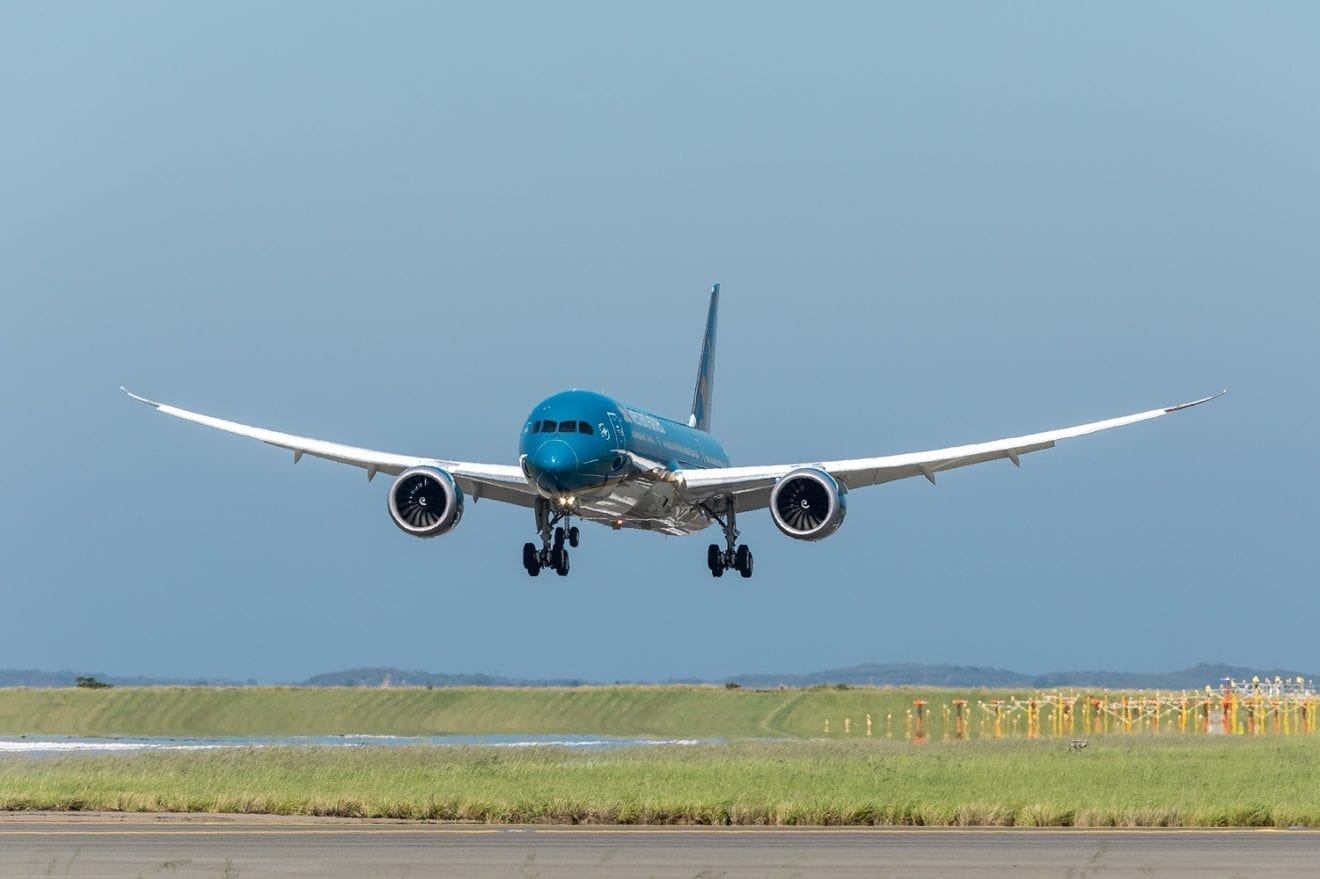
    According to the plan, Vietnam Airlines will go through with its proposal to open non-stop services to the U.S., starting with direct flights to the west coast in 2018. The national carrier is considering between San Francisco and Los Angeles.

    The U.S. proposal was revealed a couple of years ago and received much excitement, given busy travel between the countries. The U.S. is the fourth largest source of foreign visitors to Vietnam, with more than 614,000 people coming in 2017, up 11 percent from the previous year, according to the General Statistics Office.

    Aircraft manufacturer Airbus said in September 2016 that it had signed an MoU with Vietnam Airlines to deliver 10 A350-900 aircraft, which will be used for non-stop flights to the U.S.

    But the giant economy across the Pacific is just part Vietnam’s sky plan.

    For its neighbor China, Vietnam is set to open dozens of new flights by 2020.

    The new routes will connect Can Tho, Da Lat, Da Nang, Hai Phong, Hue, Nha Trang and Phu Quoc Island of Vietnam with at least 17 Chinese destinations: Changchun, Chongqing, Dalian, Fuzhou, Guilin, Guiyang, Haikou, Hainan, Harbin, Lanzhou, Ningbo, Shenyang, Wuhan, Xi’an, Xiamen, Xishuangbanna and Zhengzhou.

    Current flights to Beijing, Chengdu, Guangzhou and Shanghai will increase passenger load by adding to their frequency and using bigger aircraft, according to the development plan which has been approved by Prime Minister Nguyen Xuan Phuc.

    Chinese passengers to Vietnam surged nearly 50 percent to more than 4 million in 2017, accounting for nearly a third of foreign arrivals to the country.

    Vietnam’s aviation development plan also involves new flights to Australia, France, India, Japan, Malaysia, Russia, South Korea, Thailand, and the U.K., all of which now benefit from Vietnam’s e-visa and visa waiver programs.

    The country welcomed nearly 13 million foreign visitors and raked in nearly VND515 trillion ($22.7 billion) from tourism in 2017. It hopes the new air routes will bring the number of visitors up to 17-20 million in the next two years, when tourism money will contribute 10-12 percent to the economy, compared to the current 7 percent.