Retail News CRM

Tag: sasa

  • Sa Sa International Faces Sales And Profit Downturn Amid Economic Uncertainties

    Sa Sa International Faces Sales And Profit Downturn Amid Economic Uncertainties

    Sa Sa International, a prominent beauty retailer, has recently disclosed a decrease in both sales and profits for its most recent fiscal year. This downturn is attributed to unfavorable market conditions in Hong Kong and Macau, the principal markets for the company.

    Sales Decrease

    Sa Sa International’s financial reports demonstrate a marked decrease in turnover, with a dip of 9.7% to HK$3.9 billion (US$497 million) for the fiscal year which ended on March 31. This decline is due largely to the continuous outbound travel of Hong Kong and Macau residents to Mainland China and other foreign countries.

    This expatriation, in tandem with a robust US dollar and an increase in economic uncertainties caused by trade tariffs, has led to more cautious spending by those visiting Hong Kong and Macau. The primary markets for the group are indeed Hong Kong and Macau, which represent more than 75% of the company’s total sales.

    In these markets specifically, turnover experienced a decline of 12.3%, and 10.5% in Mainland China, but conversely, a 14.7% increase was observed in Southeast Asia.

    Profit Decline

    The company has also reported a significant decline in profits for the year, with a slide of 64.8% to HK$77 million, aligning with the company board’s previous projections in April. Brick-and-mortar sales decreased by 11.9%, though some improvement was noted in the latter half of the fiscal year. However, online sales saw a modest increase of 1.2%, largely thanks to the growth of third-party e-commerce platforms in the Southeast Asian market.

    As the year concluded, the group maintained 84 stores in Hong Kong and Macau, 18 in Mainland China, and 72 in Southeast Asia.

    Future Plans

    Sa Sa International’s management team has expressed their intent to closely monitor market trends and make adjustments to their portfolio as necessary. Their primary objective is to facilitate growth in both sales and gross profit, while at the same time, maintaining a stable gross profit margin. Their aim is to develop a sustainable model to boost profitability.

    In the first quarter ending June 15, the group witnessed a 4.5% increase in turnover, with growth recorded in all markets, except for Mainland China.

    Questions & Answers

    What are the primary markets for Sa Sa International?
    Hong Kong and Macau are the primary markets for Sa Sa International, accounting for more than 75% of the company’s total sales.

    What caused the recent downturn for Sa Sa International?
    This downturn is due largely to the continuous outbound travel of Hong Kong and Macau residents to Mainland China and other foreign countries, coupled with a robust US dollar and increasing economic uncertainties.

    What is Sa Sa International’s plan moving forward?
    The company plans to closely monitor market trends and make adjustments to their portfolio as necessary. Their primary objective is to facilitate growth in both sales and gross profit while maintaining a stable gross profit margin.
  • Mainlanders drive Sa Sa sales to $2.1b

    Mainlanders drive Sa Sa sales to $2.1b

    Sa Sa International Holdings (0178), the cosmetics and skincare retailer, said yesterday retail and wholesale turnover for the first quarter ended June 30 increased by 24.8 percent over the same period the year to HK$2.11 billion.

    The retail and wholesale turnover in Hong Kong and Macau markets increased by 27.7 percent to HK$1.8 billion, while same-store sales increased by 25.3 percent.

    This was mainly driven by a 27.5 percent increase in the number of transactions from mainland tourists, which also led to a 14.5 percent growth in the volume of transactions.

    The average sales per transaction of local consumers and mainland tourists increased by 8.1 percent and 7 percent respectively, Sa Sa reported.

    Hong Kong’s retailers have forecast their turnover in the second half to grow by 10 percent year on year, JLL found in a recent survey.

    About 83 percent of the international and local retailers are planning to open new shops in the city over the next 12 months, a significant jump from 62 percent as recorded a year ago. JLL surveyed 40 retailers and retail landlords in June and found that more than 90 percent of the respondents stated their retail sales in the first half of 2018 fared better than those in the previous year.

    Retailers from almost all sectors are seeing strong and sustained growth in their sales which will lead to them investing more into the market, while the luxury sector is currently the biggest winner, led predominantly by the mainland tourists, said James Assersohn, director of Asia Pacific Retail at JLL.

    “However, we also see locals increase spending which provides a deeper and more sustainable growth trajectory for retail businesses here,” James added.

    Meanwhile, it is worth noting that changing consumption patterns and shopper profiles fueled by millennials and generation Z have also led to greater demand for mass and mid-market brands, serving as a significant boost to local spending, said the survey. It is expected that the rents of high street shops and prime shopping centers to grow in the range of 0 to 5 percent for the full year, said Terence Chan, Head of Retail at JLL in Hong Kong.

    For the local industrial and commercial property market, property agency Midland IC&I (0459) forecast 10,000 transactions will be recorded in 2018, rising by 8 to 10 percent year-on-year, which will set a new record high.

    The turnover for the year is expected to decline 0 to 5 percent mainly due to uncertainties including the trade war between China and the United States and fluctuations the local stock market.

    Midland IC&I forecasts that industrial and commercial properties will record a turnover of HK$130 billion and HK$160 billion respectively for the second half and the full year.

  • Sasa International’s annual profit surges 276 percent

    Sasa International’s annual profit surges 276 percent

    Sasa International‘s annual attributable profit surged 275.8 percent to HK$218.9 million (US$28 million), as mainland Chinese tourists returned as the borders between Hong Kong, Macau, and Mainland China reopened.

    During the year, turnover rose 24.8 percent to HK$4.37 billion as sales in Hong Kong and Macau, its largest market, soared 31.4 percent to $3.41 billion.

    Mainland China sales grew 9.7 percent to $581.6 million, but Southeast Asia sales fell 1.7 percent to $365.8 million.

    Sales in other markets swelled 126.1 percent to $10.4 million.

    Moving forward, the beauty retailer is looking to introduce exclusive brands via livestream platforms in Mainland China to improve the company’s gross margin profile. It is also planning to expand in Hong Kong and is looking at high-traffic malls in Malaysia and Singapore.

    The company maintains a cautious outlook for China amid continued geopolitical tensions and said it has to consolidate its position in the region before making further moves.

    However, in the early weeks of the new financial year—from April 1 to June 16—the company’s turnover declined 9.5 percent year over year to $812.5 million.

  • Sa Sa starts selling 700 products on Foodpanda Hong Kong

    Sa Sa starts selling 700 products on Foodpanda Hong Kong

    Sa Sa is pleased to announce today its official entry onto foodpanda mall in Hong Kong, an online grocery and goods shopping mall under foodpanda. Through foodpanda mall’s round-the-clock delivery service, Sa Sa will open up for local customers a more convenient way of shopping to enhance customer experience. The move also marks Sa Sa’s advancement in the development of online-merge-offline (“OMO”) functions.

    Sa Sa is offering about 700 selected products on foodpanda mall, including anti-epidemic products for which Hong Kong citizens have an urgent need, and popular products such as cosmetics, skincare, fragrance, hair care, and body care products as well as health supplements. After customers have placed orders at the online supermarket, foodpanda’s couriers will collect the goods at Sa Sa’s physical stores and deliver them to the customers in as fast as 10 minutes. Customers can thus quickly obtain the products without going out, especially meeting their urgent needs for anti-epidemic products and their favorite items within the cosmetic and personal care categories. This service will initially be piloted at 20 of Sa Sa’s stores and will be rolled out at more stores in the future.

    Following the launch of the “click-and-collect” service, Sa Sa’s partnership with foodpanda mall will further enhance the OMO development of the Group’s physical stores and its online business in Hong Kong. It also provides customers with one more customer-centric and convenient channel for online shopping, complementing Sa Sa’s shopping website.

    Sa Sa and foodpanda mall will be able to manifest their respective advantages in the partnership and generate synergy. As a leading “one-stop beauty product specialty store”, Sa Sa will enrich foodpanda mall’s product assortment with its richly diverse, hot-selling cosmetics, health supplements and anti-epidemic products. Both foodpanda and Sa Sa have large customer bases, which can enable mutual conversion and thus enlarge their respective target customer bases. Sa Sa can also strengthen and expand its own base of young customers by serving foodpanda members who are used to “Quick Commerce”.

    Dr Simon Kwok, SBS, JP, Chairman and Chief Executive Officer of the Group, said, “Sa Sa is honoured to have entered foodpanda’s online platform which is widely popular with consumers in Hong Kong. Online shopping is gaining traction. The trend is especially more pronounced amid the raging pandemic as more consumers would rather stay at home than go out to protect themselves against the disease. We believe that foodpanda’s quick delivery meets our customers’ increasing demand for convenient, fast online shopping service. In the light of the urgent demand for anti-epidemic products, we are offering them at foodpanda mall in the hope of providing citizens one more convenient shopping channel to help fight the pandemic. We also hope to enhance the OMO function at Sa Sa’s operation through the partnership with foodpanda mall so as to provide customers with a more seamless and convenient shopping experience.”

    Ryan Lai, Managing Director of foodpanda Hong Kong, said, “Via our mature logistics infrastructure, our dedicated delivery fleet and ongoing data analysis, we hope to continue to pioneer ‘Q-Commerce’, providing quick and convenient delivery service to meet the needs of Hong Kong people. We are extremely pleased to have Sa Sa as a foodpanda mall retail partner, benefiting from complementary strengths in advancing each other’s OMO business strategy, and elevating customers’ shopping experience for personal care, health and beauty products etc. This partnership also expands and diversifies foodpanda mall’s product offerings, to better satisfy the wants and needs of our customers.”

    To celebrate its partnership with Sa Sa, foodpanda mall launches promotional offers from 15 March to 30 April . Customers will enjoy a HK$50 discount upon spending of HK$400 or above with their first purchase at Sa Sa on foodpanda mall by entering the promotional offer code “SASA” while the offers last.

  • Sa Sa International flags loss as store traffic drains

    Sa Sa International flags loss as store traffic drains

    Plummeting sales and write-downs have led Hong Kong-headquartered beauty-products retailer Sa Sa International to warn of a loss of up to US$38 million in the September half year.

    “The global Covid outbreak has affected the operation of all of the group’s physical stores including its businesses in Hong Kong, Macau, Mainland China and Malaysia,” chairman and CEO Simon Kwok said in a note to shareholders on Friday.

    While cross-border visitor numbers now almost nil in most markets, sales through Sasa stores to local customers were weak for most of the period due to social-distancing requirements.

    “As a result, both the footfall and retail sales at the group’s stores in those markets have fallen sharply. Retail consumption has been very weak,” he said.

    While final results will not be released until late this month, Sa Sa expects a trading loss of and impairments to range between HK$230 million and $300 million, compared to a profit in the same period a year earlier of $35.5 million (US$4.6 million).

    The impairment has arisen from the drastic decline in sales at the group’s retail stores, especially those in Hong Kong’s tourist districts, amid the Covid-19 pandemic.

    However, the group’s cash and bank balances of around HK$590 million as at September 30 are adequate to meet its current business needs.

    Sa Sa has reduced the number of stores in tourist areas, negotiated rent reductions and strengthened its category management to mitigate the decline in customers, along with reducing inventory and managing costs.

    “In addition, the group has accelerated its adaptation to the new retail era by actively developing its e-commerce and online-to-offline (O2O) businesses,” said Kwok.

  • SaSa teams with Boutir to develop personal online stores for sales staff

    SaSa teams with Boutir to develop personal online stores for sales staff

    Hong Kong-based cosmetics & personal care chain SaSa has set up personal online stores for its beauty consultants to provide a new sales channel for the brand’s customer-facing staff in partnership with the e-commerce platform Boutir.

    The solution uses the Boutir mobile app to allow customers to make purchases on the consultants’ personal storefronts, providing additional commissions for staff as well as a more flexible experience for consumers. The move is an opportunity for the brand to combine its strengths in in-person shopping with digital retail, helping SaSa expand its omnichannel sales approach.

    “SaSa is committed to social commerce and is constantly developing new online sales channels,” said SaSa chairman and CEO Dr Simon Kwok. “The partnership with Boutir allows SaSa to transcend the spatial-temporal boundaries, use social media to engage and sell more with customers in Hong Kong SAR and leverage potential synergies between its online presence with the existing brick-and-mortar stores to provide a seamless online-to-offline shopping experience that is more flexible, accessible and intimate.”

    SaSa has been building its digital strategies swiftly following the advent of the coronavirus pandemic, including the development of a WeChat mini program to target customers from the mainland who had previously visited physical outlets in Hong Kong or Macau. The personal service component made possible via the Boutir platform is expected to potentially outperform the brand’s traditional online sales in terms of house brand mix, gross margin and basket size.

    Boutir founder Eric Ng said the partnership with SaSa would use the expertise of the chain’s professional beauty consultants to extend their customer service in brick-and-mortar stores onto the online platform. “It will also improve customer loyalty, broaden the customer base and increase the sales conversion rate.”

  • SaSa sales plunge 68 per cent due to Covid-19 freezing tourism

    SaSa sales plunge 68 per cent due to Covid-19 freezing tourism

    Beauty-products retailer Sa Sa International saw sales plunge 67.9 percent in the June quarter due to the collapse in mainland tourist arrivals in the city.

    Sales in Hong Kong and Macau, its core market, fell by 74.3 percent with same-store sales down 71.9 percent. The company said the number of inbound mainlanders in the two territories was down by 98.4 percent year on year due to the Covid-19 pandemic. Overall transaction volume was down by 57 percent with local customers spending an average of 6.5 percent less per purchase.

    Chairman and CEO Simon Kwok said local customers now account for the bulk of the group’s revenue in the two cities, leading to the company adjusting its product mix to boost items that help protect against the pandemic and personal care lines.

    “This enhances the loyalty of existing customers and broadens the customer base.”

    To help counter the sales slump, SaSa has been focusing on e-commerce, especially social commerce which can use the expertise of consultants in stores.

    “Thanks to the personal service element, social commerce presents a bigger potential in delivering better performance in house brand sales mix, gross margin, and basket sizes as compared to traditional pure online sales,” said Kwok in a stock exchange filing.

    “Piloted in October last year, the WeChat mini program achieved satisfactory progress in targeting mainland customers who visited retail shops in the Hong Kong and Macau SARs.”

    Due to a low base, and the effect of the 618 Shopping Festival, sales through WeChat mini program more than doubled quarter on quarter in the three months to June, though not by enough to compensate for the loss of sales after SaSa closed its online store on the mainland.

    SaSa also used social media to engage with Hong Kong customers in late May, and used live streaming both there and on the mainland.

    Looking forward, the company says it will continue to implement cost savings, such as negotiating rent reductions and controlling inventory, which it has already reduced from around US$129 million to $108 million from March to June.

    “The group hopes that the Covid-19 pandemic will abate as soon as possible and that the Hong Kong and Macau SARs governments will then ease the compulsory quarantine measures for inbound visitors. This would allow Mainland China tourist arrivals and sales to gradually recover in the Hong Kong and Macau SARs,” said Kwok.

    He said the wage subsidy scheme in Hong Kong and Macau government’s move to give vouchers to people to encourage shopping had both helped the group.

    Sales in Mainland China and Malaysia and online decreased by 27.8 percent during the quarter.

    “Although Mainland China and Malaysia were still affected by the Covid-19 pandemic during the period, the decline in sales in the two markets narrowed as the stores have gradually reopened from March and May respectively.”

  • Loss-making Sa Sa will continue to cull stores if landlords won’t compromise

    Loss-making Sa Sa will continue to cull stores if landlords won’t compromise

    Beauty-products retailer Sa Sa International says it will continue to renegotiate rents and quit locations where it cannot get satisfactory rent reductions as it struggles to return to profitability in the decimated Hong Kong retail market.

    The company has just reported a loss of US$66.6 million for the year to March on sales down 29.9 percent to $737.7 million. The previous year, Sa Sa International posted a profit of $60.7 million. However, if a one-off impairment related to retail store assets in line with changing accounting standards, and a loss of $5.3 million related to the closure of the company’s Singapore business are excluded, the trading loss would have been a more modest $26.4 million.

    Retail and wholesale sales in Hong Kong and Macau fell 33.2 percent to $611.5 million.

    Between October 1 and June 14 this year, Sa Sa has closed 12 stores in Hong Kong, primarily in the tourist districts of Tsim Sha Tsui, Causeway Bay and Mongkok.

    “As we move into FY2020/21, we strive for a significant rental reduction in the renewal negotiations or closures of shops with an unsatisfactory rental reduction in order to reduce the rental expenses of the group as more leases will expire in this financial year,” said chairman and CEO Simon Kwok in a commentary for shareholders.

    “Meanwhile, we will continue to negotiate with landlords for temporary rental relief for shops with leases not yet expiring in the near term.”

    With new leases, the company is exploring changing from fixed-rental rates to turnover rent, which is the arrangement adopted for almost all of its current leases in Hong Kong and Macau.

    “This would help merchants such as Sa Sa and our landlords to align interests during market fluctuations,” said Kwok. “However, some landlords are willing to offer this arrangement only on a temporary basis.”

    Like most Hong Kong discretionary retailers Sa Sa has been hit heavily by declining tourist numbers from Mainland China, at first related to general economic malaise across the border, then concerns over protests from June last year and finally Covid-19 effectively ending border crossings since January.

    The chart below shows the change in the number of inbound mainlanders entering Hong Kong month by month between April last year and March this year (blue line), the decline of total retail sales in the territory (pink line) and the change in sales of medicines and cosmetics (black line).

    The year-on-year decline in Mainland tourist sales was 80.2 percent in the fourth quarter, reaching 97.4 percent in February for Hong Kong and Macau SARs combined. In the three months to March last year, mainlanders accounted for 71 percent of Sa Sa International’s sales, but in the same quarter this year just 38 percent.

    “Local consumption declined less by comparison, decreasing by 16.6 percent in the fourth quarter thanks to our quick shift of product sourcing towards personal protection equipment,” said Kwok.

    Inventory reduction

    On a more positive note, Sa Sa managed to cut its inventory by $52.6 million to $129.8 million, thanks to clearance sales and wholesale measures. Turnover days decreased by three days from 104 to 101 during the year.

    While the group’s cash balance reduced to $82.8 million at the end of March, the company says reserves are adequate for its current operational needs.

    “Currently, the top priority for Sa Sa is to manage our costs and working capital to navigate and survive the storm and to adjust our business strategy to ride on the much-awaited wave of gradual recovery,” said Kwok.

    “In addition to closely monitoring our inventory and cash positions, we aim to reduce our inventory by implementing aggressive clearance activities, as well as implementing stringent controls on product order placement to ensure that funds will only be allocated to strategically focused products.

    “While striving to retain stores and staff as much as we can, we aim to realize a leaner cost structure and enhance operational efficiency in order to achieve long term healthy development for the group.”

  • Sa Sa International tips record loss of up to HK$600 million

    Sa Sa International tips record loss of up to HK$600 million

    Beauty-products retailer Sa Sa International says it expects to post a record loss as high as HK$600 million (US$77.4 million) for the March year due to the collapse of Hong Kong’s tourism market in the wake of the Covid-19 crisis.

    In a profit warning, chairman Simon Kwok said the figure – which contrasts with a $471 million profit for the prior year – includes a $40 million loss resulting from terminating leases when it exited the Singapore market, and trading deficits in other markets adding up to between $220 million and $260 million. The rest of the potential loss, which the company expects will be between $500 million and $600 million, is the result of impairments, including on property, plant and equipment.

    Kwok said sales through its retail store network has been in “drastic decline” amid the Covid-19 outbreak.

    “The provision for the impairment losses is a non-cash accounting treatment, as such, it has no impact on the group’s cash position for the financial year.”

    He said the group has no borrowing currently, has adequate cash to meet its current business needs and expects to recover about $20 million from the closure of Sa Sa Singapore.

    The ranks of mainland Chinese visitors has been in decline since July 1, following the outbreak of social unrest in Hong Kong. But numbers fell to near zero when the border was effectively closed in the wake of the pandemic at the beginning of this year. Local consumer sentiment has also dampened.

    “The Covid-19 epidemic also caused the foot traffic and retail sales to fall significantly at our stores outside of Hong Kong SAR, including the Macau SAR and Mainland China,” said Kwok. “The group’s e-commerce business was also affected as logistics services were disrupted by the epidemic.”

    As previously reported, Sa Sa’s fourth-quarter sales plunged by 62 percent in Hong Kong and Macau and sales to mainlanders in Hong Kong and Macau slumped by 80.8 percent.

    Even in Malaysia, a market that has always been profitable for Sa Sa International, Covid-19 has been impacted by the epidemic since February.

    The company has been trimming its store network in Hong Kong as leases come up for renewal and the company will continue to pursue rent relief from landlords. It is also taking steps to reduce costs and streamline operations to work through the slump in sales.

    Sa Sa International will publish its audited results prior to June 30.

  • Sa Sa International sales down as coronavirus bites

    Sa Sa International sales down as coronavirus bites

    Fourth-quarter sales of beauty-products retailer Sa Sa International plummeted 62 percent in Hong Kong and Macau as the coronavirus pandemic brought to a halt inbound tourism from Mainland China.

    Sales to mainlanders in Hong Kong and Macau slumped by 80.8 percent. While local customers spent 4.1 percent more during the quarter, the average sale per transaction dropped 20 percent and their overall basket size dropped by 34.6 percent.

    “The rapid outbreak of novel coronavirus around the world has wreaked havoc on the global economy, and the group has been inevitably affected,” said Sa Sa International chairman and CEO Simon Kwok in a quarterly trading update to the Hong Kong stock exchange.

    Group turnover fell 56.5 percent in the three months to March 31, including the permanent closure of its Singapore business

    Strict border controls imposed in Hong Kong to reduce the spread of the virus, the two-week closure of Macau casinos and decreased consumer demand led to the temporary closure of many SaSa stores, with other stores trading shorter hours. Kwok said that while the closures lowered operating costs, they also contributed to the sales decline.

    “In view of the persistent severe operating environment, the group will continue to implement strategies for reducing costs so as to maintain its competitiveness and reduce losses,” said Kwok. “The group will also do its best to protect the livelihood of its staff.”

    Sa Sa International will continue to trim its store network in Hong Kong as leases come up for renewal and the company will continue to pursue rent relief from landlords.

    “Furthermore, the group reduced non-essential and non-productive expenses substantially across all departments, streamlined its organization structure and implemented short-term measures such as reducing salaries and adopting the scheme of unpaid leave to reduce operating costs,” he said.

    With local consumers now accounting for a majority of the group’s overall sales, the company plans to adjust its product mix to meet their demand for protective and pandemic-related.

    products and other beauty items. Slow-selling lines will be dropped and inventory reduced to help preserve cash and reduce the risk of stored products expiring.

    Kwok said that the company has progressively been reducing inventory levels and has adequate cash to meet its current business needs, despite the decline in sales.

    Enforced store closure in China during the quarter saw sales there fall by 51 percent and in Malaysia, where non-essential stores have been ordered closed for six weeks commencing mid-March, sales were down by 16.9 percent.

    The company closed down its Singapore during the quarter shuttering all 21 stores and it has permanently closed 10 stores in Mainland China during the last year, along with six in Hong Kong and Macau and two in Malaysia.

  • Sasa joins Shopee in Singapore after closing its physical stores

    Sasa joins Shopee in Singapore after closing its physical stores

    Hong Kong-headquartered cosmetics retailer Sa Sa International has relaunched its presence in Singapore with an exclusive online partnership with e-commerce platform Shopee.

    Following the firm’s exit from the territory, last year and the closure of all its Singapore outlets, the new Sasa official store on Shopee Singapore aims to tap the platform’s extensive user base to reach a wider audience.

    “The launch of the Sasa official store will allow us to bring a greater variety of beauty products and tools to a wider audience,” said Sa Sa International chairman and CEO Dr Simon Kwok. “This will enable us to effectively drive sales growth and lay a solid foundation for the development of our new retail model. We look forward to strengthening our e-commerce business further and are positive that working with Shopee will allow us to achieve success in the near future.”

    The strategic partnership will enable Shopee to drive growth in one of its top-performing categories – Beauty & Personal Care – by providing a broad assortment of Sasa’s products on the platform. The range will be discounted through to March 1 as part of Shopee’s Brands Festival.

    “Shopee is committed to helping our brands and retail partners unlock their full potential,” said Shopee CCO Zhou Junjie. “This campaign is another step forward for us in bringing our users the most popular and exciting products from their favorite brands.”

  • Sa Sa launched on HKTVmall

    Sa Sa launched on HKTVmall

    SaSa has launched a flagship store on online shopping platform HKTVmall. The SaSa flagship offers more than 1200 SKUs, consisting of trendy skin care, make-up, fragrances and personal care products. The group intends to leverage the platform’s big data analytics to formulate more effective and precise sales and product strategies, as well as offer a series of in-store marketing promotions to customers.

    “As online shopping has become increasingly popular nowadays, customers embrace smart living and enjoy online shopping anytime at their fingertips,” said Sa Sa International chairman and CEO Dr Simon Kwok. “We expect that over 4000 SKUs will be offered on the platform in the short term, and we will continue to keep up with the latest trends in the consumer market trend, exploring collaboration opportunities with other third-party platforms while providing with the customers diversified trendy products, ultimately creating a more intimate shopping experience and giving new impetus to our business growth.”

    “SaSa brought a new retail model to the industry with cosmetic products being sold on open shelves as early as 40 years ago,” said HKTV chairman Ricky Wong. “HKTVmall is developing another new retailing model aiming to build a digital ecosystem encompassing business operations, trading, retailing, financial services and all aspects of daily lives, providing a ‘one-stop shop’ platform to the customers.”

    Last year, personal care and skin care products ranked third most-popular category, accounting for 17 percent of HKTVmall’s Gross Merchandise Value, and Wong believes the partnership with SaSa will introduce more international brands of beauty products, diversifying the selection of skincare and cosmetics products on HKTVmall.

    At present, the SaSa flagship complements SaSa’s physical stores and its own website, as well as its mobile app. SaSa has also been collaborating with third-party platforms in Mainland China in recent years, including Tmall, Kaola, Xiaohongshu, and JD.

    HKTVmall collaborates with more than 2800 retailers and suppliers, providing more than 270,000 products and service choices. Last year, 680,000 unique customers made purchases via HKTVmall.

  • Home market hurts Sa Sa International sales

    Home market hurts Sa Sa International sales

    Hong Kong beauty products retail Sa Sa International has reported a 7.2 per cent decline in sales for the March quarter.

    The company’s home market and Macau were to blame, with same-store sales falling 10.8 per cent and combined retail and wholesale turnover down 8.4 per cent.

    Sa Sa is one of the bellwethers of the broader Hong Kong market because it serves both local consumers and tourists, appealing to more mainstream clients than the luxury watch and jewellery retailers which often disproportionately affect total Hong Kong retail sales figures.

    In a stock exchange filing, Sa Sa International blamed the sales decline on a 6 per cent fall in total transaction volume, of which the number of transactions of local customers and mainland tourists decreased by 8.8 per cent and 3.7 per cent respectively.

    “The average sales per transaction of local consumers and mainland tourists decreased by 0.7 per cent and 5.9 per cent respectively, which resulted in a 3.5 per cent decline in total,” the company said.

    “The weaker sales performance was mainly due to high base effect. The hot trend of some trendy product categories last year has been weakening while the group’s newly launched products could not fully compensate their sales decline. In addition, a number of new pharmacy stores selling skincare and cosmetic products have opened new stores in tourist hot spots aggressively, resulting in intensified competition and lower-than-expected sales at Sa Sa.”

    The company says it plans to open new stores to enhance its store network and boost its competitiveness “under reasonable rental condition”.

    “The group is adjusting its business strategies to adapt to the changing consumer preferences and competitive landscape. The first action is to change towards a more balanced product mix.”

    Sa Sa International says it will also increase its range of high-end products and focus on its own-label products which offer better margins.

    Another step Sa Sa plans to arrest falling sales is speeding up its investment in digitalisation and IT, using big data to formulate better product strategies.

    The new Express Railway Link and Hong Kong-Zhuhai-Macau bridge have so far failed to bring about the expected stimulus to the retail industry, the company said.

    “Looking ahead, the group believes the benefits of the two mega infrastructure projects will gradually emerge under the favourable policy of the Greater Bay Area. The group remains cautiously optimistic about the outlook of Hong Kong and Macau markets in the long run.

  • Sa Sa sales drops in HK, Macau

    Sa Sa sales drops in HK, Macau

    Sa Sa International sales slipped 2.2 per cent in the latest quarter, with same-store sales in Hong Kong and Macau down 3.7 per cent. The company says that while the transaction volume of mainland tourists rose 5.8 per cent in the three months to December 31, transactions by locals fell 5.2 per cent. However the average sale to tourists fell by 6.1 per cent and just 0.2 per cent to locals.

    Sa Sa International’s retail and wholesale turnover in markets outside Hong Kong and Macau (including Mainland China, Singapore, Malaysia and e-commerce) increased by 1.3 per cent in the third quarter.

    “[Hong Kong] consumer sentiment remained sluggish due to the weaknesses in RMB exchange rate and stock market under the continued shadow of the Sino-US trade war,” said chairman and CEO Simon Kwok in a stock exchange filing.

    “In addition, the new e-commerce law passed by the Chinese government in August came into force early this year and made daigou traders more cautious in running their businesses. The group’s sales performance was affected and negative growth was recorded in both retail sales and same store sales in the Hong Kong and Macau markets in November and December.”

    Kwok said that since the launch of the Hong Kong section of the Express Railway Link, the Group’s SaSa stores located in the Hong Kong West Kowloon station and the neighbouring Tsim Sha Tsui district have been reporting satisfactory sales performance. However, the increased influx of mainland tourists via the new Hong Kong-Zhuhai-Macau Bridge were mainly sightseeing trippers with limited purchasing power and barely contributed to the group’s overall sales in Hong Kong.

    “Nevertheless, the group believes the two mega infrastructure projects will attract more mainland travellers with higher consumption when they are gradually consummated. The group remains optimistic towards the outlook of Hong Kong and Macau markets in the middle to long run under the favourable development of the Greater Bay Area.”

    Kwok said Sa Sa International will strengthen promotional efforts to boost traffic and sales in physical stores to offset a decline in the online-driven daigou business.

    “Digitalisation and information technology enhancement will be sped up to improve operational efficiency and shopping experience. In addition, the group will seize the opportunities brought by the Greater Bay Area to achieve sustainable business development for the group,” he said.

  • Sasa Hong Kong and Macau profits soar

    Sasa Hong Kong and Macau profits soar

    Sasa profits soared 34.7 per cent in the last financial year, as sales at Hong Kong and Macau stores posted solid gains.

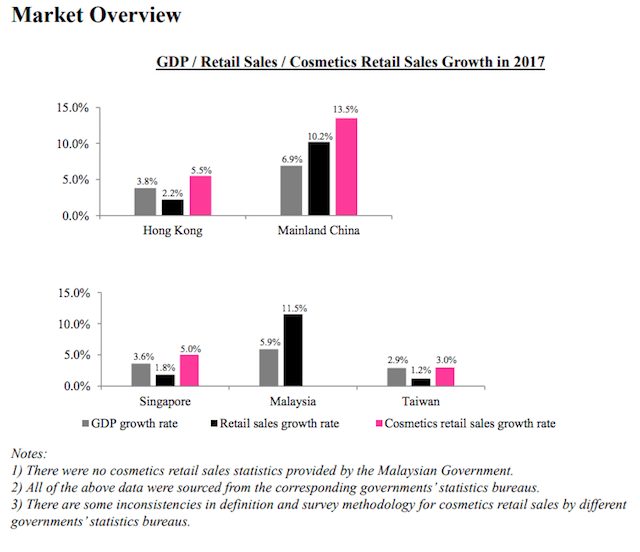
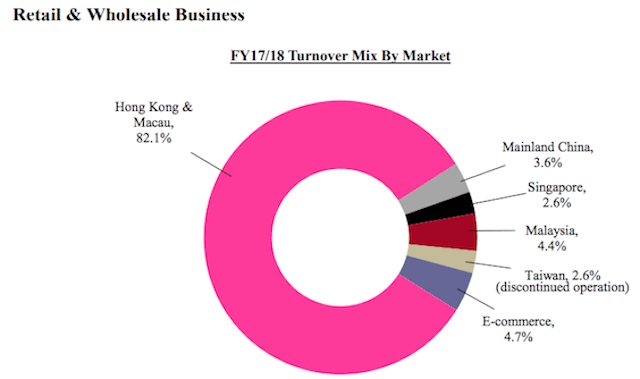
    Sasa’s parent Sa Sa International says group sales rose 6.2 per cent to HK$8.018 billion (US$1.022 billion), driven by a 7.9 per cent increase in Hong Kong and Macau, which accounts for 82 per cent of its business. Profit for the year was $440.1 million.

    The increased profit and sales were achieved despite the closure of the Taiwan business, with all 25 stores closed by year end, March 31 resulting in a loss of $25.1 million.

    Hong Kong and Macau

    In its results announcement, Sa Sa International said the reasons for the recovery of Hong Kong sales were various. “The satisfactory economic environment, high employment rate, stable property and stock market, and bullish local consumer sentiment are all driving robust growth.”

    The company said demand for middle- and high-end cosmetic products in Mainland China is soaring on the back of strong retail growth driven by the improved purchasing power of Mainland residents living in the third and fourth-tier cities.

    “This, in combination with a weak US Dollar and the strengthening of the Renminbi, is encouraging outbound travel and greater consumption by mainland tourists.”

    When those tourists visit Hong Kong, they typically shop at Sasa and its rivals. The growth rate of total transactions to Mainland Chinese visitors shopping at Sasa during the full year was 4.6 per cent, well ahead of the 3.3 per cent to local shoppers. But tourist transactions rose 8.5 per cent in the second-half year alone.

    With same-store growth up 3.9 per cent, a review of locations clearly paid off. Sa Sa’s sales rose in every quarter, by 21 and 23 per cent in the first two and by 28 per cent in each of the last two.

    Mainland China

    Sa Sa International’s Mainland China sales, measured in local currency, increased by 5 per cent to $298.7 million.

    Thanks to better cost control and increased store contributions, the group’s loss for this market reduced to $10.2 million. Group sales in the mainland rose by 6 per cent in the second half, compared to 3.9 per cent in the first half.

    Singapore

    Sa Sa Singapore sales rose 1.9 per cent for the year to HK$211.5 million, measured in local currency terms, but rose by 8.7 per cent on a same-stores basis.

    Sales declined in the first quarter because of three store closures near the end of the previous financial year, however, same-store sales turned into positive territory in the second quarter, improving further in the second half.

    Malaysia

    Sa Sa Malaysia sales rose 6.1 per cent to HK$362.5 million, but same-store revenue declined 1.2 per cent.

    The company said the more traditional brick-and-mortar retail market in Malaysia has been affected by the rapid development of digital media and e-commerce. “In addition, many new shopping malls have opened, diluting the traffic to the group’s existing stores, especially in the capital Kuala Lumpur, and indirectly affecting stores’ turnover.”

    The group’s turnover growth declined from 9.2 per cent in the first half to 3.4 per cent in the second half.

    Store network

    At the end of March, Sasa had 265 retail outlets, including 118 in Hong Kong and Macau, 55 in Mainland China, 20 in Singapore and 72 in Malaysia. But within Hong Kong and the mainland, 22 stores were closed and 23 opened as the company moved to improve locations and reduce rents.